
Welcome to the 'Licensing Process and Documentation' lesson, a crucial part of your Official DGT Theory Course for Spanish Truck Licences (Category C & C1). This lesson will guide you through the administrative journey and essential requirements needed to become a licensed professional truck driver in Spain, setting the stage for your theory exam success.
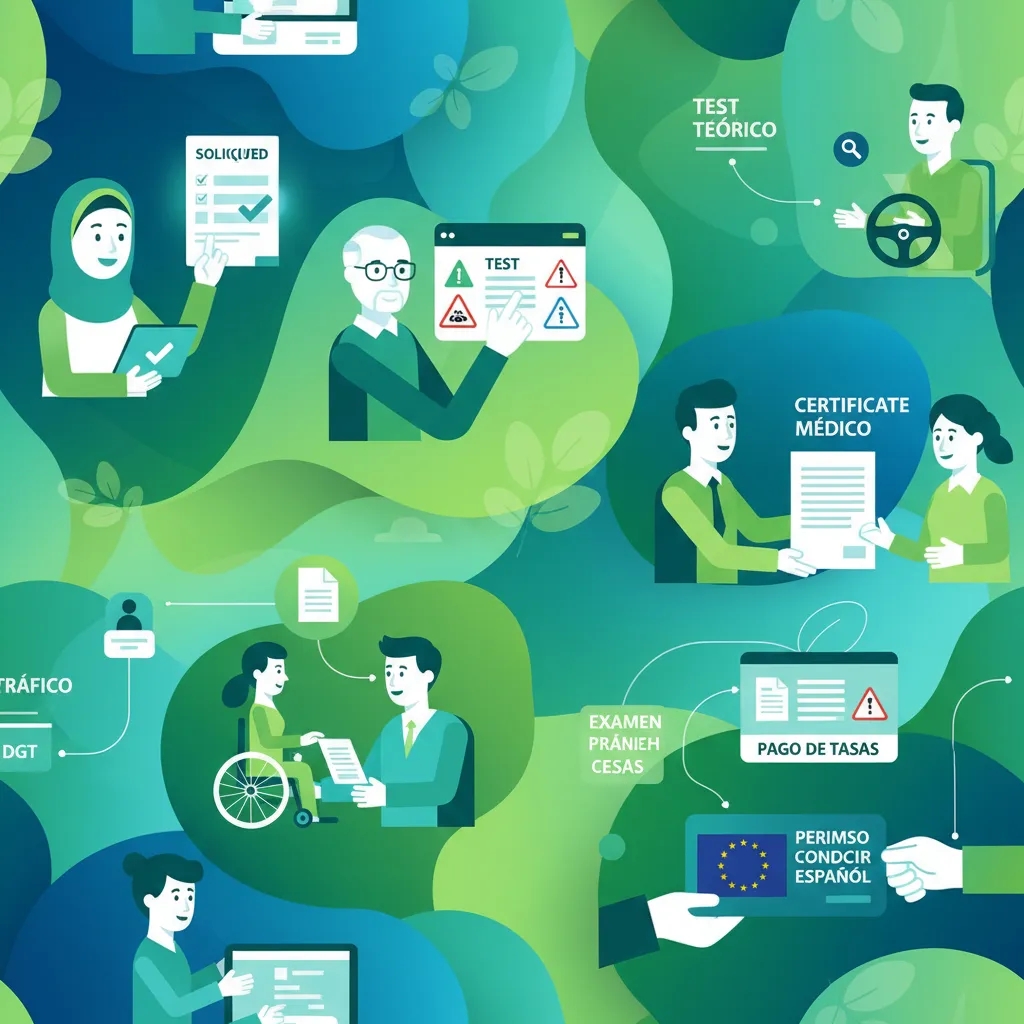
Lesson content overview
Obtaining a professional truck driving licence in Spain, specifically the Category C or C1 licence, involves a series of mandatory steps designed to ensure drivers meet stringent health, psychological, and skill standards. This comprehensive guide outlines the entire administrative and practical journey, from initial eligibility checks to the final issuance of your licence. Understanding each stage is crucial for a smooth application process, preventing delays, and preparing you for the significant responsibilities of operating heavy vehicles.
The licensing process for professional truck drivers in Spain is more than a mere formality; it is a critical legal and safety framework. Its primary objective is to verify that every driver possesses the necessary qualifications—including physical health, mental aptitude, and professional training—to operate large trucks safely on public roads. This rigorous system is vital for mitigating risks associated with heavy vehicle operation, ensuring a standardised assessment across the nation, and providing documentary verification that prevents fraud and ensures traceability.
This lesson serves as an essential foundation for subsequent modules, directly linking to topics such as professional conduct, managing working hours, and fostering a strong safety culture. By successfully navigating the licensing process, you demonstrate your commitment to these professional responsibilities.
The Dirección General de Tráfico (DGT) is the central authority in Spain responsible for all matters related to driving licences, traffic regulations, and road safety. For professional licences like Category C and C1, the DGT sets the rules, accredits examination centres, and ultimately issues the licence. This framework ensures that all candidates are assessed uniformly and meet national and European standards for professional driving. Familiarity with the DGT's role and its regulatory structure is fundamental to understanding the Spanish truck licence process.
Before embarking on the detailed licensing process, every applicant must meet fundamental eligibility requirements. These criteria establish the minimum legal standing for anyone wishing to become a professional truck driver in Spain, ensuring only qualified individuals can proceed.
Age is a crucial factor in determining eligibility for professional driving licences in Spain. For a Category C1 licence, which permits driving vehicles between 3,500 kg and 7,500 kg, the minimum age requirement is 18 years. However, for the full Category C licence, allowing operation of vehicles over 3,500 kg without an upper weight limit (excluding trailers over 750 kg), applicants must be at least 21 years old. It is important to note that these age requirements must be met before you can register for exams or apply for the licence.
Ensure you meet the specific age requirement for the exact category of professional truck licence you intend to obtain. Applying for a Category C licence before age 21 will lead to an automatic rejection by the DGT.
Proof of residency is another non-negotiable requirement. Candidates must provide evidence of legal residency in Spain, typically through an Empadronamiento certificate (proof of registration in the municipal census) that is less than three months old. For EU citizens, a valid EU residency document combined with transfer of their previous licence might apply. Furthermore, applicants must have a clear legal status, meaning no judicial bans or driving suspensions that would disqualify them from holding a professional licence. A valid NIE/NIF (foreigner identification number/national identification number) is essential for identity verification throughout the process.
The medical examination, known as Reconocimiento Médico, is a cornerstone of the professional licensing process. This mandatory health check is conducted by an authorised medical centre (Centro de Reconocimiento Médico, CRM) and is designed to detect any medical conditions that could impair safe vehicle operation.
The medical examination is comprehensive, evaluating various aspects of your physical and mental health relevant to driving heavy vehicles. Key components include a detailed vision test (assessing acuity, peripheral vision, and depth perception), a hearing test, and a thorough cardiovascular evaluation. The assessment also covers musculoskeletal function, a neurological check, blood pressure measurement, and diabetes screening. All these tests are crucial to ensure you can react appropriately and safely manage the demands of professional driving.
Upon successful completion of the medical examination, you will receive a Medical Certificate (Certificado Médico). This certificate is valid for a specific period: generally five years for drivers under 65, and ten years for those aged 65 or older. It is absolutely essential to obtain this certificate before proceeding to the psychotechnical tests or enrolling in a driving school. Failure to meet the minimum health standards, such as insufficient visual acuity even with corrective lenses, will prevent the issuance of the certificate and, consequently, the licence.
Do not confuse the official medical examination with a general health check. The medical certificate must be issued by a DGT-authorised Centro de Reconocimiento Médico (CRM).
Following the medical examination, aspiring professional drivers must undergo a Psychotechnical Test (Test Psicotécnico). This assessment focuses on your cognitive and psychological fitness, measuring key mental aptitudes crucial for managing heavy vehicles.
The psychotechnical test is a cognitive assessment administered at an authorised centre, often accredited by ANPER (Asociación Nacional de Centros de Psicotécnicos para Conductores). It comprises several modules designed to evaluate critical skills: reaction time, attention span, visual perception, and reasoning abilities. These tests are typically computer-based and measure how quickly and accurately you can process information and make decisions under simulated conditions. For example, you might be required to react to visual stimuli or maintain focus on multiple tasks simultaneously.
To successfully pass the psychotechnical test, candidates must achieve a minimum score, typically 70 points out of a possible 100. This threshold ensures that drivers possess the necessary mental aptitude and reaction speed to safely operate large trucks. If you fail to meet the minimum score on your first attempt, you will be required to retake the test. Repeated failures may necessitate a more in-depth medical re-evaluation to identify any underlying issues. The Certificate of Psychotechnical Aptitude is a mandatory document for your licence application.
Beyond health and psychological evaluations, comprehensive professional training is a fundamental requirement for obtaining a Category C or C1 licence in Spain. This training ensures that candidates acquire the theoretical knowledge and practical skills necessary for safe heavy vehicle operation.
Professional training involves completing mandatory theoretical courses and, often, practical driving lessons that adhere to the DGT-approved curriculum for Category C/C1. These courses cover a wide range of topics, including vehicle mechanics, load management, traffic regulations specific to heavy vehicles, and emergency procedures. Practical training focuses on manoeuvring large trucks, advanced braking systems, and defensive driving techniques. It is crucial that this training is undertaken at a DGT-accredited driving school or training centre, as only certifications from these institutions are recognised.
For applicants planning to operate vehicles equipped with air-brake systems, specific training modules are required to obtain an "Air-Brake Endorsement." Without this, your licence may be limited to non-air-brake vehicles.
Upon completion of the theoretical course, candidates must pass a final exam. A minimum score, typically 75%, is required to validate the training. Successful completion results in a Training Certificate (Certificado de Formación). This certificate must be presented when submitting your licence application and usually has a validity period, often two years, after which a refresher course might be needed if the licence is not obtained within that timeframe. This ensures that your theoretical knowledge is current at the time of application.
Once you have completed the medical examination, psychotechnical test, and professional training, the next critical step is to gather all the required documentation. A complete and accurate dossier is paramount for a successful licence application with the DGT. Missing or incorrect documents are a primary cause of application rejection or significant delays.
You will need official proof of your identity, typically your DNI (Documento Nacional de Identidad) for Spanish nationals or your NIE (Número de Identificación de Extranjero) for foreign residents. Alongside identity, current proof of residence is mandatory. This is usually provided by an Empadronamiento certificate that is no older than three months from its issuance date. These documents verify your identity and legal residency status in Spain, which are prerequisites for holding a DGT-issued licence.
The core of your application dossier will be the various certificates obtained during the preceding steps:
In addition to these, you must complete the official DGT application form, known as "Solicitud de Licencia." Ensure all sections are filled out accurately and legibly.
Two recent, colour passport-sized photographs are required for your application. These photos will be used for your licence card. Furthermore, you must provide proof of payment of the official licence fee. This payment can typically be made via bank transfer or directly at a DGT office. It is crucial to attach the payment receipt to your application dossier to avoid it being placed on hold.
Valid Identity Proof (DNI/NIE)
Current Residence Proof (Empadronamiento, less than 3 months old)
Official Medical Certificate
Official Psychotechnical Certificate
Professional Training Certificate (DGT-approved, score ≥75%)
Two recent passport-sized colour photographs
Completed DGT "Solicitud de Licencia" application form
Proof of Payment for the licence fee
With all documents prepared, the next phase is the formal submission of your complete application dossier to the DGT. This critical step initiates the official review process.
You can submit your application either in person at a designated DGT Traffic Office (Jefatura de Tráfico) or, increasingly, through their online platform if available and applicable for your specific situation. When submitting in person, reception staff will perform an initial check to ensure all documents are present. It is advisable to have original documents and photocopies ready, as some may need to be verified against the originals. Digital submissions typically involve uploading scanned copies of all required documents.
Once submitted, your information is entered into the DGT system. The system then undergoes an automated validation process to check for consistency, eligibility, and authenticity of all provided data. If everything is in order, the application progresses towards licence issuance. However, if any non-compliance or discrepancy is identified, the DGT will issue a request for clarification or correction, which can extend the processing time significantly. The average turnaround time can vary, but typically ranges around 30 days, although complex cases might take longer, up to 60 days.
The final stage of the licensing process is the issuance and delivery of your professional truck driving licence. This marks the culmination of your efforts and legally authorises you to operate Category C or C1 vehicles.
Upon approval of your application, the DGT will usually issue a Temporary Licence (T-licencia). This provisional document allows you to legally operate Category C or C1 vehicles while you await the physical permanent licence card. The T-licencia is typically valid for up to 30 days. The permanent licence card, which includes your photograph, personal details, licence number, authorised categories, and validity dates, is then mailed to your registered address and usually arrives within 15 to 30 days after approval.
Your Category C or C1 professional driving licence is generally valid for 10 years for drivers under 65 years of age. For drivers aged 65 and over, the validity period is typically reduced to 5 years, aligning with the increased frequency of medical evaluations required for older drivers. To renew your licence, you must undergo another mandatory medical examination at an authorised CRM. This ensures that professional drivers maintain the necessary health standards throughout their careers. Failure to undergo the required medical check will prevent renewal and can lead to licence suspension.
Navigating the licensing process can present challenges, and being aware of common pitfalls can save significant time and effort. Compliance with every DGT rule is critical.
One of the most frequent causes of delays or application rejection is submitting incomplete or outdated documentation. For example, an expired medical certificate, an Empadronamiento older than three months, or a training certificate from a non-accredited institution will invalidate your application. It is paramount to meticulously cross-check every document against the DGT's requirements before submission. Providing forged documents is a severe criminal offense, leading to legal penalties and a permanent driving ban.
Always double-check the expiry dates of all your certificates and official documents. An out-of-date document can halt your application process entirely.
Your professional licence may come with specific limitations or require additional endorsements depending on the types of vehicles you intend to drive. For instance, if you plan to tow a trailer exceeding 750 kg, you will need to obtain the C+E endorsement, which involves additional practical examinations not covered by the basic Category C licence. Similarly, if your training did not include the "Air-Brake Endorsement" module, your licence might be restricted to vehicles without air-brake systems. Always ensure your licence covers the specific operational requirements of your professional driving role.
Obtaining your professional truck driving licence in Spain, whether Category C1 or C, is a structured journey that prioritises road safety and driver competency. From meeting initial eligibility requirements and passing rigorous medical and psychotechnical tests to completing DGT-accredited training and meticulously assembling your documentation, each step is designed to prepare you for the demands of the profession. By understanding and diligently following these procedures, you ensure a smooth application and embark on your career as a qualified, responsible, and legally compliant professional driver in Spain.
Obtaining a Category C or C1 professional truck driving licence in Spain involves meeting specific eligibility criteria, completing mandatory medical and psychotechnical examinations at authorised centres, and finishing DGT-accredited training with a minimum 75% score. The documentation process requires precise assembly of identity proof, current residence certificates, and all official certificates including the Medical Certificate and Psychotechnical Certificate. After submitting a complete dossier to the DGT, applicants receive a Temporary Licence valid for up to 30 days while the permanent licence card is processed, with standard processing times of 30-60 days. Understanding these sequential requirements and avoiding common pitfalls such as expired documents or underage applications ensures a smooth licensing journey.
A short set of high-value points that capture the most important learning from this lesson.
Category C1 licence requires a minimum age of 18 years, while Category C licence requires 21 years old before application
The medical examination (Reconocimiento Médico) must be conducted at a DGT-authorised Centro de Reconocimiento Médico (CRM) to be valid
The psychotechnical test evaluates reaction time, attention span, visual perception, and reasoning with a minimum passing score of 70/100
Training certificates from DGT-accredited schools require a minimum passing score of 75% and are typically valid for 2 years
The complete documentation dossier must include identity proof, current Empadronamiento (less than 3 months old), all certificates, passport photos, application form, and fee payment receipt
Explore all units and lessons included in this driving theory course.
Medical certificates are valid for 5 years for drivers under 65 and 10 years for those aged 65 or older
Empadronamiento certificates must be less than 3 months old at the time of application submission
The Temporary Licence (T-licencia) allows legal driving for up to 30 days while awaiting the permanent licence card
Air-brake endorsement requires specific additional training modules if operating vehicles with air-brake systems
Licence validity is 10 years for drivers under 65 and 5 years for drivers aged 65 or older
Submitting an expired or outdated Empadronamiento certificate, which will cause immediate application rejection
Attempting to apply for a Category C licence before reaching the mandatory age of 21 years
Confusing a general health check with the official medical examination—only CRM-issued certificates are accepted
Overlooking the air-brake endorsement requirement when training did not include this specific module
Providing forged or falsified documents, which constitutes a criminal offense resulting in legal penalties and permanent driving ban
Lesson content overview
A short set of high-value points that capture the most important learning from this lesson.
Category C1 licence requires a minimum age of 18 years, while Category C licence requires 21 years old before application
The medical examination (Reconocimiento Médico) must be conducted at a DGT-authorised Centro de Reconocimiento Médico (CRM) to be valid
The psychotechnical test evaluates reaction time, attention span, visual perception, and reasoning with a minimum passing score of 70/100
Training certificates from DGT-accredited schools require a minimum passing score of 75% and are typically valid for 2 years
The complete documentation dossier must include identity proof, current Empadronamiento (less than 3 months old), all certificates, passport photos, application form, and fee payment receipt
Explore all units and lessons included in this driving theory course.
Medical certificates are valid for 5 years for drivers under 65 and 10 years for those aged 65 or older
Empadronamiento certificates must be less than 3 months old at the time of application submission
The Temporary Licence (T-licencia) allows legal driving for up to 30 days while awaiting the permanent licence card
Air-brake endorsement requires specific additional training modules if operating vehicles with air-brake systems
Licence validity is 10 years for drivers under 65 and 5 years for drivers aged 65 or older
Submitting an expired or outdated Empadronamiento certificate, which will cause immediate application rejection
Attempting to apply for a Category C licence before reaching the mandatory age of 21 years
Confusing a general health check with the official medical examination—only CRM-issued certificates are accepted
Overlooking the air-brake endorsement requirement when training did not include this specific module
Providing forged or falsified documents, which constitutes a criminal offense resulting in legal penalties and permanent driving ban
Explore search topics learners often look for when studying Licensing Process and Documentation. These topics reflect common questions about road rules, driving situations, safety guidance, and lesson level theory preparation for learners in Spain.
Browse additional driving theory lessons that cover connected traffic rules, road signs, and common driving situations related to this topic. Improve your understanding of how different rules interact across everyday traffic scenarios.
Understand the comprehensive step-by-step guide for obtaining Category C/C1 truck licences in Spain. This lesson covers all required medical tests, psychotechnical assessments, and essential documentation needed for your DGT application.

This lesson examines the specific documents needed to start the Spanish license acquisition process, including personal identification, proof of residence, and a valid medical certificate (psicotécnico). It outlines the official DGT application form, associated fees, and the sequential steps for successful registration. The content also clarifies the age thresholds for categories B and BE and the conditions for license renewal.
This lesson details the critical documents necessary for the legal operation of a passenger transport vehicle, such as the vehicle registration, driver's license, and insurance policy. It explains the function of the technical inspection certificate (ITV) and the necessity of maintaining accurate driver logbooks and records. Understanding these documentation requirements is essential for passing compliance audits and ensuring lawful operation.
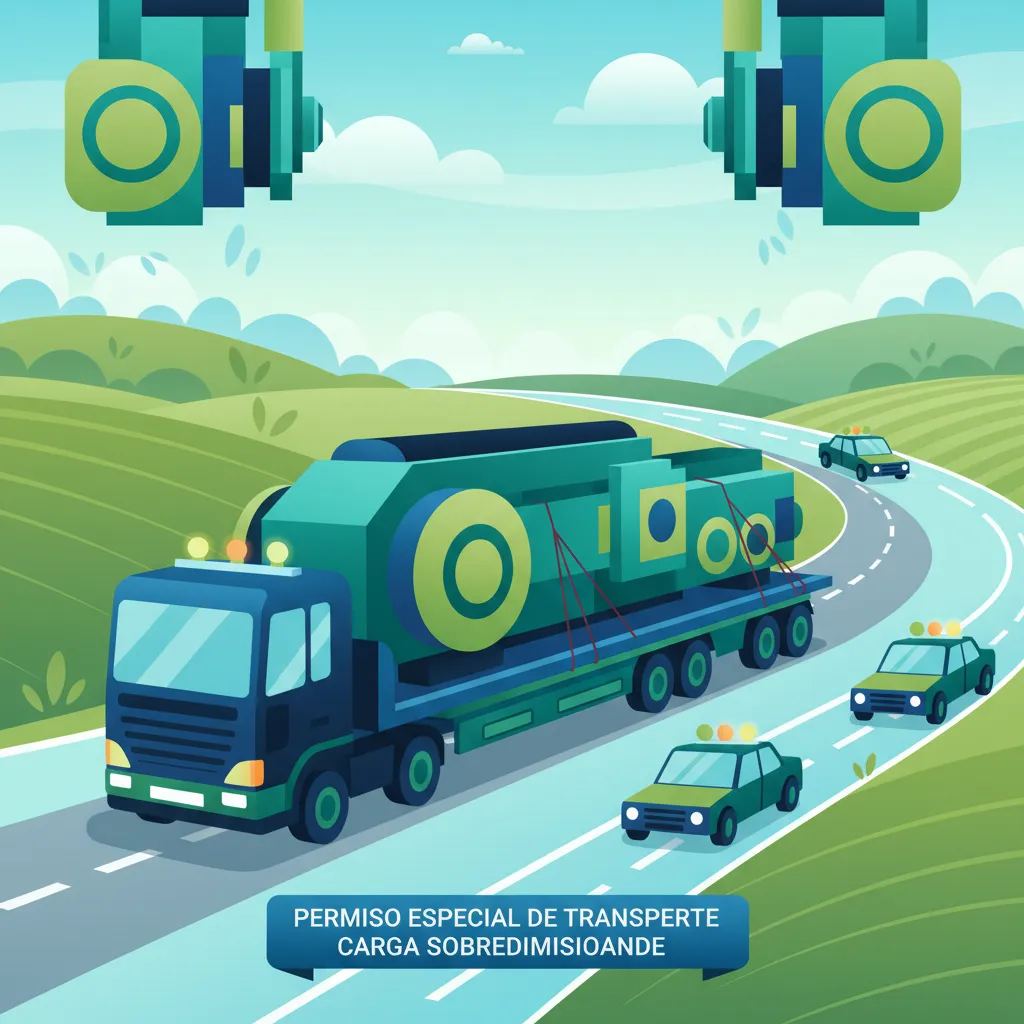
This lesson addresses the special regulations that apply to transporting loads that exceed standard legal dimensions or weight. It explains the process for obtaining the necessary special permits from the DGT and other authorities. The content also covers the requirements for route planning, the use of escort vehicles (pilot cars), and the mandatory signage and lighting for the vehicle.

This lesson provides a detailed breakdown of the D and D1 license categories, defining the vehicle dimensions and passenger capacities for each. It explains the DGT's eligibility requirements, including minimum age, medical certification, and mandatory psychological assessments for professional drivers. Learners will understand the complete procedural path to obtaining a professional bus or coach license in Spain.

This lesson examines the overarching legal framework that governs professional drivers in Spain, focusing on the Reglamento General de Circulación. It details the statutory obligations of a driver, such as maintaining mandatory insurance, ensuring vehicle roadworthiness, and carrying all required documentation. Learners will understand their legal responsibilities and the importance of compliance with DGT regulations to operate lawfully.

In this lesson, the structure and administration of the driving licence examinations are explained, covering both the theory and practical components. It details the format of the multiple-choice theory test, the pass criteria, and the process of registering for examinations through the DGT platform. The content also discusses test locations, scheduling, and the issuance of certification upon successful completion.
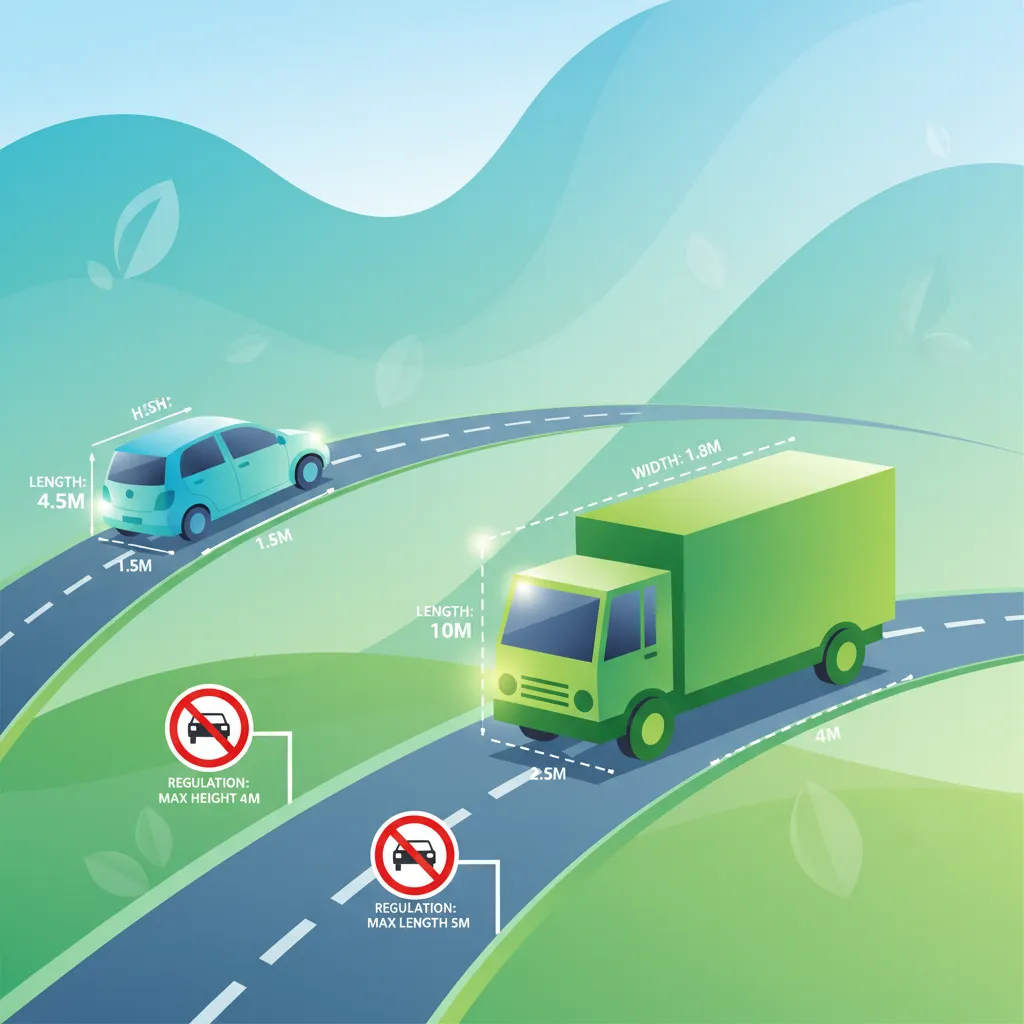
This lesson provides a detailed breakdown of the maximum permissible length, width, and height for heavy vehicles according to Spanish and EU regulations. It explains how these dimensions are measured and how they affect vehicle classification and route planning. The content emphasizes the critical importance of respecting clearance signs for bridges, tunnels, and other overhead structures to prevent accidents.
This lesson provides a broad overview of the key traffic regulations in Spain that directly impact professional truck drivers. It details the rules of priority at intersections, the interpretation of different road markings, and the principles of correct lane discipline. Furthermore, it explains the specific speed limits applicable to heavy vehicles and the legal protocols for safe overtaking and signaling.
Learn about the fundamental legal, age, residency, and health requirements for applying for Category C and C1 truck driving licences in Spain. Essential information for aspiring professional drivers.

This lesson defines the minimum legal ages for driving categories B and BE and explains the importance of medical fitness for safe vehicle operation. It covers the specific health criteria set by the DGT, such as visual acuity, hearing capacity, and other physical capabilities. The content also outlines the distinctions between the two categories, focusing on the legal permissions and requirements for each.
This lesson provides a detailed breakdown of the maximum permissible length, width, and height for heavy vehicles according to Spanish and EU regulations. It explains how these dimensions are measured and how they affect vehicle classification and route planning. The content emphasizes the critical importance of respecting clearance signs for bridges, tunnels, and other overhead structures to prevent accidents.
This lesson provides a detailed breakdown of the D and D1 license categories, defining the vehicle dimensions and passenger capacities for each. It explains the DGT's eligibility requirements, including minimum age, medical certification, and mandatory psychological assessments for professional drivers. Learners will understand the complete procedural path to obtaining a professional bus or coach license in Spain.

This lesson provides a detailed explanation of the legal definitions for Category C and C1 driving licences under Spanish law. It clarifies the maximum authorised mass (MAM) and gross vehicle weight limits that distinguish each category. The content also outlines the prerequisites for applicants, including minimum age, medical fitness, and required training qualifications for professional drivers.
This lesson examines the overarching legal framework that governs professional drivers in Spain, focusing on the Reglamento General de Circulación. It details the statutory obligations of a driver, such as maintaining mandatory insurance, ensuring vehicle roadworthiness, and carrying all required documentation. Learners will understand their legal responsibilities and the importance of compliance with DGT regulations to operate lawfully.
This lesson provides a broad overview of the key traffic regulations in Spain that directly impact professional truck drivers. It details the rules of priority at intersections, the interpretation of different road markings, and the principles of correct lane discipline. Furthermore, it explains the specific speed limits applicable to heavy vehicles and the legal protocols for safe overtaking and signaling.

This lesson details the strict EU and Spanish regulations governing drivers' working hours, driving times, and mandatory rest periods. It explains how to use a tachograph to record activity and ensure compliance with daily and weekly limits. The content also provides practical strategies for managing fatigue to maintain driver alertness and prevent accidents, a critical aspect of professional road safety.
This lesson addresses the special regulations that apply to transporting loads that exceed standard legal dimensions or weight. It explains the process for obtaining the necessary special permits from the DGT and other authorities. The content also covers the requirements for route planning, the use of escort vehicles (pilot cars), and the mandatory signage and lighting for the vehicle.
This lesson focuses on the ethical standards and professional conduct expected from commercial vehicle operators. It emphasizes the driver's role in promoting a positive safety culture and maintaining public trust through responsible behavior on the road. Key concepts include integrity, adherence to a professional code of conduct, and understanding the impact of a driver's actions on their company and the public.
Find clear answers to common questions learners have about Licensing Process and Documentation. Learn how the lesson is structured, which driving theory objectives it supports, and how it fits into the overall learning path of units and curriculum progression in Spain. These explanations help you understand key concepts, lesson flow, and exam focused study goals.
The primary DGT requirements for truck driver licensing in Spain include meeting age criteria, passing a medical examination, a psychotechnical test, and the relevant theoretical and practical driving tests. You must also provide valid identification and complete the official application form.
The medical exam assesses your general physical health, vision, and hearing to ensure you are fit to drive. The psychotechnical test evaluates your cognitive abilities, reflexes, coordination, and spatial awareness, which are crucial for operating heavy vehicles safely.
While not always a prerequisite for the initial application itself, completing specific training courses recognized by the DGT is often mandatory before you can take the theory and practical exams. It's essential to check the exact requirements for your specific licence category and region.
The validity period for medical and psychotechnical test results can vary, but they are typically valid for a limited time, often around three months for the initial application. It's crucial to have these tests done close to your application date to ensure they are current.
Common documentation issues include expired identification, incomplete application forms, incorrect or outdated medical/psychotechnical certificates, and missing proof of address or residency. Ensuring all paperwork is current and accurate is key to a smooth process.
Use our powerful search functionality to pinpoint specific Spanish DGT driving theory practice sets. Filter by road sign categories, traffic law topics, or question difficulty to build custom study sessions and reinforce your knowledge precisely where it matters for your official exam.