
Understanding the nuances of child safety in vehicles is essential for both passing the DGT theory exam and ensuring real-world protection. This guide clarifies the regulations for Child Restraint Systems (SRI), the necessary steps for safely transporting minors, and why best-practice safety often exceeds the minimum legal requirements. You will learn how to handle specific installation scenarios and stay informed on modern active safety features like anti-abandonment technology.
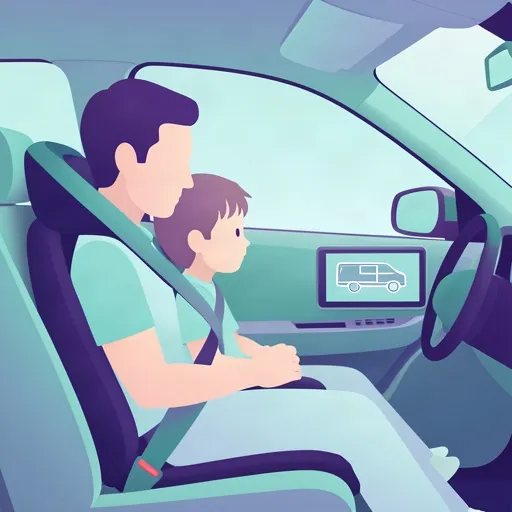
Article content overview
Ensuring the safety of minors while traveling is one of the most critical responsibilities a driver can undertake. In Spain, the regulations regarding Child Restraint Systems (SRI) are not merely suggestions; they are strictly enforced legal requirements designed to minimize injury in the event of a collision. While the DGT mandates the use of these systems until a child reaches 135 centimeters in height, safety experts and the DGT itself strongly encourage extending this protection until the child reaches 150 centimeters.
Understanding these rules is essential not only for passing the theory exam but for practicing responsible driving. Moving beyond the minimum legal requirements helps parents ensure that seatbelts function correctly for the child's height, as standard adult belts are designed for individuals over 150 cm. Failing to provide the correct restraint for a child is considered a serious traffic offense in Spain, punishable by both monetary fines and the loss of points from the driver's license.
Under Spanish traffic law, all children measuring 135 cm or less must be secured in an approved Child Restraint System (SRI) adapted to their height and weight. These systems must be homologated according to current European standards, such as the ECE R129 (i-Size) or the older ECE R44/04. When purchasing or using these seats, it is vital to check that they have not been involved in a prior collision, as internal structural damage can compromise their protective capabilities.
Any device designed to improve the safety of children in a vehicle, including car seats, boosters with backrests, and integral harness systems, which must be homologated and used according to the child's size and weight.
In terms of placement, the law is clear: children should always travel in the rear seats of the vehicle. This is because the rear seats are statistically the safest part of a car, offering better protection from frontal impacts. However, the legislation provides specific exceptions where a child may travel in the front seat, provided that they are secured with an appropriate SRI.
If a child must travel in the front seat under one of the three legal exceptions, the driver must exercise extreme caution regarding the vehicle's airbag system. If the SRI is installed in a rear-facing position, the front passenger airbag MUST be deactivated. A deploying airbag strikes a rear-facing seat with immense force, which can cause severe or fatal injuries to the infant.
For forward-facing seats, the procedure differs slightly. While the law does not strictly require deactivation, the standard best practice—and a common focus of the DGT theory exam—is to move the passenger seat as far back as possible from the dashboard. This maximizes the distance between the child and the airbag deployment zone, reducing the risk of impact injuries. Always consult the vehicle manual, as some modern cars have specific requirements for handling these scenarios.
Never install a rear-facing child seat in the front seat if the passenger-side airbag is active. Doing so creates a life-threatening risk in the event of a minor or major collision.
The year 2026 marks a significant evolution in vehicle safety, particularly with the integration of 'Active Safety' features. One of the most important advancements is the introduction of anti-abandonment sensors. These sensors detect the presence of a child in the seat after the engine has been turned off and the driver has exited, triggering an alert to the driver’s smartphone or the vehicle’s alarm system.
These technologies are designed to prevent the tragic consequences of 'forgotten child' syndrome, which can occur during high-stress situations or changes in daily routines. While these systems provide an extra layer of security, they should be viewed as a supplement to, rather than a replacement for, the driver's constant awareness and vigilance.
While the 135 cm threshold is the legal baseline for using an SRI, AESVi and the DGT recommend that children continue to use a booster seat with a backrest until they reach 150 cm. This ensures that the vehicle's diagonal seatbelt is positioned correctly over the child's shoulder rather than crossing their neck, which can be dangerous during a sudden stop or collision.
Finally, remember that the center rear seat is often the most protected position, provided that the vehicle is equipped with a three-point seatbelt or an ISOFIX anchor at that location. If an ISOFIX system is used, always verify the third point of attachment, such as a Top Tether strap or a support leg, to prevent the seat from rotating during an impact.
Spanish traffic law requires all children under 135cm to use an approved, homologated Child Restraint System (SRI) adapted to their height and weight, with rear-seat travel being the default and safest option. The law provides three specific exceptions permitting front-seat travel, but when a rear-facing SRI is used up front, the passenger airbag must always be deactivated. Safety organizations recommend extending SRI use beyond the legal minimum until the child reaches 150cm, as standard seatbelts are designed for taller individuals. Modern vehicles increasingly include active safety features like anti-abandonment sensors, which serve as an additional safeguard but do not replace proper SRI use and careful supervision.
A short set of high-value points that capture the most important ideas from this article.
The 135cm height limit is a legal minimum, not an ideal safety threshold—safety experts recommend using SRI until 150cm.
All child restraint systems must be homologated under current European standards such as ECE R129 (i-Size) or ECE R44/04.
Children should always travel in rear seats; front seat travel is permitted only under three specific statutory exceptions.
A rear-facing SRI in the front seat requires the passenger airbag to be deactivated—failure to do so is life-threatening.
Anti-abandonment sensors and active safety features supplement but do not replace driver vigilance.
Three legal exceptions allow front-seat travel: no rear seats, all rear seats occupied by other children under 135cm, or technically impossible to install SRI rearward.
Rear-facing seat + active passenger airbag = mandatory deactivation before travel.
Standard adult seatbelts are designed for individuals over 150cm—belt positioning matters for child safety.
ISOFIX installations require a third point of attachment (Top Tether or support leg) to prevent seat rotation.
The center rear seat is often the safest position if equipped with a three-point belt or ISOFIX anchor.
Assuming the 135cm limit means it is safe to stop using an SRI—the DGT recommends continuing until 150cm.
Installing a rear-facing child seat in the front without deactivating the passenger airbag, creating a fatal impact risk.
Believing front-seat travel for children is always prohibited, when three specific exceptions exist.
Using a booster seat without a backrest, causing the diagonal seatbelt to cross the child's neck instead of the shoulder.
Failing to verify all three ISOFIX attachment points, which can allow the seat to rotate during a collision.
Article content overview
A short set of high-value points that capture the most important ideas from this article.
The 135cm height limit is a legal minimum, not an ideal safety threshold—safety experts recommend using SRI until 150cm.
All child restraint systems must be homologated under current European standards such as ECE R129 (i-Size) or ECE R44/04.
Children should always travel in rear seats; front seat travel is permitted only under three specific statutory exceptions.
A rear-facing SRI in the front seat requires the passenger airbag to be deactivated—failure to do so is life-threatening.
Anti-abandonment sensors and active safety features supplement but do not replace driver vigilance.
Three legal exceptions allow front-seat travel: no rear seats, all rear seats occupied by other children under 135cm, or technically impossible to install SRI rearward.
Rear-facing seat + active passenger airbag = mandatory deactivation before travel.
Standard adult seatbelts are designed for individuals over 150cm—belt positioning matters for child safety.
ISOFIX installations require a third point of attachment (Top Tether or support leg) to prevent seat rotation.
The center rear seat is often the safest position if equipped with a three-point belt or ISOFIX anchor.
Assuming the 135cm limit means it is safe to stop using an SRI—the DGT recommends continuing until 150cm.
Installing a rear-facing child seat in the front without deactivating the passenger airbag, creating a fatal impact risk.
Believing front-seat travel for children is always prohibited, when three specific exceptions exist.
Using a booster seat without a backrest, causing the diagonal seatbelt to cross the child's neck instead of the shoulder.
Failing to verify all three ISOFIX attachment points, which can allow the seat to rotate during a collision.
Explore related topics, search based questions, and concepts that learners often look up when studying Child Safety and SRI Rules. These themes reflect real search intent and help you understand how this topic connects to wider driving theory knowledge in Spain.
Find clear and practical answers to common questions learners often have about Child Safety and SRI Rules. This section helps explain difficult points, remove confusion, and reinforce the key driving theory concepts that matter for learners in Spain.
The mandatory height limit for using an SRI is 135 cm, although experts and the DGT recommend continuing use until the child reaches 150 cm for optimal safety.
Children may occupy the front seat only if the vehicle has no rear seats, if all rear seats are already occupied by other children in SRIs, or if it is impossible to install an SRI in the rear seats.
You must ensure the front passenger airbag is deactivated. If the seat is forward-facing, the passenger seat should be moved as far back as possible.
It is an active safety feature found in many modern vehicles that detects if a child is still in the seat after the engine is turned off, sending an alert to the driver to prevent accidental abandonment.
Now that you have found specific articles, continue to deepen your understanding by exploring related DGT regulations or other driving theory topics. Strengthen your knowledge of road signs, traffic scenarios, and essential Spanish driving procedures to prepare for your official driving license exam.