
As vehicle technology advances, drivers must balance new innovations like anti-abandonment smartphone alerts with established safety rules regarding child restraint systems. This guide explains how to properly configure your vehicle for young passengers, covering essential protocols such as airbag deactivation and the correct use of SRI until the required height is met. Mastery of these rules is vital for ensuring passenger safety and correctly answering safety-related questions on your Spanish driving theory exam.
Article content overview
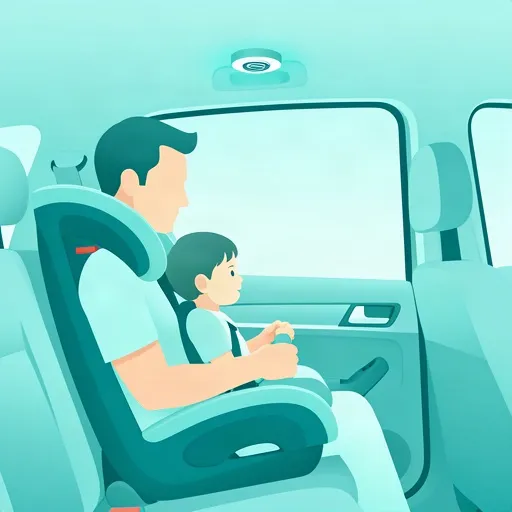
Ensuring the safety of our youngest passengers is one of the most critical responsibilities a driver faces on the road. In Spain, the Dirección General de Tráfico (DGT) maintains rigorous standards for Child Restraint Systems (SRI), emphasizing that protection goes far beyond simply buckling a seatbelt. As we approach 2026, vehicle technology has evolved to include sophisticated anti-abandonment systems, adding a digital layer of security to the established legal requirements. For those preparing for the driving theory exam, mastering these regulations is not only essential for passing your test but for ensuring the highest level of safety during every journey.
The Spanish General Traffic Regulations dictate that any minor whose height is equal to or less than 135 cm must use an approved Child Restraint System (SRI) adapted to their height and weight. While the law sets 135 cm as the minimum threshold to stop using an SRI, both the DGT and safety organizations like AESVi strongly recommend continuing the use of a booster seat until the child reaches 150 cm in height. This ensures that the vehicle's seatbelt is correctly positioned across the child's chest and hips, rather than their neck or abdomen.
Any device designed to improve the safety of children in the event of a collision, which must be homologated and adapted to the physical characteristics of the minor.
Generally, children must always travel in the rear seats of the vehicle. However, the law provides three specific exceptions where a child may occupy the front passenger seat using an approved SRI: if the vehicle lacks rear seats, if all rear seats are already occupied by other children in SRI, or if it is technically impossible to install an SRI in the rear seats.
If you are permitted to place an SRI in the front seat, you must deactivate the passenger airbag if the system is rear-facing. An active airbag in a collision can launch a rear-facing seat backward with lethal force.
Safety in 2026 is defined by both the physical structure of car seats and the integration of active digital monitors. New anti-abandonment systems have been designed to combat the tragedy of children being accidentally left in vehicles. These systems utilize weight sensors in the seat or presence detectors integrated into the car's electronics, which send an immediate alert to the driver’s smartphone if the engine is turned off while a child is still detected in the seat.
This technology represents a shift in how we interpret "passive" safety; it is no longer just about the energy absorption of a car seat, but about preventing human error through smart connectivity. When you are on the road, your primary focus remains the correct physical installation of the SRI—ensuring the ISOFIX anchors are clicked, the top tether is taut, or the support leg is properly adjusted—but leveraging these new electronic safety features provides a critical backup for distracted drivers.
| Factor | Rule / Best Practice |
|---|---|
| Minimum Height for SRI | Mandatory up to 135 cm; recommended up to 150 cm. |
| Standard Position | Rear seats are mandatory, with three specific legal exceptions for front seating. |
| Airbag Status | MUST be deactivated if the child seat is rear-facing in the front. |
| Installation | ISOFIX or seatbelt based on manufacturer instructions. |
| Safety Tech | Anti-abandonment sensors recommended to prevent accidental entrapment. |
Spanish traffic law requires all children under 135 cm to travel in an approved Child Restraint System (SRI) matched to their physical measurements, with rear seats being mandatory except under three specific conditions. When using a rear-facing SRI in the front seat, the passenger airbag must always be deactivated to prevent serious injury during deployment. The ISOFIX system or vehicle seatbelt must be used according to the SRI manufacturer's instructions, ensuring the top tether is taut and any support leg is properly placed. Anti-abandonment sensors represent modern passive safety technology that alerts drivers digitally but do not substitute for correct physical installation and positioning of the restraint system.
A short set of high-value points that capture the most important ideas from this article.
Children under 135 cm must use an approved, size-appropriate SRI; safety organizations recommend continuing until 150 cm.
Rear seats are the default position for children; front seat use is permitted only when rear seats are absent, occupied by other children in SRI, or technically impossible to install.
The passenger airbag must be deactivated whenever a rear-facing SRI is placed in the front seat to prevent lethal force in a collision.
Anti-abandonment sensors are a valuable backup feature but do not replace the driver's responsibility for correct physical SRI installation.
ISOFIX anchoring or seatbelt installation must follow the SRI manufacturer's specific instructions for proper restraint.
SRI (Sistema de Retención Infantil) is mandatory for minors up to 135 cm, with 150 cm as the recommended continuation threshold.
Three specific legal exceptions allow front-seat SRI use: no rear seats, all rear seats occupied by other children in SRI, or impossible rear installation.
Rear-facing SRI in the front seat requires complete airbag deactivation before driving.
ISOFIX provides standardized anchoring; the top tether prevents forward rotation and the support leg adds stability.
Anti-abandonment technology uses weight sensors or presence detectors to alert drivers via smartphone if a child remains in the seat after engine shutdown.
Assuming SRI use can stop at exactly 135 cm without considering that the seatbelt may not fit correctly until 150 cm.
Installing a rear-facing SRI in the front passenger seat without deactivating the airbag.
Believing anti-abandonment sensors eliminate the need for proper physical SRI installation and correct positioning.
Confusing ISOFIX installation requirements or failing to tighten the top tether and support leg properly.
Assuming any child under 135 cm can sit in any available SRI without matching it to the child's height and weight.
Article content overview
A short set of high-value points that capture the most important ideas from this article.
Children under 135 cm must use an approved, size-appropriate SRI; safety organizations recommend continuing until 150 cm.
Rear seats are the default position for children; front seat use is permitted only when rear seats are absent, occupied by other children in SRI, or technically impossible to install.
The passenger airbag must be deactivated whenever a rear-facing SRI is placed in the front seat to prevent lethal force in a collision.
Anti-abandonment sensors are a valuable backup feature but do not replace the driver's responsibility for correct physical SRI installation.
ISOFIX anchoring or seatbelt installation must follow the SRI manufacturer's specific instructions for proper restraint.
SRI (Sistema de Retención Infantil) is mandatory for minors up to 135 cm, with 150 cm as the recommended continuation threshold.
Three specific legal exceptions allow front-seat SRI use: no rear seats, all rear seats occupied by other children in SRI, or impossible rear installation.
Rear-facing SRI in the front seat requires complete airbag deactivation before driving.
ISOFIX provides standardized anchoring; the top tether prevents forward rotation and the support leg adds stability.
Anti-abandonment technology uses weight sensors or presence detectors to alert drivers via smartphone if a child remains in the seat after engine shutdown.
Assuming SRI use can stop at exactly 135 cm without considering that the seatbelt may not fit correctly until 150 cm.
Installing a rear-facing SRI in the front passenger seat without deactivating the airbag.
Believing anti-abandonment sensors eliminate the need for proper physical SRI installation and correct positioning.
Confusing ISOFIX installation requirements or failing to tighten the top tether and support leg properly.
Assuming any child under 135 cm can sit in any available SRI without matching it to the child's height and weight.
Explore related topics, search based questions, and concepts that learners often look up when studying Child Safety and SRI Rules. These themes reflect real search intent and help you understand how this topic connects to wider driving theory knowledge in Spain.
Find clear and practical answers to common questions learners often have about Child Safety and SRI Rules. This section helps explain difficult points, remove confusion, and reinforce the key driving theory concepts that matter for learners in Spain.
According to Spanish traffic regulations, children must use an approved Child Restraint System (SRI) until they exceed a height of 135 centimeters.
Yes, but only in specific cases, such as when the vehicle has no rear seats, all rear seats are occupied by other children, or it is impossible to install an SRI in the rear. If the child is in a rear-facing seat, the front airbag must be deactivated.
These systems use sensors to detect if a child has been left in a seat after the vehicle's engine is turned off, sending an alert to the driver's smartphone to prevent cases of accidental abandonment.
Statistically, the center rear seat is the safest position for a child seat, provided the vehicle's configuration allows for secure installation via ISOFIX or a stable seatbelt setup.
Now that you have found specific articles, continue to deepen your understanding by exploring related DGT regulations or other driving theory topics. Strengthen your knowledge of road signs, traffic scenarios, and essential Spanish driving procedures to prepare for your official driving license exam.