
The introduction of the Sustainable Mobility Law represents a major paradigm shift in Spanish traffic legislation, moving from vehicle-focused infrastructure to a more integrated, citizen-oriented approach. This guide clarifies the legal obligations for drivers and the evolving role of the DGT in managing modern traffic systems. By understanding these concepts, you will be better prepared to answer exam questions regarding environmental compliance and future-ready road safety standards in Spain.
Article content overview
The landscape of Spanish traffic legislation has undergone a significant transformation with the definitive approval of the Sustainable Mobility Law. For students preparing for the DGT theory exam, this shift represents more than just a regulatory update; it signifies a move toward a "people-centric" mobility model. Unlike previous regulations that primarily focused on vehicle flow and infrastructure capacity, this new framework prioritizes the right of all citizens to access essential services safely, equitably, and sustainably.
Understanding this paradigm shift is vital for success in your driving theory test. As the Dirección General de Tráfico (DGT) integrates these standards into the national curriculum, candidates must demonstrate a grasp of how environmental responsibilities and modern urban planning influence daily driving habits.
Under the new law, mobility is legally recognized as an essential collective right. This means that public authorities are now mandated to facilitate access to healthcare, education, and employment through transport systems that are not only efficient but also environmentally conscious. From an exam perspective, this highlights why new infrastructure projects—such as dedicated bus lanes, expanded cycling networks, and improved pedestrian crossings—are being prioritized over the expansion of roads for private vehicle use.
One of the most practical applications of this legislation for drivers is the implementation and management of Low Emission Zones (ZBE). These zones are designed to improve air quality in urban environments. As a driver, you must be aware that access to these areas is increasingly restricted based on the environmental classification of your vehicle, as indicated by the DGT environmental labels.
When you encounter these zones, it is not enough to simply follow the flow of traffic. You are responsible for knowing whether your vehicle meets the local municipal requirements for entry. The DGT theory exam may include questions about identifying these signs and understanding the consequences of driving an unauthorized vehicle within these restricted perimeters.
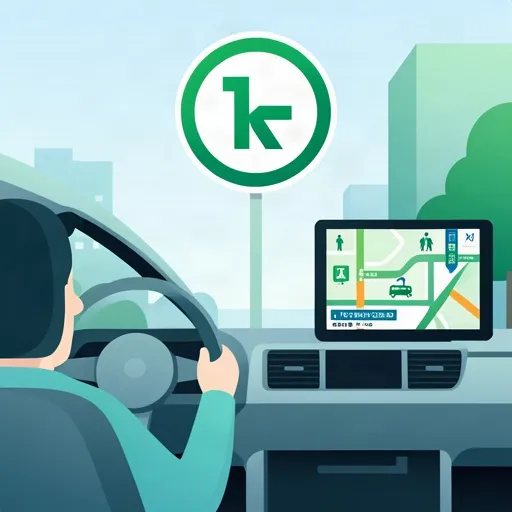
Modern driving in Spain is becoming increasingly connected. The DGT 3.0 platform is a key component of the new mobility framework, utilizing 5G technology and the Internet of Things (IoT) to transmit real-time traffic information to connected vehicles. This system provides drivers with immediate updates regarding traffic flow, road works, and incidents, contributing to a more efficient and safer road environment.
The goal of this connectivity is to reduce accident rates and environmental impact. By providing drivers with precise information before they reach a bottleneck or a hazardous area, the system encourages smoother driving patterns and reduces unnecessary emissions caused by congestion.
The legislation introduces new requirements for labor mobility. Companies with over 200 employees, as well as large employment centers, are now obligated to implement sustainable mobility plans. For the learner driver, this translates to a future where more workplaces will incentivize carpooling, the use of public transport, and teleworking. Recognizing these changes helps you understand the broader context of traffic volume on the roads during peak hours and the evolution of urban transit policies.
The DGT theory exam frequently tests your understanding of evolving road safety standards. You should expect questions that relate to environmental awareness, such as the correct way to drive in a ZBE, the significance of the environmental classification labels, and how to interact safely with vulnerable road users in modern, inclusive urban designs.
As you study, consider how these changes influence your driving behavior. Whether it is reducing speed to comply with lower limits in city centers or planning your route to avoid restricted emission zones, the modern Spanish driver must be as knowledgeable about administrative compliance as they are about technical vehicle handling.
Spain's new Sustainable Mobility Law fundamentally restructures road legislation around people-centric principles rather than vehicle convenience. Key practical implications include mandatory Low Emission Zones (ZBE) where access depends on DGT environmental classification, requiring drivers to understand their vehicle's label and local municipal requirements. The DGT 3.0 platform represents technological integration for real-time traffic connectivity, while larger employers must now implement sustainable mobility plans affecting urban traffic patterns. For DGT theory exam preparation, candidates must demonstrate understanding of environmental compliance, ZBE sign recognition, and the intersection of road safety with public health and equity objectives.
A short set of high-value points that capture the most important ideas from this article.
Spain's Sustainable Mobility Law represents a fundamental shift from vehicle-focused to people-centric mobility, prioritizing citizen access to essential services over private vehicle convenience.
Low Emission Zones (ZBE) restrict vehicle access based on DGT environmental classification labels, and drivers must verify their vehicle's compliance before entering these areas.
The DGT 3.0 platform uses 5G and IoT technology to provide real-time traffic information to connected vehicles, improving safety and reducing congestion-related emissions.
Companies with over 200 employees must implement sustainable mobility plans, influencing future commuting patterns and urban traffic volume.
Modern Spanish drivers must understand both technical vehicle handling and administrative compliance including environmental regulations.
Mobility is legally recognized as an essential collective right under the new law, not merely a personal convenience.
The R-120 sign marks the beginning of a Low Emission Zone where access depends on your vehicle's DGT environmental label.
DGT environmental labels classify vehicles by emission levels and determine access rights to restricted urban areas.
DGT 3.0 connectivity aims to reduce accidents and environmental impact by enabling smoother driving patterns through advance hazard information.
Sustainable mobility balances energy efficiency, environmental protection, and social equity with the needs of motorized traffic.
Assuming traditional road safety knowledge alone is sufficient without understanding new environmental compliance requirements.
Confusing Low Emission Zone signs with regular traffic restrictions that apply uniformly to all vehicles.
Failing to check vehicle environmental classification before driving into urban areas with ZBE restrictions.
Overlooking the exam relevance of new concepts like multimodal transport, active mobility, and PMUS (Sustainable Urban Mobility Plans).
Believing that speed and collision avoidance are the only priorities, ignoring obligations related to air quality and public health regulations.
Article content overview
A short set of high-value points that capture the most important ideas from this article.
Spain's Sustainable Mobility Law represents a fundamental shift from vehicle-focused to people-centric mobility, prioritizing citizen access to essential services over private vehicle convenience.
Low Emission Zones (ZBE) restrict vehicle access based on DGT environmental classification labels, and drivers must verify their vehicle's compliance before entering these areas.
The DGT 3.0 platform uses 5G and IoT technology to provide real-time traffic information to connected vehicles, improving safety and reducing congestion-related emissions.
Companies with over 200 employees must implement sustainable mobility plans, influencing future commuting patterns and urban traffic volume.
Modern Spanish drivers must understand both technical vehicle handling and administrative compliance including environmental regulations.
Mobility is legally recognized as an essential collective right under the new law, not merely a personal convenience.
The R-120 sign marks the beginning of a Low Emission Zone where access depends on your vehicle's DGT environmental label.
DGT environmental labels classify vehicles by emission levels and determine access rights to restricted urban areas.
DGT 3.0 connectivity aims to reduce accidents and environmental impact by enabling smoother driving patterns through advance hazard information.
Sustainable mobility balances energy efficiency, environmental protection, and social equity with the needs of motorized traffic.
Assuming traditional road safety knowledge alone is sufficient without understanding new environmental compliance requirements.
Confusing Low Emission Zone signs with regular traffic restrictions that apply uniformly to all vehicles.
Failing to check vehicle environmental classification before driving into urban areas with ZBE restrictions.
Overlooking the exam relevance of new concepts like multimodal transport, active mobility, and PMUS (Sustainable Urban Mobility Plans).
Believing that speed and collision avoidance are the only priorities, ignoring obligations related to air quality and public health regulations.
Explore related topics, search based questions, and concepts that learners often look up when studying Spain Sustainable Mobility Law Explained. These themes reflect real search intent and help you understand how this topic connects to wider driving theory knowledge in Spain.
Find clear and practical answers to common questions learners often have about Spain Sustainable Mobility Law Explained. This section helps explain difficult points, remove confusion, and reinforce the key driving theory concepts that matter for learners in Spain.
The law shifts the focus from vehicle-centric transport to people-centric mobility, recognizing mobility as a collective and essential right that must be safe, affordable, and environmentally friendly.
The law integrates the management of Low Emission Zones (ZBE) into a broader framework, ensuring that local authorities use standardized data to manage traffic based on vehicle environmental classifications and local air quality needs.
Yes, as the law updates the legislative framework for road safety and environmental standards in Spain, it is relevant for understanding current DGT traffic rules and future-oriented driving requirements.
The DGT manages the integration of mobility data through platforms like DGT 3.0 and oversees the testing of automated vehicles, ensuring that new technology aligns with safety and environmental regulations.
Now that you have found specific articles, continue to deepen your understanding by exploring related DGT regulations or other driving theory topics. Strengthen your knowledge of road signs, traffic scenarios, and essential Spanish driving procedures to prepare for your official driving license exam.