
Welcome to the DGT Regulations for Public Transport lesson. This module delves into the critical DGT rules governing bus and coach operations in Spain, building upon your understanding of general licensing and responsibilities. Mastering these regulations is vital for ensuring compliance, operational efficiency, and passenger safety as part of your Category D or D1 license preparation.

Lesson content overview
Operating public transport vehicles, such as buses and coaches, in Spain requires a thorough understanding and strict adherence to the regulations set forth by the Dirección General de Tráfico (DGT). These regulations are designed to ensure the safety of passengers, other road users, and the environment, while also guaranteeing reliable and high-quality service. For anyone pursuing a professional bus and coach driving license (Category D & D1), mastering these rules is not merely an academic exercise but a foundational requirement for a safe and legal career.
The legal framework governing public transport services establishes how these operations must be organized, executed, inspected, and maintained. This comprehensive oversight aims to mitigate the inherent risks associated with large passenger vehicles and to uphold public confidence in the transport system. Compliance fosters a predictable service for the public, limits environmental impact through emissions standards, and ensures accountability from all operators.
This lesson delves into the fundamental DGT regulations specific to public transport. It covers critical aspects such as the mandatory operational permits and route authorizations, the stringent schedules for vehicle inspections, and the adherence to environmental standards. You will also learn about the importance of following timetables, maintaining service quality, and the necessity of robust documentation for regulatory audits. Proficiency in these areas is indispensable for passing the theoretical exam for professional bus and coach licenses and for ensuring legal, safe, and environmentally responsible operation throughout your career.
The very first step to providing public transport services in Spain involves securing the necessary permits and authorizations. These legal documents are the bedrock of compliant operation, ensuring that only qualified entities and approved routes are utilized for passenger transport.
An Operational Permit is a formal authorization issued by the DGT that grants a company or entity the legal right to provide public passenger transport services. This permit signifies that the operator meets specific financial, technical, and safety criteria, demonstrating their capacity to manage such a service responsibly. Without a valid operational permit, no public transport service can legally operate in Spain.
Operational permits typically fall into subcategories based on the nature of the service. A Basic Permit generally covers the operation of a standard fleet for regular passenger transport. In contrast, a Special Permit is required for services with additional, specific requirements, such as dedicated school transport, international services, or highly specialized tourist routes. Each type of permit carries distinct conditions and obligations.
These permits are not granted indefinitely. They typically require annual renewal, necessitating proof of continued financial solvency and technical capacity from the operating company. This ongoing verification ensures that operators consistently meet the high standards required for public service. The permit must also be clearly displayed on each vehicle in service, making it visible to authorities and passengers alike.
A driver's personal license (Category D or D1) permits them to drive a bus, but it does not authorize the company or individual to offer a public transport service. An independent operational permit for the entity is always mandatory.
Beyond the general operational permit, each specific line or itinerary a bus or coach intends to operate requires a Route Authorization. This is a detailed approval specifying the start and end points, all intermediate stops, and the precise waypoints the vehicle must follow. This authorization prevents unauthorized duplication of services and ensures a structured, coordinated transport network.
Route authorizations are categorized based on their geographical scope:
A bus or coach is legally permitted to serve only the stops indicated in its authorized route. Any deviation, even if seemingly minor or convenient for passengers, requires prior submission and approval from the DGT. Unauthorized deviations can lead to significant fines and penalties, as they compromise the integrity of the planned service and potentially affect other routes or traffic flows.
The safety and environmental impact of public transport vehicles are paramount. The DGT enforces strict regulations concerning vehicle maintenance and emissions to ensure that buses and coaches are roadworthy and minimize their ecological footprint.
The Inspección Técnica de Vehículos (ITV) is a mandatory periodic technical inspection designed to ensure that vehicles meet safety and environmental standards. For public transport vehicles, these inspections are particularly rigorous and frequent.
The frequency of ITV checks for heavy passenger vehicles (buses and coaches) depends on their age:
During these inspections, various components are checked, including brakes, tires, lighting, steering, suspension, and emissions. A valid inspection sticker, prominently displayed on the vehicle, is proof of compliance.
Operating a public transport vehicle with an expired ITV certificate is a serious offense. It immediately prohibits the vehicle from passenger service and can result in substantial fines for the operator and driver. Furthermore, it raises significant safety concerns, as the vehicle's roadworthiness has not been officially verified.
To combat air pollution and align with European environmental policy, Spain enforces stringent emission standards for heavy-duty vehicles. These standards are cascaded through different "Euro" categories, with Euro VI being the most stringent and current standard for new vehicles.
The Euro emission standards (e.g., Euro III, IV, V, VI) define the maximum acceptable limits for pollutant emissions from vehicle engines, including nitrogen oxides (NOx), carbon monoxide (CO), particulate matter (PM), and hydrocarbons (HC). Each successive Euro standard introduces tighter limits, pushing manufacturers to develop cleaner engine technologies. For new heavy-duty diesel buses and coaches, meeting Euro VI standards is mandatory.
Operators of public transport fleets must ensure their vehicles comply with the applicable Euro standards. This often means that older, non-compliant vehicles may need to be retrofitted with emission reduction technologies (such as Selective Catalytic Reduction - SCR) or gradually phased out of service. Non-compliant vehicles cannot be used for public transport, and operators must retain official emission certificates as proof.
Public transport is fundamentally a service industry. Beyond the technical and legal requirements, operators have a crucial responsibility to provide a reliable, comfortable, and consistent experience for passengers. This involves strict adherence to schedules and upholding high service quality standards.
Timetable Adherence refers to the obligation to operate services according to the officially published schedule for each authorized route. This commitment ensures predictability for passengers and facilitates the efficient coordination of the entire transport network.
Drivers must carefully manage boarding times, dwell times at stops, and driving speed to meet the published schedule. While minor fluctuations are often unavoidable due to traffic or unforeseen circumstances, the DGT typically allows only a small Timetable Tolerance, usually ±5 minutes from the published departure or arrival times. Consistent or significant deviations beyond this tolerance can lead to fines or even the loss of route authorization for the operating company. Operators are expected to factor realistic buffers into their schedules to account for common traffic conditions.
In adverse weather conditions or unexpected severe traffic, operators must notify the transport authority of significant delays. While slight timetable adjustments might be permitted in extreme circumstances, the general obligation to adhere to the schedule remains.
Professional bus and coach drivers play a direct role in maintaining timetable adherence. This involves not only managing their driving pace but also efficiently handling passenger boarding and alighting, minimizing unnecessary stops, and being aware of real-time traffic conditions. Effective communication with dispatch, if available, can also help mitigate potential delays.
Service Quality Requirements encompass a range of minimum standards designed to enhance passenger experience and safety. These standards extend beyond mere transportation to cover the overall environment and interaction during a journey.
Key elements of service quality include:
Failure to maintain these quality standards can trigger supervisory inspections by the DGT or delegated authorities. Passenger complaints are taken seriously and can initiate investigations into the operator's compliance. Operators are required to have mechanisms for receiving and addressing passenger feedback and complaints.
To ensure continuous compliance with the extensive regulatory framework, the DGT employs a system of audits, mandates meticulous documentation, and enforces penalties for any breaches.
Regulatory Audits are systematic inspections carried out by the DGT or its delegated bodies to verify an operator's adherence to all applicable regulations. These audits can be scheduled or unannounced and are a critical tool for maintaining high standards in public transport.
The scope of an audit is broad, covering everything from operational permits and vehicle inspection records (ITV) to emissions certificates, timetable adherence records, and service quality reports. Operators must maintain all necessary records and be prepared to present them upon request. Any discrepancies or failures to produce required documentation can result in sanctions.
Operators are typically required to retain relevant documentation for a minimum of five years. This robust record-keeping provides traceability and evidence of compliance over time, which is essential for demonstrating continuous adherence to regulations.
Documentation and Record-Keeping are mandatory components of public transport operations. These logs and certificates provide a comprehensive history of vehicle operation, maintenance, and driver activity.
For professional drivers of Category D vehicles, maintaining accurate Driver Logbooks (tachograph records, whether analog or digital) is crucial. These logs document working hours, driving periods, breaks, and rest periods, ensuring compliance with strict limits on driver hours to prevent fatigue-related accidents. Typically, a driver must not exceed nine hours of driving per day, with mandatory rest periods.
Other key documents include:
Using informal notes instead of official, DGT-approved logbooks for driver hours or maintenance can lead to severe penalties during an audit. The law requires specific formats for these records.
Penalties and Sanctions are the legal repercussions for non-compliance with DGT regulations. These measures are designed to enforce adherence to safety and legal standards and vary in severity based on the nature and gravity of the infraction.
Penalties can be categorized as:
Operators and drivers must understand the potential severity of each infraction. Repeated violations, even minor ones, can accumulate and lead to more severe consequences, including the permanent revocation of operational permits or even driving licenses. Proactive compliance and diligent record-keeping are the best strategies for mitigating these risks.
Driving a public transport vehicle involves constant adaptation to changing conditions. DGT regulations often incorporate conditional logic, allowing for flexibility while maintaining core safety and operational principles.
The extensive DGT regulations are not arbitrary; they are meticulously crafted based on safety research, environmental science, and operational efficiency principles. Understanding the "why" behind these rules reinforces their importance for every professional bus and coach driver.
This lesson highlights the interconnected nature of DGT regulations. For instance, an operational permit is useless without route authorization, and both depend on vehicles passing ITV and meeting emissions standards. Timetable adherence relies on properly maintained vehicles and rested drivers. Ultimately, all these elements converge to ensure safe, reliable, and legally compliant public transport.
Adhering to these regulations is not just about avoiding penalties; it’s about fostering a culture of safety, professionalism, and environmental responsibility. Continuous compliance, coupled with proactive self-assessment and training, leads to improved operational efficiency, higher passenger satisfaction, and a safer public transport system for all.
This lesson covers the essential DGT regulations governing public transport operations in Spain for aspiring Category D and D1 drivers. It explains that operators must secure both an Operational Permit and Route Authorization before providing services, with permits requiring annual renewal and proof of financial solvency. Vehicle compliance is strictly enforced through regular ITV inspections (annually up to 6 years old, then every 6 months) and mandatory Euro VI emissions standards for new vehicles. Service quality requirements include strict timetable adherence within ±5 minutes tolerance, proper documentation including driver logbooks, and maintenance of vehicle cleanliness and accessibility features. The lesson also details the audit and penalty framework, emphasizing that non-compliance can result in administrative fines, permit suspension, or in severe cases, criminal charges.
A short set of high-value points that capture the most important learning from this lesson.
Operating public transport legally requires both an Operational Permit for the company and Route Authorization for each specific itinerary
Heavy passenger vehicles (buses/coaches) must pass ITV inspections annually for vehicles up to 6 years old, and every 6 months for older vehicles
All new heavy-duty buses and coaches must meet Euro VI emissions standards, with older non-compliant vehicles requiring retrofitting or phase-out
Timetable adherence is mandatory with a typical tolerance of only ±5 minutes from published schedules before penalties apply
Professional drivers must maintain accurate logbooks documenting driving hours, breaks, and rest periods to prevent fatigue-related accidents
Explore all units and lessons included in this driving theory course.
Basic Permits cover standard regular passenger transport; Special Permits are required for school transport, international services, or specialized tourist routes
Route deviations from authorized itineraries require prior DGT approval - unauthorized changes can result in significant fines and penalties
Operators must retain all documentation (ITV certificates, emissions reports, maintenance records, incident reports) for a minimum of five years
Maximum Authorized Mass (MAM) limits apply to all public transport vehicles - overloading compromises braking, handling, and safety
Regulatory audits by DGT can be scheduled or unannounced, covering permits, vehicle records, emissions certificates, timetable adherence, and service quality
Confusing a personal Category D or D1 driving license with the company's Operational Permit - they serve different legal purposes
Assuming minor route deviations are acceptable without prior DGT submission and approval
Operating a vehicle with an expired ITV certificate, which immediately prohibits passenger service and results in fines
Using informal notes instead of official DGT-approved logbooks for driver hours or maintenance records
Overloading a bus beyond Maximum Authorized Mass limits, thinking minor excess is inconsequential - it severely compromises safety
Lesson content overview
A short set of high-value points that capture the most important learning from this lesson.
Operating public transport legally requires both an Operational Permit for the company and Route Authorization for each specific itinerary
Heavy passenger vehicles (buses/coaches) must pass ITV inspections annually for vehicles up to 6 years old, and every 6 months for older vehicles
All new heavy-duty buses and coaches must meet Euro VI emissions standards, with older non-compliant vehicles requiring retrofitting or phase-out
Timetable adherence is mandatory with a typical tolerance of only ±5 minutes from published schedules before penalties apply
Professional drivers must maintain accurate logbooks documenting driving hours, breaks, and rest periods to prevent fatigue-related accidents
Explore all units and lessons included in this driving theory course.
Basic Permits cover standard regular passenger transport; Special Permits are required for school transport, international services, or specialized tourist routes
Route deviations from authorized itineraries require prior DGT approval - unauthorized changes can result in significant fines and penalties
Operators must retain all documentation (ITV certificates, emissions reports, maintenance records, incident reports) for a minimum of five years
Maximum Authorized Mass (MAM) limits apply to all public transport vehicles - overloading compromises braking, handling, and safety
Regulatory audits by DGT can be scheduled or unannounced, covering permits, vehicle records, emissions certificates, timetable adherence, and service quality
Confusing a personal Category D or D1 driving license with the company's Operational Permit - they serve different legal purposes
Assuming minor route deviations are acceptable without prior DGT submission and approval
Operating a vehicle with an expired ITV certificate, which immediately prohibits passenger service and results in fines
Using informal notes instead of official DGT-approved logbooks for driver hours or maintenance records
Overloading a bus beyond Maximum Authorized Mass limits, thinking minor excess is inconsequential - it severely compromises safety
Explore search topics learners often look for when studying DGT Regulations for Public Transport. These topics reflect common questions about road rules, driving situations, safety guidance, and lesson level theory preparation for learners in Spain.
Browse additional driving theory lessons that cover connected traffic rules, road signs, and common driving situations related to this topic. Improve your understanding of how different rules interact across everyday traffic scenarios.
Understand essential DGT regulations for public transport operations. Covers permits, route authorizations, mandatory vehicle inspections (ITV), and meeting emissions standards like Euro VI for Category D and D1 licenses.

This lesson provides a detailed breakdown of the D and D1 license categories, defining the vehicle dimensions and passenger capacities for each. It explains the DGT's eligibility requirements, including minimum age, medical certification, and mandatory psychological assessments for professional drivers. Learners will understand the complete procedural path to obtaining a professional bus or coach license in Spain.

This lesson provides a detailed outline of the legal framework that governs driver duty hours in Spain, specifying the maximum continuous driving time and mandatory rest periods defined by the DGT. Learners will understand the limits on cumulative work hours, the necessity of meticulous record-keeping, and methods for monitoring compliance with these regulations. The module also discusses the penalties for violations and reinforces the safety imperative of adherence.
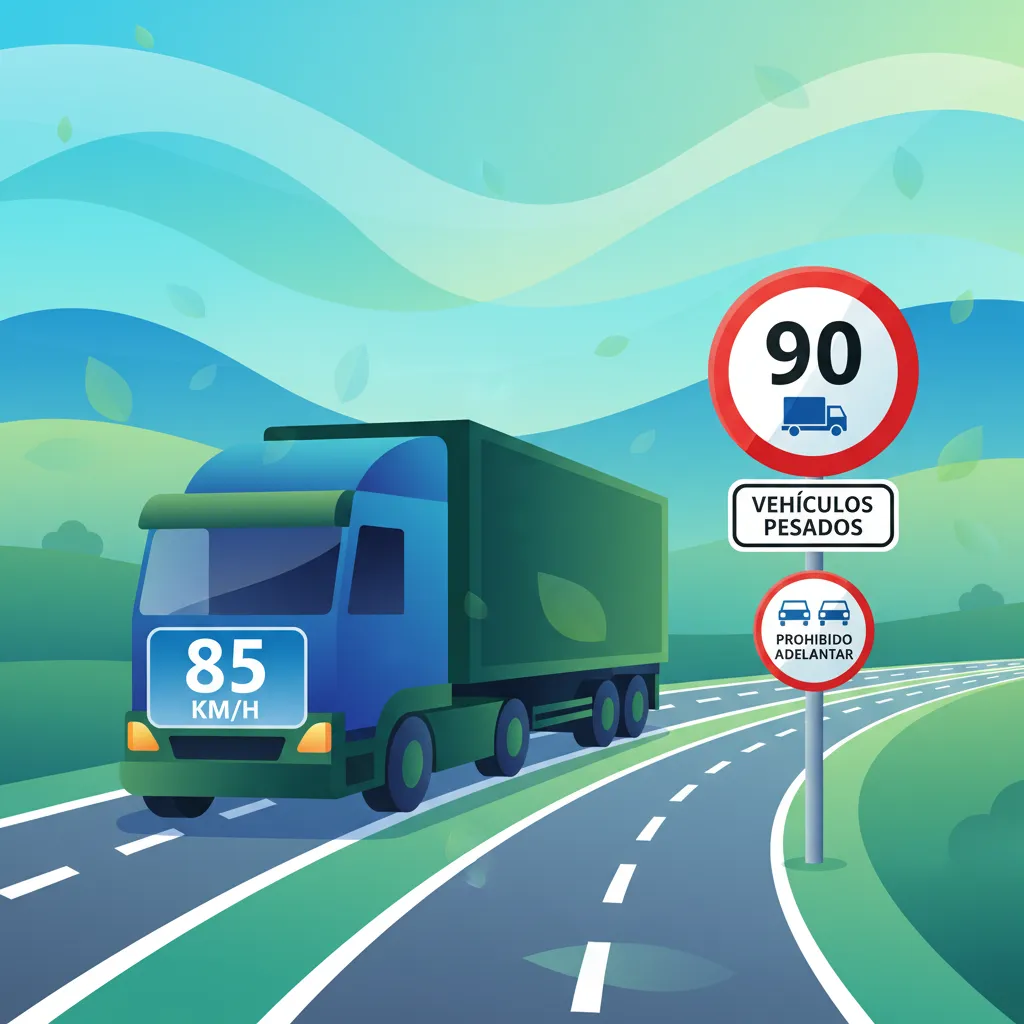
This lesson details the specific legal speed limits that apply to heavy passenger vehicles on Spanish highways, including variable speed zones that adjust based on traffic and weather conditions. Learners will understand the methods for speed monitoring, the function of speed control devices, and the legal consequences of non-compliance. The content also provides guidance on calculating a safe operating speed based on vehicle load and road conditions.

This lesson details the legal requirements for the use of seatbelts and child restraint systems in buses and coaches, as stipulated by DGT regulations. It specifies the age and size limits for various restraint devices and explains the verification checks drivers must perform. Learners will also review safety statistics that highlight the importance of correct usage and understand the legal penalties associated with non-compliance.

This lesson details the critical documents necessary for the legal operation of a passenger transport vehicle, such as the vehicle registration, driver's license, and insurance policy. It explains the function of the technical inspection certificate (ITV) and the necessity of maintaining accurate driver logbooks and records. Understanding these documentation requirements is essential for passing compliance audits and ensuring lawful operation.
Learn about maintaining high service quality and adhering to timetables in public transport operations. Covers driver responsibilities, passenger communication, and managing situations like weather or vehicle issues in Spain.

This lesson focuses on effective communication strategies for drivers, including clear verbal announcements, the use of standard hand signals, and providing multilingual support where necessary. Learners will study best practices for delivering concise information regarding routes, upcoming stops, and essential safety instructions. The content also highlights the importance of timing these announcements correctly to prevent confusion and ensure passenger confidence.

This lesson focuses on the high standards of professional behavior expected from drivers in the passenger transport sector, covering customer interaction skills and service quality benchmarks. Learners will explore effective communication techniques, methods for resolving conflicts calmly, and the importance of maintaining a professional demeanor, including appropriate dress and punctuality. The content emphasizes how courteous conduct directly enhances passenger satisfaction and promotes a positive company image.
This lesson provides a detailed outline of the legal framework that governs driver duty hours in Spain, specifying the maximum continuous driving time and mandatory rest periods defined by the DGT. Learners will understand the limits on cumulative work hours, the necessity of meticulous record-keeping, and methods for monitoring compliance with these regulations. The module also discusses the penalties for violations and reinforces the safety imperative of adherence.

This lesson provides detailed guidance on accommodating passengers with disabilities, covering the correct operation of wheelchair ramps, allocation of priority seating, and use of communication aids. Learners will understand the legal accessibility standards set by the DGT, the training required for staff, and techniques for preserving passenger dignity during boarding and travel. Emphasis is placed on safety, respect, and full compliance with all accessibility regulations.

This lesson addresses various strategies to optimize passenger boarding times, focusing on coordinated door operation, managing queues, and implementing priority boarding for eligible individuals. Learners will explore techniques for rapid fare verification, safe and efficient wheelchair assistance, and overall time management to reduce stop dwell times. The goal is to improve service punctuality while maintaining high standards of safety and passenger satisfaction.

This lesson provides a comprehensive overview of the legal and practical requirements for making public transport accessible to all passengers, including those with disabilities. It covers the correct use of designated wheelchair spaces, ramp operation, priority seating, and the function of tactile and auditory alerts. Learners will understand their obligations to assist passengers safely and respectfully, ensuring full compliance with accessibility legislation.
Find clear answers to common questions learners have about DGT Regulations for Public Transport. Learn how the lesson is structured, which driving theory objectives it supports, and how it fits into the overall learning path of units and curriculum progression in Spain. These explanations help you understand key concepts, lesson flow, and exam focused study goals.
To obtain a public transport permit in Spain, operators must meet specific criteria set by the DGT. This typically includes demonstrating financial solvency, having the necessary professional qualifications, ensuring vehicles meet safety and environmental standards, and obtaining specific authorizations for the routes to be serviced. The exact requirements can vary based on the type of service (e.g., urban vs. intercity).
In Spain, buses and coaches are subject to mandatory periodic technical inspections (ITV) managed by the DGT. The frequency depends on the vehicle's age and type. Generally, new vehicles have a grace period, after which inspections become more frequent, often annually or even semi-annually for older vehicles, to ensure ongoing roadworthiness and safety compliance.
Adhering to timetables is a fundamental requirement for public transport drivers in Spain, crucial for both operational efficiency and passenger satisfaction. The DGT mandates adherence to published schedules, and consistent delays or deviations can lead to penalties for the operator and dissatisfaction among passengers. It reflects professionalism and reliability.
Public transport operators in Spain face various compliance checks from the DGT. These can include random roadside inspections to verify vehicle condition and driver documentation, audits of operational records (like duty hours and service logs), checks on fare collection systems, and assessments of passenger safety procedures. Non-compliance can result in fines, temporary suspension of services, or revocation of permits.
Yes, adherence to DGT emission standards is a critical factor for obtaining and maintaining operational permits for public transport in Spain. Vehicles must meet specific Euro emission norms, and failure to pass emission tests during mandatory inspections can prevent a vehicle from being certified for service, directly impacting the operator's ability to comply with permit conditions.
Use our powerful search functionality to pinpoint specific Spanish DGT driving theory practice sets. Filter by road sign categories, traffic law topics, or question difficulty to build custom study sessions and reinforce your knowledge precisely where it matters for your official exam.