
This lesson guides you through the technical and safety requirements for executing lane changes on Swiss roads. Building on your knowledge of vehicle positioning and observation, you will learn how to transition between lanes safely while accounting for other road users and motorway traffic.

Lesson content overview
Navigating Swiss roads safely and efficiently requires mastery of various driving techniques, among which the lane change stands out as a fundamental maneuver. This lesson provides a comprehensive framework for executing safe and legal lane changes on all road types, a critical skill for every Category B license holder. Understanding the correct protocol, from signaling your intent to observing your surroundings and assessing gaps, is paramount for preventing collisions, maintaining smooth traffic flow, and complying with Swiss traffic law.
A lane change is more than just steering your vehicle into an adjacent lane; it's a dynamic maneuver that integrates communication, observation, decision-making, and precise vehicle control. It involves temporarily adjusting your position within the traffic stream to proceed safely, whether you're moving to an exit lane, preparing to overtake, or simply adjusting your position.
The main objective of any lane change is to do so without creating a hazard or impeding other road users. This requires a systematic approach, ensuring that your actions are predictable and that you have a clear understanding of the traffic environment around you.
Proper lane changing is a cornerstone of defensive driving. Incorrect or poorly executed lane changes are a common cause of accidents, including side-swipe collisions and rear-end crashes, particularly in dense traffic or at higher speeds. By adhering to a strict protocol, you significantly reduce the risk of conflict with other vehicles, cyclists, and pedestrians.
Furthermore, correct lane change techniques contribute to efficient traffic flow. When drivers signal early, assess gaps accurately, and match speeds smoothly, the entire traffic system operates more harmoniously. This also ensures compliance with the Swiss Road Traffic Act (SVG) and its Traffic Regulations (VRV), which legally obligate drivers to exercise due care and signal their intentions. Mastering these techniques is not just about passing your Category B theoretical exam; it's about becoming a responsible and safe driver for life on Swiss roads.
Every safe lane change adheres to a set of core principles that build upon each other. These principles form a systematic approach, ensuring that all necessary checks and preparations are made before the maneuver is initiated.
Signal: Clearly communicate your intent to change lanes.
Observe: Conduct a thorough check of mirrors and blind spots.
Assess Gap: Determine if there is sufficient space in the target lane.
Match Speed: Adjust your speed to align with the flow of traffic in the new lane.
Position: Maintain proper lateral clearance and stay within lane markings.
Execute: Initiate the lane change smoothly and complete it safely.
The act of using your vehicle's turn indicators or hand signals to inform other road users of your intention to change lanes.
Signaling is your primary means of communicating with other drivers. Activating your turn indicator well in advance provides an early warning, allowing surrounding road users ample time to anticipate your move and adjust their own speed or position accordingly. In Switzerland, it is a legal duty to signal before a lane change (VRV Art. 28).
Activate your turn indicator at least three seconds before initiating your lane change. This early signal gives other drivers adequate time to react, reducing surprise and potential conflicts.
A common misunderstanding is to activate the indicator simultaneously with the lane change, which negates its purpose of providing early warning. Remember, the indicator should be on before you begin to move your vehicle laterally.
A systematic process of using mirrors and direct visual checks (over-the-shoulder glance) to gain a comprehensive awareness of surrounding traffic.
Before every lane change, you must perform a thorough observation check to ensure the intended lane is clear. Relying solely on mirrors is insufficient because every vehicle has blind spots—areas around the vehicle not visible in the mirrors.
A common mistake is to rely solely on mirrors, assuming that if a vehicle is not visible there, the lane is clear. This can lead to serious side collisions, especially with smaller vehicles like motorcycles or bicycles that can easily be hidden in a blind spot. Drivers must verify the intended lane is clear by using all available observation techniques (VRV Art. 32).
The process of judging whether there is sufficient space and time in the target lane to complete a lane change safely without impeding other traffic.
Once you have signaled and observed, the next step is to determine if the "gap" in the target lane is large enough for your vehicle. This isn't just about physical distance; it's also about the time it takes for you to move into that space without forcing other drivers to brake or swerve.
To correctly assess a dynamic gap, observe a fixed point on the road (e.g., a sign or a bridge). When the vehicle in front in the target lane passes that point, count "one thousand one, one thousand two." If your vehicle reaches that same point before you finish counting, the gap is likely insufficient. This 2-second rule provides a minimum buffer, but it should be increased in adverse conditions or at higher speeds.
Underestimating the speed of approaching vehicles is a frequent cause of insufficient gap assessment. Always assume vehicles in the target lane might be traveling faster than you perceive.
Adjusting your vehicle's speed to align smoothly with the speed of traffic flow in the target lane before and during the lane change.
A safe lane change requires you to merge seamlessly into the flow of traffic, not disrupt it. This means your speed must be similar to that of the vehicles in the target lane as you enter it.
The goal is to avoid any sudden accelerations or decelerations that could surprise other drivers or create hazardous situations (VRV Art. 34). Smooth throttle control is key to a gentle merge.
The alignment of your vehicle within lane boundaries, ensuring it remains fully contained within the lane markings before, during, and after the lane change.
Maintaining proper vehicle positioning ensures you respect road markings and provide adequate lateral clearance—the side-to-side distance from your vehicle to other vehicles or lane lines.
Always ensure your entire vehicle, including any trailer, is fully within the new lane before deactivating your turn signal.
Determining the precise moment to initiate and complete the lane change maneuver, based on all preceding checks and assessments.
Execution timing is the culmination of all the previous principles. It's about initiating the lane change only when all conditions are satisfied and you are confident the maneuver can be completed safely.
Attempting a lane change too close to a junction or while approaching a curve limits your reaction time and can lead to dangerous situations. Always give yourself ample space and time to perform the maneuver deliberately and safely.
Adhering to the core principles of safe lane changes is not only a matter of practical safety but also a legal obligation under Swiss traffic law, particularly the Traffic Regulations (VRV – Verkehrsregelnverordnung). Understanding these specific articles is crucial for all Category B drivers.
Vehicles must stay within lane markings and not impede traffic flow unless for specific maneuvers like overtaking or lane changes, which must be executed with due care.
This article emphasizes the importance of orderly traffic flow. When changing lanes, you must ensure that your vehicle remains within the designated lane markings and that your maneuver does not disrupt or obstruct other vehicles. This means avoiding sudden swerving or cutting across lanes.
Drivers must signal their intentions clearly and in good time before changing lanes, turning, or undertaking any lateral movement.
This article directly mandates the use of turn indicators. The phrase "in good time" is critical, reinforcing the need for early signaling (ideally, at least three seconds before the maneuver).
Lane changes and other lateral maneuvers must be completed before reaching an intersection, junction, or other designated conflict point.
This rule is designed to prevent ambiguity and reduce collision risk at complex areas where multiple traffic movements occur. Attempting a lane change at or within an intersection can cause confusion and danger.
Drivers must ensure their vehicle does not interfere with or endanger traffic when changing lanes or performing other maneuvers.
This article reinforces the overall safety responsibility of the driver. It means that even if you signal and observe, if your lane change forces another driver to take evasive action (like sudden braking or swerving), you have failed to execute the maneuver safely.
Drivers must avoid sudden accelerations or decelerations that could endanger other traffic, particularly when adjusting speed during maneuvers.
This regulation complements the principle of speed matching. Abrupt changes in speed can upset the flow of traffic and increase the risk of rear-end collisions, especially in fast-moving environments like motorways.
Even experienced drivers can sometimes fall into bad habits regarding lane changes. Recognizing and rectifying these common errors is vital for maintaining safety on Swiss roads.
Safe driving is inherently contextual. The protocol for lane changes remains consistent, but its application must be adapted based on environmental factors, road types, vehicle state, and the presence of vulnerable road users.
Adverse weather conditions significantly impact the safety of lane changes by reducing visibility and traction.
Reduced light conditions affect perception and visibility for all drivers.
The characteristics of the road type directly influence how lane changes should be performed.
Driving with a heavy load or towing a trailer fundamentally alters your vehicle's dynamics and visibility.
Pedestrians, cyclists, and motorcyclists, who are at a higher risk of injury in a collision due to their lack of protection.
Vulnerable road users are particularly susceptible to dangers during lane changes, often because they are harder to spot or their movements are less predictable.
Applying the lane change protocol in various real-world scenarios solidifies understanding and builds confidence.
Scenario: You are traveling on a three-lane motorway in daylight, dry conditions, at 120 km/h, and need to move from the middle lane to the rightmost lane to prepare for an exit.
Best Practice:
Scenario: You are on a two-lane urban street with parked vehicles, driving at 30 km/h in light rain, and need to move from the right lane to the left lane to pass a parked delivery van.
Best Practice:
Scenario: You are approaching a multi-lane roundabout and realize you are in the wrong lane for your intended exit, wishing to change lanes within the roundabout.
Best Practice:
Scenario: You are driving on a highway at night with clear weather, needing to change lanes.
Best Practice:
Scenario: You are towing a caravan on a highway and need to change lanes.
Best Practice:
The detailed protocol for lane changes is rooted in fundamental principles of physics, human psychology, and accident prevention.
By understanding these underlying reasons, you gain a deeper appreciation for why each step of the lane change protocol is crucial for your safety and the safety of everyone else on the road.
To further enhance your understanding of safe driving practices and lane changes, consider reviewing these related topics in the Comprehensive Swiss Driving Theory Course for Category B License:
Safe lane changes on Swiss roads follow a systematic six-step protocol that integrates signaling, comprehensive observation (including blind spot checks), gap assessment using the 2-second rule, speed matching with target lane traffic, proper vehicle positioning within lane markings, and smooth execution completed before any junction. This protocol is legally mandated under Swiss Traffic Regulations (VRV), with specific articles requiring early signaling (Art. 28), lane discipline (Art. 16), completion before junctions (Art. 31), no traffic interference (Art. 32), and smooth speed adjustments (Art. 34). Adapting the protocol to weather, road type, and vulnerable road users—including cyclists who require 1.5 meters lateral clearance—is essential for safe driving in Switzerland.
A short set of high-value points that capture the most important learning from this lesson.
The lane change protocol follows a strict six-step sequence: Signal, Observe, Assess Gap, Match Speed, Position, and Execute—each step must be completed before proceeding to the next.
Early signaling (at least 3 seconds before moving) is a legal requirement under Swiss VRV Art. 28, giving other drivers time to react and adjust.
Mirrors alone are insufficient; an over-the-shoulder blind spot check is mandatory because motorcycles, cyclists, and other vehicles can be hidden from mirror view.
Safe gap assessment requires a minimum 2-second headway from the vehicle ahead in the target lane after merging, with larger gaps needed in adverse conditions.
Lane changes must always be completed before reaching any intersection, junction, or roundabout—changing lanes within a roundabout is prohibited under VRV Art. 31.
Explore all units and lessons included in this driving theory course.
Swiss Traffic Regulations (VRV) mandate signaling before lane changes, completing maneuvers before junctions, and avoiding any interference with traffic flow.
The 2-second rule applies to dynamic gap assessment; in rain allow 3-4 seconds, in fog or ice allow 4+ seconds to account for reduced visibility and traction.
Hand signals serve as a backup when indicators fail: arm straight out for left, arm bent upward in an 'L' shape for right.
When changing lanes near cyclists, maintain a minimum lateral clearance of 1.5 meters where possible; cyclists and motorcyclists are frequently hidden in blind spots.
Vehicles with trailers have significantly enlarged blind spots, longer braking distances, and reduced acceleration—requiring substantially larger gaps and gentler steering inputs.
Activating the turn indicator simultaneously with or after initiating the lane change, which negates its purpose of providing early warning to other road users.
Relying solely on mirrors and skipping the over-the-shoulder blind spot check, risking side collisions with vehicles hidden in blind spots.
Merging into insufficient gaps and forcing other drivers to brake abruptly, which violates VRV Art. 32 and creates collision risk.
Attempting to match speed only after beginning the lane change rather than adjusting beforehand, creating dangerous speed differentials.
Initiating lane changes too close to intersections, exits, or roundabouts, leaving insufficient time and space to complete the maneuver safely.
Lesson content overview
A short set of high-value points that capture the most important learning from this lesson.
The lane change protocol follows a strict six-step sequence: Signal, Observe, Assess Gap, Match Speed, Position, and Execute—each step must be completed before proceeding to the next.
Early signaling (at least 3 seconds before moving) is a legal requirement under Swiss VRV Art. 28, giving other drivers time to react and adjust.
Mirrors alone are insufficient; an over-the-shoulder blind spot check is mandatory because motorcycles, cyclists, and other vehicles can be hidden from mirror view.
Safe gap assessment requires a minimum 2-second headway from the vehicle ahead in the target lane after merging, with larger gaps needed in adverse conditions.
Lane changes must always be completed before reaching any intersection, junction, or roundabout—changing lanes within a roundabout is prohibited under VRV Art. 31.
Explore all units and lessons included in this driving theory course.
Swiss Traffic Regulations (VRV) mandate signaling before lane changes, completing maneuvers before junctions, and avoiding any interference with traffic flow.
The 2-second rule applies to dynamic gap assessment; in rain allow 3-4 seconds, in fog or ice allow 4+ seconds to account for reduced visibility and traction.
Hand signals serve as a backup when indicators fail: arm straight out for left, arm bent upward in an 'L' shape for right.
When changing lanes near cyclists, maintain a minimum lateral clearance of 1.5 meters where possible; cyclists and motorcyclists are frequently hidden in blind spots.
Vehicles with trailers have significantly enlarged blind spots, longer braking distances, and reduced acceleration—requiring substantially larger gaps and gentler steering inputs.
Activating the turn indicator simultaneously with or after initiating the lane change, which negates its purpose of providing early warning to other road users.
Relying solely on mirrors and skipping the over-the-shoulder blind spot check, risking side collisions with vehicles hidden in blind spots.
Merging into insufficient gaps and forcing other drivers to brake abruptly, which violates VRV Art. 32 and creates collision risk.
Attempting to match speed only after beginning the lane change rather than adjusting beforehand, creating dangerous speed differentials.
Initiating lane changes too close to intersections, exits, or roundabouts, leaving insufficient time and space to complete the maneuver safely.
Explore search topics learners often look for when studying Lane Change Protocol and Safe Execution. These topics reflect common questions about road rules, driving situations, safety guidance, and lesson level theory preparation for learners in Switzerland.
Browse additional driving theory lessons that cover connected traffic rules, road signs, and common driving situations related to this topic. Improve your understanding of how different rules interact across everyday traffic scenarios.
Explore challenging lane change situations on Swiss roads, including adverse weather, heavy traffic, and driving with trailers. Learn advanced techniques to handle complex scenarios safely and legally, building on fundamental lane change protocols.

Motorway driving requires constant concentration due to high speeds. This lesson emphasizes the importance of staying in the right-hand lane unless overtaking and the specific restrictions on lorry overtaking in Switzerland. It reinforces the need for a following distance of at least four seconds to compensate for the vehicle's long stopping distance and provides guidance on safely merging and exiting.
This lesson focuses on maintaining proper vehicle positioning within the lane, aligning correctly, and respecting road markings. You will understand how correct positioning contributes to safe overtaking and smooth turning. The content also discusses adjustments required in different scenarios, such as narrow roads and multi-lane highways, to maintain optimal lane discipline.

This lesson covers complex manoeuvres such as three-point turns, U-turns, and parking in tight spaces. You will learn the step-by-step process for performing a three-point turn and the legal requirements for a U-turn. The content also provides guidance for parking in confined areas, ensuring proper lane usage and positioning during these manoeuvres.

Motorway driving involves high speeds and requires constant concentration. This lesson covers correct lane discipline, safe procedures for joining and leaving the motorway, and techniques for overtaking other large vehicles. Maintaining appropriate speed and a safe following distance is emphasized throughout.

This lesson focuses on driving on mountain roads, addressing steep gradients, hairpin bends, and altitude-related challenges. You will learn proper techniques for climbing ascents and using engine braking on descents. The content also covers the use of snow chains, recognizing avalanche risks, and interpreting mountain road signs for safe alpine navigation.

Rural roads present challenges like narrow lanes, poor surfaces, sharp bends, and limited visibility. This lesson teaches drivers how to position their large vehicle to maximize space and visibility, anticipate oncoming traffic at blind corners, and be aware of specific rural hazards. These hazards include slow-moving agricultural vehicles, animals on the road, and concealed farm entrances.

This lesson examines the impact of various weather conditions on driving safety. It explains how to adjust speed in low visibility and the risks of aquaplaning in heavy rain. The content also covers using snow chains in snowy conditions, handling icy surfaces, and dealing with strong winds, particularly on bridges and open roads.

This lesson focuses on general driving safety in areas with a high concentration of children. It stresses the importance of significantly reducing speed, being prepared for unexpected events, and scanning for children between parked cars. The driver must exhibit maximum vigilance in these high-risk environments at all times.
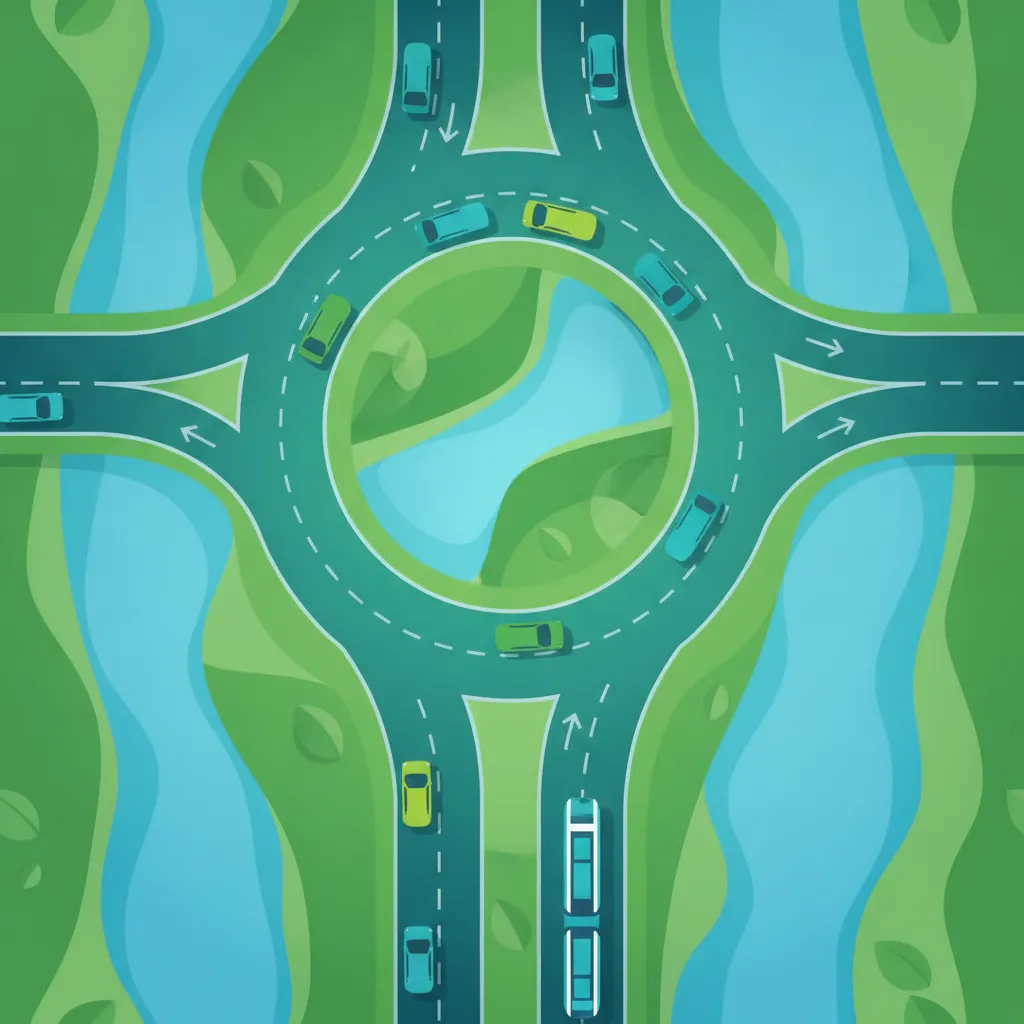
The size of a bus requires careful planning when negotiating complex intersections. This lesson teaches the importance of early lane selection, clear signalling, and comprehensive observation. It provides specific techniques for managing the vehicle's swept path through multi-lane roundabouts and other challenging urban junctions.

This lesson provides guidance on safely navigating roundabouts and tram lanes, common features in Swiss cities. It covers the rules for yielding, lane positioning within the roundabout, and signaling intentions upon exiting. Special attention is given to the hazards of crossing slippery tram tracks and sharing the road with public transport.
Understand the principles of maintaining correct lane discipline and vehicle positioning on Swiss roads. This lesson covers how proper placement and smooth transitions contribute to overall traffic safety and efficiency, reducing risks during maneuvers.
This lesson focuses on maintaining proper vehicle positioning within the lane, aligning correctly, and respecting road markings. You will understand how correct positioning contributes to safe overtaking and smooth turning. The content also discusses adjustments required in different scenarios, such as narrow roads and multi-lane highways, to maintain optimal lane discipline.
Motorway driving requires constant concentration due to high speeds. This lesson emphasizes the importance of staying in the right-hand lane unless overtaking and the specific restrictions on lorry overtaking in Switzerland. It reinforces the need for a following distance of at least four seconds to compensate for the vehicle's long stopping distance and provides guidance on safely merging and exiting.
Motorway driving involves high speeds and requires constant concentration. This lesson covers correct lane discipline, safe procedures for joining and leaving the motorway, and techniques for overtaking other large vehicles. Maintaining appropriate speed and a safe following distance is emphasized throughout.

This lesson explains strategic lane positioning to enhance visibility and safety in traffic. It covers how to choose a lane position that helps you see and be seen by other drivers, avoiding their blind spots. The content emphasizes maintaining a space cushion around the motorcycle to allow for reaction time and potential escape routes.

This lesson moves beyond simply staying within the lines, teaching how to actively position your vehicle within the lane to manage risk. You will learn to create a 'safety cushion' of space around your bus. This proactive approach improves your reaction time and gives other road users more space, reducing the likelihood of conflicts.

Bus lanes are a key tool for improving service reliability, but they come with specific rules. This lesson covers how to correctly interpret bus lane signs and markings. It also explains the regulations for entering and leaving the lane to make turns or avoid obstructions, and the priority rules associated with them.
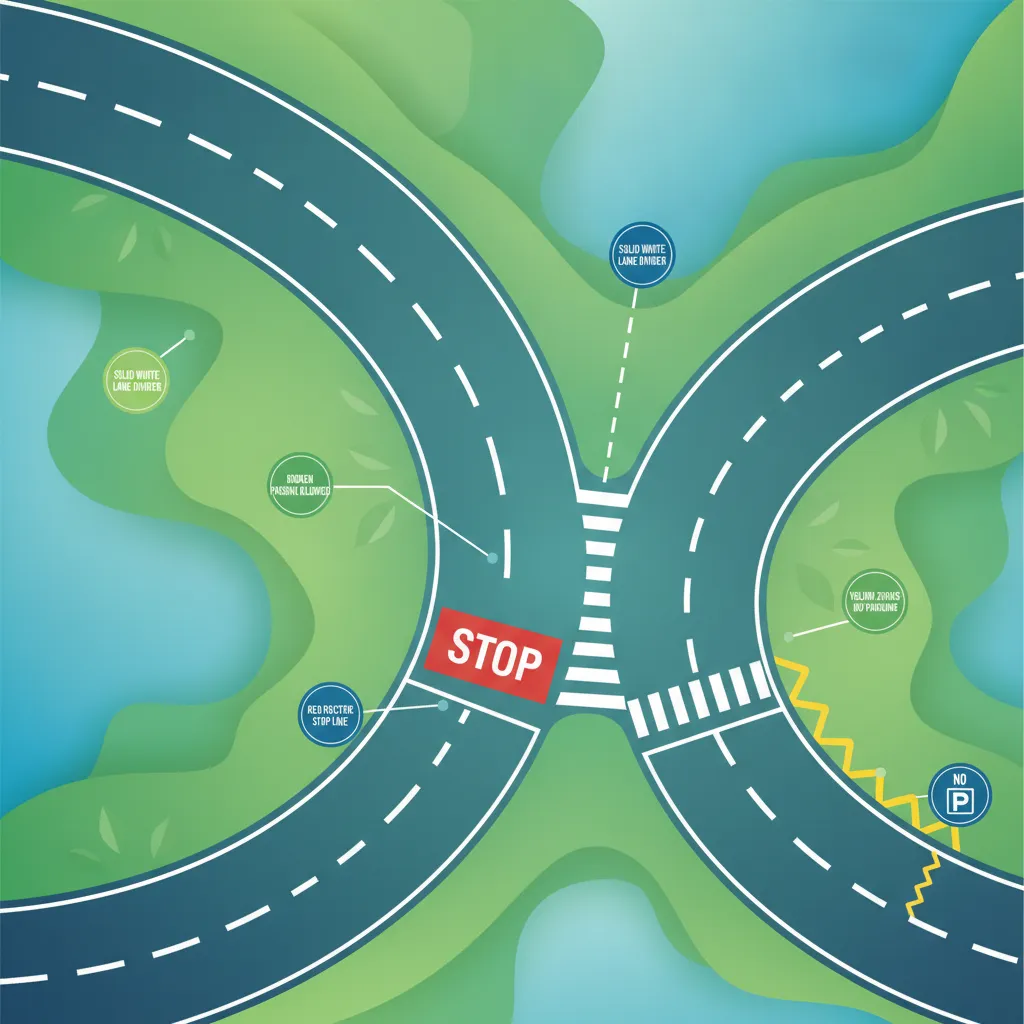
This lesson covers the various road surface markings that dictate lane usage, turning movements, and pedestrian zones. It explains the significance of solid versus broken lines, directional arrows, and specific markings for bike lanes. Understanding these markings is crucial for maintaining lane discipline and ensuring safe interactions in complex traffic environments.

This lesson focuses on the variety of painted markings on Swiss roads and their legal significance. Learners will understand the difference between solid and broken lines, the rules for stop lines, and their obligations at a zebra crossing (Fußgängerstreifen). Correct interpretation of these markings is essential for proper lane positioning and safe interaction with all road users.
This lesson focuses on general driving safety in areas with a high concentration of children. It stresses the importance of significantly reducing speed, being prepared for unexpected events, and scanning for children between parked cars. The driver must exhibit maximum vigilance in these high-risk environments at all times.
This lesson provides guidance on safely navigating roundabouts and tram lanes, common features in Swiss cities. It covers the rules for yielding, lane positioning within the roundabout, and signaling intentions upon exiting. Special attention is given to the hazards of crossing slippery tram tracks and sharing the road with public transport.
Find clear answers to common questions learners have about Lane Change Protocol and Safe Execution. Learn how the lesson is structured, which driving theory objectives it supports, and how it fits into the overall learning path of units and curriculum progression in Switzerland. These explanations help you understand key concepts, lesson flow, and exam focused study goals.
Yes, regardless of how well you have positioned your mirrors, there is always a potential blind spot. Checking over your shoulder is a critical safety step to ensure no vehicle, cyclist, or e-bike is hidden before you move.
You must give other road users sufficient time to react to your intentions. In general, you should signal long enough to provide a clear warning of your intent without misleading others about where you are actually turning or moving.
Generally, it is discouraged and often dangerous to change lanes within an intersection. You should always position your vehicle in the correct lane well before reaching an intersection to avoid abrupt or illegal manoeuvres.
The biggest risk is failing to notice a vehicle already occupying the space you intend to enter. This often happens due to rushing, improper mirror adjustment, or neglecting the shoulder check, which are common areas for error in the theory exam.
Pinpoint specific Swiss traffic rules, road signs, or driving situations you need to master. Use the practice search to start a focused revision session now and build confidence for your official driving theory exam.