
Driving a bus requires advanced planning when entering complex intersections and roundabouts due to the vehicle's significant dimensions and weight. This lesson provides essential strategies for lane positioning, signalling, and managing your swept path to ensure safety and comfort for your passengers. It is a critical component of navigating urban environments within your Swiss Category D training.
Lesson content overview
Driving a Category D vehicle, such as a bus or coach, through complex urban junctions and multi-lane roundabouts presents unique challenges compared to operating smaller vehicles. The sheer size and distinct handling characteristics of a large passenger vehicle demand heightened awareness, meticulous planning, and precise execution. This lesson, part of your Swiss Category D Driving License Theory Course, delves into the essential techniques and regulatory requirements for safely navigating these challenging intersections, prioritizing passenger safety, maintaining smooth traffic flow, and complying with Swiss traffic law.
The dimensions and weight of a bus significantly impact its movement, particularly when turning. These factors necessitate a different approach to junctions, focusing on anticipatory maneuvers and comprehensive spatial awareness. Managing the vehicle's unique swept path – the area a vehicle occupies during a turn – is paramount to prevent collisions with other road users or roadside infrastructure.
Mastering complex junctions and multi-lane roundabouts hinges on several interconnected principles. Adhering to these guidelines ensures not only your safety but also that of your passengers and fellow road users.
The proactive decision to occupy the lane appropriate for your intended exit from a junction well in advance of reaching it.
For a bus driver, choosing the correct lane for your intended exit significantly earlier than a car driver would is crucial. This proactive approach reduces the need for sudden or multiple lane changes within the intersection, which can be hazardous due to the bus’s size and blind spots. Proper early lane selection ensures a smoother entry and exit, minimizing potential conflicts and enhancing overall road safety.
The anticipation and control of the entire area covered by the vehicle during a turn, including its front overhang, rear swing, and lateral movement.
A bus's length and width mean that its front and rear portions do not follow the same path as the driver's seat. The front overhang is the part of the vehicle extending beyond the front axle, and the rear swing refers to the lateral movement of the rear corners of the bus as it turns. Effectively managing this swept path means being constantly aware of where all parts of your vehicle are in relation to curbs, other lanes, street furniture, and other road users. Misjudging the swept path can lead to clipping curbs, encroaching on adjacent lanes, or colliding with pedestrians and cyclists.
Communicating your intentions clearly and early is a fundamental aspect of safe driving, especially with a large vehicle like a bus. Using indicators (blinker in Swiss German) and, if necessary, hand signals, provides other road users with ample time to react to your planned maneuver. Clear signalling reduces uncertainty and significantly lowers the risk of collisions, contributing to a more predictable traffic flow. Signalling must be initiated well before the actual turn and cancelled promptly once the maneuver is complete.
The size and construction of a bus inherently create larger blind spots than those found in smaller vehicles. Comprehensive observation involves systematically scanning your surroundings, utilizing all mirrors (interior and exterior), and performing thorough over-the-shoulder blind spot checks before, during, and after any maneuver. This vigilant approach helps detect hidden vehicles, cyclists, or pedestrians who might be obscured by the bus's bodywork. A continuous "look-around" at critical decision points is essential.
In many urban environments, priority rules for buses are in place to facilitate public transport operations. These may include dedicated bus lanes or signal priority at traffic lights, allowing buses to bypass congestion or receive extended green phases. While these rules aim for efficiency, they do not negate the driver's responsibility for safety. Understanding when and how these priorities apply in Switzerland allows for smoother integration into traffic while maintaining a high standard of care.
Modulating your speed to match the complexity of a junction and the specific characteristics of your bus is vital. Continuous speed adjustment means reducing speed well before entering a complex intersection. This provides more time to observe, react, and make precise control inputs. Entering a junction too quickly with a large vehicle can reduce steering precision, increase stopping distances, and diminish your ability to respond to unexpected hazards.
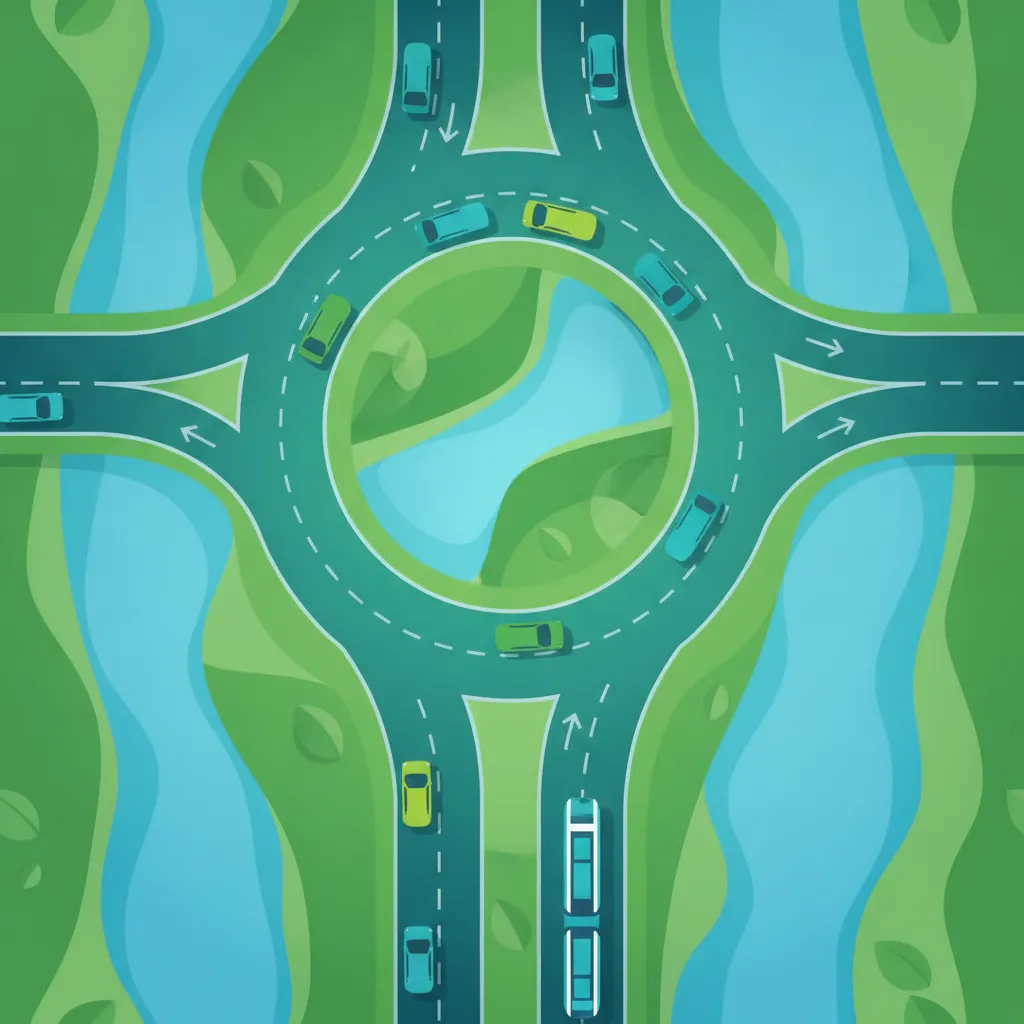
Multi-lane roundabouts are circular intersections designed to improve traffic flow, but they can be particularly challenging for bus drivers due to the need for precise lane discipline and swept path management.
A circular intersection with two or more concentric lanes, each allowing for specific turning options, designed to manage simultaneous traffic flow.
The most critical phase of navigating a multi-lane roundabout is the approach. This is where early lane selection is paramount. You must identify your intended exit and choose the correct lane well in advance.
Identify Your Exit: Determine which exit you intend to take.
Select the Correct Lane Early: Based on your exit, choose the appropriate lane. Generally, for the first exit, you'd use the innermost lane available (closest to the central island). For exits straight ahead, a middle lane might be suitable. For a left turn or U-turn, the outermost lane (farthest from the central island) is typically required to accommodate the bus's swept path.
Signal Clearly: Activate your indicators at least 100 metres before the roundabout entrance to inform other drivers of your intentions.
Reduce Speed: Adjust your speed significantly before entering to ensure you can stop if necessary and smoothly negotiate the turn.
Observe Continuously: Scan mirrors, blind spots, and the entrance for other vehicles, cyclists, and pedestrians.
Once inside a multi-lane roundabout, maintaining lane discipline is crucial. Overtaking within a roundabout is generally prohibited in Switzerland, reinforcing the need to select your lane correctly from the outset.
swept path as you turn. You may need to take a wider line (within your designated lane) to ensure your rear swing does not clip the central island or encroach into adjacent lanes, especially on tighter turns.Never change lanes inside a multi-lane roundabout with a bus unless absolutely unavoidable and only with extreme caution. The risk of collision due to your vehicle's size and blind spots is significantly higher.
Compliance with Swiss traffic regulations is not only a legal requirement but also a cornerstone of safe and responsible bus operation.
Swiss traffic law places a strong emphasis on lane discipline, particularly in multi-lane intersections and roundabouts. Drivers are expected to choose and remain in the appropriate lane for their intended direction of travel. This is particularly critical for Category D vehicles where deviations can have severe consequences. Changing lanes arbitrarily or at the last minute within an intersection is a serious violation.
The Swiss traffic code generally mandates that drivers activate their indicators at least 100 metres before executing a turn or lane change. For a bus, this early signalling is even more vital due to the time required for other road users to process the bus's intentions and adjust their own driving. Failing to signal early enough can lead to confusion and abrupt braking by surrounding traffic.
Speed reduction before junctions is not merely a recommendation but a mandatory practice. Approaching complex intersections at a controlled, reduced speed allows you to respond safely to unexpected events, manage your vehicle’s turning radius, and maintain passenger comfort. While there isn't a single universal speed limit for all roundabouts, the principle is to enter at a speed that ensures full control and maximum reaction time.
A fundamental rule in Swiss traffic law is the prohibition of overtaking inside roundabouts. This rule exists to prevent unpredictable maneuvers and maintain a steady flow of traffic. For a bus driver, this reinforces the importance of early lane selection and maintaining your position, as you cannot rely on overtaking to correct a wrongly chosen lane.
Even experienced drivers can make mistakes. Understanding common errors and how to adapt to varying conditions is crucial for advanced safety.
rear swing or front overhang can result in clipping curbs, signs, or other vehicles. Practice visualizing your bus's footprint.Driving a bus through complex junctions requires dynamic adjustment based on environmental and vehicle-specific factors:
Wet or icy surfaces drastically increase stopping distances and reduce tire grip. This demands even earlier speed reduction, increased following distances, and smoother control inputs.fog, heavy rain, or darkness, comprehensive observation becomes even more critical. Early signalling should be paired with increased use of appropriate lighting (e.g., dipped beam headlights) to enhance your visibility to others.fully loaded bus has significantly different braking and acceleration characteristics than an empty one, and its swept path might feel slightly different due to suspension compression. Adjust your speed and allow extra space accordingly.Buses, due to their size and mass, pose a significant risk to vulnerable road users such as pedestrians and cyclists. At complex junctions and roundabouts, these users are particularly exposed. Always maintain extra caution near crosswalks and bike lanes. Even if you believe you have priority, the duty of care dictates that you should always yield to pedestrians and cyclists if there is any doubt about their intentions or safety. Their smaller size makes them prone to disappearing into your blind spots, especially during turns.
When turning at an intersection or exiting a roundabout, assume there might be a cyclist or pedestrian in your blind spot. A quick, decisive head-turn check can prevent a serious accident.
Navigating complex junctions and multi-lane roundabouts with a Category D vehicle in Switzerland demands an integrated application of advanced driving techniques. It's about more than just following rules; it's about a deep understanding of your vehicle's dynamics, proactive planning, clear communication, and constant vigilance.
By consistently applying:
You will cultivate the skills necessary to safely and efficiently operate a bus or coach through the most challenging parts of the Swiss road network. These competencies are fundamental to your success as a professional passenger vehicle driver.
Navigating complex junctions and multi-lane roundabouts with a Category D vehicle requires early lane selection, thorough observation, and precise swept path management. The bus's front overhang and rear swing mean that only the driver's seat does not follow the same path as the vehicle's extremities during turns. Swiss traffic regulations mandate signalling at least 100 metres before turns, strict lane discipline, and prohibit lane changes within roundabouts. Speed must be reduced before junctions to maintain control, and heightened vigilance for vulnerable road users—particularly cyclists and pedestrians in blind spots—is essential for safe passenger transport operation.
A short set of high-value points that capture the most important learning from this lesson.
Early lane selection is critical—choose your lane based on your intended exit well before reaching the junction, not at the last moment.
The swept path of a bus includes the front overhang and rear swing; you must visualize the entire vehicle footprint, not just the driver's position.
Signal at least 100 metres before a turn or lane change to give other road users adequate time to react to a large vehicle.
Comprehensive observation requires both mirror checks and head-turn blind spot checks before, during, and after any maneuver.
Never change lanes inside a multi-lane roundabout with a bus due to size constraints and blind spot limitations.
Explore all units and lessons included in this driving theory course.
Swept path = the total area your vehicle covers during a turn, including front overhang and rear swing.
Indicators must be activated at least 100 metres before executing any turn or lane change in Switzerland.
Lane discipline is strictly enforced—overtaking inside roundabouts is prohibited by Swiss traffic law.
Speed reduction before junctions is mandatory for control, reaction time, and passenger comfort.
Pedestrians at crosswalks near junctions or roundabouts always have priority, regardless of other traffic signals.
Changing lanes after entering a roundabout, forcing dangerous late corrections that a bus cannot safely execute.
Relying solely on mirrors and skipping head-turn blind spot checks, missing cyclists and pedestrians in hidden areas.
Entering junctions too quickly, reducing steering precision and increasing stopping distances.
Underestimating rear swing and clipping curbs, central islands, or adjacent vehicles during turns.
Entering the wrong lane initially due to insufficient planning, then attempting unsafe lane changes.
Lesson content overview
A short set of high-value points that capture the most important learning from this lesson.
Early lane selection is critical—choose your lane based on your intended exit well before reaching the junction, not at the last moment.
The swept path of a bus includes the front overhang and rear swing; you must visualize the entire vehicle footprint, not just the driver's position.
Signal at least 100 metres before a turn or lane change to give other road users adequate time to react to a large vehicle.
Comprehensive observation requires both mirror checks and head-turn blind spot checks before, during, and after any maneuver.
Never change lanes inside a multi-lane roundabout with a bus due to size constraints and blind spot limitations.
Explore all units and lessons included in this driving theory course.
Swept path = the total area your vehicle covers during a turn, including front overhang and rear swing.
Indicators must be activated at least 100 metres before executing any turn or lane change in Switzerland.
Lane discipline is strictly enforced—overtaking inside roundabouts is prohibited by Swiss traffic law.
Speed reduction before junctions is mandatory for control, reaction time, and passenger comfort.
Pedestrians at crosswalks near junctions or roundabouts always have priority, regardless of other traffic signals.
Changing lanes after entering a roundabout, forcing dangerous late corrections that a bus cannot safely execute.
Relying solely on mirrors and skipping head-turn blind spot checks, missing cyclists and pedestrians in hidden areas.
Entering junctions too quickly, reducing steering precision and increasing stopping distances.
Underestimating rear swing and clipping curbs, central islands, or adjacent vehicles during turns.
Entering the wrong lane initially due to insufficient planning, then attempting unsafe lane changes.
Explore search topics learners often look for when studying Negotiating Complex Junctions and Multi-Lane Roundabouts. These topics reflect common questions about road rules, driving situations, safety guidance, and lesson level theory preparation for learners in Switzerland.
Browse additional driving theory lessons that cover connected traffic rules, road signs, and common driving situations related to this topic. Improve your understanding of how different rules interact across everyday traffic scenarios.
Identify and avoid common pitfalls when driving a bus through complex junctions and multi-lane roundabouts in Switzerland. This lesson focuses on observation, signalling, and adapting to varied conditions to prevent collisions.
A stopped bus creates a significant visual obstruction for other road users. This lesson focuses on the risk of pedestrians stepping out from in front of the bus and cyclists passing unexpectedly on either side. It reinforces the need for exhaustive mirror and blind spot checks before moving off to prevent tragic 'pull-away' accidents.
Departing from a bus stop is a high-risk manoeuvre. This lesson details the critical sequence of actions: checking all passengers are clear of the doors, performing a comprehensive mirror and blind spot check, signalling, and waiting for a safe gap in traffic. This systematic approach is essential for preventing collisions with overtaking vehicles, cyclists, or pedestrians.
Driving a bus in older parts of a city requires exceptional spatial awareness and precise control. This lesson focuses on assessing clearances, managing front and rear overhang, and negotiating tight turns around parked cars and buildings. A key theme is slow, careful, and deliberate manoeuvring to avoid contact.
The approach to a stop sets the stage for a safe passenger exchange. This lesson covers signalling in good time, decelerating smoothly, and aiming for a final position that is close and parallel to the kerb. Proper positioning minimizes the step for passengers and prevents them from having to step into traffic.
Rural driving requires a different mindset from urban driving. This lesson covers how to position your vehicle on narrow roads, how to use passing places effectively, and how to anticipate hazards like slow-moving farm machinery, animals, and concealed junctions. Managing vehicle width and height is a key focus.

This lesson focuses on general driving safety in areas with a high concentration of children. It stresses the importance of significantly reducing speed, being prepared for unexpected events, and scanning for children between parked cars. The driver must exhibit maximum vigilance in these high-risk environments at all times.
Bus stops are magnets for activity and potential hazards. This lesson trains you to anticipate dangers such as pedestrians running for the bus, cyclists passing on the inside, and cars attempting to overtake. Developing heightened situational awareness is key to preventing accidents in these busy environments.
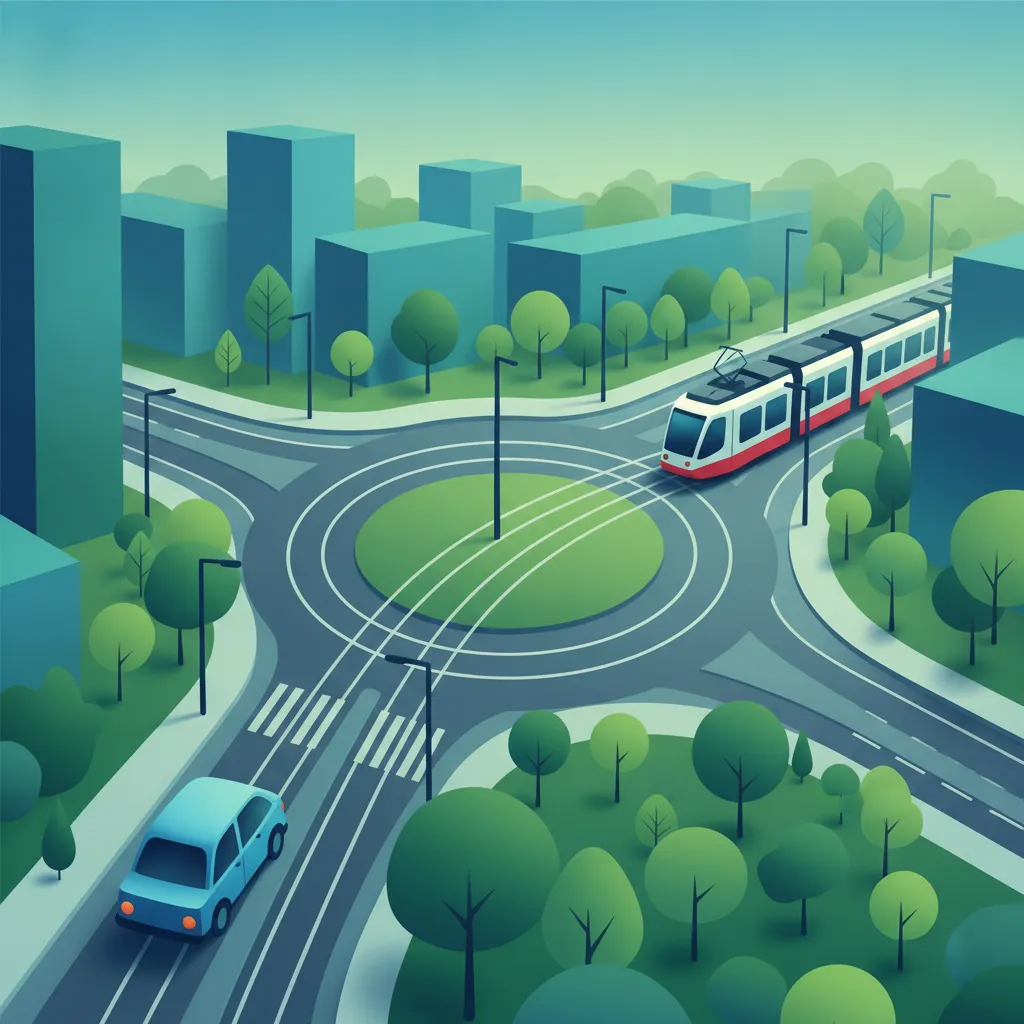
This lesson provides guidance on safely navigating roundabouts and tram lanes, common features in Swiss cities. It covers the rules for yielding, lane positioning within the roundabout, and signaling intentions upon exiting. Special attention is given to the hazards of crossing slippery tram tracks and sharing the road with public transport.

This lesson moves beyond simply staying within the lines, teaching how to actively position your vehicle within the lane to manage risk. You will learn to create a 'safety cushion' of space around your bus. This proactive approach improves your reaction time and gives other road users more space, reducing the likelihood of conflicts.

Bus lanes are a key tool for improving service reliability, but they come with specific rules. This lesson covers how to correctly interpret bus lane signs and markings. It also explains the regulations for entering and leaving the lane to make turns or avoid obstructions, and the priority rules associated with them.
Learn essential techniques for navigating complex urban junctions and multi-lane roundabouts in Switzerland with a Category D vehicle. Understand swept path, early lane selection, and priority rules to ensure safe passage and passenger comfort.
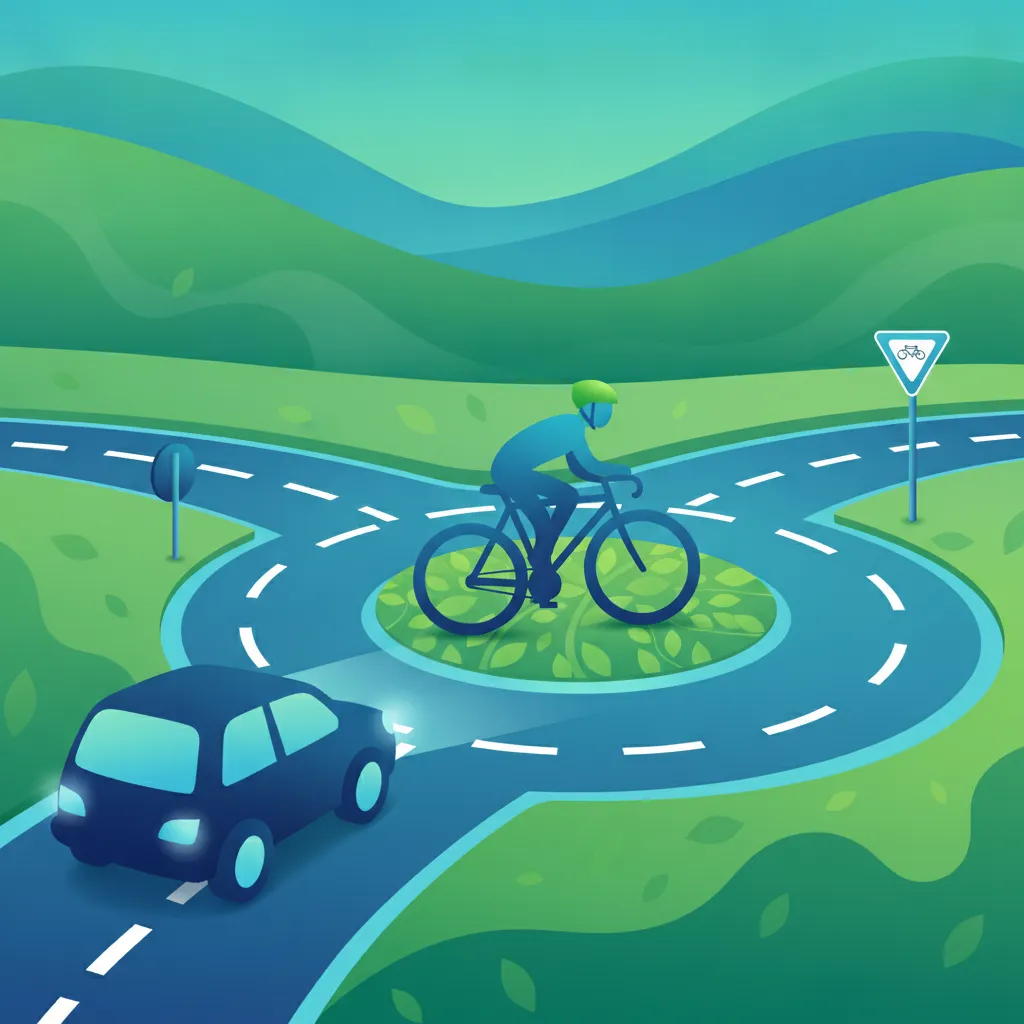
This lesson explores the correct procedures for turning at intersections and navigating roundabouts, focusing on lane selection and signaling. It covers the right-of-way rules for right and left turns and the importance of positioning the vehicle correctly before the turn. In roundabouts, the content emphasizes yielding to circulating traffic and selecting the correct exit lane.
Motorway driving involves high speeds and requires constant concentration. This lesson covers correct lane discipline, safe procedures for joining and leaving the motorway, and techniques for overtaking other large vehicles. Maintaining appropriate speed and a safe following distance is emphasized throughout.
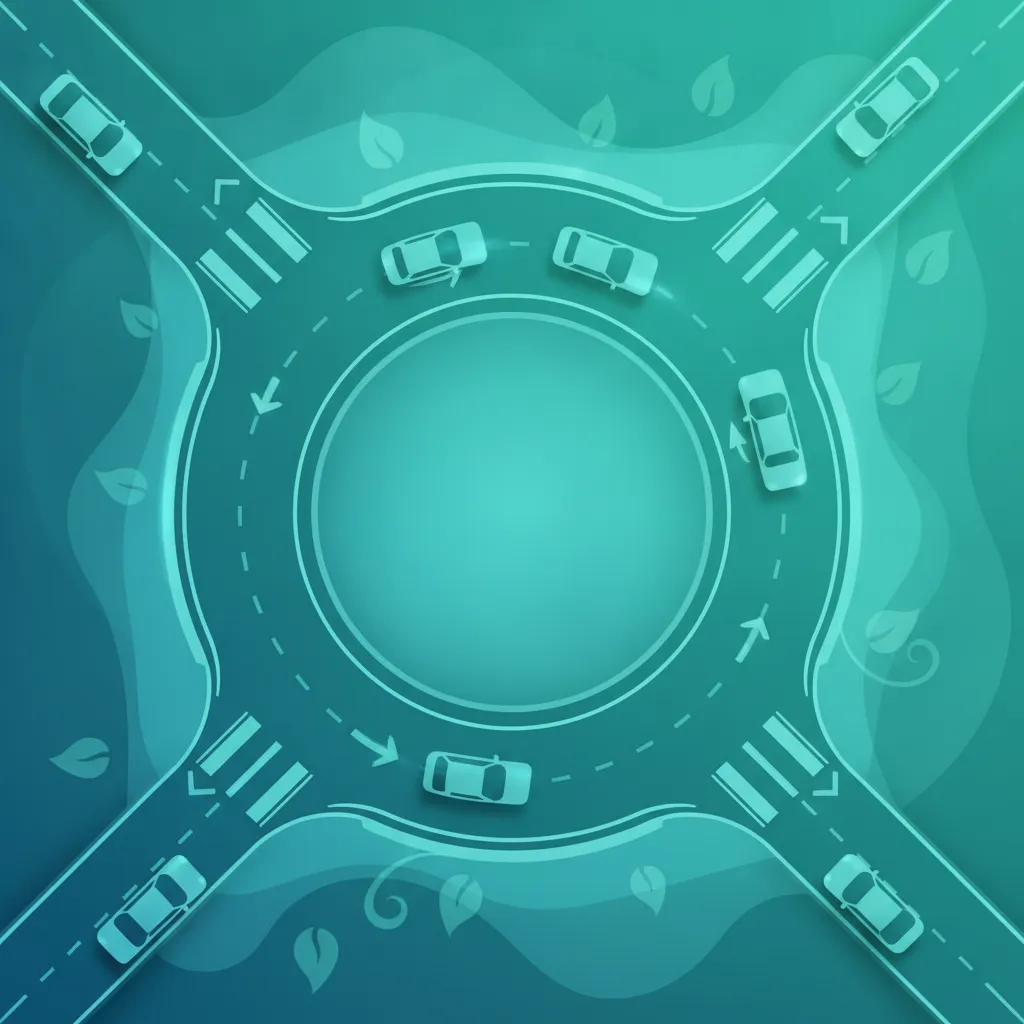
This lesson provides a detailed guide to navigating roundabouts, focusing on yielding to circulating traffic and correct lane usage. You will learn the priority principle that vehicles already in the roundabout have precedence over entering traffic. The content also covers multi-lane roundabout navigation and proper exit strategies for smooth, safe traversal.
Motorway driving requires constant concentration due to high speeds. This lesson emphasizes the importance of staying in the right-hand lane unless overtaking and the specific restrictions on lorry overtaking in Switzerland. It reinforces the need for a following distance of at least four seconds to compensate for the vehicle's long stopping distance and provides guidance on safely merging and exiting.
This lesson focuses on general driving safety in areas with a high concentration of children. It stresses the importance of significantly reducing speed, being prepared for unexpected events, and scanning for children between parked cars. The driver must exhibit maximum vigilance in these high-risk environments at all times.
This lesson focuses on maintaining proper vehicle positioning within the lane, aligning correctly, and respecting road markings. You will understand how correct positioning contributes to safe overtaking and smooth turning. The content also discusses adjustments required in different scenarios, such as narrow roads and multi-lane highways, to maintain optimal lane discipline.
This lesson covers complex manoeuvres such as three-point turns, U-turns, and parking in tight spaces. You will learn the step-by-step process for performing a three-point turn and the legal requirements for a U-turn. The content also provides guidance for parking in confined areas, ensuring proper lane usage and positioning during these manoeuvres.
Driving a bus in older parts of a city requires exceptional spatial awareness and precise control. This lesson focuses on assessing clearances, managing front and rear overhang, and negotiating tight turns around parked cars and buildings. A key theme is slow, careful, and deliberate manoeuvring to avoid contact.

When a long vehicle turns, the rear wheels follow a shorter path than the front wheels (swept path), and the rear of the vehicle swings outwards (tail swing). This lesson explains these critical concepts. You will learn how to position the vehicle before a turn to avoid mounting the kerb or striking objects like signs and pedestrians with the rear corner.
This lesson provides guidance on safely navigating roundabouts and tram lanes, common features in Swiss cities. It covers the rules for yielding, lane positioning within the roundabout, and signaling intentions upon exiting. Special attention is given to the hazards of crossing slippery tram tracks and sharing the road with public transport.
Find clear answers to common questions learners have about Negotiating Complex Junctions and Multi-Lane Roundabouts. Learn how the lesson is structured, which driving theory objectives it supports, and how it fits into the overall learning path of units and curriculum progression in Switzerland. These explanations help you understand key concepts, lesson flow, and exam focused study goals.
Because of the bus's length and width, you often need to occupy more space to avoid 'tail swing' or curb strikes. Proper lane positioning prevents other vehicles from entering your blind spots or being squeezed against the side of your vehicle.
When turning, the rear wheels of a bus follow a tighter path than the front wheels. You must often stay in the outer lane of a roundabout to ensure the rear of the bus does not mount the curb or damage central infrastructure.
Yes, standard Swiss traffic rules regarding right of way apply. However, as a professional driver, you are expected to anticipate the actions of others earlier and adjust your speed to maintain a safety cushion for passengers.
Failing to check 'last look' mirrors for cyclists or pedestrians entering the space alongside the bus while turning. Always ensure the area is clear of vulnerable road users before committing to the turn.
Pinpoint specific Swiss traffic rules, road signs, or driving situations you need to master. Use the practice search to start a focused revision session now and build confidence for your official driving theory exam.