
This lesson explores the vital role of suspension systems in heavy goods vehicles, covering both traditional leaf springs and modern air suspension. Understanding these systems is essential for maintaining vehicle stability, ensuring effective braking, and protecting your cargo during transport on Swiss roads. This knowledge forms a critical part of your technical training for the C and C1 license categories.

Lesson content overview
The suspension system is a fundamental component of any heavy goods vehicle, playing a critical role in its safe and efficient operation. For drivers undertaking the Official Swiss Driving Theory Course for Category C & C1 Goods Vehicles, a thorough understanding of this system is essential. It acts as the crucial link between the vehicle’s axles and its chassis, supporting immense weight while absorbing the constant shocks and vibrations from diverse road surfaces. A well-maintained suspension system is not just about comfort; it is paramount for vehicle stability, precise handling, effective braking, and the protection of both the valuable cargo and the vehicle's structural integrity.
This lesson delves into the primary functions of heavy vehicle suspension, explores the two most common types—traditional leaf springs and modern air suspension—and explains their direct impact on dynamic stability, load distribution, and overall roadworthiness. Understanding these dynamics is key to preventing loss of control, ensuring optimal braking, and navigating Switzerland's varied road conditions safely.
The complex interplay of components within a suspension system is designed to achieve several critical objectives that ensure the safety and performance of heavy goods vehicles. Without an effective suspension, driving a lorry or truck would be an uncomfortable, dangerous, and inefficient endeavor.
A suspension system is a mechanical assembly that connects the vehicle's axles to its frame or chassis. Its primary components typically include springs (such as leaf springs or air springs), shock absorbers (dampers), and various linkages or arms. These components work in unison to control the vertical motion of the wheels relative to the vehicle body.
The fundamental purpose of this intricate system is twofold: first, to isolate the vehicle body and its occupants from the harshness of road shocks and irregularities, thereby improving ride comfort and protecting cargo. Second, and equally vital for heavy vehicles, is to maintain continuous and optimal contact between the tyres and the road surface. This continuous contact is crucial for effective steering, braking, and propulsion, directly influencing the vehicle's dynamic stability.
A properly functioning suspension system is the cornerstone of predictable vehicle behavior. It prevents excessive body roll during cornering, reduces nose-dive during braking, and mitigates squat during acceleration. By managing the transfer of load between axles and wheels, it ensures that each tyre maintains adequate grip, which is indispensable for safe operation, especially under varying load conditions and on challenging terrains like mountain passes.
Conversely, a malfunctioning or improperly maintained suspension can lead to unpredictable handling, increased stopping distances, premature tyre wear, and even structural damage to the vehicle. It directly affects the driver's ability to maintain control, particularly during emergency maneuvers or adverse weather conditions.
Heavy goods vehicles employ different suspension technologies, each with distinct characteristics regarding performance, cost, and maintenance requirements. The choice of suspension type significantly influences a vehicle's suitability for specific transport tasks.
Leaf springs are among the oldest and most widely used forms of suspension, particularly prevalent in the rear axles of heavy trucks and lorries due to their simplicity, robustness, and cost-effectiveness.
These springs typically consist of multiple layers of tempered steel plates, or "leaves," stacked one upon another and bolted together. They are commonly shaped as semi-elliptical (half-ellipse) or quarter-elliptical, with the ends attached to the vehicle frame and the center clamped to the axle. When a load is applied or the vehicle encounters a road bump, the leaves flex, absorbing the energy and cushioning the impact.
While leaf springs are highly durable and require less complex maintenance compared to other systems, they do not automatically adapt to varying loads. Over time, or due to consistent overloading, leaf springs can develop "sag," where they permanently deform and lose their original curvature. This sag can lead to uneven ride height, reduced load-carrying capacity, and compromised handling. Regular inspection for cracks, corrosion, and proper alignment is crucial to ensure their continued integrity and performance.
Air suspension represents a more advanced and adaptable form of suspension, increasingly common in heavy goods vehicles, especially those transporting delicate cargo or requiring precise load-leveling capabilities.
Instead of steel plates, air suspension systems use flexible rubber bellows, known as air springs or airbags, inflated with compressed air to support the vehicle body. A sophisticated control system, involving an air compressor, air reservoir, pressure sensors, and control valves, continuously monitors and adjusts the air pressure within the springs. This allows the system to automatically adjust the vehicle's ride height based on the load, maintaining a consistent chassis attitude regardless of the cargo weight.
Air suspension offers significant advantages, including superior ride comfort, enhanced load protection, and the ability to maintain optimal vehicle geometry for improved stability and fuel efficiency. It can also facilitate easier loading and unloading by temporarily lowering the vehicle. These systems can be "full-air," where all axles are equipped with air springs, or "semi-air," where air springs are typically installed on selected axles, often the rear ones. However, air suspension systems are more complex and require diligent maintenance to prevent air leaks, compressor failures, or issues with control valves, which can lead to uncontrolled height changes and stability problems.
Beyond the types of springs, several conceptual elements are critical to understanding how suspension systems contribute to the safe and efficient operation of heavy goods vehicles. These concepts directly influence vehicle dynamics, driver control, and compliance with regulations.
Ride height, or ground clearance, is a crucial parameter for heavy vehicles. It is the distance between the lowest structural point of the chassis and the road surface. For goods vehicles, maintaining the correct ride height is vital for several reasons. Adequate clearance prevents damage to critical underbody components, including the exhaust system, transmission, and especially the under-run protection devices (which prevent smaller vehicles from being forced underneath in a collision).
Improper ride height also directly affects the vehicle's center of gravity. A higher ride height, particularly when empty, can elevate the center of gravity, increasing the risk of rollover during sharp turns or on uneven terrain. Conversely, a vehicle sitting too low can compromise handling, cause components to scrape the road, and lead to premature wear. Modern air suspension systems allow for automatic or manual adjustment of ride height to compensate for varying loads, ensuring that the vehicle operates within optimal parameters for safety and stability.
Load transfer is a fundamental principle of vehicle dynamics that every heavy vehicle driver must understand. It refers to the redistribution of vehicle mass between its axles and individual wheels during dynamic events. When a heavy vehicle accelerates, weight shifts towards the rear axle(s); during braking, it shifts dramatically towards the front axle(s). In cornering, weight shifts to the outer wheels.
The suspension system plays a critical role in managing this load transfer. Proper spring stiffness and damping ensure that weight is transferred predictably and effectively, maintaining optimal tyre contact and preventing excessive loading or unloading of specific axles. Uneven or uncontrolled load transfer can lead to axles exceeding their permissible load limits, reduced tyre grip, compromised braking effectiveness, and an increased risk of instability or even rollover. Correct load distribution and a well-functioning suspension system work hand-in-hand to ensure that each axle remains within its legal and safe operating limits.
The effectiveness of a heavy vehicle's braking system is not solely dependent on the brakes themselves; the suspension system plays an equally crucial, albeit often overlooked, role. During braking, especially hard braking, there is a significant forward load transfer, with weight shifting rapidly to the front axle(s).
A properly designed and maintained suspension ensures that this load transfer happens in a controlled manner, increasing the downforce on the front tyres. This increased front-wheel load is essential for maximizing braking grip and efficiency, leading to shorter and more stable stopping distances. If the suspension (particularly the rear) is too soft or worn, it can cause excessive bouncing or "axle tramp" during braking, which can momentarily lift the rear wheels, reduce tyre contact, and compromise braking stability and effectiveness. Conversely, overly stiff suspension can reduce compliance, leading to wheel lock-up more easily on uneven surfaces. Therefore, optimal suspension performance is integral to achieving maximum braking potential.
The way a heavy vehicle responds to steering inputs and behaves during cornering is heavily influenced by its suspension system. Good suspension ensures a predictable and responsive steering feel, allowing the driver to maintain precise control.
Improper suspension characteristics, such as worn components or incorrect spring stiffness, can lead to adverse handling traits. Excessive body roll during cornering makes the vehicle feel unstable and less responsive, potentially leading to under-steer (where the vehicle turns less sharply than intended) or over-steer (where the rear of the vehicle slides out). This is particularly dangerous for heavy vehicles with high centers of gravity. A well-tuned suspension system minimizes unwanted body movements, maintains consistent tyre contact patches, and contributes significantly to stable and predictable handling, which is crucial for safe navigation, especially with a full load on winding roads.
Regular inspection and maintenance of the suspension system are paramount for the safe operation of heavy goods vehicles. Early detection of wear or damage can prevent more severe issues, costly repairs, and potential accidents.
Drivers should be vigilant for both visual and functional signs of suspension deterioration. Key visual indicators include:
Functional indicators observed during driving include:
Proactive maintenance and thorough pre-drive inspections are the most effective ways to ensure the longevity and safety of a heavy vehicle's suspension system. Ignoring these signs can lead to progressive damage, compromising other vehicle components such as tyres, steering, and braking systems.
Visually inspect all visible leaf springs for cracks, breaks, or excessive sag. Ensure they are properly seated and secured.
For air suspension, check that all air springs (bellows) are fully inflated and free from visible damage, cracks, or leaks (listen for hissing sounds). Verify correct ride height for the current load.
Inspect shock absorbers for leaks or damage. While not the primary load-bearing component, they are crucial for damping oscillations.
Check all mounting points, bushings, and linkages for excessive play, damage, or missing fasteners.
Observe the vehicle’s overall stance; it should appear level and not sag noticeably at any point when unloaded or correctly loaded.
Any identified defects during these checks must be reported and rectified before the vehicle is put into service, aligning with general roadworthiness requirements for goods vehicles.
In Switzerland, the operation of heavy goods vehicles is governed by strict regulations to ensure road safety. The Road Traffic Act (Strassenverkehrsgesetz, SVG) and its ordinances, particularly the Ordinance on the Technical Requirements for Road Vehicles (Verordnung über die technischen Anforderungen an Strassenfahrzeuge, VTS, or OTV in its French translation), outline mandatory requirements for vehicle components, including suspension systems.
Swiss law unequivocally mandates that heavy goods vehicles must be maintained in a roadworthy condition, with all safety-critical components functioning correctly. This includes the suspension system, which must be free from defects that could impair vehicle stability, handling, or safety.
Swiss Road Traffic Regulations (OTV Art. 57): Specifies that vehicles must be in a condition that ensures safe operation and does not endanger road users or the environment. This directly applies to the integrity and functionality of the suspension system. Defects like cracked leaf springs, leaking air springs, or severely worn components are considered critical and must be addressed immediately.
Drivers and operators are legally responsible for ensuring that their vehicles comply with these standards. Failure to do so can result in significant penalties, including fines, vehicle immobilisation, and even criminal charges in cases of accidents caused by negligence.
Compliance with manufacturer-specified load limits is not just a recommendation; it is a legal requirement. The suspension components are designed to operate efficiently and safely within these limits.
Swiss Road Traffic Regulations (OTV Art. 28): Pertains to vehicle loading and weight distribution, stipulating that the total weight and axle loads must not exceed the maximum permissible values specified by the manufacturer or by law.
Overloading an axle, even if the vehicle's total weight is within limits, places excessive stress on the suspension springs. This can lead to premature spring failure, reduced tyre contact, compromised braking effectiveness, and an increased risk of loss of control. Drivers must meticulously verify that the cargo is distributed evenly and that no single axle or set of springs is overloaded, using the information on the vehicle's load plate as a guide.
For vehicles equipped with air suspension systems, specific maintenance and inspection protocols are legally mandated to ensure their reliable operation.
Swiss Road Traffic Regulations (OTV Art. 55): Requires regular maintenance and inspection of vehicle components according to manufacturer specifications. For air suspension, this includes verifying the integrity of air springs, checking for leaks, and ensuring the proper functioning of the compressor, pressure sensors, and control valves.
Air leaks, in particular, can be dangerous as they can lead to uncontrolled changes in ride height, uneven vehicle stance, and unpredictable handling. Drivers must incorporate checks for air suspension functionality and integrity into their daily pre-drive inspections.
The vehicle's ride height is also subject to regulatory oversight, especially concerning under-run protection.
Swiss Road Traffic Regulations (OTV Art. 44): Addresses vehicle dimensions and loading, including the requirement to maintain adequate ground clearance to prevent damage to underbody components and ensure the effectiveness of under-run protection devices.
Allowing the vehicle to sit too low, whether due to overloading or suspension malfunction, can compromise the effectiveness of front and rear under-run protection, making the vehicle non-compliant and increasing the risk of severe damage in a collision. Conversely, an excessively high ride height can negatively impact stability by raising the center of gravity, increasing rollover risk. Drivers must ensure that ride height adjustments are made correctly according to load and do not violate these critical safety parameters.
Understanding suspension systems moves from theory to practice when applied to real-world driving situations. These scenarios highlight the importance of proper suspension functionality and driver awareness.
Scenario – Heavy Load on Rear Axle
Scenario – Air Suspension Failure in Urban Deliveries
Scenario – Leaf Spring Sag and Uneven Tyre Wear
Scenario – Pre-Drive Inspection after Loading
To deepen your understanding of heavy vehicle mechanics and operations, explore these related topics and practice questions.
Heavy vehicle suspension systems connect axles to the chassis and manage the critical relationship between tyre contact and vehicle control. Two main types exist: traditional leaf springs (durable steel plates that flex under load) and modern air suspension (compressed air bellows that auto-adjust to cargo weight). The suspension system directly controls load transfer during braking and cornering, making it essential for effective braking distances and predictable handling. Swiss law requires that suspension components be roadworthy, that axle loads stay within manufacturer specifications, and that air suspension systems receive regular maintenance to prevent dangerous air leaks. Daily pre-drive inspections should verify visible springs or air bellows condition, shock absorber integrity, mounting points, and correct ride height for the current load.
A short set of high-value points that capture the most important learning from this lesson.
The suspension system connects axles to the chassis and is essential for maintaining tyre contact with the road, which directly affects steering, braking, and vehicle stability.
Leaf spring suspension uses stacked steel plates and is robust and cost-effective but does not automatically adapt to varying loads, making regular inspection critical.
Air suspension uses compressed air in rubber bellows and automatically adjusts ride height based on load, offering superior comfort and load protection but requiring diligent maintenance.
Proper suspension function is crucial for braking effectiveness because controlled load transfer during braking increases front-wheel downforce and maximises stopping power.
Swiss regulations (OTV) mandate that suspension systems must be roadworthy and axle loads must not exceed manufacturer-specified limits.
Explore all units and lessons included in this driving theory course.
Load transfer redistributes vehicle weight between axles during acceleration, braking, and cornering—suspension controls this dynamically.
Spring sag (permanent deformation) leads to uneven ride height, reduced load capacity, and compromised handling.
For air suspension, listen for hissing sounds and check that air springs are fully inflated; leaks can cause uncontrolled height changes.
Ride height directly affects centre of gravity—sitting too high increases rollover risk; sitting too low can damage under-run protection.
During braking, soft or worn rear suspension can cause axle tramp, momentarily lifting rear wheels and reducing tyre contact and braking stability.
Assuming suspension issues are minor—ignoring spring sag, cracks, or air leaks can lead to progressive damage and safety hazards.
Failing to verify ride height after loading, which can result in overloaded axles or compromised under-run protection compliance.
Overloading a single axle even when total vehicle weight is within limits, placing excessive stress on specific suspension springs.
Relying solely on automatic systems without performing manual checks for visible damage, leaks, or uneven stance.
Attributing uneven tyre wear to tyre quality alone without investigating underlying suspension problems like leaf spring sag or misalignment.
Lesson content overview
A short set of high-value points that capture the most important learning from this lesson.
The suspension system connects axles to the chassis and is essential for maintaining tyre contact with the road, which directly affects steering, braking, and vehicle stability.
Leaf spring suspension uses stacked steel plates and is robust and cost-effective but does not automatically adapt to varying loads, making regular inspection critical.
Air suspension uses compressed air in rubber bellows and automatically adjusts ride height based on load, offering superior comfort and load protection but requiring diligent maintenance.
Proper suspension function is crucial for braking effectiveness because controlled load transfer during braking increases front-wheel downforce and maximises stopping power.
Swiss regulations (OTV) mandate that suspension systems must be roadworthy and axle loads must not exceed manufacturer-specified limits.
Explore all units and lessons included in this driving theory course.
Load transfer redistributes vehicle weight between axles during acceleration, braking, and cornering—suspension controls this dynamically.
Spring sag (permanent deformation) leads to uneven ride height, reduced load capacity, and compromised handling.
For air suspension, listen for hissing sounds and check that air springs are fully inflated; leaks can cause uncontrolled height changes.
Ride height directly affects centre of gravity—sitting too high increases rollover risk; sitting too low can damage under-run protection.
During braking, soft or worn rear suspension can cause axle tramp, momentarily lifting rear wheels and reducing tyre contact and braking stability.
Assuming suspension issues are minor—ignoring spring sag, cracks, or air leaks can lead to progressive damage and safety hazards.
Failing to verify ride height after loading, which can result in overloaded axles or compromised under-run protection compliance.
Overloading a single axle even when total vehicle weight is within limits, placing excessive stress on specific suspension springs.
Relying solely on automatic systems without performing manual checks for visible damage, leaks, or uneven stance.
Attributing uneven tyre wear to tyre quality alone without investigating underlying suspension problems like leaf spring sag or misalignment.
Explore search topics learners often look for when studying Suspension Systems and Their Impact on Stability. These topics reflect common questions about road rules, driving situations, safety guidance, and lesson level theory preparation for learners in Switzerland.
Browse additional driving theory lessons that cover connected traffic rules, road signs, and common driving situations related to this topic. Improve your understanding of how different rules interact across everyday traffic scenarios.
Learn how lorry suspension systems, including leaf springs and air suspension, manage load transfer and affect overall vehicle stability, handling, and braking. Essential for Swiss C and C1 theory.
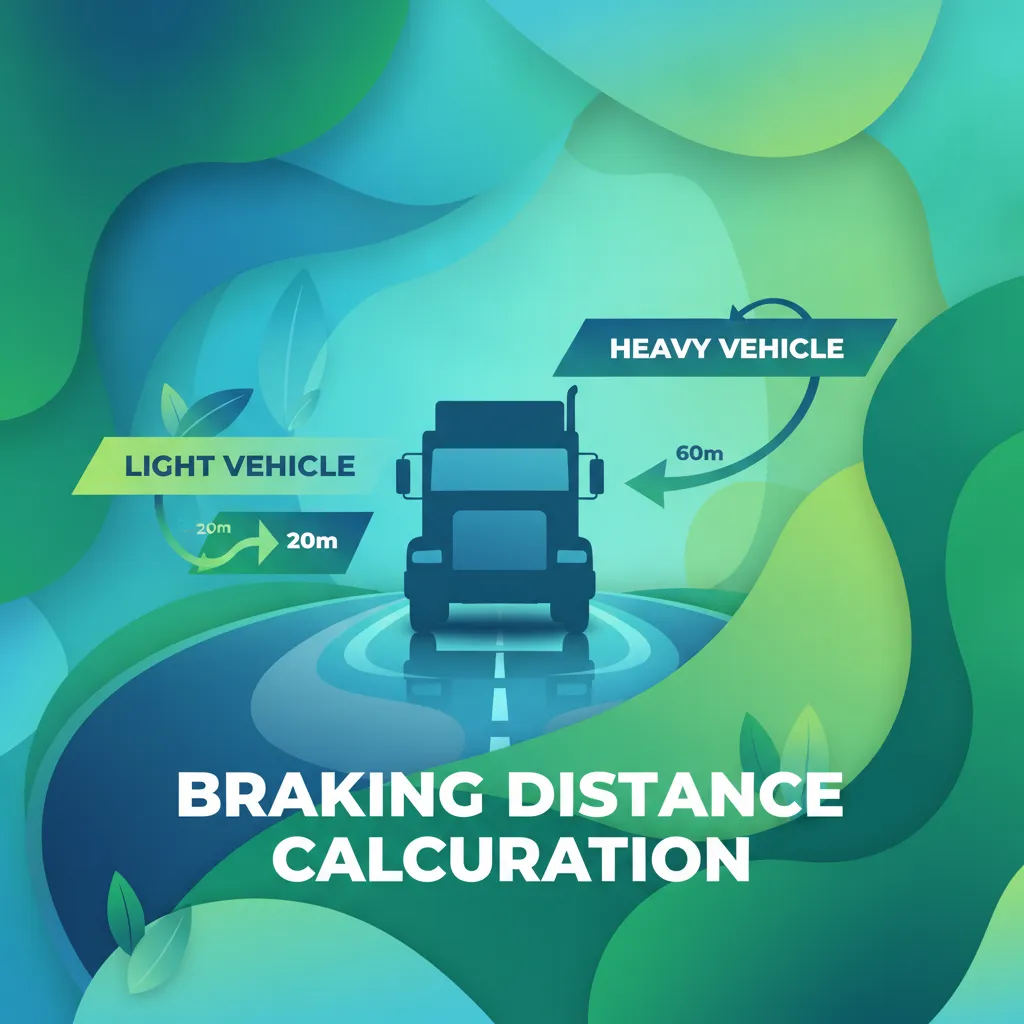
The immense mass of a loaded truck means its braking distance is far greater than that of a car. This lesson breaks down total stopping distance into reaction distance and braking distance, explaining how speed, weight, and road conditions have an exponential effect. It reinforces the necessity of maintaining a significantly larger following distance to ensure enough space to stop safely in an emergency.
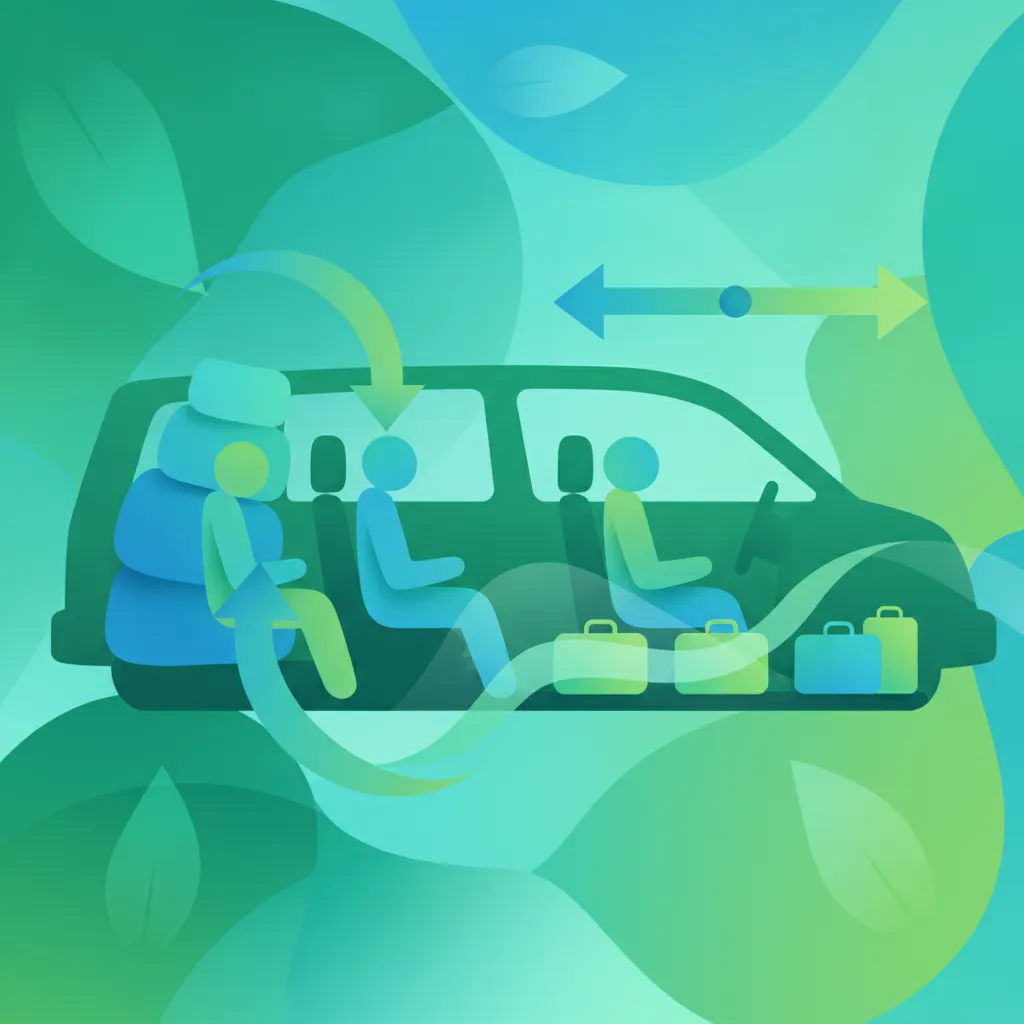
Correct load distribution is essential for safe handling and braking. This lesson explains that loads should be placed as low as possible and distributed evenly to maintain a low centre of gravity and comply with axle weight limits. A high or poorly positioned centre of gravity dramatically increases the risk of rollover, especially when cornering or in an emergency manoeuvre.
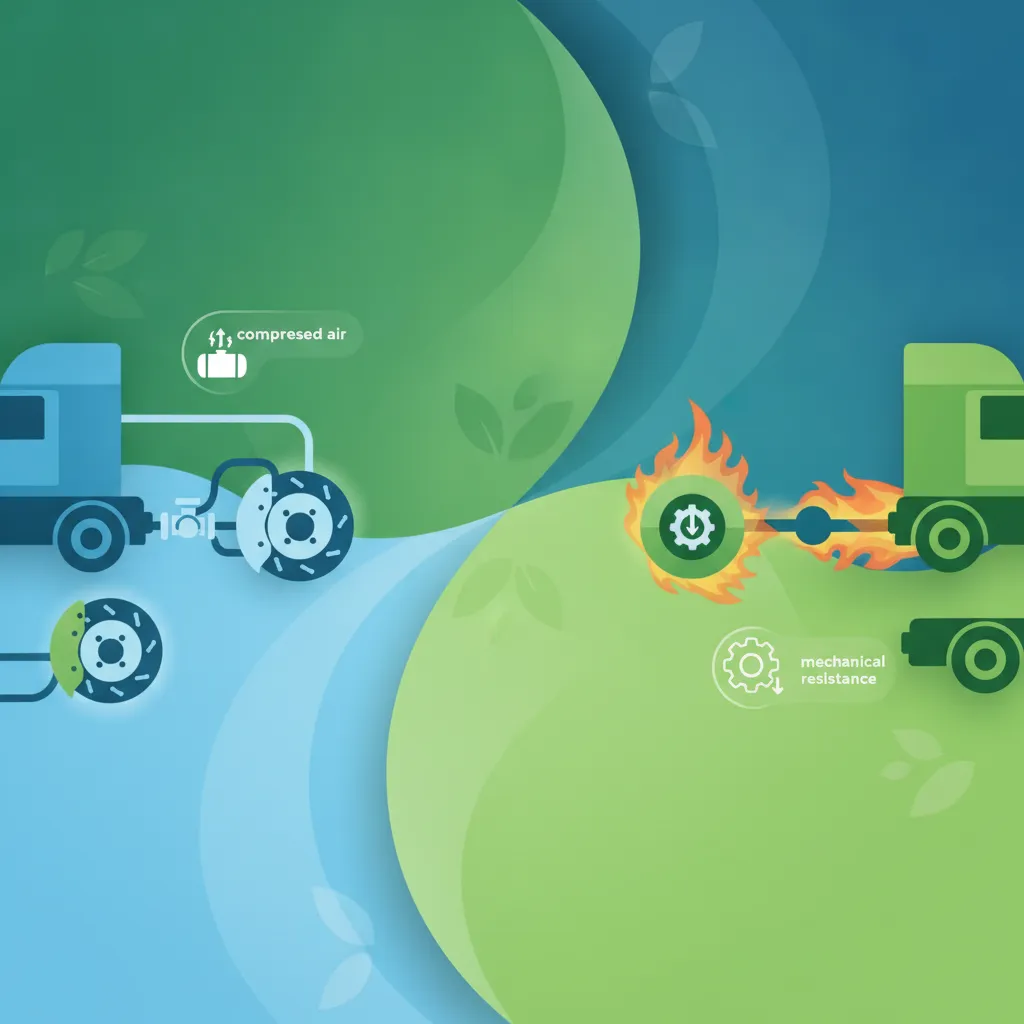
Large passenger vehicles rely on powerful air brake systems. This lesson explains how these systems work, including the importance of monitoring air pressure. It also details the function and proper use of auxiliary braking systems (retarders) to control speed on long descents and reduce wear on the service brakes.

The total weight of a vehicle is supported by its axles, and Swiss regulations set strict limits on the load each axle can bear. This lesson explains how to correctly distribute a load to comply with maximum axle load (Achslast) limits, which is vital for vehicle stability, steering control, and braking efficiency. Incorrect distribution can lead to dangerous handling characteristics and cause significant damage to road surfaces.

Heavy vehicles, especially those with a high centre ofgravity, are susceptible to rolling over. This lesson examines the primary causes, including excessive speed on bends or roundabouts, sudden steering manoeuvres, and the 'sloshing' effect of liquid loads in tankers. It reinforces that maintaining a sensible speed and driving smoothly are the best ways to mitigate this serious risk.

Wet or icy roads drastically reduce tyre grip and can double or triple braking distances. This lesson stresses the importance of significantly reducing overall speed and increasing following distances in such conditions. It advises on using brakes with extreme care to avoid skidding and explains how the vehicle's retarder should be used with caution as it can cause the drive wheels to lock up on slippery surfaces.

Overloading is a serious offence with severe safety and legal ramifications. This lesson details how excess weight drastically increases braking distances, puts extreme stress on tyres leading to blowouts, and negatively affects steering and overall stability. Furthermore, it discusses the substantial fines, potential license withdrawal, and driver liability that result from violating Swiss weight regulations.
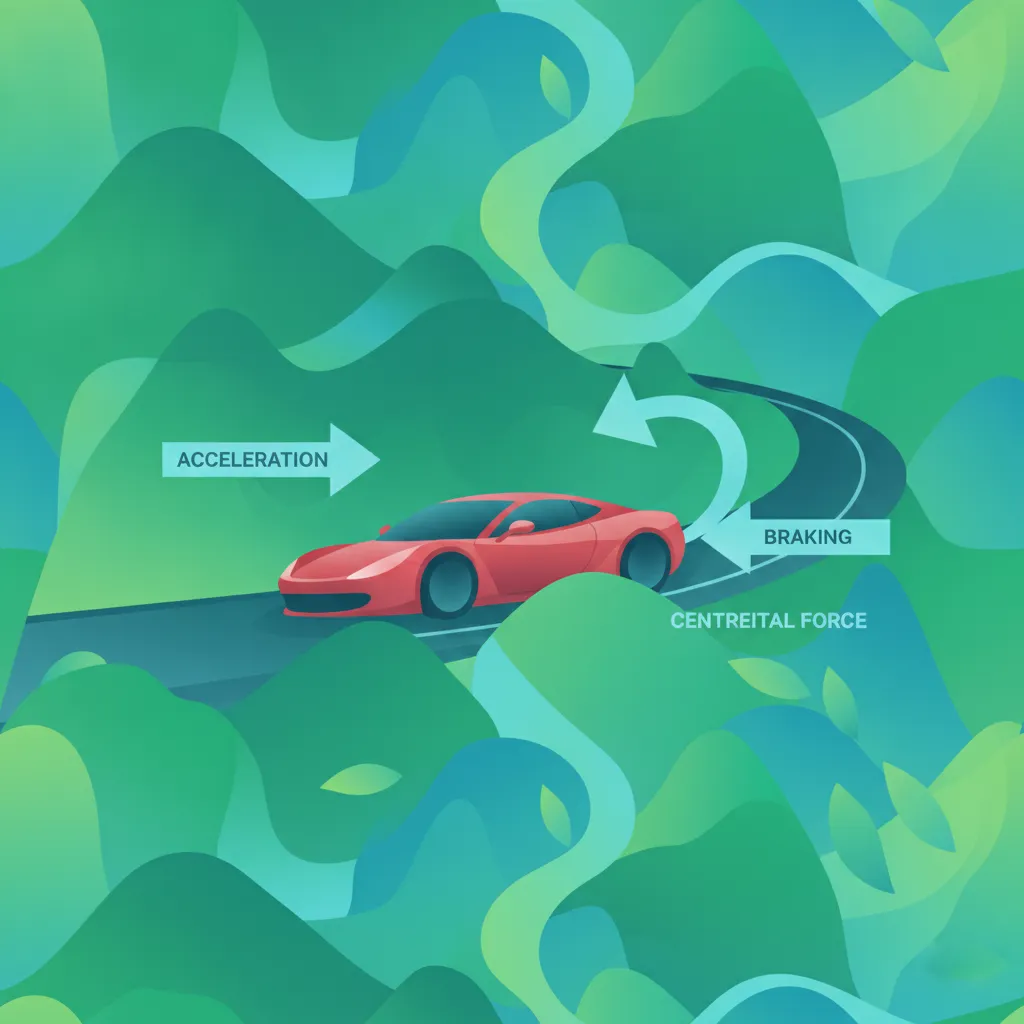
A load is not static; it is subjected to significant forces during transport. This lesson explains how acceleration, braking (deceleration), and cornering create powerful inertial forces that try to move the cargo. Load securing systems must be strong enough to counteract these forces to prevent the load from sliding forward during braking, backward during acceleration, or sideways when turning.

To prevent the service brakes from overheating and failing on long downhill gradients, heavy vehicles are equipped with endurance (or auxiliary) braking systems. This lesson explains the function of engine brakes (which alter valve timing) and retarders (which use hydrodynamic or electromagnetic force). These systems allow the driver to maintain a safe, controlled speed without relying solely on the service brakes.

Driving in the Alps requires a high level of skill and vehicle sympathy. This lesson covers techniques for climbing steep gradients by selecting the correct gear to maintain momentum without straining the engine. It reiterates the critical importance of using low gears and auxiliary brakes for descending, to ensure the service brakes remain cool and effective for the entire descent.
Understand the critical pre-drive inspection procedures for heavy vehicle suspension. Learn to identify signs of wear or damage and ensure compliance with Swiss roadworthiness standards for safety.

The condition of tyres and wheels is paramount to safety. This lesson details how to check tyre pressures, tread depth, and sidewalls for any damage or defects. You will also learn to inspect wheel nuts for security and look for signs of issues with the suspension system.

The driver is legally responsible for the roadworthiness of their vehicle at the start of and during every journey. This lesson outlines the formal process for reporting any identified defects to the transport manager or maintenance staff. It stresses the critical rule that a vehicle with a known safety-critical defect must not be driven until it has been professionally repaired and declared safe.
Before starting any journey, a professional driver must conduct a thorough pre-drive inspection. This lesson teaches a systematic walk-around method to check critical components like tyres, wheels, lights, mirrors, fluid levels, and safety equipment. This daily routine is a legal requirement and is crucial for identifying potential defects before they become a danger on the road.
The steering and tyres are two of the most critical safety components of any vehicle. This lesson explains how to perform basic checks on the power steering system and emphasizes the importance of daily tyre inspections. Drivers will learn to check for correct inflation pressure, sufficient tread depth (minimum legal requirements), and any signs of damage like cuts, bulges, or exposed cords on the sidewalls.

This lesson explores the requirements for maintaining vehicle roadworthiness, including regular technical inspections (MFK) and compliance with emission standards. It outlines the inspection criteria, such as brake performance, steering condition, and lighting system functionality. Understanding these inspections helps ensure safety and compliance with Swiss regulations.

The fifth wheel is the critical link between the tractor and semitrailer. This lesson details a visual inspection of the coupling, focusing on ensuring the locking jaws are secure, the safety latch is in place, and there is adequate lubrication on the skid plate. A thorough check of the fifth wheel mechanism is a non-negotiable part of the pre-drive inspection and after every coupling procedure.

Swiss law strictly regulates the maximum dimensions of commercial vehicles to ensure they can safely navigate the infrastructure. This lesson specifies the standard limits for vehicle height (4.0m), width (2.55m), and length for various lorry and trailer combinations. Adhering to these dimensions is crucial for avoiding collisions with bridges, tunnels, and other structures, and for navigating narrow roads.

Many modern lorries are equipped with technologies designed to improve safety. This lesson introduces common systems like reversing cameras, blind spot detection sensors, and lane departure warnings. It is crucial for drivers to understand that while these systems are valuable aids, they do not replace the need for fundamental skills of all-round observation and mirror use.

Proper visibility is paramount for the safety of large vehicles, especially at night or in poor weather. This lesson covers the full range of required lights, including headlights, indicators, brake lights, and side and rear marker lights. It also explains the function of reflectors and the mandatory high-visibility conspicuity markings that outline the vehicle's shape to other drivers.

The dashboard is the vehicle's primary communication interface with the driver. This lesson explains how to read essential gauges, such as the air pressure gauges for the braking system, the tachometer, and the fuel level. It focuses on recognizing the meaning of different warning lights (red for urgent, amber for caution) and the importance of stopping safely to investigate any critical alerts immediately.
Find clear answers to common questions learners have about Suspension Systems and Their Impact on Stability. Learn how the lesson is structured, which driving theory objectives it supports, and how it fits into the overall learning path of units and curriculum progression in Switzerland. These explanations help you understand key concepts, lesson flow, and exam focused study goals.
Air suspension provides a more constant ride height regardless of the load, which improves comfort and significantly reduces wear on both the vehicle and the road surface. It also allows for better adjustment when loading and unloading, making it a standard feature in modern heavy-duty transport.
Yes, a faulty or worn suspension prevents the tyres from maintaining consistent contact with the road. This reduces the efficiency of your brakes and can lead to increased stopping distances and loss of control, especially when the vehicle is fully loaded.
The shock absorber controls the movement of the springs. Without functioning shock absorbers, the vehicle would continue to bounce after hitting a bump, leading to instability, potential cargo damage, and reduced steering control.
The suspension system connects the axles to the chassis; if this connection is compromised, the vehicle's centre of gravity can shift unpredictably during cornering or braking. A well-maintained suspension ensures the vehicle remains stable and resists rolling, which is critical for heavy vehicles.
Pinpoint specific Swiss traffic rules, road signs, or driving situations you need to master. Use the practice search to start a focused revision session now and build confidence for your official driving theory exam.