
This lesson teaches professional Category D drivers how to manage speed beyond simple legal limits. You will learn to evaluate road, weather, and traffic factors to ensure passenger safety and control in various Swiss environments.
Lesson content overview
Welcome to this essential lesson in the Swiss Category D Driving License Theory Course. As a professional driver of a bus or coach, managing your speed effectively is one of the most critical skills you will master. This isn't just about adhering to posted speed limits; it's about continuously assessing your environment and adjusting your speed to ensure safety, passenger comfort, and vehicle control under all circumstances.
The legal speed limit is always a maximum, never a target. Your primary duty is to drive at a speed that allows you to react safely to any situation, stop within the distance you can clearly see ahead, and maintain complete control of your vehicle, especially given its size, weight, and the vulnerable passengers you transport.
Effective speed management is a continuous, context-sensitive process. It demands that you constantly evaluate prevailing conditions and adapt your driving accordingly. This approach is fundamentally different from simply watching your speedometer to stay below the maximum legal speed. For large passenger vehicles like buses and coaches, precision in speed management is paramount to protect your passengers and other road users.
The posted speed limit indicates the highest speed legally permissible on a particular stretch of road. It serves as an upper boundary to prevent drivers from traveling at speeds that the general road environment cannot safely accommodate. However, it does not guarantee that driving at this limit is safe under all conditions. As a professional driver, you must always be prepared to reduce your speed significantly below the posted limit when conditions demand it, such as during adverse weather, heavy traffic, or on challenging road sections.
The Visible Stopping Distance (VSD) is defined as the maximum distance ahead that you can clearly see to be free of obstacles or hazards. This distance is dynamic and is heavily influenced by factors such as road curvature, line-of-sight obstructions, weather conditions, and lighting levels. Your ability to see what's ahead directly dictates the maximum safe speed you can maintain. You must always ensure that your vehicle can come to a complete stop within your VSD.
Total Stopping Distance (TSD) is the cumulative distance your vehicle travels from the moment you perceive a hazard until it comes to a complete halt. It comprises three distinct phases:
For safe driving, your TSD must always be less than or equal to your VSD. This fundamental principle ensures you can stop before colliding with any unforeseen obstacle within your line of sight.
Adjusted speed is the actual speed you select after meticulously factoring in all relevant conditions. This includes road geometry, traffic density, prevailing weather, and your vehicle's load. It is the speed at which you can safely navigate the current situation, ensuring that your TSD never exceeds your VSD, and always remaining below the posted legal limit.
A safety cushion refers to the additional margin of distance or time you maintain beyond the absolute minimum required to stop safely. This extra buffer is crucial for professional drivers, especially when operating large passenger vehicles. It accounts for unexpected events, minor driver fatigue, variations in braking performance, and provides more time to react to the unpredictable actions of other road users. Maintaining a generous safety cushion is a hallmark of responsible and proactive driving.
Your chosen speed must be a dynamic variable, continuously adjusted based on a multitude of real-time factors. Ignoring any of these can compromise safety.
Legal speed limits are clearly indicated by road signs. These limits vary based on the type of road and location, such as urban areas (e.g., 50 km/h), rural roads (e.g., 80 km/h), and motorways (e.g., 100 km/h for buses without trailers in Switzerland, sometimes 80 km/h for coaches or specific types). While you must never exceed these limits, your practical speed often needs to be lower. For example, a 80 km/h limit on a rural road is the absolute maximum, but in dense fog, you might need to reduce your speed to 30 km/h or even less to ensure safety.
The physical characteristics of the road surface significantly impact your vehicle's traction and braking performance.
The nature of traffic flow directly influences your safe operating speed and the necessary following distance.
Adverse weather dramatically impacts both visibility (your VSD) and road surface friction.
The characteristics of your bus or coach itself play a crucial role in speed management.
Always consider the combined effect of these factors. For instance, a fully loaded bus on a wet, winding mountain road in heavy fog requires a far greater speed reduction than any single condition would suggest on its own.
Adhering to legal speed limits is a basic requirement, but professional bus and coach drivers have a higher duty of care. Swiss road traffic regulations reinforce the need for active speed management based on conditions.
Under no circumstances may a driver exceed the posted speed limit. These limits are non-negotiable maximums. For example, on a Swiss urban road with a 50 km/h limit, driving at 45 km/h is compliant, but driving at 55 km/h is a violation.
Swiss law, specifically Article 14 of the Road Traffic Act, mandates that drivers must adjust their speed to ensure they can stop within the visible distance, taking into account current road, traffic, and weather conditions. This is a continuous obligation. If visibility is reduced to 30 meters due to fog on a road with a 50 km/h limit, maintaining 50 km/h is illegal because your Total Stopping Distance would likely exceed your Visible Stopping Distance. A correct adjustment might be driving at 30 km/h or less.
Article 26 of the Swiss Road Traffic Act requires drivers to maintain a safe following distance that allows for adequate perception, reaction, and braking. For professional drivers, particularly with passengers, this distance must be ample. A common rule of thumb is the "2-second rule" (or more, especially with a heavy vehicle or adverse conditions). Tailgating with a 0.5-second gap on a motorway is dangerous and violates this regulation.
During conditions such as rain, snow, ice, or fog, drivers are legally obliged to reduce their speed to a level consistent with safe stopping within the VSD. For instance, driving at 30 km/h on a wet gravel road might be appropriate, whereas maintaining 60 km/h would be highly unsafe due to significantly reduced traction.
Drivers must also adjust their speed when approaching and negotiating curves, steep gradients, and intersections. This is part of the general obligation to drive safely under Swiss law. Reducing speed before a sharp turn on a mountain road is critical to avoid loss of control. Ignoring this and maintaining a high speed risks skidding or, in extreme cases, a rollover.
Even experienced drivers can sometimes fall into habits that compromise safe speed management. Be aware of these common pitfalls:
Speed management is an ongoing calculation influenced by the ever-changing driving environment.
Every decision you make regarding your speed has direct cause-and-effect relationships with safety, comfort, and vehicle longevity.
The principles of speed management are rooted in fundamental physics and human limitations:
Managing speed is arguably the most fundamental aspect of safe driving for a professional bus or coach driver. It requires constant awareness, sound judgment, and a proactive approach that prioritizes safety and passenger comfort above all else. Remember that legal speed limits are maximums; your true safe speed is determined by the constantly changing conditions around you. By diligently applying the principles of Visible Stopping Distance, Total Stopping Distance, Adjusted Speed, and maintaining a robust Safety Cushion, you will ensure compliance with Swiss road traffic laws and foster a safe, smooth, and comfortable journey for your passengers.
This lesson teaches professional Category D drivers the essential skill of dynamic speed management that goes beyond legal compliance. The core principle is that your Total Stopping Distance must never exceed your Visible Stopping Distance, requiring continuous assessment of road, weather, traffic, and vehicle conditions. Swiss law under Articles 14 and 26 mandates this approach, with specific requirements for adverse weather and following distances. Key factors affecting safe speed include surface conditions, gradients, weather visibility, traffic density, and vehicle load. Understanding the physics—particularly that braking distance increases quadratically with speed—helps drivers make informed, conservative speed choices that protect passengers and other road users.
A short set of high-value points that capture the most important learning from this lesson.
The posted speed limit is always a maximum, never a target; your actual safe speed must account for all prevailing conditions
Visible Stopping Distance (VSD) is the maximum distance you can see ahead clearly, and your Total Stopping Distance (TSD) must always be less than or equal to your VSD
TSD consists of three phases: perception distance, reaction distance, and braking distance, each contributing to your ability to stop safely
Adverse weather (rain, fog, snow, ice) dramatically reduces both your VSD and road friction, requiring significant speed reductions
Vehicle load significantly increases braking distance because additional mass means greater kinetic energy to dissipate
Explore all units and lessons included in this driving theory course.
Article 14 of the Swiss Road Traffic Act requires drivers to adjust speed so they can stop within the visible distance
Article 26 mandates maintaining a safe following distance that accounts for perception, reaction, and braking
Stopping distance increases quadratically with speed—doubling speed roughly quadruples braking distance
A fully loaded bus requires substantially longer stopping distances than an empty one, especially on downhill gradients
Electronic stability control and emergency braking systems have limits and do not replace driver judgment
Assuming that as long as speed is below the legal limit, it is automatically safe regardless of conditions
Maintaining insufficient following distance with a heavy vehicle, especially on wet roads
Failing to reduce speed or use engine braking on steep descents, risking brake fade or runaway vehicle
Entering curves too fast in a large, heavy vehicle, risking loss of traction or rollover
Underestimating how reduced visibility from fog or darkness shortens the visible stopping distance
Lesson content overview
A short set of high-value points that capture the most important learning from this lesson.
The posted speed limit is always a maximum, never a target; your actual safe speed must account for all prevailing conditions
Visible Stopping Distance (VSD) is the maximum distance you can see ahead clearly, and your Total Stopping Distance (TSD) must always be less than or equal to your VSD
TSD consists of three phases: perception distance, reaction distance, and braking distance, each contributing to your ability to stop safely
Adverse weather (rain, fog, snow, ice) dramatically reduces both your VSD and road friction, requiring significant speed reductions
Vehicle load significantly increases braking distance because additional mass means greater kinetic energy to dissipate
Explore all units and lessons included in this driving theory course.
Article 14 of the Swiss Road Traffic Act requires drivers to adjust speed so they can stop within the visible distance
Article 26 mandates maintaining a safe following distance that accounts for perception, reaction, and braking
Stopping distance increases quadratically with speed—doubling speed roughly quadruples braking distance
A fully loaded bus requires substantially longer stopping distances than an empty one, especially on downhill gradients
Electronic stability control and emergency braking systems have limits and do not replace driver judgment
Assuming that as long as speed is below the legal limit, it is automatically safe regardless of conditions
Maintaining insufficient following distance with a heavy vehicle, especially on wet roads
Failing to reduce speed or use engine braking on steep descents, risking brake fade or runaway vehicle
Entering curves too fast in a large, heavy vehicle, risking loss of traction or rollover
Underestimating how reduced visibility from fog or darkness shortens the visible stopping distance
Explore search topics learners often look for when studying Managing Speed Based on Road, Traffic, and Weather Conditions. These topics reflect common questions about road rules, driving situations, safety guidance, and lesson level theory preparation for learners in Switzerland.
Browse additional driving theory lessons that cover connected traffic rules, road signs, and common driving situations related to this topic. Improve your understanding of how different rules interact across everyday traffic scenarios.
Understand how to adjust your speed for rain, fog, snow, and ice in Switzerland. Learn to maintain safety and control for Category D drivers when visibility and traction are compromised, focusing on theory principles.
This lesson examines the impact of weather and visibility on driving safety and speed selection. It covers how fog, rain, snow, and darkness affect visibility and reaction times, providing guidelines on adjusting speed. It also includes strategies for improving visibility, such as proper headlamp use, to ensure you can adapt to varying weather conditions.

This lesson examines the impact of various weather conditions on driving safety. It explains how to adjust speed in low visibility and the risks of aquaplaning in heavy rain. The content also covers using snow chains in snowy conditions, handling icy surfaces, and dealing with strong winds, particularly on bridges and open roads.
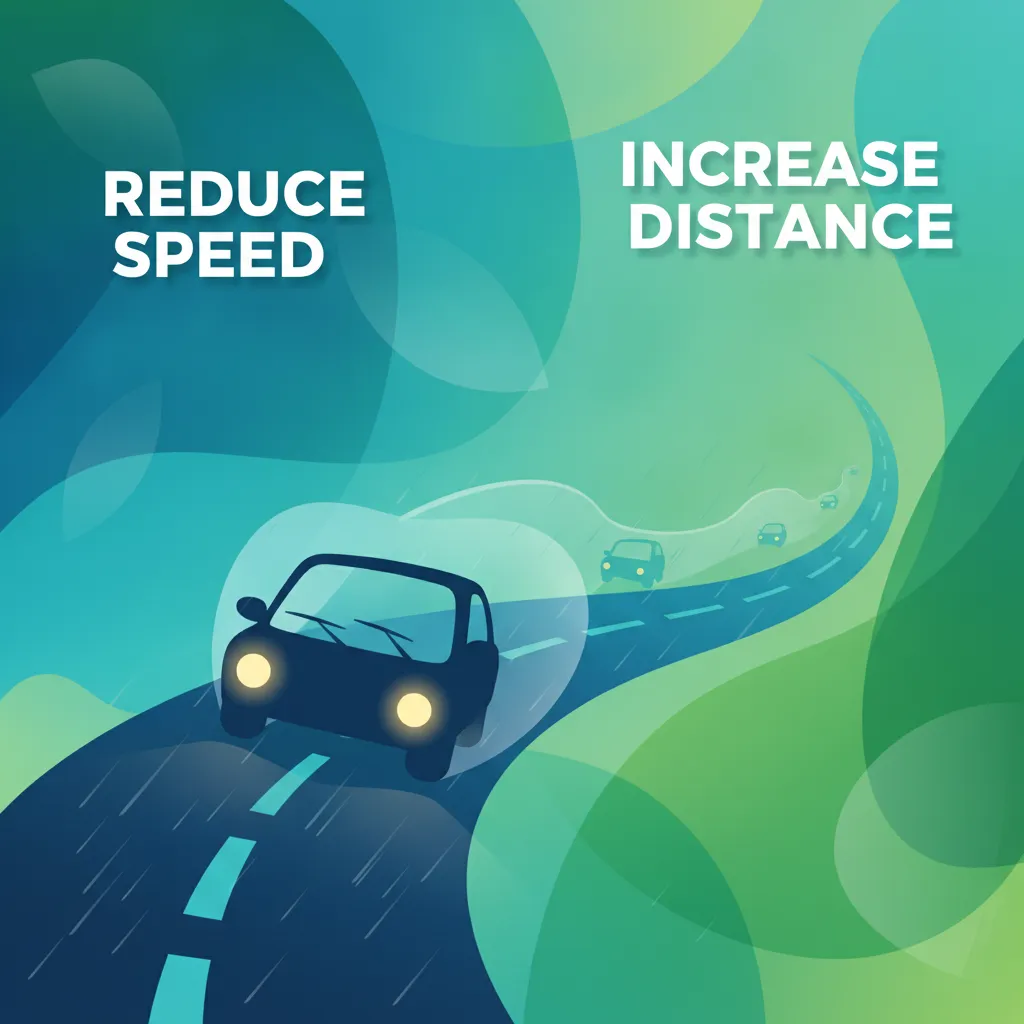
Weather has a profound impact on vehicle handling and visibility. This lesson teaches you how to reduce speed, increase following distances, and use controls smoothly to maintain traction in poor conditions. It also covers the legal requirements and practical application of snow chains in winter.
Wet or icy roads drastically reduce tyre grip and can double or triple braking distances. This lesson stresses the importance of significantly reducing overall speed and increasing following distances in such conditions. It advises on using brakes with extreme care to avoid skidding and explains how the vehicle's retarder should be used with caution as it can cause the drive wheels to lock up on slippery surfaces.
This lesson details how adverse weather conditions like rain, fog, and snow affect motorcycle safety. It explains how wet surfaces reduce tyre grip, requiring smoother control inputs and longer braking distances. Strategies for managing reduced visibility in fog and the extreme hazards of riding on snow and ice are also covered.

This lesson focuses on driving on mountain roads, addressing steep gradients, hairpin bends, and altitude-related challenges. You will learn proper techniques for climbing ascents and using engine braking on descents. The content also covers the use of snow chains, recognizing avalanche risks, and interpreting mountain road signs for safe alpine navigation.
This lesson focuses on adapting braking techniques for low-traction surfaces like wet or icy roads. It explains the need for gentle, progressive brake application to prevent wheel lock-up and maintain control. Learners will understand how to scan the road ahead for potential hazards and adjust their braking strategy accordingly.
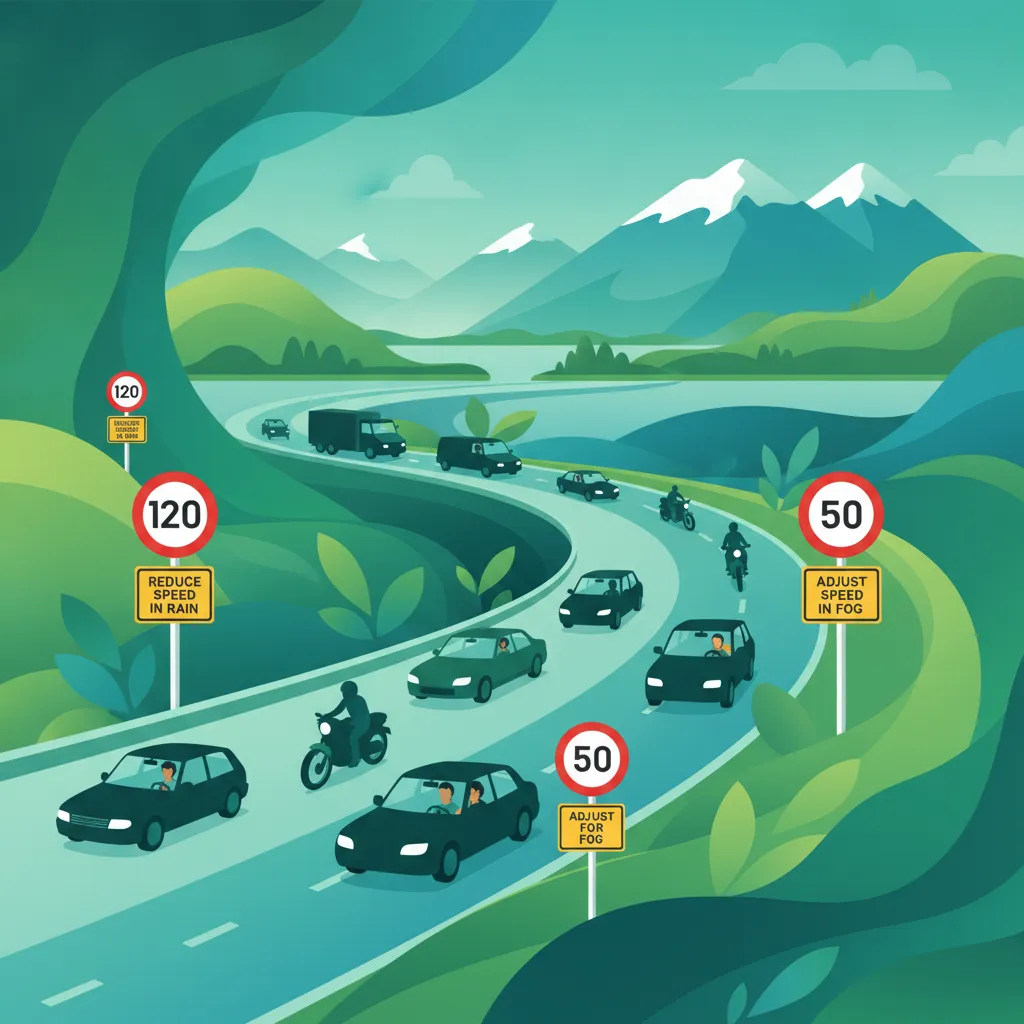
This lesson details the different speed limits applicable in urban, rural, and motorway environments across Switzerland. It explains speed limit signs, temporary restrictions, and how to adapt speed safely based on visibility and road conditions. Understanding these principles helps you comply with legal limits while ensuring an appropriate speed for the circumstances.
This lesson introduces defensive driving principles, focusing on hazard anticipation, continuous scanning, and proactive positioning. You will learn how to anticipate potential hazards by observing traffic patterns and maintaining situational awareness. Emphasis is placed on proactive speed management to avoid dangerous situations before they arise.

This lesson provides essential strategies for riding in adverse weather like rain and fog. It explains how to increase following distances, reduce speed, and use lights effectively to enhance visibility. The content also addresses the loss of traction on wet roads and the importance of smooth control inputs for braking, accelerating, and steering.
Learn how road geometry like curves and gradients affects safe speed for Category D bus drivers in Switzerland. Understand the theory behind adjusting speed for safe cornering and descents.
This lesson focuses on driving on mountain roads, addressing steep gradients, hairpin bends, and altitude-related challenges. You will learn proper techniques for climbing ascents and using engine braking on descents. The content also covers the use of snow chains, recognizing avalanche risks, and interpreting mountain road signs for safe alpine navigation.
This lesson details the different speed limits applicable in urban, rural, and motorway environments across Switzerland. It explains speed limit signs, temporary restrictions, and how to adapt speed safely based on visibility and road conditions. Understanding these principles helps you comply with legal limits while ensuring an appropriate speed for the circumstances.

This lesson provides specialized techniques for safely handling hairpin turns and steep gradients. It teaches riders how to manage speed on approach, select the correct line through the bend, and use both brakes and engine braking on descents. Proper throttle control for maintaining momentum on uphill climbs is also covered.
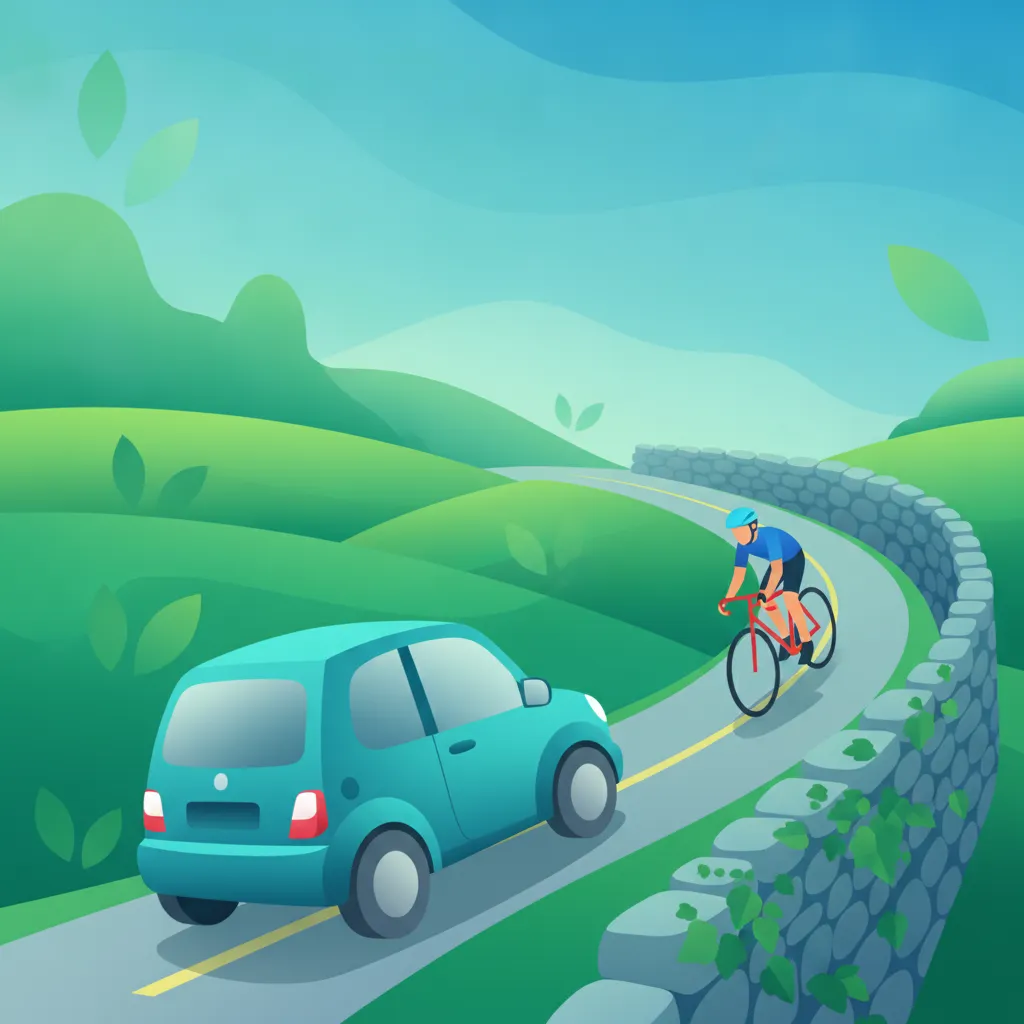
Rural roads present challenges like narrow lanes, poor surfaces, sharp bends, and limited visibility. This lesson teaches drivers how to position their large vehicle to maximize space and visibility, anticipate oncoming traffic at blind corners, and be aware of specific rural hazards. These hazards include slow-moving agricultural vehicles, animals on the road, and concealed farm entrances.
Driving in the Alps requires a high level of skill and vehicle sympathy. This lesson covers techniques for climbing steep gradients by selecting the correct gear to maintain momentum without straining the engine. It reiterates the critical importance of using low gears and auxiliary brakes for descending, to ensure the service brakes remain cool and effective for the entire descent.
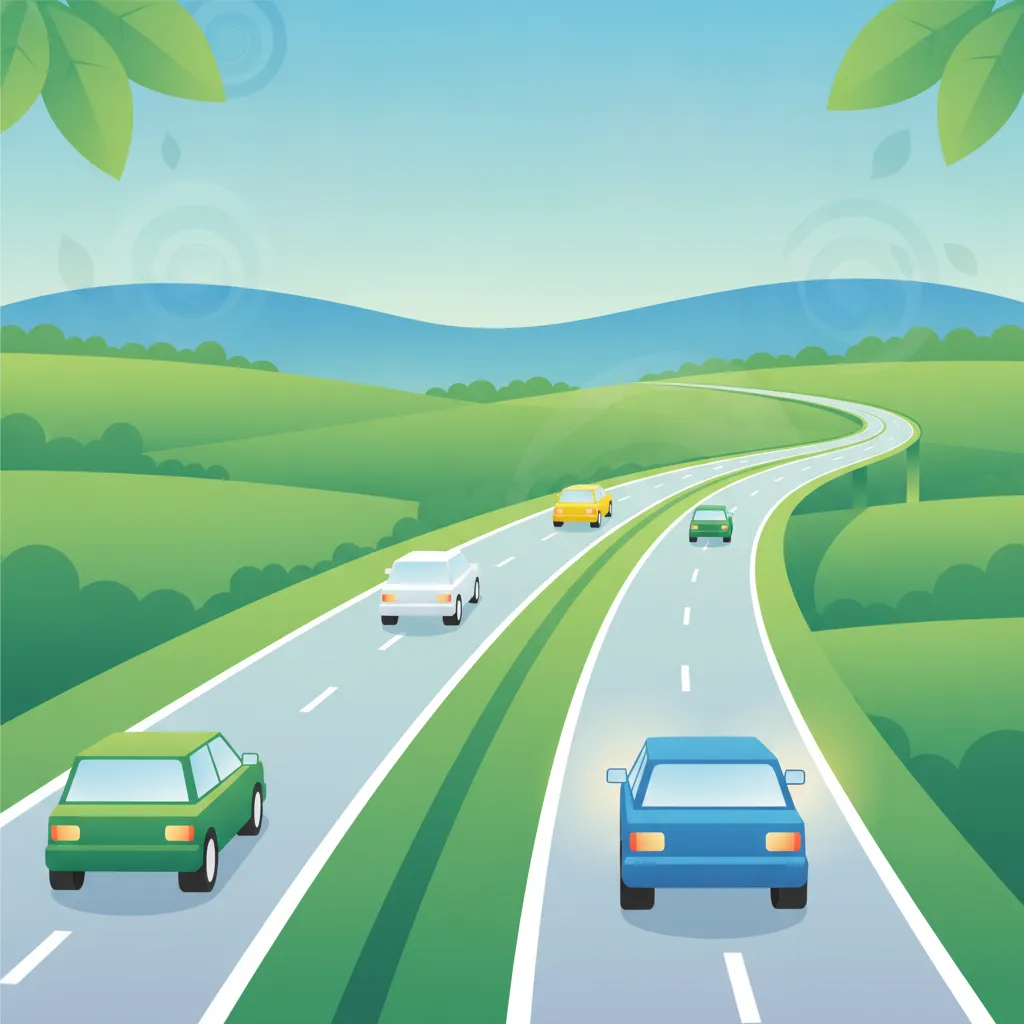
Motorway driving involves high speeds and requires constant concentration. This lesson covers correct lane discipline, safe procedures for joining and leaving the motorway, and techniques for overtaking other large vehicles. Maintaining appropriate speed and a safe following distance is emphasized throughout.

This lesson focuses on general driving safety in areas with a high concentration of children. It stresses the importance of significantly reducing speed, being prepared for unexpected events, and scanning for children between parked cars. The driver must exhibit maximum vigilance in these high-risk environments at all times.
This lesson examines the impact of weather and visibility on driving safety and speed selection. It covers how fog, rain, snow, and darkness affect visibility and reaction times, providing guidelines on adjusting speed. It also includes strategies for improving visibility, such as proper headlamp use, to ensure you can adapt to varying weather conditions.

Driving a large vehicle on mountain passes is a demanding skill. This lesson covers selecting the correct gear for both ascents and descents to maintain control and avoid overheating the brakes. It also explains the specific priority rules that apply on mountain roads and the importance of being aware of sudden weather changes.
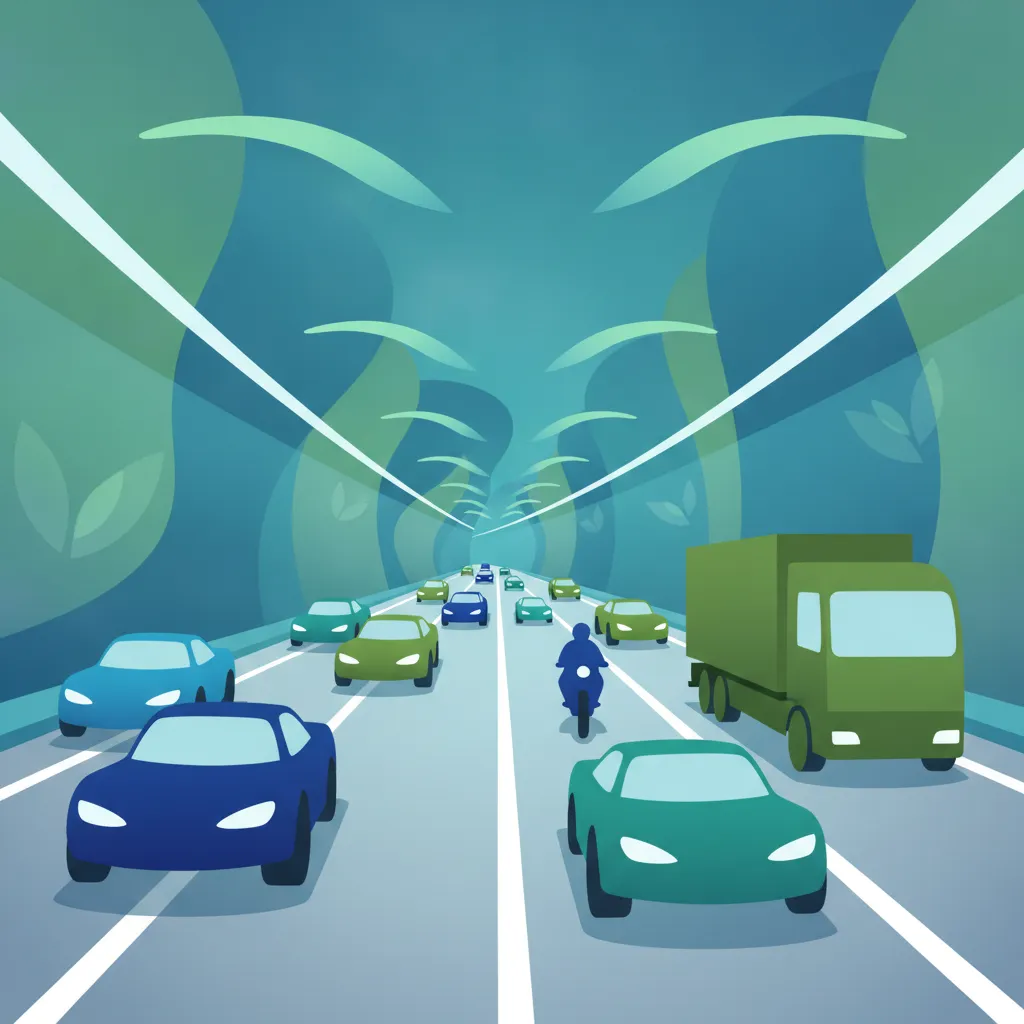
This lesson explores the rules for driving on motorways and navigating tunnels. It covers entry and exit procedures, lane discipline, minimum speed requirements, and overtaking protocols on high-speed roads. For tunnels, the content explains speed limits, lighting, emergency exits, and ventilation requirements for safe travel.
Find clear answers to common questions learners have about Managing Speed Based on Road, Traffic, and Weather Conditions. Learn how the lesson is structured, which driving theory objectives it supports, and how it fits into the overall learning path of units and curriculum progression in Switzerland. These explanations help you understand key concepts, lesson flow, and exam focused study goals.
Large passenger vehicles like buses have different braking and handling characteristics compared to cars. Drivers must maintain a speed that allows for a safe stop based on current visibility and road surface conditions, regardless of the posted legal limit.
Mountain roads often have steep gradients and tight curves that demand lower speeds for stability and to prevent brake overheating. You must always maintain a speed that allows you to manage the vehicle's descent safely using auxiliary braking.
Yes, you will likely encounter scenarios requiring you to identify that speed must be reduced in conditions such as heavy rain, snow, or fog to account for longer stopping distances and lower visibility.
Yes, professional passenger transport requires smooth driving. High speeds on curves or aggressive braking are penalized in theory scenarios because they risk passenger injury and reduce comfort.
Pinpoint specific Swiss traffic rules, road signs, or driving situations you need to master. Use the practice search to start a focused revision session now and build confidence for your official driving theory exam.