
Welcome to the lesson on Legal Limits on Duty Hours, part of the Fatigue & Professional Conduct unit. This module is crucial for professional bus and coach drivers, as understanding and adhering to these regulations is vital for passenger safety and legal compliance in Spain. We will delve into the specific DGT rules that govern your working hours and rest periods.

Lesson content overview
Operating a professional bus or coach in Spain, under a Category D or D1 driving license, comes with significant responsibilities, not least of which is adhering to strict legal limits on driving and rest periods. These regulations, primarily derived from EU Regulation 165/2014 and enforced by the Dirección General de Tráfico (DGT), are designed to prevent driver fatigue, enhance road safety for all users, and ensure fair working conditions. This comprehensive lesson, part of your Professional Bus and Coach Theory for Spanish Driving License – Category D & D1 course, will outline the detailed framework governing these critical aspects of a professional driver's work life.
Understanding and complying with these duty hour limits is not merely a bureaucratic requirement; it is a fundamental aspect of professional conduct that directly impacts the safety of passengers and other road users. Violations can lead to severe consequences, including substantial fines, license suspension, and, in cases of serious negligence leading to incidents, even criminal liability.
The legal framework for driver duty hours serves as a cornerstone of road safety. Its primary objective is to mitigate the risks associated with driver fatigue, which significantly impairs judgment, reaction time, and overall driving performance. By setting clear, quantitative limits on how long a driver can continuously operate a vehicle and how much rest they must take, these regulations aim to align operational efficiency with the physiological capabilities and safety needs of human drivers.
Fatigue is a significant factor in road accidents, contributing to reduced vigilance, slower decision-making, and an increased likelihood of error. The rules governing driving times, breaks, and rest periods are thus safety-driven, aligning with scientific understanding of human performance limitations. These regulations connect directly to broader themes of professional responsibility and risk management, ensuring that drivers are always in a fit state to handle large passenger vehicles, respond effectively in emergencies, and uphold high standards of customer service.
The regulation of driver duty hours is built upon several core principles, each addressing a specific aspect of fatigue prevention and operational management. These principles establish a balance between the demands of the transport industry and the imperative for public safety.
Professional drivers are subject to strict limits on how much time they can spend actively driving. These limits are designed to prevent both acute fatigue from a single long shift and cumulative fatigue built up over successive days or weeks.
The total time a driver spends actively controlling the vehicle on the road. This is continuously measured by a digital tachograph.
These cumulative limits are absolute and are designed to prevent drivers from being overworked consistently. Fleet planners and drivers alike must meticulously manage schedules to ensure compliance, as exceeding these totals carries significant penalties.
Even within the permissible driving hours, drivers are required to take regular breaks to interrupt continuous driving and allow for temporary recovery. These breaks are distinct from daily or weekly rest periods.
A short rest period, lasting at least 15 minutes, taken during a working day to interrupt continuous driving.
A common misunderstanding is that any stop, regardless of duration or purpose, counts as a break. Mandatory breaks must be dedicated to rest and meet the minimum uninterrupted time requirements.
Beyond breaks during driving, professional drivers must take substantial uninterrupted rest periods to ensure full recovery between shifts and over longer periods.
An uninterrupted off-vehicle period during which a driver is free to dispose of their time as they wish, satisfying legal rest requirements.
These rules ensure that drivers have sufficient time away from work to fully recuperate, both mentally and physically, preventing cumulative fatigue that can lead to burnout and increased accident risk.
Accurate record-keeping is paramount for ensuring compliance with duty hour regulations. For professional bus and coach drivers in Spain operating vehicles over 3.5 tonnes, the use of a digital tachograph is mandatory. This sophisticated device automatically records driving time, other work, availability, and rest periods, providing an indisputable log of a driver's activities.
Insert Driver Card: Before beginning any shift, ensure your personal digital tachograph card is correctly inserted into Slot 1 of the tachograph unit.
Select Activity: The tachograph will automatically detect "driving" when the vehicle is in motion. For other activities, such as "other work" (e.g., loading, unloading, administrative tasks), "availability" (e.g., waiting, co-driving), or "rest," select the appropriate mode manually.
Remove Card: At the end of your shift, remove your driver card. If you switch vehicles, remember to remove your card from the first vehicle and insert it into the next.
Manual Entries (if necessary): If you are unable to insert your card for a short period (e.g., due to forgetting it briefly), you must make manual entries on the tachograph unit to accurately record your activities. This must be done immediately upon rectifying the omission.
Failure to use the digital tachograph correctly, or attempting to manipulate its data, constitutes a serious violation and carries severe penalties for both the driver and the operating company. Always ensure your card is inserted and activities are accurately recorded.
Beyond direct driving time, regulations also consider a driver's overall "work-day" and periods of "availability." These definitions are essential for calculating cumulative limits and ensuring comprehensive fatigue management.
It is important not to confuse "availability" with "rest." Rest periods must be uninterrupted time where the driver is free from any work-related duties. On-call periods, where a driver must be ready to respond to a call, typically do not count as rest if their freedom of movement is restricted or they are required to stay at a specific location.
While adhering to legal limits is mandatory, effective fatigue management extends beyond simply meeting the minimum requirements. Individual drivers, and the companies they work for, should implement proactive strategies to identify, prevent, and mitigate fatigue.
Always prioritize safety. If you feel drowsy or fatigued, stop in a safe location and take a sufficient break, even if you haven't reached your legal driving limit for the period. Your well-being and the safety of others depend on it.
Violations of driving and rest time regulations carry significant legal consequences in Spain, affecting both the individual driver and the operating company. Enforcement is robust, with checks conducted by DGT inspectors during roadside stops, at company premises, and through automated data analysis of tachograph records.
Even with clear rules, misunderstandings and operational pressures can lead to common violations. Being aware of these pitfalls can help drivers and companies maintain compliance.
While the legal limits on duty hours are fixed, their practical application can be influenced by various operational and environmental factors. Professional drivers must exercise good judgment and apply sound fatigue management principles in all situations.
The regulations discussed are not arbitrary; they are deeply rooted in scientific understanding of human physiology and psychological responses to prolonged activity.
To ensure complete understanding and adherence, here’s a concise summary of the key legal limits and requirements for professional bus and coach drivers in Spain:
This lesson covers the strict legal framework governing duty hours for Spanish Category D/D1 bus and coach drivers under DGT enforcement and EU Regulation 165/2014. Key limits include a maximum 9 hours of daily driving (extendable to 10 hours twice weekly), 56 hours weekly, and 90 hours fortnightly, with a mandatory 45-minute break after 4.5 hours of continuous driving. Daily rest must be at least 11 hours (or 9 hours reduced with compensation), and weekly rest at least 45 hours (or 24 hours reduced with compensation). Digital tachographs are mandatory for record-keeping, and violations carry administrative fines, licence points deductions, potential suspension, and company liability. Beyond meeting legal minimums, drivers are encouraged to proactively manage fatigue through self-monitoring and healthy lifestyle practices.
A short set of high-value points that capture the most important learning from this lesson.
Maximum daily driving time is 9 hours, extendable to 10 hours on no more than two occasions within a week.
Weekly driving limit is 56 hours and fortnightly limit is 90 hours—these cumulative totals must be tracked alongside daily limits.
A mandatory 45-minute break is required after 4.5 hours of continuous driving, and this break can be split into 15 minutes followed by 30 minutes.
Digital tachograph usage is mandatory for all Category D drivers; driver cards must be inserted before starting work and removed at the end of each shift.
Reduced rest periods (9 hours daily or 24 hours weekly) require equivalent compensation rest taken before the end of the third week following the reduction.
Explore all units and lessons included in this driving theory course.
4.5 hours of continuous driving triggers a 45-minute break requirement—not a quick stop for passenger boarding.
Availability is NOT rest; waiting periods where a driver must remain at workstation do not satisfy rest period requirements.
Regular daily rest is 11 consecutive hours (can split 3h + 9h); reduced daily rest is 9 hours but only permitted three times between weekly rests.
If daily driving reaches 56 hours in one week, the following week allows only 34 hours maximum to stay within the 90-hour fortnightly limit.
Tachograph data must be regularly downloaded by the operating company—drivers are responsible for correct card usage and activity mode selection.
Believing any stop counts as a mandatory break—only uninterrupted periods of at least 45 minutes (or 15+30 minutes) dedicated to rest satisfy the requirement.
Tracking only daily driving limits and accidentally exceeding the 56-hour weekly or 90-hour fortnightly maximums through accumulated overtime.
Counting 'availability' periods (waiting at depot, co-driving standby) as rest time—rest requires being free from any work-related duty.
Taking reduced daily rest without scheduling the mandatory compensatory rest before the end of the third week following the reduction.
Forgetting to insert the driver card or failing to make manual entries when the card is unavailable, creating gaps in tachograph records.
Lesson content overview
A short set of high-value points that capture the most important learning from this lesson.
Maximum daily driving time is 9 hours, extendable to 10 hours on no more than two occasions within a week.
Weekly driving limit is 56 hours and fortnightly limit is 90 hours—these cumulative totals must be tracked alongside daily limits.
A mandatory 45-minute break is required after 4.5 hours of continuous driving, and this break can be split into 15 minutes followed by 30 minutes.
Digital tachograph usage is mandatory for all Category D drivers; driver cards must be inserted before starting work and removed at the end of each shift.
Reduced rest periods (9 hours daily or 24 hours weekly) require equivalent compensation rest taken before the end of the third week following the reduction.
Explore all units and lessons included in this driving theory course.
4.5 hours of continuous driving triggers a 45-minute break requirement—not a quick stop for passenger boarding.
Availability is NOT rest; waiting periods where a driver must remain at workstation do not satisfy rest period requirements.
Regular daily rest is 11 consecutive hours (can split 3h + 9h); reduced daily rest is 9 hours but only permitted three times between weekly rests.
If daily driving reaches 56 hours in one week, the following week allows only 34 hours maximum to stay within the 90-hour fortnightly limit.
Tachograph data must be regularly downloaded by the operating company—drivers are responsible for correct card usage and activity mode selection.
Believing any stop counts as a mandatory break—only uninterrupted periods of at least 45 minutes (or 15+30 minutes) dedicated to rest satisfy the requirement.
Tracking only daily driving limits and accidentally exceeding the 56-hour weekly or 90-hour fortnightly maximums through accumulated overtime.
Counting 'availability' periods (waiting at depot, co-driving standby) as rest time—rest requires being free from any work-related duty.
Taking reduced daily rest without scheduling the mandatory compensatory rest before the end of the third week following the reduction.
Forgetting to insert the driver card or failing to make manual entries when the card is unavailable, creating gaps in tachograph records.
Explore search topics learners often look for when studying Legal Limits on Duty Hours. These topics reflect common questions about road rules, driving situations, safety guidance, and lesson level theory preparation for learners in Spain.
Browse additional driving theory lessons that cover connected traffic rules, road signs, and common driving situations related to this topic. Improve your understanding of how different rules interact across everyday traffic scenarios.
Learn to identify and manage driver fatigue through practical scenarios relevant to Spanish driving conditions. This intent focuses on the proactive application of tachograph data and understanding legal limits to ensure safety and compliance on the road.

This lesson details the strict EU and Spanish regulations governing drivers' working hours, driving times, and mandatory rest periods. It explains how to use a tachograph to record activity and ensure compliance with daily and weekly limits. The content also provides practical strategies for managing fatigue to maintain driver alertness and prevent accidents, a critical aspect of professional road safety.

This lesson teaches drivers to identify the common symptoms of fatigue and to understand its dangerous impact on reaction time and decision-making ability. Learners will explore techniques for monitoring their own alertness, the influence of circadian rhythms, and the absolute necessity of taking regular, quality rest breaks. The module also covers the legal limits on duty hours and presents practical strategies for mitigating fatigue during long shifts.

This lesson covers the regulations and best practices regarding the use of rest areas and service stations during long-haul journeys. It reinforces the rules on mandatory rest periods to combat driver fatigue and explains how to plan routes to include necessary stops. The content also provides guidance on safe parking procedures within designated truck areas and using stops to perform quick vehicle safety checks.
Explore the complexities and advanced nuances of driver duty hours and mandatory rest periods in Spain. Understand how to manage cumulative limits, handle exceptions, and ensure full compliance with DGT regulations for professional bus and coach drivers.
This lesson details the strict EU and Spanish regulations governing drivers' working hours, driving times, and mandatory rest periods. It explains how to use a tachograph to record activity and ensure compliance with daily and weekly limits. The content also provides practical strategies for managing fatigue to maintain driver alertness and prevent accidents, a critical aspect of professional road safety.
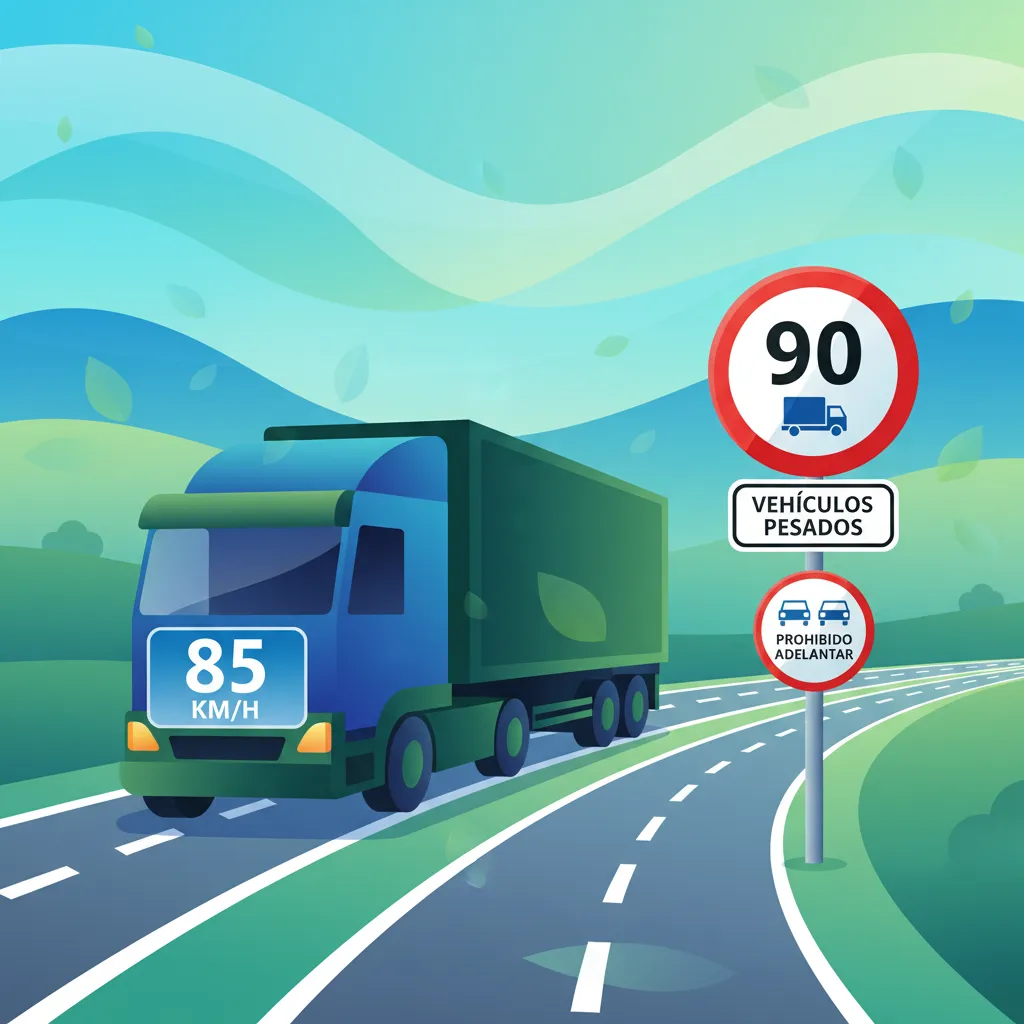
This lesson details the specific legal speed limits that apply to heavy passenger vehicles on Spanish highways, including variable speed zones that adjust based on traffic and weather conditions. Learners will understand the methods for speed monitoring, the function of speed control devices, and the legal consequences of non-compliance. The content also provides guidance on calculating a safe operating speed based on vehicle load and road conditions.
This lesson covers the regulations and best practices regarding the use of rest areas and service stations during long-haul journeys. It reinforces the rules on mandatory rest periods to combat driver fatigue and explains how to plan routes to include necessary stops. The content also provides guidance on safe parking procedures within designated truck areas and using stops to perform quick vehicle safety checks.

This lesson provides a broad overview of the key traffic regulations in Spain that directly impact professional truck drivers. It details the rules of priority at intersections, the interpretation of different road markings, and the principles of correct lane discipline. Furthermore, it explains the specific speed limits applicable to heavy vehicles and the legal protocols for safe overtaking and signaling.
This lesson teaches drivers to identify the common symptoms of fatigue and to understand its dangerous impact on reaction time and decision-making ability. Learners will explore techniques for monitoring their own alertness, the influence of circadian rhythms, and the absolute necessity of taking regular, quality rest breaks. The module also covers the legal limits on duty hours and presents practical strategies for mitigating fatigue during long shifts.

This lesson provides a detailed breakdown of the maximum permissible length, width, and height for heavy vehicles according to Spanish and EU regulations. It explains how these dimensions are measured and how they affect vehicle classification and route planning. The content emphasizes the critical importance of respecting clearance signs for bridges, tunnels, and other overhead structures to prevent accidents.

This lesson focuses on the strict limits for alcohol consumption while driving, expressed as blood alcohol concentration (BAC) thresholds specific to Spain. It explains how breathalyzer tests are administered, the legal consequences of exceeding the limits, and associated penalties like fines and licence suspension. The lesson also addresses drug-impaired driving, describing detection methods and the legal ramifications for both recreational and prescription substances.

This lesson addresses the special regulations that apply to transporting loads that exceed standard legal dimensions or weight. It explains the process for obtaining the necessary special permits from the DGT and other authorities. The content also covers the requirements for route planning, the use of escort vehicles (pilot cars), and the mandatory signage and lighting for the vehicle.

This lesson examines the overarching legal framework that governs professional drivers in Spain, focusing on the Reglamento General de Circulación. It details the statutory obligations of a driver, such as maintaining mandatory insurance, ensuring vehicle roadworthiness, and carrying all required documentation. Learners will understand their legal responsibilities and the importance of compliance with DGT regulations to operate lawfully.
Find clear answers to common questions learners have about Legal Limits on Duty Hours. Learn how the lesson is structured, which driving theory objectives it supports, and how it fits into the overall learning path of units and curriculum progression in Spain. These explanations help you understand key concepts, lesson flow, and exam focused study goals.
According to DGT regulations, a bus driver typically cannot drive for more than 9 hours per day, although this can be extended to 10 hours twice a week. Continuous driving without a break is limited, and mandatory rest periods must be observed. Specific details vary based on the type of operation (e.g., regular services vs. long-distance coaches).
Drivers must take a daily rest period of at least 11 consecutive hours, which can be reduced to 9 consecutive hours three times per week. Weekly rest must be at least 45 hours, which can be reduced to 24 hours under certain conditions. These rest periods are crucial for preventing fatigue.
The tachograph, often referred to as a digital 'tacógrafo' in Spain, is a device that records driving times, breaks, rest periods, and other work activities. It serves as mandatory evidence of compliance with legal duty hour regulations and is essential for both the driver and the transport company to monitor adherence and prevent violations.
Violating duty hour limits can lead to significant penalties for both the driver and the transport company. These can include fines, license suspension, and in severe cases, criminal charges, especially if an accident occurs due to driver fatigue. It also jeopardizes passenger safety.
This lesson focuses primarily on the domestic DGT regulations for bus and coach drivers operating within Spain for the Category D and D1 licenses. While general principles of driver fatigue and duty hours are universal, specific international transport regulations might differ and are not exhaustively covered here.
Use our powerful search functionality to pinpoint specific Spanish DGT driving theory practice sets. Filter by road sign categories, traffic law topics, or question difficulty to build custom study sessions and reinforce your knowledge precisely where it matters for your official exam.