
Understanding how to drive safely in extraordinary traffic conditions is a critical competency for any driver in Spain. This guide covers your legal obligations, the priority of official traffic instructions over your personal navigation, and the strict prohibitions against stopping in unauthorized areas. Mastering these concepts is essential for both your safety on the road and success in your DGT theory exam.
Article content overview
Navigating Spanish roads during large-scale public events requires more than just standard driving skills; it demands a high level of situational awareness and strict adherence to regulations set by the Dirección General de Tráfico (DGT). Whether it is a major sporting event, a cultural festival, or an extraordinary celestial phenomenon, the influx of vehicles often creates high-density traffic conditions that test even the most experienced drivers. Understanding your legal responsibilities in these environments is not only essential for road safety but is a frequent subject in the DGT theory exam.
When traffic volume increases due to major gatherings, the DGT often implements temporary traffic management measures. It is vital to recognize that official instructions, whether delivered via police officers on the scene or electronic signage, always take precedence over general traffic rules. Drivers must remain focused on the road, anticipating sudden stops and erratic behavior from other road users who may be distracted by the event itself.
Stopping or parking your vehicle on the hard shoulder or any part of the road to observe an event is strictly prohibited. This is a serious traffic violation that poses a significant hazard to other drivers and is a common trap in DGT theory questions.
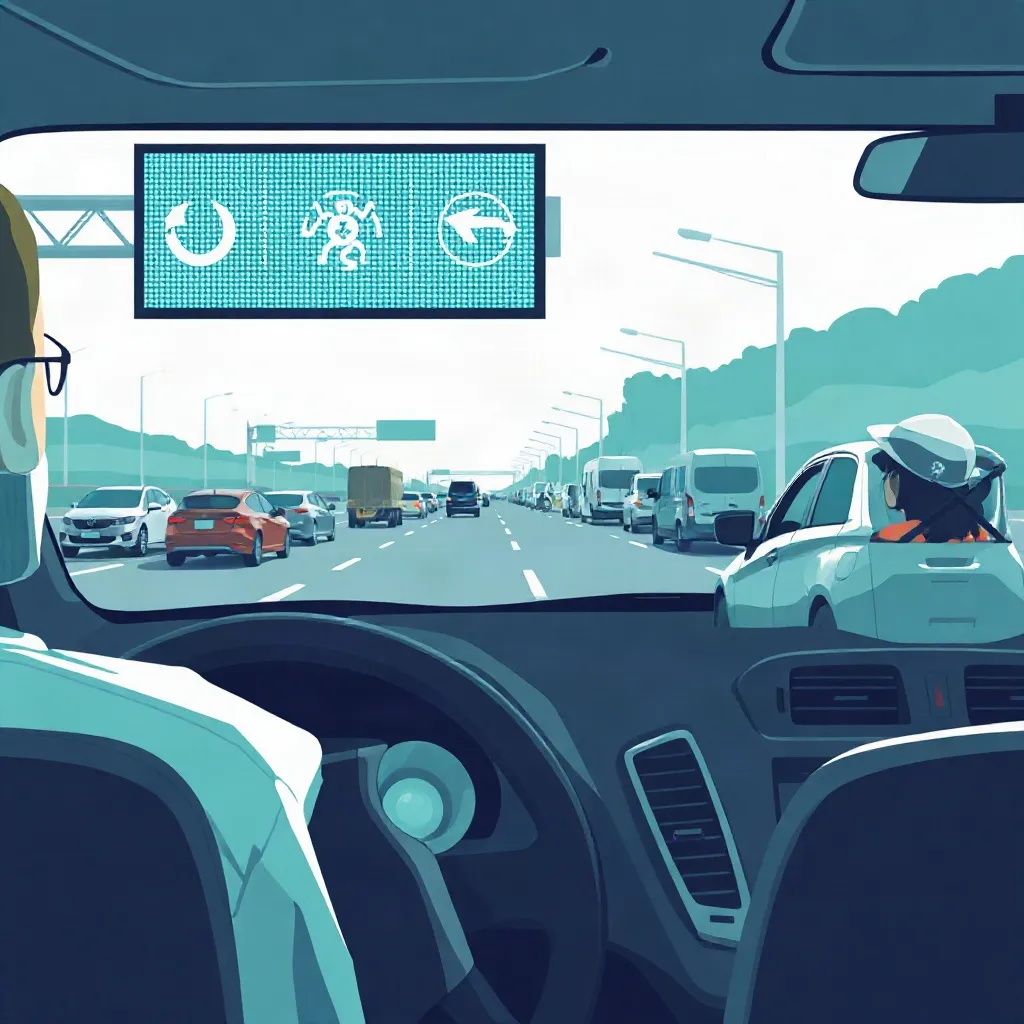
Variable Message Signs (VMS) are your primary source of real-time information. These electronic boards are used by the DGT to transmit critical data regarding temporary speed limits, road closures, and lane diversions. Failing to comply with instructions displayed on a VMS is not merely a suggestion; it is a legal requirement that, if ignored, can lead to substantial fines and the loss of penalty points on your Spanish driving licence.
During large-scale events, emergency vehicles—such as ambulances, fire trucks, and police units—may face difficulty moving through congestion. Spanish traffic law requires all drivers to facilitate the passage of these vehicles immediately. When you notice an emergency vehicle with its blue flashing lights activated, you must move your vehicle to the right, or even onto the shoulder if necessary and safe, to create an emergency corridor.
| Situation | Required Action |
|---|---|
| Emergency vehicle approaching | Move to the right, slow down, and stop if necessary to let them pass. |
| Traffic congestion on motorway | Stay in your lane; do not use the shoulder to bypass standing traffic. |
| VMS instructs speed reduction | Adjust your speed immediately to match the limit displayed. |
The DGT theory exam frequently tests your knowledge of how to handle "extraordinary" traffic scenarios. A recurring question pattern involves the legality of stopping to view events. Always remember: if the road is not explicitly designated for parking, you cannot stop. Furthermore, maintaining a safe following distance becomes even more critical during these periods, as the probability of "accordion effects"—where traffic stops abruptly—increases significantly.
In the modern era of connectivity, the DGT provides tools to help you stay informed while on the road. Utilizing digital platforms allows drivers to avoid areas of extreme congestion, which not only saves time but reduces the frustration that often leads to distracted driving. By checking your licence status, points, and any existing traffic fines through the official DGT portal, you remain a compliant and responsible driver.
Driving during large-scale public events in Spain requires strict adherence to DGT regulations that override normal driving assumptions. Variable Message Signs carry legal force and must be obeyed immediately. Critically, the hard shoulder is never permissible for stopping to observe events, and drivers must actively create emergency corridors by moving right when emergency vehicles approach. Pre-event planning through DGT official channels helps avoid congestion and penalties, while maintaining increased following distances accounts for sudden traffic stops common in high-density conditions.
A short set of high-value points that capture the most important ideas from this article.
Official traffic instructions from police or Variable Message Signs always take legal priority over standard traffic rules during extraordinary conditions.
Stopping or parking on the hard shoulder to observe events is a serious traffic violation, not merely a suggestion.
When an emergency vehicle approaches in heavy traffic, you must create an emergency corridor by moving to the right and slowing or stopping.
Variable Message Signs display legally binding instructions; ignoring them can result in fines and penalty points.
The DGT implements temporary traffic management measures during major gatherings that drivers must follow.
VMS instructions are legally mandatory, not optional advisory information.
Hard shoulders on motorways are emergency lanes only; they are never permitted for parking or waiting.
Emergency corridors require moving to the right to clear a path between lanes for emergency vehicles.
Traffic density during events increases the risk of sudden stops, requiring larger following distances.
The DGT provides real-time traffic status updates through its official app and website.
Assuming hard shoulders can be used temporarily to watch events or take photographs.
Treating Variable Message Sign instructions as optional suggestions rather than legal requirements.
Failing to create an emergency corridor when emergency vehicles approach in congested traffic.
Not adjusting following distance appropriately, leading to accordion-effect collisions.
Relying solely on personal navigation devices instead of checking official DGT information sources.
Article content overview
A short set of high-value points that capture the most important ideas from this article.
Official traffic instructions from police or Variable Message Signs always take legal priority over standard traffic rules during extraordinary conditions.
Stopping or parking on the hard shoulder to observe events is a serious traffic violation, not merely a suggestion.
When an emergency vehicle approaches in heavy traffic, you must create an emergency corridor by moving to the right and slowing or stopping.
Variable Message Signs display legally binding instructions; ignoring them can result in fines and penalty points.
The DGT implements temporary traffic management measures during major gatherings that drivers must follow.
VMS instructions are legally mandatory, not optional advisory information.
Hard shoulders on motorways are emergency lanes only; they are never permitted for parking or waiting.
Emergency corridors require moving to the right to clear a path between lanes for emergency vehicles.
Traffic density during events increases the risk of sudden stops, requiring larger following distances.
The DGT provides real-time traffic status updates through its official app and website.
Assuming hard shoulders can be used temporarily to watch events or take photographs.
Treating Variable Message Sign instructions as optional suggestions rather than legal requirements.
Failing to create an emergency corridor when emergency vehicles approach in congested traffic.
Not adjusting following distance appropriately, leading to accordion-effect collisions.
Relying solely on personal navigation devices instead of checking official DGT information sources.
Explore related topics, search based questions, and concepts that learners often look up when studying Safe Driving During Mass Events. These themes reflect real search intent and help you understand how this topic connects to wider driving theory knowledge in Spain.
Find clear and practical answers to common questions learners often have about Safe Driving During Mass Events. This section helps explain difficult points, remove confusion, and reinforce the key driving theory concepts that matter for learners in Spain.
No. Stopping or parking on the hard shoulder or any part of a motorway is strictly prohibited unless there is an emergency. Doing so for observation is a traffic violation that carries fines and point loss.
You must always follow the instructions provided by the DGT via official Variable Message Signs, traffic lights, or road signs. Official traffic management instructions always take precedence over personal navigation systems.
You can check current traffic status, road closures, and incidents through official DGT digital services, including their website and real-time information platforms, to ensure you remain compliant with the law.
Emergency service vehicles always have priority. Drivers must clear the path safely and follow any instructions given by official traffic management staff or police officers, even if those instructions deviate from standard road rules.
Now that you have found specific articles, continue to deepen your understanding by exploring related DGT regulations or other driving theory topics. Strengthen your knowledge of road signs, traffic scenarios, and essential Spanish driving procedures to prepare for your official driving license exam.