
Understanding the distinction between a vehicle's curb weight and its Maximum Authorized Mass (MAM) is essential for every aspiring driver in Spain. This guide breaks down the legal requirements for operating vehicles under the class B licence, helping you identify potential exam pitfalls and ensuring you know when a heavier vehicle requires a different licence category.
Article content overview
Understanding the legal weight constraints for the Class B driving licence is a fundamental pillar of Spanish road safety and a recurring topic in the DGT (Dirección General de Tráfico) theory exam. As a learner driver in Spain, you must grasp the distinction between a vehicle’s actual weight and its legal classification. Many students fall into the trap of assuming that as long as a vehicle is a standard passenger car, it is automatically permitted under a basic licence; however, Spanish traffic law is very specific regarding the Maximum Authorized Mass (MAM).
In the context of the Spanish General Driver Regulations (Reglamento General de Conductores), the Maximum Authorized Mass—commonly referred to in Spanish as Masa Máxima Autorizada (MMA)—is the maximum weight a vehicle is legally allowed to reach when fully loaded, including passengers, cargo, and fluids. This figure is determined by the manufacturer and is documented on the vehicle's technical card, or ficha técnica.
The total weight of the vehicle, including its structure, fuel, passengers, cargo, and any optional equipment, as specified in the vehicle's registration documents. This is the legal figure used by the DGT to determine licence requirements, not the vehicle's current empty weight or curb weight.
It is vital to realize that even if your vehicle currently weighs less than 3500 kg, if its documentation states an MMA higher than that limit, you are legally prohibited from operating it with a standard B licence. This is especially relevant in the era of modern electric and hybrid vehicles, where heavy battery packs significantly increase the vehicle's potential mass, sometimes pushing models toward or over the regulatory threshold.
The B licence is the most common permit in Spain, but it has specific boundaries designed to ensure that drivers remain within their range of competence. Generally, a Class B licence authorizes the holder to drive:
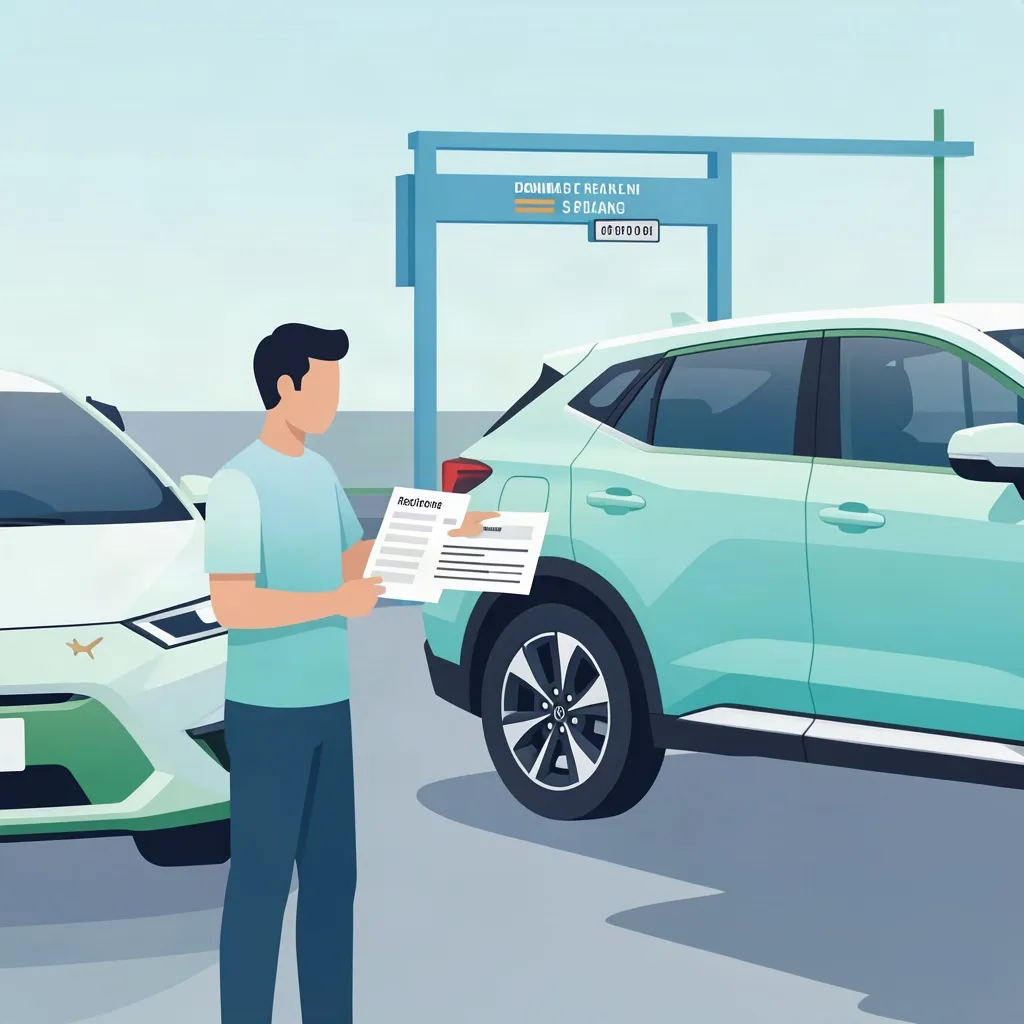
Do not confuse the vehicle's curb weight with its MMA. A heavy-duty electric SUV might feel light to drive, but its official "ficha técnica" might list an MMA that exceeds your licence limits. Always check the registration document before driving a vehicle you do not own.
When attaching a trailer to your vehicle, the calculation of the MMA becomes even more critical. While you can generally tow a "light trailer" (one with an MMA of 750 kg or less) with any B-licensed vehicle, the rules change when dealing with heavy trailers. If the trailer exceeds 750 kg, you must ensure the total MMA of the combined vehicle and trailer does not exceed 3500 kg. If the set exceeds 3500 kg but remains under 4250 kg, you may need specific administrative authorizations.
In the DGT theory exam, examiners often use scenarios involving hybrid or electric vehicles to test whether a candidate understands that the rules are based on legal mass, not the type of engine or technology. A common "trick" question involves a high-end electric vehicle that is technically heavy; students often mistakenly answer based on the vehicle's "size" or "power," ignoring the legal MMA requirement. Always base your answers on the legal definition of MMA rather than assumptions about the vehicle's appearance.
The Spanish Class B licence restricts drivers to vehicles with a Maximum Authorized Mass (MAM) not exceeding 3500 kg, where MAM represents the full legal weight limit including all passengers, cargo, and equipment—not the vehicle's current curb weight. This distinction is critical for modern electric and hybrid vehicles, whose heavy battery packs can push their registered MAM toward or past the regulatory threshold, requiring learners to always verify the ficha técnica rather than estimate by appearance. Towing rules add complexity: while light trailers (MMA ≤ 750 kg) can be attached freely, heavier trailers require the combined vehicle-and-trailer set to remain within the 3500 kg limit. DGT exam questions frequently exploit confusion between legal mass and current weight, making it essential to base answers on official registration data.
A short set of high-value points that capture the most important ideas from this article.
The B licence in Spain permits driving vehicles with a Maximum Authorized Mass (MAM) of 3500 kg or less, regardless of the vehicle's current curb weight.
MAM is the vehicle's full legal weight limit including passengers, cargo, fuel, and all equipment—not the empty weight you see on a scale.
Electric and hybrid vehicles can have high MAM values due to heavy battery packs, potentially pushing them over the 3500 kg threshold despite their standard appearance.
When towing a trailer exceeding 750 kg MMA, the combined MAM of the vehicle and trailer must be verified against the 3500 kg limit.
Always check the vehicle's official ficha técnica to confirm MAM rather than estimating based on vehicle size or engine type.
MAM stands for Masa Máxima Autorizada—the legal weight ceiling listed in the vehicle's ficha técnica.
Class B licence limits: vehicle MMA ≤ 3500 kg and maximum 9 occupants (including driver).
Light trailers (MMA ≤ 750 kg) can be towed freely; trailers over 750 kg require total set calculation.
Heavy battery packs in electric or hybrid vehicles can increase a vehicle's MAM above 3500 kg.
The DGT determines licence requirements based on registered MAM, not current real-world weight.
Confusing curb weight (vehicle empty) with MAM (maximum loaded weight) and assuming a heavy-looking car is over the limit while a light-feeling electric vehicle might actually exceed it.
Answering exam questions based on a vehicle's size, power, or fuel type rather than the legal MAM figure shown in its documentation.
Forgetting to account for trailer weight when calculating whether a combination exceeds the 3500 kg threshold.
Assuming that because a vehicle currently weighs less than 3500 kg, it is automatically legal for a Class B licence, ignoring the registered MAM.
Overlooking the fact that special vehicles (agricultural or construction machinery) have separate speed and weight exemptions under DGT regulations.
Article content overview
A short set of high-value points that capture the most important ideas from this article.
The B licence in Spain permits driving vehicles with a Maximum Authorized Mass (MAM) of 3500 kg or less, regardless of the vehicle's current curb weight.
MAM is the vehicle's full legal weight limit including passengers, cargo, fuel, and all equipment—not the empty weight you see on a scale.
Electric and hybrid vehicles can have high MAM values due to heavy battery packs, potentially pushing them over the 3500 kg threshold despite their standard appearance.
When towing a trailer exceeding 750 kg MMA, the combined MAM of the vehicle and trailer must be verified against the 3500 kg limit.
Always check the vehicle's official ficha técnica to confirm MAM rather than estimating based on vehicle size or engine type.
MAM stands for Masa Máxima Autorizada—the legal weight ceiling listed in the vehicle's ficha técnica.
Class B licence limits: vehicle MMA ≤ 3500 kg and maximum 9 occupants (including driver).
Light trailers (MMA ≤ 750 kg) can be towed freely; trailers over 750 kg require total set calculation.
Heavy battery packs in electric or hybrid vehicles can increase a vehicle's MAM above 3500 kg.
The DGT determines licence requirements based on registered MAM, not current real-world weight.
Confusing curb weight (vehicle empty) with MAM (maximum loaded weight) and assuming a heavy-looking car is over the limit while a light-feeling electric vehicle might actually exceed it.
Answering exam questions based on a vehicle's size, power, or fuel type rather than the legal MAM figure shown in its documentation.
Forgetting to account for trailer weight when calculating whether a combination exceeds the 3500 kg threshold.
Assuming that because a vehicle currently weighs less than 3500 kg, it is automatically legal for a Class B licence, ignoring the registered MAM.
Overlooking the fact that special vehicles (agricultural or construction machinery) have separate speed and weight exemptions under DGT regulations.
Explore related topics, search based questions, and concepts that learners often look up when studying B Licence Weight Limits. These themes reflect real search intent and help you understand how this topic connects to wider driving theory knowledge in Spain.
Find clear and practical answers to common questions learners often have about B Licence Weight Limits. This section helps explain difficult points, remove confusion, and reinforce the key driving theory concepts that matter for learners in Spain.
In Spain, the class B licence generally authorizes driving vehicles with a Maximum Authorized Mass (MAM) not exceeding 3,500 kg.
No, the legal limit for your licence category is strictly defined by the vehicle's Maximum Authorized Mass (MAM) as stated in the technical documentation, regardless of the powertrain technology used.
The official Maximum Authorized Mass (MAM) is specified in the vehicle's technical card, known in Spain as the 'ficha técnica'.
Operating a vehicle that exceeds the weight limit authorized by your licence is a legal violation that can result in penalties, as well as significant insurance and liability issues in the event of an accident.
Now that you have found specific articles, continue to deepen your understanding by exploring related DGT regulations or other driving theory topics. Strengthen your knowledge of road signs, traffic scenarios, and essential Spanish driving procedures to prepare for your official driving license exam.