
Welcome to the essential lesson on navigating intersections without traffic signals in Spain. As part of your AM category preparation, we'll focus on the critical 'priority to the right' rule, ensuring you can safely and confidently determine the correct order of passage at these common urban junctions, directly preparing you for DGT exam questions.
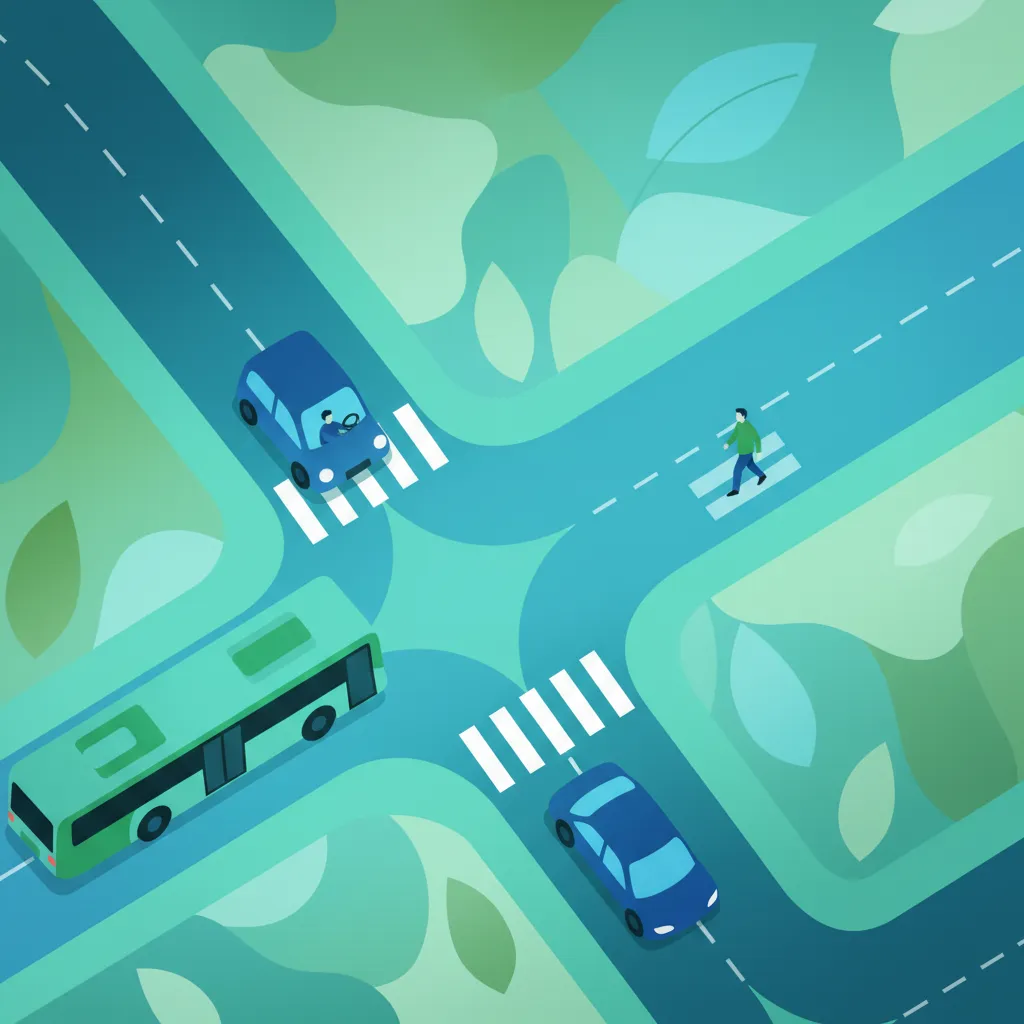
Lesson content overview
Learning to drive a moped in Spain requires a thorough understanding of traffic regulations, especially when it comes to intersections. Not all junctions are controlled by traffic lights or stop signs; many rely on a fundamental principle of right-of-way. This lesson delves into the crucial rules governing priorities at intersections without signals (intersecciones sin señal), ensuring you can navigate these common areas safely and legally as a Category AM moped rider.
Understanding these rules is vital for preventing collisions, maintaining smooth traffic flow, and fulfilling your legal obligations as a driver under the Spanish Reglamento General de Circulación (RGC). This knowledge builds upon your understanding of basic traffic signs and road positioning, and it forms a critical foundation for more complex intersection scenarios like roundabouts.
An uncontrolled intersection (intersección sin señal) is a junction where two or more roads meet, but there are no explicit traffic lights, stop signs, yield signs, or other visual control devices dictating the flow of traffic. In the absence of these explicit controls, drivers must rely solely on established legal principles and careful observation to determine the correct order of passage.
These types of intersections are common in residential areas, smaller towns, and rural roads. They can take various forms, including traditional four-way crossroads or T-junctions where one road ends at another. The key characteristic is the absence of any signs or signals that would assign priority to a specific direction or road.
The absence of explicit signage means that all drivers approaching such an intersection are considered to have an initial equal priority unless a specific rule dictates otherwise. This equality then leads to the application of the primary right-of-way rule, which is central to safe navigation.
At any uncontrolled intersection in Spain, the core principle governing who proceeds first is the priority to the right rule (prioridad a la derecha). This rule dictates that a driver must yield (ceder el paso) to any vehicle approaching from their right-hand side. This simple, universal rule is designed to provide a clear, predictable order for all road users, minimizing confusion and reducing the risk of collisions.
When you approach an uncontrolled intersection, your first action should always be to scan to your right. If you see another vehicle approaching from your right, that vehicle has the right of way, and you must be prepared to stop and allow it to pass. You should only proceed once the vehicle from your right has safely cleared the intersection or is far enough away that your entry will not impede its progress.
This rule applies regardless of the size or type of vehicle, or how fast they appear to be moving initially. While larger vehicles might sometimes appear to assert an implicit priority, the legal rule of "priority to the right" overrides vehicle size at uncontrolled intersections. For Category AM drivers, this means you must always be ready to yield to traffic from your right, even if it's a larger vehicle.
The safety rationale behind "priority to the right" is rooted in human perception and common driving patterns. Drivers naturally tend to look to their right first when approaching an intersection, as this is the primary direction from which conflicting traffic would approach in right-hand drive countries like Spain. By assigning priority to the right, decision-making time is reduced, and a standardized expectation for all drivers is created.
This rule is explicitly established in the Spanish Reglamento General de Circulación (RGC) under Article 88, which states that "Drivers approaching an intersection must observe priority to the right." It is a foundational legal requirement for all drivers in Spain.
Yielding (ceder el paso) is the mandatory act of reducing your speed, and if necessary, stopping completely to allow another vehicle or pedestrian with superior priority to proceed first. It is not just about slowing down; it often requires a full stop to ensure the safety of all road users.
When you are required to yield at an uncontrolled intersection:
When yielding, make eye contact with other drivers if possible, or use clear hand gestures to communicate your intention to yield. This reduces uncertainty and promotes safe, cooperative driving.
Even at intersections without traffic signs, you may encounter a stop line (línea de detención) painted on the road. If a stop line is present, the legal obligation, according to RGC Article 23-2, is to stop before this line if you are required to yield. Rolling past the stop line without coming to a complete halt, even if you eventually yield, is considered an infraction. Stopping at the line ensures you maintain a safe distance and have a clear view of approaching traffic without obstructing the intersection.
While "priority to the right" is the primary rule, certain situations at uncontrolled intersections require additional considerations.
Pedestrians are considered vulnerable road users, and their safety is paramount. At any marked pedestrian crossing (paso de peatones or zebra crossing), pedestrians have absolute priority over vehicles, even at uncontrolled intersections. This rule is enshrined in RGC Article 70.
If you approach an uncontrolled intersection that also has a marked pedestrian crossing, you must yield to any pedestrian who is already on the crossing or is clearly indicating an intention to cross. You must stop and allow them to complete their crossing safely before you proceed, regardless of any other vehicle priorities. Never proceed if it means a pedestrian must stop or hurry to avoid your vehicle.
Sometimes, the "priority to the right" rule can lead to a deadlock. This often happens when two vehicles approach an uncontrolled four-way intersection simultaneously from opposite directions, or if four vehicles arrive at the same time, each facing a vehicle on its right. In such equal priority situations, drivers must use courtesy, communication, and common sense to negotiate the right of way.
For instance, if you and another moped approach an intersection simultaneously from opposite directions on a single-lane road, neither of you has a clear "right-hand" advantage over the other in the immediate path of travel. In these scenarios (RGC Article 93):
It's a common misconception that the larger vehicle always has priority in these situations. This is incorrect. Courtesy and clear communication are the guiding principles, not vehicle size.
The rules discussed in this lesson are not merely suggestions; they are legally binding obligations under Spanish traffic law. Adhering to them is crucial for your safety and to avoid penalties.
| Rule | Statement | Applicability | Legal Basis | Implications for AM Riders |
|---|---|---|---|---|
| R1 – Priority to the Right | Drivers must yield to traffic approaching from their right at uncontrolled intersections. | All uncontrolled intersections (no traffic lights, signs). | RGC Art. 88 | Always scan right first; be prepared to stop. |
| R2 – Yield to Pedestrians | Drivers must stop for pedestrians crossing at marked crosswalks. | Intersections with pedestrian crossings. | RGC Art. 70 | Pedestrians have absolute priority; stop and wait. |
| R3 – Courtesy Yield | In equal priority situations (e.g., opposite directions), drivers must negotiate passage. | Simultaneous approach from opposite directions. | RGC Art. 93 | Use signals/gestures; do not assume priority. |
| R4 – Stop Before Stop Line | If a stop line is present, drivers must stop before it when yielding. | Intersections with painted stop lines. | RGC Art. 23-2 | Never roll past the stop line without stopping. |
| R5 – No Overtaking Near Intersections | Overtaking is prohibited within a certain distance before an uncontrolled intersection. | All uncontrolled intersections. | RGC Art. 56 | Avoid overtaking when approaching any intersection without explicit controls. |
The purpose of these regulations is to maintain predictable traffic flow and drastically reduce the risk of collisions at points where vehicle paths converge. Disregarding these rules can lead to serious accidents, legal penalties, and points deducted from your driving license.
Understanding the rules is one thing, but consistently applying them is another. Many collisions at uncontrolled intersections stem from common misunderstandings or risky behaviors.
Violating right-of-way rules at uncontrolled intersections can lead to:
The principles of priority remain constant, but how you apply them must adapt to changing conditions. Factors like weather, lighting, and even your moped's state can affect your ability to perceive and react safely.
Mastering the rules of priority at uncontrolled intersections is more than just passing a theory test; it's about ensuring your safety and the safety of others on the road. For Category AM moped riders, who are often more vulnerable in traffic, these rules are a lifeline.
In Spain, traffic authorities like the DGT continuously study collision data. Statistics consistently show that a significant percentage of urban collisions occur at uncontrolled intersections, many due to failures in applying priority rules. By understanding and diligently applying these regulations, you contribute directly to making Spanish roads safer for yourself and everyone else.
Always remember that having the right of way does not mean you have the right to speed or proceed recklessly. It is a right coupled with responsibility. You must always exercise caution and ensure the safety of all road users, even when you have priority.
Navigating uncontrolled intersections successfully as a moped rider comes down to a few critical principles:
These rules, backed by the Spanish Reglamento General de Circulación, are designed to create a predictable and safe environment for all road users. By diligently applying this knowledge, you will not only pass your Category AM theory exam but, more importantly, become a responsible and safe moped rider on Spanish roads.
This lesson covers the critical 'priority to the right' rule for navigating uncontrolled intersections in Spain as an AM category moped rider. At junctions without traffic lights or signs, you must yield to any vehicle approaching from your right, stop before painted stop lines when required, and give absolute priority to pedestrians at marked crosswalks. Equal priority situations require courtesy and clear communication through signals or gestures to negotiate passage. The rule is legally binding under the Reglamento General de Circulación, and violations carry fines, license points, and increased collision risk. Always adapt your approach to weather and lighting conditions, and remember that right of way comes with the responsibility to drive safely.
A short set of high-value points that capture the most important learning from this lesson.
At uncontrolled intersections in Spain, always yield to vehicles approaching from your right (prioridad a la derecha) under RGC Article 88.
Pedestrians have absolute priority at marked crosswalks regardless of other vehicle priorities, enforced under RGC Article 70.
If a stop line is present, you must stop before it when yielding; rolling past the line is an infraction under RGC Article 23-2.
In equal priority situations where no driver has a clear right-hand advantage, use signals and courtesy to negotiate passage.
Overtaking is prohibited near uncontrolled intersections; this restriction is defined under RGC Article 56.
Explore all units and lessons included in this driving theory course.
The 'priority to the right' rule is universal at uncontrolled intersections regardless of vehicle size or type.
Yielding means slowing down and being prepared to stop completely, not just reducing speed slightly.
At four-way deadlocks, communicate your intent with signals or gestures and let one driver proceed first by courtesy.
Adapt your approach to conditions: fog and rain require earlier braking and slower speeds, while night driving needs extra vigilance.
Having right of way does not excuse proceeding recklessly; you must always exercise caution for all road users.
Assuming you have priority because you arrived first at an intersection; the right-hand rule applies regardless of arrival order.
Failing to stop for pedestrians at crosswalks when focusing on vehicle traffic, which violates RGC Article 70.
Attempting to overtake another vehicle just before entering an uncontrolled intersection, creating dangerous cross-traffic conflicts.
Proceeding hesitantly or without clear signaling in equal priority situations, causing confusion and potential collisions.
Misjudging the speed or distance of vehicles approaching from the right and entering the intersection unsafely.
Lesson content overview
A short set of high-value points that capture the most important learning from this lesson.
At uncontrolled intersections in Spain, always yield to vehicles approaching from your right (prioridad a la derecha) under RGC Article 88.
Pedestrians have absolute priority at marked crosswalks regardless of other vehicle priorities, enforced under RGC Article 70.
If a stop line is present, you must stop before it when yielding; rolling past the line is an infraction under RGC Article 23-2.
In equal priority situations where no driver has a clear right-hand advantage, use signals and courtesy to negotiate passage.
Overtaking is prohibited near uncontrolled intersections; this restriction is defined under RGC Article 56.
Explore all units and lessons included in this driving theory course.
The 'priority to the right' rule is universal at uncontrolled intersections regardless of vehicle size or type.
Yielding means slowing down and being prepared to stop completely, not just reducing speed slightly.
At four-way deadlocks, communicate your intent with signals or gestures and let one driver proceed first by courtesy.
Adapt your approach to conditions: fog and rain require earlier braking and slower speeds, while night driving needs extra vigilance.
Having right of way does not excuse proceeding recklessly; you must always exercise caution for all road users.
Assuming you have priority because you arrived first at an intersection; the right-hand rule applies regardless of arrival order.
Failing to stop for pedestrians at crosswalks when focusing on vehicle traffic, which violates RGC Article 70.
Attempting to overtake another vehicle just before entering an uncontrolled intersection, creating dangerous cross-traffic conflicts.
Proceeding hesitantly or without clear signaling in equal priority situations, causing confusion and potential collisions.
Misjudging the speed or distance of vehicles approaching from the right and entering the intersection unsafely.
Explore search topics learners often look for when studying Priorities at Intersections without Signals. These topics reflect common questions about road rules, driving situations, safety guidance, and lesson level theory preparation for learners in Spain.
Browse additional driving theory lessons that cover connected traffic rules, road signs, and common driving situations related to this topic. Improve your understanding of how different rules interact across everyday traffic scenarios.
Understand the crucial 'priority to the right' rule for navigating uncontrolled intersections in Spain. This lesson clarifies right-of-way at junctions without signals or signs, essential for AM category riders and safe urban driving.

This lesson analyzes the various intersection configurations found in Spanish cities, such as controlled and uncontrolled junctions. It explains the hierarchy of right-of-way, detailing when vehicles must yield, when pedestrians have priority, and how traffic signs dictate movement. Learners are guided through DGT signage conventions that determine priority at each intersection type.
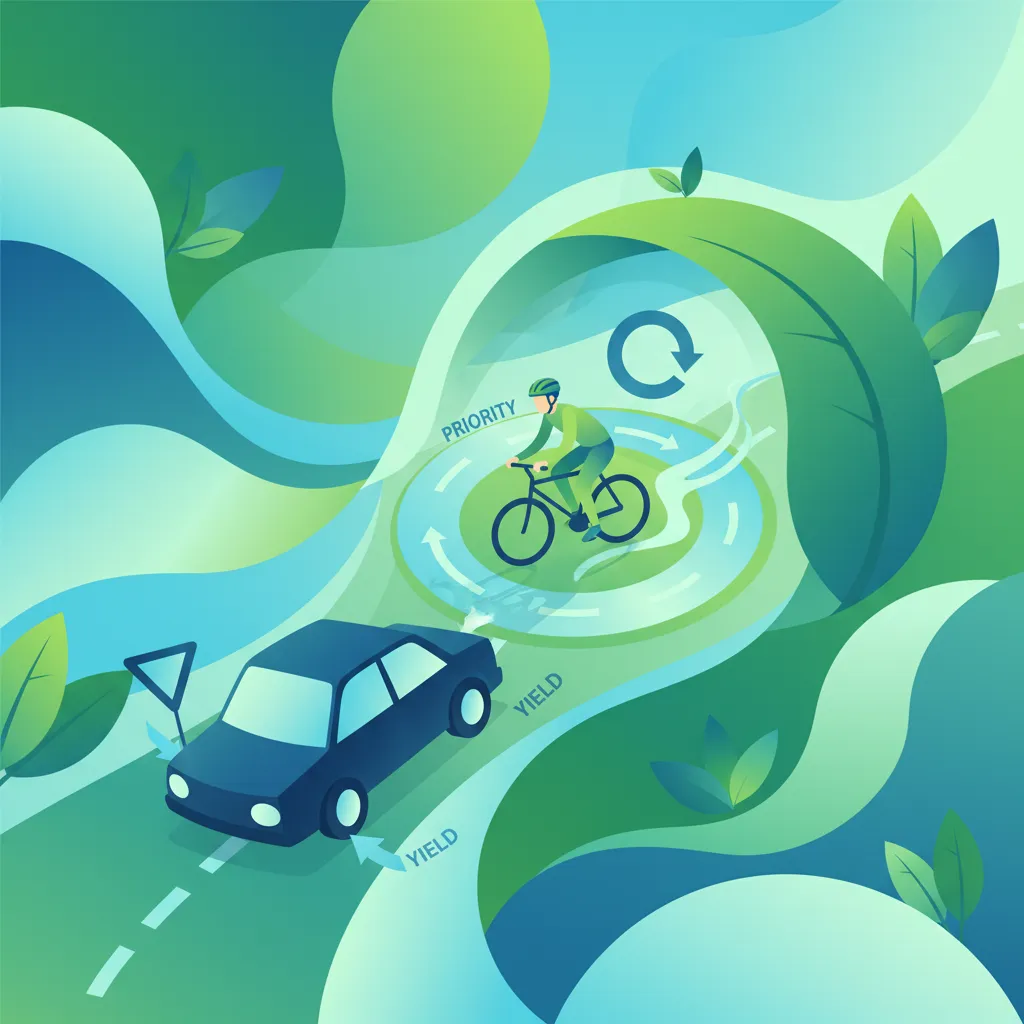
This lesson clarifies the primary rule for roundabouts: all vehicles entering must yield to traffic already on the circular roadway. It explains how to approach a roundabout, select the appropriate lane based on the intended exit, and merge safely into the flow of traffic. Proper signaling before exiting is also covered, ensuring other drivers can anticipate the rider's movements for a smooth and safe negotiation of the junction.

This lesson focuses on the absolute priority of pedestrians at marked crosswalks, often known as zebra crossings. It explains that riders must always be prepared to stop and yield the right-of-way to any pedestrian waiting to cross or already crossing. The content also covers signaled pedestrian crossings and general awareness in urban areas where pedestrians may cross unexpectedly, reinforcing safety and legal compliance.
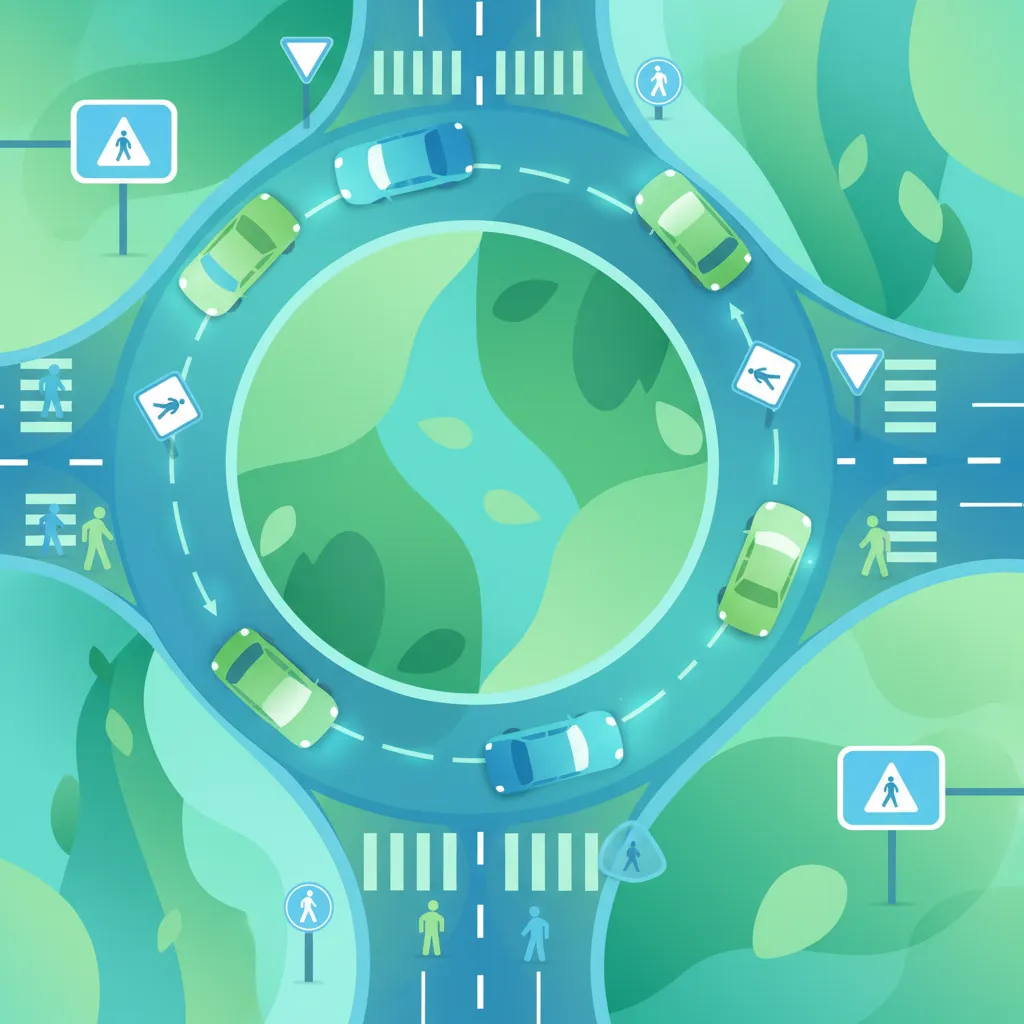
This lesson offers a comprehensive guide to navigating roundabouts in urban settings, explaining the correct protocols for entry, yielding, and circulation. Learners will be taught how to interpret lane markings and signage on multi-lane roundabouts and determine the correct vehicle positioning for safe entry and exit. The content emphasizes full compliance with Spanish city regulations that govern priority and right-of-way at these intersections.
This lesson focuses on the yielding hierarchy that governs roundabout usage in Spain. It clarifies that vehicles already circulating have priority over those entering and explains the proper lane positioning based on the intended exit. The content includes the correct use of signals for changing lanes and exiting, and safe merging techniques.
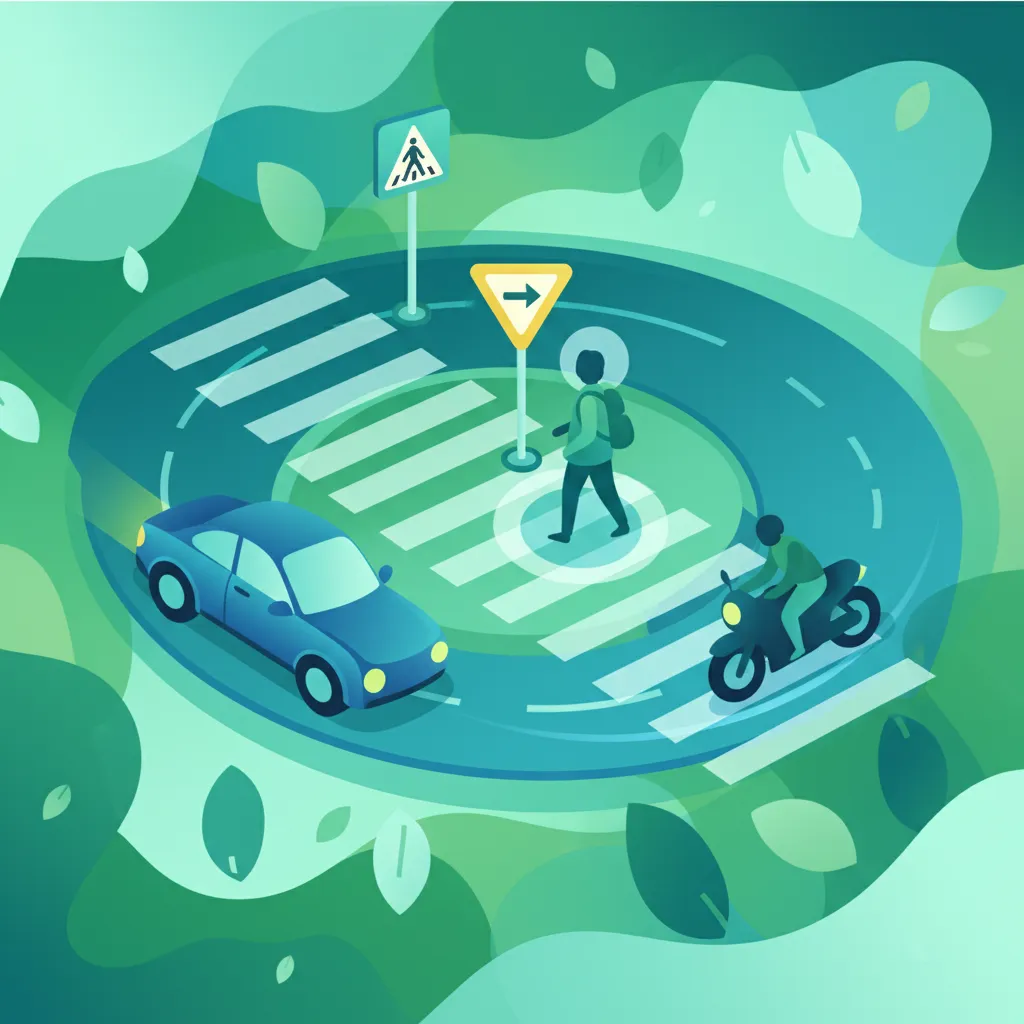
This lesson outlines the proper techniques for negotiating roundabouts and signal-controlled intersections in Spain. It explains priority rules at entry, lane selection based on the intended exit, and yielding to circulating traffic. The content also covers compliance with traffic signals and DGT regulations, including handling cyclist crossings.

This lesson explores the design and legal requirements of pedestrian crossings in Spanish urban areas. It clarifies the rules at zebra crossings, signal-controlled crossings, and areas where cyclists or other vulnerable users share space. The content explains the required safety distances and signage indicating crossing zones to ensure drivers respect all road users.
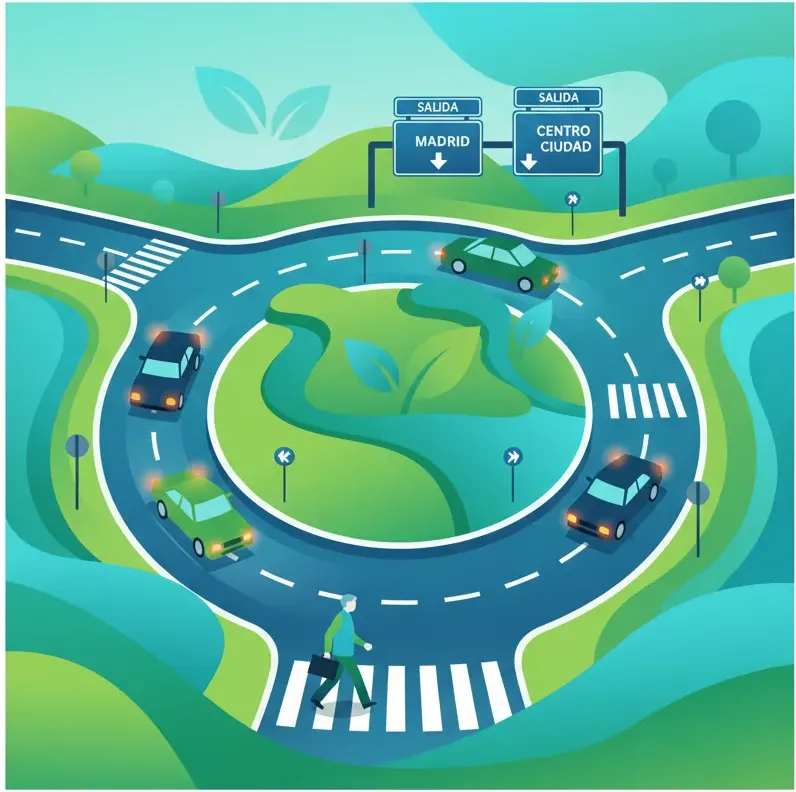
This lesson provides specific instructions on how to safely navigate complex junctions such as roundabouts and intersections with a large vehicle. It explains the rules of priority, the correct lane to use based on the intended exit, and the importance of proper vehicle positioning to account for off-tracking. The content also covers clear signaling to communicate intentions to other road users for safe and efficient passage.
Learn about the absolute priority given to pedestrians at marked crossings and intersections in Spain. This theory lesson covers how to safely yield and protect vulnerable road users, ensuring legal compliance and accident prevention.
This lesson explores the design and legal requirements of pedestrian crossings in Spanish urban areas. It clarifies the rules at zebra crossings, signal-controlled crossings, and areas where cyclists or other vulnerable users share space. The content explains the required safety distances and signage indicating crossing zones to ensure drivers respect all road users.
This lesson focuses on the absolute priority of pedestrians at marked crosswalks, often known as zebra crossings. It explains that riders must always be prepared to stop and yield the right-of-way to any pedestrian waiting to cross or already crossing. The content also covers signaled pedestrian crossings and general awareness in urban areas where pedestrians may cross unexpectedly, reinforcing safety and legal compliance.
This lesson analyzes the various intersection configurations found in Spanish cities, such as controlled and uncontrolled junctions. It explains the hierarchy of right-of-way, detailing when vehicles must yield, when pedestrians have priority, and how traffic signs dictate movement. Learners are guided through DGT signage conventions that determine priority at each intersection type.
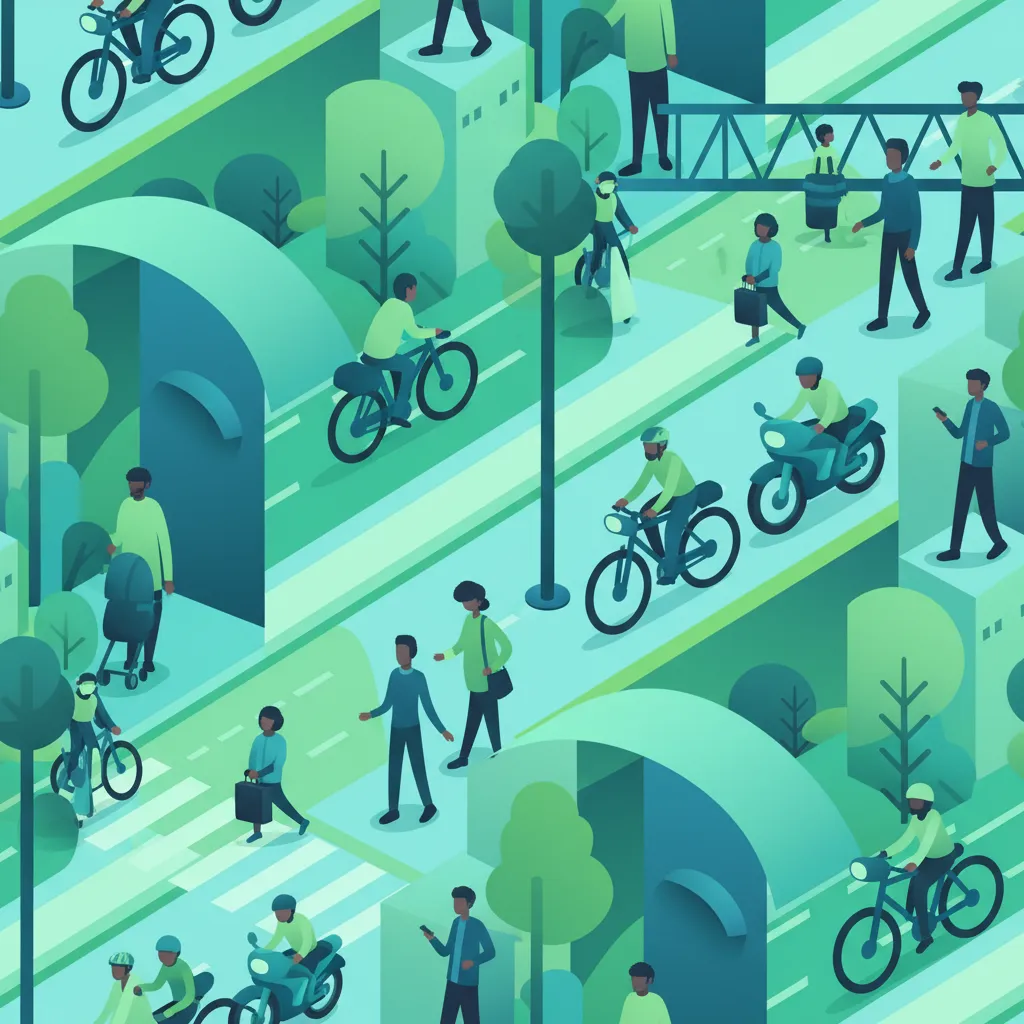
This lesson addresses the critical skill of safely sharing the road with other vulnerable users like pedestrians, cyclists, and other motorcyclists. It emphasizes the need for increased awareness, speed adaptation, and providing ample space when passing. The content covers DGT regulations regarding minimum passing distances and highlights the importance of making eye contact to ensure mutual awareness and prevent common urban accidents.

This lesson focuses on the critical skill of safely interacting with vulnerable road users, such as pedestrians and cyclists, in an urban setting. It highlights the extensive blind spots around a truck and teaches drivers to be extra vigilant, especially at intersections and crosswalks. The content covers the legal requirements for yielding and the importance of making eye contact to confirm intentions.

This lesson examines the interaction between large vehicles, such as trucks, and vulnerable road users within roundabouts. It addresses the wide turning radius of heavy vehicles, the importance of checking blind spots, and the correct yielding behavior toward pedestrians and cyclists. Learners will understand how to maintain safe distances and anticipate the movements of different road users.
This lesson offers a comprehensive guide to navigating roundabouts in urban settings, explaining the correct protocols for entry, yielding, and circulation. Learners will be taught how to interpret lane markings and signage on multi-lane roundabouts and determine the correct vehicle positioning for safe entry and exit. The content emphasizes full compliance with Spanish city regulations that govern priority and right-of-way at these intersections.
Find clear answers to common questions learners have about Priorities at Intersections without Signals. Learn how the lesson is structured, which driving theory objectives it supports, and how it fits into the overall learning path of units and curriculum progression in Spain. These explanations help you understand key concepts, lesson flow, and exam focused study goals.
The 'priority to the right' rule in Spain dictates that when you approach an intersection without any traffic signs or signals indicating otherwise, you must yield to any vehicle or moped coming from your right-hand side. This rule is fundamental for maintaining order and safety at unsignalled junctions.
The 'priority to the right' rule generally does NOT apply to roundabouts in Spain. On most roundabouts, traffic already circulating inside has priority. Always look for specific signage or signals, but typically, you must yield to vehicles already on the roundabout before entering.
If two vehicles arrive at an unsignalled intersection simultaneously, and both are to the right of each other, this creates a situation where neither has clear priority. In such cases, it's best to communicate with the other driver through signals or gestures and proceed with extreme caution, or be prepared to yield to allow the other to pass first.
Yes, the 'priority to the right' rule applies ONLY when there are no traffic signs (like 'Stop', 'Yield', or direction priority signs) or traffic lights present. Roads that appear to be main roads, even if unmarked, might also have implicit priority in practice, but legally, the signposted or signalled priority always overrides the 'priority to the right' rule.
The 'priority to the right' rule is a core concept tested in the AM category theory exam. You can expect multiple-choice questions that present various intersection scenarios, requiring you to identify which vehicle has priority and what action you should take.
Use our powerful search functionality to pinpoint specific Spanish DGT driving theory practice sets. Filter by road sign categories, traffic law topics, or question difficulty to build custom study sessions and reinforce your knowledge precisely where it matters for your official exam.