
Navigating congested urban environments requires special attention to vulnerable road users. This lesson focuses on the critical skills needed to safely manage stop-and-go traffic and interact with pedestrians and cyclists, ensuring you are prepared for the challenges of driving a truck in city settings. It builds upon your understanding of general urban driving principles to cover specific DGT regulations relevant to the Category C and C1 licences.

Lesson content overview
Urban driving presents a unique set of challenges for professional truck drivers. Frequent stops, starts, slow speeds, and the constant interaction with other road users, especially vulnerable ones like pedestrians and cyclists, demand heightened awareness and specific driving skills. For those pursuing the Official DGT Theory Course for Spanish Truck Licence Category C & C1, understanding these dynamics is not just about compliance, but about ensuring safety for everyone on the road.
This lesson delves into the critical aspects of navigating urban stop-and-go traffic while operating heavy goods vehicles (HGVs). It focuses on the extensive blind spots inherent to trucks, the legal requirements for interacting with pedestrians and cyclists, and the specific vehicle dynamics that influence safe braking and acceleration. Mastering these skills is paramount to reducing collision risks, protecting vulnerable road users, and adhering to DGT (Dirección General de Tráfico) regulations for professional drivers in Spain.
Driving a truck in a city environment means constantly being aware of pedestrians, cyclists, and motorcyclists. These vulnerable road users (VRUs) are often less visible, have shorter reaction times, and are completely unprotected in the event of a collision. Their safety depends heavily on the vigilance and responsible driving of truck operators.
One of the most significant challenges for truck drivers is managing blind spots, known in Spanish as ángulos muertos. These are areas around the vehicle that the driver cannot see directly, even with the aid of mirrors. Due to the sheer size and design of trucks, their blind spots are considerably larger and more numerous than those of passenger cars, making VRUs particularly susceptible to being hidden from view.
Types of Truck Blind Spots:
The practical implication of these extensive blind spots is that a truck driver cannot rely solely on mirrors. Active measures, such as head checks, adjusting seating position, and utilizing auxiliary camera systems (if equipped), are vital before initiating any maneuver, especially turns or lane changes. Failing to clear these zones is a leading cause of side-impact collisions involving trucks and VRUs.
The safety of pedestrians is a paramount concern in urban driving. Spanish DGT regulations are very clear regarding the right-of-way for pedestrians, particularly at crosswalks, known as pasos de peatones. Drivers of all vehicles, including heavy trucks, have a legal obligation to yield to pedestrians in these areas.
Key Principles of Pedestrian Right-of-Way:
DGT Regulation: Article 70-1 states that drivers must give way to pedestrians who are crossing at marked crosswalks, or who are about to enter them, as well as those walking on the hard shoulder or in designated pedestrian areas.
For trucks, simply slowing down is often insufficient. Due to their size, momentum, and longer stopping distances, a full and complete stop before the stop line is typically required to ensure pedestrian safety and legal compliance. Professional drivers must anticipate pedestrian movements, especially children or elderly individuals, who may react unpredictably or have limited awareness of traffic.
Effective communication between drivers and vulnerable road users is crucial for preventing accidents. While turn signals and brake lights convey vehicle intent, they do not always confirm that the other party has registered that intent. This is where eye-contact confirmation (or contacto visual) becomes indispensable.
Before proceeding through an intersection, making a turn, or moving off from a stopped position near pedestrians or cyclists, a professional truck driver should actively seek to make eye contact with these individuals.
Why Eye Contact is Critical:
If direct eye contact is not possible, drivers should look for other non-verbal cues or gestures that indicate the vulnerable user's awareness or intent. Never assume that flashing your lights or sounding your horn (which should be used sparingly) is a substitute for confirming mutual understanding.
Urban stop-and-go traffic is characterized by frequent cycles of acceleration and deceleration. For a heavy goods vehicle, managing these dynamics safely and efficiently requires specialized techniques that differ significantly from driving a passenger car.
One of the cornerstones of safe urban truck driving is the concept of progressive braking. This involves applying the brakes gradually and smoothly, increasing pressure as needed, rather than sudden, forceful application.
Benefits of Progressive Braking:
Similarly, smooth acceleration is vital. Sudden acceleration can cause loss of traction, unnecessary fuel consumption, and put stress on the drivetrain. Professional drivers should accelerate gradually, matching speed to traffic flow without aggressive bursts.
DGT Regulation: Article 84-3 emphasizes the importance of smooth and progressive braking, stating that drivers must reduce speed gradually, employing engine braking where appropriate.
The minimum safe following distance (or distancia de seguridad) is crucial for all vehicles, but especially for heavy trucks. Trucks, due to their greater mass and inertia, require significantly longer distances to stop compared to lighter vehicles. This stopping distance is further extended when the truck is heavily loaded or when road conditions are adverse (e.g., rain, snow, ice).
In stop-and-go urban traffic, maintaining an adequate following distance prevents rear-end collisions and provides the driver with sufficient time to react to sudden changes in traffic flow, such as unexpected braking by the vehicle ahead or pedestrians entering the roadway.
Guidelines for Following Distance:
DGT Regulation: Article 93-1 mandates maintaining a sufficient distance behind the preceding vehicle to allow for safe braking in case of sudden deceleration, taking into account speed, road conditions, and vehicle characteristics.
Effective gear selection and the judicious use of engine braking are indispensable techniques for professional truck drivers navigating urban stop-and-go traffic. They contribute to vehicle control, reduce wear on the service brakes, and enhance fuel efficiency.
Engine Braking in Urban Environments:
Engine braking involves downshifting to a lower gear, allowing the engine's resistance to slow the vehicle. This is particularly effective for heavy vehicles because:
Selecting the appropriate gear for the current speed and load is crucial. In slow, congested traffic, using a lower gear allows for better control and immediate power when needed, while also maximizing engine braking potential.
The nature of professional truck driving means frequently transporting varying loads. The weight, distribution, and stability of the cargo have a profound impact on the vehicle's dynamics, particularly its braking capability and handling characteristics.
The Center of Gravity (CoG) of a loaded truck is a critical factor. When cargo is loaded high, the CoG rises, making the vehicle more prone to rollovers during sudden turns or evasive maneuvers. Similarly, an improperly distributed load can cause instability, especially during braking or acceleration.
Key Effects of Load on Vehicle Dynamics:
DGT Regulation: Article 73-3 pertains to the proper functioning and maintenance of braking systems, implicitly highlighting the need for efficient brakes, especially when under load, to ensure safety.
Given the significant impact of cargo on vehicle dynamics, professional drivers must adjust their driving style accordingly. This isn't just a recommendation; it's a safety imperative.
Practical Adjustments for Loaded Trucks:
Adherence to DGT regulations is non-negotiable for professional drivers operating Category C & C1 vehicles in Spain. These rules are designed to enhance road safety, particularly in complex urban environments.
Even experienced professional drivers can fall victim to common errors or face challenging scenarios in urban stop-and-go traffic. Awareness of these situations is the first step towards prevention.
Conditional Variations:
Mastering stop-and-go situations and pedestrian interaction is a cornerstone of safe and professional truck driving in urban environments. It requires a combination of vigilance, understanding of vehicle dynamics, and strict adherence to DGT regulations.
By consistently applying these principles, professional truck drivers can significantly reduce accident risks, ensure the safety of all road users, and operate their vehicles efficiently and responsibly within the complex urban landscape.
This lesson covers the critical skills for safely navigating urban stop-and-go traffic as a Category C or C1 truck driver in Spain. Key focus areas include managing extensive truck blind spots, understanding pedestrian right-of-way rules at crosswalks under DGT Article 70-1, and applying progressive braking techniques to maintain vehicle stability and prevent jackknifing. Drivers must maintain significantly extended following distances especially when loaded, use engine braking to prevent brake fade, and always confirm mutual awareness with vulnerable road users through eye contact before proceeding. Cargo weight and distribution directly affect braking distance and rollover risk, requiring anticipatory driving and adjusted speeds. Activating hazard lights during prolonged stops in congestion alerts following traffic and prevents rear-end collisions.
A short set of high-value points that capture the most important learning from this lesson.
Trucks have extensive blind spots (ángulos muertos) on all sides requiring active head checks and mirror verification before any maneuver
Drivers must yield to pedestrians at both marked and unmarked crosswalks per DGT Article 70-1, stopping completely before the stop line
Progressive braking prevents jackknifing, maintains vehicle stability, and reduces brake wear in stop-and-go traffic
Following distance must be extended to 3-5 seconds minimum, especially when loaded or in adverse weather conditions
Eye contact (contacto visual) with vulnerable road users confirms mutual awareness before proceeding through intersections or turns
Explore all units and lessons included in this driving theory course.
DGT Article 70-1: Always yield and stop completely for pedestrians at any crosswalk, marked or unmarked
DGT Article 67-2: Clear all blind spot zones before changing lanes, turning, or reversing—mirrors alone are insufficient
DGT Article 93-1: Maintain sufficient following distance, increasing substantially when loaded or in adverse conditions
Heavier loads increase stopping distance dramatically due to greater momentum and dynamic load transfer during braking
Engine braking on downhills prevents brake fade and maintains control; late downshifting is a common safety error
Relying solely on mirrors without performing head checks, especially when turning right where cyclists may be hidden alongside the truck
Slowing but not stopping at crosswalks, attempting to proceed while pedestrians are still crossing
Following too closely behind other vehicles, underestimating the extended braking distance required for loaded trucks
Accelerating at yellow lights to beat the red, risking collision with pedestrians who have already started crossing
Using hazard lights improperly or failing to activate them when stopped in extended congestion, reducing visibility for following traffic
Lesson content overview
A short set of high-value points that capture the most important learning from this lesson.
Trucks have extensive blind spots (ángulos muertos) on all sides requiring active head checks and mirror verification before any maneuver
Drivers must yield to pedestrians at both marked and unmarked crosswalks per DGT Article 70-1, stopping completely before the stop line
Progressive braking prevents jackknifing, maintains vehicle stability, and reduces brake wear in stop-and-go traffic
Following distance must be extended to 3-5 seconds minimum, especially when loaded or in adverse weather conditions
Eye contact (contacto visual) with vulnerable road users confirms mutual awareness before proceeding through intersections or turns
Explore all units and lessons included in this driving theory course.
DGT Article 70-1: Always yield and stop completely for pedestrians at any crosswalk, marked or unmarked
DGT Article 67-2: Clear all blind spot zones before changing lanes, turning, or reversing—mirrors alone are insufficient
DGT Article 93-1: Maintain sufficient following distance, increasing substantially when loaded or in adverse conditions
Heavier loads increase stopping distance dramatically due to greater momentum and dynamic load transfer during braking
Engine braking on downhills prevents brake fade and maintains control; late downshifting is a common safety error
Relying solely on mirrors without performing head checks, especially when turning right where cyclists may be hidden alongside the truck
Slowing but not stopping at crosswalks, attempting to proceed while pedestrians are still crossing
Following too closely behind other vehicles, underestimating the extended braking distance required for loaded trucks
Accelerating at yellow lights to beat the red, risking collision with pedestrians who have already started crossing
Using hazard lights improperly or failing to activate them when stopped in extended congestion, reducing visibility for following traffic
Explore search topics learners often look for when studying Stop-and-Go Situations and Pedestrian Interaction. These topics reflect common questions about road rules, driving situations, safety guidance, and lesson level theory preparation for learners in Spain.
Browse additional driving theory lessons that cover connected traffic rules, road signs, and common driving situations related to this topic. Improve your understanding of how different rules interact across everyday traffic scenarios.
Learn critical DGT regulations for truck drivers on safely interacting with pedestrians and cyclists in Spanish cities. This lesson details truck blind spots, yielding protocols at crosswalks, and the importance of visual confirmation for urban safety.

This lesson addresses the critical skill of safely sharing the road with other vulnerable users like pedestrians, cyclists, and other motorcyclists. It emphasizes the need for increased awareness, speed adaptation, and providing ample space when passing. The content covers DGT regulations regarding minimum passing distances and highlights the importance of making eye contact to ensure mutual awareness and prevent common urban accidents.

This lesson examines the interaction between large vehicles, such as trucks, and vulnerable road users within roundabouts. It addresses the wide turning radius of heavy vehicles, the importance of checking blind spots, and the correct yielding behavior toward pedestrians and cyclists. Learners will understand how to maintain safe distances and anticipate the movements of different road users.

This lesson explores the design and legal requirements of pedestrian crossings in Spanish urban areas. It clarifies the rules at zebra crossings, signal-controlled crossings, and areas where cyclists or other vulnerable users share space. The content explains the required safety distances and signage indicating crossing zones to ensure drivers respect all road users.

This lesson focuses on the core principles of defensive driving as they apply to operating a large truck. It explains the importance of managing the space around the vehicle to create a safety buffer and always having an 'escape route' in mind. The content emphasizes anticipating the actions of other road users and being prepared to react calmly and safely to unexpected situations.

This lesson focuses on interaction dynamics with larger vehicles like cars, trucks, and buses, detailing their specific blind spot zones. Strategies for safely sharing lanes, overtaking etiquette, and proper approach when a bus stops are covered. The lesson also includes guidance on merging onto acceleration lanes following DGT policies.

This lesson provides strategies for navigating dense and often unpredictable city traffic. It explains how to maintain a safe following distance and position the vehicle correctly in stop-and-go situations to optimize flow and visibility. The content emphasizes the importance of anticipation, patience, and defensive driving techniques to safely manage the challenges of urban congestion.
This lesson introduces fundamental road safety principles applicable to all drivers, with a special emphasis on heavy vehicles. It covers defensive driving techniques, including the importance of anticipating potential hazards and managing speed appropriately for conditions. Learners will also study how to establish and maintain safe following distances and understand the hierarchy of road users to ensure safe interactions.
This lesson provides specific instructions on how to safely navigate complex junctions such as roundabouts and intersections with a large vehicle. It explains the rules of priority, the correct lane to use based on the intended exit, and the importance of proper vehicle positioning to account for off-tracking. The content also covers clear signaling to communicate intentions to other road users for safe and efficient passage.
This lesson focuses on the critical relationship between speed, following distance, and overall traffic safety on highways. It explains how to calculate a safe following distance based on speed and weather conditions, accounting for a truck's longer stopping distance. The content also teaches strategies for managing speed to adapt smoothly to changing traffic flow, enhancing both safety and fuel efficiency.
This lesson examines the principles of maintaining a safe following distance, including the 'two-second rule' and its adjustments for speed and weather. It focuses on effective blind-spot management, teaching drivers how to use mirrors and head checks. The content integrates DGT guidelines on creating a safety buffer around the vehicle to allow time to react to unexpected events.
This lesson explains essential DGT rules and techniques for professional truck drivers managing stop-and-go urban traffic. It covers progressive braking, safe following distances, gear selection, and understanding load effects on vehicle dynamics.
This lesson provides strategies for navigating dense and often unpredictable city traffic. It explains how to maintain a safe following distance and position the vehicle correctly in stop-and-go situations to optimize flow and visibility. The content emphasizes the importance of anticipation, patience, and defensive driving techniques to safely manage the challenges of urban congestion.
This lesson provides specific instructions on how to safely navigate complex junctions such as roundabouts and intersections with a large vehicle. It explains the rules of priority, the correct lane to use based on the intended exit, and the importance of proper vehicle positioning to account for off-tracking. The content also covers clear signaling to communicate intentions to other road users for safe and efficient passage.
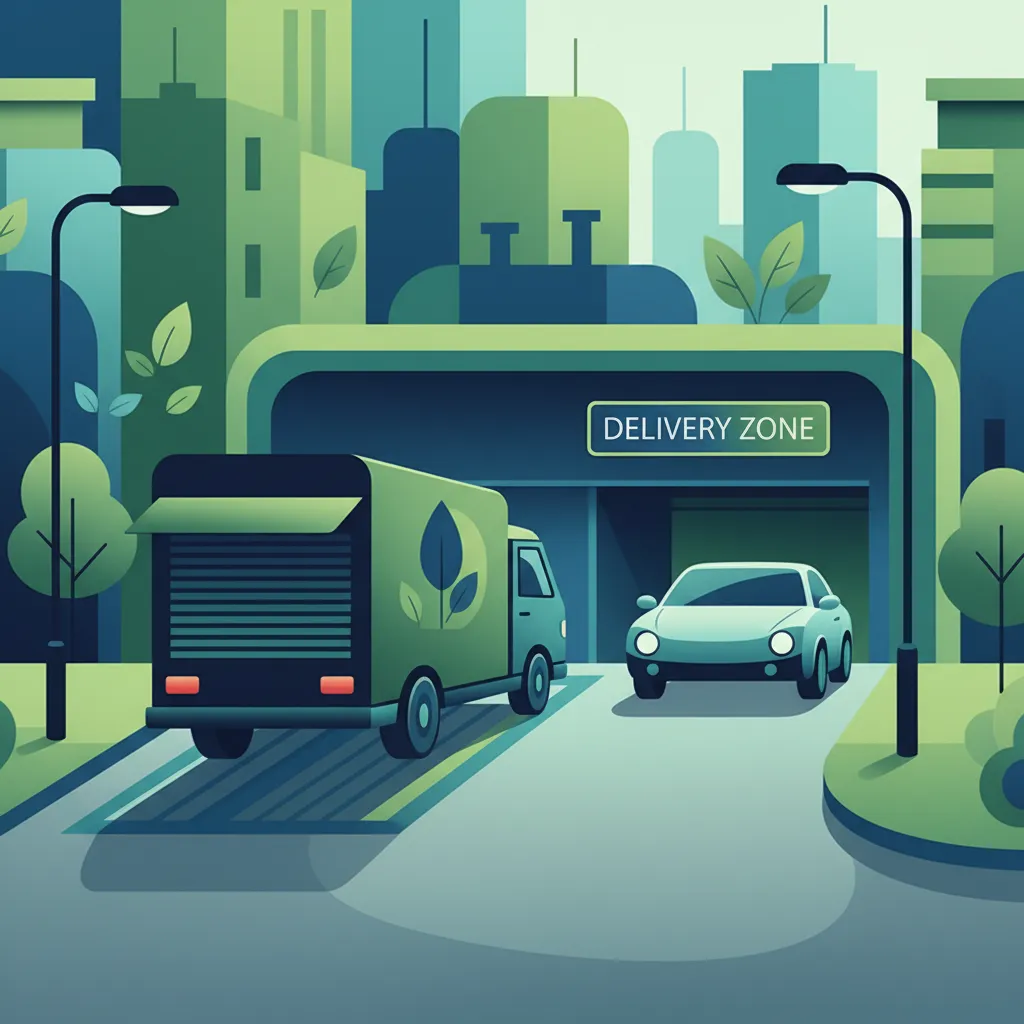
This lesson provides guidance on the practical aspects of parking and making deliveries in urban areas. It covers the techniques for safely maneuvering into and out of loading docks and designated delivery zones, which often involves precise reversing. The content also explains the specific parking regulations that apply to commercial vehicles and best practices for ensuring safety during loading and unloading.
This lesson focuses on the critical relationship between speed, following distance, and overall traffic safety on highways. It explains how to calculate a safe following distance based on speed and weather conditions, accounting for a truck's longer stopping distance. The content also teaches strategies for managing speed to adapt smoothly to changing traffic flow, enhancing both safety and fuel efficiency.
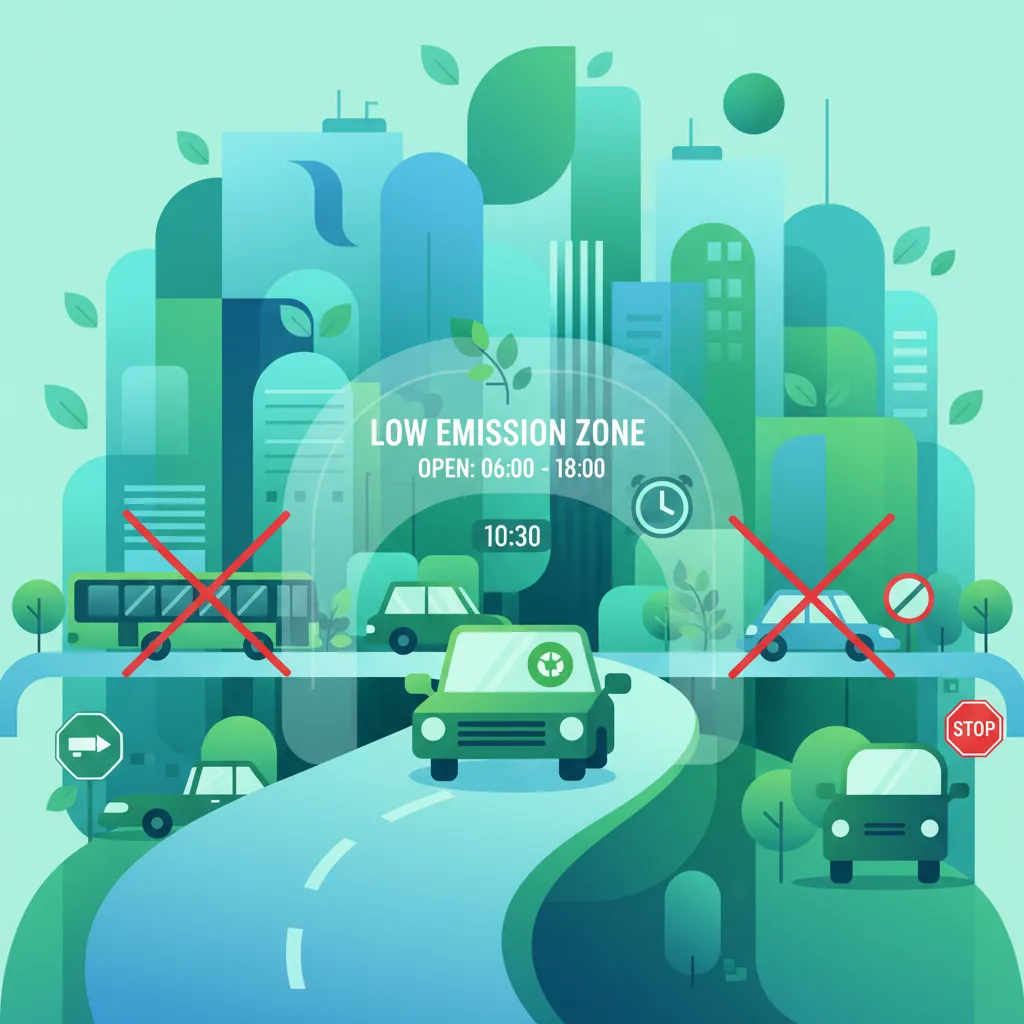
This lesson explains the various access restrictions that trucks face in modern cities. It covers the rules and requirements for entering low-emission zones (LEZ), including necessary vehicle standards and permits. The content also details time-window restrictions, where deliveries are only permitted during specific hours of the day to reduce congestion, requiring careful logistical planning.
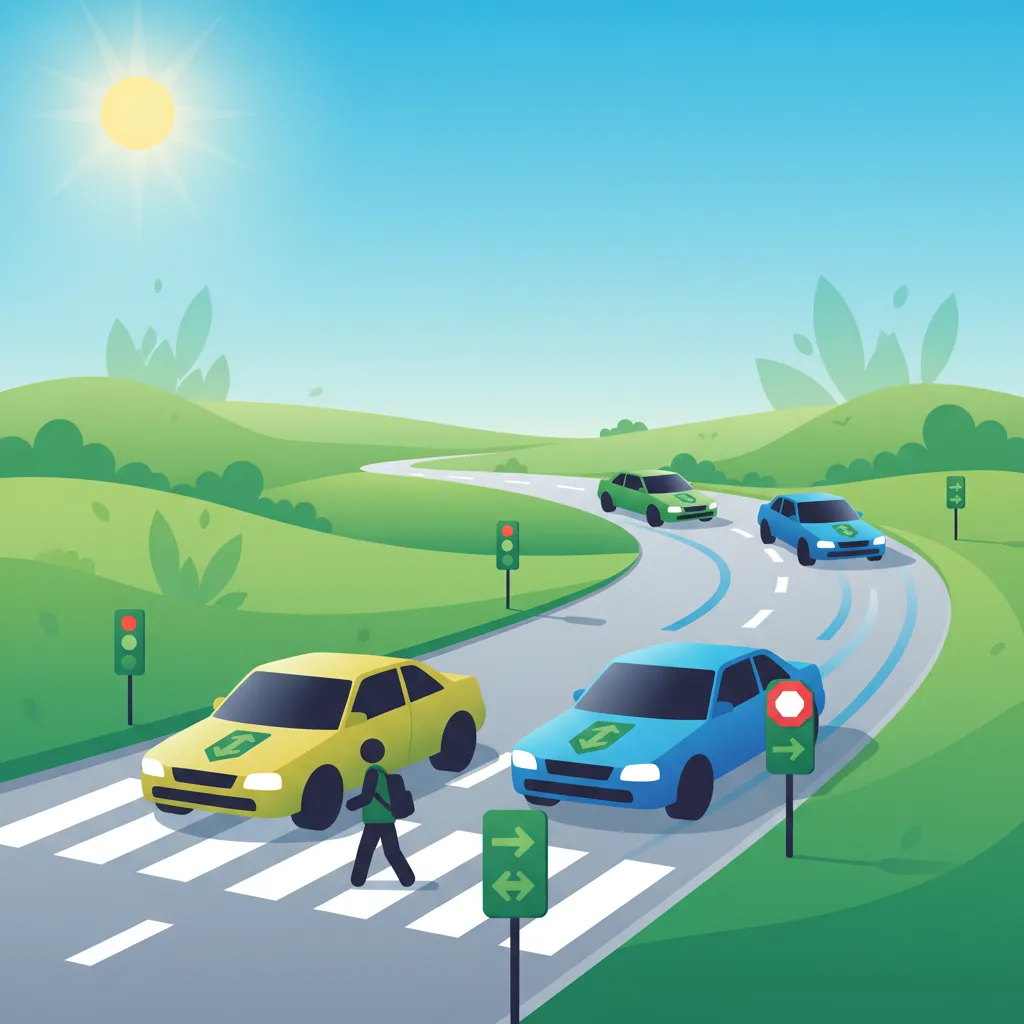
This lesson provides a broad overview of the key traffic regulations in Spain that directly impact professional truck drivers. It details the rules of priority at intersections, the interpretation of different road markings, and the principles of correct lane discipline. Furthermore, it explains the specific speed limits applicable to heavy vehicles and the legal protocols for safe overtaking and signaling.
This lesson focuses on the core principles of defensive driving as they apply to operating a large truck. It explains the importance of managing the space around the vehicle to create a safety buffer and always having an 'escape route' in mind. The content emphasizes anticipating the actions of other road users and being prepared to react calmly and safely to unexpected situations.
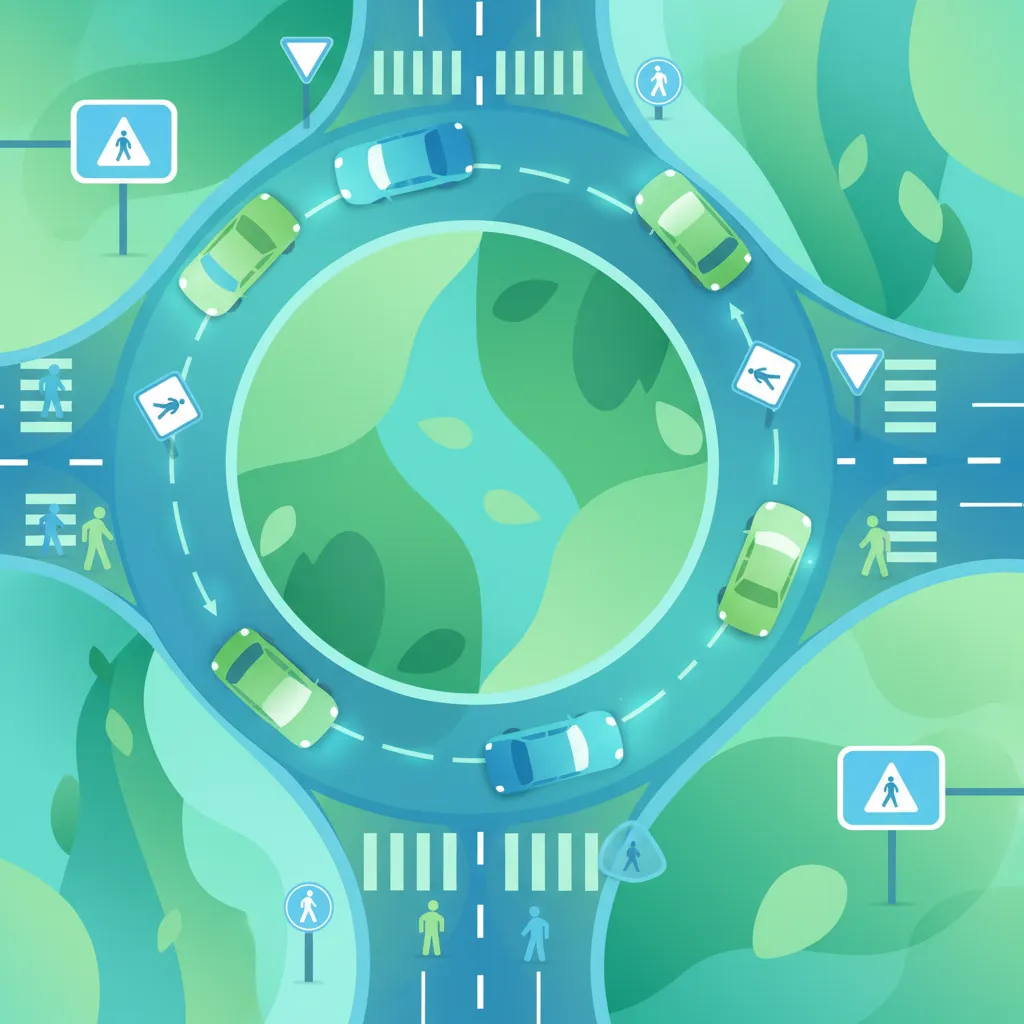
This lesson offers a comprehensive guide to navigating roundabouts in urban settings, explaining the correct protocols for entry, yielding, and circulation. Learners will be taught how to interpret lane markings and signage on multi-lane roundabouts and determine the correct vehicle positioning for safe entry and exit. The content emphasizes full compliance with Spanish city regulations that govern priority and right-of-way at these intersections.

This lesson provides theoretical guidance on the techniques for safely reversing a heavy vehicle, a high-risk maneuver. It emphasizes the correct use of mirrors, managing extensive blind spots, and the importance of using a spotter when available. The content also breaks down the geometric principles of parallel parking and backing into loading docks, focusing on vehicle positioning and spatial awareness.

This lesson focuses on the specific restrictions that heavy vehicles face on public infrastructure and in urban centers. It covers how to interpret signs indicating weight limits for bridges and height restrictions for tunnels and overpasses. The content also explains the various municipal regulations that can restrict truck access to certain urban areas, such as low-emission zones or time-based delivery windows.
Find clear answers to common questions learners have about Stop-and-Go Situations and Pedestrian Interaction. Learn how the lesson is structured, which driving theory objectives it supports, and how it fits into the overall learning path of units and curriculum progression in Spain. These explanations help you understand key concepts, lesson flow, and exam focused study goals.
Trucks have significant blind spots, particularly immediately in front, directly behind, and to the sides, especially at the rear. In urban settings with frequent stops and pedestrian activity, these blind spots are a major hazard. You must be extra vigilant at junctions, pedestrian crossings, and when filtering traffic, always assuming someone might be in these areas.
As a truck driver in Spain, you must always yield to pedestrians at designated crosswalks, whether marked or unmarked. Slow down well in advance and be prepared to stop. Look for eye contact to ensure they have seen you and are aware of your vehicle's size. Never assume a pedestrian will wait for you to pass.
While general rules for stop-and-go traffic apply, for trucks, the primary focus is on maintaining safe distances due to longer braking times and managing the vehicle's length to avoid obstructing other traffic or vulnerable road users. Be aware of your turning radius and potential overhangs when changing lanes or navigating tight urban spaces.
Failing to yield to a pedestrian is a serious traffic violation in Spain and can result in significant fines, points deducted from your driving licence, and potentially more severe penalties if an accident occurs. For the Category C/C1 theory exam, questions on pedestrian priority are critical and often focus on scenarios where a collision could easily happen.
To make effective eye contact, you need to slow down sufficiently so that the pedestrian or cyclist has time to register your presence and your intention to yield. Look directly at them if possible, and wait for a clear acknowledgment before proceeding. If visibility is poor or they seem distracted, it's safest to wait.
Use our powerful search functionality to pinpoint specific Spanish DGT driving theory practice sets. Filter by road sign categories, traffic law topics, or question difficulty to build custom study sessions and reinforce your knowledge precisely where it matters for your official exam.