
Navigating Spanish roundabouts (glorietas) requires understanding specific priority rules and correct lane usage. This lesson within the 'Roundabouts & Priority Rules' unit will clarify who yields to whom and how to position your vehicle for a safe and legal approach and exit. Mastering these skills is crucial for passing your DGT theory exam for categories B and BE and for driving confidently in Spain.
Lesson content overview
Navigating roundabouts, known as "glorietas" in Spain, is a fundamental skill for any driver. These circular intersections are designed to improve traffic flow and reduce accident severity compared to traditional junctions. However, they operate under specific rules, particularly regarding priority and lane usage, which differ from straight intersections. This lesson provides a comprehensive guide to mastering these rules, ensuring safe and compliant driving within Spanish roundabouts for those pursuing the Complete Spanish Driving License Theory Course for Categories B & BE (DGT).
Understanding these regulations is crucial not only for passing your DGT exam but, more importantly, for preventing collisions and contributing to a smooth, predictable traffic environment. We will cover the yielding hierarchy, proper lane positioning for various exits, the correct use of turn signals, and safe merging techniques.
Roundabouts are a common feature of the Spanish road network, from busy urban centres to quieter rural roads. They replace complex junctions with a circular flow, aiming to reduce conflict points and keep traffic moving.
The primary purpose of a roundabout is to manage intersecting traffic safely and efficiently. By directing vehicles to travel in one direction around a central island (typically counter-clockwise in Spain), head-on collisions are eliminated, and vehicles approach at lower speeds, making potential accidents less severe. This continuous flow design reduces the need for frequent stops, leading to less congestion and lower emissions.
Mastery of Spanish roundabout rules is paramount for several reasons. Firstly, adherence to the specific yielding hierarchy significantly reduces the risk of collisions at entry points. Secondly, correct lane positioning minimizes unpredictable lane changes within the roundabout, which are a major cause of accidents. Lastly, proper use of turn signals ensures clear communication with other drivers, fostering a predictable and safe driving environment. Non-compliance with these rules is a common source of fines and points on a driver's license, and more critically, it jeopardizes road safety.
The cornerstone of safe roundabout navigation in Spain is understanding the yielding hierarchy. This rule defines who has the right-of-way, preventing confusion and ensuring a continuous flow of traffic.
The most important rule in Spanish roundabouts, as stipulated by DGT Regulation 3.2.3.1, is that vehicles already circulating inside the roundabout have priority over vehicles intending to enter it. This principle ensures that once a vehicle has successfully merged, its path around the central island is protected. Drivers approaching the roundabout must always be prepared to stop and give way to traffic that is already inside.
As you approach a roundabout, you will typically encounter a yield line painted on the road, often accompanied by a "Give Way" or "Yield" sign. This is your cue to prepare to stop.
The yield line, often marked with a series of red and white chevrons, indicates the exact point where you must stop if necessary to give way. Before crossing this line, you must scan to your left to check for circulating traffic. Only proceed when there is a sufficient and safe gap in the traffic flow to your left, allowing you to merge smoothly without forcing any circulating vehicle to brake or swerve.
One of the most challenging aspects of multi-lane roundabouts is selecting the correct lane before entry and maintaining it. Incorrect lane discipline is a significant contributor to collisions within these intersections.
According to DGT Regulation 3.5.2, drivers must select the appropriate lane before entering the roundabout, based on their intended exit. This proactive approach minimizes the need for lane changes inside the roundabout, which are inherently more risky due to reduced visibility and short reaction times. Carefully observe road signs and markings on approach, which often indicate the correct lane for specific directions.
To reiterate, the DGT generally advises using the outermost lane for exiting the roundabout.
Proper use of turn signals (indicators) is vital for communicating your intentions to other drivers, enhancing predictability and safety. However, the rules for signaling in Spanish roundabouts are very specific and often misunderstood.
In Spain, DGT Regulation 4.1.5 states that you should use your turn signals only when you are about to exit the roundabout. Specifically, you should activate your right-hand indicator just before you reach the exit you intend to take, typically within 100 metres before the exit point. This signal clearly tells other drivers, especially those waiting to enter or those circulating behind you, that you are leaving the roundabout at the next opportunity.
Many drivers make common mistakes with turn signals in roundabouts, leading to confusion and potential hazards:
The only correct signaling is to use the right indicator when you are about to exit. All other signaling within the roundabout is considered incorrect and should be avoided.
Beyond priority and lane discipline, managing your speed and executing smooth merges are critical for safe roundabout navigation.
As you approach a roundabout, DGT Regulation 7.1.3 emphasizes the need to reduce your speed to a level compatible with its geometry and the prevailing traffic conditions. This lower speed allows you sufficient time to assess the traffic within the roundabout and identify a safe gap for entry.
Reduce Speed: Slow down significantly before reaching the yield line. Urban roundabouts typically require speeds of 30-40 km/h, but always adjust to conditions.
Look Left: Continuously scan the circulating traffic to your left for a sufficient gap.
Yield: Stop if necessary at the yield line. Do not proceed until a gap allows you to enter without causing circulating traffic to brake or swerve.
Merge Smoothly: Once a safe gap is identified (DGT Regulation 3.4.1), accelerate gently to match the speed of the circulating traffic and merge into your chosen lane. Avoid abrupt braking or acceleration.
Maintaining an appropriate speed is not just for entry but for the entire duration of your circulation. Excessive speed reduces your reaction time, makes it harder to respond to unexpected events (like a sudden stop by the vehicle ahead or a pedestrian), and increases the risk of losing control, especially in adverse weather. Maintain a consistent, moderate speed that allows you to safely observe your surroundings, check mirrors, and plan your exit.
Exiting a roundabout should be as smooth as entry. Once you have signalled your intention to exit with your right indicator, gently steer your vehicle out of the roundabout. Ensure your speed is appropriate for the exit road and that you are not cutting off other vehicles or pedestrians. Once clear of the roundabout, remember to cancel your turn signal.
The rules for roundabouts are not merely guidelines; they are enshrined in the Spanish Traffic Code (Código de Circulación) and enforced by the DGT. Understanding these specific regulations ensures legal compliance and promotes road safety.
Navigating roundabouts becomes more complex under certain conditions or with specific vehicle types. Being aware of these challenges is part of defensive driving.
For drivers with a Category BE license, operating a vehicle with a trailer (remolque) in a roundabout requires extra caution.
Environmental factors significantly impact roundabout safety:
Roundabouts can be particularly hazardous for vulnerable road users:
Understanding the correct terminology is crucial for grasping the rules and communicating effectively on the road.
Mastering roundabouts requires both theoretical knowledge and practical application. Continue to review these rules and look for opportunities to observe and practice safe navigation.
This lesson covers the essential Spanish roundabout rules that every DGT theory exam candidate must master. The fundamental principle is that circulating traffic always has priority, and drivers must stop at the yield line if necessary. Lane positioning is determined before entry: rightmost lane for first exit or going straight, innermost lanes for left turns or later exits. Turn signals should only be used to indicate exiting, never on approach or while circulating in inner lanes. Safe roundabout navigation requires correct lane selection, proper signaling, appropriate speed management, and heightened awareness of vulnerable road users like cyclists and pedestrians, especially when operating vehicles with trailers under Category BE regulations.
A short set of high-value points that capture the most important learning from this lesson.
Vehicles already circulating inside a roundabout always have priority over those attempting to enter - never assume priority when approaching the yield line
Select your lane before entering a roundabout based on your intended exit, not after you have already entered
In Spain, turn signals should only be activated when you are about to exit the roundabout, not while approaching or circulating
Always transition to the rightmost lane before your exit - DGT recommends using the outermost lane for exiting whenever feasible
Blind spots in roundabouts pose serious danger to cyclists and motorcyclists - always perform head checks before lane changes or exits
Explore all units and lessons included in this driving theory course.
The yielding hierarchy: circulating traffic has absolute priority; entering vehicles must yield and stop at the line if necessary
First exit (right turn): enter and stay in the rightmost lane, signal right before exit
Second exit (straight): use rightmost or middle lane on entry, move to right lane before your exit, signal right before exit
Third exit or left turn: enter in innermost lane, signal right and change to outer lane before exit, no signal while circulating in inner lanes
Pedestrians have priority at designated crosswalks near roundabout exits - always yield to them
Activating the turn signal while approaching the roundabout entrance, which misleads other drivers into thinking you will take the first exit
Signaling left while circulating to indicate continuing straight - this is incorrect and confusing; only signal right when exiting
Attempting to change lanes inside the roundabout instead of positioning correctly before entry
Failing to yield to pedestrians at crosswalks on exit arms of roundabouts
For Category BE drivers: not accounting for the wider turning radius of trailers, which may encroach on adjacent lanes
Lesson content overview
A short set of high-value points that capture the most important learning from this lesson.
Vehicles already circulating inside a roundabout always have priority over those attempting to enter - never assume priority when approaching the yield line
Select your lane before entering a roundabout based on your intended exit, not after you have already entered
In Spain, turn signals should only be activated when you are about to exit the roundabout, not while approaching or circulating
Always transition to the rightmost lane before your exit - DGT recommends using the outermost lane for exiting whenever feasible
Blind spots in roundabouts pose serious danger to cyclists and motorcyclists - always perform head checks before lane changes or exits
Explore all units and lessons included in this driving theory course.
The yielding hierarchy: circulating traffic has absolute priority; entering vehicles must yield and stop at the line if necessary
First exit (right turn): enter and stay in the rightmost lane, signal right before exit
Second exit (straight): use rightmost or middle lane on entry, move to right lane before your exit, signal right before exit
Third exit or left turn: enter in innermost lane, signal right and change to outer lane before exit, no signal while circulating in inner lanes
Pedestrians have priority at designated crosswalks near roundabout exits - always yield to them
Activating the turn signal while approaching the roundabout entrance, which misleads other drivers into thinking you will take the first exit
Signaling left while circulating to indicate continuing straight - this is incorrect and confusing; only signal right when exiting
Attempting to change lanes inside the roundabout instead of positioning correctly before entry
Failing to yield to pedestrians at crosswalks on exit arms of roundabouts
For Category BE drivers: not accounting for the wider turning radius of trailers, which may encroach on adjacent lanes
Explore search topics learners often look for when studying Yielding Rules and Lane Positioning in Rotaries. These topics reflect common questions about road rules, driving situations, safety guidance, and lesson level theory preparation for learners in Spain.
Browse additional driving theory lessons that cover connected traffic rules, road signs, and common driving situations related to this topic. Improve your understanding of how different rules interact across everyday traffic scenarios.
Explore complex multi-lane roundabout scenarios and specific Spanish DGT rules. Learn advanced lane selection, signaling strategies, and how to navigate challenging situations safely for your theory exam.
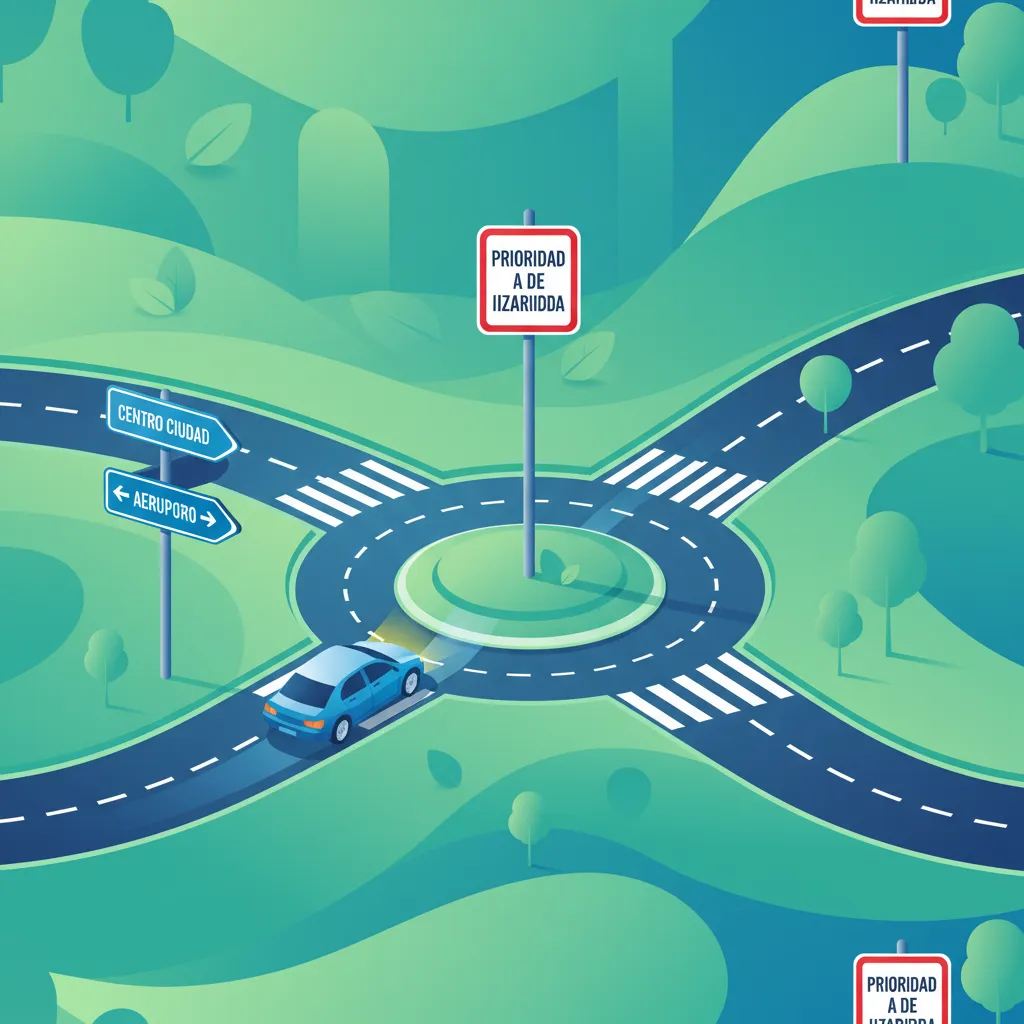
This lesson presents the variety of signs that guide drivers through roundabout navigation. It explains the significance of the roundabout warning symbol, priority signs, lane arrows, and directional signs placed before and within the roundabout. Mastery of roundabout signage ensures that drivers follow legal requirements and maintain safe traffic flow.
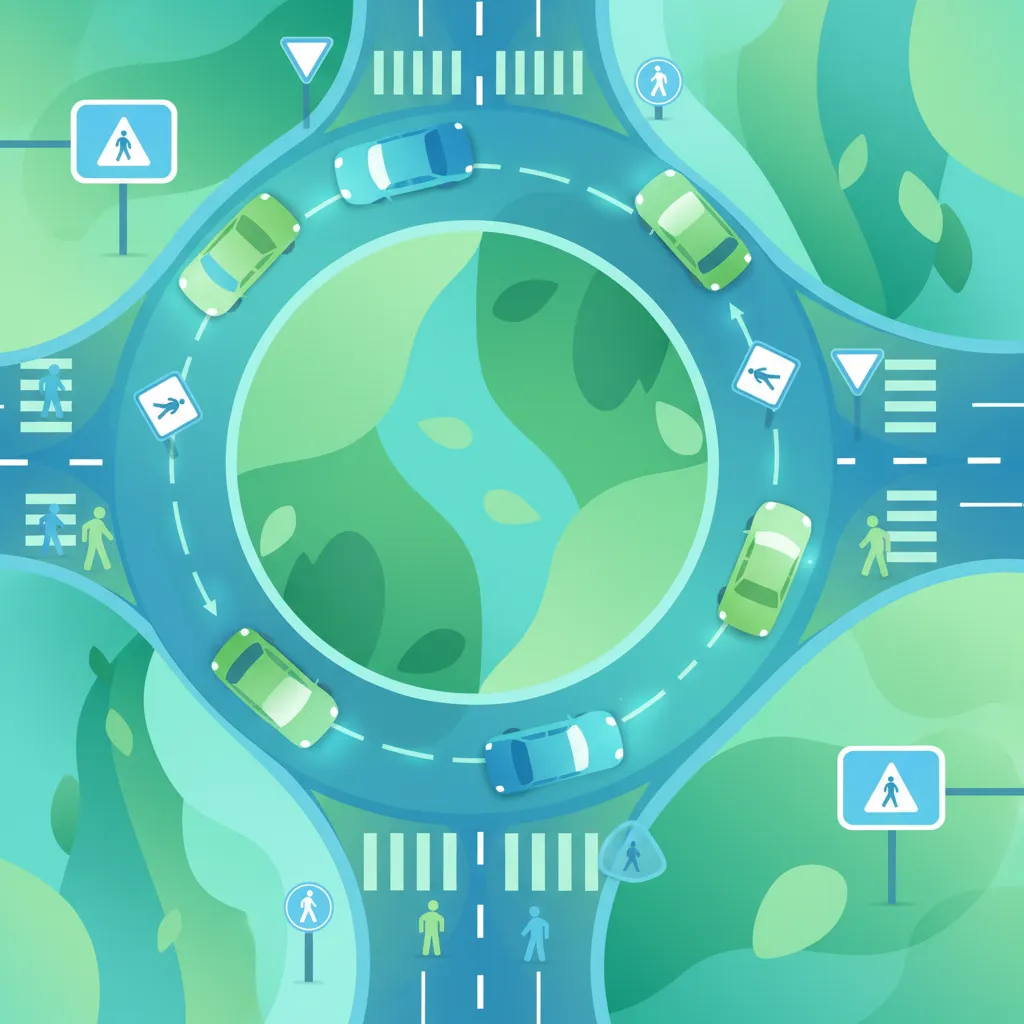
This lesson offers a comprehensive guide to navigating roundabouts in urban settings, explaining the correct protocols for entry, yielding, and circulation. Learners will be taught how to interpret lane markings and signage on multi-lane roundabouts and determine the correct vehicle positioning for safe entry and exit. The content emphasizes full compliance with Spanish city regulations that govern priority and right-of-way at these intersections.
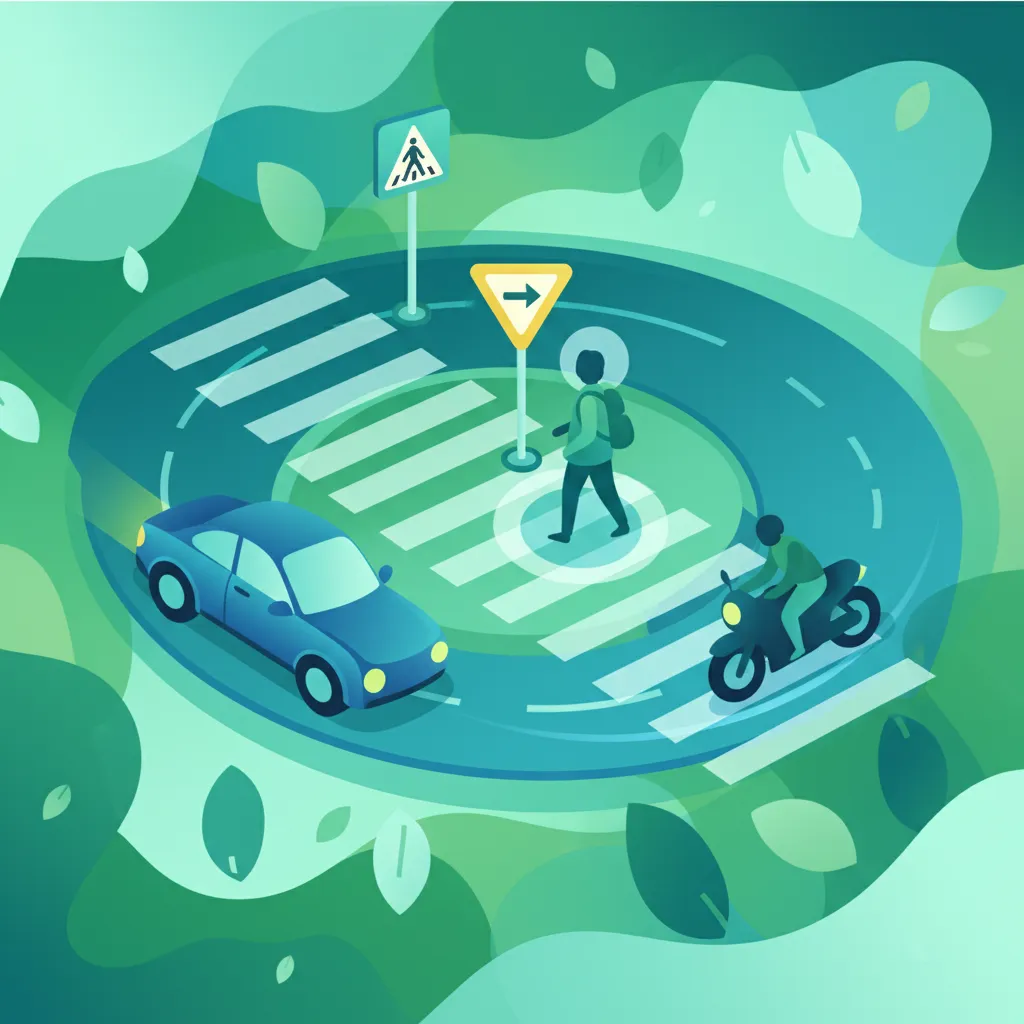
This lesson outlines the proper techniques for negotiating roundabouts and signal-controlled intersections in Spain. It explains priority rules at entry, lane selection based on the intended exit, and yielding to circulating traffic. The content also covers compliance with traffic signals and DGT regulations, including handling cyclist crossings.
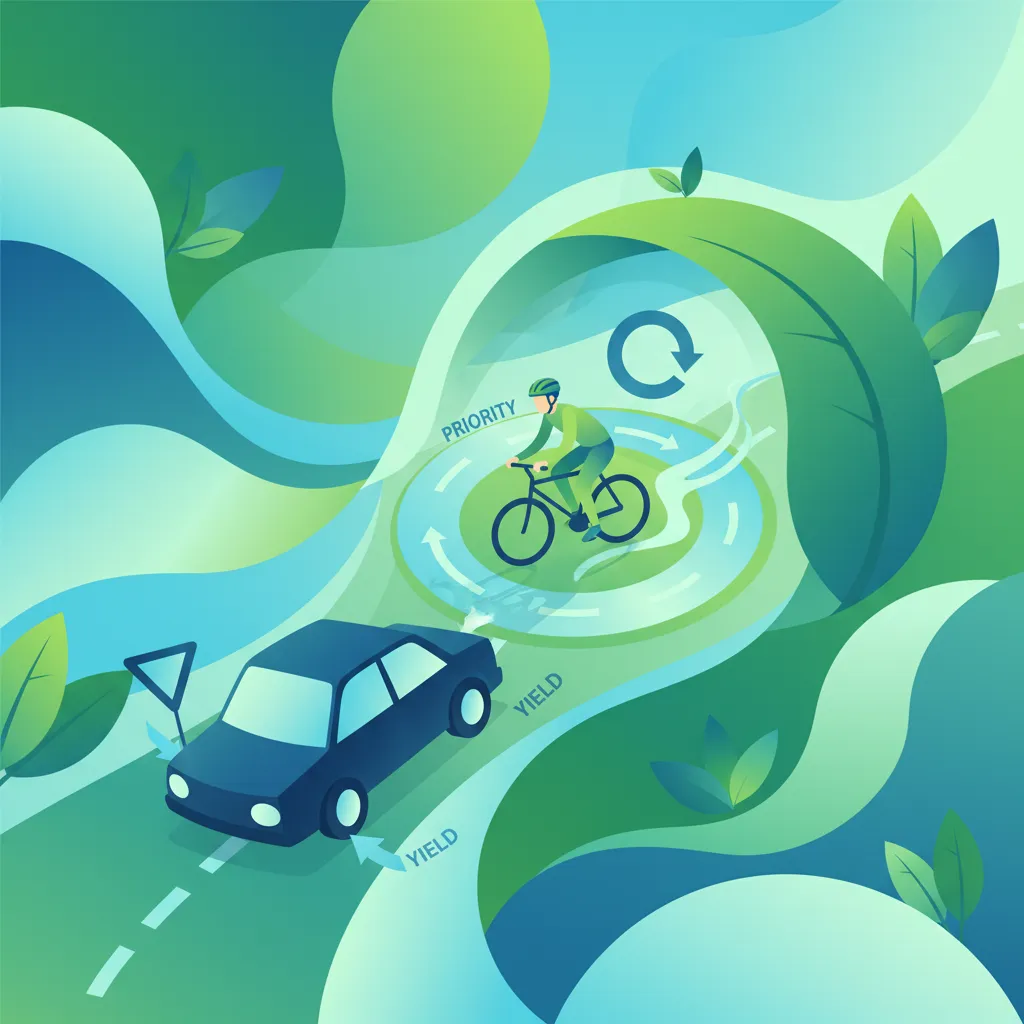
This lesson clarifies the primary rule for roundabouts: all vehicles entering must yield to traffic already on the circular roadway. It explains how to approach a roundabout, select the appropriate lane based on the intended exit, and merge safely into the flow of traffic. Proper signaling before exiting is also covered, ensuring other drivers can anticipate the rider's movements for a smooth and safe negotiation of the junction.
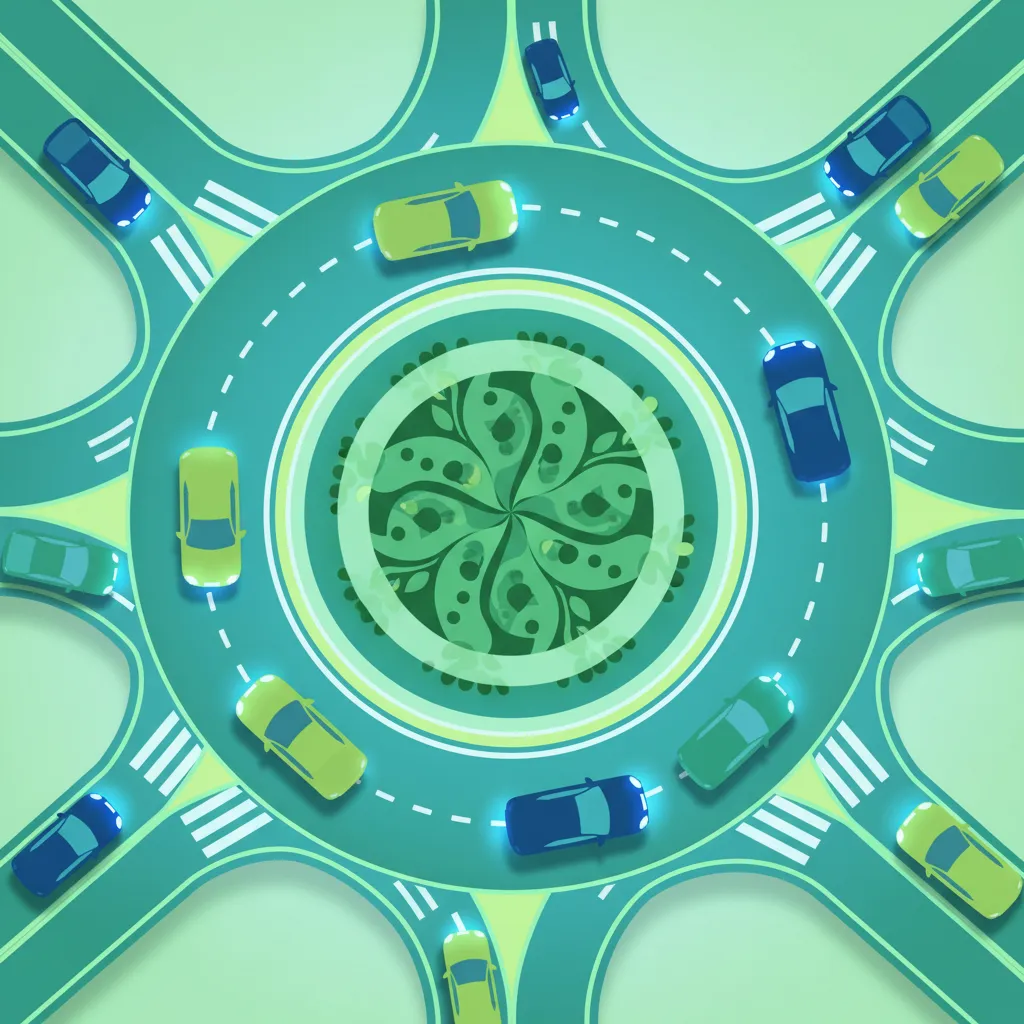
This lesson examines the structural components of a typical Spanish roundabout, describing the central island, entry and circulating lanes, and the placement of yield signs. It outlines how DGT standards dictate the geometric design and entry/exit points to ensure smooth traffic flow. Understanding these design elements enables drivers to anticipate vehicle movements and navigate safely.

This lesson examines the interaction between large vehicles, such as trucks, and vulnerable road users within roundabouts. It addresses the wide turning radius of heavy vehicles, the importance of checking blind spots, and the correct yielding behavior toward pedestrians and cyclists. Learners will understand how to maintain safe distances and anticipate the movements of different road users.
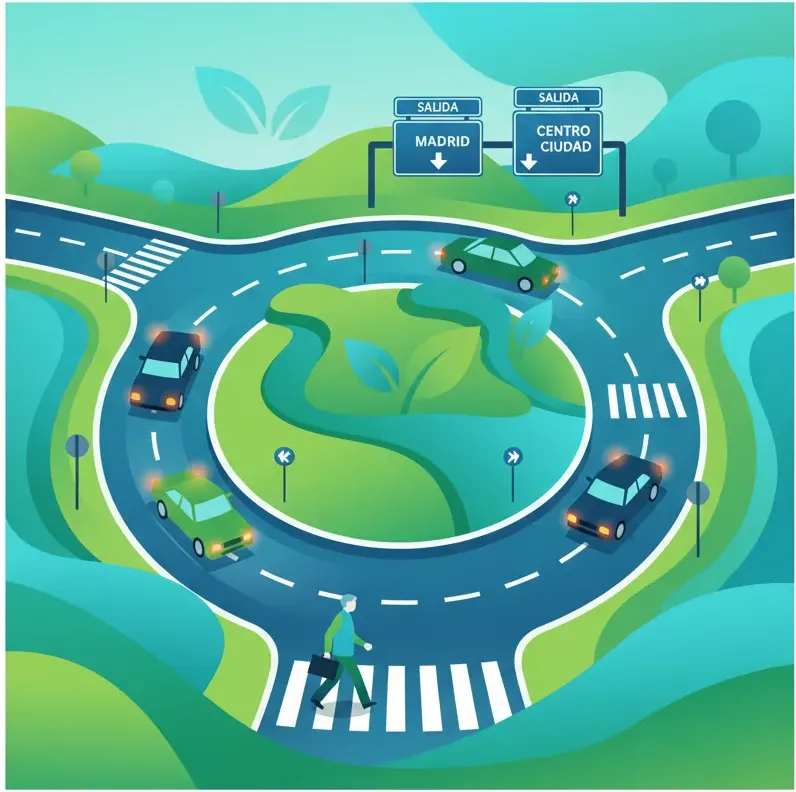
This lesson provides specific instructions on how to safely navigate complex junctions such as roundabouts and intersections with a large vehicle. It explains the rules of priority, the correct lane to use based on the intended exit, and the importance of proper vehicle positioning to account for off-tracking. The content also covers clear signaling to communicate intentions to other road users for safe and efficient passage.
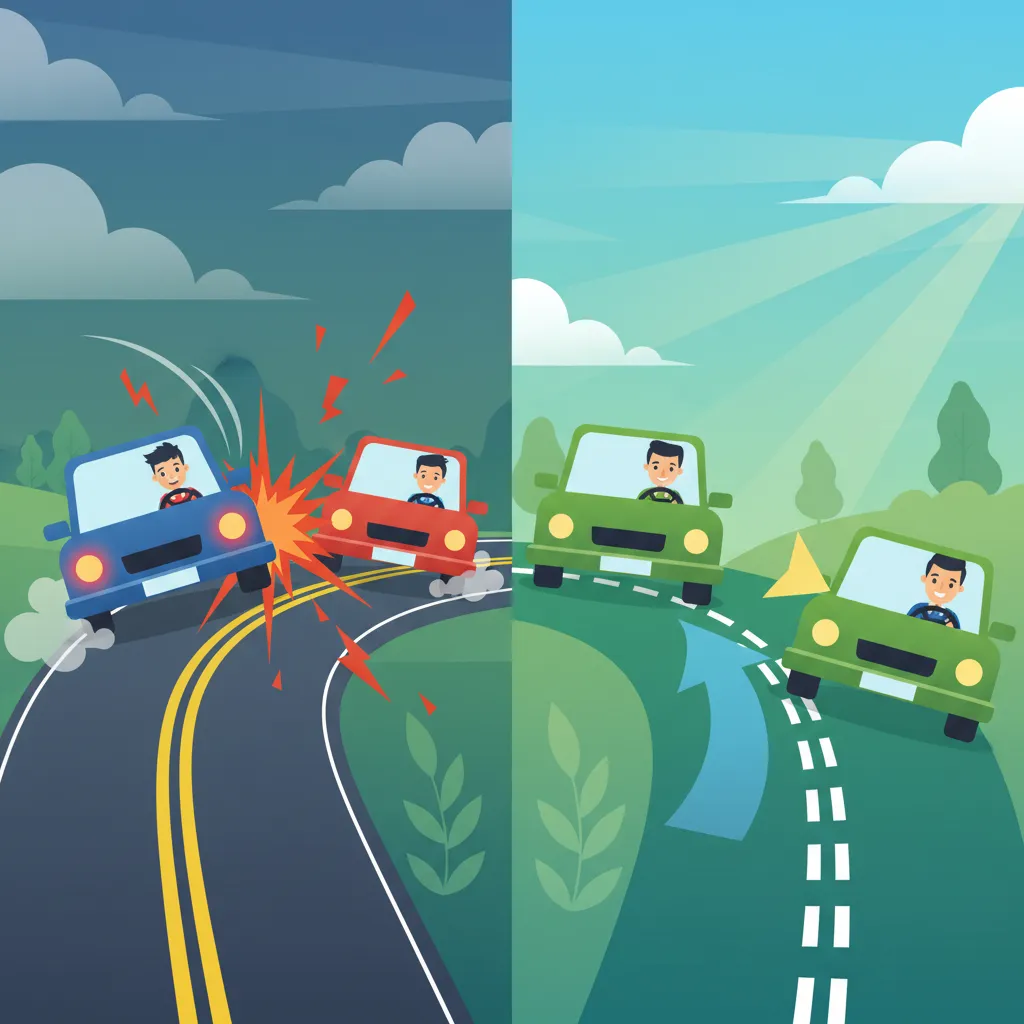
This lesson addresses common errors made by drivers when using roundabouts and presents corrective strategies. It covers issues such as entering from the wrong lane, failing to yield to circulating traffic, exceeding the recommended speed, and not signaling an exit correctly. By understanding these mistakes, drivers can improve their roundabout proficiency and reduce accident risk.

This lesson analyzes the various intersection configurations found in Spanish cities, such as controlled and uncontrolled junctions. It explains the hierarchy of right-of-way, detailing when vehicles must yield, when pedestrians have priority, and how traffic signs dictate movement. Learners are guided through DGT signage conventions that determine priority at each intersection type.
This lesson addresses the crucial 'priority to the right' rule that governs traffic at intersections without signs or signals. It explains that drivers must yield to any vehicle approaching from their right-hand side. The content provides practical examples of how to assess traffic, determine the correct order of passage, and proceed with caution to safely navigate these common but potentially confusing intersections.
Understand typical errors drivers make in Spanish roundabouts and learn to identify and mitigate hazards. Covers vulnerable road users, trailer handling, and adverse conditions for the DGT theory test.
This lesson addresses common errors made by drivers when using roundabouts and presents corrective strategies. It covers issues such as entering from the wrong lane, failing to yield to circulating traffic, exceeding the recommended speed, and not signaling an exit correctly. By understanding these mistakes, drivers can improve their roundabout proficiency and reduce accident risk.
This lesson examines the interaction between large vehicles, such as trucks, and vulnerable road users within roundabouts. It addresses the wide turning radius of heavy vehicles, the importance of checking blind spots, and the correct yielding behavior toward pedestrians and cyclists. Learners will understand how to maintain safe distances and anticipate the movements of different road users.
This lesson examines the structural components of a typical Spanish roundabout, describing the central island, entry and circulating lanes, and the placement of yield signs. It outlines how DGT standards dictate the geometric design and entry/exit points to ensure smooth traffic flow. Understanding these design elements enables drivers to anticipate vehicle movements and navigate safely.
This lesson presents the variety of signs that guide drivers through roundabout navigation. It explains the significance of the roundabout warning symbol, priority signs, lane arrows, and directional signs placed before and within the roundabout. Mastery of roundabout signage ensures that drivers follow legal requirements and maintain safe traffic flow.
This lesson provides specific instructions on how to safely navigate complex junctions such as roundabouts and intersections with a large vehicle. It explains the rules of priority, the correct lane to use based on the intended exit, and the importance of proper vehicle positioning to account for off-tracking. The content also covers clear signaling to communicate intentions to other road users for safe and efficient passage.
This lesson offers a comprehensive guide to navigating roundabouts in urban settings, explaining the correct protocols for entry, yielding, and circulation. Learners will be taught how to interpret lane markings and signage on multi-lane roundabouts and determine the correct vehicle positioning for safe entry and exit. The content emphasizes full compliance with Spanish city regulations that govern priority and right-of-way at these intersections.
This lesson outlines the proper techniques for negotiating roundabouts and signal-controlled intersections in Spain. It explains priority rules at entry, lane selection based on the intended exit, and yielding to circulating traffic. The content also covers compliance with traffic signals and DGT regulations, including handling cyclist crossings.
This lesson clarifies the primary rule for roundabouts: all vehicles entering must yield to traffic already on the circular roadway. It explains how to approach a roundabout, select the appropriate lane based on the intended exit, and merge safely into the flow of traffic. Proper signaling before exiting is also covered, ensuring other drivers can anticipate the rider's movements for a smooth and safe negotiation of the junction.
Find clear answers to common questions learners have about Yielding Rules and Lane Positioning in Rotaries. Learn how the lesson is structured, which driving theory objectives it supports, and how it fits into the overall learning path of units and curriculum progression in Spain. These explanations help you understand key concepts, lesson flow, and exam focused study goals.
In Spain, vehicles that are already circulating within the roundabout always have priority over vehicles attempting to enter. You must yield to traffic already on the roundabout before entering.
Generally, for exits to the right or straight ahead, you should use the right-hand lane. For exits to the left or to turn back, you should use the left-hand lane. Always signal your intention to change lanes or exit.
You must signal your intention to change lanes if moving from an outer to an inner lane, or vice versa, while on the roundabout. You must also signal your intention to exit the roundabout well in advance as you approach your exit.
If a roundabout has traffic lights, you must obey them. They usually control entry to the roundabout, and you must stop if the light is red, waiting for it to turn green. Priority rules still apply once you enter.
Large vehicles may need to use wider lanes or the outer lane of multi-lane roundabouts to navigate safely, especially if taking an early exit. They should always ensure they have adequate space and signal clearly.
Use our powerful search functionality to pinpoint specific Spanish DGT driving theory practice sets. Filter by road sign categories, traffic law topics, or question difficulty to build custom study sessions and reinforce your knowledge precisely where it matters for your official exam.