
Welcome to the 'Weather, Visibility & Night Riding' unit, where you'll learn critical skills for safe moped operation in Spain. This lesson on adjusting speed for environmental conditions builds directly on your understanding of basic speed limits and vehicle controls, preparing you for the complexities of urban and rural riding. Mastering this skill is crucial for passing your AM category theory exam and ensuring your safety on Spanish roads.
Lesson content overview
Navigating the roads safely on your moped, especially within the Spanish driving environment (Category AM), requires more than simply knowing the posted speed limits. While speed limits establish the maximum allowable speed under ideal conditions, real-world driving frequently presents challenges such as rain, fog, darkness, or slippery surfaces. This comprehensive lesson will equip you with the essential knowledge and strategies to adapt your speed effectively, ensuring safety for yourself and other road users.
A common misconception among new riders is that the posted speed limit is always a safe speed. In reality, the posted speed limit signifies the absolute maximum speed legally permitted on a specific road segment, applicable only when road, weather, and traffic conditions are optimal. Your safe speed, however, is a dynamic value that you must constantly calculate and adjust based on the prevailing environmental conditions.
The Spanish Dirección General de Tráfico (DGT) regulations implicitly emphasize this distinction. Operating a moped safely means taking into account all factors that could influence your ability to react, brake, and maintain control. Failing to adapt your speed to less-than-ideal circumstances is not only dangerous but also a legal violation, as it demonstrates a lack of responsible driving.
Always remember: The speed limit is a ceiling, not a target. Your actual safe speed might be significantly lower, especially in adverse conditions.
Several environmental and vehicle-related factors directly impact how fast you can safely travel on your moped. Understanding these elements is fundamental to mastering speed adaptation.
The visibility margin is one of the most critical concepts for safe riding. It defines the clear distance you can see ahead, which must always be greater than your total stopping distance. Your total stopping distance is the sum of the perception-reaction distance (how far you travel from seeing a hazard to reacting) and the braking distance (how far you travel while braking).
When visibility is reduced due to rain, fog, or darkness, your ability to see hazards early diminishes significantly. This directly impacts your perception-reaction time and, consequently, your total stopping distance. If you cannot see far enough ahead to stop safely within that visible distance, you are traveling too fast.
Spanish traffic law, specifically Article 93 of the Reglamento de Circulación, mandates that every driver must be able to stop their vehicle within the distance they can see clearly. This rule is paramount in conditions of reduced visibility.
Traction refers to the frictional grip between your moped's tires and the road surface. This crucial element is heavily influenced by weather conditions, the type of road surface, and the condition of your tires. A dry, clean asphalt road provides excellent traction, allowing for efficient braking and maneuvering. However, this changes dramatically with adverse weather.
Article 61 of the DGT's "Conducción segura" guidelines emphasizes the driver's responsibility to adjust speed to the prevailing road conditions. Neglecting the state of the road surface can lead to a loss of control, especially when braking or turning.
The amount of ambient light plays a critical role in your ability to perceive hazards and for other road users to see you.
Proper use of your moped's lighting equipment is legally mandated and essential for safety. Article 121 of the DGT's Reglamento de Circulación stipulates when headlights must be used:
Your moped is equipped with different types of lights for various situations:
Using high beams in fog or heavy rain can be counterproductive. The light reflects off the water droplets, creating a glare that can further reduce your visibility rather than improve it.
A safety buffer refers to an intentional reduction of your speed beyond the minimum legally required adjustments. This additional margin accounts for human factors like variability in reaction time, potential distractions, and the unpredictable nature of road hazards.
While not explicitly codified in law, incorporating a safety buffer is a core recommendation in DGT safe driving guidelines. It provides an extra cushion of time and distance, giving you more opportunities to respond to unexpected events, such as a pedestrian suddenly stepping onto the road or another vehicle making an abrupt maneuver. This practice is universally advisable, regardless of a rider's experience level.
Adhering to specific DGT regulations is not just about avoiding penalties; it's about embedding safe practices into your riding behavior.
This article is fundamental: "The driver must adapt the speed of their vehicle to the road, traffic, visibility, and weather conditions, always within the limits established, and being able to stop the vehicle within the distance they can see clearly and anticipate any obstacles."
Mandatory requirement for drivers to adjust their speed to prevailing road, traffic, visibility, and weather conditions, ensuring they can always stop within their clear line of sight.
Implications for AM Riders: This means you are legally obligated to reduce your speed in conditions such as rain, fog, night, or on slippery surfaces, even if you are below the posted speed limit. The posted limit is irrelevant if the conditions dictate a slower, safer speed.
As discussed earlier, this article reinforces the critical visibility margin: "Every driver must be in a position to stop their vehicle within the free and clear distance they can see ahead."
Implications for AM Riders: This rule directly dictates your maximum safe speed under reduced visibility. If you can only see 20 metres ahead due to fog, you must travel at a speed where your total stopping distance is less than 20 metres.
This article details when and how vehicle lighting must be used: "All vehicles that circulate between sunset and sunrise, or during the day in tunnels, underpasses, or lanes affected by 'sentido contrario al habitual,' or when atmospheric conditions or environmental circumstances significantly reduce visibility, must have their lighting on."
Implications for AM Riders: You must activate your moped's lights (typically dipped beam) not only at night but also during dusk, dawn, and whenever weather conditions like rain or fog impair visibility.
The general vehicle regulations specify the conditions under which fog lights may be used: "Rear fog lights must be used when atmospheric conditions are particularly unfavorable, such as dense fog, heavy rain, strong snowfall or dust clouds. Front fog lights may be used in these same conditions, and also in less severe fog, light rain, or light snow, or on narrow, winding roads."
Implications for AM Riders: Use your fog lights judiciously. Activating them in clear conditions is illegal and can confuse or blind other drivers. Always ensure they are switched off once visibility improves.
While not a specific article, DGT guidelines consistently advise drivers to consider their vehicle's load and mechanical condition.
Implications for AM Riders: A heavily loaded moped will have increased inertia, meaning it will take longer to stop. Worn tires or brakes will also reduce your vehicle's ability to stop efficiently. Always adjust your speed downwards to compensate for these factors.
Maintaining your moped in excellent condition (checking tires, brakes, lights) is a proactive step that enhances your ability to adapt speed safely.
Here are practical applications of the principles discussed, tailored for Category AM riders in Spain.
Riding in Rain and on Wet Roads:
Riding in Fog:
Riding in Snow or Ice (Rare for AM but Possible):
Dusk and Dawn:
Night Riding:
Failing to adapt your speed is a leading cause of accidents. Here are common mistakes and the correct behavior:
Maintaining Posted Speed in Heavy Rain:
Using High Beam in Fog:
Ignoring Reduced Visibility at Dusk or Dawn:
Overlooking Tire Condition on Wet Roads:
Misjudging Visibility When Entering a Tunnel:
Mastering speed adaptation is a cornerstone of safe riding for the Spanish Driving License Theory – AM Category. Remember these key takeaways:
By diligently applying these principles, you will enhance your safety, reduce the risk of accidents, and comply with Spanish traffic regulations while riding your Category AM moped.
This lesson teaches AM category moped riders how to safely adapt their speed based on environmental conditions in Spain, emphasizing that posted speed limits are maximums for ideal conditions only. Key concepts include the visibility margin rule (you must stop within what you can see), traction variations across wet, oily, and icy surfaces, and the legal requirements for headlamp use under DGT Articles 91, 93, and 121. Practical guidance covers specific adjustments for rain (reduce speed, increase following distance), fog (use dipped beam and fog lights, never high beam), dusk/dawn (activate lights early), and night riding (stay well below limits, use appropriate headlights). A safety buffer beyond minimum legal requirements is recommended to account for reaction time variability and unexpected hazards.
A short set of high-value points that capture the most important learning from this lesson.
The posted speed limit is a maximum for ideal conditions only—your safe speed must be dynamically calculated based on actual weather, visibility, and road surface conditions.
You must always be able to stop your moped within the distance you can see clearly ahead (visibility margin), which becomes critical in rain, fog, or darkness.
Headlights are legally required from sunset to sunrise, in tunnels, and whenever atmospheric conditions reduce visibility—not just at night.
Reducing your speed has a disproportionately positive effect on stopping distance because braking distance increases with the square of your speed.
High beams create dangerous glare in fog or heavy rain by reflecting off water droplets, making dipped beams and fog lights the correct choice.
Explore all units and lessons included in this driving theory course.
DGT Article 91 mandates that drivers adapt speed to road, traffic, visibility, and weather conditions and must always stop within their clear line of sight.
DGT Article 93 requires drivers to be able to stop within the free and clear distance they can see ahead—this directly dictates maximum safe speed in reduced visibility.
Use dipped beam (luces de cruce) for normal night driving and adverse weather; use high beam (luces de carretera) only on unlit roads with no oncoming traffic.
Rear fog lights must only be used when visibility is below approximately 50 metres due to fog, heavy rain, snowfall, or dust clouds.
Hydroplaning occurs when water builds between tires and road, causing loss of control—reduce speed significantly in heavy rain to prevent this.
Continuing at the posted speed limit during heavy rain or fog, not accounting for dramatically increased stopping distances on wet or slippery surfaces.
Using high beam headlights in fog or heavy rain, which reflects light off water particles and actually reduces forward visibility.
Failing to activate dipped beam headlights early enough at dusk or dawn, reducing conspicuity to other road users before full darkness arrives.
Not reducing speed sufficiently for a loaded moped, which has increased inertia and longer stopping distances.
Assuming black ice is visible—it is often invisible, especially in shaded areas, bridges, and underpasses where it commonly forms.
Lesson content overview
A short set of high-value points that capture the most important learning from this lesson.
The posted speed limit is a maximum for ideal conditions only—your safe speed must be dynamically calculated based on actual weather, visibility, and road surface conditions.
You must always be able to stop your moped within the distance you can see clearly ahead (visibility margin), which becomes critical in rain, fog, or darkness.
Headlights are legally required from sunset to sunrise, in tunnels, and whenever atmospheric conditions reduce visibility—not just at night.
Reducing your speed has a disproportionately positive effect on stopping distance because braking distance increases with the square of your speed.
High beams create dangerous glare in fog or heavy rain by reflecting off water droplets, making dipped beams and fog lights the correct choice.
Explore all units and lessons included in this driving theory course.
DGT Article 91 mandates that drivers adapt speed to road, traffic, visibility, and weather conditions and must always stop within their clear line of sight.
DGT Article 93 requires drivers to be able to stop within the free and clear distance they can see ahead—this directly dictates maximum safe speed in reduced visibility.
Use dipped beam (luces de cruce) for normal night driving and adverse weather; use high beam (luces de carretera) only on unlit roads with no oncoming traffic.
Rear fog lights must only be used when visibility is below approximately 50 metres due to fog, heavy rain, snowfall, or dust clouds.
Hydroplaning occurs when water builds between tires and road, causing loss of control—reduce speed significantly in heavy rain to prevent this.
Continuing at the posted speed limit during heavy rain or fog, not accounting for dramatically increased stopping distances on wet or slippery surfaces.
Using high beam headlights in fog or heavy rain, which reflects light off water particles and actually reduces forward visibility.
Failing to activate dipped beam headlights early enough at dusk or dawn, reducing conspicuity to other road users before full darkness arrives.
Not reducing speed sufficiently for a loaded moped, which has increased inertia and longer stopping distances.
Assuming black ice is visible—it is often invisible, especially in shaded areas, bridges, and underpasses where it commonly forms.
Explore search topics learners often look for when studying Adjusting Speed for Weather and Light Conditions. These topics reflect common questions about road rules, driving situations, safety guidance, and lesson level theory preparation for learners in Spain.
Browse additional driving theory lessons that cover connected traffic rules, road signs, and common driving situations related to this topic. Improve your understanding of how different rules interact across everyday traffic scenarios.
Learn essential Spanish driving theory for AM category mopeds. Understand how to dynamically adjust your speed for rain, fog, and night, ensuring safety with DGT rules and proper visibility margins on Spanish roads.
This lesson addresses the specific challenges posed by rain and fog, focusing on reduced visibility and loss of traction. It explains the proper use of windshield wipers and fog lights, and the need to adjust speed and increase following distance. The content covers how to prevent and react to hydroplaning (aquaplaning) to maintain vehicle control.

This lesson focuses on the specific techniques required for riding in rainy and slippery conditions. It explains how water on the road surface reduces tire grip and significantly increases braking distances. Learners will be taught to reduce speed, use controls smoothly and progressively, and be particularly cautious of painted lines and manhole covers, which become extremely slippery when wet.
This lesson covers how environmental conditions such as rain, fog, and darkness affect driving safety. It instructs drivers on adjusting speed, using appropriate lighting, and increasing following distance to compensate for reduced visibility and traction. The lesson incorporates DGT safety recommendations for handling adverse weather to mitigate risk and maintain control.
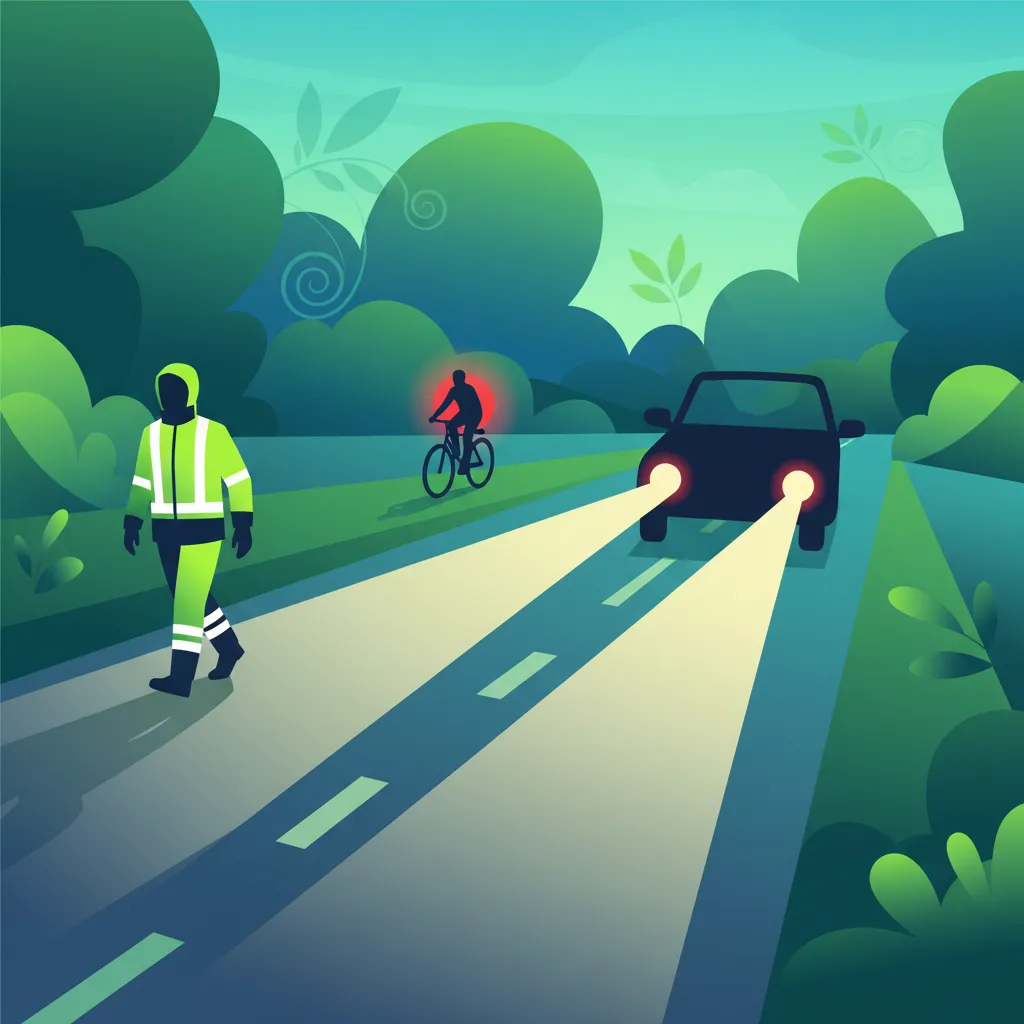
This lesson outlines the mandatory lighting and visibility equipment as per DGT regulations. It covers the correct use of headlights (low and high beams), taillights, and turn signals, ensuring the moped is visible to others, especially at night or in poor weather. The importance of wearing high-visibility or reflective clothing is also emphasized as a critical measure to enhance personal safety by making the rider more conspicuous.

This lesson outlines the proper use and legal requirements of vehicle lighting and mirror systems. It covers headlamps, fog lights, turn signals, and brake lights, clarifying when each must be used according to DGT regulations. The lesson also explains the correct adjustment of rearview and side mirrors and strategies for effective blind-spot monitoring.
This lesson teaches riders the critical importance of maintaining a safe following distance to allow for adequate reaction and braking time. It explains practical methods for judging this distance, such as the 'two-second rule,' and how this gap must be increased in adverse weather or poor visibility. Understanding this principle is fundamental to preventing rear-end collisions, one of the most common types of traffic accidents.
This lesson focuses on safe nighttime riding, covering headlight alignment, rear-light visibility, and the use of reflective gear to enhance conspicuity. It explains DGT night riding requirements, including mandatory lighting standards. Topics also include managing glare from oncoming vehicles and mitigating rider fatigue during low-light conditions.
This lesson focuses on the optimal position for a moped within a traffic lane to maximize visibility and safety. It discusses the importance of maintaining a safety buffer from other vehicles and hazards, particularly the risk posed by the doors of parked cars. The content explains how to use lane positioning strategically to discourage unsafe overtaking and to be clearly seen by drivers in front and behind, especially when approaching intersections.
This lesson examines the significant impact of various weather conditions on driving safety, including rain, fog, snow, ice, and high winds. Learners will understand how each condition can affect vehicle traction, reduce visibility, and alter driver perception, learning the appropriate adjustments to speed, following distance, and braking. The module also covers the use of vehicle safety features to mitigate risks in adverse weather.
Master the critical concept of stopping distance versus visibility margin for AM category mopeds in Spain. Understand DGT regulations on safe sightlines and how they dictate your speed in all conditions.
This lesson teaches riders the critical importance of maintaining a safe following distance to allow for adequate reaction and braking time. It explains practical methods for judging this distance, such as the 'two-second rule,' and how this gap must be increased in adverse weather or poor visibility. Understanding this principle is fundamental to preventing rear-end collisions, one of the most common types of traffic accidents.
This lesson outlines the mandatory lighting and visibility equipment as per DGT regulations. It covers the correct use of headlights (low and high beams), taillights, and turn signals, ensuring the moped is visible to others, especially at night or in poor weather. The importance of wearing high-visibility or reflective clothing is also emphasized as a critical measure to enhance personal safety by making the rider more conspicuous.
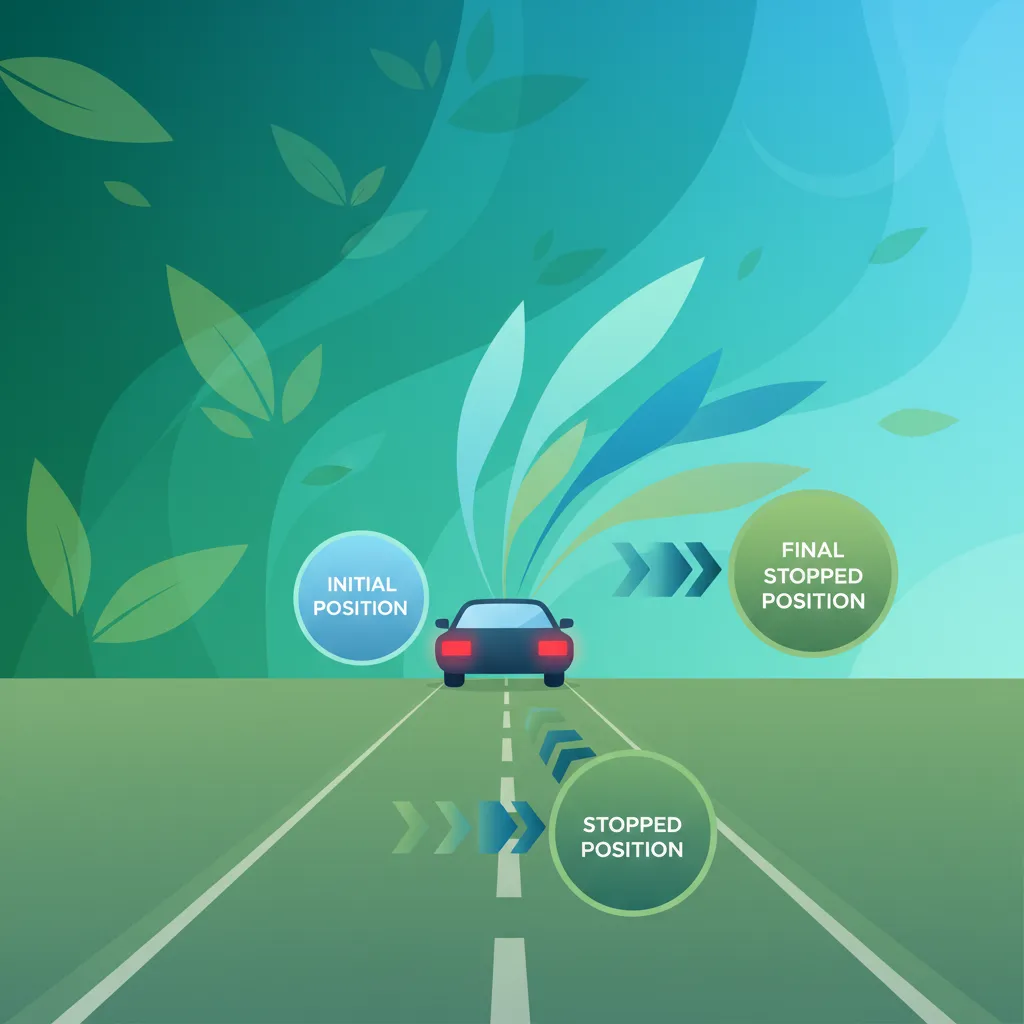
This lesson focuses on the correct application of a moped's brakes for effective and stable deceleration. It explains the concept of balanced braking, using both front and rear brakes simultaneously for maximum stopping power without losing traction. Learners will understand how factors like speed, road surface, and weather dramatically affect total stopping distance, and will learn techniques for emergency braking.

This lesson provides a detailed guide to safely starting a moped, from the ignition sequence to the coordinated use of the throttle and brakes. It explains the importance of a pre-ride checklist to verify lights and controls are functional. The content also covers techniques for achieving smooth acceleration from a standstill and performing controlled stops, which is crucial for managing stop-and-go urban traffic conditions.
This lesson focuses on the optimal position for a moped within a traffic lane to maximize visibility and safety. It discusses the importance of maintaining a safety buffer from other vehicles and hazards, particularly the risk posed by the doors of parked cars. The content explains how to use lane positioning strategically to discourage unsafe overtaking and to be clearly seen by drivers in front and behind, especially when approaching intersections.
This lesson focuses on strategies for maximizing rider visibility in daylight and nighttime conditions, covering high-visibility apparel, reflective vests, and LED accessories. It delves into rider posture and lane positioning that improve sightlines and reduce collision risk. The content aligns with DGT regulations for illumination levels on motorcycles.
This lesson focuses on the specific techniques required for riding in rainy and slippery conditions. It explains how water on the road surface reduces tire grip and significantly increases braking distances. Learners will be taught to reduce speed, use controls smoothly and progressively, and be particularly cautious of painted lines and manhole covers, which become extremely slippery when wet.
This lesson focuses on safe nighttime riding, covering headlight alignment, rear-light visibility, and the use of reflective gear to enhance conspicuity. It explains DGT night riding requirements, including mandatory lighting standards. Topics also include managing glare from oncoming vehicles and mitigating rider fatigue during low-light conditions.
This lesson outlines the proper use and legal requirements of vehicle lighting and mirror systems. It covers headlamps, fog lights, turn signals, and brake lights, clarifying when each must be used according to DGT regulations. The lesson also explains the correct adjustment of rearview and side mirrors and strategies for effective blind-spot monitoring.
This lesson teaches riders how to react effectively in a sudden, critical situation. It explains the technique for applying maximum braking force without locking the wheels, ensuring the shortest possible stopping distance while maintaining stability. The content also covers how to perform a swift and controlled swerve to avoid an obstacle when stopping is not possible, emphasizing the importance of looking where you want to go.
Find clear answers to common questions learners have about Adjusting Speed for Weather and Light Conditions. Learn how the lesson is structured, which driving theory objectives it supports, and how it fits into the overall learning path of units and curriculum progression in Spain. These explanations help you understand key concepts, lesson flow, and exam focused study goals.
No, posted speed limits on Spanish roads are the absolute maximum allowed under ideal conditions. When visibility is reduced due to rain, fog, or darkness, or if the road surface is slippery, you must reduce your speed significantly below the posted limit to ensure you can stop safely. The DGT expects riders to use their judgment.
The Spanish theory exam and DGT regulations don't specify exact percentages for speed reduction. Instead, the focus is on the principle of safe driving: you must reduce your speed so that you can stop safely within the distance you can see clearly ahead. This means your stopping distance must always be less than your line of sight.
Ideal driving conditions for speed limits generally mean dry roads, good visibility (daylight, no fog or heavy rain), and light traffic. Any deviation from these, such as wet surfaces, poor lighting, or adverse weather, requires a prudent reduction in speed below the maximum legal limit.
Yes, the 'dooring' risk from parked vehicles remains a hazard regardless of weather. However, when riding in adverse conditions where visibility and stopping distances are compromised, you should maintain an even greater buffer zone from parked cars and reduce your speed further to react to any unexpected events, including doors opening.
At night or in conditions of poor visibility, your ability to see hazards and other road users is severely limited. Consequently, you must reduce your speed substantially. Ensure your moped's lights are functioning correctly and consider using reflective gear to increase your visibility to others, but the primary safety measure remains reducing your speed.
Use our powerful search functionality to pinpoint specific Spanish DGT driving theory practice sets. Filter by road sign categories, traffic law topics, or question difficulty to build custom study sessions and reinforce your knowledge precisely where it matters for your official exam.