
Navigating parking in Spain can be tricky. This lesson clarifies the rules for regulated parking zones like ORA/SER, no-parking areas, and exclusive disabled spots. Understanding these regulations and their associated DGT penalties is crucial for your Category B theory exam and for avoiding fines on the road.
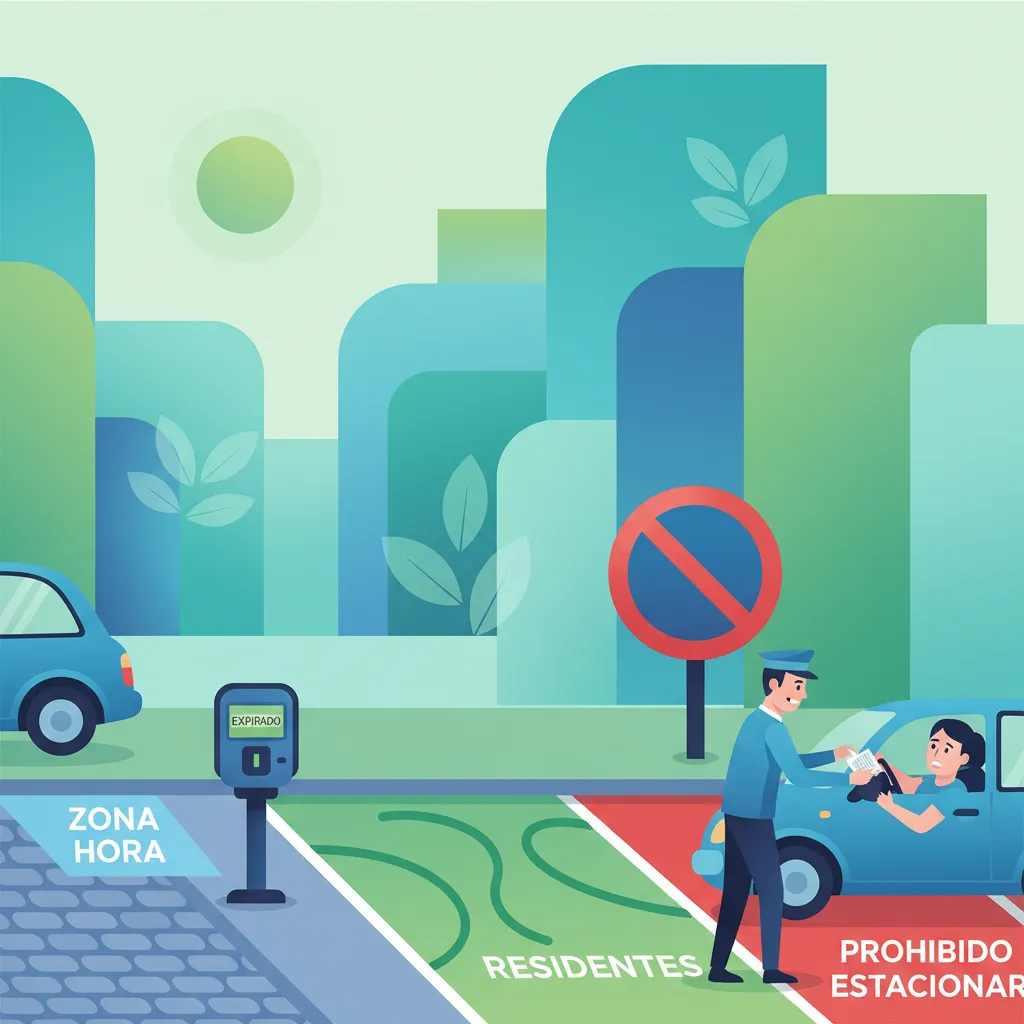
Lesson content overview
Navigating parking regulations in Spain is a fundamental skill for all drivers, not only to avoid costly fines and vehicle towing but also to contribute to road safety and efficient traffic flow. This comprehensive lesson details the legal framework governing where and how you can park, interpreting DGT (Dirección General de Tráfico) signage, and understanding the various types of regulated zones. By mastering these rules, you will be well-equipped to park responsibly and legally across Spanish towns and cities.
Proper adherence to parking regulations is more than just about avoiding penalties; it plays a critical role in urban mobility and safety. Unregulated or illegal parking can cause significant traffic congestion, block access for emergency services, obstruct pedestrian walkways, and create hazardous blind spots for other drivers. Understanding and respecting these rules ensures fair access to public spaces, maintains order, and protects all road users. This lesson builds upon foundational knowledge from earlier units, such as basic DGT traffic signs and urban driving principles, to provide a complete understanding of parking laws.
Regulated Parking Zones, known as Zonas de Estacionamiento Regulado (ZER), are areas where parking is permitted only under specific conditions, typically involving time limits or payment. These zones are crucial for managing limited curb space in high-demand urban areas, ensuring that parking spots are available for more drivers throughout the day.
ZER zones are designated areas, usually in city centers or busy commercial districts, where local authorities control parking duration and sometimes require a fee. They are identifiable by specific signage, often a blue square sign with a white 'P' (for parking) and additional text or symbols indicating the regulations. Drivers must pay close attention to these signs, as rules can vary significantly from one street to another, even within the same city.
The purpose of ZER zones is to facilitate a higher turnover of vehicles, preventing cars from occupying prime spots for extended periods. This helps reduce congestion, supports local businesses by increasing customer accessibility, and ensures residents have a chance to find parking near their homes.
Within ZER zones, you will often encounter different types of time limits:
Regardless of the type, drivers must always check the supplementary plates below the main parking sign. These plates provide crucial details about the days, hours, and duration limits that apply.
In certain ZER zones, particularly those with time limits but without payment meters, drivers are required to display a parking disc (disco horario). This is a circular device used to indicate the exact time of arrival, allowing enforcement officers to verify compliance with the maximum parking duration.
Always keep a valid parking disc in your vehicle, especially when driving in urban areas. They are usually available at tobacconists, newsagents, or local traffic offices.
The parking disc must be correctly set to the nearest 5-minute increment following your arrival time. For example, if you park at 10:02, you should set the disc to 10:05. The disc must be clearly visible through the windshield for the entire duration of your stay. Failure to display the disc, or setting it incorrectly, can result in a fine. The primary implication is that after the indicated time limit, the vehicle must be moved to a different parking spot or leave the zone entirely.
Certain areas on the road are designated as no-parking or no-stopping zones to maintain continuous traffic flow, ensure safety, and provide clear access for public transport and emergency vehicles. Understanding the distinction between "no parking" and "no stopping" is critical.
These zones are marked by distinct DGT signs:
No Parking (Prohibido Estacionar): This sign is a red-bordered circle with a blue background and a single diagonal red line. It signifies that you may not park your vehicle in this area. However, you are allowed to stop briefly for reasons such as dropping off or picking up passengers, as long as the driver remains in the vehicle or nearby and the stop does not impede traffic.
No Stopping (Prohibido Parar y Estacionar): This sign is similar but features a red-bordered circle with a blue background and two diagonal red lines forming an "X". This is a stricter prohibition, meaning you may not stop, stand, or park your vehicle in this area, even for a brief moment to drop off a passenger. The vehicle must remain in motion.
Violating either of these rules can lead to immediate fines and, in some cases, the vehicle being towed away, especially in no-stopping zones where obstruction is deemed more severe.
Sometimes, parking or stopping prohibitions are not absolute but conditional, applying only during certain hours or under specific circumstances. These conditions are always indicated by supplementary plates placed beneath the main sign. For instance:
Always read all accompanying signs carefully to understand the precise restrictions. Ignoring these details is a common cause of parking violations.
Stopping or parking in prohibited areas can severely disrupt traffic, especially in urban environments. For example, stopping in a bus lane or at a taxi stand, even for a moment, can delay public transport and create bottlenecks. Parking near an intersection or a pedestrian crossing can block sightlines, making it dangerous for both drivers and pedestrians. Penalties for these violations are generally high, reflecting the potential impact on public safety and mobility.
To ensure accessibility and independence for individuals with reduced mobility, specific parking spaces are reserved throughout Spain. These spaces are strictly regulated, and their misuse carries significant penalties.
Disabled parking spaces are clearly marked and easily recognizable. They feature a blue background with a white wheelchair symbol, often painted on the road surface and accompanied by a vertical sign.
These spaces are strategically located, typically closest to building entrances, facilities, or public services, to minimize the distance individuals with disabilities need to travel.
Only vehicles displaying a valid disability placard or plate issued by the competent authority may occupy these reserved spaces. The placard must be clearly visible on the dashboard or hung from the rearview mirror. It is assigned to the individual, not the vehicle, meaning it can be used in any vehicle transporting the person with reduced mobility.
Using a disabled parking space without a valid, properly displayed placard is a serious offense. It deprives someone with a genuine need of an essential service and is subject to stringent penalties.
Unauthorized use of a disabled parking space is considered a major infraction. The fines for such violations are typically higher than those for standard parking offenses. In addition to a substantial fine, the vehicle may be immediately towed away. These penalties underscore the importance of respecting accessibility provisions for all members of society.
Beyond the general DGT regulations, Spanish municipalities have the authority to implement their own local parking rules, often referred to as Ordenación del Tráfico (ORA) or Special Event Regulation (SER). These ordinances allow local councils to tailor parking management to the specific needs and conditions of their urban environments.
ORA zones represent permanent local rules that define special parking regimes. These can include:
Drivers must always be aware of the specific ORA regulations in effect wherever they park, as these rules often supersede general parking signs. Local signs will provide all the necessary information.
Special Event Regulations (SER) are temporary ordinances enacted by municipal authorities for specific events, such as festivals, sports events, parades, or roadworks. These regulations often involve temporary parking prohibitions, street closures, or altered traffic flows to manage crowds, ensure public safety, and facilitate event logistics.
Temporary signs, often with specific dates and times, will be posted in affected areas. It is crucial to pay attention to these temporary signs, as they take precedence over permanent parking rules. Ignoring SER signs can lead to fines and immediate vehicle towing, especially if the vehicle obstructs an event route or emergency access.
Compliance with ORA and SER ordinances is mandatory. These rules are enforced by local police and traffic wardens, and penalties can vary depending on the municipality and the severity of the infraction. Before parking, always scan for any local signage, especially in areas unfamiliar to you, to ensure you understand and adhere to all relevant restrictions. Assuming national rules override local ordinances is a common mistake that leads to citations.
As mentioned earlier, the parking disc is a key tool for managing time-limited parking in specific ZER zones. Its correct use is a simple yet crucial aspect of compliant parking.
Using a parking disc involves a few straightforward steps:
Acquire a Disc: Ensure you have a standard, approved parking disc. These are widely available.
Identify ZER Zones: Look for signs indicating time-limited parking zones that require a disc.
Set Arrival Time: Immediately upon parking, set the disc to the nearest 5-minute increment following your actual arrival time. For example, if you arrive at 14:07, set the disc to 14:10.
Display Clearly: Place the disc on your dashboard, visible through the windshield, for the entire duration of your stay.
Respect the Limit: Note the maximum parking duration indicated on the accompanying sign (e.g., "Máx. 2h"). You must move your vehicle before this limit expires.
Several common mistakes can lead to fines related to parking discs:
Always treat the parking disc requirement with diligence to avoid unnecessary penalties.
Beyond the core rules, certain scenarios frequently lead to violations due to misunderstanding or oversight.
A common mistake is assuming that after the time limit in a ZER zone expires, you can simply "reset" your parking disc or pay for more time without moving your vehicle. The intent of time-limited parking is to encourage vehicle turnover. Once the maximum allowed time has elapsed, you are legally required to move your vehicle. Parking again in the same spot or nearby immediately after the limit expires may still be considered a violation if the enforcement agencies deem it an attempt to circumvent the rules.
The distinction between "no parking" and "no stopping" is frequently misunderstood. Many drivers believe a "quick stop" to drop off or pick up a passenger is always permissible. However, in "no stopping" zones (sign R-308), even a momentary halt is forbidden. In "no parking" zones (sign R-307), a stop is allowed only if the driver remains with the vehicle and it does not impede traffic. Always err on the side of caution and seek a legal parking spot if you need to leave your vehicle or make a more extended stop.
Drivers sometimes overlook temporary signage related to events (SER) or specific local ordinances (ORA), assuming that permanent signs always take precedence. This is incorrect. Temporary restrictions, roadworks, and local residential rules are legally binding and must be obeyed. A street that normally allows parking may be temporarily prohibited due to a market, parade, or street cleaning schedule. Always check for supplementary plates and temporary notices.
Parking rules, while generally fixed, can be influenced by various contextual factors, requiring drivers to exercise good judgment and situational awareness.
Adverse weather conditions, such as heavy rain, fog, or snow, can impact parking decisions. Visibility is reduced, making it harder to spot signs or judge distances. In such conditions, it's even more important to ensure your parked vehicle does not create an additional hazard, such as obstructing drainage in heavy rain or impeding snow plows. Temporary no-parking signs related to weather-induced operations (e.g., snow removal) may appear. At night, ensure your vehicle is parked in a well-lit area or clearly marked if required, especially if parking on unlit roads.
The type of road significantly influences parking regulations:
The type and size of your vehicle, along with any load it carries, can affect parking. Overloaded vehicles or those with trailers must ensure that their dimensions do not infringe upon prohibited areas or create obstructions. For example, a trailer extending onto a crosswalk, even if the towing vehicle is legally parked, could constitute a violation. Drivers of large vehicles must also be mindful of sightlines and ensure they do not block views for other drivers, especially at intersections.
Parking decisions have a direct impact on vulnerable road users, such as pedestrians, cyclists, and motorcyclists. Parking too close to crosswalks, intersections, or school zones can dangerously reduce visibility, particularly for children. Local ordinances often enforce minimum distances from such areas (e.g., 5 meters from a pedestrian crossing). Always consider how your parked vehicle might affect others' safety and ability to navigate the road or sidewalk.
The extensive framework of parking regulations is designed to achieve specific goals, and understanding the cause-and-effect relationships reinforces the importance of compliance.
When drivers adhere to parking rules, the benefits are clear:
Conversely, violations directly contribute to congestion, increase accident risk, and can hinder emergency responses.
Violating parking regulations carries immediate and long-term consequences:
Adhering to parking regulations is a simple yet impactful way to demonstrate responsible road behavior and contribute positively to your community.
Let's look at some common scenarios to solidify your understanding of Spanish parking regulations.
Scenario 1 – Parking in a Regulated Urban Zone
Scenario 2 – Dropping Off a Passenger at a No-Stopping Zone
Scenario 3 – Misusing a Disabled Parking Space
Scenario 4 – Parking During a Local Event
Scenario 5 – Residential Parking without a Permit
This comprehensive understanding of parking zones, DGT signs, and local regulations forms a vital part of responsible driving in Spain. By applying these principles, you will ensure a safer journey for yourself and all others on the road.
Spanish parking regulations use a layered system of DGT national signs and local ORA/SER ordinances to manage urban parking through ZER zones, which require payment or parking discs with arrival time set to the nearest 5-minute increment. The critical distinction is between 'No Parking' (R-307, allowing brief stops if the driver remains nearby) and 'No Stopping' (R-308, prohibiting any halt). Disabled parking spaces are strictly reserved for vehicles with valid placards and violations result in heavy fines and immediate towing. Local ordinances always take precedence over general rules, and supplementary plates must be read carefully as they contain the specific conditions, hours, and exceptions that apply to each zone.
A short set of high-value points that capture the most important learning from this lesson.
Distinguish between 'No Parking' (R-307) allowing brief stops and 'No Stopping' (R-308) prohibiting any halt whatsoever
ZER zones require either payment at meters or a parking disc displaying your arrival time set to the nearest 5-minute increment
ORA and SER local ordinances are legally binding and take precedence over general national parking signs
Disabled parking spaces require a valid disability placard displayed on the dashboard or rearview mirror; unauthorized use carries substantial fines and immediate towing
Supplementary plates below signs provide crucial details about exceptions, operating hours, and specific conditions that always apply
Explore all units and lessons included in this driving theory course.
R-307 (Prohibido Estacionar) = parking prohibited but stopping allowed; R-308 (Prohibido Parar y Estacionar) = absolutely no stopping or parking
Parking discs cannot be reset to extend stays; after the time limit expires, you must move your vehicle completely out of the zone
ORA zones include resident-only permits (Tarjeta de Residente), blue zones (Zona Azul) requiring payment, and green zones with preferential rates
Disabled parking placard is assigned to the individual, not the vehicle, and can be used in any vehicle transporting that person
SER temporary restrictions for events are legally binding and override permanent signs during their specified dates and times
Assuming a quick stop to drop off passengers is always permitted; in no-stopping zones even momentary halts are forbidden
Believing that after a time limit expires you can reset your parking disc or pay for more time without moving the vehicle
Overlooking temporary SER signage or local ORA ordinances, assuming permanent national rules always take precedence
Parking too close to intersections, pedestrian crossings, or bends where it creates dangerous blind spots for other road users
Failing to read supplementary plates beneath signs, which contain the actual conditions, hours, and exceptions that define the restrictions
Lesson content overview
A short set of high-value points that capture the most important learning from this lesson.
Distinguish between 'No Parking' (R-307) allowing brief stops and 'No Stopping' (R-308) prohibiting any halt whatsoever
ZER zones require either payment at meters or a parking disc displaying your arrival time set to the nearest 5-minute increment
ORA and SER local ordinances are legally binding and take precedence over general national parking signs
Disabled parking spaces require a valid disability placard displayed on the dashboard or rearview mirror; unauthorized use carries substantial fines and immediate towing
Supplementary plates below signs provide crucial details about exceptions, operating hours, and specific conditions that always apply
Explore all units and lessons included in this driving theory course.
R-307 (Prohibido Estacionar) = parking prohibited but stopping allowed; R-308 (Prohibido Parar y Estacionar) = absolutely no stopping or parking
Parking discs cannot be reset to extend stays; after the time limit expires, you must move your vehicle completely out of the zone
ORA zones include resident-only permits (Tarjeta de Residente), blue zones (Zona Azul) requiring payment, and green zones with preferential rates
Disabled parking placard is assigned to the individual, not the vehicle, and can be used in any vehicle transporting that person
SER temporary restrictions for events are legally binding and override permanent signs during their specified dates and times
Assuming a quick stop to drop off passengers is always permitted; in no-stopping zones even momentary halts are forbidden
Believing that after a time limit expires you can reset your parking disc or pay for more time without moving the vehicle
Overlooking temporary SER signage or local ORA ordinances, assuming permanent national rules always take precedence
Parking too close to intersections, pedestrian crossings, or bends where it creates dangerous blind spots for other road users
Failing to read supplementary plates beneath signs, which contain the actual conditions, hours, and exceptions that define the restrictions
Explore search topics learners often look for when studying Regulations for Parking Zones and Penalties. These topics reflect common questions about road rules, driving situations, safety guidance, and lesson level theory preparation for learners in Spain.
Browse additional driving theory lessons that cover connected traffic rules, road signs, and common driving situations related to this topic. Improve your understanding of how different rules interact across everyday traffic scenarios.
Understand the different types of regulated parking zones (ZER, ORA, SER) in Spain. Learn about specific rules for blue and green zones, disabled parking, and the penalties for violations as per DGT regulations.

This lesson covers the essential techniques for perpendicular parking (reversing into a bay) and executing a three-point turn. It details the approach, turning points, and use of mirrors and observation to ensure proper vehicle positioning. Learners will understand how to assess the required space and comply with DGT regulations for these common maneuvers.

This lesson explains the Spanish traffic penalty system, which combines fines with a demerit points system linked to the driving license. It outlines the different categories of infractions (minor, serious, very serious) and their corresponding penalties in terms of fines and points lost. Understanding this system is essential for riders to appreciate the long-term consequences of traffic violations, which can ultimately lead to the suspension of their license.

This lesson provides guidance on the practical aspects of parking and making deliveries in urban areas. It covers the techniques for safely maneuvering into and out of loading docks and designated delivery zones, which often involves precise reversing. The content also explains the specific parking regulations that apply to commercial vehicles and best practices for ensuring safety during loading and unloading.

This lesson introduces the visual language of road markings, focusing on the distinction between solid and broken lines and what they permit regarding lane changes and overtaking. It explains the meaning of directional arrows painted on the road surface, which guide drivers into the correct lane for their intended maneuver. Understanding these markings is crucial for maintaining proper lane discipline and navigating complex intersections and multi-lane roads.

This lesson explains the methodical process of parallel parking, including how to select an appropriate spot and identify reference points for the maneuver. Learners will be taught the correct backing technique, steering angles, and alignment steps required to position the vehicle within the space without collision. The lesson also outlines DGT standards for parallel parking.

This lesson clarifies the primary rule for roundabouts: all vehicles entering must yield to traffic already on the circular roadway. It explains how to approach a roundabout, select the appropriate lane based on the intended exit, and merge safely into the flow of traffic. Proper signaling before exiting is also covered, ensuring other drivers can anticipate the rider's movements for a smooth and safe negotiation of the junction.
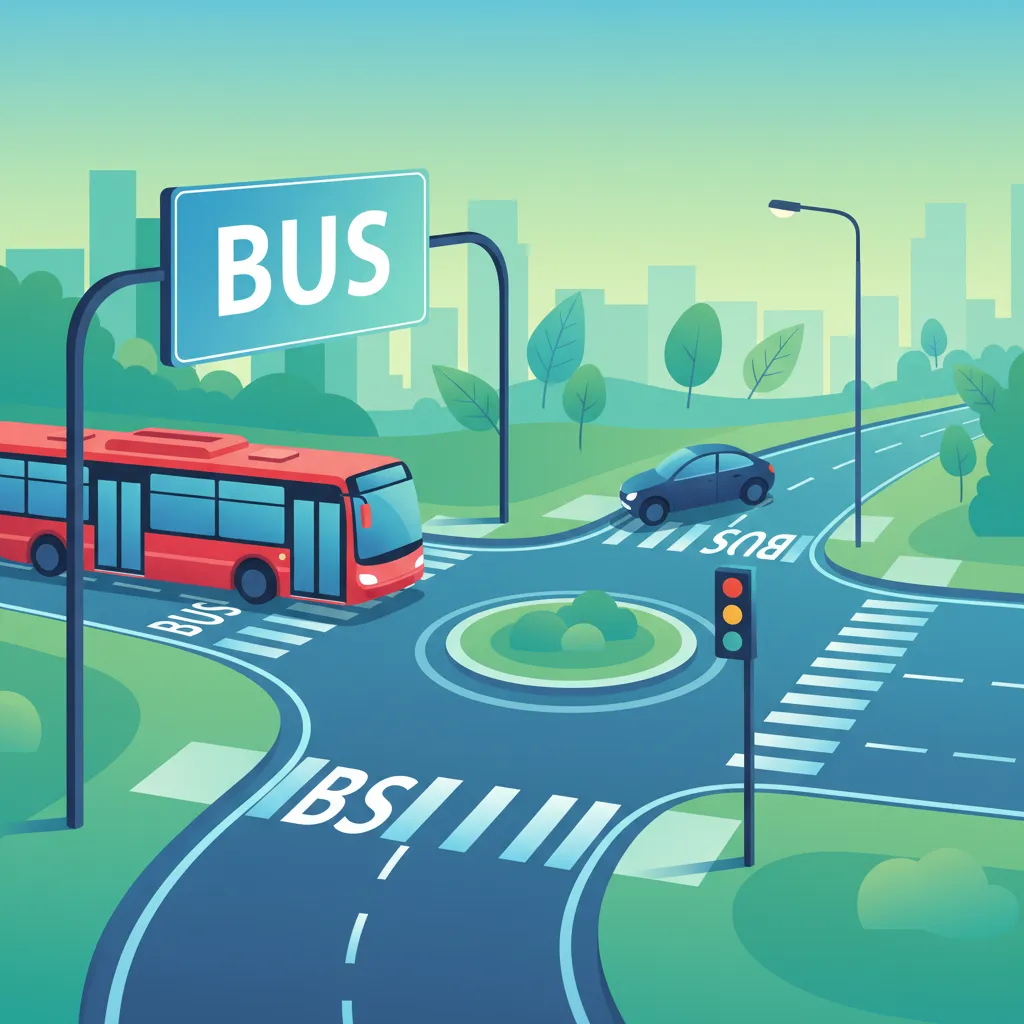
This lesson explores the regulations for dedicated bus lanes in urban environments, detailing the correct interpretation of associated lane markings and traffic signage. Learners will understand the specified times of operation, rules for sharing lanes with other vehicles, and the legal consequences of unauthorized entry. The module also provides clear guidelines for entering and exiting bus lanes at designated points to maintain traffic flow.
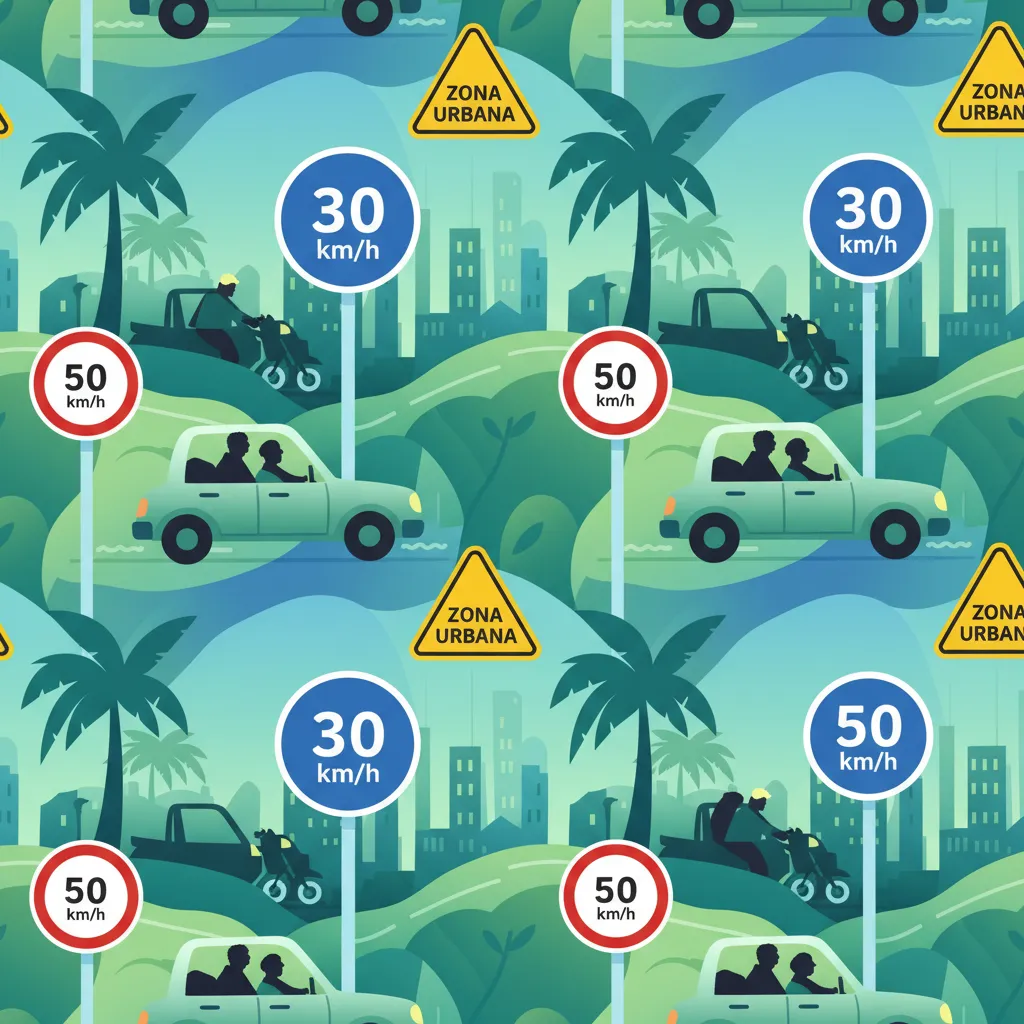
This lesson outlines the speed limits applicable to different types of urban streets and the corresponding road signs that communicate them. It explains the interpretation of speed zone markings, signs indicating reduced speed areas like 30 km/h zones, and the rationale behind speed enforcement in city settings. Learners will understand how to maintain compliance to enhance safety for all road users.

This lesson explains the fundamental DGT regulations that govern public transport services, including requirements for operational permits and route authorizations. It covers the mandatory schedules for vehicle inspections, standards for emissions, and the legal importance of adhering to timetables and service quality. Learners will also understand the nature of regulatory audits and compliance checks that operators must undergo.

This lesson provides strategies for navigating tight, confined environments such as multi-story car parks and narrow urban lanes. It emphasizes the importance of slow and controlled movements, constant observation, and a thorough understanding of the vehicle's dimensions and turning circle. Learners will develop the skills to maneuver with precision while avoiding obstacles.
Learn to identify and avoid frequent parking errors in Spain, such as misinterpreting time limits, misusing parking discs, and ignoring temporary signage. Understand how these violations lead to fines and towing.
This lesson covers the essential techniques for perpendicular parking (reversing into a bay) and executing a three-point turn. It details the approach, turning points, and use of mirrors and observation to ensure proper vehicle positioning. Learners will understand how to assess the required space and comply with DGT regulations for these common maneuvers.
This lesson explains the methodical process of parallel parking, including how to select an appropriate spot and identify reference points for the maneuver. Learners will be taught the correct backing technique, steering angles, and alignment steps required to position the vehicle within the space without collision. The lesson also outlines DGT standards for parallel parking.

This lesson addresses common errors made by drivers when using roundabouts and presents corrective strategies. It covers issues such as entering from the wrong lane, failing to yield to circulating traffic, exceeding the recommended speed, and not signaling an exit correctly. By understanding these mistakes, drivers can improve their roundabout proficiency and reduce accident risk.
This lesson provides strategies for navigating tight, confined environments such as multi-story car parks and narrow urban lanes. It emphasizes the importance of slow and controlled movements, constant observation, and a thorough understanding of the vehicle's dimensions and turning circle. Learners will develop the skills to maneuver with precision while avoiding obstacles.

This lesson outlines the proper use and legal requirements of vehicle lighting and mirror systems. It covers headlamps, fog lights, turn signals, and brake lights, clarifying when each must be used according to DGT regulations. The lesson also explains the correct adjustment of rearview and side mirrors and strategies for effective blind-spot monitoring.
This lesson provides guidance on the practical aspects of parking and making deliveries in urban areas. It covers the techniques for safely maneuvering into and out of loading docks and designated delivery zones, which often involves precise reversing. The content also explains the specific parking regulations that apply to commercial vehicles and best practices for ensuring safety during loading and unloading.

This lesson covers the legal overtaking procedures applicable on different road types, focusing on identifying safe passing zones and executing maneuvers correctly. Learners will be taught how to maintain adequate safety distances before, during, and after overtaking. The content includes DGT regulations for overtaking, appropriate signaling, and visibility checks to ensure safe completion of the maneuver.
This lesson clarifies the primary rule for roundabouts: all vehicles entering must yield to traffic already on the circular roadway. It explains how to approach a roundabout, select the appropriate lane based on the intended exit, and merge safely into the flow of traffic. Proper signaling before exiting is also covered, ensuring other drivers can anticipate the rider's movements for a smooth and safe negotiation of the junction.

This lesson examines the principles of maintaining a safe following distance, including the 'two-second rule' and its adjustments for speed and weather. It focuses on effective blind-spot management, teaching drivers how to use mirrors and head checks. The content integrates DGT guidelines on creating a safety buffer around the vehicle to allow time to react to unexpected events.

This lesson focuses on the yielding hierarchy that governs roundabout usage in Spain. It clarifies that vehicles already circulating have priority over those entering and explains the proper lane positioning based on the intended exit. The content includes the correct use of signals for changing lanes and exiting, and safe merging techniques.
Find clear answers to common questions learners have about Regulations for Parking Zones and Penalties. Learn how the lesson is structured, which driving theory objectives it supports, and how it fits into the overall learning path of units and curriculum progression in Spain. These explanations help you understand key concepts, lesson flow, and exam focused study goals.
ORA (Ordinaria de Regulación de Aparcamiento) and SER (Servicio de Estacionamiento Regulado) are timed parking zones in Spanish cities where you typically need to pay a fee and adhere to time limits, often indicated by blue or green painted lines and signs. General no-parking zones are areas where parking is strictly forbidden at all times, usually marked by solid yellow lines and specific signs, and violations incur immediate penalties.
Disabled parking bays are exclusively reserved for vehicles displaying a valid European disabled permit. Parking in these bays without the proper permit is a serious offense, resulting in significant fines and often immediate towing of the vehicle. Always ensure you understand the specific signage and markings indicating these restricted areas.
Yes, vehicles parked illegally in prohibited zones, obstructing traffic, blocking driveways, or occupying disabled bays without authorization can be towed by the authorities in Spain. The process also involves paying a fine and a fee for the towing and impoundment of your vehicle.
Parking restriction signs typically show a blue circle with a red border and a diagonal red bar for 'No Parking', or a blue circle with a red border and two diagonal red bars for 'No Stopping'. Other signs may indicate timed parking zones (ORA/SER) with associated time limits and payment requirements. Always look for supplementary signs that may provide specific times or conditions.
The Spanish driving theory exam includes questions on parking regulations, including identifying zone types, understanding signage, and knowing the penalties for violations. Incorrectly answering these questions can lead to failing the exam. This lesson prepares you for such scenarios.
Use our powerful search functionality to pinpoint specific Spanish DGT driving theory practice sets. Filter by road sign categories, traffic law topics, or question difficulty to build custom study sessions and reinforce your knowledge precisely where it matters for your official exam.