
Welcome to the fundamental skills of driving a manual transmission vehicle. This lesson focuses on clutch operation and basic gear shifting, essential for smooth starts and controlled movement. Understanding these mechanics is crucial for navigating traffic effectively and mastering the practical aspects of driving in Spain.

Lesson content overview
Understanding and skillfully operating the clutch and gear lever is fundamental for driving a manual transmission vehicle, a core requirement for obtaining your Spanish driving license for categories B & BE. This lesson provides a comprehensive guide to these essential controls, detailing their mechanics, proper usage, and the techniques necessary for smooth, efficient, and safe driving. Mastery here not only ensures vehicle control but also contributes to fuel efficiency and the longevity of your car's mechanical components.
The clutch serves as the crucial link between your engine and the wheels. In a manual transmission, it allows you to temporarily disconnect the engine from the gearbox, enabling you to change gears without damaging the transmission. Without a clutch, changing gears would be impossible or would result in severe gear grinding and mechanical damage.
The clutch pedal is the leftmost pedal in a manual transmission vehicle, controlled by your left foot. When you press this pedal, you activate a mechanism that separates the engine's rotating flywheel from the transmission's input shaft. This separation, known as clutch disengagement, interrupts the flow of power from the engine to the wheels.
For a gear change to occur smoothly and without grinding, the clutch pedal must be pressed fully to the floor. Partial depression of the clutch pedal can lead to incomplete disengagement, causing the gears to clash or grind as they attempt to mesh. All manual vehicles have a small amount of free-play in the clutch pedal – a minimal initial movement before any disengagement begins. This free-play is necessary for proper operation and is usually adjustable during maintenance.
The clutch engagement point, often referred to as the "clutch bite," is a critical concept for any manual driver. This is the precise pedal position during release where the friction plates inside the clutch assembly begin to make contact and transmit power from the engine to the transmission. You will feel this as a slight resistance or a subtle vibration through the pedal, and the vehicle may start to creep forward slightly.
Identifying and learning to feel this point is paramount for smooth starts, controlled acceleration, and precise gear changes. It provides the driver with vital tactile feedback for timing the coordination between releasing the clutch and applying the accelerator. Releasing the clutch too quickly past this point without adequate throttle can cause the engine to stall, while holding it at the engagement point for too long can lead to excessive clutch wear and overheating.
Practice finding the engagement point in a safe, flat area. With the engine running and in first gear, slowly release the clutch pedal until you feel the vehicle begin to move forward without touching the accelerator. This helps build muscle memory.
The gear lever is your direct interface with the vehicle's transmission, allowing you to select different gear ratios to match your speed and driving conditions. Each gear ratio dictates how much engine power is translated into wheel rotation.
Most manual transmissions utilize a sequential gear pattern, commonly known as the "H-pattern" due to its typical layout. This pattern defines the spatial arrangement of the gears on the shift knob, providing a predictable path for the driver to select the desired gear.
A standard H-pattern typically features:
Drivers must memorize their vehicle's specific gear pattern to avoid mis-shifts, which can be dangerous and cause mechanical strain. Some vehicles may have reverse gear located differently, for instance, by pushing down on the lever before moving it, or by pulling up a collar.
Reverse gear is specifically designed for backing up and has a very low gear ratio, providing maximum torque at minimal speed. Due to its powerful nature and the direction of travel, DGT (Dirección General de Tráfico) regulations stipulate that reverse gear must only be engaged when the vehicle is at a near-stop. Attempting to shift into reverse while moving forward at any significant speed can cause severe damage to the transmission and lead to a sudden, uncontrolled reversal.
Always ensure your vehicle is completely stationary or moving at a very minimal crawl before attempting to engage reverse gear.
Up-shifting is the process of changing from a lower gear (e.g., 1st) to a higher gear (e.g., 2nd, 3rd, etc.) as your vehicle gains speed. This allows the engine to operate efficiently within its optimal RPM (revolutions per minute) range, preventing over-revving and conserving fuel.
The ideal moment to up-shift depends on several factors, including the vehicle's engine type (petrol or diesel), load, and desired acceleration. Generally, for most passenger cars, up-shifting occurs when the engine reaches approximately 1500-2500 RPM. Shifting too early (at low RPM) can cause the engine to "lug" or struggle, leading to strain and inefficiency. Shifting too late (at high RPM) wastes fuel and causes unnecessary engine wear.
The vehicle's tachometer, which displays engine RPM, is your primary guide. Listen to the engine's sound as well; a rising pitch often indicates the need for an up-shift.
Accelerate: Gently press the accelerator pedal until the engine reaches the appropriate RPM range for the current gear (typically 1500-2500 RPM for smooth operation).
Depress Clutch Fully: Quickly and completely press the clutch pedal to the floor with your left foot. This disengages the engine from the transmission.
Shift Gear: While the clutch is depressed, move the gear lever smoothly and decisively to the next higher gear position in the H-pattern.
Release Clutch and Apply Throttle: As you begin to slowly release the clutch pedal, simultaneously and gently press the accelerator pedal. This coordinated action ensures a smooth transfer of power, preventing a sudden lurch or engine stall. Find the engagement point and allow the clutch to fully re-engage as you increase throttle.
Resume Acceleration: Once the clutch is fully released, continue to accelerate or maintain your desired speed in the new gear.
Down-shifting is the process of changing from a higher gear to a lower one (e.g., 4th to 3rd). This technique is crucial for increasing engine braking, providing more power for acceleration, or preparing for turns and inclines. It enhances vehicle control, reduces reliance on friction brakes, and is a hallmark of skilled driving.
Down-shifting leverages the engine's natural resistance to slow the vehicle, a concept known as engine braking. When you down-shift, the engine's RPM increases, and its rotational inertia helps to slow the car down without solely relying on the foot brake. This is particularly useful on long descents to prevent brake fade (overheating of brakes) and provides better control before entering corners. Additionally, a lower gear provides more torque (pulling power), which is essential when needing to accelerate quickly, such as overtaking or climbing a steep hill.
To prevent a sudden jolt or lurch when down-shifting, skilled drivers often employ a technique called rev-matching. This involves briefly increasing the engine's RPM to match the higher rotational speed the engine will need to be at for the lower gear, before the clutch is fully re-engaged.
Without rev-matching, a down-shift can cause the engine speed to suddenly jump, creating drivetrain shock, which can be uncomfortable for passengers and lead to premature wear on transmission components. On slippery surfaces, an un-rev-matched down-shift can even cause a momentary loss of traction in the drive wheels.
Anticipate: Identify the need to down-shift (e.g., approaching a corner, slowing down for traffic, preparing for a hill).
Depress Clutch Fully: Press the clutch pedal completely to the floor.
Select Lower Gear: Move the gear lever to the desired lower gear.
(Optional) Rev-Match: Briefly and lightly "blip" the accelerator pedal to raise the engine's RPM. The goal is to bring the engine speed close to what it would be if it were already in the target lower gear at your current vehicle speed. This usually means a quick increase of a few hundred to a thousand RPM.
Release Clutch Smoothly: As the engine RPM begins to drop from the blip, smoothly release the clutch pedal. If rev-matched correctly, the re-engagement will be seamless without a jolt.
Adjust Throttle: Maintain appropriate throttle for the new gear and speed, or continue to decelerate if that is the goal.
Starting a manual transmission vehicle on an incline presents a unique challenge: preventing the vehicle from rolling backward before it can move forward. This requires precise coordination of the clutch, accelerator, and brake pedals. DGT regulations mandate that drivers must prevent excessive rollback when starting on an incline, to avoid obstructing traffic or causing collisions.
The traditional manual hill-start technique involves using the foot brake to hold the vehicle in place while preparing to move.
Stop on Incline: When stopping on a hill, keep your left foot on the clutch (fully depressed) and your right foot on the foot brake, with the vehicle in first gear.
Prepare to Move: Ensure your handbrake is released (if using handbrake to hold, release it as you start step 4).
Find Engagement Point: Slowly release the clutch pedal until you feel the "bite" point – the point where the engine starts to slightly pull against the brakes.
Apply Throttle & Release Brake: While holding the clutch precisely at its engagement point, gently apply throttle with your right foot. As the engine gains power, simultaneously and smoothly release the foot brake.
Smooth Acceleration: Continue to smoothly release the clutch pedal fully while increasing throttle, allowing the vehicle to move forward without rolling back.
Many modern vehicles are equipped with Hill-Start Assist (HSA) systems. These electronic systems automatically hold the brakes for a few seconds after the driver releases the foot brake on an incline, giving the driver more time to engage the clutch and accelerator without rollback. While HSA simplifies the process, the driver must still understand and correctly execute the clutch and throttle coordination. HSA is an aid, not a complete replacement for proper technique.
Effective clutch operation and gear shifting are inextricably linked to managing your engine's speed, measured in Revolutions Per Minute (RPM). The tachometer on your dashboard displays the engine's current RPM, providing crucial feedback for optimal driving.
Each gear has an optimal RPM range for efficiency and power delivery. Driving with the engine in the correct RPM range for your chosen gear ensures the engine is not working too hard (lugging) or over-revving. Understanding the relationship between vehicle speed, gear selection, and engine RPM is key to smooth and economical driving.
Proper engine speed management ensures a balanced approach to driving, maximising both vehicle performance and longevity.
Adhering to specific regulations and best practices regarding clutch and gear operation is vital for safety, vehicle maintenance, and compliance with the DGT's requirements for a Spanish driving license theory course.
Several rules, directly or indirectly enforced by DGT regulations, govern the proper use of the clutch and gear lever:
| Violation | Why Wrong | Correct Behavior | Possible Consequence |
|---|---|---|---|
| Stalling at Start | Releasing clutch too quickly without enough throttle. | Apply gentle throttle while releasing clutch gradually from the bite point. | Loss of control, traffic disruption, potential rear-end collision. |
| Grinding Gears | Shifting without fully depressing clutch, or forcing the lever. | Ensure the clutch pedal is pressed completely to the floor before moving the gear lever. | Transmission wear, gear damage, costly repairs. |
| Shifting at Too Low RPM (Lugging) | Engine struggling due to insufficient power for the selected gear. | Shift up only after reaching the recommended RPM range for the current gear and speed. | Engine strain, poor fuel economy, potential stall, premature wear. |
| Incorrect Rev-Matching (Down-shift Jolt) | Not blipping the throttle or blipping insufficiently during down-shift. | Briefly blip the throttle to match engine RPM to the new lower gear before clutch re-engagement. | Drivetrain shock, loss of traction, uncomfortable ride, accelerated component wear. |
| Rolling Back on a Hill | Releasing the foot brake or handbrake too early before clutch engagement and throttle. | Use coordinated foot-brake hold or handbrake, increase throttle as clutch bites, then smoothly release brake. | Obstruction of traffic, collision risk with vehicle behind. |
| Engaging Reverse While Moving | Attempting to select reverse while the vehicle is still moving forward. | Ensure the vehicle is at a complete standstill before attempting to select reverse gear. | Severe transmission damage, sudden and dangerous backward motion. |
| Riding the Clutch (Holding half-depressed) | Keeping the clutch pedal partially pressed for extended periods. | Keep the clutch either fully engaged (pedal fully released) or fully disengaged (pedal fully depressed). | Clutch overheating, premature wear of friction plates, costly clutch replacement. |
| Using Clutch to Control Speed on Slopes | Relying on clutch slip to modulate speed instead of engine braking. | Down-shift to use engine braking, supplementing with the foot brake as needed. | Rapid clutch wear, overheating, potential clutch failure. |
Skilled drivers adapt their clutch and gear shifting techniques based on various external factors. These conditional variations ensure safety, efficiency, and comfort in diverse driving scenarios for your Spanish driving license course.
Mastering clutch operation and gear shifting is a cornerstone of safe and confident driving with a manual transmission. By understanding the mechanics, practicing the procedures, and adapting to various conditions, you will develop the essential control needed to pass your driving test and drive responsibly.
This lesson covers the essential mechanics of manual transmission operation, focusing on clutch control and gear shifting techniques. Key skills include finding the clutch engagement point for smooth starts, timing up-shifts based on engine RPM (typically 1500-2500), and performing rev-matched down-shifts for engine braking. The content emphasizes that reverse gear requires a near-complete stop, the clutch must always be fully depressed before shifting, and that improper technique causes common issues like stalling, grinding, rollback, and excessive component wear. Understanding these fundamentals is critical for both the Spanish driving theory exam and safe practical driving.
A short set of high-value points that capture the most important learning from this lesson.
The clutch engagement point (bite) is the tactile reference for smooth vehicle starts without stalling
Up-shifting optimizes engine RPM (1500-2500) to balance power, efficiency, and component longevity
Down-shifting provides engine braking and increased torque for better vehicle control on descents and inclines
Reverse gear must only be engaged when the vehicle is at near-stop to prevent transmission damage
The clutch pedal must be fully depressed before moving the gear lever to avoid gear grinding
Explore all units and lessons included in this driving theory course.
Full clutch depression is mandatory before any gear change - partial engagement causes transmission wear
Listen to engine pitch and watch the tachometer (RPM) to determine optimal shift points
Rev-matching (blipping the throttle) synchronizes engine speed during down-shifts for smooth re-engagement
On inclines, prevent rollback by coordinating clutch bite point with throttle before releasing the brakes
Riding the clutch (holding it partially pressed) causes overheating and premature friction plate wear
Releasing the clutch too quickly at the bite point without adequate throttle causes the engine to stall
Shifting gears without fully depressing the clutch results in grinding, damaged synchros, and costly repairs
Up-shifting at too low RPM (lugging) strains the engine and transmission, reducing efficiency and longevity
Down-shifting without rev-matching creates a sudden jolt that stresses drivetrain components and can break traction on slippery surfaces
Rolling backward on a hill because clutch was released before sufficient throttle was applied obstructs traffic and creates collision risk
Lesson content overview
A short set of high-value points that capture the most important learning from this lesson.
The clutch engagement point (bite) is the tactile reference for smooth vehicle starts without stalling
Up-shifting optimizes engine RPM (1500-2500) to balance power, efficiency, and component longevity
Down-shifting provides engine braking and increased torque for better vehicle control on descents and inclines
Reverse gear must only be engaged when the vehicle is at near-stop to prevent transmission damage
The clutch pedal must be fully depressed before moving the gear lever to avoid gear grinding
Explore all units and lessons included in this driving theory course.
Full clutch depression is mandatory before any gear change - partial engagement causes transmission wear
Listen to engine pitch and watch the tachometer (RPM) to determine optimal shift points
Rev-matching (blipping the throttle) synchronizes engine speed during down-shifts for smooth re-engagement
On inclines, prevent rollback by coordinating clutch bite point with throttle before releasing the brakes
Riding the clutch (holding it partially pressed) causes overheating and premature friction plate wear
Releasing the clutch too quickly at the bite point without adequate throttle causes the engine to stall
Shifting gears without fully depressing the clutch results in grinding, damaged synchros, and costly repairs
Up-shifting at too low RPM (lugging) strains the engine and transmission, reducing efficiency and longevity
Down-shifting without rev-matching creates a sudden jolt that stresses drivetrain components and can break traction on slippery surfaces
Rolling backward on a hill because clutch was released before sufficient throttle was applied obstructs traffic and creates collision risk
Explore search topics learners often look for when studying Clutch Operation and Gear Shifting Fundamentals. These topics reflect common questions about road rules, driving situations, safety guidance, and lesson level theory preparation for learners in Spain.
Browse additional driving theory lessons that cover connected traffic rules, road signs, and common driving situations related to this topic. Improve your understanding of how different rules interact across everyday traffic scenarios.
Understand the core mechanics of clutch operation and fundamental gear shifting techniques for manual cars. Learn about the clutch engagement point and smooth gear changes, essential for Spanish driving theory.

This lesson compares manual and automatic transmissions, detailing the mechanical principles behind each system. It explains clutch operation and gear selection for manual vehicles, while describing the torque converter and shifting patterns in automatic gearboxes. The content addresses the impact of each transmission type on fuel efficiency, driver control, and overall vehicle dynamics.
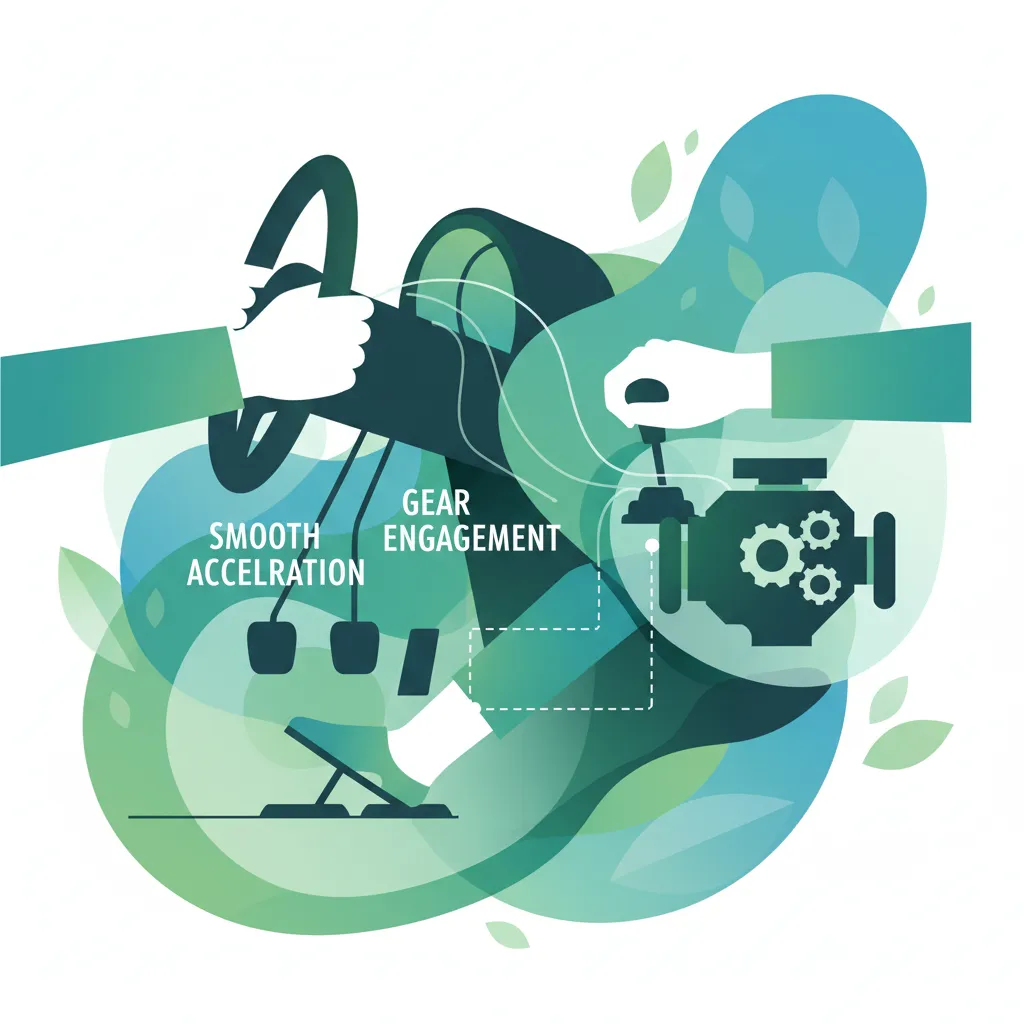
This lesson explains the synchronized operation of the throttle, clutch, and gear selector, detailing how power delivery is modulated. It introduces the typical gear shifting pattern, explains the purpose of neutral, and discusses appropriate rpm ranges for upshifts and downshifts. Emphasis is placed on rider coordination for smooth acceleration and effective engine braking.
Learn the theory and practical techniques for safely starting a manual transmission vehicle on inclines. Understand clutch, accelerator, and brake coordination to prevent rollback and ensure smooth hill starts in Spain.
In this lesson, the mechanics of stopping and starting on an incline are examined. It details the steps for using the clutch and brake to hold the vehicle stationary on a slope, preventing rollback before engaging the accelerator. The lesson also introduces the hill-assist system available in modern vehicles, explaining its operation and benefits for ensuring a smooth start.

This lesson focuses on the specific procedures for parking safely on an incline. It explains the correct method for applying the parking brake, selecting the appropriate gear, and turning the front wheels towards or away from the curb to prevent rolling. These techniques are essential for securing the vehicle on both uphill and downhill slopes.
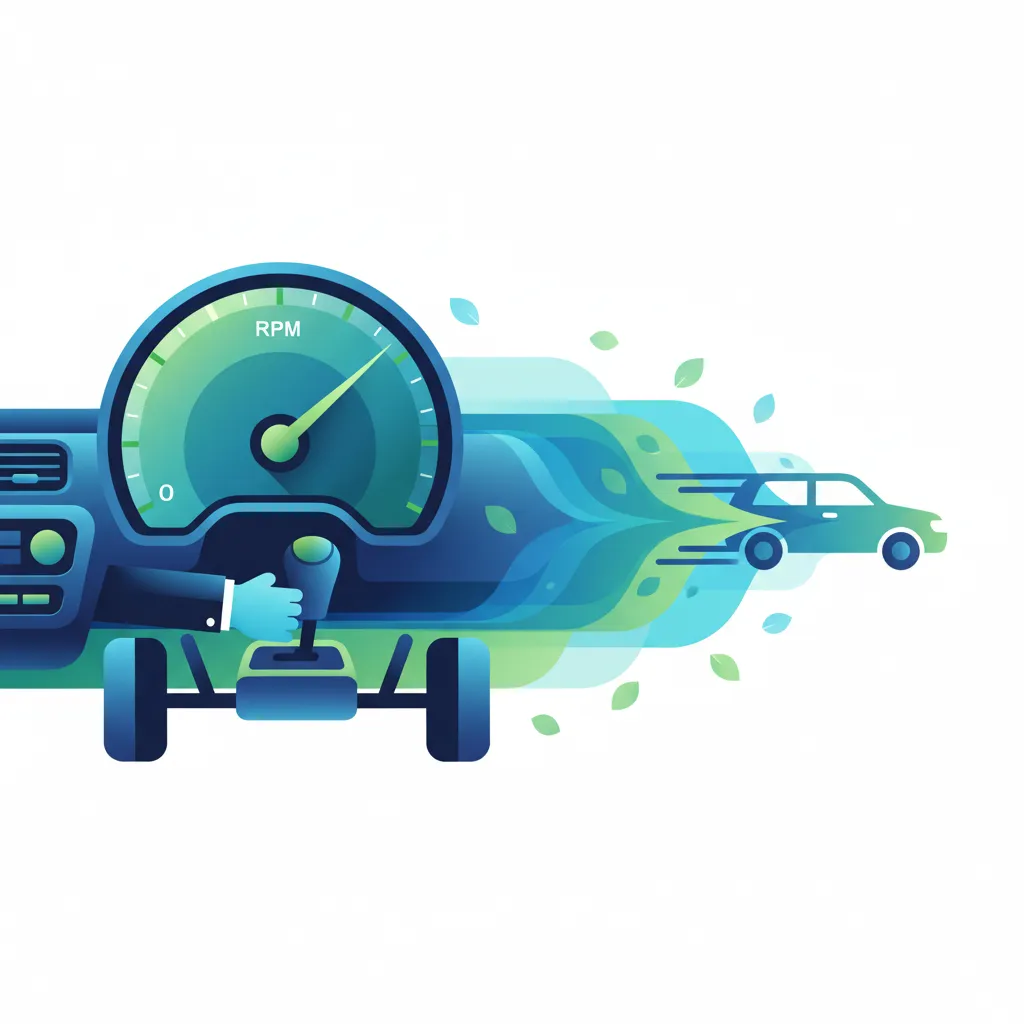
This lesson explains the concept of engine braking and how down-shifting can be used to control vehicle speed without relying solely on the foot brake. It describes the appropriate RPM range for down-shifts and the benefits of engine braking on downhill sections. Learners will understand how to select the correct gear to assist the vehicle's deceleration process, enhancing safety.
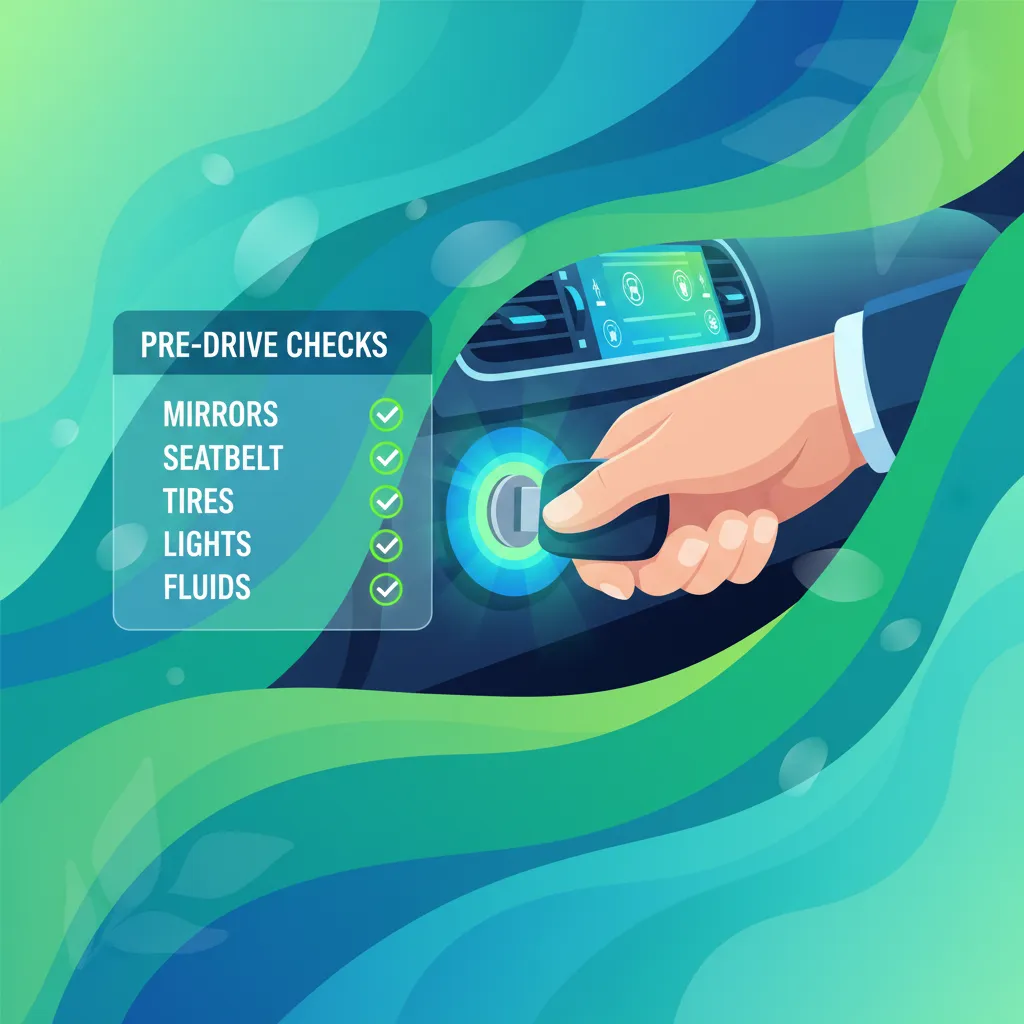
This lesson details the systematic steps required to start a vehicle safely and prepare it for motion. It describes the ignition sequence and confirmation of dashboard indicators before starting the engine. The content also outlines essential pre-drive checks, including verification of fluid levels, tire pressure, mirror adjustment, and seat position.
This lesson covers the essential techniques for perpendicular parking (reversing into a bay) and executing a three-point turn. It details the approach, turning points, and use of mirrors and observation to ensure proper vehicle positioning. Learners will understand how to assess the required space and comply with DGT regulations for these common maneuvers.
This lesson provides theoretical guidance on the techniques for safely reversing a heavy vehicle, a high-risk maneuver. It emphasizes the correct use of mirrors, managing extensive blind spots, and the importance of using a spotter when available. The content also breaks down the geometric principles of parallel parking and backing into loading docks, focusing on vehicle positioning and spatial awareness.
Find clear answers to common questions learners have about Clutch Operation and Gear Shifting Fundamentals. Learn how the lesson is structured, which driving theory objectives it supports, and how it fits into the overall learning path of units and curriculum progression in Spain. These explanations help you understand key concepts, lesson flow, and exam focused study goals.
The engagement point, or biting point, is the precise moment when the clutch disc begins to connect the engine to the gearbox. At this point, you'll feel the engine speed slightly change as it starts to transfer power. Finding this point smoothly is key to starting off without stalling or lurching, especially on inclines.
Stalling usually happens when you release the clutch too quickly or don't give enough gas as you're engaging the clutch. To avoid it, practice releasing the clutch pedal slowly, especially as you approach the biting point. Coordinate this with gentle acceleration to match the engine speed to the new gear.
Up-shifting means moving to a higher gear (e.g., from 1st to 2nd), which is typically done as the vehicle speeds up. Down-shifting means moving to a lower gear (e.g., from 3rd to 2nd), usually done when slowing down or needing more power for acceleration or engine braking. Both require careful clutch and accelerator coordination.
Generally, you use lower gears for slower speeds and higher gears for faster speeds. For example, 1st gear is for starting off, 2nd and 3rd for city driving and moderate speeds, and 4th, 5th, or 6th for faster roads like autovías. The engine should sound relaxed, not strained, in the gear you select.
Yes, understanding clutch operation and gear shifting fundamentals is important for the Spanish DGT theory exam. Questions often assess your knowledge of how manual transmissions work, safe gear selection, and preventing common issues like stalling or jerky movements.
Use our powerful search functionality to pinpoint specific Spanish DGT driving theory practice sets. Filter by road sign categories, traffic law topics, or question difficulty to build custom study sessions and reinforce your knowledge precisely where it matters for your official exam.