
This lesson thoroughly explains engine braking and effective downshifting techniques. You'll learn how to use your vehicle's engine to control speed, reducing reliance on your foot brake, especially on descents. Mastering these skills is vital for safe driving in Spain and for successfully navigating related questions on your DGT theory exam for Category B and BE licenses. It builds upon your understanding of basic braking principles.
Lesson content overview
Driving a vehicle safely and efficiently requires more than just knowing how to accelerate and brake. Advanced techniques like engine braking and down-shifting are fundamental for maintaining optimal control, especially in challenging situations like long descents, or when carrying heavy loads. This comprehensive lesson will explore these essential skills, providing a deep understanding of their mechanics, benefits, and practical application within the context of the Spanish driving license theory course.
Understanding and correctly applying engine braking and down-shifting reduces reliance on the vehicle's friction brakes, helps prevent brake fade, and significantly enhances overall road safety and vehicle longevity. By learning these techniques, drivers can manage speed more effectively, ensuring smoother and more controlled driving in various conditions.
Engine braking refers to the process of decelerating a vehicle by using the resistance created within the engine itself, rather than solely relying on the friction generated by the foot brakes. When the accelerator pedal is released and the vehicle is still in gear, the engine's internal friction, compression, and pumping losses act as a natural brake against the vehicle's forward momentum. This effect naturally slows the car down, converting the vehicle's kinetic energy into heat and noise within the engine.
Deceleration of a vehicle achieved by using the engine's internal resistance when the throttle is closed and the transmission remains engaged in a gear.
There are primarily two forms of engine braking:
The primary purpose of engine braking is to supplement the vehicle's conventional braking system. It provides an additional means of slowing down, which is particularly beneficial for reducing wear on the foot brakes, preventing them from overheating (known as brake fade) on long or steep downhill sections, and offering finer control over speed.
When a vehicle is in motion and the driver releases the accelerator, the wheels continue to turn the transmission, which in turn continues to rotate the engine's crankshaft. However, without fuel being injected and combusted, the engine is no longer producing power to propel the vehicle forward. Instead, the pistons are moving against the vacuum created by the closed throttle plate and compressing air within the cylinders, creating significant resistance. This resistance actively works against the vehicle's momentum, causing it to slow down. The higher the engine's revolutions per minute (RPM), the greater this resistance becomes.
Down-shifting is the act of changing to a lower gear while the vehicle is in motion. This technique is closely intertwined with engine braking because it directly enhances the engine's decelerating effect. When a driver down-shifts, they are essentially increasing the gear ratio between the wheels and the engine. A lower gear (e.g., 3rd instead of 4th) requires the engine to spin at a higher RPM for a given road speed. This increased engine speed significantly boosts the internal resistance, leading to a much stronger engine braking force.
The act of changing from a higher gear to a lower gear while driving, which increases the engine's RPM and enhances its braking effect.
Down-shifting is an essential skill for several driving scenarios:
Executing a smooth down-shift requires coordinated use of the clutch, accelerator, and gear lever. The general procedure is as follows:
Release Accelerator: Lift your foot completely off the accelerator pedal.
Select Lower Gear: Move the gear lever to the desired lower gear (e.g., from 4th to 3rd).
Rev-Match (Optional but Recommended): Briefly and lightly press the accelerator pedal while the clutch is still depressed. This "blip" of the throttle matches the engine RPM to the higher RPM it will achieve in the lower gear, ensuring a smoother transition and preventing jerking.
Release Clutch Smoothly: Slowly and smoothly release the clutch pedal. If rev-matching was performed correctly, the engagement will be seamless.
Practicing these steps will help drivers achieve smooth, controlled down-shifts, which are crucial for maintaining stability and preventing unnecessary wear on the transmission and engine.
Selecting the correct gear for a down-shift is critical. The goal is to achieve effective engine braking without causing damage to the engine by exceeding its maximum safe operating speed, known as the redline, or by operating it at too low an RPM, which can lead to "lugging."
The number of times the engine's crankshaft rotates in one minute, indicating the engine's speed.
For most B-category vehicles (standard passenger cars), the optimal engine speed window for effective and safe engine braking through down-shifting is typically between 1500–2500 RPM. This range provides a good balance:
When down-shifting, drivers must constantly monitor their tachometer (RPM gauge) to ensure they stay within safe operating limits.
The key is to anticipate the need for deceleration and select a gear that brings the engine RPM into the optimal range for the current speed, allowing for effective engine braking and smooth control.
Heel-to-heel braking, sometimes referred to as "heel-and-toe," is an advanced driving technique primarily used in performance driving or specific demanding situations. It involves using the right foot to simultaneously operate the brake pedal with the toes (or ball of the foot) and lightly press the accelerator pedal with the heel (or side of the foot) while the left foot operates the clutch for a down-shift.
An advanced technique where the driver uses the right foot to simultaneously operate the brake and accelerator pedals during a down-shift, typically for smoother transitions in performance driving.
The purpose of this technique is to:
While highly effective, heel-to-heel braking requires significant practice and coordination. It is not a mandatory technique for obtaining a Spanish driving license (Category B & BE) and is generally not necessary for everyday driving. However, understanding its purpose highlights the importance of smooth gear changes and RPM matching for optimal vehicle control.
Spanish traffic regulations, enforced by the Dirección General de Tráfico (DGT), emphasize maintaining full control of the vehicle at all times and adjusting speed to suit road conditions. While engine braking is not explicitly mandated by a specific law, its intelligent use is considered a best practice and an integral part of responsible driving, especially on descents.
On long descents, Spanish driving theory recommends using engine braking to relieve pressure on the conventional foot brakes. This aligns with the DGT's general principle of maintaining safe vehicle control and preventing dangerous situations.
Engine braking and down-shifting are invaluable techniques in a wide range of driving situations. Understanding when and how to apply them can significantly improve safety and confidence behind the wheel.
This is arguably the most critical scenario for active engine braking. On long or steep descents, continuous use of the foot brake can quickly cause them to overheat and become less effective, or even fail completely.
Correct Behavior: Before beginning a long or steep descent, select a lower gear (e.g., 3rd or 2nd) that allows the engine to keep the vehicle's speed in check without needing constant foot brake application. The RPM should be within the optimal 1500–2500 range. You should only need to lightly tap the foot brake intermittently to shave off any excess speed that builds up.
Incorrect Behavior: Remaining in a high gear and continuously riding the foot brake, leading to brake fade and potential loss of control.
Using engine braking before entering a curve helps reduce speed smoothly, allowing the vehicle to remain stable and prepared for acceleration out of the turn.
Correct Behavior: As you approach a curve, ease off the accelerator, down-shift to a gear appropriate for the curve's speed (e.g., from 4th to 3rd or 2nd), and then apply gentle foot braking if necessary. This helps settle the car's weight and allows you to accelerate smoothly through and out of the corner.
Incorrect Behavior: Braking hard within the curve, which can unsettle the vehicle and potentially lead to skidding or loss of traction, especially on wet surfaces.
In urban environments with frequent stops and starts, mild engine braking can contribute to smoother driving and reduce brake wear.
Correct Behavior: When anticipating a red light or slowing traffic, lift off the accelerator and allow the car to slow naturally through passive engine braking. For more rapid deceleration, a gentle down-shift can further reduce speed before a final application of the foot brake to come to a complete stop.
Incorrect Behavior: Constantly using the foot brake for every minor speed adjustment, leading to jerky driving and increased brake pad wear.
When towing a trailer or carrying a heavy load, the vehicle's overall mass increases significantly, which in turn increases the stopping distance and places greater strain on the braking system.
Correct Behavior: Drivers of Category BE vehicles (car with trailer) must anticipate the need for braking much earlier. Active engine braking through careful down-shifting is even more critical in these situations, especially on descents. Selecting a low gear (e.g., 2nd or even 1st on very steep grades) helps control the combined weight of the vehicle and trailer, preventing the trailer from pushing the towing vehicle and reducing the risk of jack-knifing.
Incorrect Behavior: Underestimating the impact of the added weight and relying solely on the foot brakes, which will quickly overheat and lose effectiveness, leading to a dangerous loss of control.
The effectiveness and application of engine braking and down-shifting can vary based on external factors. Drivers must adapt their techniques to maintain safety.
When engine braking near cyclists, pedestrians, or motorcyclists, ensure your deceleration is smooth and predictable. Abrupt down-shifts or harsh braking could startle them or cause them to react unpredictably. Maintaining a steady, controlled deceleration signals your intentions clearly.
Even experienced drivers can sometimes make errors when it comes to engine braking and down-shifting. Being aware of these common pitfalls can help new drivers avoid dangerous situations.
The principles of engine braking and down-shifting are foundational and build upon knowledge acquired in previous lessons, while also preparing learners for more advanced modules.
This lesson connects directly with core concepts from the Spanish Driving License Theory Course, reinforcing comprehensive vehicle control.
Furthermore, the smooth control and anticipation learned through engine braking and down-shifting are vital for Hazard Perception & Defensive Driving (Lesson 7), where proactive speed management can prevent dangerous situations.
Engine braking and down-shifting are indispensable techniques for any driver, particularly for those operating manual transmission vehicles in varied terrain and traffic conditions. They offer a sophisticated method of speed control that goes beyond simple foot brake application. By leveraging the engine's natural resistance and intelligently selecting lower gears, drivers can significantly:
Always monitor your RPM, anticipate road conditions, and practice smooth coordination between the clutch, accelerator, and gear lever. Mastering these techniques will make you a more confident, safer, and more efficient driver, fully prepared for the demands of the Spanish road network.
Explore all units and lessons included in this driving theory course.
Lesson content overview
Explore all units and lessons included in this driving theory course.
Explore search topics learners often look for when studying Engine Braking and Down‑shifting Techniques. These topics reflect common questions about road rules, driving situations, safety guidance, and lesson level theory preparation for learners in Spain.
Browse additional driving theory lessons that cover connected traffic rules, road signs, and common driving situations related to this topic. Improve your understanding of how different rules interact across everyday traffic scenarios.
Learn advanced techniques for controlling vehicle speed using engine braking and down-shifting in manual transmission cars. This lesson explains how to prevent brake fade and enhance safety on descents and in various traffic situations, vital for comprehensive driving theory.

This lesson explores the mechanics of clutch operation and fundamental gear shifting techniques for manual transmissions. It describes the function of the clutch pedal, identifying the engagement point, and how to facilitate smooth gear changes. The content explains the gear lever pattern and the process of up-shifting and down-shifting while maintaining engine speed.
This lesson explains the synchronized operation of the throttle, clutch, and gear selector, detailing how power delivery is modulated. It introduces the typical gear shifting pattern, explains the purpose of neutral, and discusses appropriate rpm ranges for upshifts and downshifts. Emphasis is placed on rider coordination for smooth acceleration and effective engine braking.

This lesson compares manual and automatic transmissions, detailing the mechanical principles behind each system. It explains clutch operation and gear selection for manual vehicles, while describing the torque converter and shifting patterns in automatic gearboxes. The content addresses the impact of each transmission type on fuel efficiency, driver control, and overall vehicle dynamics.

This lesson focuses on mastering acceleration and deceleration to integrate smoothly with traffic. It teaches how to apply the throttle gradually for steady speed control and how to use front and rear brakes in a balanced manner to slow down without destabilizing the moped. Learners will understand how to adjust their speed in response to changing traffic conditions, ensuring safe following distances and predictable movements for other road users.
In this lesson, the mechanics of stopping and starting on an incline are examined. It details the steps for using the clutch and brake to hold the vehicle stationary on a slope, preventing rollback before engaging the accelerator. The lesson also introduces the hill-assist system available in modern vehicles, explaining its operation and benefits for ensuring a smooth start.
This lesson focuses on the coordination of acceleration and deceleration to maintain vehicle stability. It explains how to modulate the accelerator pedal for smooth acceleration and how to apply the brake pedal for controlled deceleration. The content covers the role of the ABS system, the calculation of stopping distances, and the importance of maintaining stability during speed changes.
Identify and understand common mistakes learners make with engine braking and down-shifting. This lesson focuses on avoiding over-revving, lugging, and abrupt gear changes to ensure safe and effective vehicle control according to Spanish driving theory standards.
This lesson explores the mechanics of clutch operation and fundamental gear shifting techniques for manual transmissions. It describes the function of the clutch pedal, identifying the engagement point, and how to facilitate smooth gear changes. The content explains the gear lever pattern and the process of up-shifting and down-shifting while maintaining engine speed.
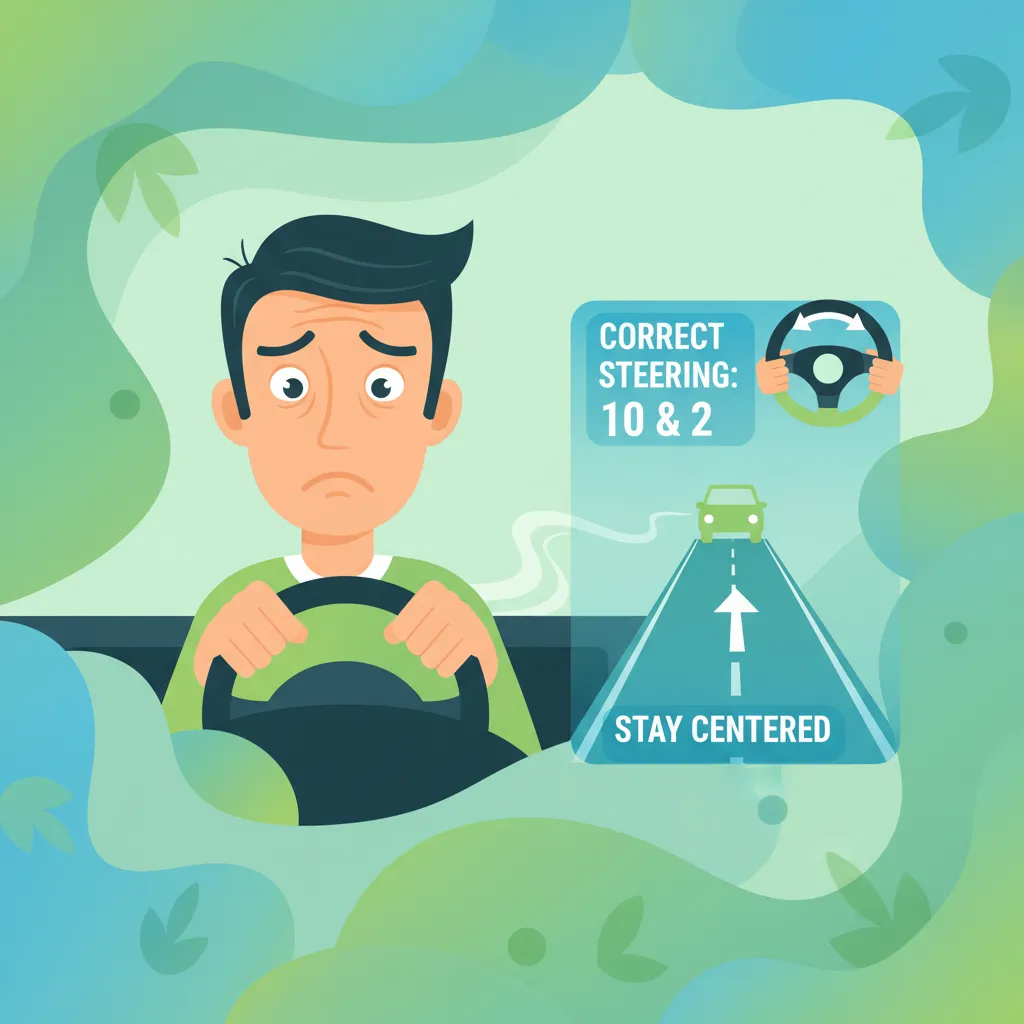
This lesson identifies frequent beginner errors such as over-application of throttle, misuse of the clutch, and improper braking timing. It analyzes the underlying causes of these mistakes and offers corrective techniques to develop safe riding habits. By referencing DGT exam examples, learners gain insight into how to avoid these common pitfalls.
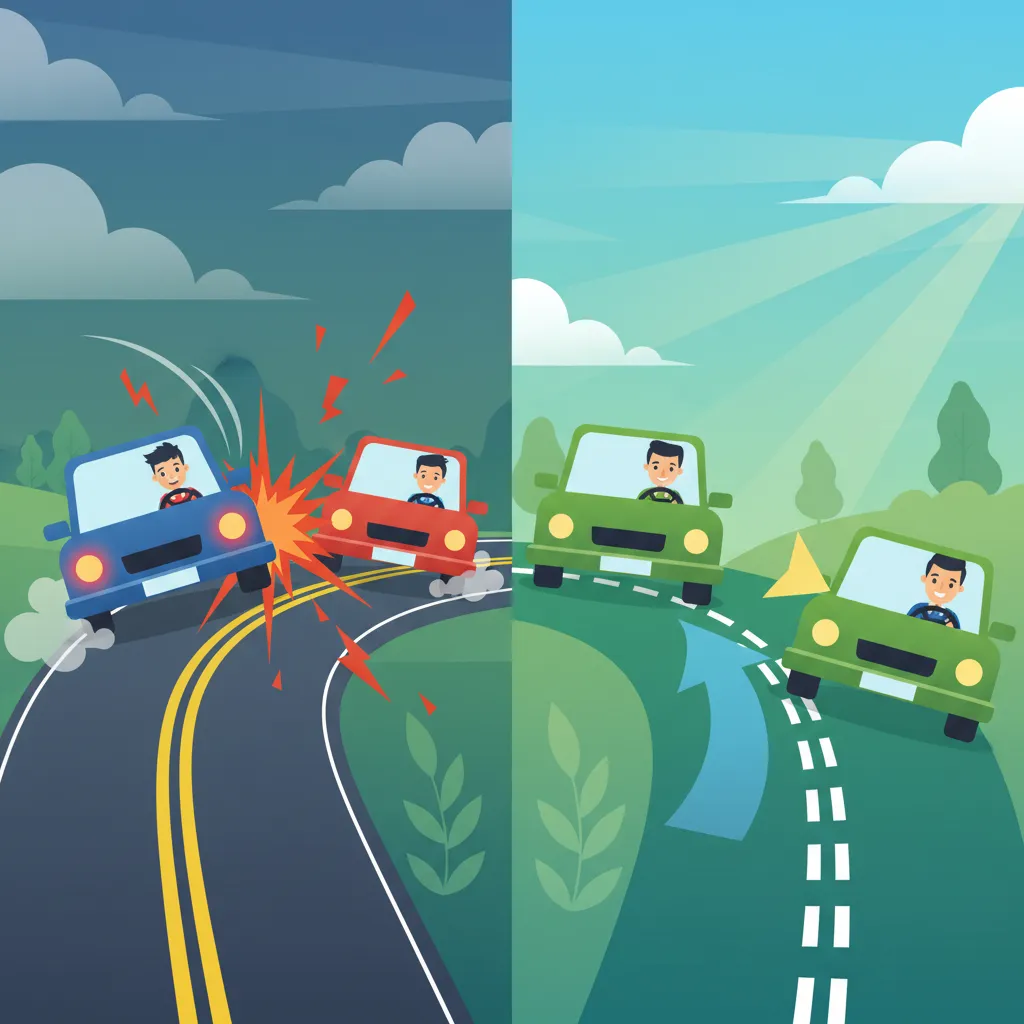
This lesson addresses common errors made by drivers when using roundabouts and presents corrective strategies. It covers issues such as entering from the wrong lane, failing to yield to circulating traffic, exceeding the recommended speed, and not signaling an exit correctly. By understanding these mistakes, drivers can improve their roundabout proficiency and reduce accident risk.

This lesson presents advanced cornering scenarios common on Spanish roads, such as mountain hairpins and high-speed autovía exits. It outlines specific techniques for descent control, ascent maneuvers, and safely merging into traffic after cornering. Interaction with cyclists and emergency cornering strategies are also covered in accordance with DGT regulations.

This lesson focuses on the specific procedures for parking safely on an incline. It explains the correct method for applying the parking brake, selecting the appropriate gear, and turning the front wheels towards or away from the curb to prevent rolling. These techniques are essential for securing the vehicle on both uphill and downhill slopes.
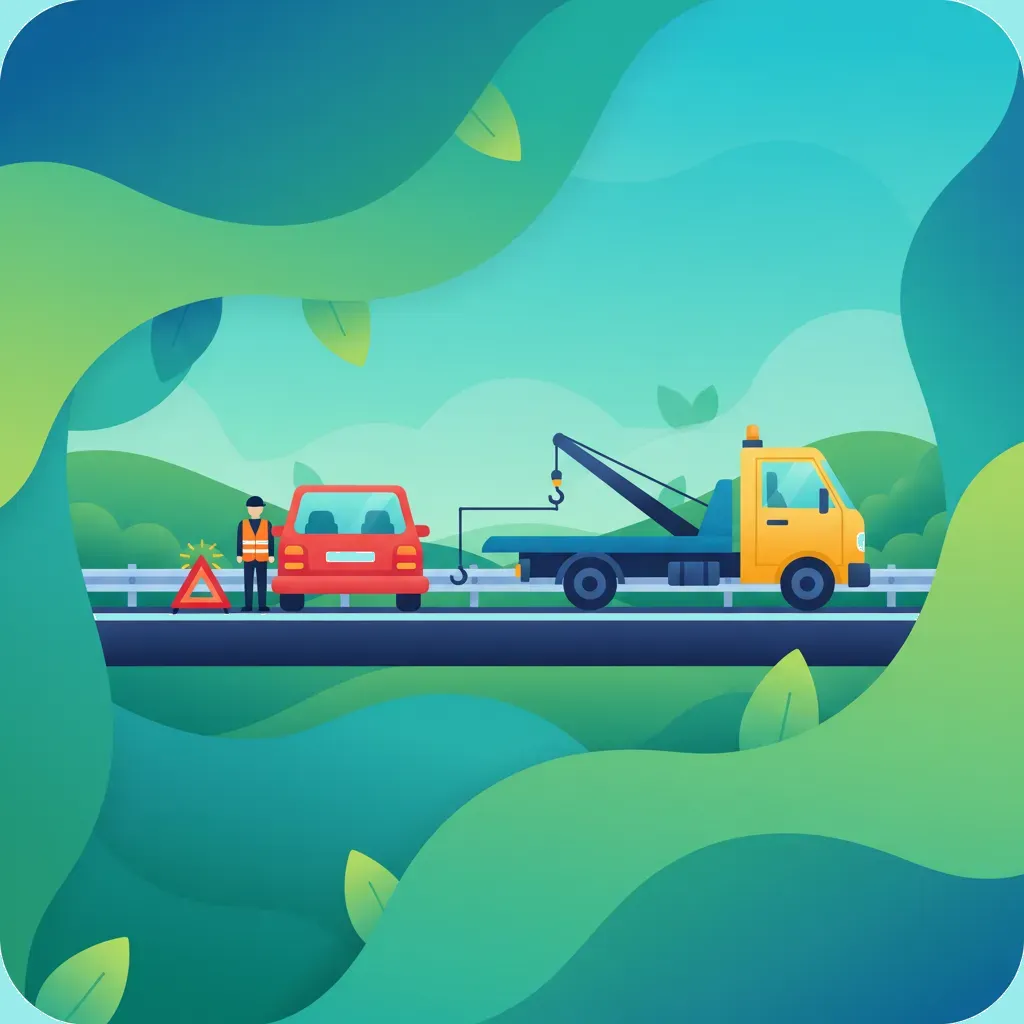
In this lesson, drivers learn the correct actions to take during a vehicle breakdown. It outlines steps for safely stopping on the hard shoulder, activating hazard lights, and deploying warning devices like the triangle or V16 light. The lesson covers DGT procedures for roadside emergencies, including wearing a high-visibility vest and contacting assistance safely.
In this lesson, the mechanics of stopping and starting on an incline are examined. It details the steps for using the clutch and brake to hold the vehicle stationary on a slope, preventing rollback before engaging the accelerator. The lesson also introduces the hill-assist system available in modern vehicles, explaining its operation and benefits for ensuring a smooth start.
This lesson outlines procedures for handling emergency situations and accidents. It covers emergency braking techniques, hazard avoidance strategies, and the DGT emergency protocol for accident reporting. Emphasis is placed on rider protective actions, post-crash first aid, roadside safety, and legal obligations after an incident.
This lesson focuses on the coordination of acceleration and deceleration to maintain vehicle stability. It explains how to modulate the accelerator pedal for smooth acceleration and how to apply the brake pedal for controlled deceleration. The content covers the role of the ABS system, the calculation of stopping distances, and the importance of maintaining stability during speed changes.
This lesson addresses the specific challenges posed by rain and fog, focusing on reduced visibility and loss of traction. It explains the proper use of windshield wipers and fog lights, and the need to adjust speed and increase following distance. The content covers how to prevent and react to hydroplaning (aquaplaning) to maintain vehicle control.
Find clear answers to common questions learners have about Engine Braking and Down‑shifting Techniques. Learn how the lesson is structured, which driving theory objectives it supports, and how it fits into the overall learning path of units and curriculum progression in Spain. These explanations help you understand key concepts, lesson flow, and exam focused study goals.
While not explicitly mandatory by law in every situation, engine braking is highly recommended and considered a best practice by the DGT, especially on long or steep descents. It significantly improves safety by preventing brake fade and maintaining vehicle control, a key aspect of responsible driving for your Spanish license.
Yes, excessive or aggressive downshifting can over-rev the engine, potentially causing damage. It's crucial to select the appropriate gear that keeps the RPM within a safe, effective range, typically indicated by your tachometer, avoiding the red zone. This is a common point in DGT safety questions for Category B.
When engine braking, modern fuel-injected engines generally cut off fuel supply, leading to zero fuel consumption during deceleration. This makes it an efficient and environmentally friendly way to slow down, contrasting with using the foot brake while in neutral, which still consumes fuel to keep the engine idling.
Engine braking (or compression braking) uses the engine's internal resistance to slow the vehicle, applicable to most cars. Exhaust brakes, found on heavy vehicles, restrict exhaust flow to create back pressure, providing additional braking power. For your B or BE license, focus on understanding engine braking in standard vehicles.
No, downshifting to the lowest possible gear might cause the engine to over-rev or the wheels to lock, especially on slippery surfaces. The goal is smooth, controlled deceleration. You should select a gear that provides effective braking while keeping the engine's RPM within its safe operating range and maintaining stability.
Use our powerful search functionality to pinpoint specific Spanish DGT driving theory practice sets. Filter by road sign categories, traffic law topics, or question difficulty to build custom study sessions and reinforce your knowledge precisely where it matters for your official exam.