
Welcome to Lesson 3.5, where we tackle the crucial skill of stopping and starting your vehicle on inclines. This lesson builds upon your understanding of clutch and brake control, equipping you to safely manage hills and introducing modern hill-assist technology. Mastering this is key for smooth urban and rural driving and will prepare you for specific scenarios on the Spanish driving theory exam.
Lesson content overview
Navigating slopes safely is a fundamental skill for any driver, especially when learning for the Complete Spanish Driving License Theory Course for Categories B & BE (DGT). This lesson explores the crucial techniques for stopping a vehicle on an incline and restarting it without uncontrolled rollback, a process commonly known as a hill start. We will also examine modern vehicle technology like Hill-Start Assist (HSA), designed to make these maneuvers smoother and safer.
When a vehicle is stopped on an inclined road, gravity exerts a powerful force that attempts to pull the car downhill. This downhill force, known as the gravitational component, is proportional to the steepness of the slope. The steeper the incline, the greater the force that must be counteracted to keep the vehicle stationary.
Ignoring this physical principle can lead to unintended rollback, creating hazardous situations, particularly in traffic. Drivers must always be aware of the incline's grade, whether gentle, moderate, or steep, as this determines the amount of brake pressure and clutch engagement required to maintain control. Even on what appears to be a gentle slope (less than 3% grade), there's a minimal rollback force that needs to be managed. On moderate (3–6% grade) and especially steep slopes (over 6% grade), active and precise control is essential.
The manual hill-start, also known as the clutch-brake method, is a core driving skill that allows you to start moving uphill without rolling backward. It requires precise coordination between your feet on the clutch, brake, and accelerator pedals. This technique ensures a smooth transition from a stop to forward motion, preventing collisions and maintaining traffic flow.
Performing a manual hill start effectively involves a sequence of coordinated actions. Accuracy and a good sense of your vehicle's feedback, particularly the engine's sound and the clutch's engagement point, are key.
Approach the Stop: As you approach a stop on an incline, shift into first gear and fully depress the clutch pedal. Keep your foot firmly on the foot brake to hold the vehicle stationary.
Find the Bite Point: Slowly and smoothly begin to release the clutch pedal. You will feel a subtle change in the engine's sound or vibration, and the front of the vehicle may dip slightly as the clutch plates just begin to engage the transmission. This is the bite point.
Apply Throttle: Once you've found the bite point, gently press the accelerator pedal to increase the engine's revolutions per minute (RPM) to a safe level, typically around 1500 RPM. This provides the necessary torque to overcome the gravitational force pulling the car downhill.
Release the Foot Brake: As the engine's torque begins to pull the car forward, swiftly but smoothly release your foot from the brake pedal. If performed correctly, the vehicle will remain stationary or begin to move forward without rolling backward.
Fully Engage the Clutch: Continue to release the clutch pedal completely while maintaining the necessary throttle. The vehicle should now be moving smoothly uphill. Avoid holding the clutch at the bite point for too long, as this can cause excessive clutch wear.
The handbrake (also known as the parking brake) offers an alternative or supplementary method for executing a hill start, particularly useful on very steep inclines or when you are less experienced with clutch-brake coordination. It can reduce the pressure on the foot brake and provide a more stable hold.
Secure the Vehicle: When stopped on an incline, ensure the handbrake is firmly engaged after selecting first gear and depressing the clutch. You can then release the foot brake.
Prepare to Move: Find the clutch bite point as described above, and apply gentle throttle to raise the engine RPM. The vehicle will feel like it's pulling against the handbrake.
Release Handbrake and Engage Clutch: As you feel the engine's torque sufficient to move the vehicle, gradually release the handbrake while simultaneously releasing the clutch further and smoothly increasing the throttle. The goal is to release the handbrake just as the engine's power overcomes the downhill force, allowing for a seamless transition into forward motion.
Confirm Release: Always ensure the handbrake is fully released before proceeding to avoid dragging it, which can cause significant wear and overheating of the braking system, as well as reduced fuel efficiency.
The handbrake method can be particularly helpful for beginners or when dealing with heavy loads or trailers, as it provides a solid anchor during the crucial transition phase.
For nearly all hill-start situations, first gear is the mandatory choice. This is because first gear provides the highest torque multiplication, meaning it delivers the maximum rotational force from the engine to the wheels. This high torque is essential to overcome the gravitational pull on an incline without excessive clutch slip or stalling the engine.
While some very gentle slopes might technically allow a start in second gear, this requires significantly higher engine revs and more precise clutch control, putting unnecessary strain on the clutch. Always opt for first gear for reliability and safety when starting uphill.
Modulating clutch slip is a refined skill crucial for smooth hill starts. It involves carefully adjusting the clutch pedal to control the amount of power being transferred from the engine to the wheels. Too much slip (clutch released too slowly while accelerating) will cause excessive wear and heat, potentially leading to premature clutch failure. Too little slip (clutch released too quickly) will cause the engine to stall. The key is to find the perfect balance: enough slip to prevent stalling and allow the engine to build power, but not so much that it causes unnecessary wear. This precise control is best developed through practice and by paying close attention to the vehicle's sounds and vibrations.
Modern vehicles often come equipped with an electronic aid called Hill-Start Assist (HSA), designed to simplify uphill starts and enhance safety. Understanding how HSA works and its limitations is important, as it complements, rather than replaces, the driver's skills.
Hill-Start Assist is an automatic driver-aid system that provides temporary brake pressure after the driver releases the foot brake on an incline. When the vehicle's sensors detect that it is stopped on a slope, and the driver depresses the foot brake, the system becomes active. Once the driver releases the foot brake to move their foot to the accelerator, HSA maintains the brake pressure for a brief interval, typically between 2 to 3 seconds. This precious window allows the driver sufficient time to engage the clutch and apply the accelerator without the vehicle rolling backward. After the preset duration, or once the system detects adequate engine torque, the brakes are automatically released, enabling a smooth departure.
While incredibly helpful, Hill-Start Assist systems have specific limitations that drivers must be aware of:
In Spain, as outlined by the Dirección General de Tráfico (DGT) regulations, drivers have clear responsibilities when encountering inclines. These rules are designed to prevent accidents and ensure the safety of all road users.
A fundamental principle in Spanish traffic law is the zero-rollback policy when stopped on an incline. This means that a driver must ensure their vehicle does not move backward unintentionally at any time after stopping on a slope. This applies to all non-moving situations, such as waiting at traffic lights, stop signs, or in congested traffic.
Failing to prevent rollback is not only a significant safety hazard that can lead to rear-end collisions but can also result in legal liability and penalties under Spanish traffic regulations.
The rationale behind this strict policy is to prevent sudden, unpredictable movements that could endanger other vehicles, pedestrians, or cyclists behind the stopped car. Drivers are expected to use appropriate techniques, whether manual clutch-brake control, handbrake assistance, or Hill-Start Assist, to maintain a stationary position until forward motion can be safely initiated.
Even experienced drivers can make mistakes during hill starts. Recognizing these common pitfalls can help you avoid them and refine your technique.
Safe driving on inclines requires adapting your technique to various environmental and vehicle-specific conditions.
When driving a vehicle with a heavy load or trailer, anticipate the increased effort required for hill starts and practice the handbrake method to ensure maximum control.
Let's consider a few real-world examples to solidify your understanding.
You are stopped at a traffic light on a 4% uphill grade in busy urban traffic. A vehicle is stopped directly behind you.
You are driving on a rural mountain road with a 10% grade, and your vehicle is fully loaded with camping gear, making it heavier than usual. The road surface is slightly damp.
You have parked your vehicle parallel to the curb on a residential street with a 5% uphill grade. When you return to start, there are pedestrians walking on the sidewalk nearby.
Mastering hill starts is vital for safe and confident driving, particularly within the framework of the Spanish driving license regulations.
By integrating these principles and practicing regularly, you will confidently handle any uphill start scenario you encounter on Spanish roads.
This lesson covers the mechanics of stopping and restarting on inclines, emphasizing that gravity constantly pulls vehicles backward with force proportional to slope steepness. Two primary manual techniques are taught: the clutch-brake method (finding the bite point, applying throttle, then releasing the foot brake) and the handbrake-assisted method (providing extra security on steep grades or with heavy loads). Electronic Hill-Start Assist automatically holds brake pressure briefly after releasing the foot brake but has limitations and cannot replace driver skill. Spanish DGT regulations enforce a strict zero-rollback policy, meaning drivers must never allow unintended backward movement when stopped on a slope, with failure potentially resulting in legal penalties.
A short set of high-value points that capture the most important learning from this lesson.
Gravity constantly pulls vehicles backward on inclines; the steeper the slope, the greater the force that must be counteracted to prevent rollback.
First gear provides maximum torque multiplication, making it the essential gear choice for nearly all hill-start situations.
The bite point is the precise clutch position where engine power begins transmitting to the wheels, and finding it is fundamental to smooth hill starts.
Hill-Start Assist temporarily holds brake pressure for 2–3 seconds after releasing the foot brake, but it supplements rather than replaces driver skill.
Spain's zero-rollback policy means drivers must prevent any unintended backward movement when stopped on an incline.
Explore all units and lessons included in this driving theory course.
On steep grades (over 6%) or when carrying heavy loads, use the handbrake-assisted method for maximum control and security.
HSA has limitations: it disengages after a few seconds, may not engage on very gentle slopes, and can be deactivated in certain driving modes.
Always ensure the handbrake is fully released before driving; partial engagement causes overheating, rapid wear, and reduced fuel efficiency.
Heavy loads or trailers increase downhill gravitational force, requiring earlier clutch engagement, firmer bite point, and more throttle.
Wet or icy conditions reduce tire traction, demanding gentler clutch and throttle input to prevent wheel spin and loss of control.
Releasing the foot brake before the clutch has adequately engaged at the bite point, causing the vehicle to roll backward.
Holding the clutch at the bite point for too long with high RPM causes excessive heat generation, accelerated wear, and a burning clutch smell.
Relying solely on engine braking to hold a vehicle stationary on an incline is insufficient and will result in slow but steady rollback.
Over-relying on Hill-Start Assist on very steep grades, assuming it will hold indefinitely; the system has slope and duration limits.
Applying accelerator too abruptly can cause wheel spin on wet or loose surfaces, resulting in loss of traction and jerky, unsafe starts.
Lesson content overview
A short set of high-value points that capture the most important learning from this lesson.
Gravity constantly pulls vehicles backward on inclines; the steeper the slope, the greater the force that must be counteracted to prevent rollback.
First gear provides maximum torque multiplication, making it the essential gear choice for nearly all hill-start situations.
The bite point is the precise clutch position where engine power begins transmitting to the wheels, and finding it is fundamental to smooth hill starts.
Hill-Start Assist temporarily holds brake pressure for 2–3 seconds after releasing the foot brake, but it supplements rather than replaces driver skill.
Spain's zero-rollback policy means drivers must prevent any unintended backward movement when stopped on an incline.
Explore all units and lessons included in this driving theory course.
On steep grades (over 6%) or when carrying heavy loads, use the handbrake-assisted method for maximum control and security.
HSA has limitations: it disengages after a few seconds, may not engage on very gentle slopes, and can be deactivated in certain driving modes.
Always ensure the handbrake is fully released before driving; partial engagement causes overheating, rapid wear, and reduced fuel efficiency.
Heavy loads or trailers increase downhill gravitational force, requiring earlier clutch engagement, firmer bite point, and more throttle.
Wet or icy conditions reduce tire traction, demanding gentler clutch and throttle input to prevent wheel spin and loss of control.
Releasing the foot brake before the clutch has adequately engaged at the bite point, causing the vehicle to roll backward.
Holding the clutch at the bite point for too long with high RPM causes excessive heat generation, accelerated wear, and a burning clutch smell.
Relying solely on engine braking to hold a vehicle stationary on an incline is insufficient and will result in slow but steady rollback.
Over-relying on Hill-Start Assist on very steep grades, assuming it will hold indefinitely; the system has slope and duration limits.
Applying accelerator too abruptly can cause wheel spin on wet or loose surfaces, resulting in loss of traction and jerky, unsafe starts.
Explore search topics learners often look for when studying Stopping on Inclines and Hill‑Start Assist. These topics reflect common questions about road rules, driving situations, safety guidance, and lesson level theory preparation for learners in Spain.
Browse additional driving theory lessons that cover connected traffic rules, road signs, and common driving situations related to this topic. Improve your understanding of how different rules interact across everyday traffic scenarios.
Learn the differences between manual hill-start techniques using clutch and brake versus the operation of electronic Hill-Start Assist (HSA) systems. Understand how each method helps prevent rollback on inclines according to DGT regulations for Spanish driving theory.

This lesson focuses on the specific procedures for parking safely on an incline. It explains the correct method for applying the parking brake, selecting the appropriate gear, and turning the front wheels towards or away from the curb to prevent rolling. These techniques are essential for securing the vehicle on both uphill and downhill slopes.
Identify and understand frequent errors drivers make when stopping and starting on slopes. This lesson focuses on avoiding rollback, excessive clutch slip, and other issues to ensure safe uphill driving as per Spanish DGT rules.
This lesson focuses on the specific procedures for parking safely on an incline. It explains the correct method for applying the parking brake, selecting the appropriate gear, and turning the front wheels towards or away from the curb to prevent rolling. These techniques are essential for securing the vehicle on both uphill and downhill slopes.
This lesson explains the concept of engine braking and how down-shifting can be used to control vehicle speed without relying solely on the foot brake. It describes the appropriate RPM range for down-shifts and the benefits of engine braking on downhill sections. Learners will understand how to select the correct gear to assist the vehicle's deceleration process, enhancing safety.
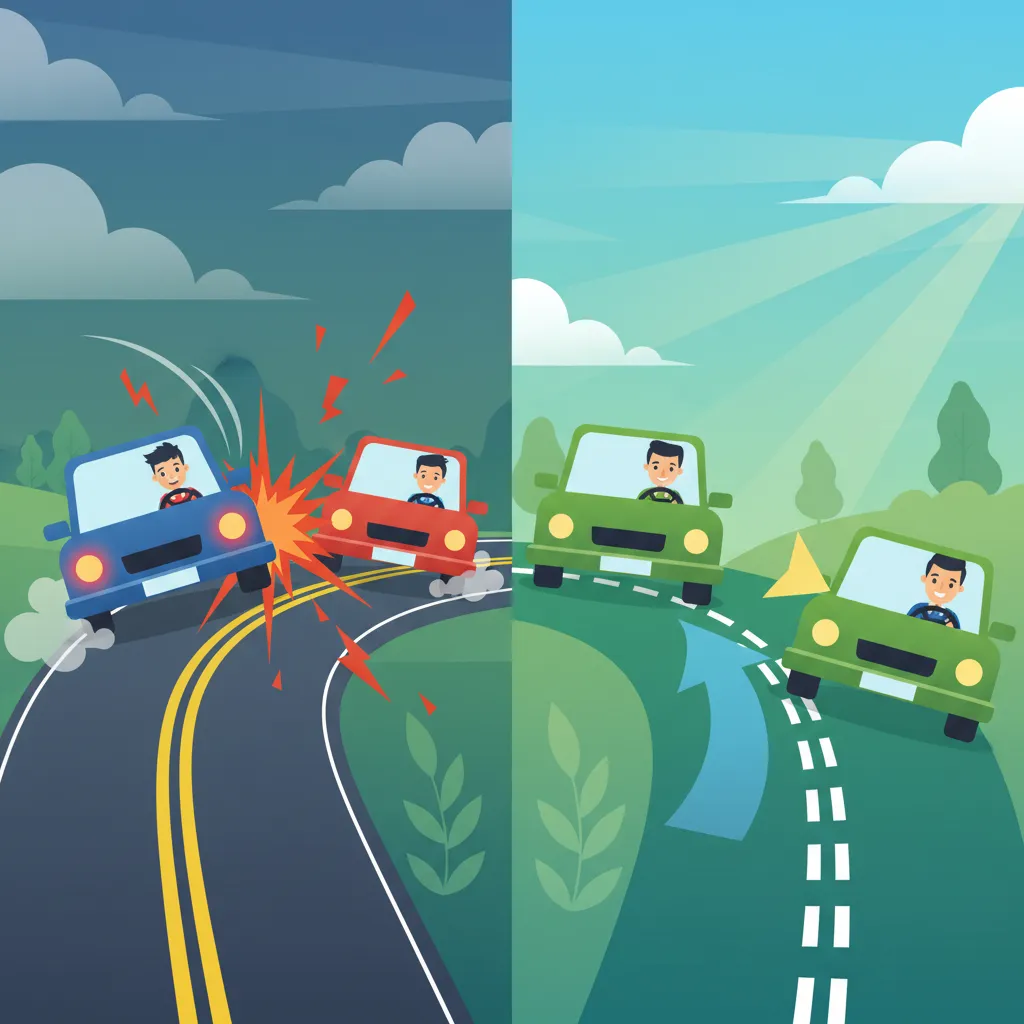
This lesson addresses common errors made by drivers when using roundabouts and presents corrective strategies. It covers issues such as entering from the wrong lane, failing to yield to circulating traffic, exceeding the recommended speed, and not signaling an exit correctly. By understanding these mistakes, drivers can improve their roundabout proficiency and reduce accident risk.
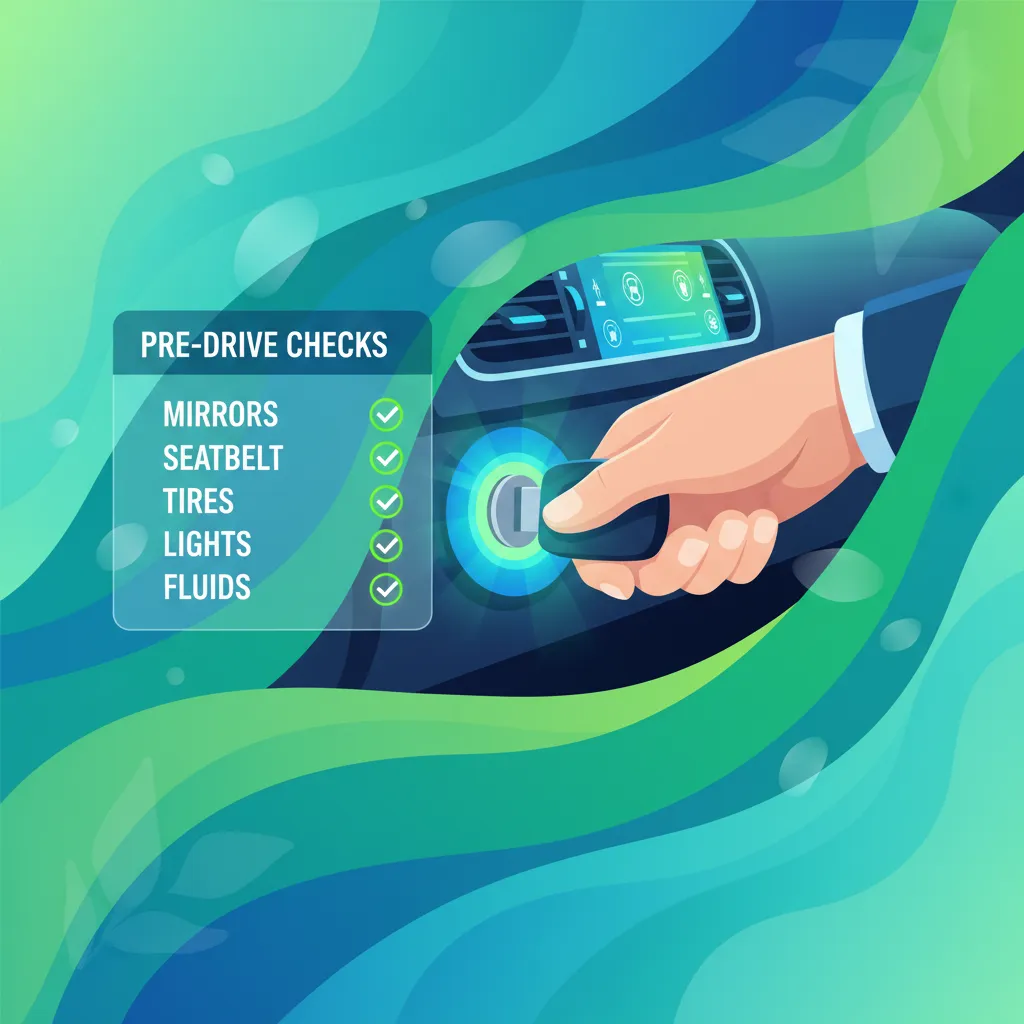
This lesson details the systematic steps required to start a vehicle safely and prepare it for motion. It describes the ignition sequence and confirmation of dashboard indicators before starting the engine. The content also outlines essential pre-drive checks, including verification of fluid levels, tire pressure, mirror adjustment, and seat position.
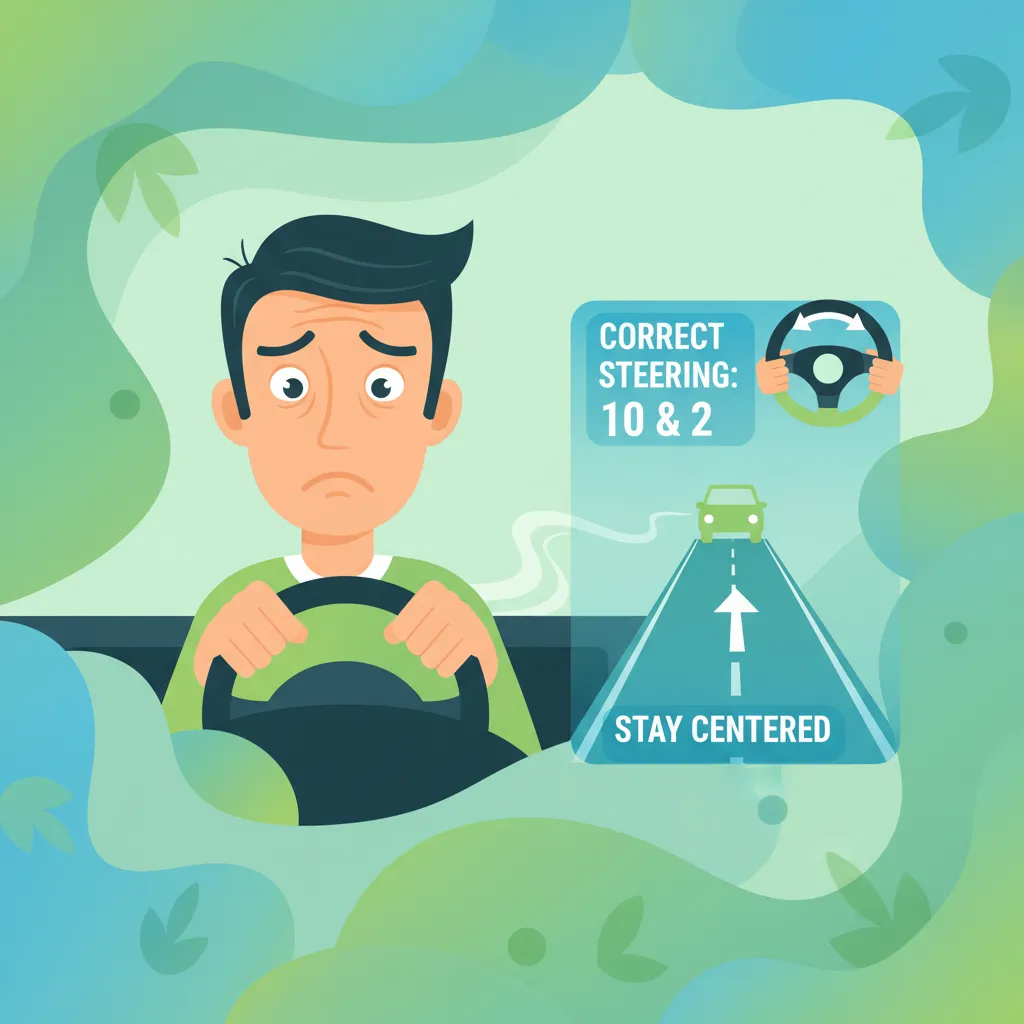
This lesson identifies frequent beginner errors such as over-application of throttle, misuse of the clutch, and improper braking timing. It analyzes the underlying causes of these mistakes and offers corrective techniques to develop safe riding habits. By referencing DGT exam examples, learners gain insight into how to avoid these common pitfalls.
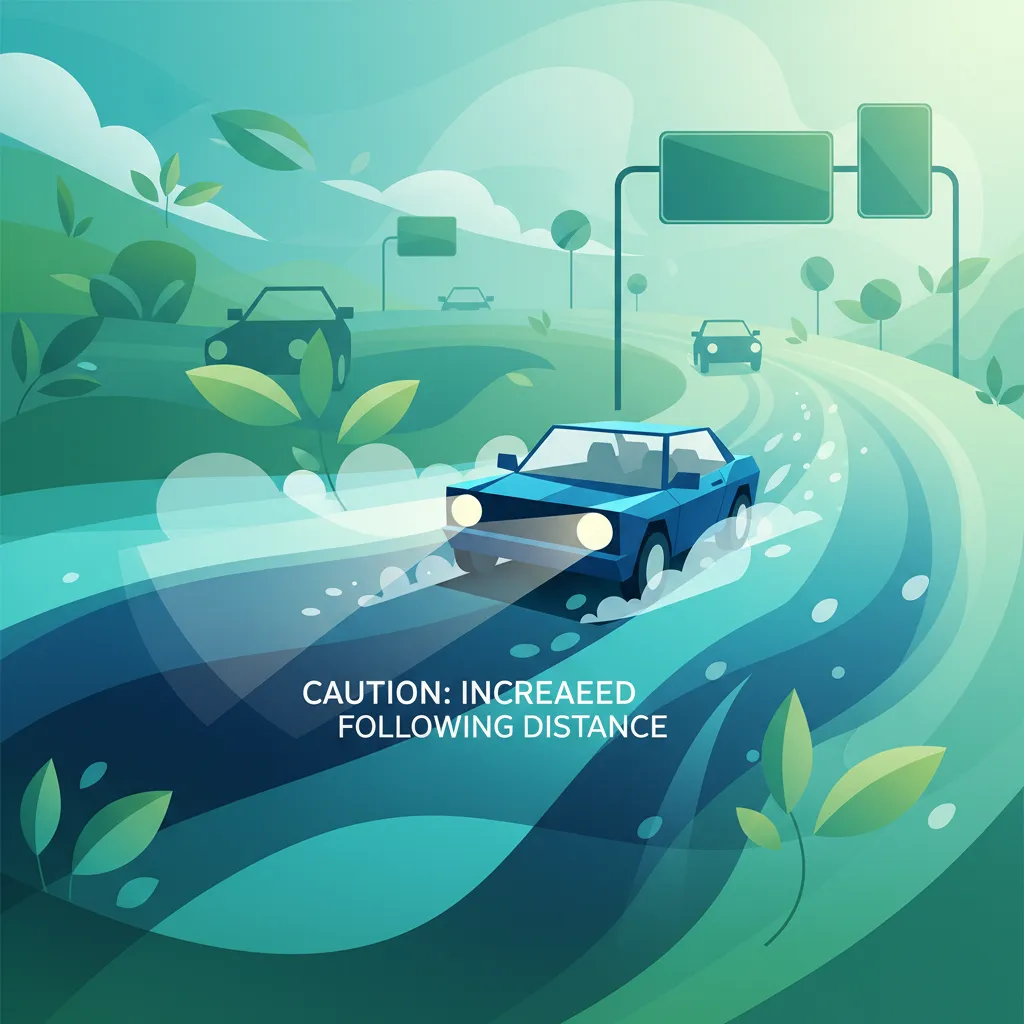
This lesson addresses the specific challenges posed by rain and fog, focusing on reduced visibility and loss of traction. It explains the proper use of windshield wipers and fog lights, and the need to adjust speed and increase following distance. The content covers how to prevent and react to hydroplaning (aquaplaning) to maintain vehicle control.

This lesson presents advanced cornering scenarios common on Spanish roads, such as mountain hairpins and high-speed autovía exits. It outlines specific techniques for descent control, ascent maneuvers, and safely merging into traffic after cornering. Interaction with cyclists and emergency cornering strategies are also covered in accordance with DGT regulations.

This lesson provides strategies for navigating tight, confined environments such as multi-story car parks and narrow urban lanes. It emphasizes the importance of slow and controlled movements, constant observation, and a thorough understanding of the vehicle's dimensions and turning circle. Learners will develop the skills to maneuver with precision while avoiding obstacles.
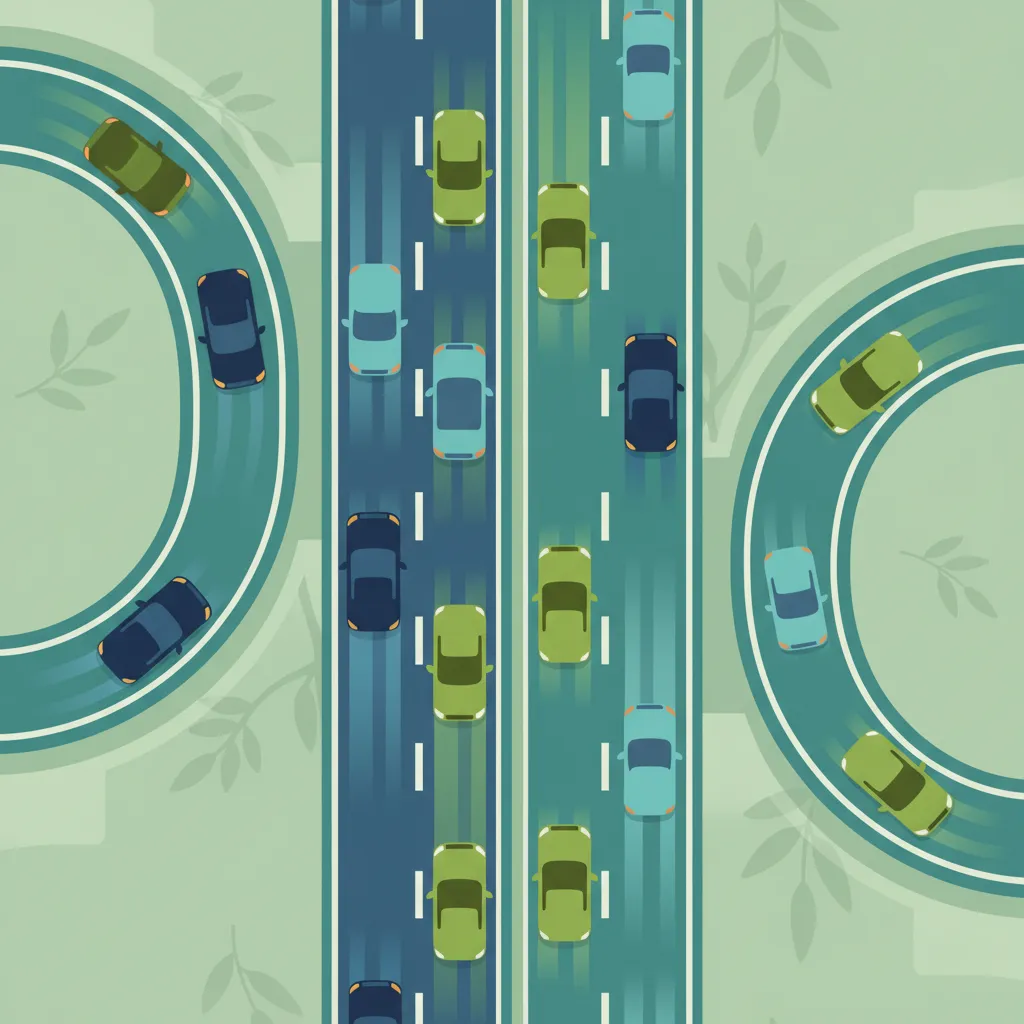
This lesson defines proper lane discipline on highways, emphasizing correct lane positioning and the rule to drive in the right-hand lane except when overtaking. It details safe merging onto main carriageways from an acceleration lane and effective exit strategies using deceleration lanes. Learners will understand DGT merge rules and the importance of signaling lane changes early.
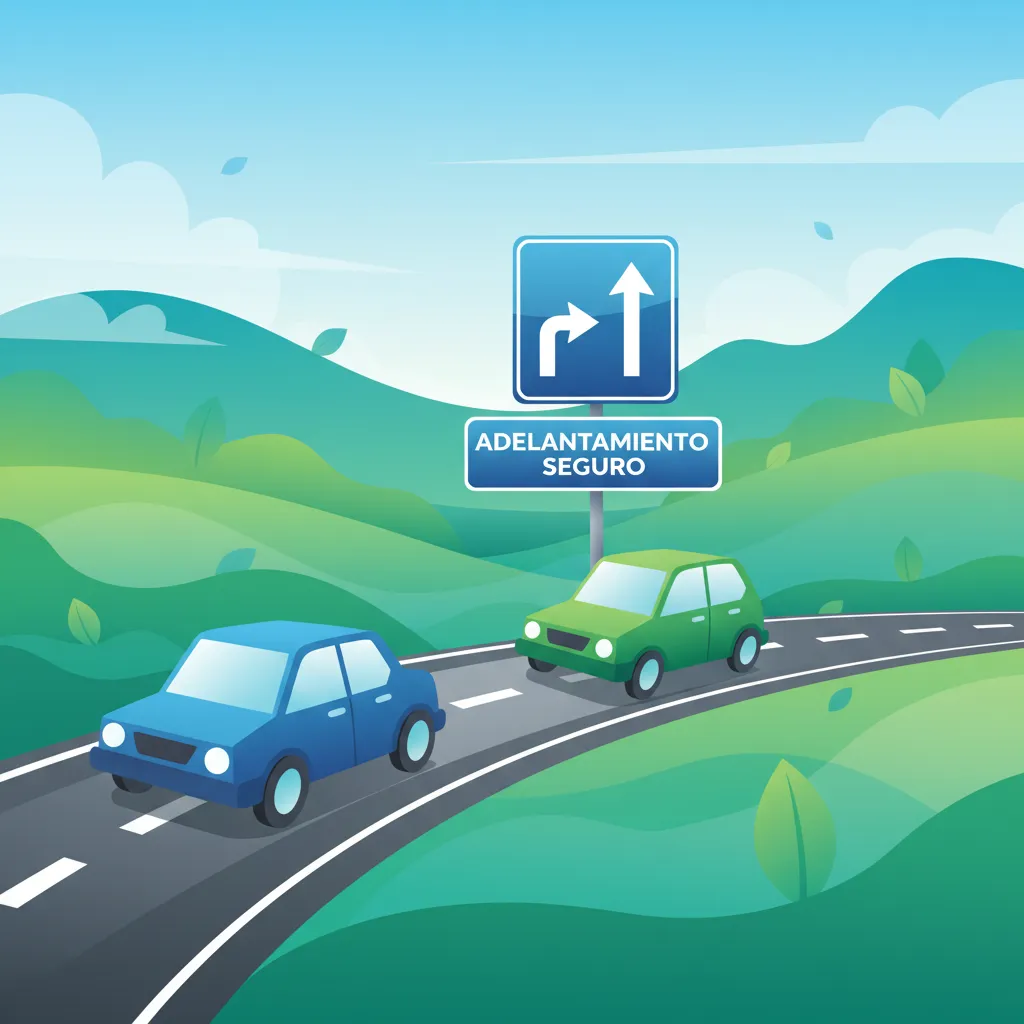
This lesson covers the legal overtaking procedures applicable on different road types, focusing on identifying safe passing zones and executing maneuvers correctly. Learners will be taught how to maintain adequate safety distances before, during, and after overtaking. The content includes DGT regulations for overtaking, appropriate signaling, and visibility checks to ensure safe completion of the maneuver.
Find clear answers to common questions learners have about Stopping on Inclines and Hill‑Start Assist. Learn how the lesson is structured, which driving theory objectives it supports, and how it fits into the overall learning path of units and curriculum progression in Spain. These explanations help you understand key concepts, lesson flow, and exam focused study goals.
To stop on a hill, engage the foot brake firmly and apply the handbrake. To start, release the handbrake slightly while engaging the clutch and applying the accelerator. Finding the 'bite point' of the clutch is crucial to prevent rolling back before smoothly accelerating.
Hill-start assist systems, often called 'ayuda al arranque en pendiente' in Spain, automatically hold the brake for a few seconds after you release the foot brake, giving you time to move your foot to the accelerator and engage the clutch without the car rolling back. The DGT recognises this technology as a safety feature.
If you stall, immediately re-apply the foot brake and handbrake to secure the vehicle. Then, restart the engine and try again, focusing on finding the clutch's bite point smoothly before releasing the brakes.
While the DGT doesn't have a specific rule solely for stopping on inclines, it mandates safe driving practices. This includes preventing your vehicle from rolling backward into traffic or other vehicles, which is implicitly covered by general safety and control requirements.
The exam will likely include questions about hill-start assist, focusing on understanding how it works and how a driver should operate in conjunction with it, rather than testing the technical function itself. It's important to know its benefits for safe starting.
Use our powerful search functionality to pinpoint specific Spanish DGT driving theory practice sets. Filter by road sign categories, traffic law topics, or question difficulty to build custom study sessions and reinforce your knowledge precisely where it matters for your official exam.