
Welcome to the essential lesson on reverse parking and three-point turns! As part of Unit 8, 'Parking & Manoeuvres', this topic is crucial for your DGT driving theory exam and everyday driving confidence. Building on basic vehicle control, this lesson will equip you with the skills to confidently navigate tight spaces and perform these common manoeuvres safely and legally.

Lesson content overview
Developing proficiency in essential driving maneuvers is critical for both safety on the road and successfully passing the DGT (Dirección General de Tráfico) practical driving test in Spain. This lesson provides a detailed guide to two fundamental techniques: reverse parking into a perpendicular bay and executing a three-point turn to change direction on narrow roads. These maneuvers demand precision, controlled speed, and constant observation, ensuring your vehicle is positioned correctly without obstructing traffic or posing a hazard.
Understanding the principles behind these techniques not only prepares you for the test but also instills confidence for everyday driving in diverse urban and rural environments. We will explore the specific steps, DGT regulations, common pitfalls, and the underlying safety logic that governs these crucial aspects of the Complete Spanish Driving License Theory Course for Categories B & BE.
Successfully performing complex driving maneuvers like reverse parking and three-point turns relies on a set of fundamental principles. These principles ensure safety, efficiency, and compliance with traffic regulations.
Before initiating any maneuver, a systematic visual scan of your surroundings is paramount. This involves actively using all mirrors – rearview and side mirrors – combined with thorough head checks to cover blind spots. The goal is to identify any approaching traffic, pedestrians, cyclists, or fixed obstacles that could interfere with your intended path. By anticipating potential conflicts, you can adjust your speed or even postpone the maneuver, significantly reducing accident risks. Remember, signaling your intentions without prior observation is insufficient and potentially dangerous.
Before committing to a parking spot or a turn, it is vital to accurately estimate the available space relative to your vehicle's dimensions. This includes judging the length, width, and turning radius of your car against the size of the target parking bay or the width of the road. An incorrect assessment can lead to multiple attempts, encroaching on adjacent lanes, or even damaging your vehicle or others. Developing this skill involves practice and a keen awareness of your vehicle's physical boundaries.
During maneuvers that involve reversing or pivoting, small, controlled steering inputs are far more effective than abrupt, large turns. Incremental steering prevents oversteering, which can cause the vehicle to swing unexpectedly wide, and helps maintain a steady, predictable trajectory. This precise control must be coordinated smoothly with clutch and brake operation to achieve the desired wheel angle and vehicle path.
The use of turn indicators (intermitentes) is a legal requirement and a critical communication tool. Activating the appropriate signal before initiating any lateral movement or change of direction informs other road users of your intentions, allowing them to anticipate your actions and adjust their speed or position accordingly. Failure to signal, or signaling too late, can cause confusion, unexpected braking, and increase the risk of collisions.
Reference points are visual cues on your vehicle or in the environment that help you judge distances and alignment. These can include parking line markers, sidewalk edges, the corners of adjacent parked vehicles, or even specific points on your own car (e.g., the side mirror lining up with a curb). Learning to use these points provides objective criteria for guiding your vehicle's trajectory and stopping position, ensuring you finish the maneuver accurately and within specified boundaries.
Performing reverse parking or three-point turns requires a very slow and controlled speed, typically under 5 km/h. This low speed allows for adequate reaction time, fine-tuning of steering inputs, and continuous observation of dynamic surroundings. Excessive speed, even slight, reduces maneuverability and significantly increases the risk of collision, as minor steering errors can have magnified consequences.
The final step of any maneuver is ensuring your vehicle is correctly positioned. For parking, this means being fully inside the marked bay, parallel to the curb or lines, and not obstructing traffic flow or pedestrian paths. For a three-point turn, it means completing the turn safely and being aligned in the new direction of travel. Correct positioning is a legal compliance and a safety measure, preventing hazards for subsequent traffic and avoiding potential penalties.
Reverse parking, often referred to as perpendicular parking, involves driving past an intended parking space and then reversing into it. This maneuver is widely used in car parks, shopping centers, and street parking zones where vehicles park at a 90-degree angle to the flow of traffic or the curb.
Perpendicular parking is defined as positioning your vehicle by first driving forward past the space, then reversing backward into the bay so that the vehicle is contained within its marked boundaries, typically with the front facing the curb or parking line. This method often allows for easier exit than nose-in parking, as you drive forward out of the space.
Perpendicular parking can be into:
Initial Positioning: Drive past the desired parking bay, positioning your vehicle approximately one meter from the row of parked cars or the curb. Align your car so that your rear bumper is roughly in line with the second car or the far boundary of the target parking bay.
Signal Your Intent: Activate your turn signal towards the side of the parking bay (e.g., right signal for a bay on your right).
Full Observation: Check your rearview mirror, side mirrors, and perform a thorough head check (blind spot check) to ensure no vehicles, pedestrians, or cyclists are approaching from behind or the sides.
Engage Reverse Gear: Select reverse gear and begin to move very slowly.
Steering for Entry: As you start reversing, turn your steering wheel fully towards the parking bay (e.g., full right lock for a bay on your right).
Monitor Trajectory: Continue reversing slowly, constantly checking both side mirrors. Watch the vehicle's rear swing into the bay and adjust your steering as needed to guide the car. Your goal is to get the vehicle roughly halfway into the bay before straightening.
Straightening the Wheels: Once the vehicle's front wheels are clear of the adjacent parked cars or obstacles, and your car is somewhat aligned with the bay, start to straighten your steering wheel.
Final Alignment: Continue reversing slowly, making small adjustments to the steering wheel to center the vehicle perfectly within the parking lines. Use your side mirrors to ensure equal spacing on both sides. Stop when your vehicle is fully inside the bay, without protruding into the travel lane.
Secure the Vehicle: Engage the parking brake, select neutral (or park in an automatic car), and switch off the engine.
According to DGT regulations, you must signal before initiating the reverse maneuver. All mirrors must be used, and a safe entry distance (approximately one meter from the curb) should be maintained. Upon completion, the parking brake must be engaged. A common error is assuming any angle is acceptable; vehicles must be parked orthogonal (at a right angle) to the curb. Another misunderstanding is over-relying on front lights; your reverse lights must illuminate, and parking lights (luces de posición) should be used if visibility is reduced while stationary. Drivers often misjudge the width of the space, attempting to fit into bays too narrow for their vehicle plus adequate clearance.
When practicing, focus on consistency. Repeatedly using the same reference points will build muscle memory and improve your spatial judgment for various parking scenarios.
The three-point turn, also known as a K-turn, is an essential maneuver for changing your vehicle's direction on a narrow road where a simple U-turn is not feasible. It involves a series of forward, reverse, and forward movements, effectively forming a triangular path to reverse your direction.
A three-point turn is a controlled maneuver to reverse the direction of a vehicle on a road too narrow for a single U-turn. It consists of three distinct movements: driving forward to the curb, reversing into the opposite lane, and then driving forward again in the new direction. This maneuver is crucial for navigating tight residential streets, cul-de-sacs, or other confined urban spaces.
Initial Positioning and Observation: Signal your intention to turn (e.g., left if you want to turn left, or right if you are moving to the right side of the road first), move your vehicle to the appropriate side of the road (usually the right curb) while maintaining a safe distance. Perform a comprehensive check of all mirrors and blind spots for approaching traffic in both directions.
First Movement (Forward): Slowly move forward, turning the steering wheel sharply towards the curb (e.g., full right lock if starting from the right curb). Continue until the front of your vehicle is as close as possible to the curb without touching it. Stop completely.
Second Movement (Reverse): Before reversing, signal your intent to reverse (usually by signaling left as you will be turning into the opposite lane, or simply ensuring your reverse lights are on). Conduct another thorough check of all mirrors and blind spots, paying close attention to traffic approaching from the new potential direction and any obstacles behind you. Engage reverse gear and slowly begin to reverse while turning the steering wheel sharply in the opposite direction (e.g., full left lock). Aim to guide the rear of your vehicle into the opposite lane until you can comfortably complete the turn. Stop completely.
Third Movement (Forward): Signal your intention to move forward (e.g., right signal). Check your mirrors and blind spots for any oncoming traffic. Engage a forward gear and slowly move forward, steering as necessary (e.g., turning the wheel to the right) to align your vehicle with the new direction of travel. Accelerate gently once you are safely aligned and clear of any obstruction.
When executing a three-point turn, it is mandatory to signal your intent (left or right) before each movement. Crucially, you must yield (ceder el paso) to any oncoming traffic during each stage of the maneuver, whether they are in the same lane or crossing it. Complete stops are required before changing direction (forward to reverse, and reverse to forward). A common mistake is attempting the maneuver without fully stopping between movements, which can surprise other drivers and lead to collisions. Ignoring the need to remain within the lane boundaries, or drifting into the opposing lane without yielding, can also cause dangerous situations.
Never attempt a three-point turn if the road width is insufficient, or if traffic is too heavy. In such cases, it is safer to find an alternative route or a wider area to turn around.
Mastering parking and turning maneuvers requires more than just knowing the steps; it demands acute awareness of your surroundings and the ability to accurately judge your vehicle's position. This involves systematic observation of specific zones around your vehicle and the intelligent use of reference points.
Observation zones are specific areas around your vehicle that require visual inspection before, during, and after any maneuver. Neglecting any of these zones can lead to blind spot accidents.
Reference points are visual markers that help you judge distances and align your vehicle accurately. They provide objective feedback, reducing reliance on guesswork.
By consistently scanning these observation zones and intelligently using reference points, you can execute maneuvers with greater precision, confidence, and safety.
Compliance with DGT (Dirección General de Tráfico) regulations is not only a legal requirement but also fundamental for safe road use in Spain. Several articles within the Reglamento General de Circulación specifically govern how parking and turning maneuvers must be performed.
Before commencing any lateral movement, reversing action, or change of direction, the driver must activate the appropriate turn signal (or use hand signals if the vehicle's indicators are non-functional or not clearly visible). This applies universally to both reverse parking and three-point turns. The rationale is to clearly communicate your intentions to other road users, allowing them to anticipate your actions and react safely. Failure to signal is a traffic violation and can be a contributing factor in accidents.
During reverse maneuvers, your vehicle's reverse lights must illuminate, clearly indicating your backward movement. When the vehicle is stationary after completing a parking maneuver, particularly in low visibility conditions (e.g., at night, in fog, or heavy rain), parking lights (luces de posición) must be switched on. This ensures your parked vehicle remains visible to other traffic. While reversing, it is good practice to ensure your headlights (or dipped beam) are on if conditions require it for your own visibility.
When executing a three-point turn, the driver has a legal obligation to give way (ceder el paso) to any vehicles approaching in the opposite direction. This rule applies at each stage where your vehicle occupies or crosses the opposing lane. Priority belongs to vehicles already in the lane of travel. Failing to yield can lead to direct collisions and severe penalties.
After completing a reverse parking maneuver, your vehicle must be fully contained within the limits of the marked parking bay. It should be parallel to the curb or painted lines, without any part of the vehicle protruding into the travel lane, pedestrian area, or adjacent bays. Incorrect positioning can incur fines and create hazards for other road users.
Although not explicitly codified with a precise numerical value, DGT regulations implicitly require drivers to maintain a "low speed" appropriate for safe maneuvering. This typically means operating the vehicle at a crawl, generally below 5 km/h, throughout the entire process of reverse parking or a three-point turn. This controlled speed allows for continuous observation, precise steering adjustments, and adequate reaction time, minimizing the risk of collisions.
Prior to initiating any reverse segment of a maneuver, the driver must perform a thorough rear-view check using mirrors and by physically turning their head to check blind spots. This ensures that no vehicles, pedestrians, or obstacles are in the intended path of travel. This is a mandatory safety measure to prevent collisions with unseen elements.
Even experienced drivers can make errors during parking and turning maneuvers. Awareness of these common pitfalls can help you avoid them and maintain a high standard of safety.
Failure to Signal Intent:
Reversing Without Proper Blind-Spot Checks:
Parking Too Close or Too Far from the Curb:
Attempting a Three-Point Turn on an Unsuitable Road:
Neglecting to Engage the Parking Brake:
Over-Steering During Reverse Maneuvers:
Failing to Yield During a Three-Point Turn:
Driving conditions are rarely ideal. Being able to adapt your parking and turning techniques to different environments is a mark of a competent driver.
By taking these conditional variations into account, you enhance your defensive driving skills and ensure safer execution of all maneuvers.
Beyond merely passing the DGT driving test, mastering reverse parking and three-point turns is fundamentally about safety, spatial awareness, and understanding basic vehicle dynamics. These maneuvers are frequently performed in urban environments, making proficiency essential for daily driving.
Drivers often underestimate the time required to complete a complex maneuver. This can lead to rushing, which in turn increases the likelihood of errors. A structured approach, combining systematic observation with incremental actions, helps reduce cognitive overload and ensures that the driver has sufficient time to perceive changes in the environment and react appropriately. Human reaction time, approximately 0.75 seconds on average, dictates the necessity for extremely low speeds during these maneuvers, allowing for a safe response to unexpected events.
The ability to execute these maneuvers successfully is governed by the vehicle's turning radius. This is the minimum radius a vehicle can turn, determined by its wheelbase and the maximum steering angle of its wheels.
According to DGT traffic safety data, a significant proportion of minor collisions and scrapes occur during parking maneuvers, especially reverse parking. These incidents are most commonly attributed to insufficient observation (blind spot issues), misjudgment of distances, and excessive speed. This highlights the direct link between practicing these maneuvers correctly and reducing accident rates in low-speed, confined environments. By adhering to the principles outlined in this lesson, drivers contribute directly to improved road safety for themselves and others.
The skills learned in this lesson, such as precise vehicle control, systematic observation, and spatial judgment, are foundational. They will be further developed and applied in more complex scenarios covered in subsequent lessons, particularly in "Maneuvering in Confined Urban Spaces."
This lesson covers two essential driving maneuvers for the Spanish DGT theory exam: reverse perpendicular parking and three-point turns. Reverse parking involves driving past a bay, signaling, performing full observation checks, then reversing in with controlled steering while monitoring trajectory through mirrors and head checks until the vehicle is centered within the marked bay. A three-point turn consists of three distinct movements—forward to the curb, reverse into the opposite lane, then forward in the new direction—with mandatory complete stops and yielding to traffic between each phase. Key safety principles include systematic observation of rear, side, and front zones, using reference points for alignment, maintaining very low speed, and complying with DGT signaling and light requirements. Common mistakes to avoid include failing to signal, neglecting blind-spot checks, poor curb distance judgment, attempting turns on unsuitable roads, and forgetting the parking brake.
A short set of high-value points that capture the most important learning from this lesson.
Systematic observation using mirrors and head checks is your primary safety tool before and during any maneuver
Reference points such as parking lines, curbs, and adjacent vehicles help judge distances and alignment during maneuvers
Low speed (below 5 km/h) is essential for precise control and adequate reaction time during reverse parking and three-point turns
DGT regulations require signaling before any lateral movement or change of direction, including each phase of a three-point turn
Complete stops are mandatory between each movement phase of a three-point turn to ensure safety and allow traffic assessment
Explore all units and lessons included in this driving theory course.
Signalling requirement (Artículo 101): Activate turn signal before any lateral movement, reverse action, or change of direction
Parking brake must be engaged immediately after completing any parking maneuver, especially on inclines
Vehicle must be fully contained within marked parking bay limits without protruding into travel lanes or adjacent bays
Yield (ceder el paso) to oncoming traffic during all phases of a three-point turn when crossing the opposing lane
Reverse lights must illuminate during reverse maneuvers, and parking lights (luces de posición) are required when stationary in low visibility
Not signaling before initiating reverse parking or before each phase of a three-point turn, which is a DGT violation
Relying solely on mirrors without performing head checks to cover blind spots before reversing
Parking too close (under 0.5 meters) or too far (over 0.5 meters) from the curb, resulting in fines or traffic obstruction
Attempting a three-point turn on roads too narrow, with heavy traffic, or poor visibility instead of finding a safer alternative
Forgetting to engage the parking brake after completing a parking maneuver, risking vehicle roll on inclines
Lesson content overview
A short set of high-value points that capture the most important learning from this lesson.
Systematic observation using mirrors and head checks is your primary safety tool before and during any maneuver
Reference points such as parking lines, curbs, and adjacent vehicles help judge distances and alignment during maneuvers
Low speed (below 5 km/h) is essential for precise control and adequate reaction time during reverse parking and three-point turns
DGT regulations require signaling before any lateral movement or change of direction, including each phase of a three-point turn
Complete stops are mandatory between each movement phase of a three-point turn to ensure safety and allow traffic assessment
Explore all units and lessons included in this driving theory course.
Signalling requirement (Artículo 101): Activate turn signal before any lateral movement, reverse action, or change of direction
Parking brake must be engaged immediately after completing any parking maneuver, especially on inclines
Vehicle must be fully contained within marked parking bay limits without protruding into travel lanes or adjacent bays
Yield (ceder el paso) to oncoming traffic during all phases of a three-point turn when crossing the opposing lane
Reverse lights must illuminate during reverse maneuvers, and parking lights (luces de posición) are required when stationary in low visibility
Not signaling before initiating reverse parking or before each phase of a three-point turn, which is a DGT violation
Relying solely on mirrors without performing head checks to cover blind spots before reversing
Parking too close (under 0.5 meters) or too far (over 0.5 meters) from the curb, resulting in fines or traffic obstruction
Attempting a three-point turn on roads too narrow, with heavy traffic, or poor visibility instead of finding a safer alternative
Forgetting to engage the parking brake after completing a parking maneuver, risking vehicle roll on inclines
Explore search topics learners often look for when studying Reverse Parking and Three‑Point Turns. These topics reflect common questions about road rules, driving situations, safety guidance, and lesson level theory preparation for learners in Spain.
Browse additional driving theory lessons that cover connected traffic rules, road signs, and common driving situations related to this topic. Improve your understanding of how different rules interact across everyday traffic scenarios.
Learn about frequent errors drivers make during reverse parking and three-point turns according to DGT regulations. Understand how to avoid these mistakes for safer driving and exam success.

This lesson provides strategies for navigating tight, confined environments such as multi-story car parks and narrow urban lanes. It emphasizes the importance of slow and controlled movements, constant observation, and a thorough understanding of the vehicle's dimensions and turning circle. Learners will develop the skills to maneuver with precision while avoiding obstacles.

This lesson explains the methodical process of parallel parking, including how to select an appropriate spot and identify reference points for the maneuver. Learners will be taught the correct backing technique, steering angles, and alignment steps required to position the vehicle within the space without collision. The lesson also outlines DGT standards for parallel parking.

This lesson focuses on the specific procedures for parking safely on an incline. It explains the correct method for applying the parking brake, selecting the appropriate gear, and turning the front wheels towards or away from the curb to prevent rolling. These techniques are essential for securing the vehicle on both uphill and downhill slopes.
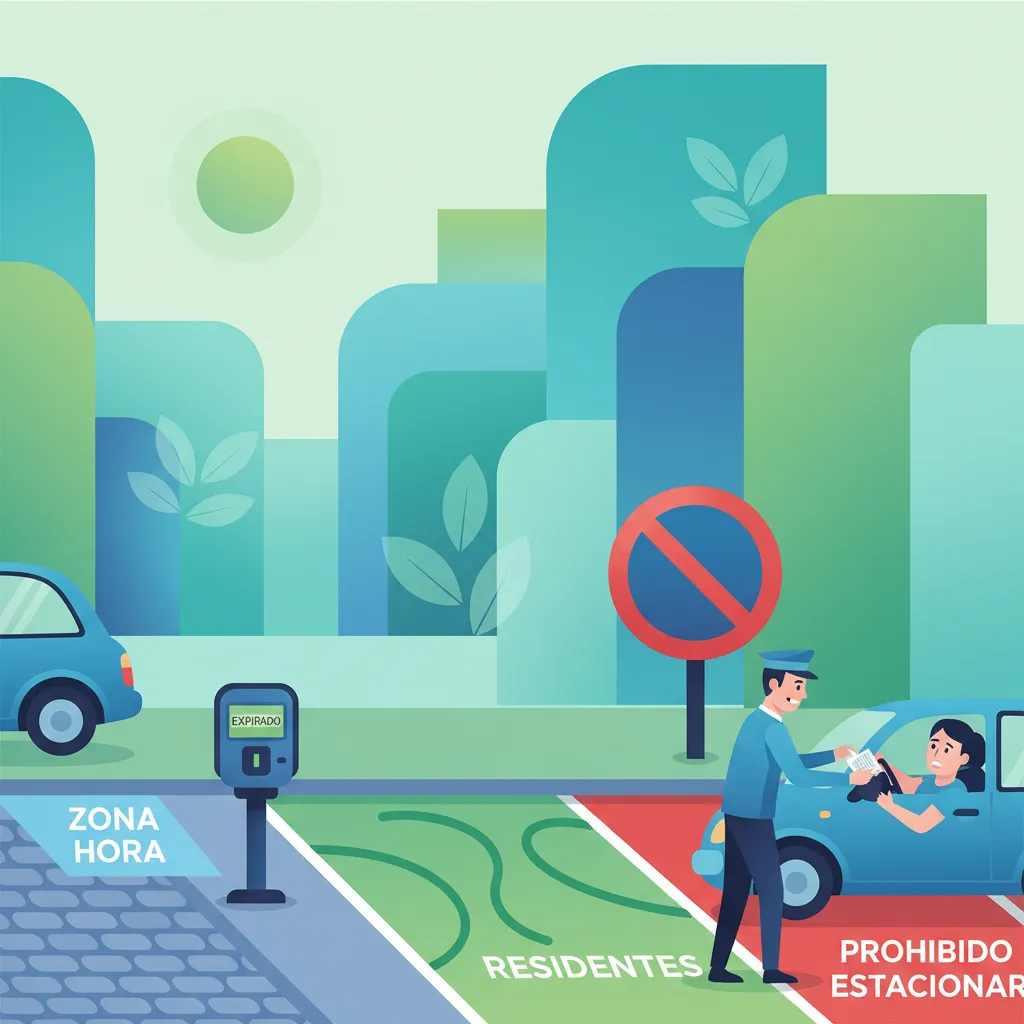
This lesson outlines the legal framework surrounding parking regulations in Spain, including the identification of regulated zones (e.g., ORA/SER), no-parking areas, and disabled parking spaces. It explains DGT signage interpretation and how improper parking can affect traffic flow and result in penalties. Learners will understand the regulatory environment to comply with parking laws and avoid fines.

This lesson provides theoretical guidance on the techniques for safely reversing a heavy vehicle, a high-risk maneuver. It emphasizes the correct use of mirrors, managing extensive blind spots, and the importance of using a spotter when available. The content also breaks down the geometric principles of parallel parking and backing into loading docks, focusing on vehicle positioning and spatial awareness.
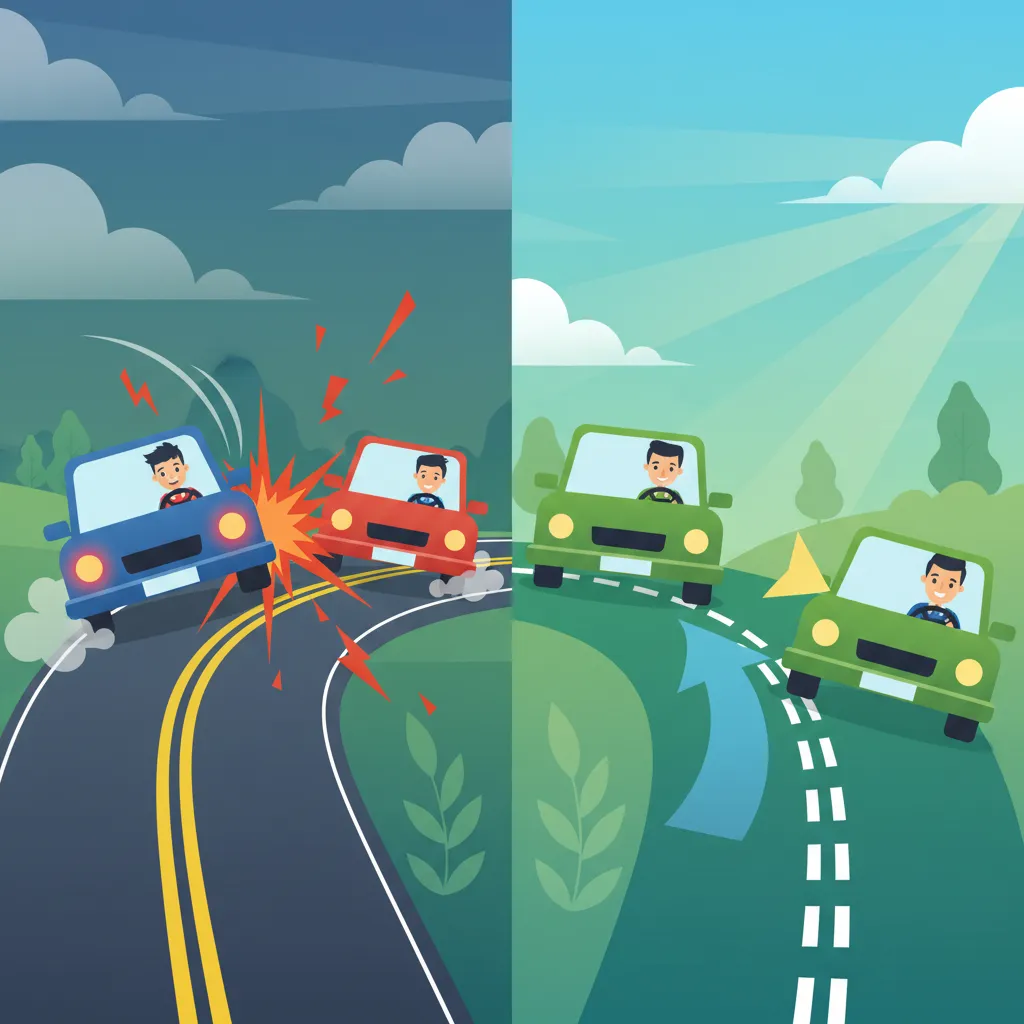
This lesson addresses common errors made by drivers when using roundabouts and presents corrective strategies. It covers issues such as entering from the wrong lane, failing to yield to circulating traffic, exceeding the recommended speed, and not signaling an exit correctly. By understanding these mistakes, drivers can improve their roundabout proficiency and reduce accident risk.

This lesson provides guidance on the practical aspects of parking and making deliveries in urban areas. It covers the techniques for safely maneuvering into and out of loading docks and designated delivery zones, which often involves precise reversing. The content also explains the specific parking regulations that apply to commercial vehicles and best practices for ensuring safety during loading and unloading.

This lesson examines the specific hazards posed by vehicles parked along the roadside. It highlights the primary risk of a driver or passenger opening a door into the path of an approaching moped. Learners will understand the importance of maintaining a safe lateral distance and positioning themselves in the lane to avoid the 'door zone' while continuously scanning for signs of occupant activity.
Develop essential spatial awareness for executing parking and turning maneuvers. This lesson focuses on using reference points and understanding vehicle dynamics for precise control in urban driving.
This lesson provides strategies for navigating tight, confined environments such as multi-story car parks and narrow urban lanes. It emphasizes the importance of slow and controlled movements, constant observation, and a thorough understanding of the vehicle's dimensions and turning circle. Learners will develop the skills to maneuver with precision while avoiding obstacles.
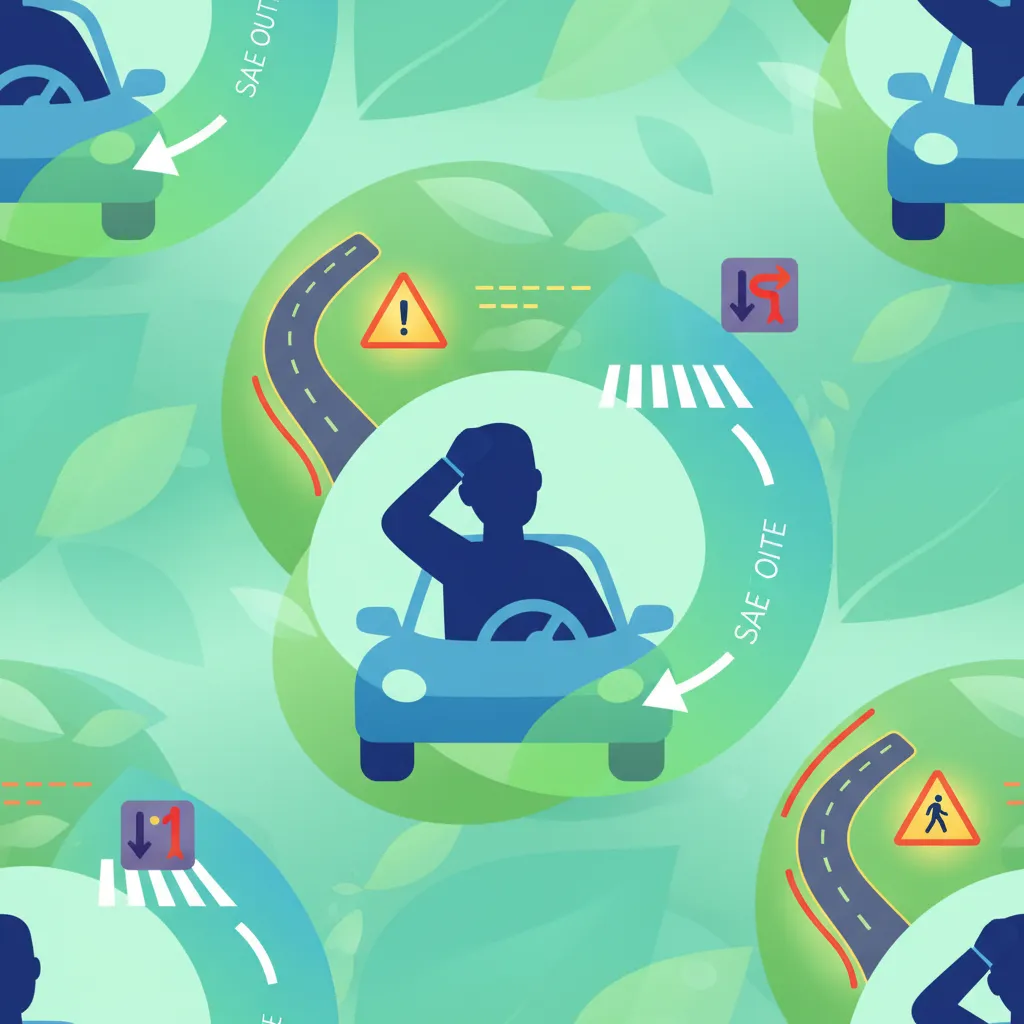
In this lesson, drivers learn how to identify risk zones where potential hazards are likely to develop. The content explains the use of proactive observation and scanning techniques to detect evolving dangers in the driving environment. Learners will practice anticipating the actions of other road users based on traffic patterns and context, adjusting their speed and position accordingly.

This lesson examines the principles of maintaining a safe following distance, including the 'two-second rule' and its adjustments for speed and weather. It focuses on effective blind-spot management, teaching drivers how to use mirrors and head checks. The content integrates DGT guidelines on creating a safety buffer around the vehicle to allow time to react to unexpected events.

In this lesson, learners will acquire the necessary skills to maneuver buses and coaches within confined areas such as narrow city streets, bus depots, and passenger terminals. It details techniques for reverse driving, tight cornering, and parallel parking, emphasizing the critical importance of blind spot awareness and precise low-speed control. The content focuses on developing spatial awareness to avoid collisions while maintaining passenger comfort.

This lesson outlines the proper use and legal requirements of vehicle lighting and mirror systems. It covers headlamps, fog lights, turn signals, and brake lights, clarifying when each must be used according to DGT regulations. The lesson also explains the correct adjustment of rearview and side mirrors and strategies for effective blind-spot monitoring.
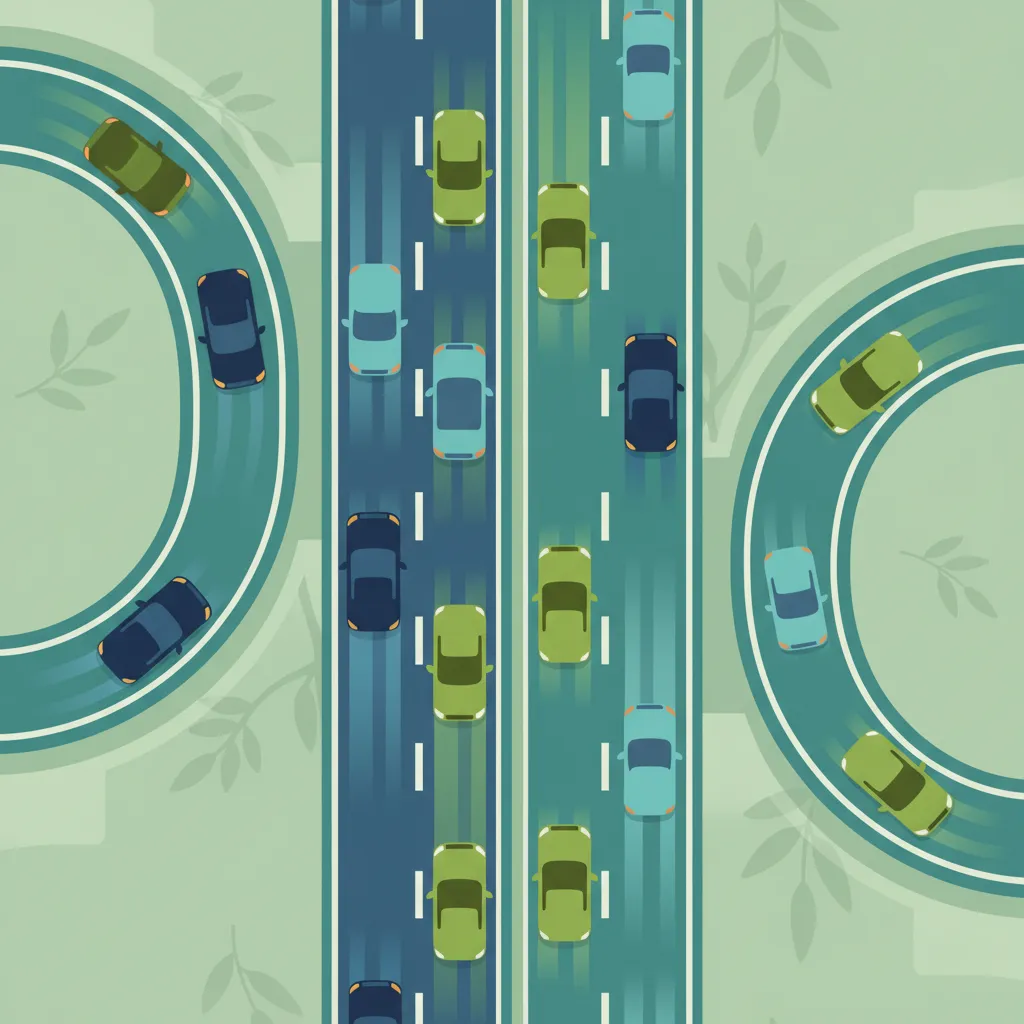
This lesson defines proper lane discipline on highways, emphasizing correct lane positioning and the rule to drive in the right-hand lane except when overtaking. It details safe merging onto main carriageways from an acceleration lane and effective exit strategies using deceleration lanes. Learners will understand DGT merge rules and the importance of signaling lane changes early.

This lesson covers how environmental conditions such as rain, fog, and darkness affect driving safety. It instructs drivers on adjusting speed, using appropriate lighting, and increasing following distance to compensate for reduced visibility and traction. The lesson incorporates DGT safety recommendations for handling adverse weather to mitigate risk and maintain control.
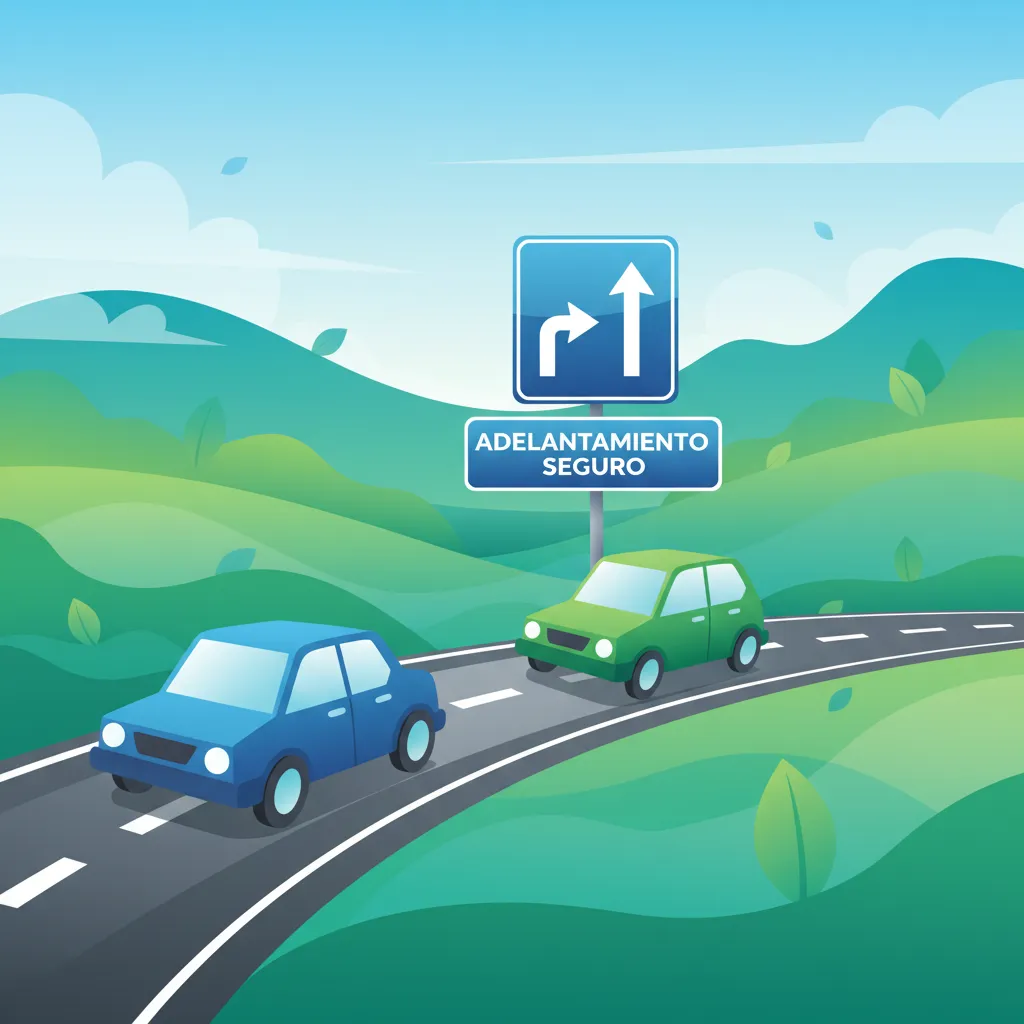
This lesson covers the legal overtaking procedures applicable on different road types, focusing on identifying safe passing zones and executing maneuvers correctly. Learners will be taught how to maintain adequate safety distances before, during, and after overtaking. The content includes DGT regulations for overtaking, appropriate signaling, and visibility checks to ensure safe completion of the maneuver.
This lesson addresses the practical aspects of maneuvering a large vehicle in various environments. It explains concepts like turning radius, off-tracking, and the vehicle's total footprint, which determine the space needed for turns and other maneuvers. Learners will develop the spatial awareness required to navigate tight corners, loading bays, and urban streets while maintaining safe clearance from obstacles.

This lesson addresses the specific challenges posed by rain and fog, focusing on reduced visibility and loss of traction. It explains the proper use of windshield wipers and fog lights, and the need to adjust speed and increase following distance. The content covers how to prevent and react to hydroplaning (aquaplaning) to maintain vehicle control.
Find clear answers to common questions learners have about Reverse Parking and Three‑Point Turns. Learn how the lesson is structured, which driving theory objectives it supports, and how it fits into the overall learning path of units and curriculum progression in Spain. These explanations help you understand key concepts, lesson flow, and exam focused study goals.
A parallel park involves parking alongside a kerb between two other vehicles. A perpendicular reverse park (or bay parking) involves reversing into a parking space at a right angle to the road, commonly found in car parks or on streets with designated bays. Both are important manoeuvres tested in practical exams, and understanding the techniques for each is vital for your theory preparation.
While precise reference points can vary slightly with vehicle size, the key is to use clear landmarks for your three steering inputs. Typically, you'll use your starting position, the kerb or opposite boundary, and then a final alignment. The DGT theory exam will focus on your understanding of the safe procedure, including observation and using the full width of the road when necessary and safe.
Common errors include not checking mirrors and blind spots sufficiently, turning the steering wheel too early or too late, misjudging the distance to the bay lines or other vehicles, and mounting the kerb. Our lesson details how to avoid these pitfalls through careful observation and precise steering control, mirroring DGT exam requirements.
While power steering makes the physical act easier, the manoeuvre itself is still a fundamental driving skill. You must know how to execute it safely and efficiently, especially in situations where you might need to turn the vehicle around on a narrow road. The DGT theory exam assesses your knowledge of the correct procedure and safety considerations.
DGT regulations require you to park fully within the marked bay lines, without obstructing other bays or traffic. Proper alignment is essential. For reverse bay parking, you must ensure you have adequate clearance from surrounding vehicles and obstacles, performing checks throughout the manoeuvre.
Use our powerful search functionality to pinpoint specific Spanish DGT driving theory practice sets. Filter by road sign categories, traffic law topics, or question difficulty to build custom study sessions and reinforce your knowledge precisely where it matters for your official exam.