
This lesson delves into the crucial coordination of acceleration and deceleration, fundamental skills for smooth and safe driving. You'll learn how to modulate accelerator and brake pedals effectively, understanding the physics behind stopping distances and the role of modern safety systems like ABS. Mastering these principles is vital for maintaining vehicle stability, passing your DGT exam, and preparing you for more advanced techniques like engine braking and hill starts for Category B and BE.
Lesson content overview
Controlling your vehicle's speed is fundamental to safe and efficient driving. This lesson delves into the critical principles of acceleration, deceleration, and braking, providing you with the knowledge needed to manage your vehicle's kinetic energy smoothly and safely. For anyone preparing for the Spanish driving license theory course, understanding these concepts is not just about passing an exam; it's about developing the foundational skills for responsible road use in Spain, ensuring vehicle stability, preventing collisions, and complying with the strict regulations set forth by the Dirección General de Tráfico (DGT).
Mastering these techniques will allow you to maintain control in various situations, from urban traffic to motorways, and adapt to diverse road and weather conditions. Proper modulation of the accelerator and brake pedals, alongside intelligent gear selection, directly impacts your safety, the safety of other road users, your vehicle's longevity, and even fuel efficiency.
At the core of vehicle speed management lies an understanding of basic physics, specifically how a vehicle's motion and energy are interconnected. Every time you change your speed, you are managing this energy.
Acceleration is the rate at which your vehicle's velocity changes over time, typically an increase in speed. It is achieved by applying power from the engine through the accelerator pedal, which controls the throttle opening. Deceleration, conversely, is the rate at which your vehicle's velocity decreases, usually by reducing engine power (lifting off the accelerator) or by applying the brakes. Both are forms of acceleration in physics, but in driving, they refer specifically to increasing and decreasing speed.
A moving vehicle possesses kinetic energy, which is the energy of motion. This energy is directly proportional to the vehicle's mass and the square of its speed (E = ½ mv²). This quadratic relationship means that even a small increase in speed results in a significantly larger amount of kinetic energy. For instance, doubling your speed quadruples your kinetic energy.
When you decelerate or brake, your braking system must dissipate this kinetic energy, converting it into heat through friction. The greater the kinetic energy, the more work your brakes have to do, and consequently, the longer the distance required to bring the vehicle to a complete stop. This fundamental principle underscores the importance of anticipating speed changes and maintaining safe following distances, especially at higher speeds.
Smooth acceleration is crucial for maintaining vehicle stability, conserving fuel, and preventing unnecessary wear on your vehicle's components. It also contributes to a comfortable ride for passengers and avoids surprising other road users.
Effective acceleration begins with progressive accelerator pedal control. This means gradually increasing pressure on the accelerator pedal rather than pressing it abruptly. A gentle, steady input allows the engine to deliver power smoothly to the wheels, preventing sudden surges that can cause wheel spin, particularly on surfaces with reduced traction (like wet or icy roads).
When starting from a standstill, release the clutch smoothly (in manual vehicles) while simultaneously and gently pressing the accelerator. The goal is to avoid engine stalling or excessive revving that causes the wheels to spin. On a moving vehicle, when you need to increase speed, apply steady pressure to the accelerator until you reach the desired velocity, then ease off slightly to maintain that speed.
Selecting the correct gear is integral to smooth and efficient acceleration. Each gear ratio provides a different level of torque (rotational force) from the engine to the wheels. Lower gears (1st, 2nd) provide more torque for starting and accelerating at low speeds, while higher gears (4th, 5th, 6th) are for maintaining speed at lower engine revolutions per minute (RPMs), improving fuel efficiency.
To accelerate smoothly, shift through the gears progressively, ensuring the engine operates within its optimal RPM range. Shifting too early (at low RPMs) can "lug" the engine, making acceleration sluggish and causing strain. Shifting too late (at high RPMs) wastes fuel and can cause excessive noise or engine wear. The DGT's Reglamento General de Circulación (RGC) Article 84 mandates that drivers accelerate smoothly, avoiding sudden speed changes that could endanger other road users. This includes careful throttle application and appropriate gear changes.
Controlled deceleration is just as important as smooth acceleration for road safety. It allows you to reduce speed predictably, giving other drivers time to react and maintaining the stability of your vehicle.
Most of your driving involves gradual deceleration. This means slowly reducing speed by lifting your foot off the accelerator and, if necessary, applying light and progressive pressure to the brake pedal. This technique is used when approaching traffic lights, stop signs, curves, or when anticipating a slowdown in traffic.
Emergency braking, on the other hand, is required in sudden, unexpected situations to stop the vehicle as quickly as possible. In such cases, you must apply maximum, firm, and continuous pressure to the brake pedal. If your vehicle is equipped with an Anti-Lock Braking System (ABS), it will activate automatically to prevent wheel lock-up, allowing you to maintain steering control.
Anticipatory braking is a key defensive driving technique. It involves scanning the road far ahead to identify potential hazards or reasons to slow down (e.g., traffic lights changing, pedestrians near a crossing, vehicles ahead braking, upcoming curves). By identifying these situations early, you can begin to decelerate sooner and more gently, often by simply lifting your foot off the accelerator (coasting) before needing to apply the brakes.
This approach not only reduces wear on your brakes and improves fuel economy but also gives following drivers more time to react to your speed change, significantly reducing the risk of a rear-end collision. RGC Article 71 states that drivers must decelerate gradually unless emergency braking is unavoidable, reinforcing the importance of this technique.
Understanding stopping distance is paramount for maintaining safe following distances and making informed decisions on the road. The total stopping distance is comprised of two main components: the perception-reaction distance and the braking distance.
Perception-reaction time (PRT) is the interval between a driver perceiving a hazard or a need to stop and actually beginning to apply the brakes. For an average, alert driver, this time is approximately 1.5 seconds, but it can vary significantly depending on factors such as fatigue, distraction, alcohol, drugs, or unexpected situations.
During this perception-reaction time, your vehicle continues to travel at its current speed. This distance traveled before you even touch the brake pedal is the perception-reaction distance. For example, at 100 km/h, a vehicle travels approximately 42 metres during a 1.5-second reaction time (100 km/h ≈ 27.8 m/s; 27.8 m/s * 1.5 s = 41.7 m). This highlights why looking ahead and anticipating events is so crucial.
Braking distance is the distance your vehicle travels from the moment you apply the brakes until it comes to a complete stop. Unlike perception-reaction distance, braking distance is heavily influenced by several physical factors:
The total stopping distance is the sum of your perception-reaction distance and your braking distance. It represents the entire length of road required to bring your vehicle to a halt after a hazard is first perceived.
For example, at 80 km/h:
On wet asphalt at the same speed, the braking distance could increase to around 60-70 metres, making the total stopping distance over 90-100 metres. These figures are approximations and vary based on many specific conditions, but they underscore the need for significant following distances. The Spanish Reglamento General de Circulación (RGC) implicitly mandates drivers to maintain a safe distance based on speed and conditions, which is directly related to understanding total stopping distance.
Modern vehicles are often equipped with advanced safety systems designed to assist drivers, and the Anti-Lock Braking System (ABS) is one of the most significant.
Under hard braking, especially on slippery surfaces, conventional brakes can cause the wheels to lock up. When wheels lock, they stop rotating and the tyres begin to skid, resulting in a complete loss of steering control. The vehicle will continue in the direction it was going when the wheels locked, regardless of steering wheel input.
ABS works by monitoring the speed of each wheel. If it detects that a wheel is about to lock during braking, it rapidly modulates the brake pressure to that specific wheel, releasing and reapplying it many times per second. This pulsing action prevents the wheels from locking, allowing them to continue rotating. By keeping the wheels rotating, ABS preserves the lateral grip of the tyres, which means the driver can still steer the vehicle to avoid an obstacle while braking firmly.
A common misunderstanding among drivers is how to properly use ABS. Some drivers instinctively "pump" the brakes manually, as was taught for non-ABS vehicles. However, with an ABS-equipped vehicle, this is incorrect and reduces the system's effectiveness.
The correct procedure for emergency braking with ABS is to apply firm, continuous pressure to the brake pedal. Do not release the pedal or pump it. You will likely feel a pulsing sensation through the pedal and hear a grinding or buzzing noise; this is the ABS working correctly. Maintain this firm pressure, and steer around any obstacles if necessary. The system will handle the modulation automatically. RGC Article 96 specifically advises against pumping the brakes in ABS-equipped vehicles, emphasizing continuous pressure.
Beyond the foot brake, your vehicle's engine can also be a powerful tool for controlling speed, particularly during descents or when anticipating a long stop.
Engine braking is the deceleration produced by the resistance of the engine when the accelerator pedal is released. In a manual transmission vehicle, this effect is amplified by shifting to a lower gear. When you down-shift, the engine is forced to turn at a higher RPM for a given road speed, creating resistance that helps slow the vehicle.
This technique is especially useful on long, steep descents. Relying solely on your foot brakes during such descents can cause them to overheat, leading to a phenomenon known as "brake fade," where braking efficiency significantly diminishes or is lost entirely. Engine braking helps to preserve your service brakes for emergencies and reduces wear.
To effectively use engine braking, you need to down-shift appropriately. This involves selecting a lower gear that matches your current speed and the desired level of deceleration. For smooth down-shifting in a manual car, especially when using engine braking, some drivers employ rev-matching. This involves briefly pressing the accelerator pedal while the clutch is disengaged and before engaging the lower gear, to bring the engine's RPMs up to match the higher speed it will be running at in the lower gear. This prevents a sudden "jerk" or loss of stability that can occur if the engine speed is significantly different from the transmission speed when the clutch is re-engaged.
Vehicle dynamics are not static; they change significantly with the amount of weight being carried and the prevailing environmental conditions. Ignoring these factors can lead to dangerous situations.
Adding passengers, cargo, or towing a trailer (relevant for BE category drivers in Spain) significantly increases the vehicle's total mass. This increased mass directly translates to:
For drivers towing trailers (BE category), RGC Article 96bis specifically requires increasing braking distance accordingly and ensuring the trailer's braking system, if equipped, is functional and correctly connected.
Environmental factors have a profound impact on a tyre's traction – the grip it has on the road surface. Reduced traction directly compromises both acceleration and braking performance.
RGC Article 69 unequivocally states that drivers must adjust their speed to the road, traffic, weather, and visibility conditions. This is a crucial regulation for safe driving in Spain.
Compliance with Spanish traffic law is paramount. Several articles within the Reglamento General de Circulación (RGC) directly govern how drivers must manage acceleration, deceleration, and braking.
Even experienced drivers can sometimes fall prey to poor habits related to speed management. Being aware of these common pitfalls can help you avoid them.
Many drivers underestimate the total stopping distance required, especially at higher speeds or in adverse conditions. This often leads to following too closely, late braking, and increased collision risk.
Pumping the brakes when an ABS system is present is a common error that negates the system's benefits.
Failing to adjust driving behaviour for vehicle load or challenging weather/road conditions can lead to loss of control or increased stopping distances.
Mastering acceleration, deceleration, and braking is a cornerstone of safe and responsible driving, especially within the context of the Spanish driving license theory course. It requires a blend of theoretical understanding of vehicle dynamics and practical application of precise pedal and gear control.
By consistently applying smooth acceleration, practicing anticipatory and controlled deceleration, understanding the components of stopping distance, and utilizing systems like ABS correctly, you can significantly enhance your safety and control on the road. Always remember to adapt your driving to the specific conditions – be it heavy load, adverse weather, or different road types – and to adhere to the crucial DGT regulations. Integrating these principles ensures not just compliance, but a confident, stable, and secure driving experience for yourself and everyone around you.
Smooth speed management requires understanding how kinetic energy relates to stopping distance, which comprises perception-reaction distance and braking distance. Progressive accelerator control and anticipatory braking are fundamental techniques, while ABS allows firm, continuous brake pressure during emergencies without wheel lock-up. Engine braking through down-shifting preserves friction brakes on descents and enhances control. Drivers must adapt speed to conditions per RGC Article 69, accounting for load, weather, and surface type, with specific attention to the exponential relationship between speed and braking requirements.
A short set of high-value points that capture the most important learning from this lesson.
Kinetic energy increases with the square of speed, meaning doubling your speed quadruples the energy your brakes must dissipate.
Total stopping distance equals perception-reaction distance plus braking distance, with the former depending on driver alertness and the latter on speed, road surface, and vehicle condition.
ABS prevents wheel lock-up during emergency braking by rapidly modulating brake pressure, allowing you to maintain steering control while braking firmly.
Engine braking through down-shifting helps control speed on descents and prevents brake fade from overheated friction brakes.
RGC Article 69 requires drivers to adapt speed to road, traffic, weather, and visibility conditions at all times.
Explore all units and lessons included in this driving theory course.
Doubling speed quadruples kinetic energy and approximately quadruples braking distance.
On wet roads, braking distance roughly doubles; on ice, it can be ten times greater than on dry asphalt.
With ABS, apply firm continuous pressure to the brake pedal and never pump the brakes.
Perception-reaction time at 100 km/h covers approximately 42 metres before brakes are even applied.
Heavier vehicles (load or trailers) require longer stopping distances and must compensate with increased following gaps.
Underestimating stopping distance, especially at higher speeds or in adverse weather conditions, leading to following too closely.
Pumping the brakes in an ABS-equipped vehicle, which defeats the system's purpose of preventing wheel lock-up.
Failing to adjust braking technique for vehicle load, weather, or road surface conditions.
Shifting gears too early (lugging the engine) or too late (wasting fuel) when accelerating through the gear range.
Relying solely on foot brakes on long descents, risking brake fade from overheating.
Lesson content overview
A short set of high-value points that capture the most important learning from this lesson.
Kinetic energy increases with the square of speed, meaning doubling your speed quadruples the energy your brakes must dissipate.
Total stopping distance equals perception-reaction distance plus braking distance, with the former depending on driver alertness and the latter on speed, road surface, and vehicle condition.
ABS prevents wheel lock-up during emergency braking by rapidly modulating brake pressure, allowing you to maintain steering control while braking firmly.
Engine braking through down-shifting helps control speed on descents and prevents brake fade from overheated friction brakes.
RGC Article 69 requires drivers to adapt speed to road, traffic, weather, and visibility conditions at all times.
Explore all units and lessons included in this driving theory course.
Doubling speed quadruples kinetic energy and approximately quadruples braking distance.
On wet roads, braking distance roughly doubles; on ice, it can be ten times greater than on dry asphalt.
With ABS, apply firm continuous pressure to the brake pedal and never pump the brakes.
Perception-reaction time at 100 km/h covers approximately 42 metres before brakes are even applied.
Heavier vehicles (load or trailers) require longer stopping distances and must compensate with increased following gaps.
Underestimating stopping distance, especially at higher speeds or in adverse weather conditions, leading to following too closely.
Pumping the brakes in an ABS-equipped vehicle, which defeats the system's purpose of preventing wheel lock-up.
Failing to adjust braking technique for vehicle load, weather, or road surface conditions.
Shifting gears too early (lugging the engine) or too late (wasting fuel) when accelerating through the gear range.
Relying solely on foot brakes on long descents, risking brake fade from overheating.
Explore search topics learners often look for when studying Acceleration, Deceleration, and Braking Principles. These topics reflect common questions about road rules, driving situations, safety guidance, and lesson level theory preparation for learners in Spain.
Browse additional driving theory lessons that cover connected traffic rules, road signs, and common driving situations related to this topic. Improve your understanding of how different rules interact across everyday traffic scenarios.
Explore how vehicle load, weather, and road conditions critically impact acceleration, deceleration, and braking distances in Spain. Understand how to adapt your driving technique to maintain safety and control under varying circumstances according to DGT regulations.
This lesson provides a detailed examination of the components that determine a vehicle’s stopping distance: perception time, reaction time, and braking distance. It outlines how to calculate safe stopping distances under various speeds and road conditions like wet or dry surfaces. Learners will be equipped to compute appropriate safety margins and understand the physics of emergency braking.
This lesson focuses on the critical relationship between speed, following distance, and overall traffic safety on highways. It explains how to calculate a safe following distance based on speed and weather conditions, accounting for a truck's longer stopping distance. The content also teaches strategies for managing speed to adapt smoothly to changing traffic flow, enhancing both safety and fuel efficiency.

This lesson addresses the dynamics of accelerating, braking, and turning while towing a trailer. It explains how to adjust for increased load inertia, the impact on stopping distances, and the need for wider turns to account for off-tracking. The content outlines DGT speed guidelines specific to towing and emphasizes smooth control to ensure stability.
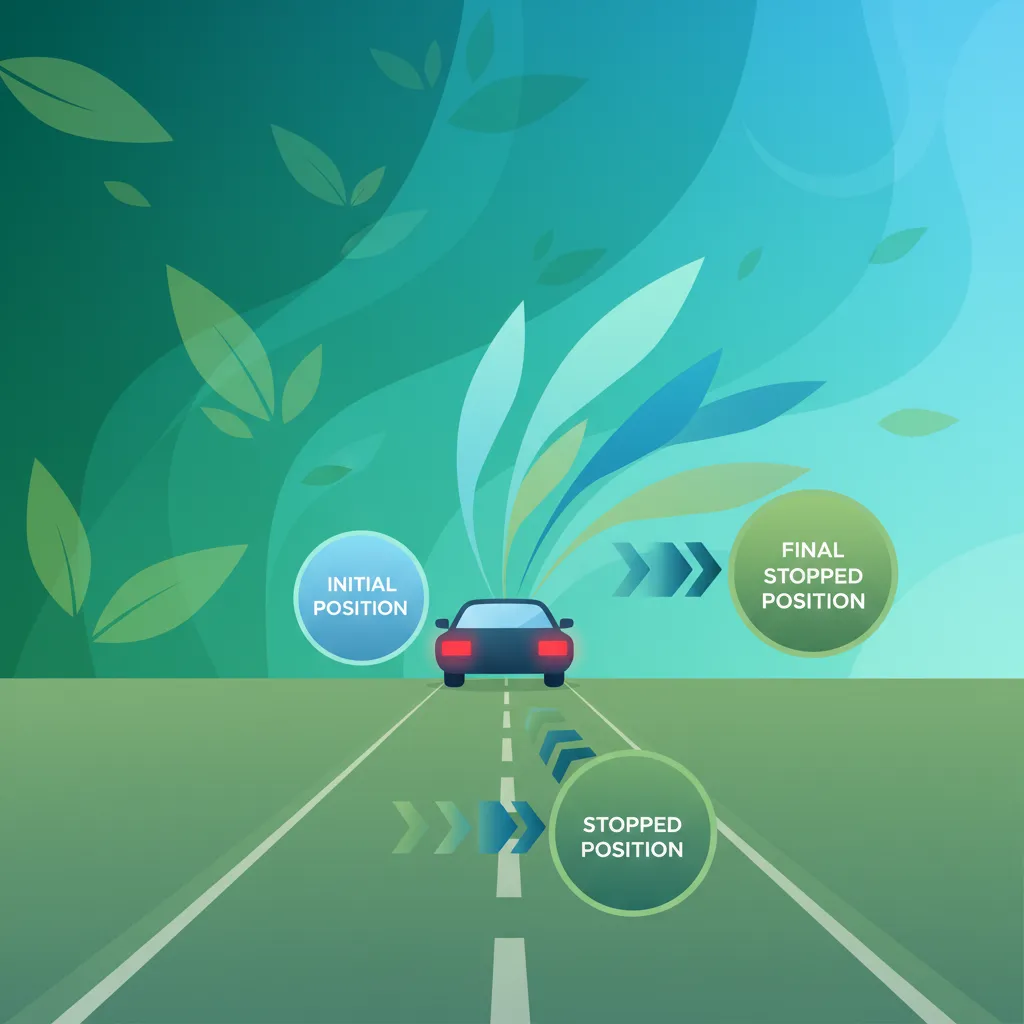
This lesson focuses on the correct application of a moped's brakes for effective and stable deceleration. It explains the concept of balanced braking, using both front and rear brakes simultaneously for maximum stopping power without losing traction. Learners will understand how factors like speed, road surface, and weather dramatically affect total stopping distance, and will learn techniques for emergency braking.
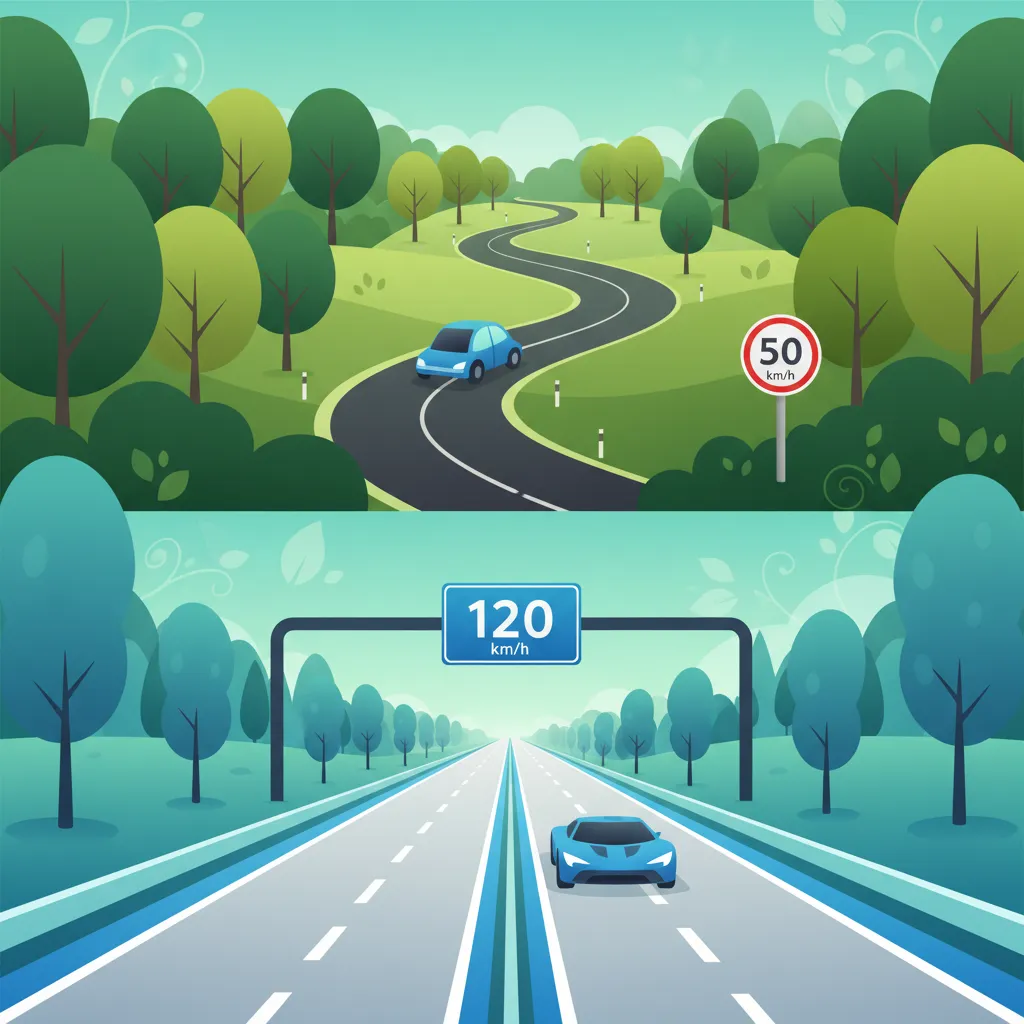
In this lesson, the different speed limits applied to rural roads and autovías (highways) are examined. Learners will understand the classification of road types and the DGT-mandated speed limits for each, including how to interpret variable speed limit signs. The lesson also includes techniques for maintaining speed control and adapting to road conditions and traffic flow.
This lesson examines the principles of maintaining a safe following distance, including the 'two-second rule' and its adjustments for speed and weather. It focuses on effective blind-spot management, teaching drivers how to use mirrors and head checks. The content integrates DGT guidelines on creating a safety buffer around the vehicle to allow time to react to unexpected events.

This lesson focuses on mastering acceleration and deceleration to integrate smoothly with traffic. It teaches how to apply the throttle gradually for steady speed control and how to use front and rear brakes in a balanced manner to slow down without destabilizing the moped. Learners will understand how to adjust their speed in response to changing traffic conditions, ensuring safe following distances and predictable movements for other road users.

This lesson examines the complex braking systems found in heavy passenger vehicles, with a focus on air brakes and anti-lock braking systems (ABS). It covers how these systems impact stopping distance, brake fade, and overall safety under different load and weather conditions. Learners will also study the required maintenance schedules and safety checks to ensure the braking components remain in optimal working order.
This lesson teaches riders the critical importance of maintaining a safe following distance to allow for adequate reaction and braking time. It explains practical methods for judging this distance, such as the 'two-second rule,' and how this gap must be increased in adverse weather or poor visibility. Understanding this principle is fundamental to preventing rear-end collisions, one of the most common types of traffic accidents.
This lesson addresses the specific challenges posed by rain and fog, focusing on reduced visibility and loss of traction. It explains the proper use of windshield wipers and fog lights, and the need to adjust speed and increase following distance. The content covers how to prevent and react to hydroplaning (aquaplaning) to maintain vehicle control.
Understand the theory behind modern braking systems like ABS, including how to use them effectively. Learn about engine braking and down-shifting techniques for enhanced vehicle control and safety during deceleration according to Spanish traffic law.
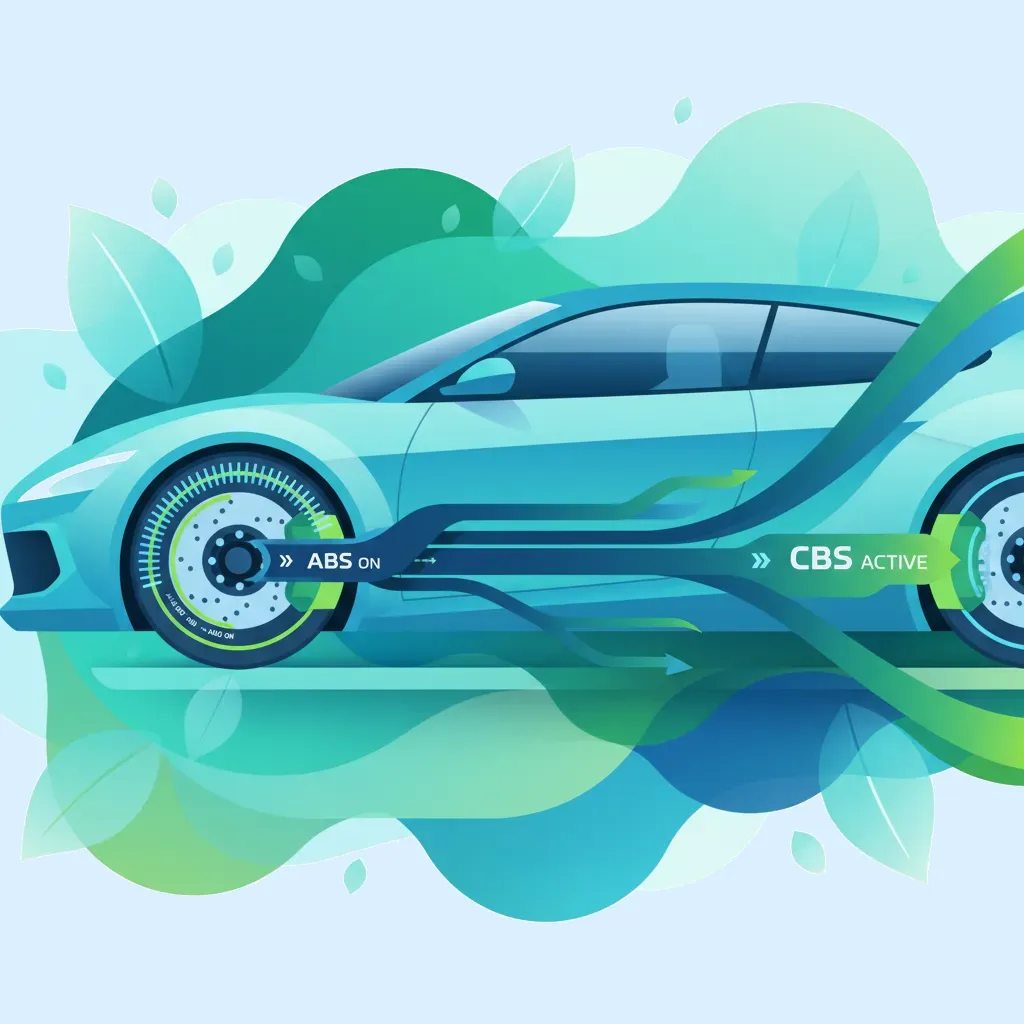
This lesson covers the principles of anti-lock braking systems (ABS), describing how wheel slip detection prevents wheel lock-up. It explains combined braking operation, where front and rear brakes are applied in a calibrated ratio to maintain stability. Learners also explore how ABS enhances safety on low-traction surfaces and review DGT braking regulations.
This lesson examines the complex braking systems found in heavy passenger vehicles, with a focus on air brakes and anti-lock braking systems (ABS). It covers how these systems impact stopping distance, brake fade, and overall safety under different load and weather conditions. Learners will also study the required maintenance schedules and safety checks to ensure the braking components remain in optimal working order.
This lesson focuses on adapting braking techniques for wet and slippery roads. Topics include hydroplaning risk, reduced tire friction, and how ABS assists in preventing wheel lock-up. Learners are taught to employ progressive braking, reduce speed, and assess tire tread depth to maintain adequate grip.
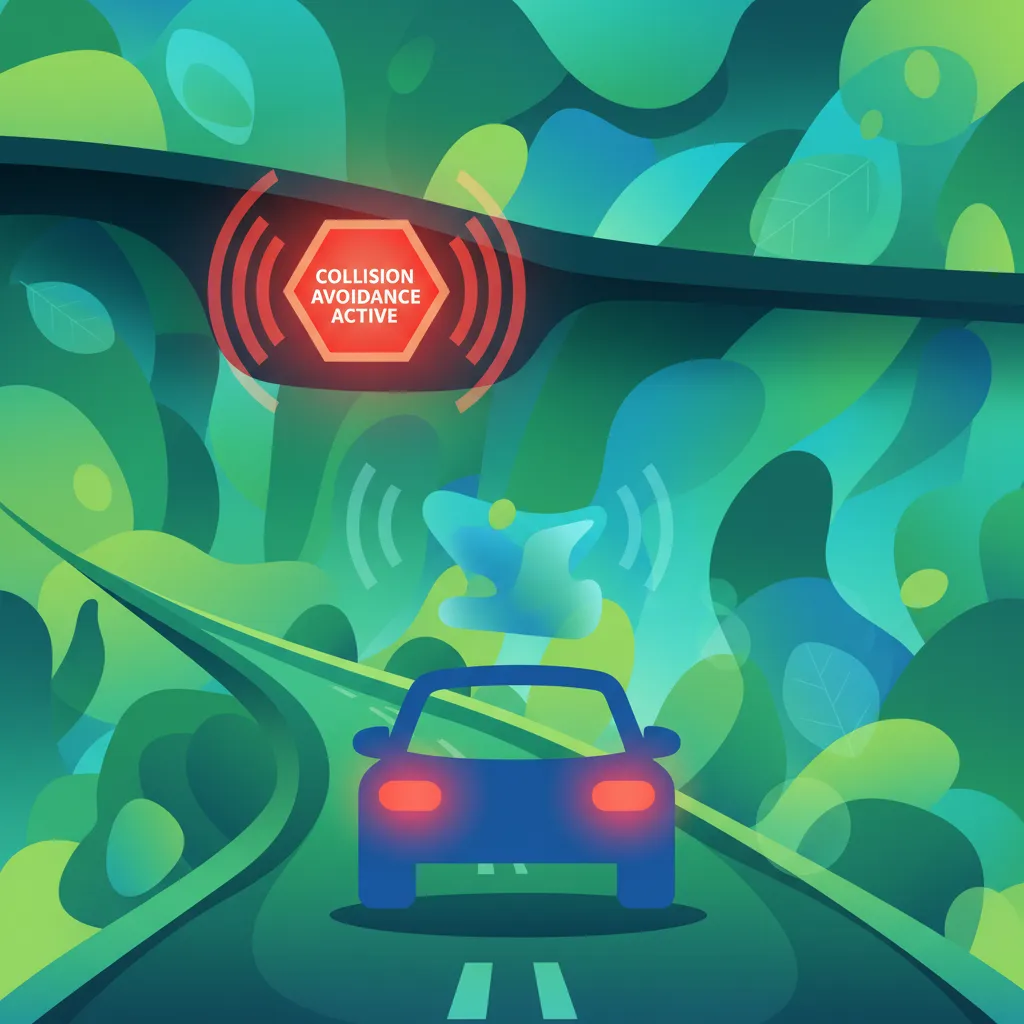
This lesson provides an overview of modern driver-assistance technologies designed to prevent collisions. It explains the function of systems like the Anti-lock Braking System (ABS), Electronic Stability Control (ESC), and Automatic Emergency Braking Systems (AEBS). Learners will understand how these systems work to help maintain control during emergency maneuvers, while also recognizing their operational limitations.

This lesson details the protocol for performing an emergency stop, emphasizing full-force application of both front and rear brakes while maintaining optimal rider posture. It covers the importance of visual fixation and the role of ABS in stabilizing the bike under panic conditions. Learners also study the calculation of stopping distances based on speed and road conditions.
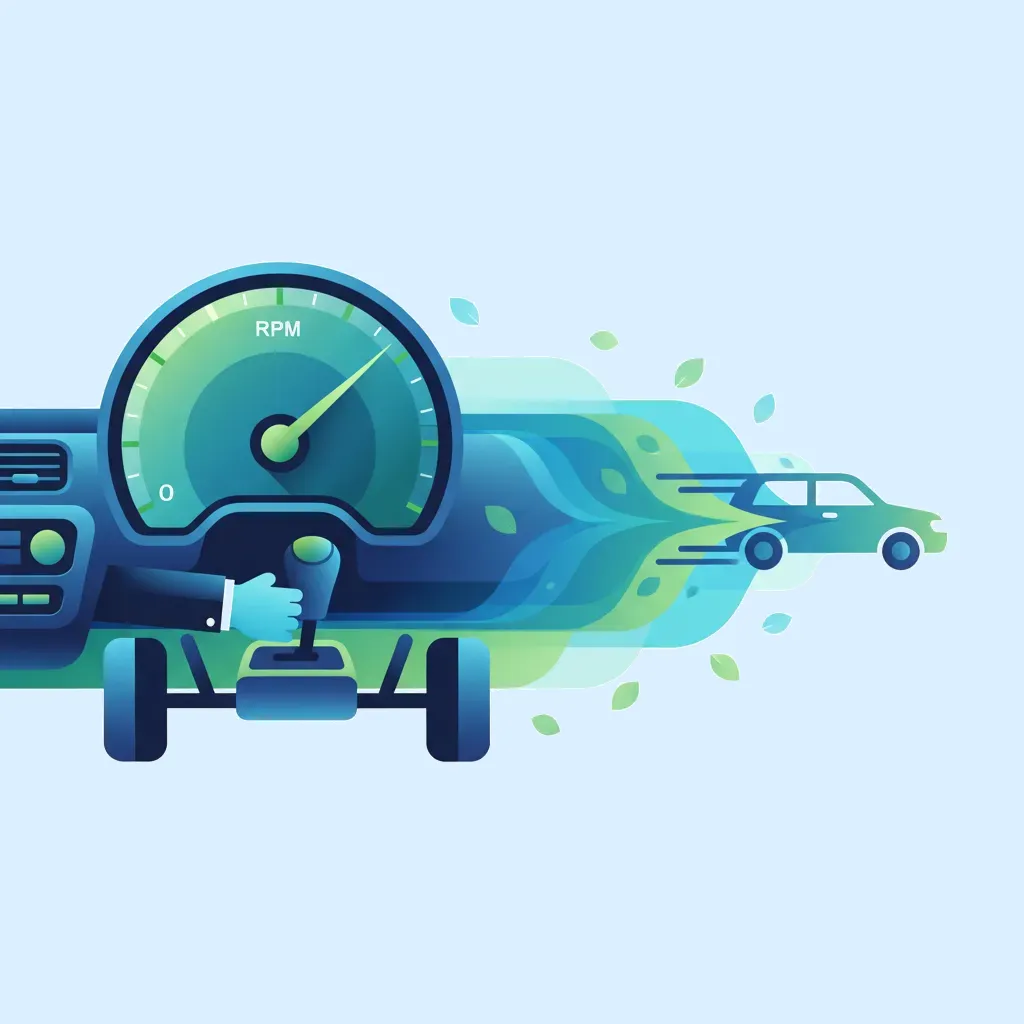
This lesson explains the concept of engine braking and how down-shifting can be used to control vehicle speed without relying solely on the foot brake. It describes the appropriate RPM range for down-shifts and the benefits of engine braking on downhill sections. Learners will understand how to select the correct gear to assist the vehicle's deceleration process, enhancing safety.
Find clear answers to common questions learners have about Acceleration, Deceleration, and Braking Principles. Learn how the lesson is structured, which driving theory objectives it supports, and how it fits into the overall learning path of units and curriculum progression in Spain. These explanations help you understand key concepts, lesson flow, and exam focused study goals.
The Anti-lock Braking System (ABS) prevents your wheels from locking up when you brake hard, especially on slippery surfaces. This allows you to maintain steering control while braking, enabling you to potentially avoid an obstacle even during a sudden stop. The DGT emphasizes understanding this safety feature for exam and road safety.
Stopping distance is influenced by reaction time, vehicle speed, road conditions (wet, dry, gravel), tire condition, and brake effectiveness. The DGT exam frequently presents scenarios requiring you to calculate or compare stopping distances under varying circumstances, highlighting the importance of maintaining a safe following distance.
While the fundamental principles of applying the brake pedal are the same, in a manual vehicle, you typically depress the clutch pedal simultaneously when coming to a complete stop to prevent the engine from stalling. In an automatic, you only focus on the brake. Both require smooth, progressive pressure for optimal control, a key skill for your DGT B license.
Smooth acceleration involves applying gentle, progressive pressure to the accelerator, especially when moving off or changing gears. For deceleration, release the accelerator smoothly and apply the brake progressively, anticipating stops. This coordination prevents jerky movements, enhances passenger comfort, and is a hallmark of a controlled and stable driver, which is assessed in your DGT practical exam.
Engine braking involves using the resistance of the engine to slow the vehicle down, primarily by selecting a lower gear. While this lesson focuses on pedal braking, engine braking is a complementary technique for controlled deceleration, especially on long downhill stretches or to save wear on your service brakes. It is covered in subsequent DGT theory lessons on advanced deceleration methods.
Use our powerful search functionality to pinpoint specific Spanish DGT driving theory practice sets. Filter by road sign categories, traffic law topics, or question difficulty to build custom study sessions and reinforce your knowledge precisely where it matters for your official exam.