
Parking on slopes requires specific techniques to ensure your vehicle remains secure and does not roll. This lesson, part of Unit 8 on Parking & Manoeuvres, focuses on the critical procedures for safely parking uphill and downhill, including correct use of the parking brake and wheel orientation. Mastering this is vital for both the theory exam and everyday safe driving in Spain.

Lesson content overview
Parking a vehicle on an incline, whether uphill or downhill, requires specific techniques to ensure safety and prevent accidents. Gravity is a constant force, and on a slope, it will exert a pull on your vehicle, potentially causing it to roll away if not properly secured. This lesson, designed for the Spanish driving license theory course for categories B & BE, details the mandatory procedures for safely parking on gradients, ensuring your vehicle remains stationary and complies with DGT (Dirección General de Tráfico) regulations.
Successfully parking on a slope begins with identifying the gradient and understanding the forces at play. An incline, or gradient, is any road surface that is not perfectly flat, presenting either an uphill or downhill slope. These conditions significantly alter the dynamics of parking compared to a level surface.
When your vehicle is parked on an incline, gravity constantly attempts to pull it downhill. This gravitational force creates a component of force parallel to the slope. The steeper the incline, the greater this parallel force, and thus, the stronger the tendency for the vehicle to roll. Without proper restraints, this force can easily overcome the slight resistance offered by a vehicle's standard braking system or transmission, leading to uncontrolled movement.
Adhering to correct parking procedures on slopes is not merely a recommendation; it is a critical safety measure and a legal requirement under Spanish traffic law. A vehicle that rolls away can cause severe accidents, injuring pedestrians, colliding with other vehicles, or damaging property. Such incidents lead to significant legal liability for the driver. By employing mechanical restraints (the parking brake) and strategic wheel positioning, drivers effectively counteract gravity, ensuring the vehicle remains stationary and protecting everyone on the road.
Securing a vehicle on a gradient involves a combination of mechanical and procedural steps. These actions provide multiple layers of protection against unintended movement, making them indispensable for safe driving practices in Spain.
The parking brake, often called the handbrake or emergency brake, is a crucial secondary braking system designed to mechanically lock the wheels in place when the vehicle is stationary. In most modern vehicles, this system typically acts on the rear wheels, though some advanced systems may involve all wheels. It can be engaged via a mechanical lever, a pedal, or an electronic button (Electronic Parking Brake, EPB).
When parking on any incline, regardless of its steepness, the parking brake must be fully engaged before exiting the vehicle. For vehicles with an EPB, ensure the 'P' indicator on the dashboard illuminates, confirming its activation. Failure to fully engage the parking brake is a common cause of roll-away incidents and is a violation of DGT regulations.
For vehicles equipped with a manual transmission, selecting an appropriate gear provides an additional layer of restraint, leveraging the engine's compression to resist movement. This is a mandatory safety measure in Spain when parking on an incline.
This engine-based restraint is an essential backup in case the parking brake fails or is not fully engaged, significantly increasing the safety margin.
Automatic transmission vehicles simplify gear selection for parking by offering a "Park" (P) mode. When "P" is selected, a mechanical lock engages within the transmission, preventing the drive wheels from turning.
However, relying solely on "P" on a steep incline is not recommended and can even damage the transmission over time. The DGT mandates the use of the parking brake in conjunction with "P" on any incline. The "P" mode provides primary mechanical locking, while the parking brake offers the crucial secondary, often more robust, mechanical restraint directly on the wheels. Always select "P" and then fully engage the parking brake.
The direction in which you turn your front wheels is a vital safety measure, particularly when a curb is present. This technique ensures that if your vehicle were to somehow overcome the parking brake and gear lock, its wheels would immediately encounter the curb, physically blocking further movement.
Parking Downhill with a Curb: Turn your front wheels towards the curb. This means the front of your wheels should be pointing towards the sidewalk. If the vehicle rolls forward, the front wheels will wedge against the curb, bringing the vehicle to a safe stop.
Parking Uphill with a Curb: Turn your front wheels away from the curb. This means the front of your wheels should be pointing towards the center of the road. If the vehicle rolls backward, the rear of the front wheels will hit the curb, preventing further movement.
Parking on an Incline Without a Curb: In situations where there is no curb, such as on a rural road or a wide shoulder, turn your wheels towards the side of the road or edge of the carriageway. This action will direct the vehicle away from the flow of traffic and towards the safest possible stopping point should it begin to roll. The aim is to maximize the distance the vehicle travels before potentially impacting something dangerous, or to direct it into a less hazardous area.
The Spanish Dirección General de Tráfico (DGT) explicitly outlines the mandatory procedures for parking on inclines to ensure public safety. These rules are detailed in the General Traffic Regulations (Reglamento General de Circulación). Adherence to these articles is compulsory for all drivers holding a Spanish driving license.
Mastering incline parking involves a methodical approach, combining all the components discussed. Here's how to apply them in typical scenarios:
This situation requires preventing the vehicle from rolling backward into traffic or downhill.
Bring the vehicle to a complete stop, keeping your foot on the brake pedal.
For manual transmission, select first gear (1ª). For automatic, select "P".
While still holding the foot brake, turn the steering wheel sharply to the left (away from the curb). This angles the front wheels so that their rear portion would contact the curb if the vehicle were to roll backward.
Fully engage the parking brake (handbrake or EPB). Ensure it is pulled up firmly or the EPB indicator is illuminated.
Slowly release the foot brake and check if the vehicle holds securely. If it moves, re-engage the foot brake and repeat the steps, ensuring the parking brake is fully engaged and gear is correctly selected.
Only once the vehicle is completely stable should you switch off the engine and exit.
Here, the objective is to prevent the vehicle from rolling forward into an intersection or further down the slope.
Bring the vehicle to a complete stop, maintaining pressure on the foot brake.
For manual transmission, select reverse gear (R). For automatic, select "P".
While maintaining foot brake pressure, turn the steering wheel sharply to the right (towards the curb). This angles the front wheels so that their front portion would contact the curb if the vehicle were to roll forward.
Fully engage the parking brake. Verify its engagement.
Gently release the foot brake and confirm the vehicle is stable and does not roll.
Once secure, turn off the engine and exit the vehicle.
This scenario requires directing any potential roll-away toward the safest possible area, usually the roadside.
Stop the vehicle completely, foot on the brake.
For manual, engage first gear (uphill) or reverse (downhill). For automatic, select "P".
Turn the front wheels sharply towards the edge of the road or shoulder. This ensures that if the vehicle rolls, it moves away from the traffic lane.
Engage the parking brake fully.
Release the foot brake slowly to confirm stability.
Switch off the engine and exit once confirmed secure.
When parking a vehicle towing a trailer on an incline, the process is more complex due to the independent mass of the trailer. Both units must be secured.
Follow all steps for securing the towing vehicle as described above (parking brake, correct gear, wheel orientation).
Additionally, engage the trailer's independent handbrake if it has one. Most trailers designed for road use in Spain are equipped with an overrun brake system which includes a parking brake lever.
For heavy trailers, or if there's any doubt about stability, consider placing wheel chocks under the trailer wheels as an extra precaution. Chocks are wedges placed firmly against the wheels to prevent movement.
Ensure the trailer's hitch is properly secured and locked if it is intended to remain attached to the towing vehicle.
Ignoring proper incline parking procedures can lead to serious consequences. Here are some frequent errors and how to correct them:
Forgetting the Parking Brake (Handbrake): Many drivers, especially on slight inclines, rely solely on the foot brake or the transmission lock ("P"). This is insufficient.
Leaving Manual Transmission in Neutral: A common and dangerous mistake is leaving a manual vehicle in neutral on a slope. The engine offers no resistance, and the vehicle will roll if the parking brake fails.
Incorrect Wheel Orientation: Turning wheels in the wrong direction, or leaving them straight, negates the failsafe function of the curb.
Relying Solely on "P" in an Automatic: While "P" locks the transmission, it's not designed to hold a heavy vehicle on a steep incline independently and can be damaged under stress.
Neglecting Trailer Security: Forgetting to apply the trailer's own parking brake or chocks can result in the trailer rolling independently.
Partial Engagement of the Parking Brake: Not pulling the handbrake lever far enough or pressing the EPB button inadequately.
Environmental factors and vehicle specificities can influence the effectiveness of parking restraints. Drivers must adapt their approach to ensure safety under varying conditions.
Wet, snowy, or icy surfaces drastically reduce tire traction.
The environment in which you park dictates the availability of curbs and the nature of the road edge.
The weight and type of vehicle also influence parking stability on an incline.
Mastering parking on inclines is a critical skill for all drivers in Spain, particularly given the varied terrain. Consistent practice and a thorough understanding of DGT regulations are key to ensuring safety for yourself and others.
Parking on inclines requires combining multiple safety measures to counteract gravity. The parking brake is mandatory under DGT Article 84.1 and serves as the primary mechanical restraint. For manual vehicles, first gear (uphill) or reverse gear (downhill) adds engine-based resistance as a backup. Wheel orientation uses the curb or road edge as a physical barrier: toward the curb downhill, away from it uphill, and toward the road edge without a curb. Automatic vehicles must use both 'P' and the parking brake. For BE category with trailers, both units require independent securing with their respective brakes.
A short set of high-value points that capture the most important learning from this lesson.
Always engage the parking brake fully before exiting on any incline, regardless of steepness.
For manual vehicles, select first gear when parking uphill and reverse gear when parking downhill to use engine compression as a backup restraint.
Turn front wheels towards the curb when parking downhill and away from the curb when parking uphill.
For automatic vehicles, always use both 'P' mode and the parking brake together on inclines.
When parking on an incline without a curb, turn wheels toward the road edge to direct any roll-away away from traffic.
Explore all units and lessons included in this driving theory course.
DGT Article 84.1 mandates parking brake use on all inclines; this is non-negotiable.
Wheel orientation creates a physical failsafe: downhill wheels toward curb wedge against it, uphill wheels away from curb block the vehicle's path if it rolls.
First gear (uphill) and reverse gear (downhill) provide engine-based resistance against the direction of potential roll.
A vehicle with a faulty parking brake must never be left unattended on an incline (DGT Article 85).
Trailers (BE category) require independent securing with their own parking brake and potentially wheel chocks.
Relying solely on the transmission 'P' lock in automatics without engaging the parking brake.
Leaving a manual vehicle in neutral on a slope, eliminating engine compression as a safety backup.
Turning wheels in the wrong direction, negating the curb failsafe mechanism.
Partially engaging the parking brake instead of pulling it fully until firm resistance is felt.
Forgetting to secure the trailer independently when parking a vehicle-trailor combination on an incline.
Lesson content overview
A short set of high-value points that capture the most important learning from this lesson.
Always engage the parking brake fully before exiting on any incline, regardless of steepness.
For manual vehicles, select first gear when parking uphill and reverse gear when parking downhill to use engine compression as a backup restraint.
Turn front wheels towards the curb when parking downhill and away from the curb when parking uphill.
For automatic vehicles, always use both 'P' mode and the parking brake together on inclines.
When parking on an incline without a curb, turn wheels toward the road edge to direct any roll-away away from traffic.
Explore all units and lessons included in this driving theory course.
DGT Article 84.1 mandates parking brake use on all inclines; this is non-negotiable.
Wheel orientation creates a physical failsafe: downhill wheels toward curb wedge against it, uphill wheels away from curb block the vehicle's path if it rolls.
First gear (uphill) and reverse gear (downhill) provide engine-based resistance against the direction of potential roll.
A vehicle with a faulty parking brake must never be left unattended on an incline (DGT Article 85).
Trailers (BE category) require independent securing with their own parking brake and potentially wheel chocks.
Relying solely on the transmission 'P' lock in automatics without engaging the parking brake.
Leaving a manual vehicle in neutral on a slope, eliminating engine compression as a safety backup.
Turning wheels in the wrong direction, negating the curb failsafe mechanism.
Partially engaging the parking brake instead of pulling it fully until firm resistance is felt.
Forgetting to secure the trailer independently when parking a vehicle-trailor combination on an incline.
Explore search topics learners often look for when studying Parking in Inclines and Use of Parking Brakes. These topics reflect common questions about road rules, driving situations, safety guidance, and lesson level theory preparation for learners in Spain.
Browse additional driving theory lessons that cover connected traffic rules, road signs, and common driving situations related to this topic. Improve your understanding of how different rules interact across everyday traffic scenarios.
Understand the specific DGT regulations for parking on inclines in Spain. Learn the differences in applying parking brakes and selecting gears for manual and automatic vehicles on slopes.
In this lesson, the mechanics of stopping and starting on an incline are examined. It details the steps for using the clutch and brake to hold the vehicle stationary on a slope, preventing rollback before engaging the accelerator. The lesson also introduces the hill-assist system available in modern vehicles, explaining its operation and benefits for ensuring a smooth start.

This lesson covers the essential techniques for perpendicular parking (reversing into a bay) and executing a three-point turn. It details the approach, turning points, and use of mirrors and observation to ensure proper vehicle positioning. Learners will understand how to assess the required space and comply with DGT regulations for these common maneuvers.
This lesson explains the concept of engine braking and how down-shifting can be used to control vehicle speed without relying solely on the foot brake. It describes the appropriate RPM range for down-shifts and the benefits of engine braking on downhill sections. Learners will understand how to select the correct gear to assist the vehicle's deceleration process, enhancing safety.

This lesson explores the mechanics of clutch operation and fundamental gear shifting techniques for manual transmissions. It describes the function of the clutch pedal, identifying the engagement point, and how to facilitate smooth gear changes. The content explains the gear lever pattern and the process of up-shifting and down-shifting while maintaining engine speed.

This lesson provides theoretical guidance on the techniques for safely reversing a heavy vehicle, a high-risk maneuver. It emphasizes the correct use of mirrors, managing extensive blind spots, and the importance of using a spotter when available. The content also breaks down the geometric principles of parallel parking and backing into loading docks, focusing on vehicle positioning and spatial awareness.

This lesson explains the methodical process of parallel parking, including how to select an appropriate spot and identify reference points for the maneuver. Learners will be taught the correct backing technique, steering angles, and alignment steps required to position the vehicle within the space without collision. The lesson also outlines DGT standards for parallel parking.
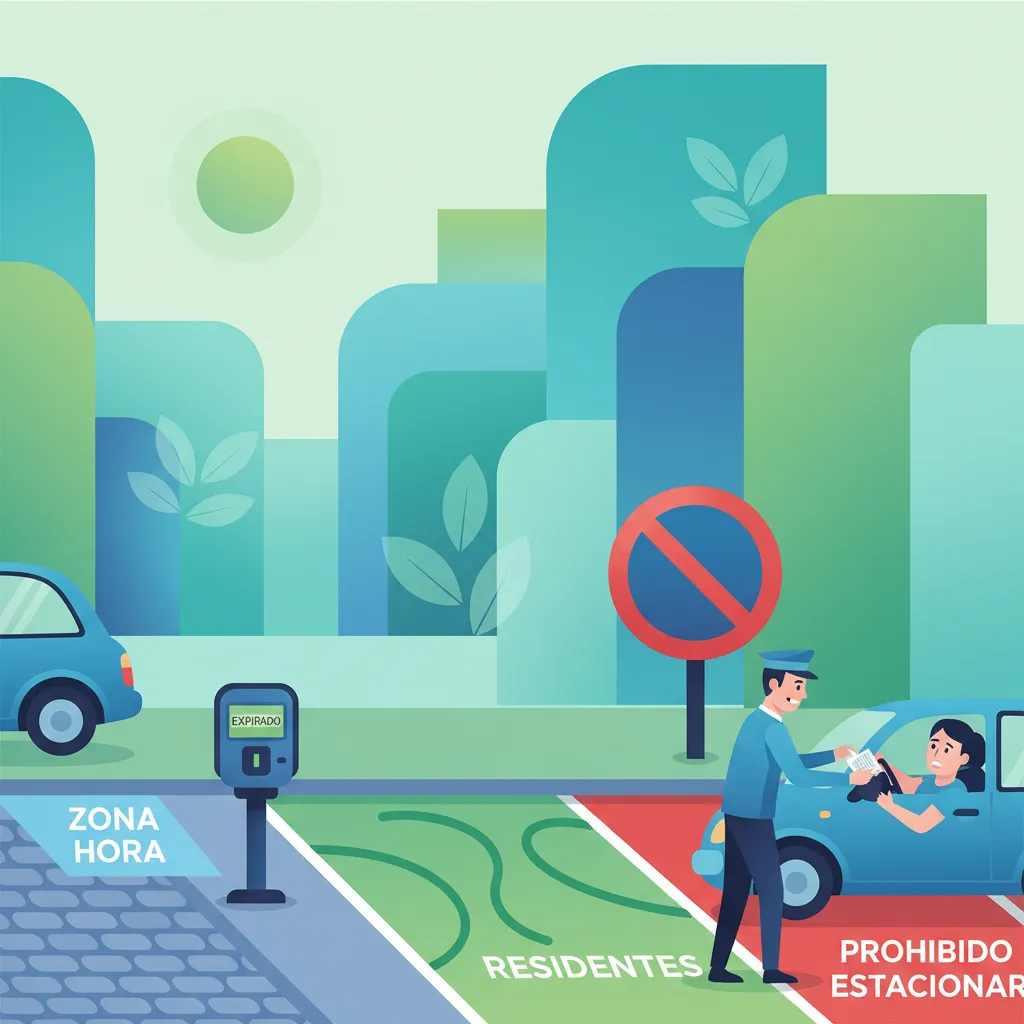
This lesson outlines the legal framework surrounding parking regulations in Spain, including the identification of regulated zones (e.g., ORA/SER), no-parking areas, and disabled parking spaces. It explains DGT signage interpretation and how improper parking can affect traffic flow and result in penalties. Learners will understand the regulatory environment to comply with parking laws and avoid fines.

This lesson compares manual and automatic transmissions, detailing the mechanical principles behind each system. It explains clutch operation and gear selection for manual vehicles, while describing the torque converter and shifting patterns in automatic gearboxes. The content addresses the impact of each transmission type on fuel efficiency, driver control, and overall vehicle dynamics.
This lesson focuses on the coordination of acceleration and deceleration to maintain vehicle stability. It explains how to modulate the accelerator pedal for smooth acceleration and how to apply the brake pedal for controlled deceleration. The content covers the role of the ABS system, the calculation of stopping distances, and the importance of maintaining stability during speed changes.

This lesson addresses the dynamics of accelerating, braking, and turning while towing a trailer. It explains how to adjust for increased load inertia, the impact on stopping distances, and the need for wider turns to account for off-tracking. The content outlines DGT speed guidelines specific to towing and emphasizes smooth control to ensure stability.
Learn essential driving theory for parking on slopes in Spain. This lesson details how to correctly orient your front wheels towards or away from the curb for maximum safety according to DGT rules.
This lesson covers the essential techniques for perpendicular parking (reversing into a bay) and executing a three-point turn. It details the approach, turning points, and use of mirrors and observation to ensure proper vehicle positioning. Learners will understand how to assess the required space and comply with DGT regulations for these common maneuvers.
This lesson provides theoretical guidance on the techniques for safely reversing a heavy vehicle, a high-risk maneuver. It emphasizes the correct use of mirrors, managing extensive blind spots, and the importance of using a spotter when available. The content also breaks down the geometric principles of parallel parking and backing into loading docks, focusing on vehicle positioning and spatial awareness.
This lesson explains the methodical process of parallel parking, including how to select an appropriate spot and identify reference points for the maneuver. Learners will be taught the correct backing technique, steering angles, and alignment steps required to position the vehicle within the space without collision. The lesson also outlines DGT standards for parallel parking.

This lesson provides strategies for navigating tight, confined environments such as multi-story car parks and narrow urban lanes. It emphasizes the importance of slow and controlled movements, constant observation, and a thorough understanding of the vehicle's dimensions and turning circle. Learners will develop the skills to maneuver with precision while avoiding obstacles.
In this lesson, the mechanics of stopping and starting on an incline are examined. It details the steps for using the clutch and brake to hold the vehicle stationary on a slope, preventing rollback before engaging the accelerator. The lesson also introduces the hill-assist system available in modern vehicles, explaining its operation and benefits for ensuring a smooth start.

This lesson provides guidance on the practical aspects of parking and making deliveries in urban areas. It covers the techniques for safely maneuvering into and out of loading docks and designated delivery zones, which often involves precise reversing. The content also explains the specific parking regulations that apply to commercial vehicles and best practices for ensuring safety during loading and unloading.
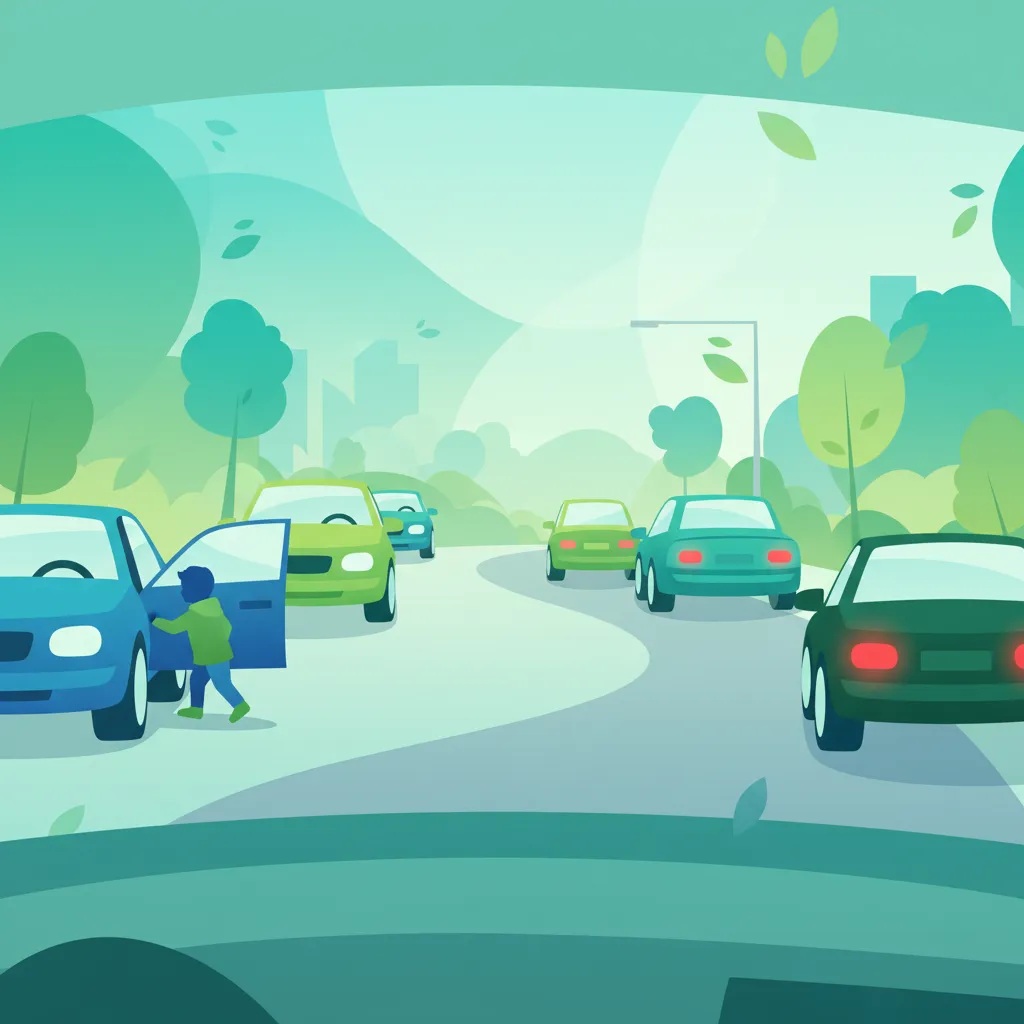
This lesson examines the specific hazards posed by vehicles parked along the roadside. It highlights the primary risk of a driver or passenger opening a door into the path of an approaching moped. Learners will understand the importance of maintaining a safe lateral distance and positioning themselves in the lane to avoid the 'door zone' while continuously scanning for signs of occupant activity.
This lesson outlines the legal framework surrounding parking regulations in Spain, including the identification of regulated zones (e.g., ORA/SER), no-parking areas, and disabled parking spaces. It explains DGT signage interpretation and how improper parking can affect traffic flow and result in penalties. Learners will understand the regulatory environment to comply with parking laws and avoid fines.

This lesson presents advanced cornering scenarios common on Spanish roads, such as mountain hairpins and high-speed autovía exits. It outlines specific techniques for descent control, ascent maneuvers, and safely merging into traffic after cornering. Interaction with cyclists and emergency cornering strategies are also covered in accordance with DGT regulations.

This lesson focuses on the optimal position for a moped within a traffic lane to maximize visibility and safety. It discusses the importance of maintaining a safety buffer from other vehicles and hazards, particularly the risk posed by the doors of parked cars. The content explains how to use lane positioning strategically to discourage unsafe overtaking and to be clearly seen by drivers in front and behind, especially when approaching intersections.
Find clear answers to common questions learners have about Parking in Inclines and Use of Parking Brakes. Learn how the lesson is structured, which driving theory objectives it supports, and how it fits into the overall learning path of units and curriculum progression in Spain. These explanations help you understand key concepts, lesson flow, and exam focused study goals.
Turning the wheels acts as a secondary safety measure. If the parking brake fails, the wheels will guide the car into the curb or away from traffic, preventing it from rolling into a dangerous situation. This is a critical DGT requirement for parking on slopes.
When parking uphill with a curb, after applying the parking brake and selecting the correct gear (first gear for manual, or Park for automatic), turn your steering wheel AWAY from the curb. This way, if the car rolls back, the rear of the front wheel will hit the curb and stop the car.
When parking downhill with a curb, after applying the parking brake and selecting the correct gear (reverse gear for manual, or Park for automatic), turn your steering wheel TOWARDS the curb. If the car rolls forward, the front of the front wheel will hit the curb and stop the car.
If there is no curb on an incline, you should still turn your wheels. For an uphill slope, turn the wheels slightly to the right (away from the road). For a downhill slope, turn the wheels slightly to the right as well. The goal is to direct the car away from the travelled portion of the road should it start to roll.
For manual transmissions, when parking uphill, leave the car in first gear. When parking downhill, leave the car in reverse gear. For automatic transmissions, always select 'P' (Park). Always engage the parking brake firmly in addition to selecting the correct gear.
Yes, the principle of turning the wheels and using the parking brake applies to both uphill and downhill parking on inclines. The specific direction you turn your wheels differs depending on whether you are facing uphill or downhill, and whether a curb is present, to maximise safety.
Use our powerful search functionality to pinpoint specific Spanish DGT driving theory practice sets. Filter by road sign categories, traffic law topics, or question difficulty to build custom study sessions and reinforce your knowledge precisely where it matters for your official exam.