
Welcome to the 'Roundabouts & Priority Rules' unit! This lesson focuses on the 'Design and Function of Spanish Roundabouts,' explaining the critical structural elements and DGT-approved designs. Understanding how roundabouts are built and operate is key to successfully navigating them and answering exam questions correctly.
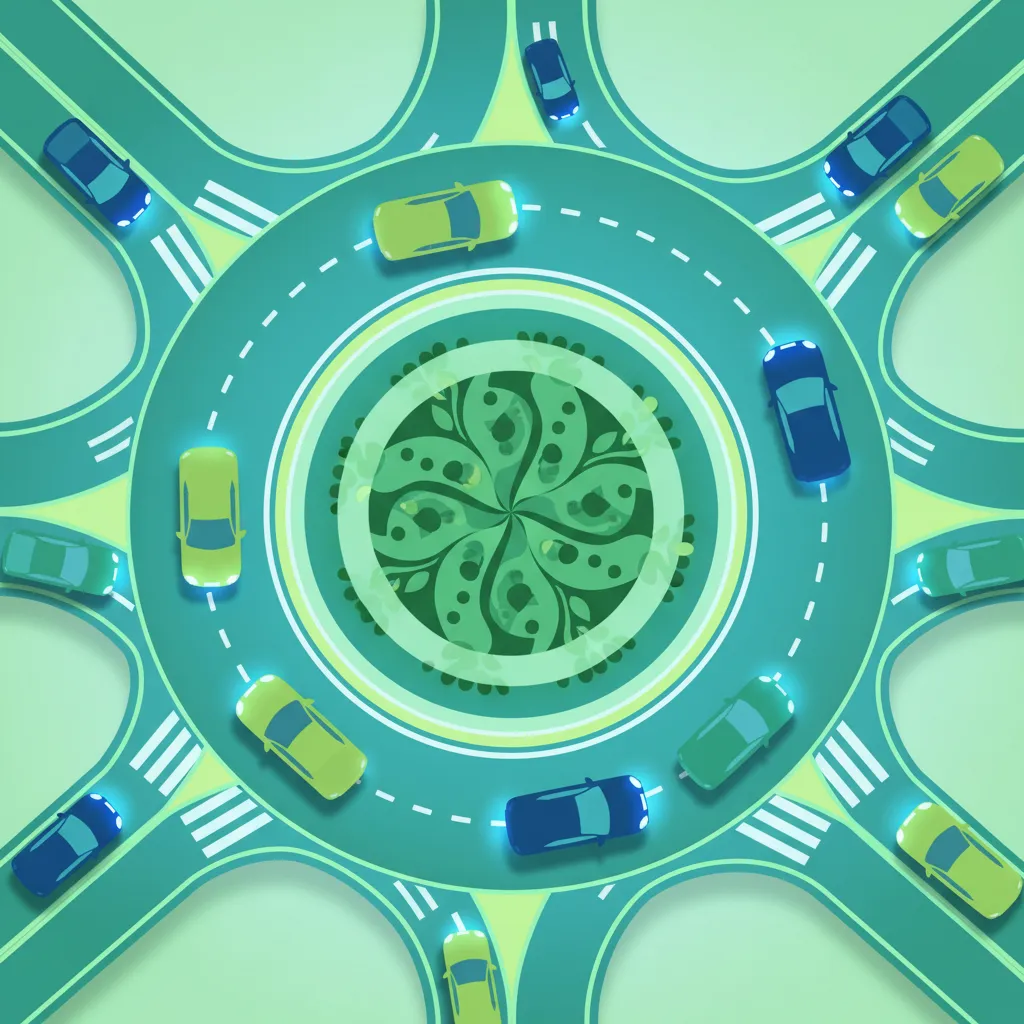
Lesson content overview
Roundabouts (known in Spanish as rotondas or glorietas) are a fundamental part of the road network in Spain. They are designed to manage traffic flow efficiently and enhance safety at intersections. Understanding their specific design, as mandated by the Dirección General de Tráfico (DGT), is crucial for every driver. This lesson will explore the structural components, geometric parameters, and functional purpose of Spanish roundabouts, detailing how these elements dictate driver behavior and ensure smooth, safe navigation.
Mastery of roundabout design allows drivers to anticipate vehicle movements, select appropriate lanes, and comply with essential right-of-way rules. This knowledge significantly reduces the risk of collisions and improves overall traffic flow, contributing to a more relaxed and confident driving experience. Before delving into the specifics, it is assumed that you have a basic understanding of general traffic signs, right-of-way hierarchy, and lane discipline, as these principles form the foundation for navigating roundabouts effectively.
The primary purpose of a roundabout is to replace traditional four-way intersections, which often have numerous conflict points and require complex traffic light systems. By channeling all movements in one direction around a central island, roundabouts reduce these conflict points, lower vehicle speeds through natural curvature, and assign clear priority to circulating traffic. This design philosophy fundamentally enhances safety and efficiency.
Traditional intersections have many potential points where vehicles can collide, especially in head-on or right-angle crashes. Roundabouts convert these into glancing blows by ensuring all traffic moves in the same general direction around a central point. This significantly lowers the severity of potential accidents.
The curved design of a roundabout naturally encourages drivers to reduce their speed upon approach and while circulating. This inherent speed moderation is a key safety feature, as lower speeds mean more reaction time and less kinetic energy in the event of a collision. The DGT's geometric standards are specifically crafted to enforce these safe speeds.
A core principle of Spanish roundabouts is that traffic already circulating within the roundabout has priority over traffic wishing to enter. This clear hierarchy, enforced by yield signs at every entry point, simplifies decision-making for drivers and promotes a predictable, continuous flow of traffic.
Remember that the DGT's approach to roundabout design is centered on safety and efficiency. Every component, from the central island to the lane markings, serves a specific purpose in achieving these goals.
Spanish roundabouts are characterized by several distinct structural components, each playing a vital role in their overall function. Recognizing and understanding these elements is the first step towards competent navigation.
The central island (isla central) is the raised, non-drivable core of a roundabout. It is typically landscaped or decorated, serving as both a physical barrier and a visual focal point for drivers. Its primary purpose is to define the central point around which all traffic must circulate, separating opposing traffic flows and dictating the curvature radius for entry and exit maneuvers.
Drivers must always circulate around the central island; crossing over it or stopping on it is strictly prohibited. The island is not a place to wait or to perform maneuvers; its integrity ensures the proper flow and safety of the roundabout. Different types of central islands exist, from simple concrete structures to elaborate garden islands or even those incorporating traffic signals in very complex multi-lane junctions. However, the fundamental rule remains: traffic must flow around it.
Circulating lanes (carriles de circulación) are the one or more lanes that guide traffic around the central island in a clockwise direction, in adherence to Spain's right-hand traffic regime. These lanes are fundamental for managing traffic capacity; single-lane roundabouts are common for lower traffic volumes, while multi-lane designs handle higher volumes and multiple destinations.
The choice of circulating lane upon approach is critical and must align with your intended exit. Lane changes within the circulating lanes are highly restricted and typically only permissible where specific markings allow, to prevent collisions. Improper lane changes are a common cause of accidents in multi-lane roundabouts. Drivers are expected to maintain their selected lane position until they are prepared to exit.
Entry lanes (carriles de entrada) are the approach lanes that guide vehicles into the roundabout. As you approach a roundabout, these lanes require you to decelerate, observe any yield signs, and prepare to merge safely into the circulating traffic flow. Often, these lanes are marked with arrows indicating possible destinations or lane assignments before the entry point.
The most crucial rule at an entry lane is to yield to traffic already on the circulating lane. You must adjust your speed and be prepared to stop before the yield line if necessary to give way. Assuming priority or entering without sufficient gaps are dangerous errors that can lead to collisions.
Exit lanes (carriles de salida) are the lanes that guide vehicles out of the roundabout onto the desired road. When preparing to leave a roundabout, proper signaling is essential. You must signal your intention to exit to inform other road users of your maneuver. The general rule is to signal right after passing the exit immediately preceding your intended departure point. This prevents confusion for other drivers who might otherwise assume you are exiting earlier.
Once you have safely exited the roundabout, you should maintain your lane position and gradually accelerate to match the speed of the new road, ensuring not to make any immediate lane changes without proper observation and signaling.
The yield sign (Señal de Ceda el paso) is a triangular sign, universally recognized, and is placed at every entry point to a Spanish roundabout. Its presence is mandatory and fundamental to the priority rules governing roundabouts. This sign explicitly communicates that drivers must give way to vehicles already circulating within the roundabout.
Failure to observe a yield sign is a serious traffic violation and a significant cause of accidents. Drivers must be prepared to stop completely before the yield line if necessary to ensure a safe entry into the circulating traffic. It is never optional; you must prioritize those already inside the roundabout.
The Dirección General de Tráfico (DGT) establishes precise geometric design standards (normas geométricas) for roundabouts in Spain. These specifications are not arbitrary; they are critical for ensuring predictable vehicle trajectories, maintaining safe speeds, and optimizing traffic flow.
Key parameters include:
These geometric standards dictate not only how the roundabout is built but also how drivers should approach and navigate it. Understanding that the roundabout's shape is engineered for specific speeds reinforces the importance of adhering to those speeds rather than attempting to "straighten out" the curves.
Navigating a Spanish roundabout correctly requires adherence to several mandatory rules and regulations. These rules are designed to prevent conflicts and ensure safety for all road users.
The most fundamental rule: at every entry point, you must yield to vehicles already circulating within the roundabout. This means slowing down significantly, looking to your left (as traffic comes from the left in right-hand driving countries), and stopping before the yield line if there is insufficient gap in the circulating traffic. Entering without yielding is a serious offense and a primary cause of collisions.
Drivers are legally required to signal their intention to exit a roundabout. This signal should be given with the right turn indicator after passing the exit immediately preceding your intended one. This timing avoids confusing other drivers, particularly those waiting to enter or those circulating behind you, who might misinterpret an early signal as an intention to exit at an earlier point.
Failing to signal correctly can lead to fines and is a significant cause of miscommunication and potential accidents within roundabouts.
In multi-lane roundabouts, lane discipline is paramount. You should select your lane upon approach based on your intended exit. Generally:
Drivers must adhere to the design speed of the roundabout, often indicated by specific speed limit signs (e.g., 30 km/h). Speeding through a roundabout significantly increases the risk of losing control due to centrifugal forces and reduces reaction time. Furthermore, adverse weather conditions such as rain, fog, or icy roads demand an even greater reduction in speed to maintain traction and visibility.
Many urban roundabouts feature pedestrian crosswalks (pasos de peatones) or cycle lanes (carriles bici) that intersect the roundabout's entry/exit points or even its circulating path. Where marked, pedestrians and cyclists always have the right-of-way. Drivers must be vigilant, slow down, and be prepared to stop to allow vulnerable road users to cross safely. Never assume a pedestrian or cyclist will yield to you, even if they appear to be far away.
Despite clear rules, certain errors are frequently observed in Spanish roundabouts, often leading to dangerous situations or violations.
Ceda el paso (Yield) sign with a Stop sign. While both require giving way, a Stop sign mandates a complete stop regardless of traffic, while Ceda el paso only requires stopping if there is circulating traffic to yield to.Driving conditions can significantly impact how you navigate a roundabout. Adapting your approach based on these variations is a mark of a skilled driver.
The widespread adoption of roundabouts in Spain and globally is largely due to their proven safety benefits, as evidenced by DGT statistics.
Understanding these underlying safety principles reinforces why strict adherence to roundabout rules is not just about avoiding fines, but about contributing to a safer, more efficient road environment for everyone.
This lesson explains the design and function of Spanish roundabouts as mandated by DGT geometric standards, detailing structural components including the central island, circulating lanes, entry lanes, and exit lanes. The central principle is that circulating traffic has priority over entering traffic, enforced by mandatory yield signs at every entry point. Lane discipline is critical: drivers must select the appropriate lane upon approach and avoid changing lanes within the circulating path. The lesson also covers common violations such as failing to yield, incorrect lane changes, and improper signaling, while emphasizing the safety benefits of roundabouts including reduced severe collisions and inherent speed moderation through geometry.
A short set of high-value points that capture the most important learning from this lesson.
Spanish roundabouts channel all traffic clockwise around a central island to reduce conflict points and improve safety.
The central island (isla central) is strictly non-drivable; crossing or stopping on it is prohibited.
Vehicles already circulating within the roundabout have absolute priority over vehicles at entry points.
DGT geometric design standards enforce speeds of approximately 30-40 km/h through the roundabout's curvature.
Pedestrians and cyclists at marked crossings always have right-of-way over vehicles entering or exiting a roundabout.
Explore all units and lessons included in this driving theory course.
Yield sign (Ceda el paso) at entry requires giving way to circulating traffic; stop only if necessary.
In multi-lane roundabouts: use outer lane for 1st-2nd exits, inner lane for exits beyond the 2nd.
Signal right after passing the exit immediately before your intended departure point.
Heavy vehicles with trailers must often use the outermost lane due to their larger turning radius.
Lane changes within circulating lanes are restricted and only permitted where markings explicitly allow them.
Entering the roundabout without yielding to circulating traffic, the most common and dangerous error.
Attempting to exit from the inner lane by cutting across the outer lane, causing side-swipe collisions.
Failing to signal or signaling too early when exiting, confusing other drivers about your intentions.
Stopping on the central island, which is non-drivable and must always remain clear.
Speeding through the roundabout beyond the design speed, reducing reaction time and increasing collision severity.
Lesson content overview
A short set of high-value points that capture the most important learning from this lesson.
Spanish roundabouts channel all traffic clockwise around a central island to reduce conflict points and improve safety.
The central island (isla central) is strictly non-drivable; crossing or stopping on it is prohibited.
Vehicles already circulating within the roundabout have absolute priority over vehicles at entry points.
DGT geometric design standards enforce speeds of approximately 30-40 km/h through the roundabout's curvature.
Pedestrians and cyclists at marked crossings always have right-of-way over vehicles entering or exiting a roundabout.
Explore all units and lessons included in this driving theory course.
Yield sign (Ceda el paso) at entry requires giving way to circulating traffic; stop only if necessary.
In multi-lane roundabouts: use outer lane for 1st-2nd exits, inner lane for exits beyond the 2nd.
Signal right after passing the exit immediately before your intended departure point.
Heavy vehicles with trailers must often use the outermost lane due to their larger turning radius.
Lane changes within circulating lanes are restricted and only permitted where markings explicitly allow them.
Entering the roundabout without yielding to circulating traffic, the most common and dangerous error.
Attempting to exit from the inner lane by cutting across the outer lane, causing side-swipe collisions.
Failing to signal or signaling too early when exiting, confusing other drivers about your intentions.
Stopping on the central island, which is non-drivable and must always remain clear.
Speeding through the roundabout beyond the design speed, reducing reaction time and increasing collision severity.
Explore search topics learners often look for when studying Design and Function of Spanish Roundabouts. These topics reflect common questions about road rules, driving situations, safety guidance, and lesson level theory preparation for learners in Spain.
Browse additional driving theory lessons that cover connected traffic rules, road signs, and common driving situations related to this topic. Improve your understanding of how different rules interact across everyday traffic scenarios.
Learn about frequent errors drivers make in Spanish roundabouts, such as incorrect yielding, improper lane changes, and failing to signal exits. Understand how to avoid these mistakes for safer driving.
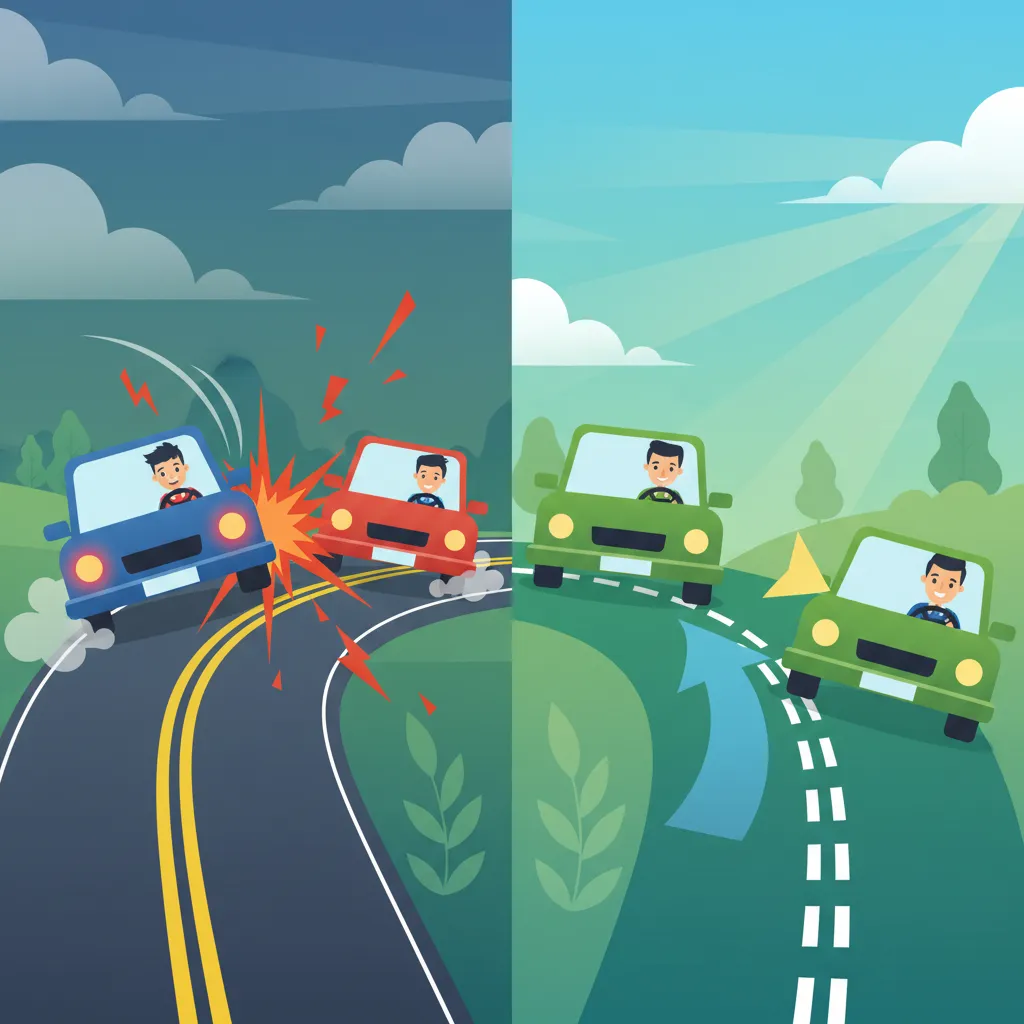
This lesson addresses common errors made by drivers when using roundabouts and presents corrective strategies. It covers issues such as entering from the wrong lane, failing to yield to circulating traffic, exceeding the recommended speed, and not signaling an exit correctly. By understanding these mistakes, drivers can improve their roundabout proficiency and reduce accident risk.
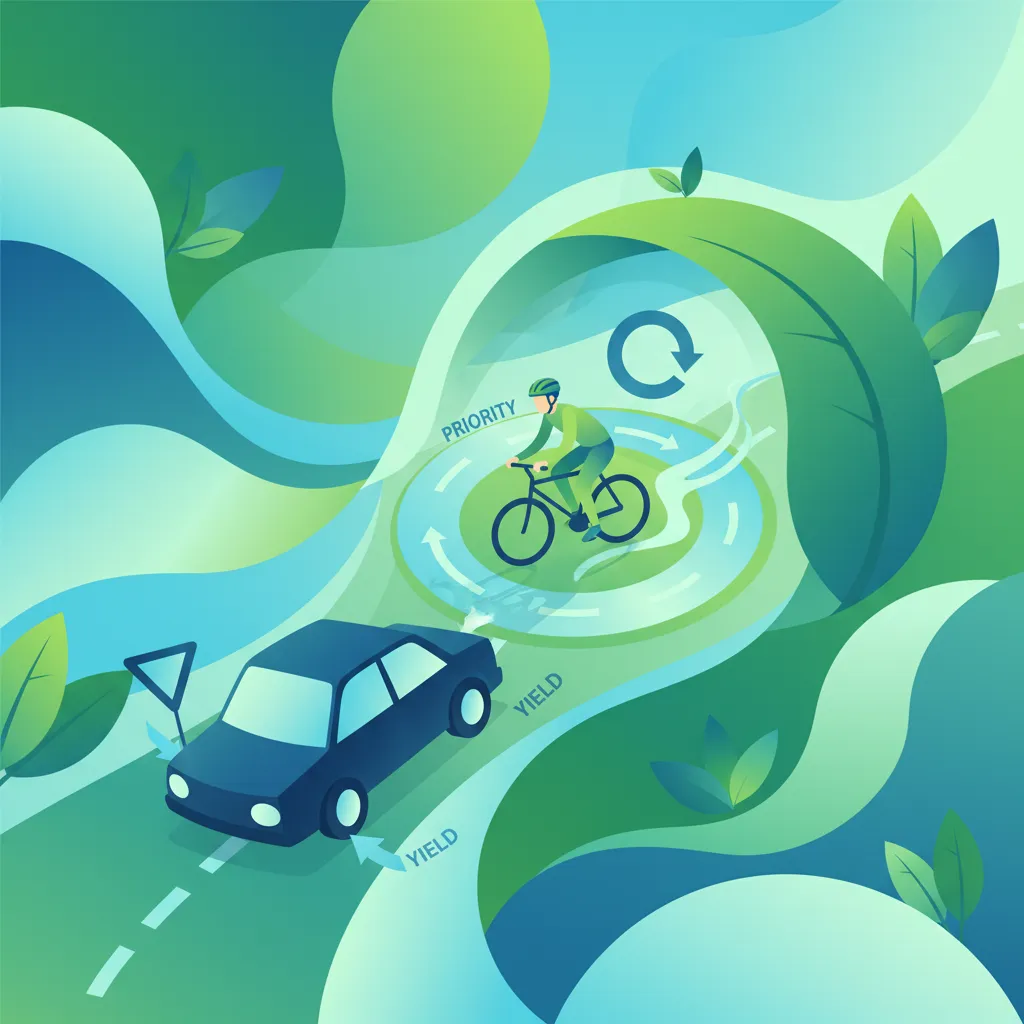
This lesson clarifies the primary rule for roundabouts: all vehicles entering must yield to traffic already on the circular roadway. It explains how to approach a roundabout, select the appropriate lane based on the intended exit, and merge safely into the flow of traffic. Proper signaling before exiting is also covered, ensuring other drivers can anticipate the rider's movements for a smooth and safe negotiation of the junction.
This lesson focuses on the yielding hierarchy that governs roundabout usage in Spain. It clarifies that vehicles already circulating have priority over those entering and explains the proper lane positioning based on the intended exit. The content includes the correct use of signals for changing lanes and exiting, and safe merging techniques.
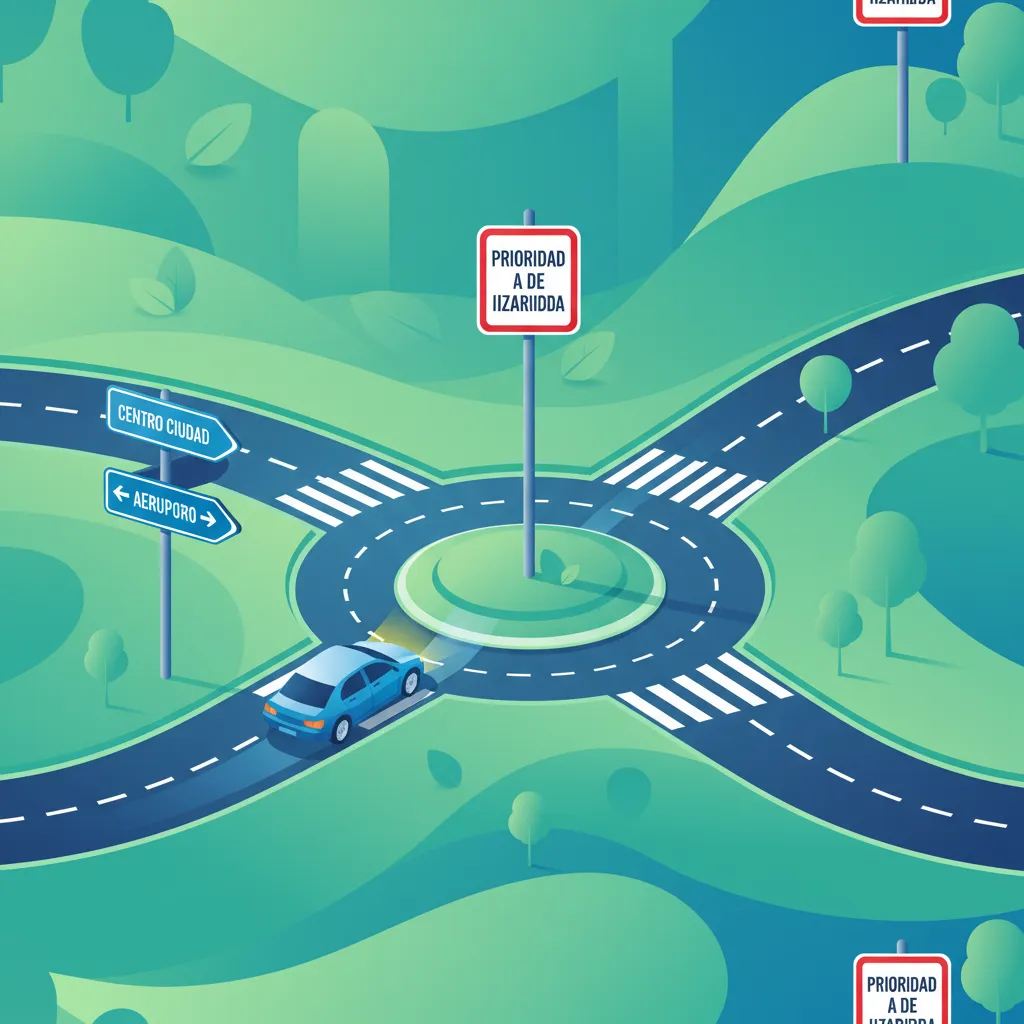
This lesson presents the variety of signs that guide drivers through roundabout navigation. It explains the significance of the roundabout warning symbol, priority signs, lane arrows, and directional signs placed before and within the roundabout. Mastery of roundabout signage ensures that drivers follow legal requirements and maintain safe traffic flow.
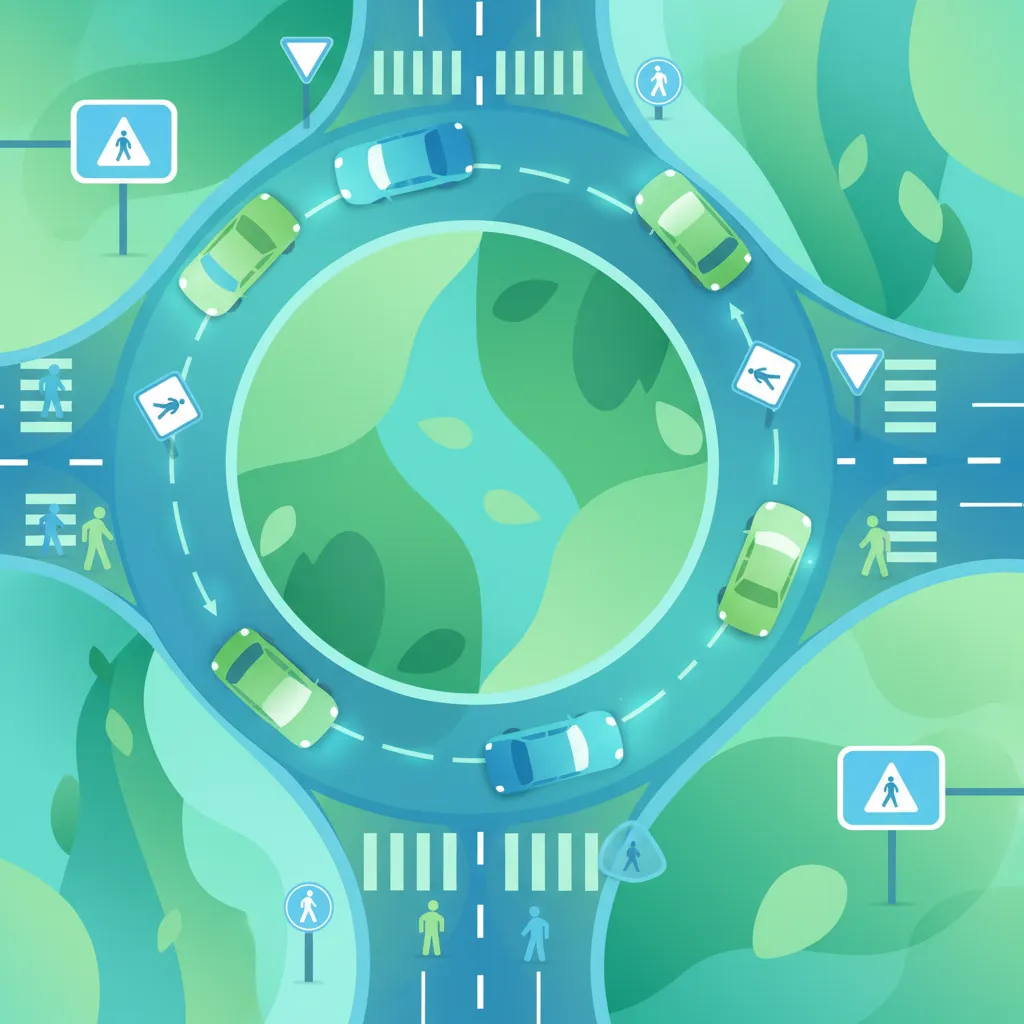
This lesson offers a comprehensive guide to navigating roundabouts in urban settings, explaining the correct protocols for entry, yielding, and circulation. Learners will be taught how to interpret lane markings and signage on multi-lane roundabouts and determine the correct vehicle positioning for safe entry and exit. The content emphasizes full compliance with Spanish city regulations that govern priority and right-of-way at these intersections.

This lesson examines the interaction between large vehicles, such as trucks, and vulnerable road users within roundabouts. It addresses the wide turning radius of heavy vehicles, the importance of checking blind spots, and the correct yielding behavior toward pedestrians and cyclists. Learners will understand how to maintain safe distances and anticipate the movements of different road users.
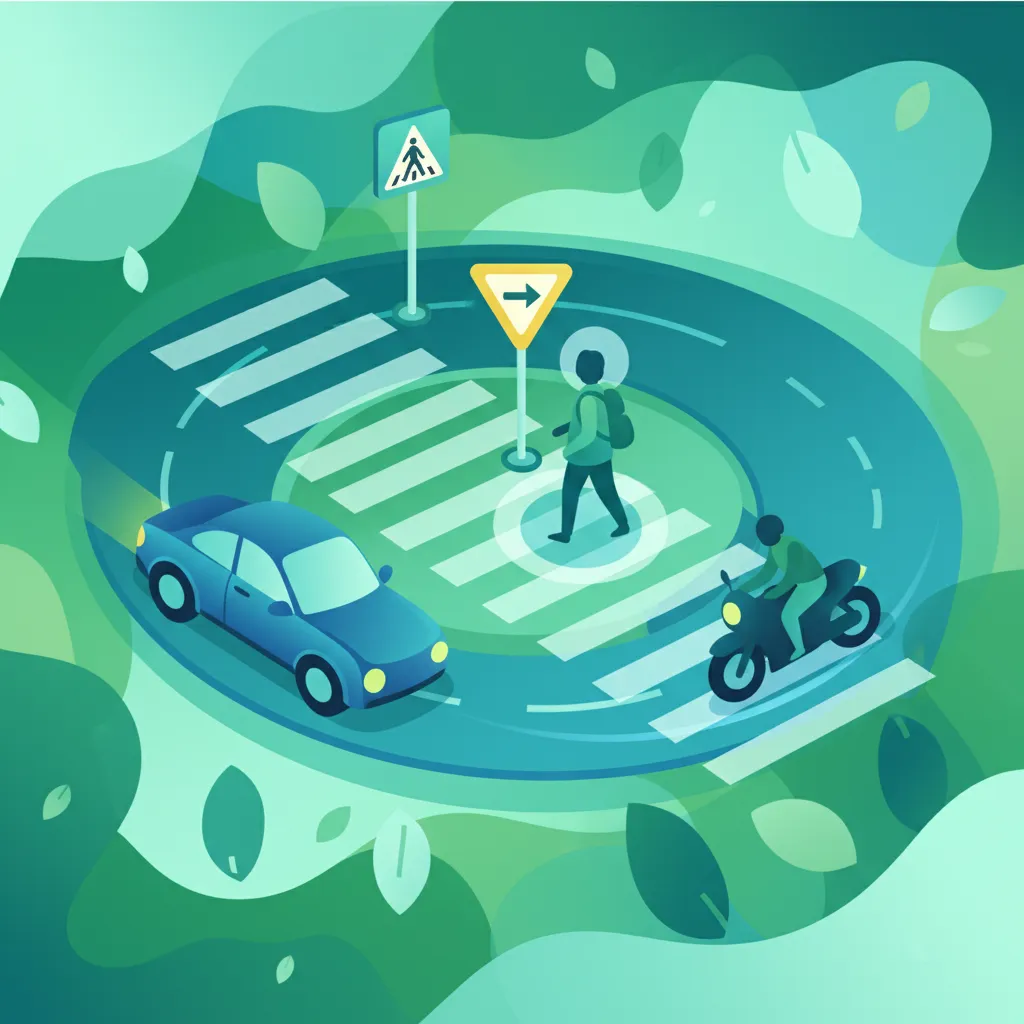
This lesson outlines the proper techniques for negotiating roundabouts and signal-controlled intersections in Spain. It explains priority rules at entry, lane selection based on the intended exit, and yielding to circulating traffic. The content also covers compliance with traffic signals and DGT regulations, including handling cyclist crossings.
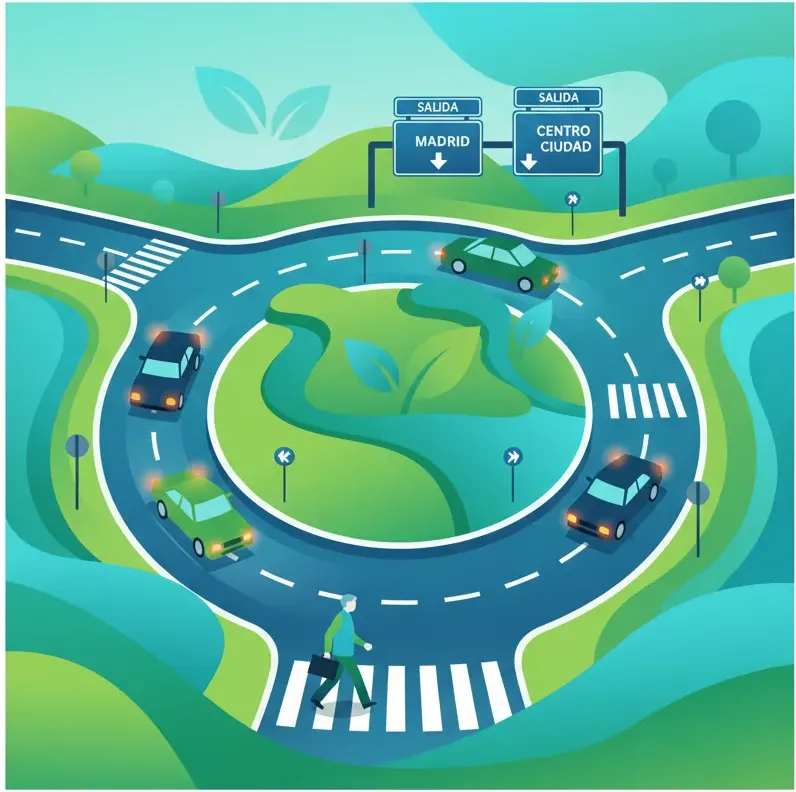
This lesson provides specific instructions on how to safely navigate complex junctions such as roundabouts and intersections with a large vehicle. It explains the rules of priority, the correct lane to use based on the intended exit, and the importance of proper vehicle positioning to account for off-tracking. The content also covers clear signaling to communicate intentions to other road users for safe and efficient passage.
Explore the official DGT geometric design standards for Spanish roundabouts, including curvature radius, lane widths, and sight distance requirements. Understand how these design principles ensure safe traffic flow and speed moderation.
This lesson presents the variety of signs that guide drivers through roundabout navigation. It explains the significance of the roundabout warning symbol, priority signs, lane arrows, and directional signs placed before and within the roundabout. Mastery of roundabout signage ensures that drivers follow legal requirements and maintain safe traffic flow.
This lesson examines the interaction between large vehicles, such as trucks, and vulnerable road users within roundabouts. It addresses the wide turning radius of heavy vehicles, the importance of checking blind spots, and the correct yielding behavior toward pedestrians and cyclists. Learners will understand how to maintain safe distances and anticipate the movements of different road users.
This lesson addresses common errors made by drivers when using roundabouts and presents corrective strategies. It covers issues such as entering from the wrong lane, failing to yield to circulating traffic, exceeding the recommended speed, and not signaling an exit correctly. By understanding these mistakes, drivers can improve their roundabout proficiency and reduce accident risk.
This lesson clarifies the primary rule for roundabouts: all vehicles entering must yield to traffic already on the circular roadway. It explains how to approach a roundabout, select the appropriate lane based on the intended exit, and merge safely into the flow of traffic. Proper signaling before exiting is also covered, ensuring other drivers can anticipate the rider's movements for a smooth and safe negotiation of the junction.
This lesson focuses on the yielding hierarchy that governs roundabout usage in Spain. It clarifies that vehicles already circulating have priority over those entering and explains the proper lane positioning based on the intended exit. The content includes the correct use of signals for changing lanes and exiting, and safe merging techniques.
This lesson offers a comprehensive guide to navigating roundabouts in urban settings, explaining the correct protocols for entry, yielding, and circulation. Learners will be taught how to interpret lane markings and signage on multi-lane roundabouts and determine the correct vehicle positioning for safe entry and exit. The content emphasizes full compliance with Spanish city regulations that govern priority and right-of-way at these intersections.
This lesson outlines the proper techniques for negotiating roundabouts and signal-controlled intersections in Spain. It explains priority rules at entry, lane selection based on the intended exit, and yielding to circulating traffic. The content also covers compliance with traffic signals and DGT regulations, including handling cyclist crossings.
This lesson provides specific instructions on how to safely navigate complex junctions such as roundabouts and intersections with a large vehicle. It explains the rules of priority, the correct lane to use based on the intended exit, and the importance of proper vehicle positioning to account for off-tracking. The content also covers clear signaling to communicate intentions to other road users for safe and efficient passage.
Find clear answers to common questions learners have about Design and Function of Spanish Roundabouts. Learn how the lesson is structured, which driving theory objectives it supports, and how it fits into the overall learning path of units and curriculum progression in Spain. These explanations help you understand key concepts, lesson flow, and exam focused study goals.
The central island on a Spanish roundabout serves as a physical barrier to guide traffic flow, prevent direct crossing, and provide a central point around which vehicles circulate. Its design also helps to slow down approaching vehicles, contributing to safer speeds within the roundabout.
Yield signs, or 'ceda el paso' signs, are almost always located at the entrance to a Spanish roundabout. They indicate that drivers entering the roundabout must yield to vehicles already circulating within it, prioritizing their movement.
DGT geometric design standards aim to ensure safe entry speeds, clear visibility for entering and circulating vehicles, and predictable traffic flow. Proper design minimises conflict points and helps drivers maintain control, reducing the likelihood of accidents.
While DGT sets standards, the actual design of Spanish roundabouts can vary based on space constraints, traffic volume, and the specific location (urban vs. rural). However, the fundamental principles of guiding traffic and yielding to circulating vehicles remain consistent.
When approaching a large roundabout, observe the road markings and signage carefully. Generally, the right lane is for exiting sooner, while left lanes are for continuing around or exiting further. Always yield to vehicles already on the roundabout and choose your lane well in advance of your intended exit.
Use our powerful search functionality to pinpoint specific Spanish DGT driving theory practice sets. Filter by road sign categories, traffic law topics, or question difficulty to build custom study sessions and reinforce your knowledge precisely where it matters for your official exam.