
Welcome to the lesson on Roundabout Signs! Navigating Spanish roundabouts safely and legally requires understanding specific signage. This lesson, part of Unit 5 'Roundabouts & Priority Rules' in your Complete Spanish Driving License Theory Course, will equip you with the knowledge to interpret these crucial signs and ensure smooth, safe passage through any rotary.
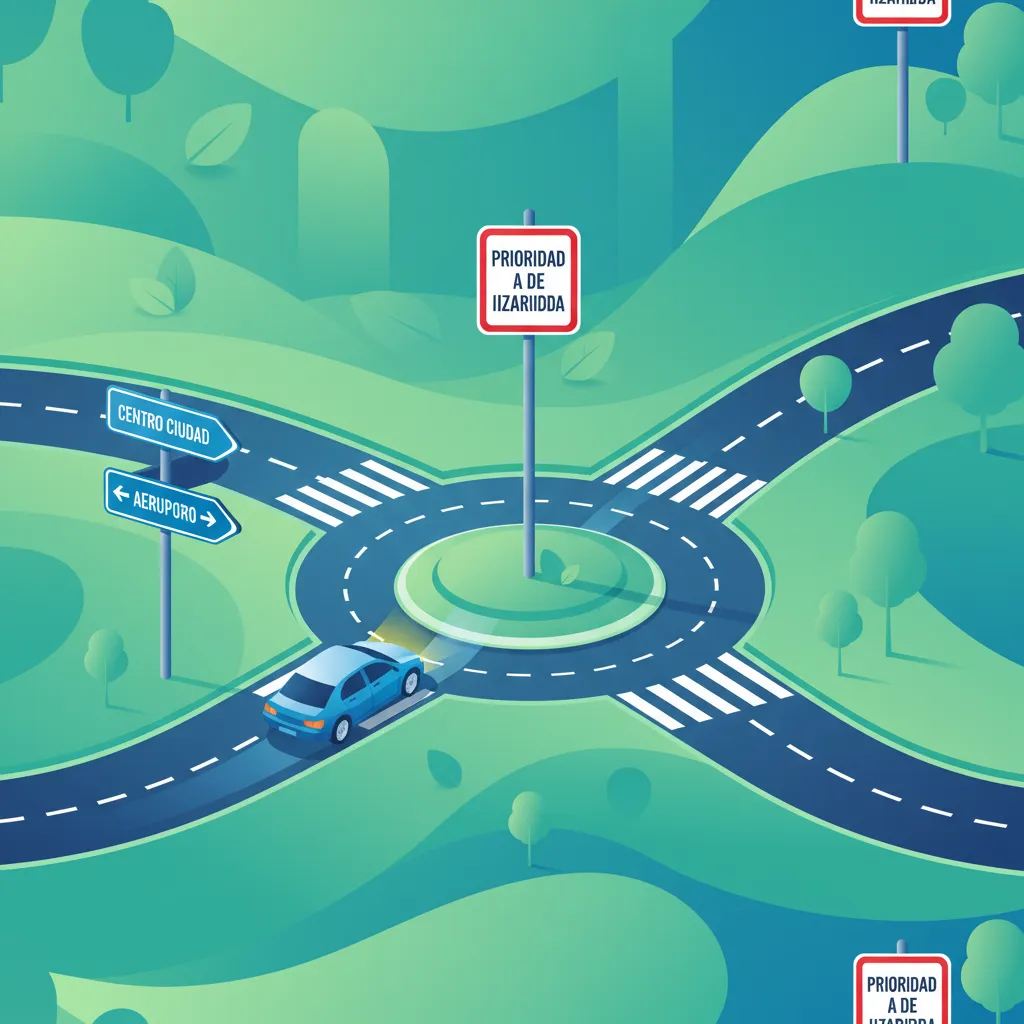
Lesson content overview
Roundabouts, or glorietas, are a ubiquitous feature of the Spanish road network, designed to improve traffic flow and reduce the severity of collisions compared to traditional intersections. Mastering their navigation is a cornerstone of safe driving in Spain and a crucial component of the Spanish driving license exam. This comprehensive lesson focuses specifically on the diverse range of traffic signs that guide drivers through roundabouts, from the initial warning of their presence to the precise indications for exiting.
Understanding roundabout signage is not merely about memorizing symbols; it's about internalizing the legal requirements and safety principles they represent. These signs dictate your approach speed, lane selection, and, most importantly, when and where to yield, ensuring predictable behavior and minimizing conflict points among drivers, pedestrians, and cyclists. By the end of this chapter, you will possess a deep understanding of how to interpret and react to every sign specific to roundabout navigation, aligning your driving with the regulations set forth by the Dirección General de Tráfico (DGT) and the Reglamento General de Circulación (RGC).
Traffic signs around roundabouts are strategically placed to convey critical information at various stages of your approach and traversal. Adhering to these signs is fundamental for safety and efficiency.
Always scan ahead for roundabout signs. Early identification allows ample time to adjust your speed, choose the correct lane, and prepare to yield or stop, preventing last-minute maneuvers that can cause accidents.
Signs placed well before a roundabout serve as an essential alert, giving drivers sufficient time to process the upcoming road configuration. This advance notice is crucial for reducing speed and selecting the appropriate lane before reaching the entry point. Drivers must reduce speed and prepare for the required actions indicated by subsequent signs.
The yield sign is paramount at every roundabout entry. It unequivocally assigns priority to traffic already circulating within the roundabout, preventing collisions and maintaining continuous flow. Drivers must be prepared to stop if there are vehicles within the roundabout, ensuring safe entry.
Arrows, whether painted on the road surface or displayed on overhead signs, are vital for correct lane usage within multi-lane roundabouts. They indicate which lane is suitable for which exit, reducing confusion and the need for hazardous lane changes mid-roundabout. Following these arrows ensures smooth progression to your intended exit.
Signs providing destination names or road numbers at or after the roundabout help drivers identify their exit. This information reduces hesitation and allows for proper lane positioning prior to exiting, contributing to overall traffic efficiency.
Specific signs within or near roundabouts alert drivers to the presence of pedestrian and cyclist crossings. These signs mandate yielding to vulnerable road users at designated points, emphasizing their safety as a top priority.
Some roundabouts include specific signage or road markings designed to guide large vehicles, such as buses or trucks. These provisions account for their larger turning radii and ensure they can navigate the roundabout safely without obstructing other traffic or damaging infrastructure.
Navigating roundabouts in Spain requires a clear understanding of several key signs. Each sign provides specific instructions to ensure safety and smooth traffic flow.
The primary sign warning of an approaching roundabout is a triangular sign with a red border, indicating danger. Inside, a circular pictogram depicts traffic circulating clockwise.
This sign is typically placed between 150 and 200 metres before the roundabout in urban areas, and often further in rural settings. Its purpose is to give drivers ample time to reduce their speed and mentally prepare for the intersection. Sometimes, this warning sign may be accompanied by a supplementary sign indicating a recommended or mandatory speed limit for the approach, especially if the roundabout requires a significant speed reduction for safe negotiation. Drivers must adjust their speed according to these indications and the prevailing road conditions.
The most critical regulatory sign at any roundabout entry in Spain is the Ceda el paso sign, which means "Yield." This sign is an inverted red triangle with a white background and the text "CEDA EL PASO" in black.
Upon encountering this sign, drivers are legally obliged to yield to any vehicle already circulating within the roundabout. This means you must stop your vehicle if necessary to allow circulating traffic to pass safely before entering. Failing to yield is a serious traffic violation and a common cause of collisions at roundabouts. Even if the roundabout appears empty, a momentary check is required to confirm no vehicles are approaching rapidly from your left.
Never assume priority when approaching a roundabout with a 'Ceda el Paso' sign. Always prepare to yield to traffic already inside, regardless of your intended exit.
In multi-lane roundabouts, specific guidance is provided for lane usage, primarily through arrows painted on the road surface or displayed on overhead gantry signs. These arrows are crucial for guiding drivers to the correct lane for their intended exit.
Drivers must position their vehicle in the appropriate lane before entering the roundabout and maintain that lane discipline throughout their trajectory. Lane changes within the roundabout itself are generally prohibited unless explicitly allowed by additional signs or markings, as they significantly increase the risk of side-swipe collisions.
Once inside or just past a roundabout, informational signs provide directions to specific destinations or indicate road numbers for each exit. These signs are typically blue or green (depending on the type of road) and feature arrows pointing towards the exit, accompanied by the name of a city, town, street, or a road identification number.
These signs are essential for route planning, especially when navigating unfamiliar areas. By observing these signs early, drivers can confirm they are in the correct lane for their desired exit, minimizing hesitation and preventing abrupt maneuvers. It’s important to identify your exit destination before you enter the roundabout if possible, to choose the correct lane from the outset.
Roundabouts often integrate pathways for pedestrians and cyclists. Signs are deployed to alert drivers to these crossings, emphasizing the need to yield to vulnerable road users.
These blue square signs with white pictograms (a walking person for pedestrians, a cyclist for cyclists) warn drivers that they must be prepared to stop and yield if pedestrians or cyclists are using or about to use the crossing. These crossings can be located at the entry/exit points of the roundabout or even further inside, especially in shared-space designs. Drivers must reduce speed and remain vigilant for anyone attempting to cross.
Large vehicles, such as buses, trucks, and vehicles towing trailers, have different handling characteristics and turning radii. Some roundabouts may feature specific signage to guide them.
Drivers of large vehicles must pay close attention to this signage to ensure safe passage and avoid creating hazards or damaging infrastructure. Attempting to use inner lanes not designed for larger vehicles can lead to blockages or collisions.
The Reglamento General de Circulación (RGC), or General Traffic Regulations, forms the legal framework for all road usage in Spain, including specific provisions for roundabout navigation and signage. Compliance with these articles is mandatory and enforced by the DGT.
Always remember that traffic signs take precedence over general road rules. If a sign contradicts a default rule (e.g., a "Stop" sign where you might expect "Yield"), the sign's instruction must be followed.
Rule: Drivers must yield to traffic already circulating within the roundabout. This applies to all roundabouts where a "Ceda el paso" (Yield) sign or a "Stop" sign is present at the entry.
Applicability: Every roundabout entry in Spain.
Rationale: This rule is fundamental to maintaining continuous flow and preventing entry-related collisions by clearly assigning priority to vehicles that are already moving within the circular intersection.
Rule: Drivers must always respect the speed limits indicated by road signs. In the absence of specific signs, the general urban speed limit (currently 50 km/h) applies, which must be reduced to a speed appropriate for the roundabout's design and prevailing conditions.
Applicability: Approaching and entering all roundabouts.
Rationale: Appropriate speed is crucial for safely negotiating the curvature of a roundabout, managing centrifugal forces, and having sufficient time to react to other traffic, pedestrians, or unexpected hazards.
Rule: Drivers must stay within their chosen lane while circulating inside a multi-lane roundabout and generally must not change lanes within the roundabout unless explicitly indicated by signs or road markings. Lane changes are primarily reserved for after exiting.
Applicability: Multi-lane roundabouts.
Rationale: Strict lane discipline minimizes the risk of side-impact collisions, reduces driver confusion, and promotes predictable traffic flow. Abrupt lane changes within a confined circular space are extremely dangerous.
Rule: Drivers must yield to pedestrians and cyclists at designated crosswalks, which may be located at or near the entry/exit points of roundabouts.
Applicability: Roundabouts with pedestrian or cyclist crossing signs (S-20, S-22).
Rationale: This rule prioritizes the safety of vulnerable road users, who are at a higher risk of serious injury in the event of a collision. Drivers must be prepared to stop.
Rule: Buses, heavy trucks, and vehicles with trailers must adhere to specific lane signs or restrictions tailored to their size and turning capabilities. Some roundabouts may be unsuitable for such vehicles.
Applicability: Roundabouts with specific large-vehicle signage.
Rationale: These provisions accommodate the larger turning radii of heavy vehicles, prevent them from obstructing traffic or colliding with the central island, and ensure overall safety.
Rule: All traffic signage, including those for roundabouts, must be clearly visible, legible, and, where appropriate, illuminated at night. They must be placed at prescribed distances to ensure adequate reaction time for drivers.
Applicability: Nationwide.
Rationale: Clear and visible signage is essential for drivers to perceive, process, and react to instructions effectively, thereby preventing violations due to obstructed or unreadable signs.
Despite clear signage and regulations, certain situations frequently lead to driver errors or become particularly challenging. Awareness of these can help prevent mistakes.
Roundabout navigation is not static; it requires dynamic adaptation based on various environmental and vehicle-specific factors.
Let's consider practical scenarios to illustrate how various signs interact and dictate driver behavior.
Correct Behavior: The driver sees the advance warning sign with the 30 km/h limit from a distance. Due to the rain, they reduce their speed even further, perhaps to 25 km/h, well before reaching the roundabout. As they approach the entry, they stop at the Ceda el paso line to yield to a circulating car. Having planned to take the second exit, they use the outer lane as indicated by the lane arrows. Upon approaching the first exit, they slow down and check for pedestrians at the Paso para peatones crossing. They smoothly exit at the second exit, maintaining their lane.
Incorrect Behavior: The driver ignores the speed limit, maintaining 50 km/h in the rain. They fail to yield, forcing a car already inside to brake sharply. Inside the roundabout, they realize they are in the wrong lane for their exit and attempt a sudden lane change, almost colliding with a car in the inner lane. They then accelerate through the pedestrian crossing without checking, endangering a pedestrian.
Correct Behavior: The driver identifies the illuminated advance warning sign and the upcoming dual-lane roundabout. They notice the directional sign indicating that the second exit is for their destination, requiring them to use the outer lane. They reduce their speed to 40 km/h, check the Ceda el paso sign, and yield to a vehicle already circulating. They proceed into the outer lane, follow the lane arrow, and safely exit at the second exit, paying attention to the exit direction sign after leaving the roundabout.
Incorrect Behavior: The driver, despite the illuminated signs, misreads the lane arrows and enters the roundabout in the inner lane for what they think is their exit. Realizing their mistake late, they are forced to complete an extra loop of the roundabout, potentially causing confusion for other drivers.
Correct Behavior: The bus driver, recognizing the large-vehicle lane sign, positions the bus in the designated outer lane well in advance. They reduce speed, yield to circulating traffic as per the Ceda el paso sign, and then proceed, utilizing the wider turning radius afforded by the outer lane, ensuring no obstruction to smaller vehicles.
Incorrect Behavior: The bus driver ignores the dedicated lane sign and attempts to navigate the roundabout using an inner lane. This causes the bus to swing wide, potentially mounting the central island or obstructing other lanes, leading to traffic congestion and a dangerous situation.
Correct Behavior: The driver, seeing the Paso para ciclistas sign and noticing a cyclist approaching the crossing, slows down. They are prepared to stop and yield, allowing the cyclist to cross safely before proceeding through the roundabout.
Incorrect Behavior: The driver, focused only on vehicle traffic, fails to notice the Paso para ciclistas sign or the approaching cyclist. They continue without slowing, forcing the cyclist to brake abruptly or risking a collision, which could lead to severe consequences for the cyclist.
The design and placement of roundabout signage are not arbitrary; they are meticulously planned based on principles of traffic engineering, human psychology, and accident prevention.
Ceda el paso sign reduces ambiguity and cognitive load. Drivers respond more consistently to a definitive regulatory sign than to subtle cues, which minimizes hesitation and conflicts at the entry.This lesson covers the essential road signs for navigating Spanish roundabouts: the advance warning sign (P-4), mandatory yield sign (R-1), lane direction arrows, and exit directional signs. Key regulations from the RGC establish yielding priority to circulating traffic, speed limits, lane discipline requirements, and protection for vulnerable road users. Understanding these signs and their legal implications is crucial for passing the DGT theory exam and ensuring safe, predictable driving behavior at Spanish roundabouts.
A short set of high-value points that capture the most important learning from this lesson.
The P-4 triangular warning sign alerts drivers to roundabouts approximately 150-200 metres ahead, requiring speed reduction and preparation.
The Ceda el paso (R-1) sign is mandatory at every roundabout entry—drivers must yield to all circulating traffic before entering.
Lane arrows on road surfaces or overhead signs must be followed before entry; lane changes within roundabouts are generally prohibited.
Signs S-20 and S-22 require drivers to yield to pedestrians and cyclists at designated crossings within or near roundabouts.
Large vehicles must follow designated outer lane signs and restrictions specific to their turning capabilities.
Explore all units and lessons included in this driving theory course.
Yield sign (Ceda el paso) at roundabout entry means traffic already inside always has priority—stop if necessary.
Select your lane before entering a multi-lane roundabout; lane changes inside are typically prohibited and dangerous.
Pedestrian (S-20) and cyclist (S-20/S-22) crossing signs require yielding at designated points, especially at entry/exit.
Advance warning signs are placed 150-200 metres ahead to allow adequate reaction time at typical approach speeds.
Large vehicles should use outermost lanes designed for their wider turning radii to avoid blocking traffic.
Entering a roundabout without yielding to circulating traffic, causing immediate collision risk.
Changing lanes inside a multi-lane roundabout instead of selecting the correct lane before entry.
Missing an exit because lane arrows were misinterpreted or the exit was identified too late.
Failing to stop for pedestrians or cyclists at S-20 and S-22 crossings, risking serious injuries.
Large vehicles using inner lanes not designed for their turning radius, potentially causing blockages.
Lesson content overview
A short set of high-value points that capture the most important learning from this lesson.
The P-4 triangular warning sign alerts drivers to roundabouts approximately 150-200 metres ahead, requiring speed reduction and preparation.
The Ceda el paso (R-1) sign is mandatory at every roundabout entry—drivers must yield to all circulating traffic before entering.
Lane arrows on road surfaces or overhead signs must be followed before entry; lane changes within roundabouts are generally prohibited.
Signs S-20 and S-22 require drivers to yield to pedestrians and cyclists at designated crossings within or near roundabouts.
Large vehicles must follow designated outer lane signs and restrictions specific to their turning capabilities.
Explore all units and lessons included in this driving theory course.
Yield sign (Ceda el paso) at roundabout entry means traffic already inside always has priority—stop if necessary.
Select your lane before entering a multi-lane roundabout; lane changes inside are typically prohibited and dangerous.
Pedestrian (S-20) and cyclist (S-20/S-22) crossing signs require yielding at designated points, especially at entry/exit.
Advance warning signs are placed 150-200 metres ahead to allow adequate reaction time at typical approach speeds.
Large vehicles should use outermost lanes designed for their wider turning radii to avoid blocking traffic.
Entering a roundabout without yielding to circulating traffic, causing immediate collision risk.
Changing lanes inside a multi-lane roundabout instead of selecting the correct lane before entry.
Missing an exit because lane arrows were misinterpreted or the exit was identified too late.
Failing to stop for pedestrians or cyclists at S-20 and S-22 crossings, risking serious injuries.
Large vehicles using inner lanes not designed for their turning radius, potentially causing blockages.
Explore search topics learners often look for when studying Signage Specific to Roundabout Navigation. These topics reflect common questions about road rules, driving situations, safety guidance, and lesson level theory preparation for learners in Spain.
Browse additional driving theory lessons that cover connected traffic rules, road signs, and common driving situations related to this topic. Improve your understanding of how different rules interact across everyday traffic scenarios.
Explore the specific meaning and application of all road signs governing roundabout navigation in Spain. Understand warning, priority, and directional signs to ensure safe and legal driving. Essential for the DGT theory exam.
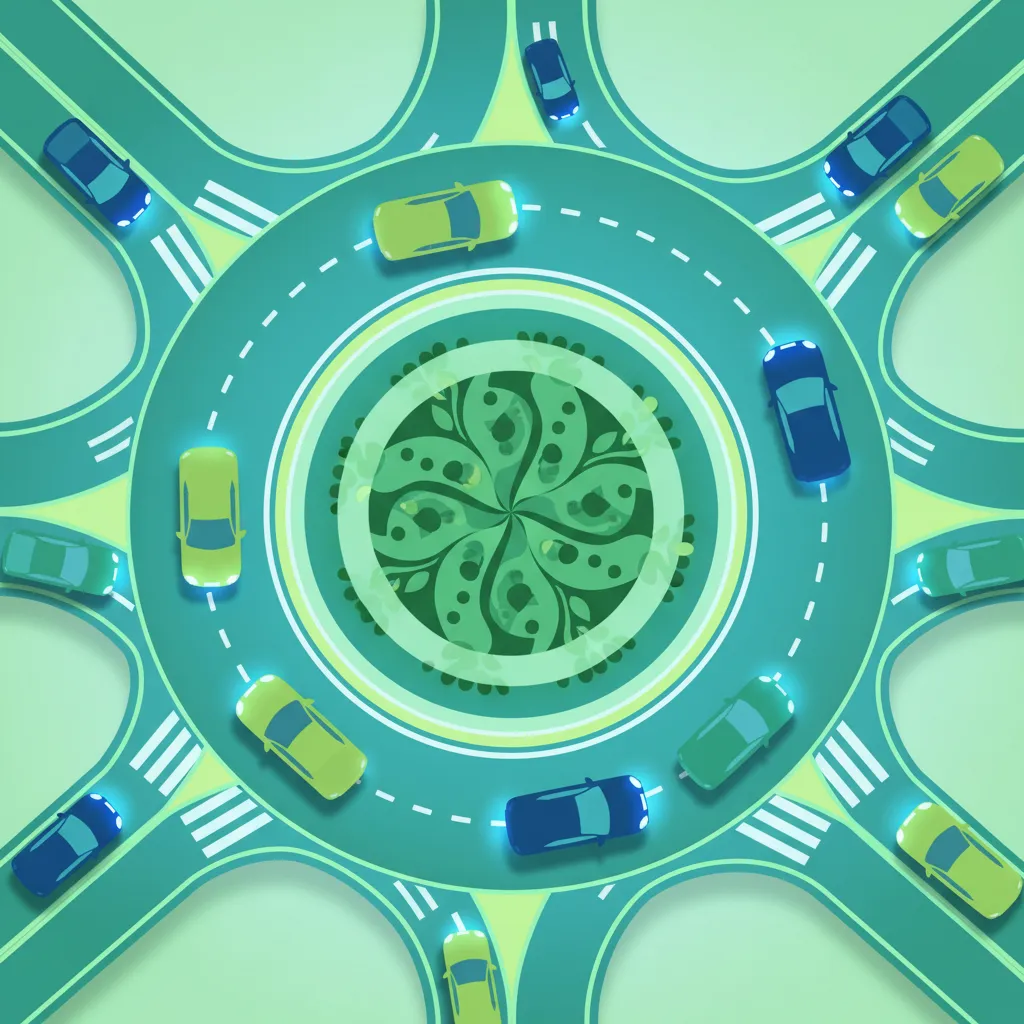
This lesson examines the structural components of a typical Spanish roundabout, describing the central island, entry and circulating lanes, and the placement of yield signs. It outlines how DGT standards dictate the geometric design and entry/exit points to ensure smooth traffic flow. Understanding these design elements enables drivers to anticipate vehicle movements and navigate safely.
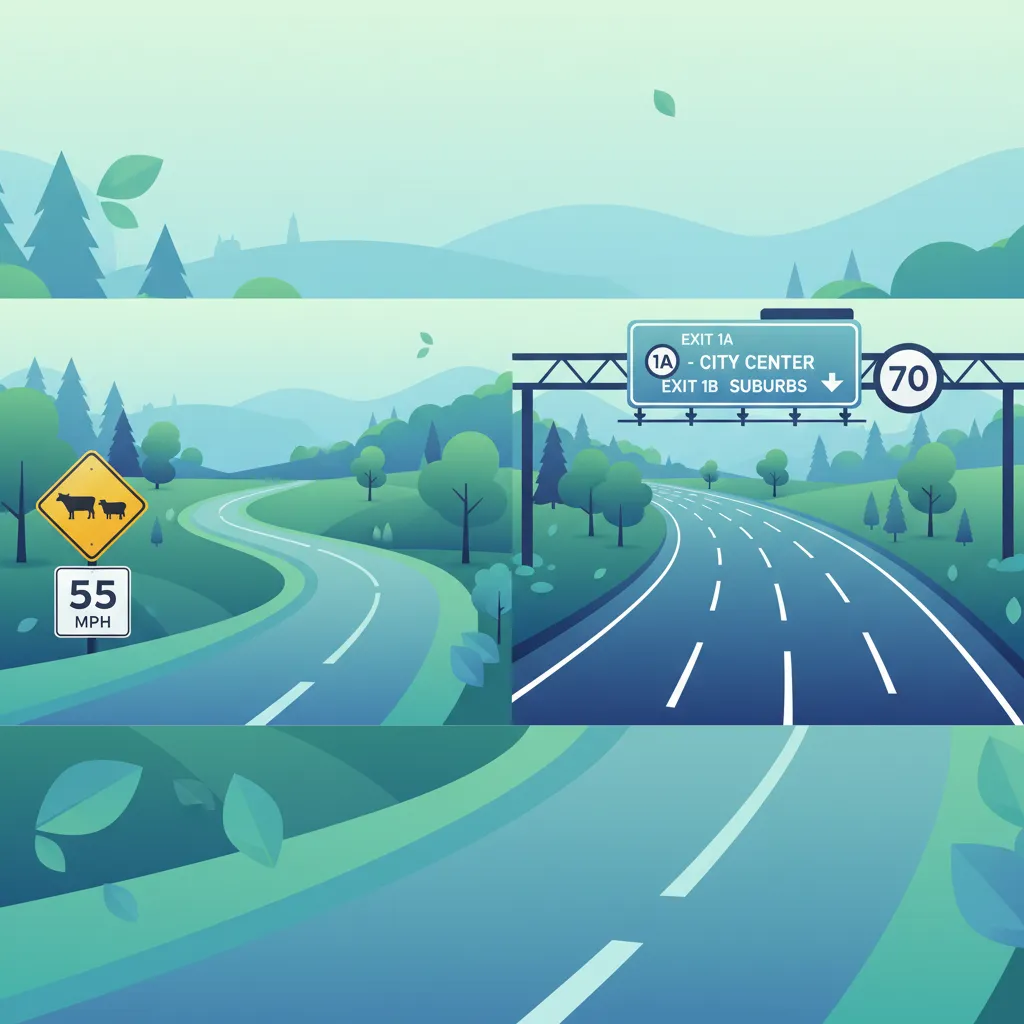
This lesson focuses on the specific signage systems used in rural and highway environments in Spain. It explains how to interpret directional signs, exit numbering, distance markers, and signs for services like fuel and rest areas. Understanding these signs is crucial for effective navigation and safe driving at high speeds.
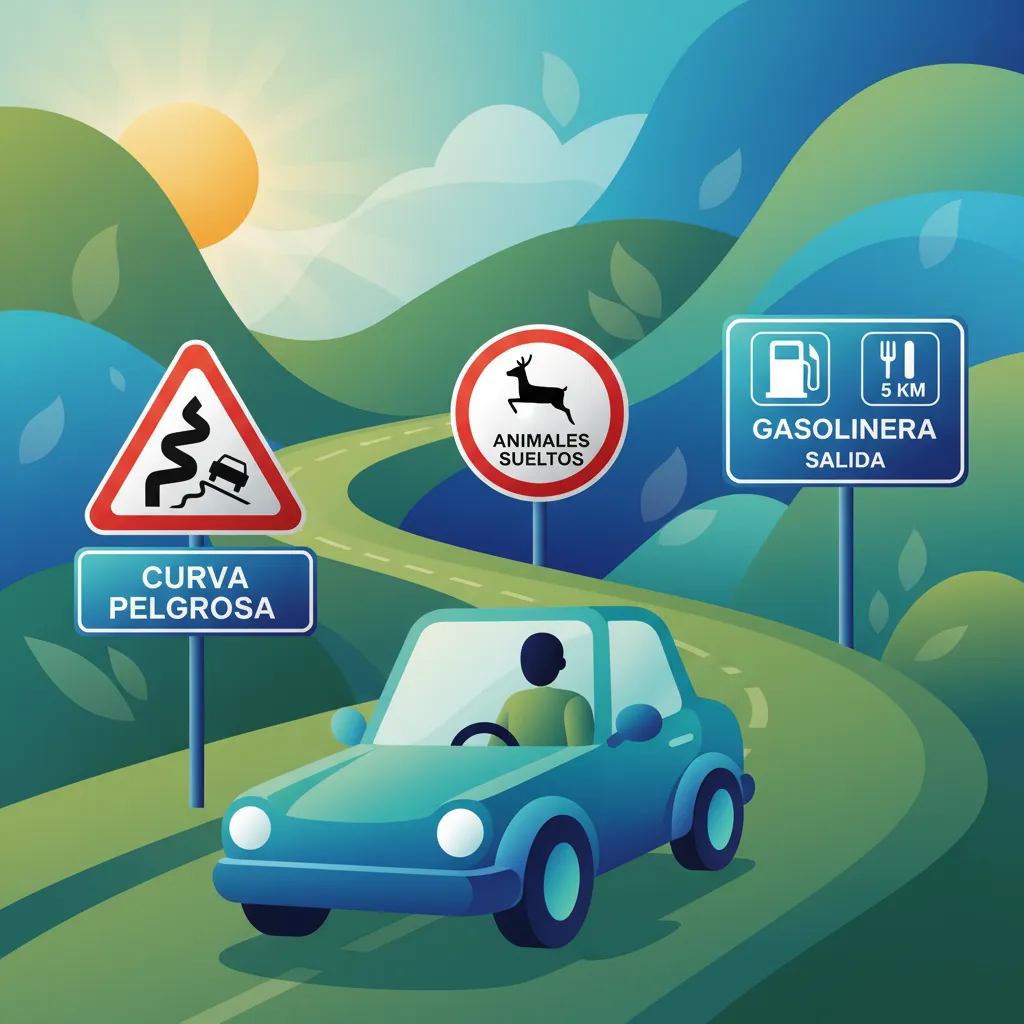
This lesson covers warning and informational signs, which are crucial for anticipating road conditions. It explains how triangular warning signs alert riders to upcoming hazards like sharp curves, slippery surfaces, or pedestrian crossings. The content also describes rectangular informational signs that provide directions, distances, and other useful guidance, helping riders to plan their route and adjust their driving in advance.

This lesson clarifies the primary rule for roundabouts: all vehicles entering must yield to traffic already on the circular roadway. It explains how to approach a roundabout, select the appropriate lane based on the intended exit, and merge safely into the flow of traffic. Proper signaling before exiting is also covered, ensuring other drivers can anticipate the rider's movements for a smooth and safe negotiation of the junction.
This lesson addresses common errors made by drivers when using roundabouts and presents corrective strategies. It covers issues such as entering from the wrong lane, failing to yield to circulating traffic, exceeding the recommended speed, and not signaling an exit correctly. By understanding these mistakes, drivers can improve their roundabout proficiency and reduce accident risk.
This lesson outlines the proper techniques for negotiating roundabouts and signal-controlled intersections in Spain. It explains priority rules at entry, lane selection based on the intended exit, and yielding to circulating traffic. The content also covers compliance with traffic signals and DGT regulations, including handling cyclist crossings.
This lesson provides specific instructions on how to safely navigate complex junctions such as roundabouts and intersections with a large vehicle. It explains the rules of priority, the correct lane to use based on the intended exit, and the importance of proper vehicle positioning to account for off-tracking. The content also covers clear signaling to communicate intentions to other road users for safe and efficient passage.
This lesson offers a comprehensive guide to navigating roundabouts in urban settings, explaining the correct protocols for entry, yielding, and circulation. Learners will be taught how to interpret lane markings and signage on multi-lane roundabouts and determine the correct vehicle positioning for safe entry and exit. The content emphasizes full compliance with Spanish city regulations that govern priority and right-of-way at these intersections.
This lesson focuses on the yielding hierarchy that governs roundabout usage in Spain. It clarifies that vehicles already circulating have priority over those entering and explains the proper lane positioning based on the intended exit. The content includes the correct use of signals for changing lanes and exiting, and safe merging techniques.

This lesson introduces the visual language of road markings, focusing on the distinction between solid and broken lines and what they permit regarding lane changes and overtaking. It explains the meaning of directional arrows painted on the road surface, which guide drivers into the correct lane for their intended maneuver. Understanding these markings is crucial for maintaining proper lane discipline and navigating complex intersections and multi-lane roads.
Learn to identify and avoid frequent errors drivers make at Spanish roundabouts. This lesson covers challenging scenarios and explains how correct interpretation of signage prevents dangerous situations and violations.
This lesson addresses common errors made by drivers when using roundabouts and presents corrective strategies. It covers issues such as entering from the wrong lane, failing to yield to circulating traffic, exceeding the recommended speed, and not signaling an exit correctly. By understanding these mistakes, drivers can improve their roundabout proficiency and reduce accident risk.
This lesson clarifies the primary rule for roundabouts: all vehicles entering must yield to traffic already on the circular roadway. It explains how to approach a roundabout, select the appropriate lane based on the intended exit, and merge safely into the flow of traffic. Proper signaling before exiting is also covered, ensuring other drivers can anticipate the rider's movements for a smooth and safe negotiation of the junction.
This lesson outlines the proper techniques for negotiating roundabouts and signal-controlled intersections in Spain. It explains priority rules at entry, lane selection based on the intended exit, and yielding to circulating traffic. The content also covers compliance with traffic signals and DGT regulations, including handling cyclist crossings.

This lesson examines the interaction between large vehicles, such as trucks, and vulnerable road users within roundabouts. It addresses the wide turning radius of heavy vehicles, the importance of checking blind spots, and the correct yielding behavior toward pedestrians and cyclists. Learners will understand how to maintain safe distances and anticipate the movements of different road users.
This lesson focuses on the yielding hierarchy that governs roundabout usage in Spain. It clarifies that vehicles already circulating have priority over those entering and explains the proper lane positioning based on the intended exit. The content includes the correct use of signals for changing lanes and exiting, and safe merging techniques.
This lesson examines the structural components of a typical Spanish roundabout, describing the central island, entry and circulating lanes, and the placement of yield signs. It outlines how DGT standards dictate the geometric design and entry/exit points to ensure smooth traffic flow. Understanding these design elements enables drivers to anticipate vehicle movements and navigate safely.
This lesson offers a comprehensive guide to navigating roundabouts in urban settings, explaining the correct protocols for entry, yielding, and circulation. Learners will be taught how to interpret lane markings and signage on multi-lane roundabouts and determine the correct vehicle positioning for safe entry and exit. The content emphasizes full compliance with Spanish city regulations that govern priority and right-of-way at these intersections.
This lesson provides specific instructions on how to safely navigate complex junctions such as roundabouts and intersections with a large vehicle. It explains the rules of priority, the correct lane to use based on the intended exit, and the importance of proper vehicle positioning to account for off-tracking. The content also covers clear signaling to communicate intentions to other road users for safe and efficient passage.

This lesson presents advanced cornering scenarios common on Spanish roads, such as mountain hairpins and high-speed autovía exits. It outlines specific techniques for descent control, ascent maneuvers, and safely merging into traffic after cornering. Interaction with cyclists and emergency cornering strategies are also covered in accordance with DGT regulations.

This lesson covers the essential techniques for perpendicular parking (reversing into a bay) and executing a three-point turn. It details the approach, turning points, and use of mirrors and observation to ensure proper vehicle positioning. Learners will understand how to assess the required space and comply with DGT regulations for these common maneuvers.
Find clear answers to common questions learners have about Signage Specific to Roundabout Navigation. Learn how the lesson is structured, which driving theory objectives it supports, and how it fits into the overall learning path of units and curriculum progression in Spain. These explanations help you understand key concepts, lesson flow, and exam focused study goals.
The primary warning sign for a roundabout in Spain is a circular blue sign with white arrows indicating traffic circulates counter-clockwise. This sign signals that you are approaching a roundabout and should prepare to follow its rules.
At the entrance to a roundabout in Spain, you will typically encounter either a 'Ceda el Paso' (Yield) sign or a 'Stop' sign. You must respect these signs and yield to vehicles already circulating within the roundabout before entering.
Lane arrows on signs or road markings within a roundabout indicate which lanes lead to which exits. Following these arrows correctly is essential for positioning your vehicle to take the desired exit and avoid impeding other traffic.
Yes, directional signs placed before and within roundabouts are crucial. They indicate the destination of each exit, helping you choose the correct lane well in advance and ensuring you reach your intended route without confusion.
No, you must always obey all traffic signs, including those inside the roundabout. These signs provide essential information about lane usage, priority, and exit routes, and ignoring them can lead to dangerous situations and fines.
Use our powerful search functionality to pinpoint specific Spanish DGT driving theory practice sets. Filter by road sign categories, traffic law topics, or question difficulty to build custom study sessions and reinforce your knowledge precisely where it matters for your official exam.