
This lesson delves into the critical aspects of vehicle dynamics and braking systems specific to buses and coaches, essential for your professional D/D1 license in Spain. Understanding how these systems, particularly air brakes and ABS, function and impact safety is key to passing your DGT theory exam and operating large passenger vehicles responsibly.

Lesson content overview
Operating heavy passenger vehicles, such as buses and coaches, demands an advanced understanding of vehicle dynamics, particularly concerning braking systems. Unlike smaller vehicles, the sheer mass, higher speeds, and responsibility for numerous passengers mean that the physics of deceleration and the engineering of braking technologies become critically important. This lesson, part of your Professional Bus and Coach Theory for Spanish Driving License – Category D & D1, provides an in-depth examination of these complex systems, focusing on how they ensure safety, stability, and compliance with Spanish DGT regulations under various conditions.
At its core, braking is the process of dissipating a moving vehicle's kinetic energy, converting it into heat through friction. For heavy vehicles, this energy is substantial, directly proportional to the vehicle's mass and the square of its speed. This means that a small increase in speed dramatically increases the energy that the braking system must handle.
The effectiveness of braking relies heavily on the coefficient of friction (µ), which is the measure of grip between the tires and the road surface. This coefficient varies significantly based on road conditions (dry, wet, icy, gravel), tire quality, and even temperature. A higher coefficient allows for greater braking force and shorter stopping distances.
During braking, inertia causes a significant dynamic load transfer. The vehicle's weight shifts from the rear axle to the front axle. This phenomenon is crucial because it increases the load and therefore the available traction on the front wheels, while simultaneously reducing the load and traction on the rear wheels. Professional drivers must understand this to anticipate how the vehicle will react and to ensure even and controlled braking, especially when fully loaded.
The redistribution of vehicle weight during braking, causing an increase in load on the front axle and a decrease on the rear axle due to inertia.
Modern heavy passenger vehicles primarily utilize air brake systems due to their ability to generate immense braking force with relatively little effort from the driver, their robust nature, and inherent safety features. Unlike hydraulic systems, air brakes use compressed air to actuate the braking mechanisms.
A typical air brake system comprises several key components:
The air brake system is divided into multiple independent circuits to ensure safety and redundancy. These typically include the service brake, emergency (secondary) brake, and parking brake circuits.
The service brake circuit is the primary system used during normal driving conditions. When the driver presses the foot pedal, the service valve opens, allowing compressed air from the reservoirs to flow to the brake chambers at each wheel. The air pressure pushes on a diaphragm or piston, which then actuates the brake mechanism, slowing the vehicle. The harder the pedal is pressed, the more air pressure is delivered, and the greater the braking force.
For effective and safe operation, Spanish DGT regulations (DGT Regulation 2.5.2) mandate a minimum service air pressure of 5 bar before departure for all Category D vehicles equipped with air brakes. Operating below this pressure can severely compromise braking effectiveness and is a serious safety hazard. Regular monitoring of the air pressure gauge is therefore an essential pre-trip and ongoing check.
The emergency, or secondary, brake circuit provides full braking capability in the event of a failure in the primary service brake system or if air pressure drops below a safe threshold. This system often operates independently, providing a critical layer of safety. In many modern heavy vehicles, this is integrated as a dual-circuit system, where failure in one circuit does not compromise the other. If the air pressure in the service circuit drops too low (e.g., typically below 4 bar), the emergency brake may activate automatically, bringing the vehicle to a controlled stop.
The parking brake circuit is designed to hold the vehicle stationary when parked. Unlike service brakes, which are applied by air pressure, parking brakes in heavy vehicles are often spring-applied and air-released. This means that if air pressure is lost (e.g., when the engine is off), the springs automatically apply the brakes, ensuring the vehicle remains secure. To release the parking brake, compressed air is used to overcome the spring force. Drivers must always engage the parking brake when stopping, especially when loading or unloading passengers, to prevent unintended movement.
Visually inspect air lines, hoses, and connections for any damage or leaks.
Check the air pressure gauge; ensure the system builds and maintains pressure to the maximum cut-out (typically 8-10 bar).
Test for air leaks by applying the brakes and listening for escaping air; the pressure should not drop significantly within a minute.
Confirm that the minimum service air pressure of 5 bar is met before commencing any journey.
Verify the parking brake engages and holds the vehicle securely.
The Anti-lock Braking System (ABS) is a crucial electronic safety feature designed to prevent wheel lock-up during heavy or emergency braking. Wheel lock-up, especially on slippery surfaces, can lead to a loss of steering control and significantly extend stopping distances. ABS mitigates these risks by rapidly modulating brake pressure to each wheel, allowing them to continue rotating and maintain traction.
ABS operates through a sophisticated network of components:
The primary benefit of ABS is the ability to maintain steering control during emergency braking. By preventing wheel lock-up, the tires continue to grip the road, allowing the driver to steer around obstacles even while braking hard. It also generally reduces stopping distance on low-traction surfaces like wet or icy roads, although its primary goal is control rather than minimum stopping distance in all scenarios.
Drivers of ABS-equipped vehicles must understand that the system will cause a pulsating feeling in the brake pedal, accompanied by a grinding noise. This is normal and indicates the system is actively working. The correct technique for an emergency stop in an ABS vehicle is to press the brake pedal firmly and continuously – never pump the brakes, as this interferes with the system's operation.
When driving a vehicle equipped with ABS, if you need to perform an emergency stop, press the brake pedal firmly and hold it down. Do not pump the brakes, as this will disable the ABS function and could lead to loss of control.
Spanish regulations require ABS to be functional and activated on all Category D vehicles equipped with the system. Disabling ABS for any reason is prohibited unless approved for specific maintenance by a certified technician. Always check the ABS warning light during your pre-trip inspection; if it remains illuminated, the system has a fault and should be inspected before operation.
Stopping distance is one of the most critical safety parameters for professional drivers. It represents the total distance a vehicle travels from the moment a driver perceives a hazard to the point where the vehicle comes to a complete stop. This distance is divided into two main components:
Professional bus and coach drivers must always account for their vehicle's increased mass and potential full passenger load when estimating stopping distances. A fully loaded coach traveling at 80 km/h on dry asphalt may require approximately 100 metres to stop, significantly more than an empty vehicle or a car. This underscores the need for maintaining ample following distances and anticipating potential hazards well in advance. Spanish regulations prescribe maximum permissible speeds and require drivers to maintain safe following distances appropriate for their vehicle type and conditions.
Brake fade is a dangerous phenomenon where the effectiveness of a vehicle's braking system diminishes due to excessive heat. This overheating can be caused by prolonged or repeated heavy braking, especially common on long downhill grades or in stop-and-go urban traffic with a heavy load.
There are two primary types of brake fade:
Brake fade can lead to dangerously extended stopping distances and even complete loss of braking power. To prevent brake fade, professional drivers must employ mitigation strategies:
Ignoring signs of brake fade, such as a spongy pedal or reduced braking effectiveness, can lead to catastrophic brake failure. Always prioritize preventing brake fade through proper driving techniques.
The way passengers and cargo are distributed within a bus or coach profoundly impacts its handling and, critically, its braking performance. Understanding load distribution and dynamic weight transfer is essential for safe operation.
Static Load Distribution refers to how the vehicle's total weight is distributed across its axles when stationary. Manufacturers design vehicles with specific axle weight ratings, and these must not be exceeded. Improper loading, such as concentrating too many passengers or heavy cargo at one end, can overload an axle, leading to:
During braking, dynamic weight transfer occurs, shifting weight from the rear to the front axle. For a heavily loaded vehicle, this effect is amplified. If the rear axle is already heavily loaded, the reduction in weight during braking can severely decrease its traction, potentially leading to premature rear-wheel lock-up (even with ABS) and loss of vehicle stability, particularly if the vehicle is turning. Conversely, an underloaded front axle might not provide sufficient grip for effective steering during emergency braking.
The maximum permissible total weight (Gross Vehicle Weight - GVW) and individual axle weights that a vehicle is legally allowed to carry, including the vehicle itself, passengers, and cargo.
Professional drivers must ensure that the vehicle's legal maximum load limits are observed. This includes not only the total vehicle weight but also individual axle weight ratings. When carrying passengers, ensure that they are distributed as evenly as possible to maintain balance, especially on vehicles without automatic load-sensing brake proportioning. Even minor imbalances can become significant during emergency braking maneuvers.
Adherence to Spanish DGT regulations regarding braking systems is not just a legal obligation but a fundamental aspect of professional driving safety for Category D & D1 license holders.
As previously mentioned, Spanish DGT Regulation 2.5.2 mandates that the minimum service air pressure must be 5 bar or higher before a Category D vehicle with air brakes commences any journey. This ensures that sufficient braking force is available for safe operation. Failure to comply is a serious offense.
Professional drivers are legally required to perform a comprehensive visual and functional check of the entire braking system before each trip. This includes:
This daily routine is crucial for detecting minor defects before they escalate into catastrophic failures.
For hydraulic brake systems (though less common for main service brakes in heavy buses/coaches, they may be present in auxiliary systems or smaller Category D1 vehicles), brake fluid replacement is critical. According to manufacturer guidelines and DGT Technical Maintenance Standards, brake fluid must be replaced every 12-18 months or after 15,000 km, whichever occurs first. Brake fluid degrades over time, absorbing moisture, which lowers its boiling point and can lead to fluid fade.
Drivers must strictly adhere to the maximum permissible total weight (Gross Vehicle Weight - GVW) and individual axle weight ratings specified for their vehicle. Overloading is a severe violation, leading to fines and significantly compromising braking performance, vehicle stability, and safety.
If a Category D vehicle is equipped with ABS, the system must remain functional and enabled during all normal driving conditions. Disabling ABS is prohibited unless specifically authorized for maintenance purposes with a valid technical service certificate. A non-functional ABS system must be repaired immediately.
Ignoring regulatory requirements or neglecting proper operating procedures for braking systems can lead to severe consequences. Here are some common violations and associated risks:
Professional drivers must adapt their braking techniques to various environmental and operational contexts to maintain optimal safety and efficiency.
Mastering vehicle dynamics and braking systems is not merely a technical requirement; it is the cornerstone of safe and responsible professional driving for Category D & D1 license holders. A thorough understanding of air brake architecture, the function and benefits of ABS, the factors influencing stopping distance, and effective brake fade management is non-negotiable.
Professional drivers must integrate pre-trip inspections, adhere to strict load regulations, and follow maintenance schedules to ensure the optimal readiness of their braking systems. Furthermore, adapting braking techniques to varying weather, road types, and vehicle loads, as well as understanding the critical role of dynamic load transfer, are essential skills. By consistently applying these principles and complying with Spanish DGT regulations, drivers can ensure passenger safety, vehicle longevity, and their own professional competence on the road.
This lesson covers the sophisticated braking systems found in buses and coaches, essential for Spanish DGT Category D/D1 theory exams. It explains how air brake systems use compressed air to actuate braking mechanisms across multiple safety circuits, how ABS prevents wheel lock-up to maintain steering control during emergency stops, and how factors like vehicle speed, load, and road conditions significantly affect stopping distances. The content details brake fade prevention through engine braking and intermittent braking techniques, the impact of dynamic load transfer during deceleration, and the mandatory pre-trip inspection requirements and maintenance schedules specified by Spanish regulations. Professional drivers must understand these principles to ensure passenger safety and regulatory compliance.
A short set of high-value points that capture the most important learning from this lesson.
Air brake systems in heavy vehicles use compressed air to generate massive braking force, with independent circuits for service, emergency, and parking brakes ensuring redundancy and safety.
The Anti-lock Braking System (ABS) prevents wheel lock-up during emergency braking by rapidly modulating pressure at each wheel, allowing the driver to maintain steering control.
Stopping distance increases exponentially with speed and significantly with vehicle load, requiring professional drivers to maintain much greater following distances than car drivers.
Brake fade occurs when excessive heat reduces braking effectiveness; it can be prevented through engine braking, intermittent braking, and appropriate gear selection on descents.
Spanish DGT regulations mandate a minimum service air pressure of 5 bar before departure and require functional ABS on all equipped Category D vehicles.
Explore all units and lessons included in this driving theory course.
Minimum service air pressure for Category D vehicles: 5 bar; normal operating pressure: 8-10 bar; emergency brake activates around 4 bar.
During braking, dynamic load transfer shifts weight from rear to front axle, reducing rear-wheel traction and increasing front-wheel braking capacity.
ABS prevents wheel lock-up through rapid pressure modulation; the correct emergency response is to press the brake pedal firmly and hold it continuously—never pump.
Brake fade has two types: thermal fade from overheated components and fluid fade from boiled brake fluid; both reduce braking effectiveness dangerously.
Parking brakes in heavy vehicles are spring-applied and air-released, meaning they automatically engage if air pressure is lost.
Pumping the brakes in an ABS-equipped vehicle disables the system's function and can cause wheel lock-up and loss of steering control.
Starting a journey with air pressure below 5 bar severely compromises braking force and violates DGT Regulation 2.5.2.
Overloading a vehicle beyond GVW or axle limits dramatically increases kinetic energy and stopping distance while reducing stability.
Relying solely on service brakes on long downhill grades without engine braking causes brake fade and potential total brake failure.
Failing to engage the parking brake when boarding/alighting passengers can allow the vehicle to roll away, causing injury or damage.
Lesson content overview
A short set of high-value points that capture the most important learning from this lesson.
Air brake systems in heavy vehicles use compressed air to generate massive braking force, with independent circuits for service, emergency, and parking brakes ensuring redundancy and safety.
The Anti-lock Braking System (ABS) prevents wheel lock-up during emergency braking by rapidly modulating pressure at each wheel, allowing the driver to maintain steering control.
Stopping distance increases exponentially with speed and significantly with vehicle load, requiring professional drivers to maintain much greater following distances than car drivers.
Brake fade occurs when excessive heat reduces braking effectiveness; it can be prevented through engine braking, intermittent braking, and appropriate gear selection on descents.
Spanish DGT regulations mandate a minimum service air pressure of 5 bar before departure and require functional ABS on all equipped Category D vehicles.
Explore all units and lessons included in this driving theory course.
Minimum service air pressure for Category D vehicles: 5 bar; normal operating pressure: 8-10 bar; emergency brake activates around 4 bar.
During braking, dynamic load transfer shifts weight from rear to front axle, reducing rear-wheel traction and increasing front-wheel braking capacity.
ABS prevents wheel lock-up through rapid pressure modulation; the correct emergency response is to press the brake pedal firmly and hold it continuously—never pump.
Brake fade has two types: thermal fade from overheated components and fluid fade from boiled brake fluid; both reduce braking effectiveness dangerously.
Parking brakes in heavy vehicles are spring-applied and air-released, meaning they automatically engage if air pressure is lost.
Pumping the brakes in an ABS-equipped vehicle disables the system's function and can cause wheel lock-up and loss of steering control.
Starting a journey with air pressure below 5 bar severely compromises braking force and violates DGT Regulation 2.5.2.
Overloading a vehicle beyond GVW or axle limits dramatically increases kinetic energy and stopping distance while reducing stability.
Relying solely on service brakes on long downhill grades without engine braking causes brake fade and potential total brake failure.
Failing to engage the parking brake when boarding/alighting passengers can allow the vehicle to roll away, causing injury or damage.
Explore search topics learners often look for when studying Vehicle Dynamics and Braking Systems. These topics reflect common questions about road rules, driving situations, safety guidance, and lesson level theory preparation for learners in Spain.
Browse additional driving theory lessons that cover connected traffic rules, road signs, and common driving situations related to this topic. Improve your understanding of how different rules interact across everyday traffic scenarios.
Explore the advanced physics and engineering behind heavy passenger vehicle braking systems. Understand the intricacies of air brake pressure, ABS modulation, and their impact on dynamic load transfer and stability during demanding driving conditions for the Spanish DGT theory.
This lesson provides an overview of modern driver-assistance technologies designed to prevent collisions. It explains the function of systems like the Anti-lock Braking System (ABS), Electronic Stability Control (ESC), and Automatic Emergency Braking Systems (AEBS). Learners will understand how these systems work to help maintain control during emergency maneuvers, while also recognizing their operational limitations.
This lesson covers the principles of anti-lock braking systems (ABS), describing how wheel slip detection prevents wheel lock-up. It explains combined braking operation, where front and rear brakes are applied in a calibrated ratio to maintain stability. Learners also explore how ABS enhances safety on low-traction surfaces and review DGT braking regulations.
This lesson focuses on the coordination of acceleration and deceleration to maintain vehicle stability. It explains how to modulate the accelerator pedal for smooth acceleration and how to apply the brake pedal for controlled deceleration. The content covers the role of the ABS system, the calculation of stopping distances, and the importance of maintaining stability during speed changes.

This lesson explains the fundamental principles of air brake systems used in heavy vehicles. It details the functions of each major component, including the air compressor, reservoirs (air tanks), control valves, and brake chambers. Learners will understand how compressed air is used to apply braking force and the importance of maintaining adequate air pressure for safe operation.

This lesson focuses on adapting braking techniques for wet and slippery roads. Topics include hydroplaning risk, reduced tire friction, and how ABS assists in preventing wheel lock-up. Learners are taught to employ progressive braking, reduce speed, and assess tire tread depth to maintain adequate grip.

This lesson details the protocol for performing an emergency stop, emphasizing full-force application of both front and rear brakes while maintaining optimal rider posture. It covers the importance of visual fixation and the role of ABS in stabilizing the bike under panic conditions. Learners also study the calculation of stopping distances based on speed and road conditions.

This lesson covers the importance of proper air brake maintenance for ensuring optimal stopping power and safety. It explains the process of checking and adjusting slack adjusters to compensate for brake lining wear. Learners will understand how to perform routine pre-trip inspections, including checking for air leaks and ensuring the system is balanced for even braking performance.
Learn about critical maintenance checks, legal DGT regulations, and safety protocols for heavy passenger vehicle braking systems. Understand how proper upkeep and adherence to rules like minimum air pressure prevent brake fade and ensure safe operation in Spain.
This lesson details the legal requirements for the use of seatbelts and child restraint systems in buses and coaches, as stipulated by DGT regulations. It specifies the age and size limits for various restraint devices and explains the verification checks drivers must perform. Learners will also review safety statistics that highlight the importance of correct usage and understand the legal penalties associated with non-compliance.

This lesson explains the fundamental DGT regulations that govern public transport services, including requirements for operational permits and route authorizations. It covers the mandatory schedules for vehicle inspections, standards for emissions, and the legal importance of adhering to timetables and service quality. Learners will also understand the nature of regulatory audits and compliance checks that operators must undergo.
This lesson covers the importance of proper air brake maintenance for ensuring optimal stopping power and safety. It explains the process of checking and adjusting slack adjusters to compensate for brake lining wear. Learners will understand how to perform routine pre-trip inspections, including checking for air leaks and ensuring the system is balanced for even braking performance.
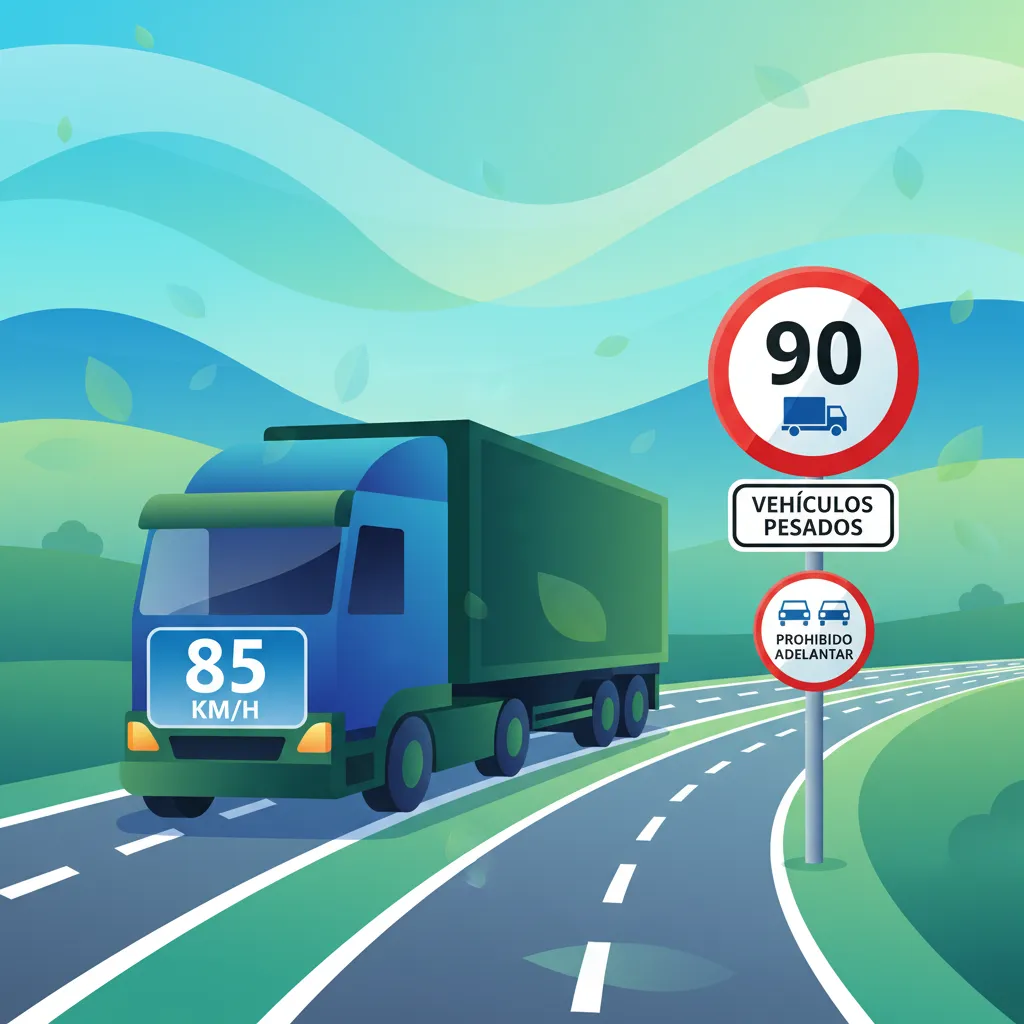
This lesson details the specific legal speed limits that apply to heavy passenger vehicles on Spanish highways, including variable speed zones that adjust based on traffic and weather conditions. Learners will understand the methods for speed monitoring, the function of speed control devices, and the legal consequences of non-compliance. The content also provides guidance on calculating a safe operating speed based on vehicle load and road conditions.

This lesson addresses overtaking procedures and lane discipline specifically for large coaches, emphasizing correct lane positioning and safe passing practices on multi-lane highways. It covers the legal rules for overtaking, the critical need for comprehensive blind spot checks before changing lanes, and the importance of signaling intentions early. Learners will also be taught how to maintain appropriate safety gaps when maneuvering around slower-moving traffic.

This lesson focuses on safe and efficient methods for passenger boarding and alighting at designated stops and stations, highlighting correct stop positioning and controlled door operation. It covers the proper deployment of wheelchair ramps, the use of safety signage, and the delivery of clear announcements to manage passenger movement effectively. Learners will develop techniques for controlling speed and performing safety checks to minimize stop times while maximizing safety.
This lesson explains the critical importance of proper weight distribution and adherence to load limits for buses and coaches, focusing on gross vehicle weight and axle load regulations. It describes how passenger and cargo placement affects the centre of gravity, which in turn influences vehicle stability during acceleration, braking, and cornering. Learners will be taught best practices for load planning to ensure compliance and maintain safe handling.
This lesson outlines the techniques for executing safe and precise stops at bus stops and transport stations, focusing on controlled deceleration and correct alignment with the stop line. Learners will understand the importance of maintaining clear passenger visibility, applying the parking brake correctly, and minimizing dwell time without compromising safety. The module also emphasizes the need for consistency in stop positioning to improve service predictability.
This lesson focuses on the correct procedures for managing mechanical failures while ensuring the safety of all passengers. Learners will study safe pull-over techniques, the proper use of hazard warning lights, and effective communication with passengers during a breakdown. The content also covers the use of emergency tools, coordination with roadside assistance, and protocols for maintaining a safe environment until help arrives or service is restored.

This lesson outlines the core principles of defensive driving, focusing on maintaining a safe following distance, creating a protective space cushion around the vehicle, and anticipating potential hazards. Learners will be taught how to develop contingency plans for unexpected events and employ risk mitigation techniques to actively avoid accidents. The content reinforces the vital importance of remaining vigilant and proactive at all times when driving.
Find clear answers to common questions learners have about Vehicle Dynamics and Braking Systems. Learn how the lesson is structured, which driving theory objectives it supports, and how it fits into the overall learning path of units and curriculum progression in Spain. These explanations help you understand key concepts, lesson flow, and exam focused study goals.
Buses primarily use air brakes because they are more powerful and reliable for heavy vehicles. Air brakes use compressed air to apply force to the brake pads, offering greater stopping power and resistance to fade compared to hydraulic brakes, which use fluid and are typically found in smaller vehicles.
ABS prevents the wheels from locking up during heavy braking. This allows the driver to maintain steering control and often reduces stopping distances, especially on slippery surfaces. For buses, this is crucial for preventing skids and maintaining stability with a heavy load.
Yes, the load significantly affects braking distance. A fully loaded bus is much heavier than an empty one, meaning it requires a longer distance to come to a complete stop. Understanding this is vital for maintaining safe following distances and anticipating stops.
Regular checks include inspecting brake pads and discs for wear, checking air pressure and looking for leaks in the air brake system, ensuring ABS warning lights are functioning correctly, and verifying the effectiveness of the parking brake. DGT regulations require strict adherence to maintenance schedules.
Brake fade is the loss of braking effectiveness due to overheating, often from prolonged or heavy use, such as on long descents. To prevent it, use lower gears to assist braking (engine braking), avoid 'riding' the brakes, and ensure the braking system is properly maintained. Modern systems like ABS help manage heat and wear.
Use our powerful search functionality to pinpoint specific Spanish DGT driving theory practice sets. Filter by road sign categories, traffic law topics, or question difficulty to build custom study sessions and reinforce your knowledge precisely where it matters for your official exam.