
This lesson provides a detailed guide to overtaking rules specifically for motorcyclists in Spain, essential for your DGT A, A1, or A2 licence theory exam. You'll learn critical aspects like safe zones, necessary visibility distances, and how to assess oncoming traffic to execute a safe manoeuvre. Understanding these rules is crucial for both passing your exam and ensuring your safety on the road when interacting with other vehicles.

Lesson content overview
Overtaking is one of the most complex and potentially dangerous manoeuvres a motorcyclist can perform. For riders preparing for their Spanish DGT A, A1, or A2 motorcycle theory exam, a thorough understanding of the specific rules and safe practices is paramount. This comprehensive lesson delves into the legal requirements and practical considerations for overtaking, ensuring you can execute this manoeuvre safely and confidently within the Spanish traffic framework.
Unlike cars, motorcycles possess unique characteristics—lighter mass, higher acceleration, and greater manoeuvrability—which, while advantageous, also increase a rider's vulnerability if an overtake is performed incorrectly. Therefore, strict adherence to safety zones, maintaining adequate visibility, precise speed management, and correct signalling are not merely recommendations but critical obligations under Spanish traffic law.
Performing a safe and legal overtake on a motorcycle requires more than just accelerating past another vehicle. It demands a holistic approach guided by several core principles that minimize risk and adhere to Spanish DGT regulations.
The visibility zone refers to the unobstructed distance ahead a rider must be able to see clearly before initiating an overtaking manoeuvre. For motorcyclists in Spain, this typically means ensuring a clear view of approximately 100 to 150 metres to safely complete the overtake without encountering unexpected oncoming traffic or hazards. This distance is crucial for providing sufficient reaction time for both the rider and any approaching vehicles. Failing to assess this zone properly can lead to head-on collisions, especially on roads with limited sightlines like curves or hill crests. Riders must use mirrors and direct visual checks (a "lifesaver" glance) to confirm the path ahead is clear.
Speed matching involves adjusting your motorcycle's speed to the flow of traffic before, during, and after the overtaking manoeuvre. Before initiating, you should accelerate smoothly to a speed that allows you to pass the target vehicle efficiently but without exceeding the posted speed limit. During the overtake, maintain a consistent speed to minimize your time in the opposing lane or adjacent to the overtaken vehicle. After passing, gradually decelerate and merge back into the lane, avoiding abrupt changes that could destabilise your motorcycle or surprise other drivers. The DGT mandates that vehicles must not exceed speed limits while overtaking, reinforcing the importance of controlled acceleration and deceleration.
Lane change timing is the precise moment you initiate the lateral movement to overtake. This timing is critical to reduce the duration your motorcycle spends in vulnerable positions, such as another vehicle's blind spot or the opposing traffic lane. An early initiation, without sufficient speed or gap, can place you in danger, while a late initiation, too close to the vehicle being passed, risks collision. Proper timing involves synchronising your lane change with a clear and sufficient gap in traffic, always after signalling your intent well in advance. Spanish traffic law (Art. 90, DGT) requires the left turn indicator to be activated at least 150 metres before the lane change.
Maintaining a safe overtaking distance or lateral clearance is legally mandated and critical for stability. Spanish Reglamento General de Circulación (Art. 71-2) specifies a minimum lateral distance of 1.5 metres between the overtaking motorcycle and the vehicle being overtaken on standard lanes. This distance helps prevent side-by-side contact, accounts for sudden movements from the overtaken vehicle, and mitigates aerodynamic turbulence. When overtaking larger vehicles like trucks or buses, a minimum of 2 metres is strongly recommended due to their larger blind spots and potential for greater air displacement.
Generally, overtaking must be performed on the left side of the vehicle being passed. However, Spanish traffic law (Reglamento del Tráfico, Art. 93.2) allows for right-hand overtaking under specific, limited conditions. These exceptions are critical for maintaining traffic flow in certain scenarios while still preserving safety. A motorcyclist may overtake on the right only when the overtaken vehicle has clearly signalled its intention to turn left, when traffic is congested and moving in queues, or on multi-lane roads where the right lane is designated for continuous travel and overtaking. It is crucial for riders to verify these specific conditions exist before attempting a right-hand overtake.
Beyond the fundamental principles, understanding the nuances of each aspect of overtaking is vital for all motorcyclists in Spain.
The visibility zone is not merely a suggestion but a legal requirement. It encompasses the entire segment of road ahead that must be free of obstructions—such as parked vehicles, sharp curves, or hill crests—and visible for a sufficient distance (approximately 100-150 metres) to allow a complete and safe overtaking manoeuvre.
A common misunderstanding among riders is believing that a "quick glance" is sufficient, or underestimating the actual distance needed to safely complete an overtake. Always err on the side of caution; if in doubt, do not overtake.
Speed matching is the critical act of harmonising your motorcycle's speed with the surrounding traffic. This involves two main phases:
The DGT Ordinance 17-2010 strictly mandates that a vehicle must not exceed speed limits while overtaking. Over-accelerating to "complete the overtake fast" is a common and dangerous misunderstanding that can lead to loss of traction, instability, and legal penalties. For example, if the speed limit is 90 km/h, a rider must not exceed 90 km/h even when actively overtaking; instead, they should accelerate to match 90 km/h and then perform the pass.
The safe overtaking distance is the minimum lateral clearance you must maintain between your motorcycle and the vehicle you are passing.
A frequent misconception is believing that merely avoiding physical contact is sufficient, especially on narrow lanes. This overlooks the physical forces and safety margins required. Always provide ample space, even if it means waiting for a wider section of the road.
Lane change timing refers to the exact moment you begin your lateral movement to perform an overtake. This timing must be synchronized with a clear, sufficient gap in traffic.
An example of correct behaviour would be activating the left indicator 150 metres before crossing the lane line, gradually increasing speed, and then smoothly changing lanes when safe. Assuming that signaling later is acceptable due to "good visibility" is a dangerous misconception.
While overtaking is generally performed on the left, Spanish Reglamento del Tráfico, Article 93.2, provides right-hand overtake exceptions. These are specific scenarios where passing on the right is permitted:
It is a common misunderstanding to treat right-hand overtakes as always legal on multi-lane roads without considering the specific conditions. Always verify that one of these specific conditions exists before attempting to overtake on the right.
Performing overtaking manoeuvres on road sections where the line of sight is limited, such as curves and crests (hilltops), is generally prohibited in Spain.
Associated rules (Reglamento General de Circulación art. 50-1) explicitly prohibit overtaking where visibility is insufficient. Riders must not assume their higher position provides sufficient visibility on curves; always wait until the curve opens up and you can see the required distance ahead.
Special considerations apply when interacting with vulnerable road users (VRUs) such as cyclists, pedestrians, or even other motorcyclists. Article 55-2 of Spanish traffic law mandates extra caution.
A common mistake is neglecting to give extra space to cyclists, especially on narrow urban lanes. Always adjust your overtaking speed and distance to ensure the safety of VRUs.
Overtaking rules for motorcyclists in Spain are strictly governed by the Reglamento General de Circulación (General Road Safety Code) and related DGT ordinances. Compliance is mandatory for all A, A1, and A2 licence holders.
Before your exam and for riding safety, always consult the latest official DGT regulations for any updates to specific article numbers or distance requirements.
Understanding common mistakes is key to preventing them. Here are frequent violations associated with motorcycle overtaking in Spain:
Overtaking on a Blind Curve or Crest:
Insufficient Lateral Clearance:
Right-Hand Overtake Without Proper Condition:
Failure to Signal Intent:
Overtaking in Low-Visibility Weather:
Overtaking a Cyclist on a Narrow Road:
Safe overtaking is not a static procedure; it must be dynamically adjusted based on prevailing conditions.
Successful and safe overtaking is deeply rooted in the rider's perception, decision-making, and control skills.
Let's look at real-world examples to solidify your understanding.
Check your rearview mirrors and perform a "lifesaver" head-turn to confirm the lane beside and behind you is clear.
Ensure you have a clear visibility zone of at least 150 metres ahead, free of oncoming traffic or hazards.
Activate your left turn indicator at least 150 metres before you intend to change lanes.
Accelerate smoothly but decisively to match the speed limit of 90 km/h.
Move into the left lane, maintaining at least 1.5 metres lateral clearance from the overtaken car.
Once you can see the overtaken car fully in your right rearview mirror, signal right and smoothly return to your original lane, maintaining a safe following distance.
Assess the road ahead for a wider segment or a safe opportunity where you can maintain sufficient clearance.
Check mirrors and perform a "lifesaver" head-turn.
Activate your left turn indicator well in advance.
Wait until there is ample space to ensure at least 2 metres lateral clearance from the cyclist.
Overtake the cyclist at a moderate, safe speed, without exceeding 50 km/h.
Once safely past and with sufficient clearance, signal right and smoothly return to your lane.
Confirm that the vehicle ahead is definitively signalling a left turn and has positioned itself to the left.
Ensure there is sufficient clear space on the right side to pass safely without impeding the turning vehicle or other traffic.
Check your mirrors and perform a "lifesaver" head-turn to confirm the right lane is clear.
Activate your left turn indicator (as you are passing on their right, you are signalling your intention to move around their left-turning path, which is considered a 'left' movement relative to the general flow).
Proceed cautiously on the right side, maintaining adequate clearance, and ensure you clear the intersection before returning to a central lane position.
Successfully navigating overtaking manoeuvres requires a blend of knowledge, skill, and vigilance. For your Spanish A, A1, or A2 licence, remember these critical points:
Verify Visibility: Is the road ahead clear for at least 100-150 metres?
Check Speed: Am I within the speed limit, and can I match the flow safely?
Signal Early: Is my left indicator on at least 150 metres before the manoeuvre?
Ensure Clearance: Can I maintain at least 1.5 metres (2 metres for VRUs/large vehicles) lateral distance?
Pass on Left: Am I overtaking from the left, or is there a legal right-hand exception?
Smooth Re-entry: Can I return to my lane smoothly after passing, maintaining a safe distance?
Assess Conditions: Have I factored in weather, light, road type, and vulnerable users?
By internalizing these rules and practising safe riding habits, you will be well-prepared for your Spanish Motorcycle Theory Exam and, more importantly, a safer rider on the road.
This lesson covers the essential DGT rules for motorcyclist overtaking in Spain, including mandatory visibility zones of 100-150 metres, strict speed limit compliance, and minimum lateral clearances of 1.5m from cars and 2m from larger vehicles or vulnerable road users. Proper signalling requires activating the left indicator at least 150 metres before changing lanes, and overtaking is prohibited in low-visibility areas like curves and hill crests. Right-hand overtaking is permitted only under specific conditions such as the overtaken vehicle signalling a left turn or traffic queues. These rules apply to all A, A1, and A2 licence holders and are tested extensively in the Spanish motorcycle theory exam.
A short set of high-value points that capture the most important learning from this lesson.
A clear visibility zone of 100-150 metres ahead is mandatory before initiating any overtaking manoeuvre in Spain.
You must never exceed the posted speed limit while overtaking, regardless of how urgent the pass may feel.
Maintain at least 1.5 metres lateral clearance from cars and 2 metres from large vehicles or vulnerable road users during overtakes.
Right-hand overtaking is only legal under specific conditions: the overtaken vehicle signalling left, traffic queues, or multi-lane roads.
Overtaking is strictly prohibited on blind curves, hill crests, and anywhere with insufficient visibility due to hidden oncoming traffic.
Explore all units and lessons included in this driving theory course.
Activate your left turn indicator at least 150 metres before initiating any overtaking lane change.
Cyclists and pedestrians require a minimum 2-metre lateral clearance due to their vulnerability and sensitivity to wind blast.
General overtaking must occur from the left; the right is an exception, not the default.
In adverse weather (rain, fog, strong wind), reduce speed, increase following distance, and postpone overtakes if visibility is compromised.
The Reglamento General de Circulación Articles 50-1, 57, 71-2, 90, and 93.2 govern motorcycle overtaking rules in Spain.
Attempting to overtake on a blind curve or crest assuming the road ahead is clear, which risks head-on collisions with unseen traffic.
Squeezing past vehicles with insufficient lateral clearance (less than the required 1.5m or 2m), leaving no safety margin for aerodynamic turbulence or unexpected movements.
Overtaking on the right without verifying that one of the legal exceptions applies, treating it as generally permissible on multi-lane roads.
Failing to signal or activating the indicator too late (less than 150m before the manoeuvre), surprising other road users and violating DGT requirements.
Underestimating the distance and time needed to complete an overtake, especially when misjudging the speed of oncoming vehicles or the length of the vehicle being passed.
Lesson content overview
A short set of high-value points that capture the most important learning from this lesson.
A clear visibility zone of 100-150 metres ahead is mandatory before initiating any overtaking manoeuvre in Spain.
You must never exceed the posted speed limit while overtaking, regardless of how urgent the pass may feel.
Maintain at least 1.5 metres lateral clearance from cars and 2 metres from large vehicles or vulnerable road users during overtakes.
Right-hand overtaking is only legal under specific conditions: the overtaken vehicle signalling left, traffic queues, or multi-lane roads.
Overtaking is strictly prohibited on blind curves, hill crests, and anywhere with insufficient visibility due to hidden oncoming traffic.
Explore all units and lessons included in this driving theory course.
Activate your left turn indicator at least 150 metres before initiating any overtaking lane change.
Cyclists and pedestrians require a minimum 2-metre lateral clearance due to their vulnerability and sensitivity to wind blast.
General overtaking must occur from the left; the right is an exception, not the default.
In adverse weather (rain, fog, strong wind), reduce speed, increase following distance, and postpone overtakes if visibility is compromised.
The Reglamento General de Circulación Articles 50-1, 57, 71-2, 90, and 93.2 govern motorcycle overtaking rules in Spain.
Attempting to overtake on a blind curve or crest assuming the road ahead is clear, which risks head-on collisions with unseen traffic.
Squeezing past vehicles with insufficient lateral clearance (less than the required 1.5m or 2m), leaving no safety margin for aerodynamic turbulence or unexpected movements.
Overtaking on the right without verifying that one of the legal exceptions applies, treating it as generally permissible on multi-lane roads.
Failing to signal or activating the indicator too late (less than 150m before the manoeuvre), surprising other road users and violating DGT requirements.
Underestimating the distance and time needed to complete an overtake, especially when misjudging the speed of oncoming vehicles or the length of the vehicle being passed.
Explore search topics learners often look for when studying Overtaking Rules for Motorcyclists. These topics reflect common questions about road rules, driving situations, safety guidance, and lesson level theory preparation for learners in Spain.
Browse additional driving theory lessons that cover connected traffic rules, road signs, and common driving situations related to this topic. Improve your understanding of how different rules interact across everyday traffic scenarios.
Explore specific scenarios where Spanish traffic law permits right-hand overtaking or differs for motorcyclists. Understand rules for overtaking at intersections, in traffic queues, and on multi-lane roads, crucial for the A, A1, A2 licence theory.
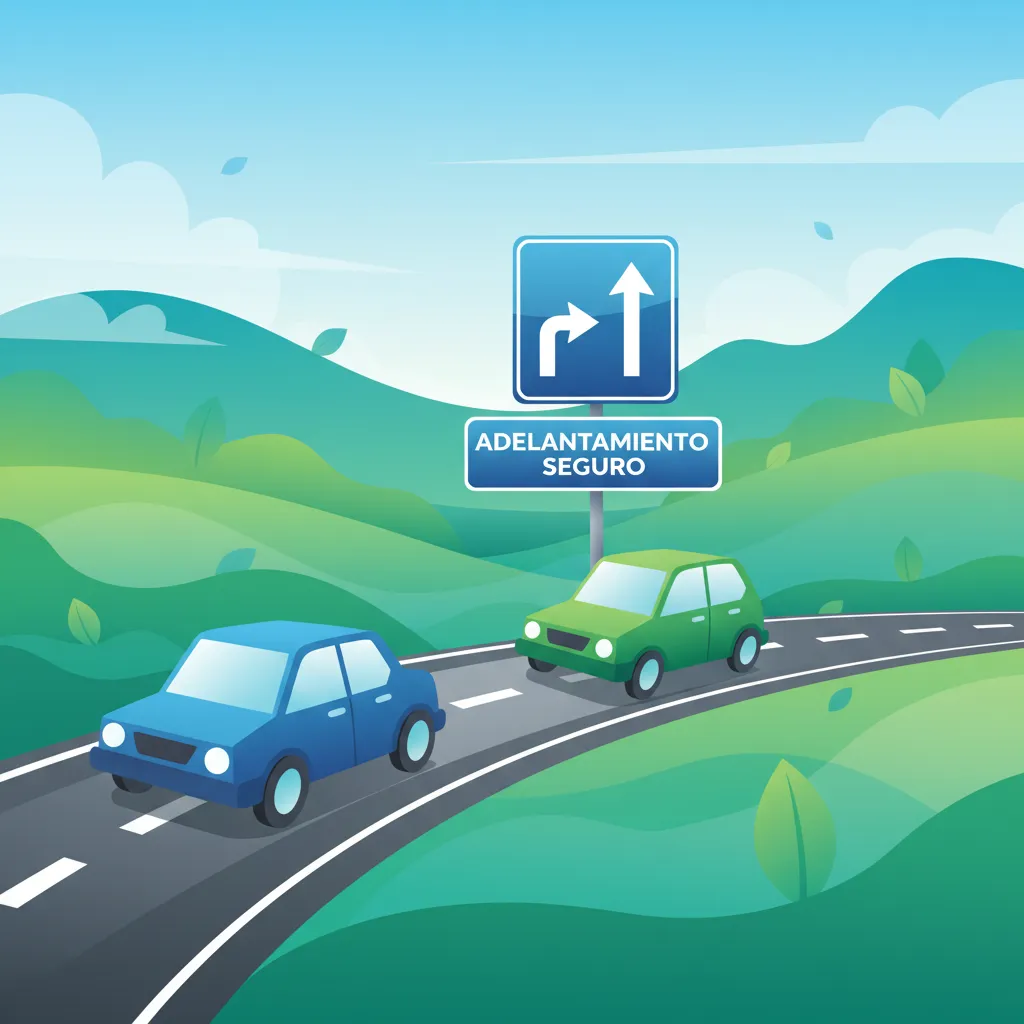
This lesson covers the legal overtaking procedures applicable on different road types, focusing on identifying safe passing zones and executing maneuvers correctly. Learners will be taught how to maintain adequate safety distances before, during, and after overtaking. The content includes DGT regulations for overtaking, appropriate signaling, and visibility checks to ensure safe completion of the maneuver.
This lesson outlines the proper techniques for negotiating roundabouts and signal-controlled intersections in Spain. It explains priority rules at entry, lane selection based on the intended exit, and yielding to circulating traffic. The content also covers compliance with traffic signals and DGT regulations, including handling cyclist crossings.

This lesson presents advanced cornering scenarios common on Spanish roads, such as mountain hairpins and high-speed autovía exits. It outlines specific techniques for descent control, ascent maneuvers, and safely merging into traffic after cornering. Interaction with cyclists and emergency cornering strategies are also covered in accordance with DGT regulations.

This lesson focuses on interaction dynamics with larger vehicles like cars, trucks, and buses, detailing their specific blind spot zones. Strategies for safely sharing lanes, overtaking etiquette, and proper approach when a bus stops are covered. The lesson also includes guidance on merging onto acceleration lanes following DGT policies.

This lesson focuses on low-speed manoeuvres within congested urban traffic, detailing techniques for navigating tight corners and weaving through traffic. Learners analyze urban traffic flow, pedestrian zones, and cyclist interactions to anticipate hazards. The lesson also explains DGT regulations regarding slow-speed movement and lane positioning.

This lesson clarifies the primary rule for roundabouts: all vehicles entering must yield to traffic already on the circular roadway. It explains how to approach a roundabout, select the appropriate lane based on the intended exit, and merge safely into the flow of traffic. Proper signaling before exiting is also covered, ensuring other drivers can anticipate the rider's movements for a smooth and safe negotiation of the junction.

This lesson focuses on defensive maneuvers in mixed traffic environments where various vehicles share the road. It outlines lane discipline, appropriate overtaking safety measures, and strategies for maintaining a safety corridor. The content incorporates DGT defensive guidelines, teaching riders to manage space and anticipate unpredictable driver behavior.

This lesson addresses the crucial 'priority to the right' rule that governs traffic at intersections without signs or signals. It explains that drivers must yield to any vehicle approaching from their right-hand side. The content provides practical examples of how to assess traffic, determine the correct order of passage, and proceed with caution to safely navigate these common but potentially confusing intersections.
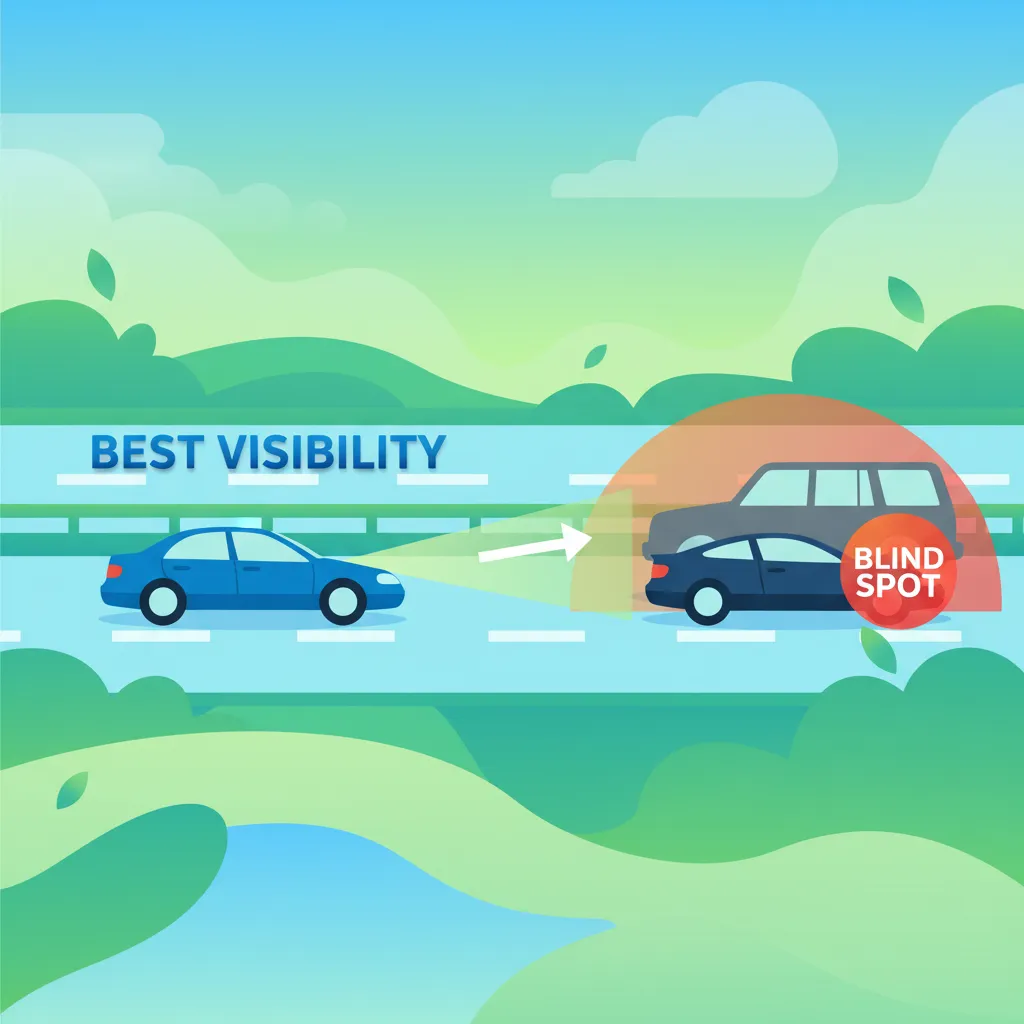
This lesson explores proper lane positioning, emphasizing strategic selection of traffic lanes for optimal visibility. It explains the importance of rider line of sight and peripheral vision in maintaining situational awareness. The content also covers legal aspects of lane splitting and correct usage of road shoulders, abiding by DGT regulations.

This lesson provides a detailed guide to performing safe and legal overtaking maneuvers on the highway. It places strong emphasis on the techniques for thoroughly checking the large blind spots around a truck before initiating a lane change. The content also covers judging the necessary speed differential and distance required to complete the pass and return to the lane safely.
Learn about the risks involved in motorcycle overtaking and how to avoid frequent errors. This lesson covers visibility issues, insufficient clearance, and dangerous situations like overtaking on curves, vital for Spanish theory exams.
This lesson focuses on defensive maneuvers in mixed traffic environments where various vehicles share the road. It outlines lane discipline, appropriate overtaking safety measures, and strategies for maintaining a safety corridor. The content incorporates DGT defensive guidelines, teaching riders to manage space and anticipate unpredictable driver behavior.
This lesson covers the legal overtaking procedures applicable on different road types, focusing on identifying safe passing zones and executing maneuvers correctly. Learners will be taught how to maintain adequate safety distances before, during, and after overtaking. The content includes DGT regulations for overtaking, appropriate signaling, and visibility checks to ensure safe completion of the maneuver.
This lesson focuses on interaction dynamics with larger vehicles like cars, trucks, and buses, detailing their specific blind spot zones. Strategies for safely sharing lanes, overtaking etiquette, and proper approach when a bus stops are covered. The lesson also includes guidance on merging onto acceleration lanes following DGT policies.
This lesson presents advanced cornering scenarios common on Spanish roads, such as mountain hairpins and high-speed autovía exits. It outlines specific techniques for descent control, ascent maneuvers, and safely merging into traffic after cornering. Interaction with cyclists and emergency cornering strategies are also covered in accordance with DGT regulations.
This lesson explores proper lane positioning, emphasizing strategic selection of traffic lanes for optimal visibility. It explains the importance of rider line of sight and peripheral vision in maintaining situational awareness. The content also covers legal aspects of lane splitting and correct usage of road shoulders, abiding by DGT regulations.

This lesson introduces anticipation techniques that improve a rider’s ability to predict potential hazards before they manifest. It covers scanning ahead, evaluating traffic patterns, and applying DGT risk assessment criteria. Emphasis is placed on developing a defensive riding mindset and maintaining safety margins to reduce accident likelihood.
This lesson identifies frequent beginner errors such as over-application of throttle, misuse of the clutch, and improper braking timing. It analyzes the underlying causes of these mistakes and offers corrective techniques to develop safe riding habits. By referencing DGT exam examples, learners gain insight into how to avoid these common pitfalls.

This lesson outlines procedures for handling emergency situations and accidents. It covers emergency braking techniques, hazard avoidance strategies, and the DGT emergency protocol for accident reporting. Emphasis is placed on rider protective actions, post-crash first aid, roadside safety, and legal obligations after an incident.
This lesson outlines the proper techniques for negotiating roundabouts and signal-controlled intersections in Spain. It explains priority rules at entry, lane selection based on the intended exit, and yielding to circulating traffic. The content also covers compliance with traffic signals and DGT regulations, including handling cyclist crossings.
This lesson focuses on low-speed manoeuvres within congested urban traffic, detailing techniques for navigating tight corners and weaving through traffic. Learners analyze urban traffic flow, pedestrian zones, and cyclist interactions to anticipate hazards. The lesson also explains DGT regulations regarding slow-speed movement and lane positioning.
Find clear answers to common questions learners have about Overtaking Rules for Motorcyclists. Learn how the lesson is structured, which driving theory objectives it supports, and how it fits into the overall learning path of units and curriculum progression in Spain. These explanations help you understand key concepts, lesson flow, and exam focused study goals.
Generally, no. Continuous white lines indicate a prohibition against crossing them, meaning overtaking is forbidden. However, there are very specific exceptions, such as overtaking a bicycle or moped, provided there's sufficient space and safety. Always ensure you have a clear view and enough distance to complete the manoeuvre safely without endangering anyone.
When overtaking motor vehicles outside urban areas, a lateral safety distance of at least 1.5 metres is mandatory. Within urban areas, you must leave a "proportionate" safety margin, which means enough space to avoid any risk. Always consider the vehicle's size and speed, and be extra cautious of wind turbulence from larger vehicles.
Overtaking on the right is generally prohibited in Spain, with strict exceptions. It is allowed if the vehicle you are overtaking has clearly indicated it intends to turn left or stop on the left, and there is sufficient space to pass safely on the right. You may also overtake on the right in specific traffic situations, such as in congested urban traffic where lanes are clearly marked and vehicles are moving slowly in parallel.
If the vehicle you are overtaking accelerates, you must abandon the overtaking manoeuvre and safely return to your lane. It is illegal for the vehicle being overtaken to accelerate, but in real-world situations, you must prioritize safety. Never try to force an overtake if the other driver is obstructing you; it creates an extremely dangerous situation.
Use our powerful search functionality to pinpoint specific Spanish DGT driving theory practice sets. Filter by road sign categories, traffic law topics, or question difficulty to build custom study sessions and reinforce your knowledge precisely where it matters for your official exam.