
This lesson focuses on the crucial rules and safe practices for overtaking on Spanish roads, a key aspect of the 'Rural & Highway Driving' unit. You will learn the legal procedures, essential safety distances, and correct signaling required by the DGT, building upon your understanding of speed management to execute these maneuvers safely and confidently.
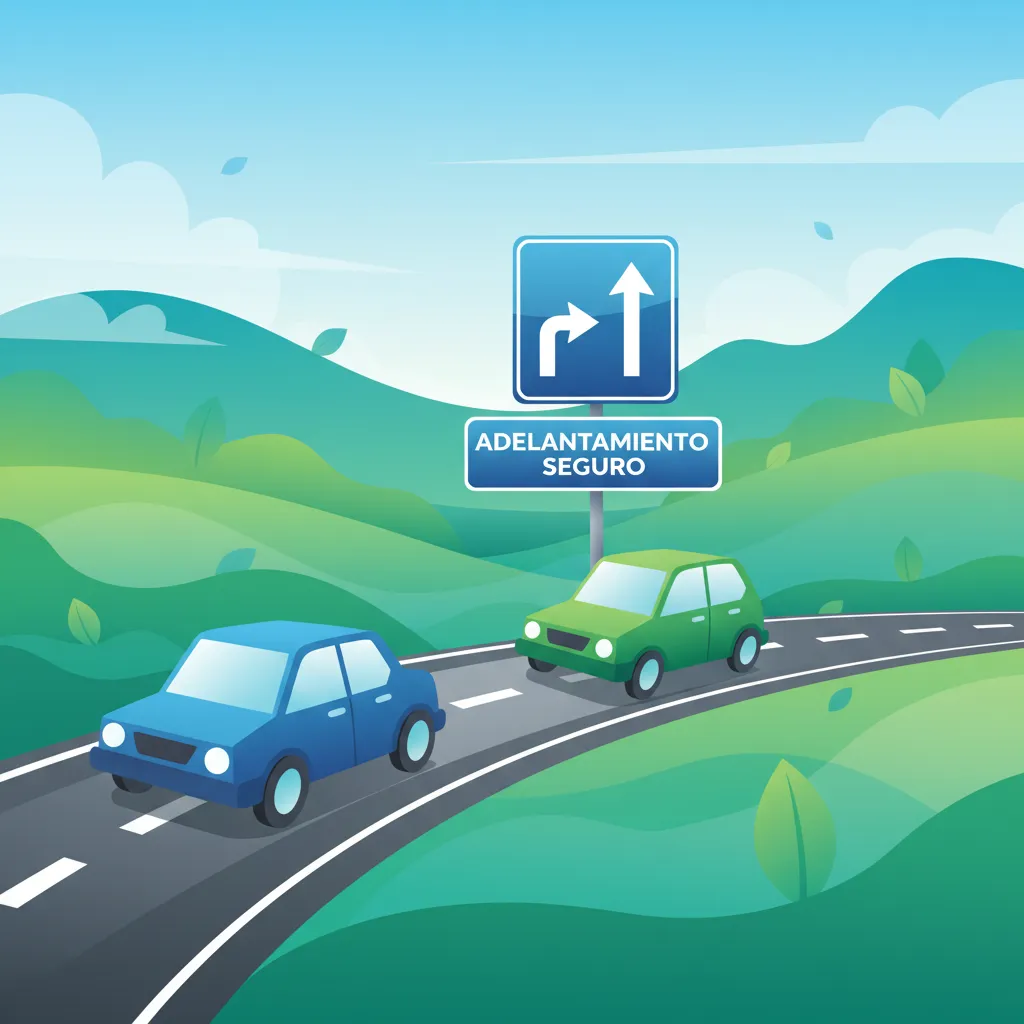
Lesson content overview
Overtaking is a fundamental maneuver in driving, allowing a vehicle to safely pass another vehicle traveling in the same direction at a slower speed. Executing an overtake correctly is crucial for maintaining traffic flow, but more importantly, it is vital for road safety. Misjudged overtaking is a significant contributor to road accidents in Spain, emphasizing the need for a thorough understanding of the legal requirements and best practices.
This comprehensive lesson, part of the Complete Spanish Driving License Theory Course for Categories B & BE, details the legal overtaking procedures applicable on different road types, focusing on identifying safe passing zones, appropriate signaling, visibility checks, and maintaining adequate safety distances before, during, and after the maneuver. Mastering these procedures ensures compliance with DGT regulations and promotes responsible road use.
Overtaking, also known as passing, involves moving into an adjacent lane (or a different part of the road) to get ahead of a slower vehicle and then safely returning to the original lane. It's a dynamic maneuver that requires precise judgment, adherence to traffic laws, and a keen awareness of surrounding conditions.
The primary purpose of overtaking is to improve traffic flow by allowing faster vehicles to proceed without being unduly held up by slower ones. However, this must never compromise safety. Incorrect overtaking can lead to head-on collisions, side-swipes, or rear-end crashes, making it one of the riskiest maneuvers a driver can perform. Therefore, a driver must only overtake when it is absolutely safe, legal, and necessary.
The Spanish Road Safety Code (Reglamento General de Circulación, RGC) strictly defines where overtaking is permitted and prohibited, primarily based on visibility, road geometry, and the presence of vulnerable road users. Identifying these zones correctly is the first step in any safe overtaking maneuver.
Overtaking is generally permitted on road sections where visibility is excellent, and there are no specific prohibitions indicated by signs or road markings. These typically include:
Several situations and locations strictly prohibit overtaking to prevent dangerous conflicts and protect road users. These restrictions are often indicated by road markings, signage, or contextual factors.
Always be vigilant for road signs and markings. A broken line might suggest overtaking is permitted, but if there's a "No Overtaking" sign (R-305) or the visibility is poor, the prohibition takes precedence.
Maintaining adequate safety distances is paramount throughout the entire overtaking process. These distances provide the necessary time and space for reaction, acceleration, and safe re-entry, mitigating the risk of collisions.
Before even considering an overtake, you must ensure a sufficient longitudinal gap between your vehicle and the vehicle you intend to pass. This pre-maneuver safety distance allows for adequate reaction time and space to build up speed for the overtake.
Beyond the distance to the vehicle you are following, you must have an unobstructed view of the road ahead. This visibility distance is crucial to confirm that there is no oncoming traffic and no other obstacles in the intended overtaking path.
When assessing visibility, consider the combined speed of your vehicle, the vehicle you are overtaking, and any potential oncoming traffic. The faster the speeds, the greater the visibility distance required.
After successfully passing the slower vehicle, you must not return to your original lane too soon. The post-maneuver safety distance ensures you have adequate space between your vehicle and the vehicle you just overtook.
A safe overtaking maneuver is a controlled sequence of actions. Follow these steps meticulously to ensure compliance with DGT regulations and maximize safety.
Assess and Prepare: Check mirrors (rear-view and side-view) for traffic behind you and to your sides. Glance over your shoulder to check your blind spots. Ensure the road ahead is clear for a sufficient distance, free of oncoming traffic, intersections, or prohibited zones. Maintain a safe following distance (2-3 seconds) from the vehicle you intend to overtake. Ensure your vehicle has enough power to accelerate quickly and safely.
Signal Your Intent: Activate your left turn indicator (directional signal) for at least 3 seconds before initiating your lane change. This clearly communicates your intention to other road users, both behind and in front of you.
Move Out and Accelerate: Once the path is clear, smoothly move into the overtaking lane. Accelerate purposefully, but always within the posted speed limits. The goal is to complete the maneuver as quickly and safely as possible without exceeding legal speeds. Shift to a lower gear if necessary to gain sufficient acceleration.
Pass the Vehicle: Continue accelerating past the slower vehicle, maintaining a safe lateral distance from it. Avoid lingering alongside the other vehicle.
Check and Signal Return: Once you can see the overtaken vehicle completely in your right-hand side mirror, activate your right turn indicator. This indicates your intent to return to your original lane.
Return to Original Lane: When you have established a safe clearance (at least 1 meter from the front of the overtaken vehicle to the rear of your vehicle) and the path is clear, smoothly move back into your original lane.
Cancel Signal and Re-establish Safety Distance: Cancel your turn indicator. Adjust your speed to maintain a safe following distance (2-3 seconds) from the overtaken vehicle and continue driving safely.
While acceleration is necessary for a quick overtake, it is crucial to remain within the legal speed limits. Exceeding the posted speed limit, even for overtaking a slower vehicle, is a violation of DGT regulations (RGC Article 69) and carries penalties. You must assess if you can complete the overtake safely without breaking the speed limit. If not, do not attempt the maneuver. After overtaking, smoothly decelerate to match the flow of traffic, maintaining your safe following distance.
Overtaking procedures can vary significantly based on environmental conditions, road types, and the presence of vulnerable road users or specialized vehicles.
Adverse weather conditions like rain, fog, or snow, as well as poor light conditions at night, demand increased caution and adjustment of safety parameters.
The type of road you are on dictates specific overtaking rules.
The characteristics of your vehicle can also impact overtaking.
Heavily Loaded Vehicles or Trailers (Category BE): When driving with a heavily loaded vehicle or towing a trailer, your vehicle's acceleration capabilities are reduced, and braking distances are significantly increased. This means you need much longer clear stretches of road to overtake safely, and your pre- and post-maneuver safety distances must be substantially larger.
Vulnerable Road Users: Special care is required when overtaking cyclists, pedestrians, or motorcyclists. You must maintain an increased lateral clearance to ensure their safety.
When overtaking a cyclist on a rural road, you must move fully into the adjacent lane (if available) or maintain a minimum lateral clearance of 1.5 meters if there is no dedicated overtaking lane. Overtaking a cyclist from the same side (i.e., squeezing past them in their lane) is strictly prohibited (RGC Article 73).
Adhering to the specific articles of the Spanish Road Safety Code (Reglamento General de Circulación, RGC) is mandatory. Violations can lead to significant fines and penalty points on your driving license.
Key DGT regulations pertaining to overtaking include:
Understanding the rules is one thing; applying them flawlessly is another. Many accidents related to overtaking stem from common errors.
When in doubt, don't overtake. It is always safer to wait for a clearly marked, unobstructed, and legal overtaking zone than to risk an unsafe maneuver. Patience is a virtue in driving.
Mastering overtaking is a critical skill for all drivers, particularly within the framework of the Spanish driving regulations for Category B and BE licenses. Remember these essential principles:
By applying these guidelines, you can contribute to safer roads, enhance traffic flow, and demonstrate responsible driving behavior in Spain.
This lesson covers the full DGT-compliant overtaking procedure for Spanish roads: identifying permitted and prohibited zones (solid lines, curves, crossings, tunnels), maintaining specific safety distances before and after the maneuver, executing the step-by-step lane-change sequence, and signaling correctly for at least 3 seconds. Key distances include a 2-3 second headway before the overtake, 150 metres of visibility on rural roads, and 1 metre of lateral clearance when returning to lane. Special rules apply for adverse weather, night driving, Category BE vehicles, and vulnerable road users — most critically, cyclists require a minimum 1.5-metre lateral clearance and must be passed from the left. Adherence to RGC Articles 69, 70, 71, 73, 136, and 137 ensures safe, legal overtaking.
A short set of high-value points that capture the most important learning from this lesson.
Only overtake where legally permitted: broken white lines indicate overtaking is allowed, but road signs (R-305) and solid lines take precedence.
Maintain a minimum 2-3 second headway from the vehicle ahead before initiating any overtake.
Ensure at least 150 metres of clear visibility ahead on rural roads before beginning the maneuver.
Return to your original lane only when you have at least 1 metre of lateral clearance from the overtaken vehicle.
When overtaking cyclists, you must maintain a minimum 1.5-metre lateral clearance and pass from the left; squeezing past them in their lane is prohibited (RGC Article 73-4).
Explore all units and lessons included in this driving theory course.
Overtaking is prohibited on curves, hills, tunnels, bridges, pedestrian crossings, intersections, and at any vehicle signaling a turn.
Signal your intent with the left indicator for at least 3 seconds before changing lanes.
Never exceed the speed limit during an overtake — it remains a legal limit even when overtaking a slower vehicle (RGC Article 69).
For Category BE (car with trailer), braking distances increase significantly, requiring much longer clear stretches of road.
A broken white line may permit overtaking, but poor visibility or a prohibition sign overrides it immediately.
Misjudging visibility — attempting to overtake on curves or hills where the sight distance is too short to complete the maneuver safely.
Insufficient pre-maneuver distance — starting the overtake too close to the vehicle ahead, which limits space to accelerate and react.
Late or missing signaling — failing to signal at least 3 seconds before the lane change, reducing predictability for other road users.
Insufficient post-maneuver clearance — returning to the original lane too soon, forcing the overtaken driver to brake suddenly.
Relying solely on mirrors and neglecting the blind-spot glance over the shoulder, which can hide motorcycles and cyclists.
Lesson content overview
A short set of high-value points that capture the most important learning from this lesson.
Only overtake where legally permitted: broken white lines indicate overtaking is allowed, but road signs (R-305) and solid lines take precedence.
Maintain a minimum 2-3 second headway from the vehicle ahead before initiating any overtake.
Ensure at least 150 metres of clear visibility ahead on rural roads before beginning the maneuver.
Return to your original lane only when you have at least 1 metre of lateral clearance from the overtaken vehicle.
When overtaking cyclists, you must maintain a minimum 1.5-metre lateral clearance and pass from the left; squeezing past them in their lane is prohibited (RGC Article 73-4).
Explore all units and lessons included in this driving theory course.
Overtaking is prohibited on curves, hills, tunnels, bridges, pedestrian crossings, intersections, and at any vehicle signaling a turn.
Signal your intent with the left indicator for at least 3 seconds before changing lanes.
Never exceed the speed limit during an overtake — it remains a legal limit even when overtaking a slower vehicle (RGC Article 69).
For Category BE (car with trailer), braking distances increase significantly, requiring much longer clear stretches of road.
A broken white line may permit overtaking, but poor visibility or a prohibition sign overrides it immediately.
Misjudging visibility — attempting to overtake on curves or hills where the sight distance is too short to complete the maneuver safely.
Insufficient pre-maneuver distance — starting the overtake too close to the vehicle ahead, which limits space to accelerate and react.
Late or missing signaling — failing to signal at least 3 seconds before the lane change, reducing predictability for other road users.
Insufficient post-maneuver clearance — returning to the original lane too soon, forcing the overtaken driver to brake suddenly.
Relying solely on mirrors and neglecting the blind-spot glance over the shoulder, which can hide motorcycles and cyclists.
Explore search topics learners often look for when studying Overtaking Procedures and Safety Distances. These topics reflect common questions about road rules, driving situations, safety guidance, and lesson level theory preparation for learners in Spain.
Browse additional driving theory lessons that cover connected traffic rules, road signs, and common driving situations related to this topic. Improve your understanding of how different rules interact across everyday traffic scenarios.
Learn essential Spanish driving theory for overtaking safely in rain, fog, or at night. This lesson covers specific rules and increased safety distances required for conditions and vehicle types like trailers (Category BE).
This lesson addresses the specific challenges posed by rain and fog, focusing on reduced visibility and loss of traction. It explains the proper use of windshield wipers and fog lights, and the need to adjust speed and increase following distance. The content covers how to prevent and react to hydroplaning (aquaplaning) to maintain vehicle control.
This lesson covers how environmental conditions such as rain, fog, and darkness affect driving safety. It instructs drivers on adjusting speed, using appropriate lighting, and increasing following distance to compensate for reduced visibility and traction. The lesson incorporates DGT safety recommendations for handling adverse weather to mitigate risk and maintain control.

This lesson addresses the dynamics of accelerating, braking, and turning while towing a trailer. It explains how to adjust for increased load inertia, the impact on stopping distances, and the need for wider turns to account for off-tracking. The content outlines DGT speed guidelines specific to towing and emphasizes smooth control to ensure stability.

This lesson provides a detailed guide to performing safe and legal overtaking maneuvers on the highway. It places strong emphasis on the techniques for thoroughly checking the large blind spots around a truck before initiating a lane change. The content also covers judging the necessary speed differential and distance required to complete the pass and return to the lane safely.

This lesson outlines the proper use and legal requirements of vehicle lighting and mirror systems. It covers headlamps, fog lights, turn signals, and brake lights, clarifying when each must be used according to DGT regulations. The lesson also explains the correct adjustment of rearview and side mirrors and strategies for effective blind-spot monitoring.

This lesson focuses on nighttime driving, emphasizing proper headlight usage and glare management from oncoming vehicles. It discusses DGT regulations for night driving, the appropriate use of high-beam and low-beam headlights, and techniques to reduce eye strain. Additionally, the lesson highlights the signs of driver fatigue and the importance of taking breaks.

This lesson examines the significant impact of various weather conditions on driving safety, including rain, fog, snow, ice, and high winds. Learners will understand how each condition can affect vehicle traction, reduce visibility, and alter driver perception, learning the appropriate adjustments to speed, following distance, and braking. The module also covers the use of vehicle safety features to mitigate risks in adverse weather.

This lesson teaches drivers how to proactively identify potential road hazards, from potholes and debris to unpredictable driver behavior. It provides specific guidance on how to adjust driving techniques to cope with adverse weather conditions such as heavy rain, fog, high winds, and icy roads. The content focuses on managing reduced visibility and traction to maintain vehicle control and safety.

This lesson focuses on safe nighttime riding, covering headlight alignment, rear-light visibility, and the use of reflective gear to enhance conspicuity. It explains DGT night riding requirements, including mandatory lighting standards. Topics also include managing glare from oncoming vehicles and mitigating rider fatigue during low-light conditions.
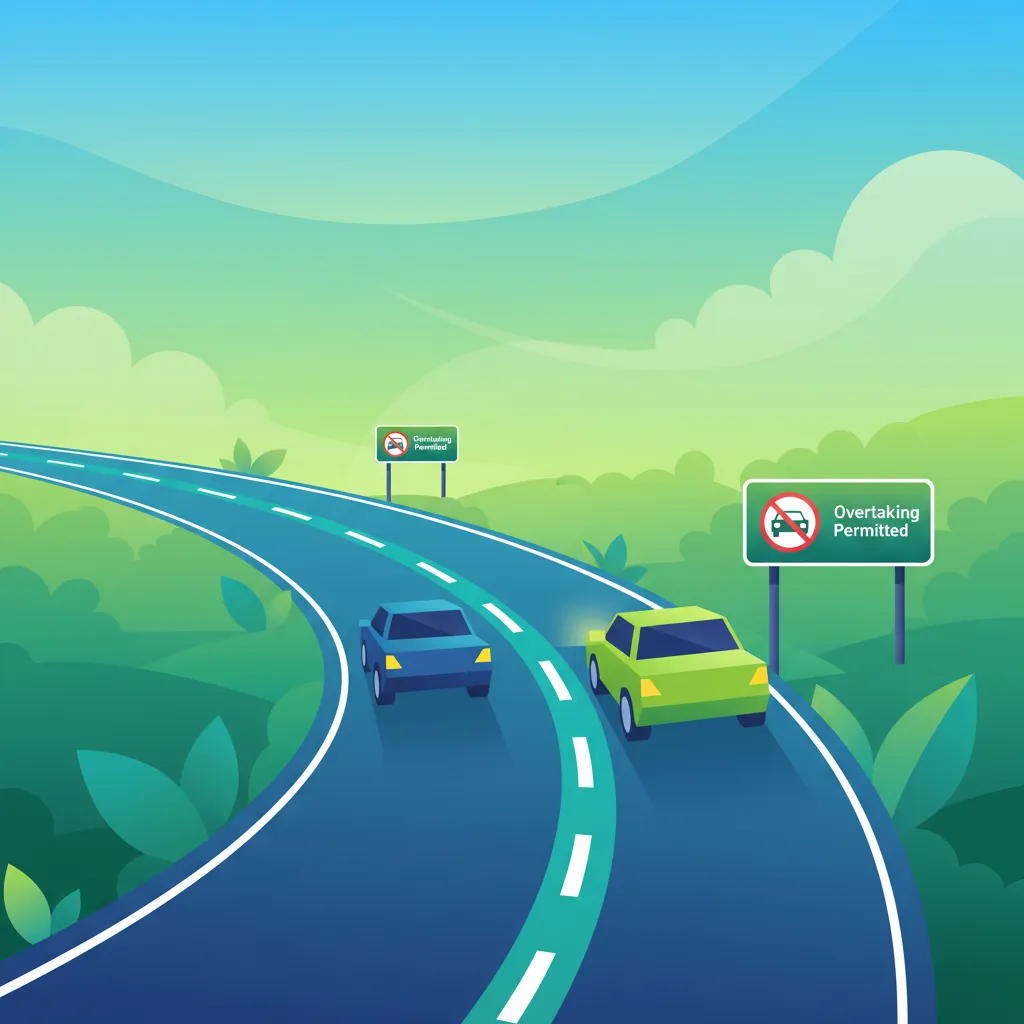
This lesson focuses on the principles of safe lane selection and overtaking on multi-lane roads and highways. It covers the importance of maintaining proper lane discipline and the legal protocols for executing a safe pass, including checking blind spots and ensuring sufficient speed differential. The content also stresses the need for clear signaling and judging adequate space before returning to the original lane.
Understand frequent errors drivers make during overtaking maneuvers according to Spanish traffic law. This lesson details DGT regulations and the associated penalties for unsafe overtaking practices, helping you avoid costly mistakes.

This lesson details overtaking rules specific to motorcyclists, covering safe zones, required visibility distance, and assessment of oncoming traffic. It emphasizes the importance of speed matching and correct timing of lane changes. The module references DGT regulations, including conditions for passing on the left or right in various environments.
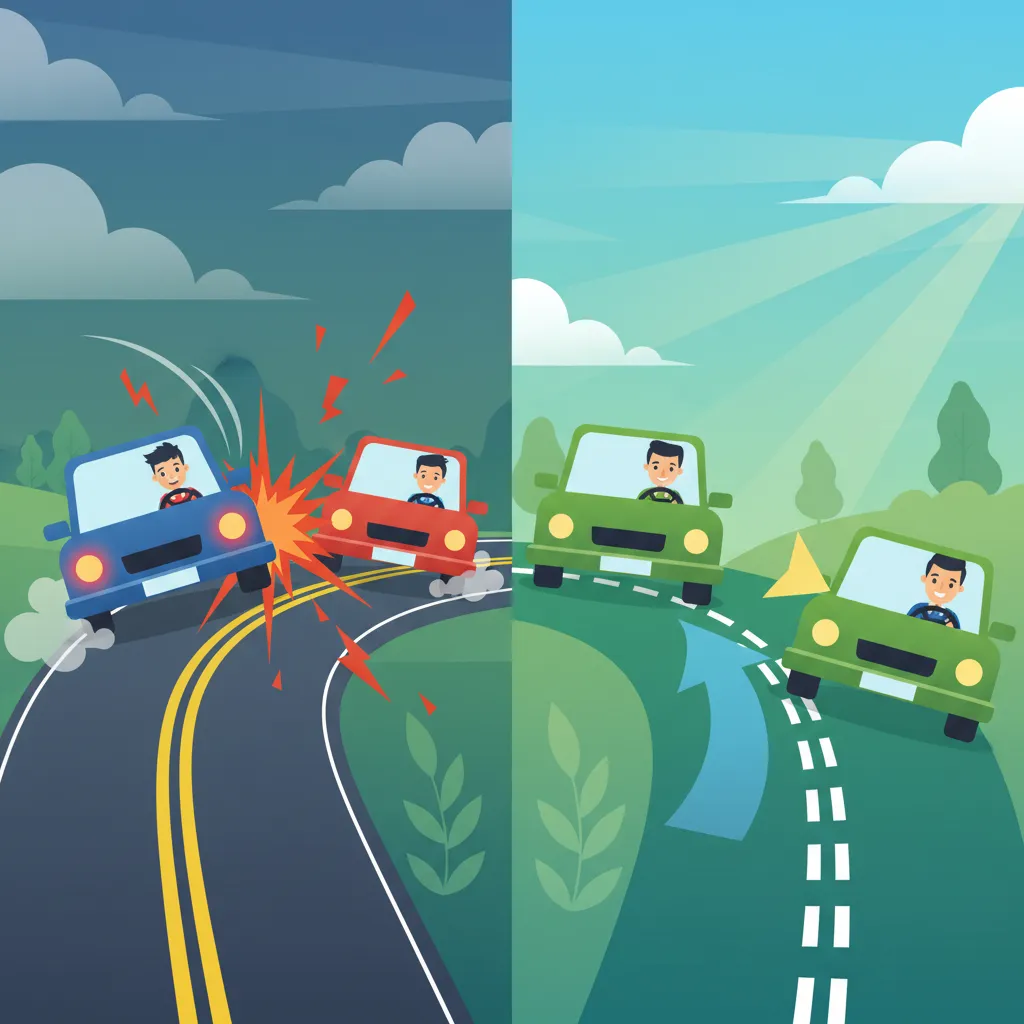
This lesson addresses common errors made by drivers when using roundabouts and presents corrective strategies. It covers issues such as entering from the wrong lane, failing to yield to circulating traffic, exceeding the recommended speed, and not signaling an exit correctly. By understanding these mistakes, drivers can improve their roundabout proficiency and reduce accident risk.

This lesson introduces the visual language of road markings, focusing on the distinction between solid and broken lines and what they permit regarding lane changes and overtaking. It explains the meaning of directional arrows painted on the road surface, which guide drivers into the correct lane for their intended maneuver. Understanding these markings is crucial for maintaining proper lane discipline and navigating complex intersections and multi-lane roads.
This lesson outlines the proper use and legal requirements of vehicle lighting and mirror systems. It covers headlamps, fog lights, turn signals, and brake lights, clarifying when each must be used according to DGT regulations. The lesson also explains the correct adjustment of rearview and side mirrors and strategies for effective blind-spot monitoring.
This lesson examines the principles of maintaining a safe following distance, including the 'two-second rule' and its adjustments for speed and weather. It focuses on effective blind-spot management, teaching drivers how to use mirrors and head checks. The content integrates DGT guidelines on creating a safety buffer around the vehicle to allow time to react to unexpected events.
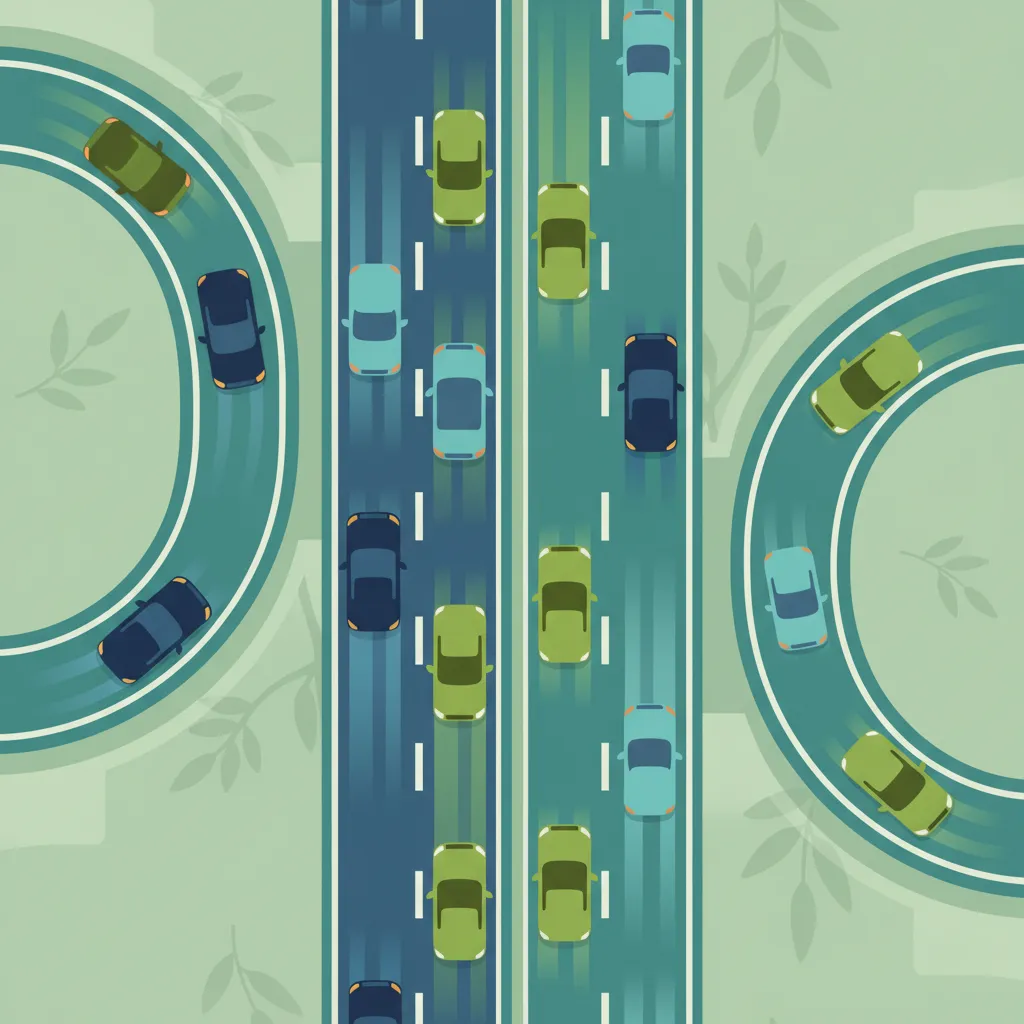
This lesson defines proper lane discipline on highways, emphasizing correct lane positioning and the rule to drive in the right-hand lane except when overtaking. It details safe merging onto main carriageways from an acceleration lane and effective exit strategies using deceleration lanes. Learners will understand DGT merge rules and the importance of signaling lane changes early.
This lesson focuses on the principles of safe lane selection and overtaking on multi-lane roads and highways. It covers the importance of maintaining proper lane discipline and the legal protocols for executing a safe pass, including checking blind spots and ensuring sufficient speed differential. The content also stresses the need for clear signaling and judging adequate space before returning to the original lane.

This lesson covers the essential techniques for perpendicular parking (reversing into a bay) and executing a three-point turn. It details the approach, turning points, and use of mirrors and observation to ensure proper vehicle positioning. Learners will understand how to assess the required space and comply with DGT regulations for these common maneuvers.

This lesson addresses overtaking procedures and lane discipline specifically for large coaches, emphasizing correct lane positioning and safe passing practices on multi-lane highways. It covers the legal rules for overtaking, the critical need for comprehensive blind spot checks before changing lanes, and the importance of signaling intentions early. Learners will also be taught how to maintain appropriate safety gaps when maneuvering around slower-moving traffic.
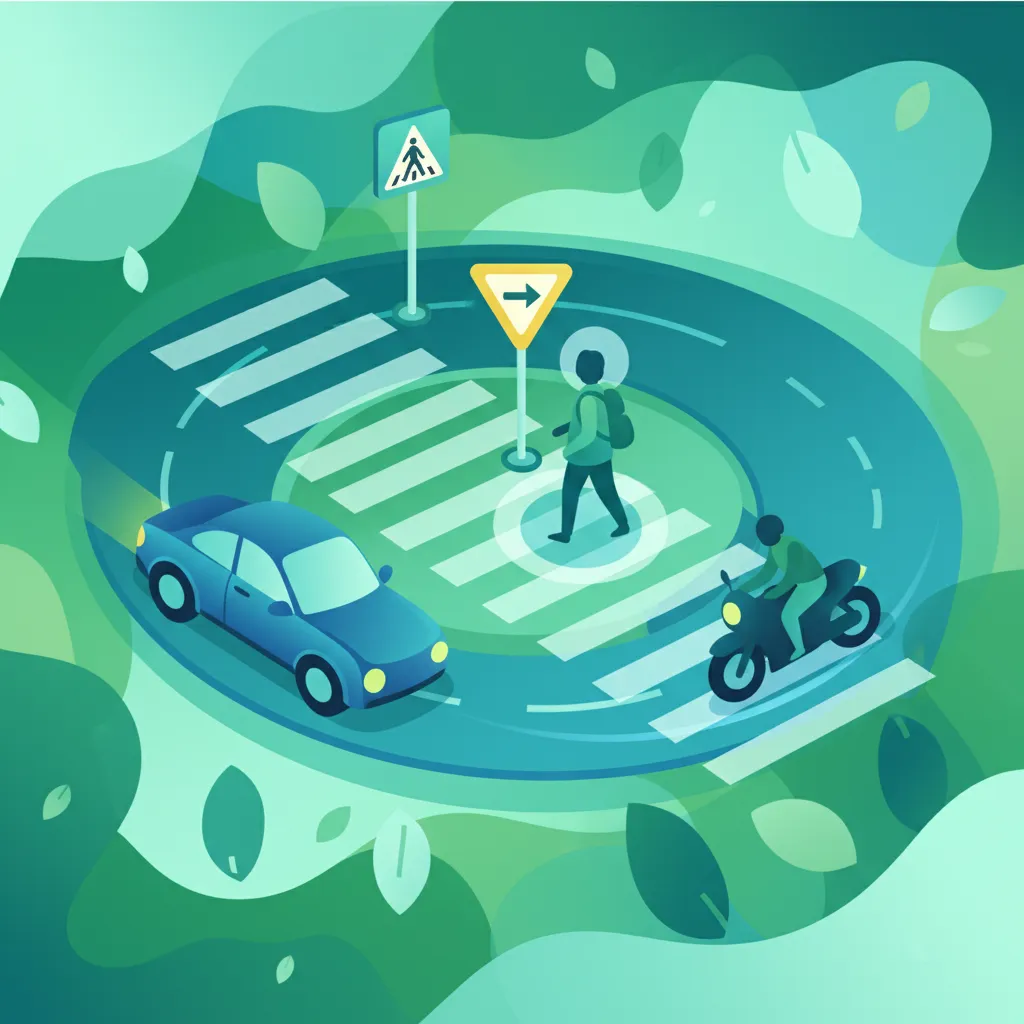
This lesson outlines the proper techniques for negotiating roundabouts and signal-controlled intersections in Spain. It explains priority rules at entry, lane selection based on the intended exit, and yielding to circulating traffic. The content also covers compliance with traffic signals and DGT regulations, including handling cyclist crossings.
Find clear answers to common questions learners have about Overtaking Procedures and Safety Distances. Learn how the lesson is structured, which driving theory objectives it supports, and how it fits into the overall learning path of units and curriculum progression in Spain. These explanations help you understand key concepts, lesson flow, and exam focused study goals.
The DGT specifies that you must leave a lateral safety distance sufficient to avoid any danger. For bicycles and mopeds, this must be a minimum of 1.5 meters. For other vehicles, it should be proportional to speed and road conditions, ensuring you can return to your lane safely without hindering the overtaken vehicle.
Generally, it is strictly forbidden to overtake when there is a continuous white line, as it signifies a no-passing zone. However, there are very specific exceptions, such as overtaking bicycles, mopeds, pedestrians, or animals, provided there is sufficient visibility and safety, and you do not endanger anyone. For other vehicles, crossing a continuous line is a serious infraction.
Overtaking is prohibited in areas of reduced visibility (like curves or hill crests), at intersections without priority signs (unless overtaking a two-wheeled vehicle), at level crossings, in tunnels with only one lane per direction, and where road signs explicitly forbid it. You must always ensure clear visibility and safe conditions.
You must indicate your intention to overtake with your left turn signal well in advance. Keep the signal on during the entire maneuver until you have fully re-entered your lane. Upon returning, indicate with your right turn signal. Proper signaling ensures other road users understand your intentions, preventing confusion and accidents.
Use our powerful search functionality to pinpoint specific Spanish DGT driving theory practice sets. Filter by road sign categories, traffic law topics, or question difficulty to build custom study sessions and reinforce your knowledge precisely where it matters for your official exam.