
Logo
Pedestrian Safety

Spanish Pedestrian Rules for Interurban Roads | DGT Driving Theory Exam

Understand the critical DGT regulations for pedestrians on interurban roads in Spain with this focused practice set. Learn about the 'left-side rule,' mandatory reflective vest requirements for visibility, and specific exceptions for groups or people in wheelchairs. This set helps solidify your knowledge for the official Spanish driving theory exam.

pedestriansinterurban roadssafetyDGT rulesreflective vestroad users
Spanish Pedestrian Rules for Interurban Roads | DGT Driving Theory Exam

Mastering Pedestrian Safety on Spanish Interurban Roads

This practice set focuses on crucial pedestrian rules for Spanish interurban roads, ensuring you understand walking direction, reflective clothing, and specific exceptions. Improve your driving theory knowledge and prepare for scenarios involving vulnerable road users on the DGT exam. Strengthen your understanding to confidently answer any related theory test revision questions.

Prepare for scenarios involving pedestrians on Spanish interurban roads. This set covers the general rule of walking on the left, mandatory reflective clothing requirements at night, and specific exceptions for groups or individuals with mobility aids, helping you avoid common exam pitfalls.

Example Questions in Interurban Pedestrian Rules

Preview sample questions from the Interurban Pedestrian Rules practice set to see how they help you prepare for the driving theory exam in Spain.

Pedestrian Side InterurbanWheelchair Pedestrian SideReflective Gear DistanceReflective Gear TimePedestrians Right SideReflective Vest HomologatedPushing Bike SideGroup Night LightsSafer Right SideShoulder Use InterurbanWhy Walk LeftPedestrian Group Side

Why Learners Search for Interurban Pedestrian Rules When Preparing for the Theory Exam

Learners choose Interurban Pedestrian Rules to improve accuracy and understanding of key exam themes in Spain. It offers realistic driving theory questions and targeted revision for effective preparation.

spanish pedestrian rules interurban roads quizDGT walking on highway left side rulereflective vest requirement Spain driving theorypedestrian exceptions interurban roads Spainpractice questions pedestrian safety DGTwalking on shoulder Spain driving exam

Questions Learners Have About Interurban Pedestrian Rules

Find answers to the most common queries learners have when practising Interurban Pedestrian Rules, including how questions match the official theory exam in Spain, how scoring works, and how this practice improves exam readiness.

Which side of the road should pedestrians walk on outside urban areas in Spain?

As a general rule, pedestrians outside urban areas in Spain must walk on the left side of the road, facing oncoming traffic. This allows them to see approaching vehicles and react safely.

When should a pedestrian use a reflective vest on an interurban road?

Pedestrians must wear a reflective vest or another luminous/retro-reflective element between dusk and dawn, or at any time when visibility is significantly reduced. This element must be visible from at least 150 meters by approaching drivers.

Are there any exceptions to the left-side rule for pedestrians on interurban roads?

Yes, there are exceptions. Groups of pedestrians, individuals pushing bicycles or similar small vehicles, or people in wheelchairs should walk on the right side of the road or the shoulder, if available. The right side can also be used if it is demonstrably safer or easier due to specific road or traffic circumstances.

Why is it safer for pedestrians to walk on the left side of interurban roads?

Walking on the left side allows pedestrians to face oncoming traffic directly. This enables them to see approaching vehicles, assess potential hazards, and take evasive action if necessary, significantly increasing their safety.

What should groups of pedestrians do when walking on an interurban road in Spain?

Groups of pedestrians must walk on the right side of the road, or the shoulder if available, and should generally walk in single file. At night or in low visibility, the person leading the group must carry a white or yellow light, and the person at the rear a red light, on the side closest to the road center.

Skills You Will Build for the Driving Theory Exam

By completing Interurban Pedestrian Rules, you will gain stronger rule knowledge, faster recognition of signs and situations, better decision making in traffic scenarios, and increased accuracy on exam style questions used in Spain. These outcomes directly support higher scoring exam performance.

Understand the general rule for pedestrians walking on Spanish interurban roads.
Identify situations where pedestrians must use a reflective vest at night or in low visibility.
Recognise the required visibility distance for reflective elements on interurban roads in Spain.
Learn about the exceptions to the left-side rule for pedestrians, such as groups or wheelchair users.
Apply DGT rules correctly for pedestrian behaviour outside urban areas for your driving theory exam.

Expand Your Practice: Pedestrian Safety and Spanish Road Rules

Continue practicing related questions to solidify your knowledge of vulnerable road users and Spanish traffic rules, ensuring you grasp all nuances. This comprehensive topic revision for the DGT theory test builds confidence and prepares you for diverse exam scenarios.

Pedestrian Priority at Corners and Crossings in Spanish Traffic

Pedestrian Priority

Master the Rules: Ensure Pedestrian Safety and Ace Your DGT Exam!
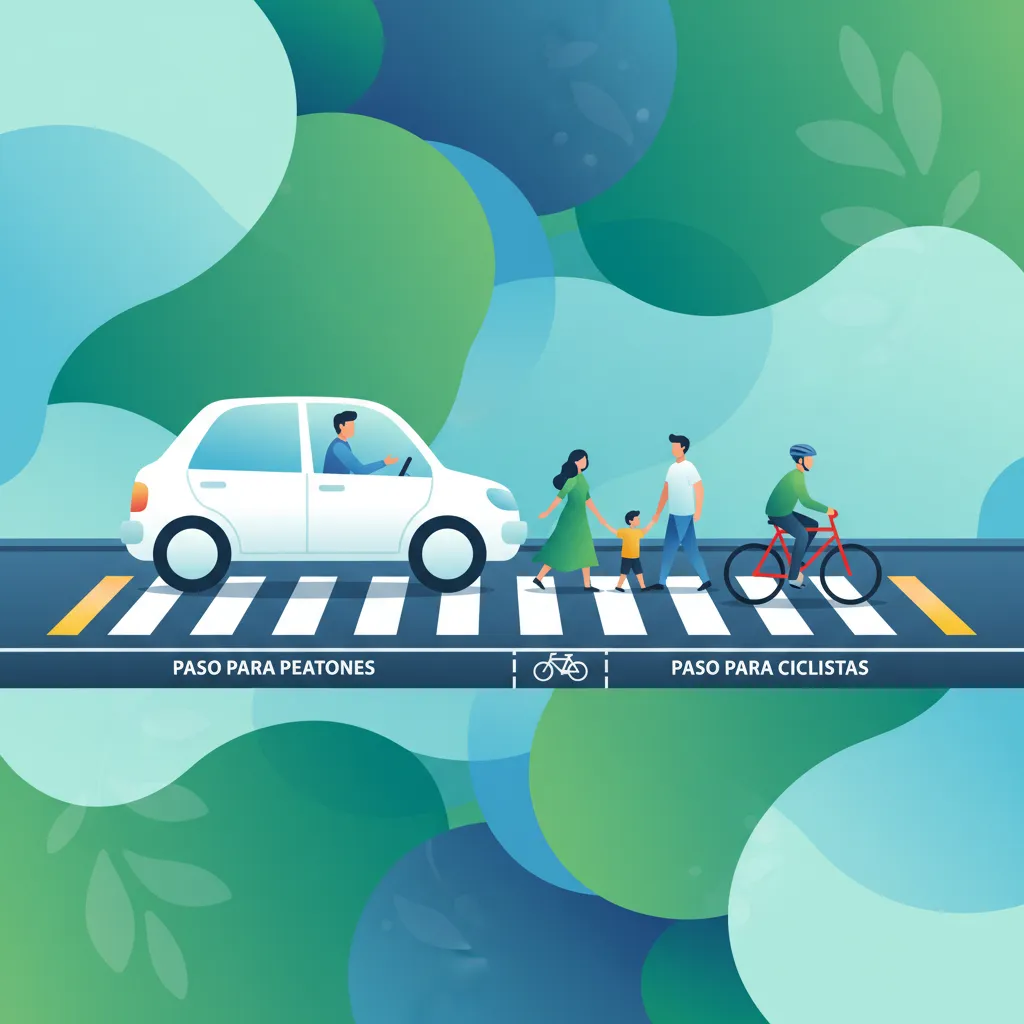
pedestrian priorityright of waycrossings
15 questionsView details
Understanding Zebra Crossings and Pedestrian Priority in Spain

Pedestrian & Cycle Priority

Master Spanish Pedestrian and Cycle Priority to Drive Safely and Pass Your Exam.

pedestrianscyclistspriority
15 questionsView details
Right of Way at Unmarked & Special Intersections in Spain

Unmarked Intersection Priority

Navigate Complex Intersections: Master Spanish Right of Way Rules

PriorityRight of WayIntersections
21 questionsView details
Driving Rules in a Spanish Travesía: Urban Areas on Rural Roads

Spanish Travesía Rules

Master the unique challenges of Travesías to confidently pass your Spanish driving theory exam.

TravesíaSpeed limitsLighting
15 questionsView details
Navigating Near Vulnerable Pedestrians in Spain

Children & Elderly Safety

Master Safe Driving Around Children and the Elderly for Your DGT Exam!

vulnerable groupspedestrianschildren
15 questionsView details
Navigating One-Way and Two-Way Streets in Spain

One-Way vs Two-Way Streets

Avoid Common Mistakes: Master Urban Street Logic for Your DGT Exam.

urban drivingone-way streettwo-way street
16 questionsView details

Questions in Interurban Pedestrian Rules

Exam focused questionss

0

Difficulty Level

How This Driving Theory Practice Helps You Pass Faster

Interurban Pedestrian Rules offers quick, focused exam style practice to boost your Spanish knowledge for the driving theory exam in Spain.

Avoid common mistakes regarding pedestrian positioning on interurban roads.
Gain confidence in answering DGT exam questions about reflective vest requirements.
Clearly understand the exceptions to the general pedestrian walking rules in Spain.
Improve your overall knowledge of Spanish traffic law concerning vulnerable road users.
Boost your exam readiness by practicing tricky pedestrian safety scenarios.

Who Should Practise Interurban Pedestrian Rules?

Interurban Pedestrian Rules helps learners in Spain with clear explanations and targeted Spanish practice to improve essential driving theory topics.

This practice set is ideal for intermediate learners preparing for the Spanish driving theory exam. It addresses common misconceptions about pedestrian rules outside urban areas, ensuring you understand the specific DGT regulations for interurban roads and the use of reflective gear, which are frequent exam topics.

Start Practice

Ready to Start Practicing? Choose Your Theory Category

Dive deeper into your Spanish DGT driving theory preparation by selecting a specific practice category. Whether you need to review road signs, master traffic priority rules, or understand vehicle safety, pick a topic to begin targeted exercises and reinforce your knowledge for the official exam.

Explore Practice Categories

CTA Decorative Squares

Practice Spanish driving theory questions

Spanish road signsSpanish article topicsSearch Spanish road signsSpanish driving theory homeSpanish road sign categoriesSpanish driving theory topicsSpanish Moped Theory AM courseSearch Spanish theory articlesSpanish driving theory coursesSpanish driving theory articlesSpanish driving theory practiceSpanish driving licence proceduresSpanish Driving Theory D & D1 courseSpanish Driving Theory B & BE courseLane Signs Spanish road sign categoryOther Signs Spanish road sign categorySpanish Truck Driving Theory C/C1 courseService Signs Spanish road sign categoryPriority Signs Spanish road sign categoryLocation Signs Spanish road sign categoryMandatory Signs Spanish road sign categoryDirection Signs Spanish road sign categorySpanish Motorcycle Theory (A, A1, A2) courseRestriction Signs Spanish road sign categoryAdditional Panels Spanish road sign categoryRoute Number Signs Spanish road sign categoryConfirmation Signs Spanish road sign categoryPre-signaling Signs Spanish road sign categoryGeneral Danger Signs Spanish road sign categoryDe-restriction Signs Spanish road sign categoryEntry Prohibition Signs Spanish road sign categoryGeneral Indication Signs Spanish road sign categoryConstruction Warning Signs Spanish road sign categoryConstruction Indication Signs Spanish road sign categoryConstruction Speed Limit Signs Spanish road sign categoryConstruction De-restriction Signs Spanish road sign categoryConstruction Reflective Marking Signs Spanish road sign categoryOther Prohibition or Restriction Signs Spanish road sign categorySigns for Specific Use in Built-up Areas Spanish road sign categoryConstruction Regulation and Priority Signs Spanish road sign category