
This lesson focuses on the critical spatial awareness required when navigating buses and coaches through narrow streets and historic Swiss city centres. You will learn to manage clearances, avoid contact with obstacles, and execute tight turns safely as a professional driver.
Lesson content overview
Navigating a large passenger vehicle like a bus or coach through the confined spaces of narrow streets and historic city centres presents unique and significant challenges. For drivers pursuing a Swiss Category D Driving License Theory Course, mastering these skills is not just about compliance, but about ensuring the utmost safety for passengers, protecting the vehicle from damage, and preserving often delicate historic infrastructure. This lesson delves into the specific techniques, principles, and regulations required to operate a bus with precision and confidence in such demanding environments.
Driving a bus in older parts of a city, or through particularly narrow lanes, demands an exceptional level of spatial awareness and precise vehicle control. Unlike modern thoroughfares designed for larger vehicles, historic city centres often feature tight turns, limited sightlines, and fixed obstacles such as stone bollards, building corners, and closely parked cars. These physical constraints significantly reduce available safety margins, making anticipatory driving and careful manoeuvring paramount.
The core difficulty lies in managing the substantial dimensions of a bus within a severely restricted space. This includes the vehicle's width, length, and particularly its front and rear overhangs, which behave differently during turns than the wheel path. Errors in judgment or execution can lead to serious consequences, including collisions, property damage, passenger discomfort or injury, and potential legal repercussions. Therefore, a deliberate, slow, and methodical approach is essential.
Operating a bus safely in historic city centres is critical for several reasons. Firstly, passenger safety is always the highest priority; sudden movements or collisions can cause injury, especially to standing passengers. Secondly, the integrity of the vehicle is at stake, as scrapes or impacts can lead to costly repairs and operational downtime. Finally, many historic areas contain valuable and protected infrastructure, which drivers have a responsibility to avoid damaging. Successful navigation in these environments reinforces the principles of professional responsibility and duty of care inherent to the Swiss Category D driving license.
Mastering narrow street navigation hinges on the application of several interconnected driving principles. These principles guide decision-making and actions, ensuring safety and efficiency.
Clearance management is the fundamental principle of ensuring adequate lateral space for the bus to pass without making contact with any obstacles. This applies to both static clearance (the distance to fixed objects like walls, lampposts, or roadside signs) and dynamic clearance (the space needed during a manoeuvre, especially while turning).
Drivers must continuously assess the available lane width in relation to the bus's dimensions, including mirrors. Before entering a narrow segment, a driver should determine if there is sufficient space to proceed safely. This may involve deciding whether to wait for oncoming traffic to clear, repositioning the vehicle slightly, or even finding an alternative route if the passage is too restricted. Incorrectly estimating the width, ignoring parked vehicles, or misjudging the turning radius are common mistakes that lead to contact with curbs or other objects.
Overhang awareness refers to understanding how the front and rear sections of the bus extend beyond its wheelbase and how these sections swing during a turn. The front overhang is the distance from the front axle to the front bumper. During a turn, the front of the bus swings outwards, following a wider arc than the front wheels. The rear overhang is the distance from the rear axle to the rearmost part of the vehicle. During a turn, the rear of the bus swings inwards, towards the centre of the turn. This inward swing is often referred to as 'cut-in' or 'tail swing'.
This phenomenon means that while the wheels may clear an obstacle, the body of the bus—either the front or the rear—might not. For example, during a right turn, the front bumper might swing wide into the path of an oncoming vehicle or street furniture, while the rear might swing inward and strike a curb or parked car. Drivers must account for both the front and rear overhangs to avoid striking obstacles on either side of the vehicle, particularly when negotiating tight corners or making adjustments in traffic. A common mistake is focusing only on the wheel path and neglecting the wider trajectory of the vehicle's body.
Incremental steering involves making small, gradual adjustments to the steering wheel rather than large, abrupt inputs. This technique is crucial for maintaining vehicle stability, particularly in confined spaces and at low speeds. It allows for smoother turns, which enhances passenger comfort by preventing sudden lateral forces that could cause discomfort or falls.
Drivers should anticipate steering needs early and use smooth, continuous wheel movements. Pre-emptive steering, making slight adjustments before entering a turn, can set the vehicle up for a more controlled path. Fine-tuning adjustments can then be made during the turn. Over-steering or making sudden, large steering changes can lead to instability, passenger discomfort, and an increased risk of losing control.
Positioning on reference line involves accurately aligning the bus within its designated lane or relative to the road's edge. This principle ensures sufficient clearance from opposing traffic, prevents encroachment onto adjacent lanes, and respects road markings.
In a two-way street, this might mean centering the bus appropriately. In a one-way street or dedicated bus lane, it often involves maintaining a specific distance from the curb. Proper positioning prevents conflict with oncoming vehicles, reduces the risk of side-swiping parked cars, and helps protect vulnerable road users. Drivers must avoid drifting too close to the curb, which can scrape wheels or side panels, or straying too far into the opposing lane, which creates a collision hazard.
Speed reduction is the deliberate act of operating the bus at a controlled, reduced speed that is appropriate for the specific width, complexity, and environmental conditions of the street. This is distinct from simply obeying the posted speed limit, as conditions in narrow urban areas often demand speeds well below the maximum allowed.
Decelerating well in advance of a narrow segment and maintaining a low-speed cruise throughout confined areas gives the driver more time to perceive and react to obstacles, allows for smoother and more precise steering, and significantly reduces passenger discomfort.
Using low gears and applying gentle, progressive braking are key components of controlled deceleration. Maintaining speeds suitable for wider roads in narrow environments is a common mistake that severely limits reaction time and increases the risk of accidents.
In narrow streets and historic centres, vulnerable road users such as pedestrians and cyclists are often in closer proximity to the vehicle and may be obscured from view. Vigilance involves continuous and active scanning of the environment, not just directly ahead, but also using side mirrors and windows, and performing frequent shoulder checks.
Pedestrians may step out from between parked cars or from behind street furniture without warning. Cyclists might share the narrow roadway, weave through traffic, or use sidewalks. Drivers must be prepared to stop or adjust speed instantly. Assuming clear pathways or neglecting blind spots are dangerous mistakes. This heightened awareness is critical for preventing serious accidents involving those most at risk.
Operating a bus or coach in Switzerland requires strict adherence to specific traffic laws, which are particularly relevant in narrow urban and historic environments. Drivers must be intimately familiar with these regulations as defined in the Swiss Road Traffic Act (SVG) and its associated ordinances.
Rule: Buses must not occupy a lane that is narrower than the legal minimum width required for their dimensions, including mirrors.
This rule is vital in historic city centres where road widths can be highly variable and may not always be designed for modern Category D vehicles. Adequate lane width is necessary to prevent collisions with curbs, parked vehicles, and fixed roadside objects, thereby ensuring passenger safety and the integrity of the infrastructure. For a standard bus width of 2.55 metres, sufficient clearance must be maintained on both sides.
An example of correct behaviour would be a bus safely travelling in a lane at least 3.2 metres wide, allowing for its width plus necessary safety margins. Conversely, attempting to drive a 2.55-metre wide bus through a 2.8-metre wide alley, leaving insufficient clearance, would be a violation and could lead to contact.
Rule: Overtaking is strictly prohibited on streets where the available width does not allow for the safe passage of the bus, the overtaken vehicle, and any oncoming traffic simultaneously.
This regulation is particularly relevant on narrow two-way streets, one-way streets with parked cars, or any road where space is constrained. The rationale is to prevent head-on collisions and side-swipes in environments where escape routes are limited.
Attempting to overtake a parked car on a narrow street, forcing oncoming traffic to swerve or stop, is a dangerous and illegal manoeuvre. Always wait for a clear opening or use designated passing zones.
Rule: Speed limits in historic city centres are often significantly reduced, typically to 30 km/h (Zone 30), and these limits must be strictly observed at all times.
These lower speed limits are implemented to enhance safety for pedestrians, allow drivers more time to react to unexpected hazards, and reduce noise pollution in residential and culturally sensitive areas. Adhering to these limits is mandatory.
Maintaining a speed suitable for wider streets (e.g., 50 km/h) in a 30 km/h zone of a historic centre increases stopping distances, makes precise turning difficult, and elevates the risk of striking parked cars or pedestrians.
Rule: Turn signals (Blinker) must be activated well in advance of any turning manoeuvre or lane change in a narrow street environment.
Early and clear signalling is crucial for communicating your intentions to other road users, including pedestrians, cyclists, and other drivers. This allows them sufficient time to react and adjust their own positions or actions, thereby preventing confusion and potential collisions. Signalling only a second before a turn is insufficient and can surprise other users. A good practice is to signal at least 5 seconds before the intended manoeuvre.
Rule: The bus must maintain a minimum lateral clearance of 0.5 metres from parked vehicles when navigating narrow streets, unless the road is explicitly designated as a one-way lane where such clearance may be reduced by specific road markings or conditions.
This rule is designed to prevent accidental contact with parked cars, which can result in vehicle damage, insurance claims, and delays. It also ensures adequate space for emergency services or other road users to pass. Drivers must be mindful of this clearance, especially when negotiating passages with parallel parking.
Operating a bus in confined urban settings often exposes drivers to specific risks and common errors. Awareness of these can significantly improve safety and operational efficiency.
A frequent mistake is entering a tight corner at a speed too high for the conditions, often exceeding 10 km/h. This can cause the bus to overrun the intended path, leading to contact with curbs, road signs, or parked vehicles. Correct behaviour: Decelerate to a controlled speed, often below 5 km/h, well before initiating the turn. This provides ample time for precise steering and clearance assessment.
Drivers sometimes focus solely on the path of the wheels, neglecting how the front or rear of the bus swings out during a turn. This can result in the front bumper striking street furniture or oncoming traffic, or the rear of the bus cutting in and hitting parked cars or pedestrians. Correct behaviour: Initiate turns earlier and use a wider turning radius, actively monitoring both front and rear overhangs in mirrors to ensure sufficient clearance.
Attempting to keep the bus excessively close to the curb, especially when compensating for perceived narrowness, can lead to scraping wheels, damaging side panels, or even mounting the curb. Correct behaviour: Maintain a balanced position within the lane, allowing for a safe margin from the curb while also considering the vehicle's natural sway and the necessary clearance from the opposite side.
In urban areas, pedestrians can be partially or fully hidden behind parked cars, bus shelters, or street furniture. Failing to account for this restricted visibility is a significant risk. Correct behaviour: Approach potential pedestrian zones slowly, actively scan the environment using all mirrors and windows, and be prepared for pedestrians to emerge unexpectedly. Glance through the front windshield's "A-pillar blind spot" when appropriate.
Even on a one-way street, attempting to overtake a parked car or slow-moving vehicle without ensuring absolute clearance can force other road users into dangerous situations. Correct behaviour: Assess the lane width carefully. If there isn't at least 0.5 metres of clearance on either side of the bus from the parked vehicle and the opposite curb (or other obstacles), wait for a clear opening or use designated passing zones.
Activating turn signals only at the last moment before a manoeuvre prevents other road users from anticipating your actions, potentially causing confusion or unsafe reactions. Correct behaviour: Signal at least 3-5 seconds before initiating any turn or lane change, allowing ample time for others to understand your intentions.
Sudden, jerky steering movements can cause significant discomfort to passengers, especially those standing, and can lead to vehicle instability, particularly in a long bus. Correct behaviour: Utilize smooth, incremental steering corrections, maintaining a gentle and steady hand on the wheel to ensure a comfortable and stable ride.
Maintaining normal speed in wet or icy narrow streets dramatically increases stopping distances and the risk of skidding or losing control. Correct behaviour: Further reduce speed, increase following distances, and make all inputs (steering, braking, acceleration) even more gradually in adverse weather.
Driving a bus in narrow streets is not a static task; conditions constantly change and demand immediate adaptation.
| Condition | Impact on Principles | Reasoning |
|---|---|---|
| Rain or Wet Pavement | Speed reduction must be greater; longer braking distances. | Reduced tyre-road friction significantly increases stopping distances and the risk of skidding, demanding more cautious and earlier braking. |
| Nighttime / Low Visibility | Additional reliance on headlights; increased vigilance for pedestrians. | Limited sightlines necessitate improved visual detection of obstacles and road users. Dipped beams should be used in built-up areas, high beams only where permitted and safe. |
| Snow or Ice | Further speed reduction; avoid abrupt steering and braking. | Extremely low surface traction demands the smoothest possible manoeuvres to prevent sliding, loss of control, and increased braking distances. |
| Heavy Passenger Load | Alters vehicle handling; longer braking distance; increased inertia. | A heavier mass reduces vehicle responsiveness and increases kinetic energy, affecting acceleration, braking effectiveness, and slightly altering the turning radius due to increased body roll. |
| Presence of Bicycles | Enhanced blind-spot checks; anticipate cyclists weaving through traffic. | Cyclists often occupy varying parts of the lane and can appear suddenly, especially in narrow passages. Drivers must allow ample space and be prepared for unexpected movements. |
| Construction Zones | Temporary lane markings, detours, or temporary one-way operation. | Drivers must be highly aware of altered lane configurations, temporary signage, and adjust clearance assessments accordingly, as established routes and widths may change. |
| Temporary Traffic Control | May restrict lane usage, alter right-of-way rules (e.g., during events). | Drivers must adapt to changed traffic patterns, obey temporary signage, and be prepared for unexpected pedestrian or vehicle movements directed by event staff or temporary lights. |
Understanding the underlying reasons behind these driving principles reinforces their importance and helps drivers make intuitive, safe decisions.
Let's look at how these principles apply in real-world driving situations.
Setting: A narrow, historic street with a 30 km/h speed limit. Parked cars are closely spaced on both sides, making the turning space very restricted. Decision Point: Initiating a right-hand turn at an upcoming intersection. Correct Behaviour: The driver reduces speed to 5 km/h well before the turn. They position the bus slightly wider on approach to allow for the front overhang to clear the curb, then use incremental steering inputs. They constantly monitor the front and rear overhangs using mirrors to ensure clearance from parked cars on both the originating and destination streets, completing the turn smoothly. Incorrect Behaviour: The driver maintains 20 km/h, performs a sharp turn, and fails to account for the front overhang. The front bumper scrapes the curb or street furniture on the right, or the rear of the bus clips a parked car as it cuts in.
Setting: A one-way narrow lane where cars are frequently parked along one or both curbs. A delivery van is temporarily double-parked, further reducing the effective lane width. Decision Point: Deciding whether to proceed past the double-parked van. Correct Behaviour: The driver slows down significantly, assesses the remaining lane width, and confirms there is enough dynamic clearance (at least 0.5 metres from both the parked cars and the van) for the bus and its mirrors to pass safely. They proceed very slowly, using precise steering and monitoring both sides of the bus. If clearance is insufficient, they wait patiently for the obstruction to clear. Incorrect Behaviour: The driver attempts to squeeze past without verifying adequate clearance, potentially scraping the side of the bus against the van or the parked cars, or causing damage to mirrors.
Setting: A narrow street with parked vehicles lining the curb, obscuring views of the sidewalk. A pedestrian crossing (without traffic lights) is located just beyond these parked vehicles. Decision Point: Approaching the pedestrian crossing with limited visibility. Correct Behaviour: The driver significantly reduces speed, actively scans all mirrors and windows, and specifically looks for signs of pedestrians (e.g., feet appearing from behind parked cars). They cover the brake and are prepared to stop immediately if a pedestrian steps out, prioritizing the safety of vulnerable road users. Incorrect Behaviour: The driver proceeds at normal speed, assuming no pedestrians are present due to the parked vehicles. This lack of vigilance dramatically increases the risk of a collision if a pedestrian unexpectedly enters the roadway.
Mastering the art of driving a Category D bus in narrow streets and historic city centres comes down to a consistent application of vigilance, precision, and a deep understanding of your vehicle's dynamics.
By diligently applying these principles, drivers can navigate Switzerland's historic and narrow urban landscapes with the professionalism and safety expected of a Category D license holder.
Navigating buses through narrow streets and historic Swiss city centres demands exceptional spatial awareness and deliberate, slow manoeuvring. Drivers must manage front and rear overhangs, which swing differently during turns, and continuously assess lateral clearance including mirrors. Key techniques include incremental steering, early signalling, and maintaining proper lane positioning while respecting Swiss road traffic regulations on minimum clearances, speed limits (typically 30 km/h in historic zones), and overtaking restrictions. Drivers must also stay vigilant for vulnerable road users hidden behind parked vehicles and adapt their approach for weather conditions and heavy passenger loads.
A short set of high-value points that capture the most important learning from this lesson.
Always assess lateral clearance for your entire vehicle width, including mirrors, before entering any narrow section.
Front overhang swings outward during turns while rear overhang swings inward (cut-in), requiring active monitoring of both extremities in mirrors.
Reduce speed well in advance of confined areas to extend perception-response time and allow smoother, more precise steering.
Use incremental steering with small, progressive inputs rather than abrupt corrections to maintain vehicle stability and passenger comfort.
In Switzerland, overtaking is prohibited on streets where width does not safely accommodate your bus, the overtaken vehicle, and oncoming traffic simultaneously.
Explore all units and lessons included in this driving theory course.
During a right turn, the front bumper swings wider to the outside while the rear cuts inward toward the inside of the turn.
Maintain at least 0.5 metres lateral clearance from parked vehicles unless specific one-way road markings permit otherwise.
Activate turn signals at least 3-5 seconds before any turning manoeuvre or lane change.
Speed limits in historic city centres are typically 30 km/h (Zone 30), well below normal urban limits.
Adverse conditions (rain, snow, ice, heavy load) require greater speed reduction and even smoother steering and braking inputs.
Focusing only on the wheel path and neglecting the different trajectory of front and rear overhangs during turns.
Entering tight turns at excessive speed (over 10 km/h) instead of decelerating to around 5 km/h.
Activating turn signals only seconds before a turn, giving other road users insufficient time to react.
Failing to account for pedestrians or cyclists obscured behind parked vehicles, street furniture, or bus shelters.
Attempting to overtake another vehicle on a narrow street without verifying absolute clearance for all parties.
Lesson content overview
A short set of high-value points that capture the most important learning from this lesson.
Always assess lateral clearance for your entire vehicle width, including mirrors, before entering any narrow section.
Front overhang swings outward during turns while rear overhang swings inward (cut-in), requiring active monitoring of both extremities in mirrors.
Reduce speed well in advance of confined areas to extend perception-response time and allow smoother, more precise steering.
Use incremental steering with small, progressive inputs rather than abrupt corrections to maintain vehicle stability and passenger comfort.
In Switzerland, overtaking is prohibited on streets where width does not safely accommodate your bus, the overtaken vehicle, and oncoming traffic simultaneously.
Explore all units and lessons included in this driving theory course.
During a right turn, the front bumper swings wider to the outside while the rear cuts inward toward the inside of the turn.
Maintain at least 0.5 metres lateral clearance from parked vehicles unless specific one-way road markings permit otherwise.
Activate turn signals at least 3-5 seconds before any turning manoeuvre or lane change.
Speed limits in historic city centres are typically 30 km/h (Zone 30), well below normal urban limits.
Adverse conditions (rain, snow, ice, heavy load) require greater speed reduction and even smoother steering and braking inputs.
Focusing only on the wheel path and neglecting the different trajectory of front and rear overhangs during turns.
Entering tight turns at excessive speed (over 10 km/h) instead of decelerating to around 5 km/h.
Activating turn signals only seconds before a turn, giving other road users insufficient time to react.
Failing to account for pedestrians or cyclists obscured behind parked vehicles, street furniture, or bus shelters.
Attempting to overtake another vehicle on a narrow street without verifying absolute clearance for all parties.
Explore search topics learners often look for when studying Driving in Narrow Streets and Historic City Centres. These topics reflect common questions about road rules, driving situations, safety guidance, and lesson level theory preparation for learners in Switzerland.
Browse additional driving theory lessons that cover connected traffic rules, road signs, and common driving situations related to this topic. Improve your understanding of how different rules interact across everyday traffic scenarios.
Learn how to manage front and rear overhangs and assess lateral clearance when driving large vehicles through confined urban and historic city centres in Switzerland. Essential for Category D drivers to avoid collisions.
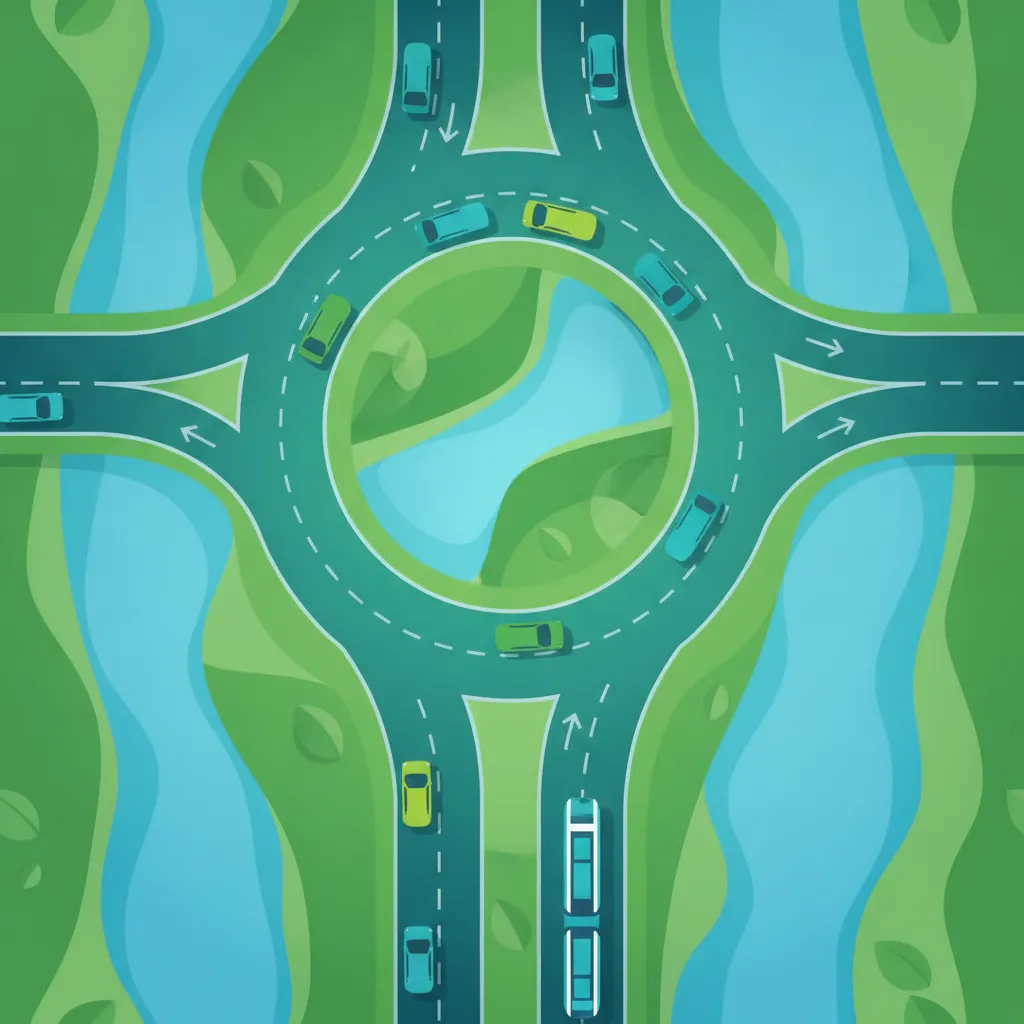
The size of a bus requires careful planning when negotiating complex intersections. This lesson teaches the importance of early lane selection, clear signalling, and comprehensive observation. It provides specific techniques for managing the vehicle's swept path through multi-lane roundabouts and other challenging urban junctions.

Rural driving requires a different mindset from urban driving. This lesson covers how to position your vehicle on narrow roads, how to use passing places effectively, and how to anticipate hazards like slow-moving farm machinery, animals, and concealed junctions. Managing vehicle width and height is a key focus.
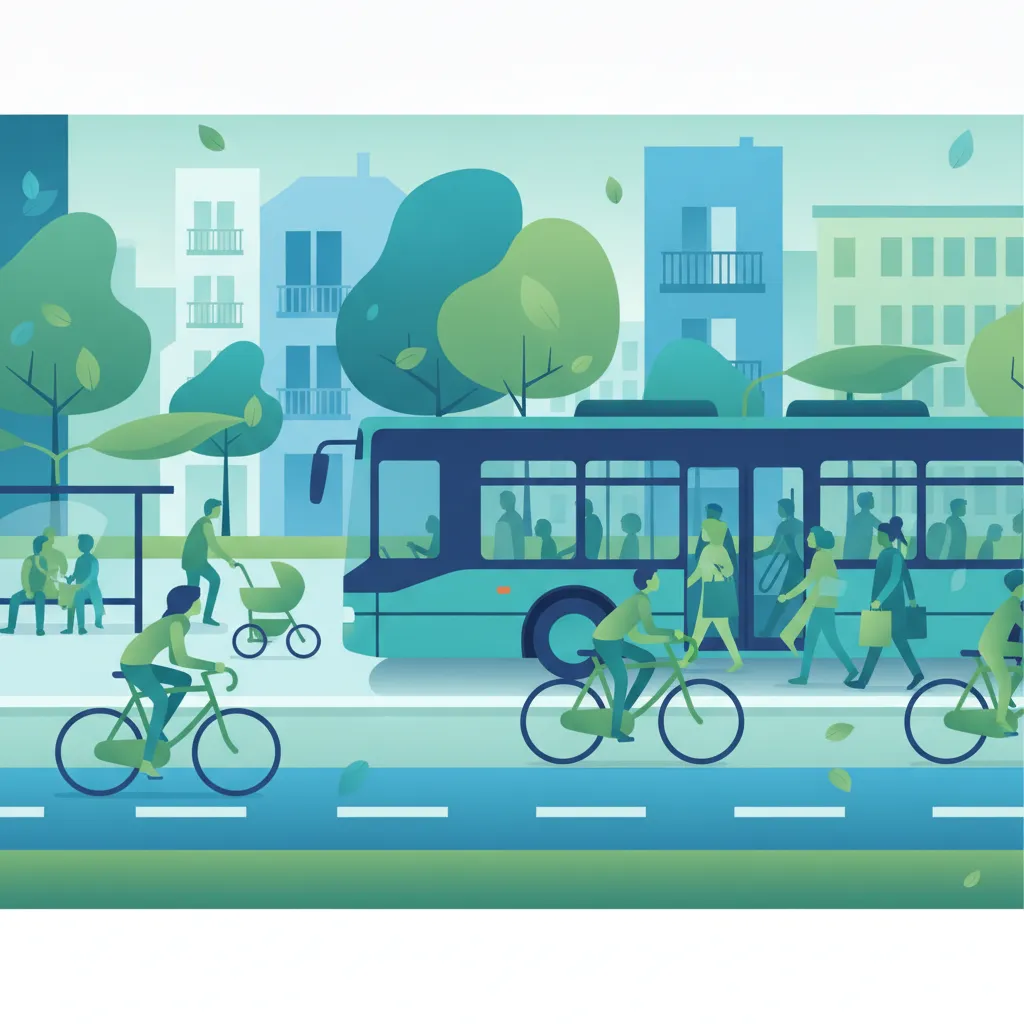
A stopped bus creates a significant visual obstruction for other road users. This lesson focuses on the risk of pedestrians stepping out from in front of the bus and cyclists passing unexpectedly on either side. It reinforces the need for exhaustive mirror and blind spot checks before moving off to prevent tragic 'pull-away' accidents.

When a long vehicle turns, the rear wheels follow a shorter path than the front wheels (swept path), and the rear of the vehicle swings outwards (tail swing). This lesson explains these critical concepts. You will learn how to position the vehicle before a turn to avoid mounting the kerb or striking objects like signs and pedestrians with the rear corner.

This lesson moves beyond simply staying within the lines, teaching how to actively position your vehicle within the lane to manage risk. You will learn to create a 'safety cushion' of space around your bus. This proactive approach improves your reaction time and gives other road users more space, reducing the likelihood of conflicts.

Terminals and depots are busy environments with other large vehicles, maintenance staff, and cleaning crews. This lesson focuses on the specific hazards present in these off-road locations. It emphasizes adherence to site-specific rules, maintaining low speeds, and being highly aware of people working around vehicles.
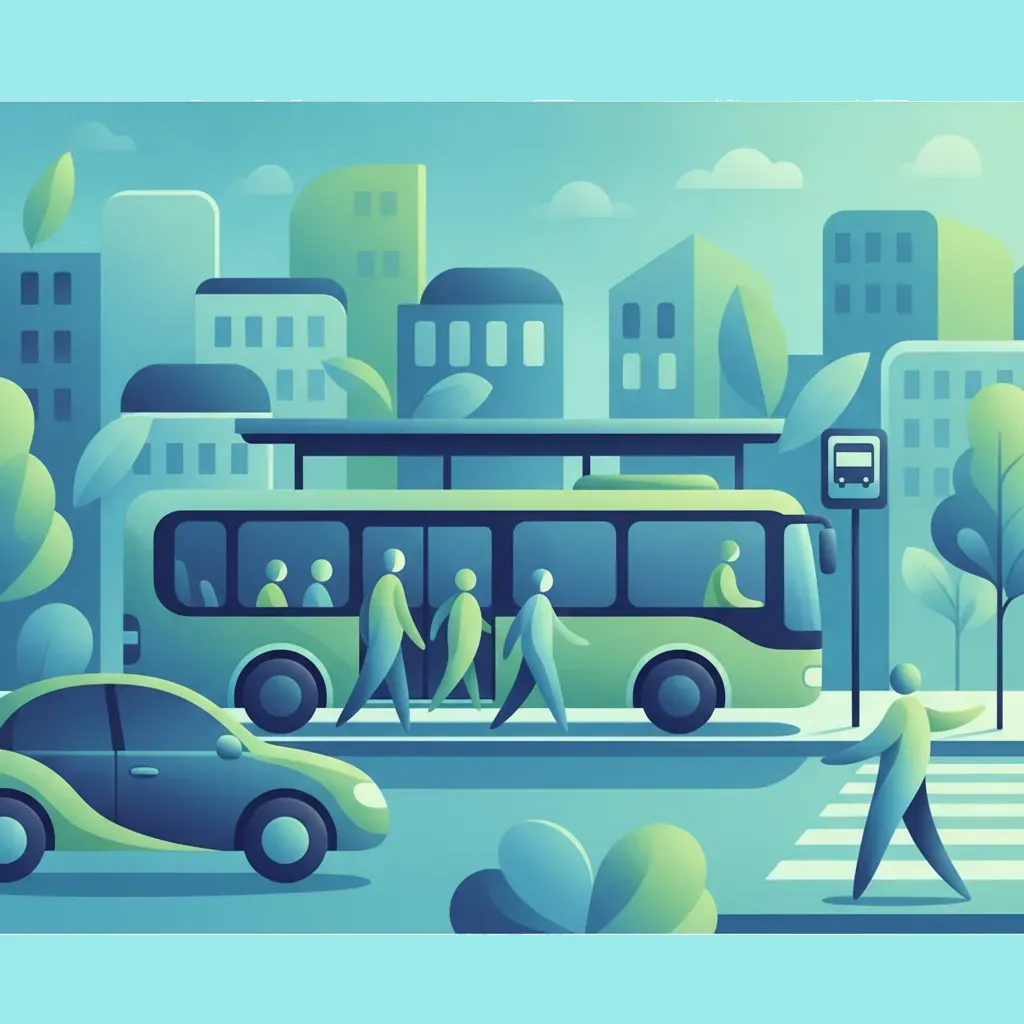
The approach to a stop sets the stage for a safe passenger exchange. This lesson covers signalling in good time, decelerating smoothly, and aiming for a final position that is close and parallel to the kerb. Proper positioning minimizes the step for passengers and prevents them from having to step into traffic.

This lesson focuses on safe interaction with large vehicles. It highlights the significant blind spots (or 'no-zones') around trucks and buses and teaches riders how to position themselves to remain visible. The content also provides guidance on overtaking large vehicles safely and anticipating their wide turning radius at intersections.

Buses have a high centre of gravity, making them susceptible to rollover forces. This lesson explains how factors like passenger load, luggage placement, and speed affect vehicle stability. Understanding these principles is essential for safe cornering, navigating roundabouts, and handling the vehicle in strong crosswinds.

Buses and coaches require significantly more distance to stop than cars. This lesson explains why the 'two-second rule' is insufficient and teaches the appropriate methods for calculating a safe gap in various conditions. Maintaining an adequate safety cushion is one of the most important defensive driving skills.
Master the techniques for maintaining vigilance for pedestrians and cyclists in narrow Swiss streets and historic centres. This lesson focuses on hazard perception and safe interaction with vulnerable road users near buses.
A stopped bus creates a significant visual obstruction for other road users. This lesson focuses on the risk of pedestrians stepping out from in front of the bus and cyclists passing unexpectedly on either side. It reinforces the need for exhaustive mirror and blind spot checks before moving off to prevent tragic 'pull-away' accidents.
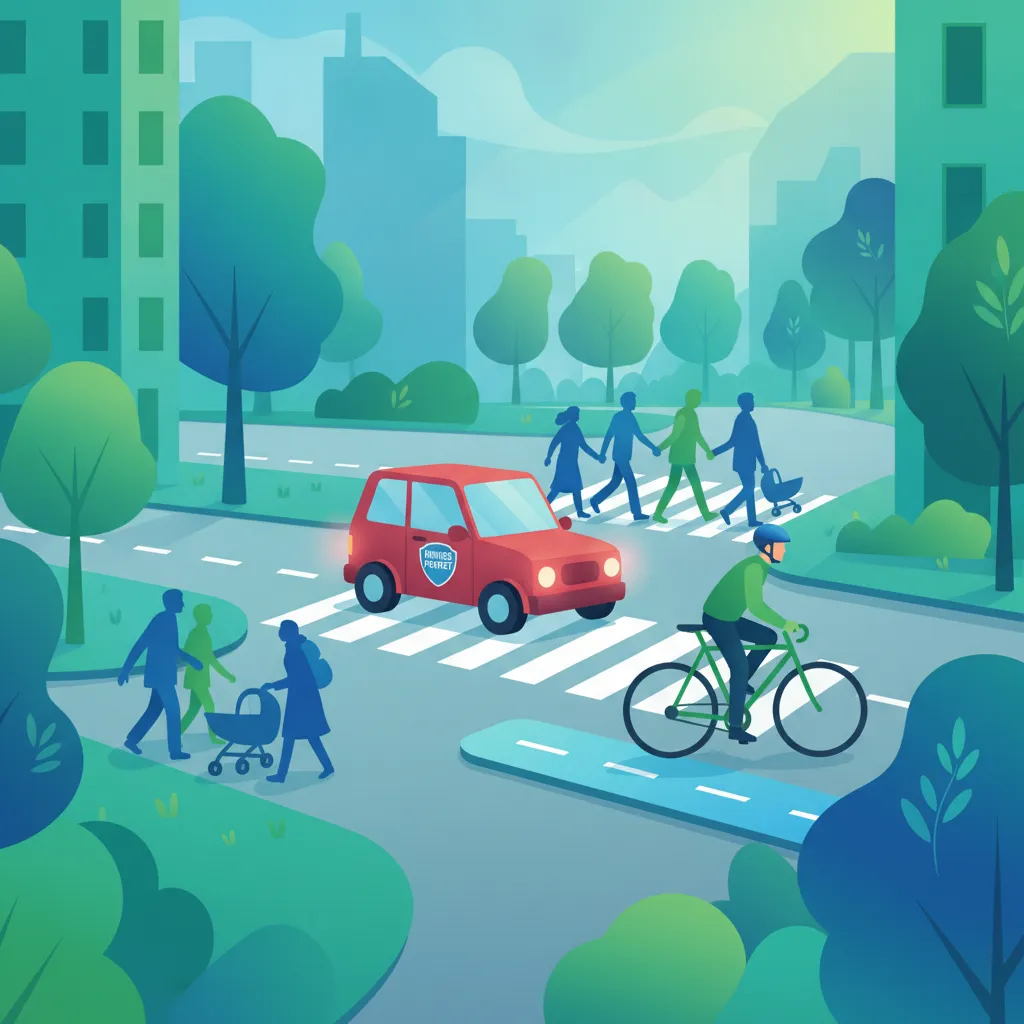
Pedestrians, cyclists, motorcyclists, and e-scooter riders are extremely vulnerable in any interaction with a heavy vehicle. This lesson instills a defensive mindset, teaching drivers to be hyper-aware of VRUs, especially near junctions, crossings, and cycle lanes. It focuses on anticipation and giving VRUs extra space, as they can be unpredictable and are often hidden in blind spots.
This lesson moves beyond simply staying within the lines, teaching how to actively position your vehicle within the lane to manage risk. You will learn to create a 'safety cushion' of space around your bus. This proactive approach improves your reaction time and gives other road users more space, reducing the likelihood of conflicts.
The size of a bus requires careful planning when negotiating complex intersections. This lesson teaches the importance of early lane selection, clear signalling, and comprehensive observation. It provides specific techniques for managing the vehicle's swept path through multi-lane roundabouts and other challenging urban junctions.
Rural driving requires a different mindset from urban driving. This lesson covers how to position your vehicle on narrow roads, how to use passing places effectively, and how to anticipate hazards like slow-moving farm machinery, animals, and concealed junctions. Managing vehicle width and height is a key focus.
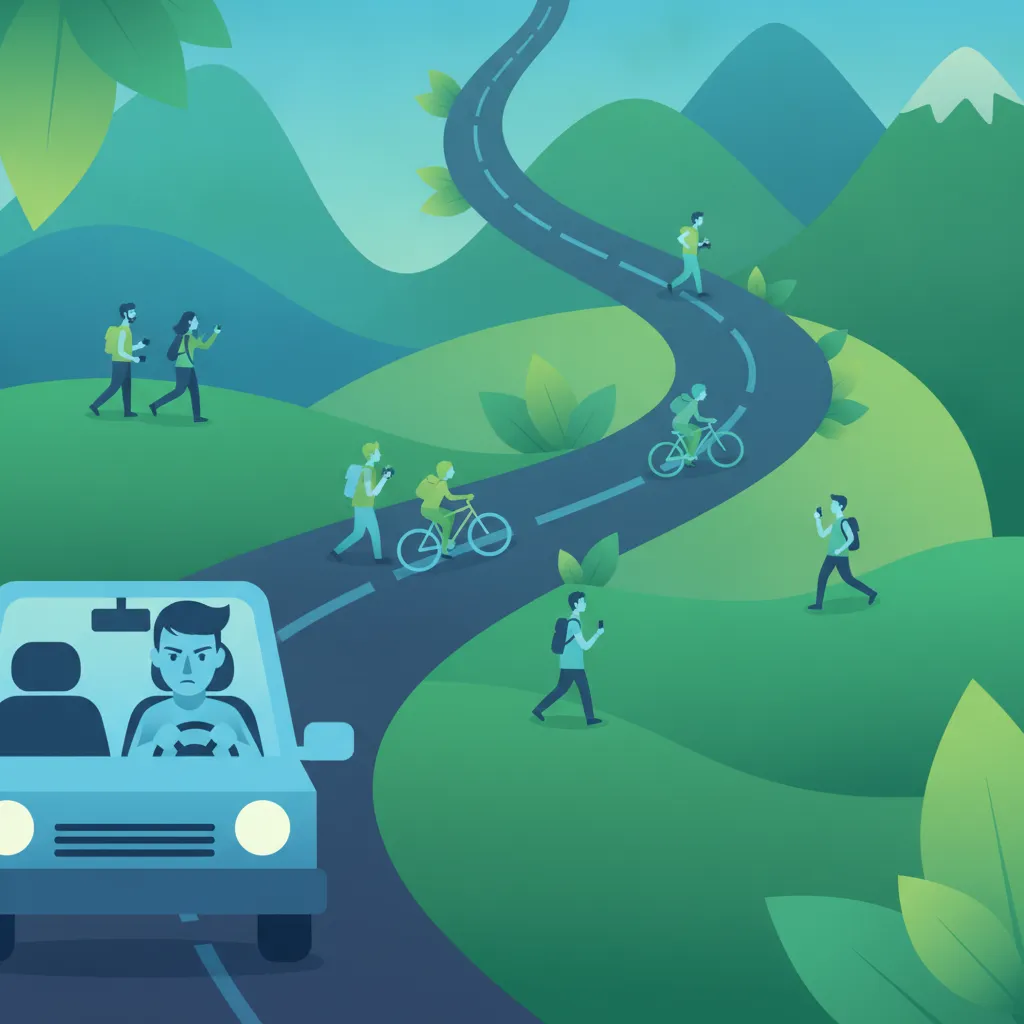
Tourists are often unfamiliar with local traffic rules and may be distracted by sightseeing, leading to unpredictable behavior. This lesson teaches drivers to be extra cautious in these zones. It focuses on anticipating sudden crossings, being aware of other tour vehicles, and maintaining a large safety bubble around the bus.
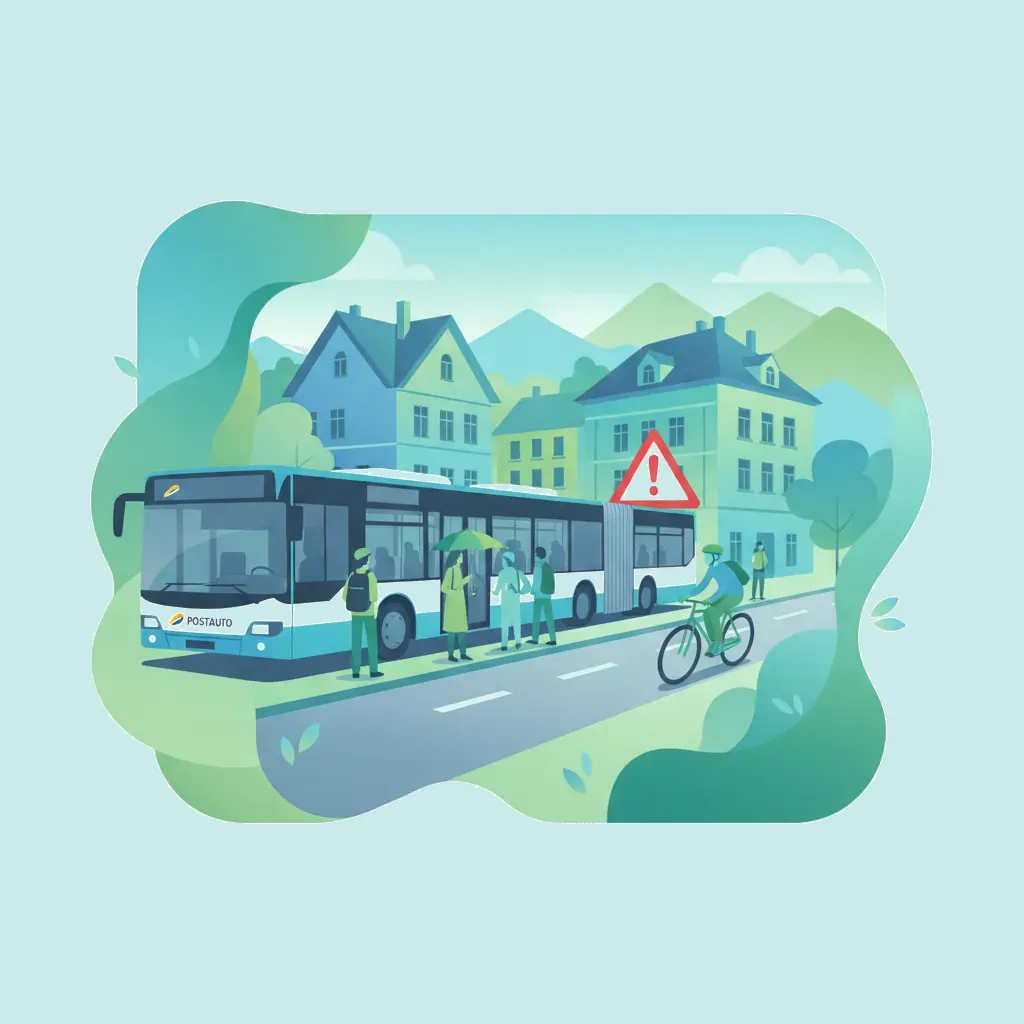
Bus stops are magnets for activity and potential hazards. This lesson trains you to anticipate dangers such as pedestrians running for the bus, cyclists passing on the inside, and cars attempting to overtake. Developing heightened situational awareness is key to preventing accidents in these busy environments.
The approach to a stop sets the stage for a safe passenger exchange. This lesson covers signalling in good time, decelerating smoothly, and aiming for a final position that is close and parallel to the kerb. Proper positioning minimizes the step for passengers and prevents them from having to step into traffic.
This lesson focuses on safe interaction with large vehicles. It highlights the significant blind spots (or 'no-zones') around trucks and buses and teaches riders how to position themselves to remain visible. The content also provides guidance on overtaking large vehicles safely and anticipating their wide turning radius at intersections.

This lesson trains drivers to look beyond other vehicles and actively search for pedestrians, cyclists, and motorcyclists, especially those who may be distracted or unaware. It covers common behavioral patterns of different VRU groups. The goal is to see potential hazards developing early and create time and space to react safely.
Find clear answers to common questions learners have about Driving in Narrow Streets and Historic City Centres. Learn how the lesson is structured, which driving theory objectives it supports, and how it fits into the overall learning path of units and curriculum progression in Switzerland. These explanations help you understand key concepts, lesson flow, and exam focused study goals.
Rear overhang (tail swing) occurs when the rear of the vehicle moves outward from the turn centre. Always check your mirrors constantly during the turn and keep the front of the bus as wide as necessary to pull the rear around obstacles without striking them.
The main risks are tight turns, narrow streets with parked cars, and overhanging building features like balconies or signs. You must manage your speed to near-zero when maneuvering these hazards to allow for constant observation of all vehicle corners.
While the exam focuses on your ability to judge situations, you must know that if a space is clearly too narrow, you must stop and consider an alternative route or wait for traffic to clear, prioritizing safety over the temptation to squeeze through.
In narrow spaces, any increase in speed significantly reduces your reaction time. Driving slowly allows you to make micro-adjustments to your steering and positioning, which is critical for avoiding contact with infrastructure in historic areas.
Pinpoint specific Swiss traffic rules, road signs, or driving situations you need to master. Use the practice search to start a focused revision session now and build confidence for your official driving theory exam.