
This lesson provides a comprehensive guide to the mandatory daily walk-around check for heavy goods vehicle drivers in Switzerland. Mastering this routine is critical for legal compliance, ensuring your vehicle remains roadworthy, and maintaining the safety standards required for Category C and C1 licensing.
Lesson content overview
Operating a heavy goods vehicle in Switzerland, particularly a Category C or C1 lorry, carries significant responsibilities. A fundamental aspect of this professional duty is the diligent performance of a daily pre-drive inspection, often referred to as a "walk-around check." This systematic examination of your vehicle before every journey is not merely good practice; it is a legal obligation designed to ensure roadworthiness and prevent accidents. This lesson will guide you through a comprehensive method to inspect critical components, helping you identify potential defects before they escalate into dangerous situations on the road.
The daily pre-drive inspection is a cornerstone of road safety for heavy goods vehicles. Its importance stems from a combination of legal requirements, accident prevention, and professional accountability. By systematically checking your vehicle, you proactively mitigate risks associated with mechanical failures, contributing significantly to the safety of all road users.
In Switzerland, drivers of Category C and C1 vehicles are legally mandated to perform a thorough inspection of their vehicle before commencing any journey. This requirement is enshrined in Swiss road traffic legislation, including the Road Traffic Act (SVG) and the Ordinance on Road Traffic (VZO). Failure to comply can result in severe penalties, including fines, driving license points, and legal liability in the event of an accident attributed to a preventable vehicle defect. This legal framework underscores the importance of the daily check as a non-negotiable part of a professional driver's routine.
The primary purpose of the pre-drive inspection is to confirm the vehicle's roadworthiness. Heavy goods vehicles, due to their size, weight, and potential cargo, pose a greater risk if they experience mechanical failure. Identifying defects such as worn tyres, non-functional lights, or low fluid levels before departure prevents operational failures that could lead to loss of control, reduced visibility, or compromised braking ability. This proactive approach drastically reduces the likelihood of accidents and protects not only the driver and cargo but also other road users.
The daily walk-around check is a prime example of preventive safety. Instead of reacting to problems after they occur, drivers identify and address potential hazards in advance. This principle is vital in commercial transport, where the stakes are high. By institutionalizing a systematic inspection, drivers develop a disciplined habit that minimises oversight and enhances overall safety culture. It aligns with the goal of operating vehicles reliably and efficiently, avoiding costly breakdowns and delays caused by unaddressed issues.
Documentation is Key: Always record your inspection findings, especially any defects and corrective actions, in the vehicle's logbook. This provides traceability, fulfils legal requirements, and supports maintenance records.
A systematic walk-around ensures that no critical component is overlooked. The recommended method involves moving around the vehicle in a consistent sequence, performing visual and tactile checks on each section. This methodical approach is crucial for comprehensive defect identification.
Start at the Driver's Side Front: Begin your inspection at a consistent point, typically the front driver's side of the vehicle, and proceed clockwise or counter-clockwise around the entire vehicle.
Visual and Tactile Checks: For each component, perform a thorough visual inspection for damage, wear, or cleanliness. Where appropriate and safe, use tactile checks (e.g., wiggling components, checking for play).
Internal Checks: Before or after the external walk-around, perform essential internal checks, such as dashboard warning lights, mirror adjustments, and fluid levels accessible from the cab.
Test Functionality: For items like lights and brakes, you will need to engage them to verify functionality. This may require turning on the ignition or having an assistant.
Document Findings: Note any defects, however minor, in your logbook. If a defect impairs roadworthiness, it must be addressed before departure.
Tyres and wheels are paramount for vehicle control, braking, and load support. Their condition directly impacts safety and fuel efficiency.
The tread on your tyres provides essential grip on the road surface, especially in wet conditions. Insufficient tread depth severely compromises traction and increases the risk of aquaplaning. For heavy goods vehicles, a minimum tread depth of 1.6 millimetres is legally required across the entire tread surface. However, it is highly recommended to maintain a greater depth, especially on load-bearing axles and in winter conditions, for optimal safety.
Correct tyre inflation pressure is equally vital. Under-inflated tyres generate excessive heat, leading to premature wear, increased fuel consumption, and a higher risk of blow-outs. Over-inflated tyres reduce the contact patch with the road, leading to less grip, uneven wear, and a harsher ride. Always check tyre pressure with a reliable gauge when the tyres are cold and compare it to the manufacturer's specifications, usually found on a placard inside the cab or on the fuel filler flap. Remember that tyre pressure may need adjustment based on the load carried.
Beyond the tread, the tyre sidewalls must be meticulously inspected. Look for any cuts, bulges, cracks, or embedded objects. A bulge indicates a structural failure within the tyre's internal plies, making a blow-out imminent and extremely dangerous. Cuts can weaken the sidewall, while cracks (often due to age or sun exposure) can lead to eventual failure. Any significant sidewall damage warrants immediate tyre replacement.
The wheel rims should be free from cracks, bends, or significant corrosion. Damage to the rim can compromise the tyre's seal, leading to slow leaks, or even cause the tyre to detach from the wheel. Pay close attention to the wheel nuts (lug nuts) that secure the wheel to the hub. They must all be present, appear tight, and show no signs of loosening (e.g., rust trails or shiny spots indicating movement). Loose wheel nuts are extremely dangerous and can lead to wheel detachment while driving.
Proper lighting and reflectors ensure your vehicle is seen by others and that you can see the road, especially in low light or adverse weather. They also communicate your intentions (e.g., turning, braking) to other road users.
Check the functionality of your low-beam and high-beam headlights. Ensure they are clean and free of cracks. Your taillights must be operational, providing visibility from the rear. Crucially, test all brake lights (main and high-level, if applicable) to confirm they illuminate brightly when the brake pedal is pressed. A burnt-out brake light significantly increases the risk of a rear-end collision.
Activate your turn signals (left and right) and verify that all indicator lights (front, side, and rear) flash at the correct rate. The hazard warning lights, which flash all indicators simultaneously, are vital for warning others of a stationary hazard or breakdown. They must be fully functional. For heavy goods vehicles, side marker lights and often additional reflectors along the length of the vehicle are legally required. Ensure all these are present, clean, and working.
Dirt, mud, or ice can significantly obscure light output, rendering even fully functional lights ineffective. Always ensure all light lenses and reflector surfaces are clean. Additionally, check for obvious misalignments of headlights, which could dazzle oncoming drivers or inadequately illuminate the road.
Mirrors provide crucial situational awareness, allowing you to monitor traffic behind and to the sides of your vehicle.
Inspect all external mirrors (main and wide-angle, driver's side and passenger's side) for cracks, chips, or damage that could distort your view. Ensure they are clean and free of obstructions. Before driving, adjust your mirrors to provide the widest possible view of the areas to the sides and rear of your vehicle, minimising blind spots. Swiss regulations typically require mirrors to provide a clear view up to at least 150 degrees to the rear.
An area around a vehicle that cannot be directly observed by the driver using mirrors or by looking through windows. Heavy goods vehicles have significant blind spots.
Correct fluid levels are critical for the proper operation and safety of various vehicle systems, including the engine, cooling, and braking.
Check the engine oil level using the dipstick, ensuring it is between the minimum and maximum marks. Low oil can cause severe engine damage. Similarly, verify the coolant level in the expansion tank when the engine is cold. Low coolant can lead to engine overheating. Also, visually inspect for any signs of fluid leaks underneath the vehicle or on engine components.
The brake fluid reservoir level should be between the specified marks. Low brake fluid can indicate a leak in the braking system or worn brake pads, both of which compromise braking effectiveness. For vehicles with hydraulic systems (e.g., power steering, clutch), check their respective fluid levels as well. Any noticeable fluid leak needs immediate attention.
Ensure the windshield washer fluid reservoir is adequately filled. Clear visibility is paramount, and running out of washer fluid in poor weather can be dangerous. Finally, confirm you have sufficient fuel for your planned journey.
Certain safety items are mandatory for heavy goods vehicles in Switzerland and are essential for managing emergencies.
Category C vehicles must carry a fire extinguisher of an appropriate type and capacity. Check that it is securely mounted, easily accessible, and, crucially, that its pressure gauge indicates it is fully charged and within its service date. An expired or uncharged extinguisher is useless in an emergency. Additionally, a fully stocked and unexpired first aid kit must be present and accessible, ready for use in case of injury.
A reflective warning triangle is mandatory for signalling a breakdown or accident. Ensure it is present and in good condition. For longer journeys, or as a general precaution, verify the presence and condition of a spare tyre (if carried) and the necessary wheel-changing equipment, including a wheel brace and jack.
A portable, collapsible triangular device with reflective surfaces, used to warn oncoming traffic of a stationary vehicle or hazard on the road.
These safety features are designed to protect vulnerable road users (pedestrians, cyclists, motorcyclists) in the event of a collision.
Front Underrun Protection: Visually inspect the front underrun protection plate for any damage, cracks, or signs of detachment. This plate prevents smaller vehicles or road users from sliding underneath the lorry in a frontal collision. It must be securely attached and meet minimum height requirements.
Side Guards: Similarly, examine the side guards (lateral protection devices) along the sides of the vehicle. These prevent pedestrians and cyclists from being run over by the rear wheels in a side impact. Ensure they are intact, securely mounted, and free from significant damage or corrosion.
The overall structural integrity of the vehicle is critical for safe operation.
Vehicle Body and Chassis: Conduct a general visual inspection of the vehicle's cab, chassis frame, and body panels. Look for any significant dents, severe corrosion, cracks in the chassis, or loose components. Structural damage can compromise vehicle handling and safety.
Load Securing Devices: Although detailed load securing is covered in a separate lesson, the pre-drive check should include a quick verification that any load securing equipment (e.g., straps, chains, nets, load bars) is present, in good condition (no fraying, rust, or damage), and correctly stored or used if already laden. Ensure that if a load is present, it appears stable and correctly secured according to regulations.
The adherence to Swiss traffic regulations is paramount for all professional drivers. For Category C and C1 vehicles, the daily pre-drive inspection is a direct manifestation of these legal requirements.
| Rule | Applicability | Legal Status | Rationale | Correct Example | Incorrect Example |
|---|---|---|---|---|---|
| Daily inspection of Category C/C1 vehicles must be performed before each journey. | All heavy goods vehicles, regardless of load, before each drive. | Mandatory | Guarantees roadworthiness and safety of vehicles, ensuring compliance. | Driver completes a systematic walk-around and notes findings in the vehicle logbook before leaving the depot. | Driver starts the trip without checking tyres or lights, assuming the vehicle is fine from the last journey. |
| Tyre tread depth must be at least 1.6 mm. | All tyres, especially load-bearing. | Mandatory | Provides adequate grip, reduces hydroplaning risk, and ensures safe braking. | Driver uses a tread depth gauge and finds all tyres exceed 2.5 mm; replaces any tyre below the legal limit. | Driver drives with visibly worn tyres that barely show any tread, leading to poor grip in wet conditions. |
| Tyre inflation pressure must match manufacturer’s specifications. | Before any trip; especially after load changes. | Mandatory | Ensures optimal contact patch, fuel efficiency, and tyre integrity, preventing premature wear and failure. | Driver checks tyre pressure with a calibrated gauge and adjusts to the specified bar value for the current load. | Driver estimates tyre pressure by kicking the tyres or uses an unreliable gauge, resulting in under-inflated tyres. |
| All external lighting must be operational and clean. | Day/night operation, any weather condition. | Mandatory | Ensures the vehicle is visible to others and communicates the driver's intentions, reducing collision risk. | Driver systematically checks each headlight, tail light, brake light, and indicator, cleaning any dirty lenses. | Driver proceeds with a burnt-out brake light or a mud-splattered headlight, significantly reducing visibility to others. |
| Fire extinguisher must be present, correctly mounted, and charged. | All Category C vehicles, regardless of load. | Mandatory | Provides immediate means to combat a fire, protecting vehicle, cargo, and driver. | Driver verifies the fire extinguisher's pressure gauge is in the green zone and confirms it's within the service date. | Driver has an expired or uncharged fire extinguisher that fails to operate during a small engine fire. |
| Mirrors must provide a clear view rearward up to at least 150° and be free from damage. | Side and interior mirrors, before each journey. | Mandatory | Ensures the driver has critical situational awareness of traffic around the vehicle, especially in blind spots. | Driver checks all mirrors for cracks and adjusts them to cover blind spots effectively before setting off. | A side mirror is cracked, causing distortion and making it difficult for the driver to accurately judge the distance of following vehicles. |
Even experienced drivers can sometimes overlook critical aspects during a pre-drive check. Awareness of these common mistakes can significantly improve inspection quality.
The pre-drive inspection is not a static routine; it must adapt to varying environmental conditions and vehicle states.
Every aspect of the daily pre-drive inspection has a direct bearing on safety, vehicle performance, and legal compliance. Understanding these cause-and-effect relationships reinforces the importance of diligence.
The daily pre-drive inspection for Category C and C1 vehicles in Switzerland is a mandatory legal requirement designed to ensure roadworthiness and prevent accidents caused by mechanical failure. This systematic walk-around covers tyres and wheels, external lighting and reflectors, mirrors, fluid levels, safety equipment, and structural components. Tyre tread depth must meet the legal minimum of 1.6mm and pressure must be adjusted for the current load. All defects must be documented in the vehicle logbook, and any issue compromising roadworthiness must be rectified before driving. Adapting the inspection to weather conditions, load state, and trailer attachment ensures comprehensive safety coverage.
A short set of high-value points that capture the most important learning from this lesson.
Swiss law mandates a daily pre-drive walk-around inspection before every journey for Category C and C1 vehicles, as required by the Road Traffic Act (SVG) and VZO.
Tyre tread must be at least 1.6mm legally, but heavier treads are recommended for load-bearing axles and winter conditions.
All external lights and reflectors must be operational, clean, and properly aligned regardless of dashboard indicators.
Safety equipment including a charged fire extinguisher and first aid kit must be present, accessible, and within their service dates.
Any defect affecting roadworthiness must be recorded in the vehicle logbook and corrected before departure.
Explore all units and lessons included in this driving theory course.
Tyre pressure must match manufacturer specifications adjusted for the current load, not just a standard value.
Side guards and front underrun protection must be intact and securely mounted to protect vulnerable road users.
Fluid checks include engine oil, coolant, brake fluid, windshield washer fluid, and any hydraulic systems.
When towing a trailer, inspection extends to coupling mechanism, safety chains, electrical connections, and trailer tyres.
Check for snow, ice, or mud accumulation on lights, mirrors, and undercarriage in adverse weather conditions.
Neglecting to recheck tyre pressure after load changes, assuming pressures set for the previous load are still correct.
Overlooking minor cracks or damage to side guards, underrun protection, or chassis as insignificant.
Relying on dashboard warning lights alone to check all external lights, missing single bulb failures in multi-bulb arrays.
Skipping inspection of load securing equipment condition, focusing only on load stability rather than strap or chain wear.
Failing to clear snow or ice from lights and mirrors before departure in winter conditions, reducing visibility.
Lesson content overview
A short set of high-value points that capture the most important learning from this lesson.
Swiss law mandates a daily pre-drive walk-around inspection before every journey for Category C and C1 vehicles, as required by the Road Traffic Act (SVG) and VZO.
Tyre tread must be at least 1.6mm legally, but heavier treads are recommended for load-bearing axles and winter conditions.
All external lights and reflectors must be operational, clean, and properly aligned regardless of dashboard indicators.
Safety equipment including a charged fire extinguisher and first aid kit must be present, accessible, and within their service dates.
Any defect affecting roadworthiness must be recorded in the vehicle logbook and corrected before departure.
Explore all units and lessons included in this driving theory course.
Tyre pressure must match manufacturer specifications adjusted for the current load, not just a standard value.
Side guards and front underrun protection must be intact and securely mounted to protect vulnerable road users.
Fluid checks include engine oil, coolant, brake fluid, windshield washer fluid, and any hydraulic systems.
When towing a trailer, inspection extends to coupling mechanism, safety chains, electrical connections, and trailer tyres.
Check for snow, ice, or mud accumulation on lights, mirrors, and undercarriage in adverse weather conditions.
Neglecting to recheck tyre pressure after load changes, assuming pressures set for the previous load are still correct.
Overlooking minor cracks or damage to side guards, underrun protection, or chassis as insignificant.
Relying on dashboard warning lights alone to check all external lights, missing single bulb failures in multi-bulb arrays.
Skipping inspection of load securing equipment condition, focusing only on load stability rather than strap or chain wear.
Failing to clear snow or ice from lights and mirrors before departure in winter conditions, reducing visibility.
Explore search topics learners often look for when studying Daily Pre-Drive Inspection (Walk-around Check). These topics reflect common questions about road rules, driving situations, safety guidance, and lesson level theory preparation for learners in Switzerland.
Browse additional driving theory lessons that cover connected traffic rules, road signs, and common driving situations related to this topic. Improve your understanding of how different rules interact across everyday traffic scenarios.
Learn to identify common defects during your daily walk-around checks for Category C/C1 vehicles. Understand your legal responsibility for reporting issues and the safety implications in Switzerland.

The driver is legally responsible for the roadworthiness of their vehicle at the start of and during every journey. This lesson outlines the formal process for reporting any identified defects to the transport manager or maintenance staff. It stresses the critical rule that a vehicle with a known safety-critical defect must not be driven until it has been professionally repaired and declared safe.

While others may have loaded the vehicle, the driver holds the final legal responsibility for the security of the load once on the public highway. This lesson clarifies this crucial point of law, explaining that the driver must inspect the load and its securing arrangements before departure and re-check them during the journey. The consequences of a load shifting or falling can be catastrophic and result in severe legal penalties for the driver.

This lesson outlines the mandatory documentation required during any professional transport journey in Switzerland. Drivers must be able to present the vehicle registration document ('Fahrzeugausweis'), their valid driving license, and the OACP qualification card upon request. It also touches upon transport-specific documents like consignment notes, which are crucial for legal compliance during roadside inspections by authorities.

Overloading is a serious offence with severe safety and legal ramifications. This lesson details how excess weight drastically increases braking distances, puts extreme stress on tyres leading to blowouts, and negatively affects steering and overall stability. Furthermore, it discusses the substantial fines, potential license withdrawal, and driver liability that result from violating Swiss weight regulations.

This lesson explores the requirements for maintaining vehicle roadworthiness, including regular technical inspections (MFK) and compliance with emission standards. It outlines the inspection criteria, such as brake performance, steering condition, and lighting system functionality. Understanding these inspections helps ensure safety and compliance with Swiss regulations.

Operating a heavy goods vehicle involves a significant responsibility for the safety of all road users. This lesson emphasizes the professional driver's enhanced duty of care due to the vehicle's size, mass, and potential impact in a collision. It covers the importance of a professional attitude, constant vigilance, and adherence to all traffic regulations to prevent incidents and maintain a high standard of road safety.

Despite the complex mirror systems, large areas around a truck remain hidden from the driver's view. This lesson maps out these significant blind spots: directly in front, behind, and along both sides of the vehicle. It teaches drivers to be constantly aware of these 'no-zones' and to anticipate that smaller vehicles, cyclists, or pedestrians may be hidden within them, especially before changing lanes or turning.

Proper visibility is paramount for the safety of large vehicles, especially at night or in poor weather. This lesson covers the full range of required lights, including headlights, indicators, brake lights, and side and rear marker lights. It also explains the function of reflectors and the mandatory high-visibility conspicuity markings that outline the vehicle's shape to other drivers.

Swiss law strictly regulates the maximum dimensions of commercial vehicles to ensure they can safely navigate the infrastructure. This lesson specifies the standard limits for vehicle height (4.0m), width (2.55m), and length for various lorry and trailer combinations. Adhering to these dimensions is crucial for avoiding collisions with bridges, tunnels, and other structures, and for navigating narrow roads.
This lesson emphasizes the broad responsibilities of holding a driver's licence in Switzerland, including adherence to traffic laws and maintaining vehicle roadworthiness. It covers legal obligations related to insurance, registration, and reporting accidents, as well as the consequences of violations. The content reinforces the duty of care drivers owe to all other road users.
Explore the critical safety components of lorries, such as tyres, lighting systems, mirrors, and essential safety equipment. Understand their function and importance for roadworthiness in Switzerland.
Proper visibility is paramount for the safety of large vehicles, especially at night or in poor weather. This lesson covers the full range of required lights, including headlights, indicators, brake lights, and side and rear marker lights. It also explains the function of reflectors and the mandatory high-visibility conspicuity markings that outline the vehicle's shape to other drivers.

The dashboard is the vehicle's primary communication interface with the driver. This lesson explains how to read essential gauges, such as the air pressure gauges for the braking system, the tachometer, and the fuel level. It focuses on recognizing the meaning of different warning lights (red for urgent, amber for caution) and the importance of stopping safely to investigate any critical alerts immediately.

Heavy goods vehicles are fitted with specific safety structures to mitigate the severity of collisions with smaller vehicles and vulnerable road users. This lesson explains the function of the rear underrun bar, which prevents cars from going underneath the truck in a rear-end collision. It also covers side guards, which are designed to stop cyclists and pedestrians from falling under the vehicle's wheels during a side impact.

Pedestrians, cyclists, motorcyclists, and e-scooter riders are extremely vulnerable in any interaction with a heavy vehicle. This lesson instills a defensive mindset, teaching drivers to be hyper-aware of VRUs, especially near junctions, crossings, and cycle lanes. It focuses on anticipation and giving VRUs extra space, as they can be unpredictable and are often hidden in blind spots.
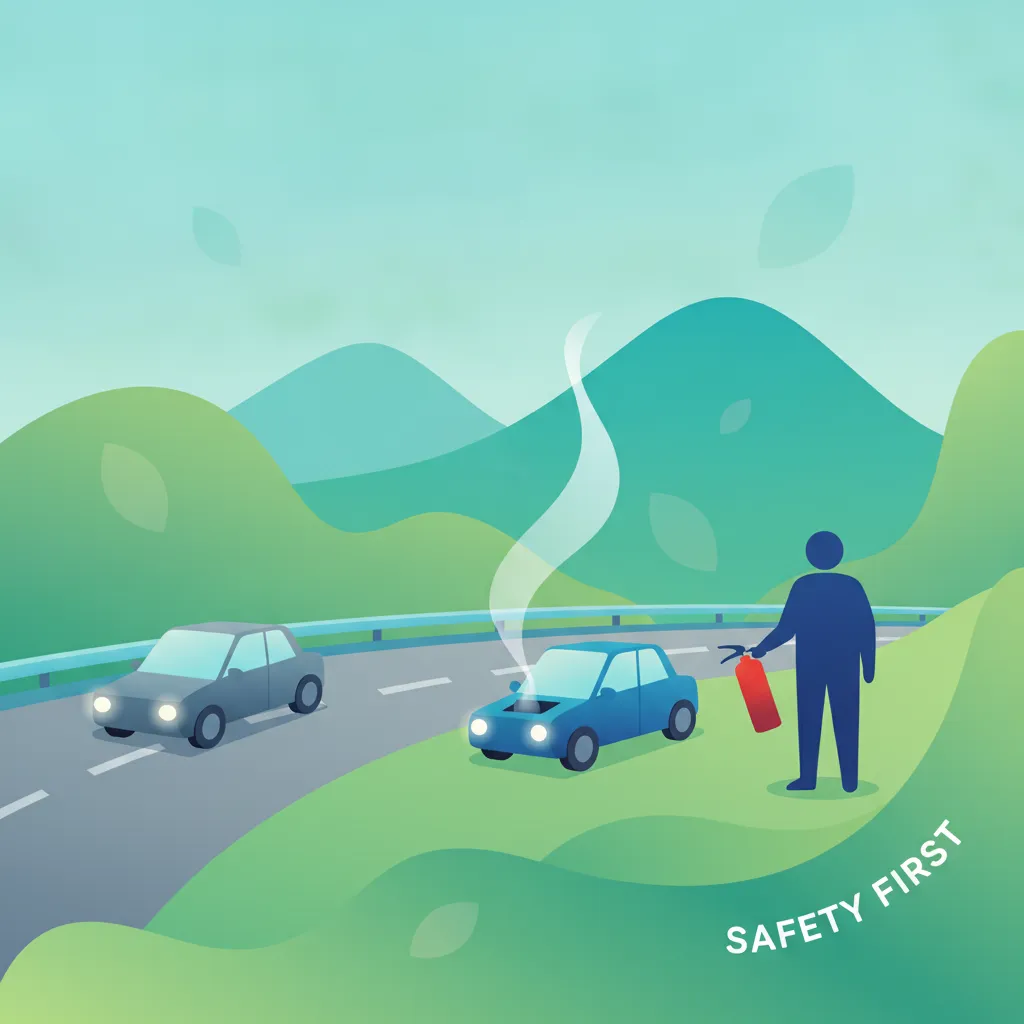
Vehicle fires can start from overheated brakes, tyres, or electrical faults. This lesson covers preventative checks and the immediate actions to take if a fire is detected: stop safely, shut off the engine, and call the emergency services. It provides guidance on using the on-board fire extinguisher for small, accessible fires but stresses that personal safety is paramount and the driver should not take unreasonable risks.

After stopping for an emergency, making the scene safe is the top priority. This lesson details the procedure: activate hazard warning lights, put on high-visibility clothing before exiting the cab, and place the warning triangle at the correct distance behind the vehicle (at least 100m on motorways). This warns approaching traffic and creates a safer environment for the driver and emergency responders.
Despite the complex mirror systems, large areas around a truck remain hidden from the driver's view. This lesson maps out these significant blind spots: directly in front, behind, and along both sides of the vehicle. It teaches drivers to be constantly aware of these 'no-zones' and to anticipate that smaller vehicles, cyclists, or pedestrians may be hidden within them, especially before changing lanes or turning.

This lesson focuses on the legally required safety equipment that must be on board every passenger vehicle. You will learn how to locate and check the fire extinguisher, first aid kit, and emergency hammers. It also covers the inspection of emergency exits to ensure they are unobstructed and functional.
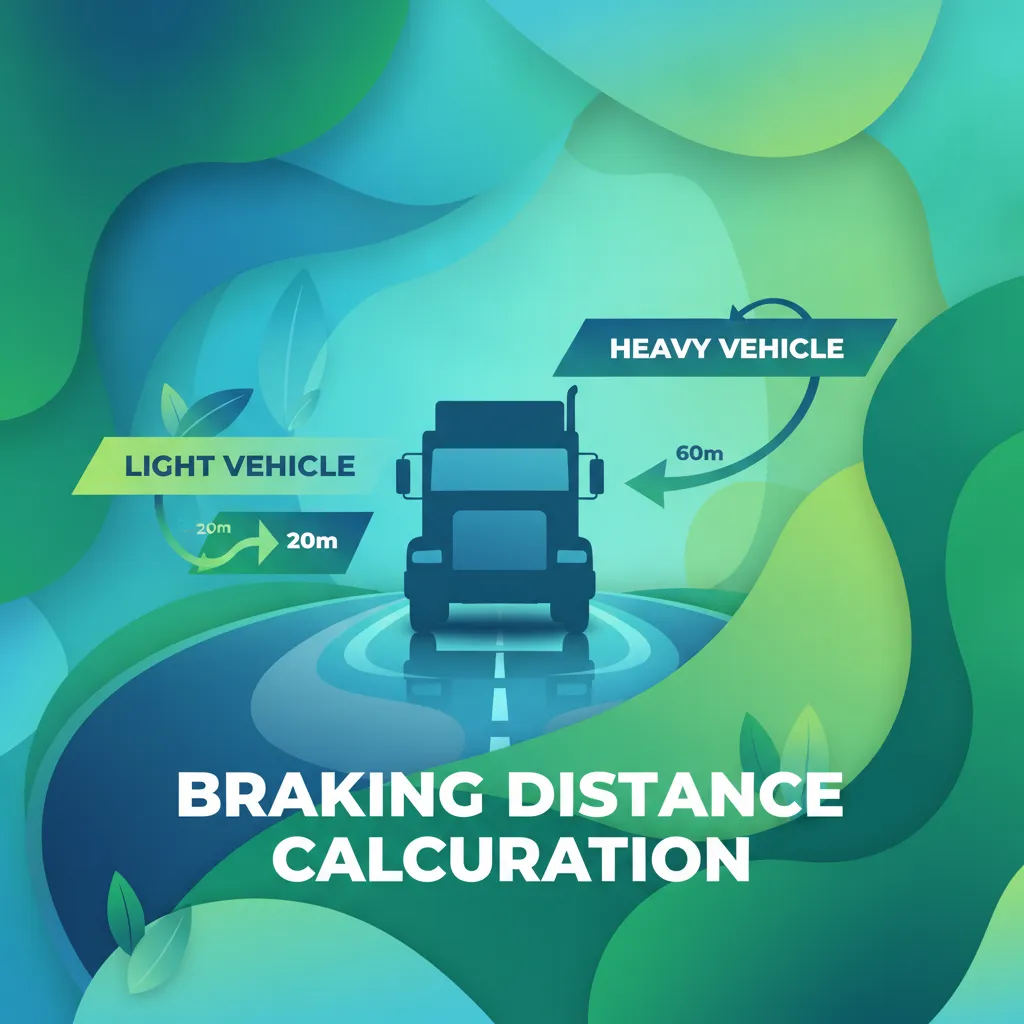
The immense mass of a loaded truck means its braking distance is far greater than that of a car. This lesson breaks down total stopping distance into reaction distance and braking distance, explaining how speed, weight, and road conditions have an exponential effect. It reinforces the necessity of maintaining a significantly larger following distance to ensure enough space to stop safely in an emergency.

This lesson examines the different lighting systems on a vehicle, including headlamps, fog lights, and turn signals. It explains the appropriate use of low-beam and high-beam headlights and the conditions for activating fog lights. Understanding proper lighting usage improves visibility and safety, especially in low-light or adverse weather conditions.
Find clear answers to common questions learners have about Daily Pre-Drive Inspection (Walk-around Check). Learn how the lesson is structured, which driving theory objectives it supports, and how it fits into the overall learning path of units and curriculum progression in Switzerland. These explanations help you understand key concepts, lesson flow, and exam focused study goals.
Yes, drivers are legally responsible for ensuring their vehicle is in a safe, roadworthy condition before starting any journey. Failure to perform checks that result in an accident or roadside inspection failure can lead to severe legal and insurance consequences.
If you identify a critical defect, such as failing lights, worn tyres, or brake system issues, you must not drive the vehicle. You are required to report the defect to your fleet manager or maintenance team immediately to ensure it is repaired before the vehicle enters traffic.
A thorough inspection is required at the start of every working day or whenever you take over a different vehicle. It is a fundamental aspect of your professional duty of care.
The exam tests your understanding of the principles of roadworthiness, the importance of specific checks like tyre pressure and lighting, and your legal obligation to maintain a safe vehicle at all times.
Pinpoint specific Swiss traffic rules, road signs, or driving situations you need to master. Use the practice search to start a focused revision session now and build confidence for your official driving theory exam.