
This lesson guides you through the critical safety requirements for driving buses and coaches in Swiss tunnels and galleries. It builds on your knowledge of vehicle dynamics and passenger safety to ensure you can manage these high-risk environments professionally and according to Swiss law.
Lesson content overview
Tunnels and galleries are integral parts of the Swiss road network, allowing efficient passage through mountainous terrain and under densely populated areas. For professional drivers operating Category D passenger vehicles (buses and coaches), these enclosed environments present unique challenges and heightened risks compared to open-road driving. Mastering specific safety procedures for tunnels is not only crucial for passenger safety but also a mandatory requirement under Swiss traffic law.
This lesson details the essential safety measures you must undertake before entering, while navigating, and after exiting tunnels and galleries. It focuses on integrating mandatory pre-entry checks, dynamic driving adjustments, and critical emergency response protocols to ensure the safety and well-being of all passengers and road users.
Driving a large passenger vehicle through a tunnel demands a distinct approach due to the confined and often isolated nature of these structures. The sudden transition from bright daylight to artificial tunnel lighting, coupled with limited escape routes and reduced ventilation, significantly amplifies the risks associated with incidents like breakdowns, fires, or collisions.
The enclosed nature of tunnels means that any incident can quickly escalate. Smoke from a fire, for instance, cannot disperse easily, leading to rapid accumulation and severe respiratory hazards. Similarly, a breakdown can quickly cause significant traffic congestion, increasing the risk of secondary collisions. The psychological impact of sudden darkness, reduced spatial awareness, and the "tunnel effect"—where objects may appear further away than they are—also necessitates a higher level of driver alertness and adherence to safety protocols.
Key risks within tunnels and galleries include:
Before your bus or coach enters a tunnel or gallery, specific actions are legally required and paramount for safety. These checks prepare you and your vehicle for the unique conditions inside.
The human eye requires time to adapt to changes in light intensity. When transitioning from bright daylight into the darker environment of a tunnel, wearing sunglasses severely hinders this adaptation process. This can lead to a temporary but dangerous loss of vision, potentially obscuring obstacles, road markings, or other vehicles.
It is mandatory for all drivers in Switzerland to remove sunglasses before entering a tunnel or gallery. Failure to do so can result in impaired vision and is a safety violation.
Anticipate tunnel entrances and remove your sunglasses well in advance, allowing your eyes sufficient time to adjust to the impending change in light. Store them securely to avoid distraction.
Dipped headlights, also known as low beams, are legally required inside all tunnels and galleries in Switzerland, regardless of the time of day or ambient light conditions outside. This ensures that your vehicle is clearly visible to oncoming traffic and vehicles ahead, and that you have adequate illumination of the road surface and any potential hazards.
Even if your bus has automatic lighting systems, it is essential to manually activate your dipped headlights before entering a tunnel. Automatic systems may not always react fast enough to the sudden change in light.
Daytime running lights (DRLs) are insufficient in tunnels as they do not provide adequate rear illumination or forward reach. Always switch to dipped headlights a few metres before the tunnel entrance.
Once inside a tunnel, your driving behaviour must adapt significantly to mitigate the increased risks of the enclosed environment.
In tunnels, the standard following distance (typically 2 seconds on open roads) must be substantially increased. The reduced visibility, potential for sudden stops, and the "tunnel effect" all necessitate a greater buffer.
The space between your vehicle and the one ahead, measured in the time it takes to reach a fixed point on the road.
To calculate your following distance, pick a fixed point (e.g., a road sign or lamp post) that the vehicle ahead of you passes. Then, count the seconds until your own vehicle passes the same point. Adjust your speed to maintain the required time gap.
Strict adherence to posted speed limits within tunnels is critical. Tunnels often have specific speed limits lower than the open road, which are determined by factors such as tunnel length, curvature, and emergency infrastructure.
In multi-lane tunnels, maintain strict lane discipline. Only change lanes when absolutely necessary and safe to do so, using clear signals. Overtaking rules within tunnels vary; observe all signage carefully. Some tunnels prohibit overtaking, while others allow it under specific conditions. Always assume overtaking is prohibited unless explicitly indicated otherwise.
As a professional Category D driver, passenger safety is your primary responsibility. This extends to preparing and managing passengers during tunnel transit.
Proactive communication helps manage passenger expectations and promotes safety. Before entering a tunnel, make a clear announcement to your passengers.
A brief announcement can significantly improve passenger compliance and preparedness. For example: "Attention passengers, we are now entering a tunnel. Please remain seated, keep your seat belts fastened, and keep the aisles clear. Thank you for your cooperation."
This informs passengers about the upcoming change in environment and reminds them of essential safety protocols, contributing to a calmer and safer journey.
Despite all precautions, emergencies can occur. Knowing and executing the correct protocols for breakdowns and fires in a tunnel is paramount. Swift and appropriate action can save lives.
If your bus breaks down inside a tunnel and cannot continue under its own power, follow these critical steps immediately:
Safely Pull Over: If an emergency lane or designated breakdown bay is available, steer your bus into it immediately. If no such area exists, pull over as far to the left as possible within the traffic lane, ensuring you are visible. Do not stop in the rightmost lane if there is space to move further left.
Activate Hazard Warning Lights: Switch on your vehicle's hazard warning lights (flashing orange lights) immediately. This alerts following traffic to a stationary obstruction.
Switch Off Engine: Turn off the engine to prevent the accumulation of exhaust fumes and reduce fire risk.
Inform Passengers: Calmly inform passengers of the situation and instruct them to remain seated unless an evacuation is ordered. Explain that emergency services have been alerted.
Contact Emergency Services: Use the nearest emergency telephone (if available) or your mobile phone to contact emergency services (e.g., 117 for police, 118 for fire, 144 for ambulance in Switzerland). Provide your exact location (tunnel name, kilometer marker, or emergency exit number).
Assess Need for Evacuation: Only evacuate passengers if there is an immediate danger (e.g., fire, heavy smoke, or direct order from emergency personnel). If evacuation is necessary, direct passengers to the nearest emergency exit, following exit signage.
Fire in a tunnel is one of the most dangerous scenarios due to the rapid spread of smoke and heat in an enclosed space. Immediate action is vital.
Stop Immediately: If you detect fire on your bus or if a fire occurs ahead of you in the tunnel, stop the vehicle immediately. Try to stop in an emergency lane or close to an emergency exit if possible, but do not risk your life or passengers' safety by attempting to drive further.
Activate Hazard Warning Lights: Turn on your hazard warning lights.
Switch Off Engine: Turn off the engine.
Attempt to Extinguish (If Safe): If the fire is small and contained (e.g., in the engine compartment or a small interior fire), use the onboard fire extinguisher to attempt to put it out. Do not put yourself or others at undue risk. If the fire is large, spreading rapidly, or produces thick smoke, prioritize evacuation.
Order Evacuation: If the fire cannot be quickly extinguished, or if smoke is building up, evacuate passengers immediately. Direct them calmly but swiftly to the nearest emergency exit (indicated by green signs) or to a designated safe zone.
Guide to Safety: Lead passengers away from the smoke and fire. Instruct them to stay low to the ground if there is smoke. Use emergency telephones to alert services and provide location details.
Do Not Re-Enter: Once evacuated, do not re-enter the tunnel or the bus for any reason. Wait for emergency services in a safe location outside the tunnel or within a designated emergency area.
Tunnels are equipped with various safety features:
Familiarize yourself with the location and use of these safety features in tunnels you frequently use.
After successfully navigating a tunnel, especially after an incident, there are final checks to ensure your bus is fully operational and safe to continue.
As you exit the tunnel, perform a quick check of your vehicle's essential systems:
Briefly stopping at a safe location just after exiting a tunnel for these checks can prevent future issues and ensures a smooth continuation of your journey.
Swiss traffic law includes specific mandates designed to enhance safety in tunnels. Professional Category D drivers must be intimately familiar with these regulations.
Failing to comply with these regulations can lead to significant fines, legal penalties, and endanger the lives of your passengers and other road users.
Many incidents in tunnels stem from common errors or a lack of understanding of specific tunnel procedures. Being aware of these can help you avoid them.
Safety procedures in tunnels are not static; they must be adapted based on prevailing conditions.
Applying theoretical knowledge to real-world situations is crucial for professional drivers.
Setting: You are driving a Category D bus on a motorway in Switzerland at 80 km/h under bright sunlight. Ahead, you see the entrance to a long tunnel.
Correct Behavior: As you approach, you notice the speed limit sign for the tunnel indicates 70 km/h. Approximately 100 meters before the entrance, you smoothly reduce your speed to 70 km/h. You remove your sunglasses and place them in a secure holder. You then manually switch on your dipped headlights. Just before entering, you make a brief announcement to your passengers: "Attention passengers, we are now entering a tunnel. Please remain seated and keep your seat belts fastened. Thank you."
Incorrect Behavior: You continue driving at 80 km/h, relying on your automatic headlights which eventually switch on a few seconds after you've entered the dark tunnel. You keep your sunglasses on, causing temporary white-out as you enter the dark interior, struggling to see the road ahead for a few crucial seconds. No announcement is made to passengers.
Setting: While driving through a 5 km long tunnel, your bus suddenly loses power due to a mechanical failure. There is an emergency lane on your left.
Correct Behavior: You immediately activate your hazard warning lights. You smoothly steer the bus into the emergency lane on your left, bringing it to a complete stop as far left as possible. You turn off the engine. Calmly, you inform your passengers that there's been a technical issue and that emergency services are being contacted. You then locate the nearest emergency telephone and provide precise details of your location (tunnel name, kilometer marker, "bus breakdown"). You instruct passengers to remain seated unless an evacuation order is given.
Incorrect Behavior: You stop the bus in the active traffic lane, directly obstructing other vehicles. You forget to activate your hazard lights immediately, leading to a close call for the vehicle behind you. You panic, immediately attempting to evacuate passengers into the tunnel without assessing the situation or contacting emergency services, creating chaos and unnecessary risk.
Setting: You are halfway through a 7 km long tunnel. Outside, there is heavy rain, and inside the tunnel, visibility is somewhat reduced due to mist and exhaust fumes. Your current speed is 60 km/h.
Correct Behavior: Recognizing the reduced visibility and potential for slippery conditions, you consciously increase your following distance to a minimum of 4 seconds behind the vehicle ahead. You maintain a steady speed of 60 km/h, constantly scanning the road ahead for any sudden changes or hazards. Your dipped headlights are on, and you ensure your passengers are seated and belted. You remain extra vigilant, aware that braking distances will be longer in these conditions.
Incorrect Behavior: You maintain a 2-second following distance, feeling pressured by the vehicle behind you. You assume the tunnel conditions are the same as dry weather. When the vehicle ahead suddenly brakes, you are forced to brake harshly, narrowly avoiding a rear-end collision, and causing discomfort and potential injury to your passengers.
Driving a Category D passenger vehicle through tunnels and galleries in Switzerland requires a high level of professionalism, vigilance, and adherence to specific safety protocols. By consistently performing mandatory pre-entry checks, adapting your driving behavior to the enclosed environment, and being prepared for emergencies, you significantly reduce risks and ensure the safety and comfort of your passengers. Understanding the unique challenges and the reasoning behind each regulation empowers you to make informed decisions and react effectively in all situations, making you a safe and responsible professional bus and coach driver.
This lesson covers essential tunnel safety procedures for Swiss Category D bus and coach drivers, emphasizing mandatory pre-entry actions such as removing sunglasses and activating dipped headlights. It specifies increased following distances of at least 3 seconds (4+ in adverse conditions) and provides step-by-step protocols for vehicle breakdowns and fires, including when to evacuate passengers. The lesson also addresses passenger safety responsibilities, post-tunnel vehicle checks, and specific requirements under Swiss traffic law, including the Swiss Road Traffic Act (SVG). Practical scenarios demonstrate correct versus incorrect behaviors to reinforce exam-relevant knowledge.
A short set of high-value points that capture the most important learning from this lesson.
Remove sunglasses and activate dipped headlights before entering any tunnel; automatic systems alone are insufficient
Maintain a minimum 3-second following distance in tunnels, extending to 4 seconds or more in adverse weather or when fully loaded
In emergencies, immediately activate hazard lights, switch off the engine, and contact emergency services via tunnel telephones
Passenger safety is paramount: enforce seat belt use, keep aisles clear, and make pre-tunnel announcements
Only evacuate passengers when there is immediate danger such as fire, heavy smoke, or direct order from emergency personnel
Explore all units and lessons included in this driving theory course.
Dipped headlights are legally mandatory in all Swiss tunnels regardless of external light conditions; daytime running lights alone are insufficient
Swiss emergency numbers: 117 (police), 118 (fire), 144 (ambulance)
If a fire cannot be quickly contained, evacuate immediately toward green emergency exit signs; stay low if smoke is present
Post-tunnel checks include verifying headlights, testing brakes, and deactivating hazard lights once safe
Tunnel speed limits are set based on tunnel design and must be strictly observed; reduce speed further if conditions require
Driving into tunnels wearing sunglasses, causing temporary blindness during the light transition
Relying on daytime running lights (DRLs) instead of manually switching to dipped headlights before entry
Maintaining insufficient following distance (2 seconds) in tunnels, which is inadequate for enclosed environments
Failing to activate hazard lights immediately when breaking down, creating secondary collision risks
Panicking and evacuating passengers without first assessing the situation or contacting emergency services
Lesson content overview
A short set of high-value points that capture the most important learning from this lesson.
Remove sunglasses and activate dipped headlights before entering any tunnel; automatic systems alone are insufficient
Maintain a minimum 3-second following distance in tunnels, extending to 4 seconds or more in adverse weather or when fully loaded
In emergencies, immediately activate hazard lights, switch off the engine, and contact emergency services via tunnel telephones
Passenger safety is paramount: enforce seat belt use, keep aisles clear, and make pre-tunnel announcements
Only evacuate passengers when there is immediate danger such as fire, heavy smoke, or direct order from emergency personnel
Explore all units and lessons included in this driving theory course.
Dipped headlights are legally mandatory in all Swiss tunnels regardless of external light conditions; daytime running lights alone are insufficient
Swiss emergency numbers: 117 (police), 118 (fire), 144 (ambulance)
If a fire cannot be quickly contained, evacuate immediately toward green emergency exit signs; stay low if smoke is present
Post-tunnel checks include verifying headlights, testing brakes, and deactivating hazard lights once safe
Tunnel speed limits are set based on tunnel design and must be strictly observed; reduce speed further if conditions require
Driving into tunnels wearing sunglasses, causing temporary blindness during the light transition
Relying on daytime running lights (DRLs) instead of manually switching to dipped headlights before entry
Maintaining insufficient following distance (2 seconds) in tunnels, which is inadequate for enclosed environments
Failing to activate hazard lights immediately when breaking down, creating secondary collision risks
Panicking and evacuating passengers without first assessing the situation or contacting emergency services
Explore search topics learners often look for when studying Specific Safety Procedures for Tunnels and Galleries. These topics reflect common questions about road rules, driving situations, safety guidance, and lesson level theory preparation for learners in Switzerland.
Browse additional driving theory lessons that cover connected traffic rules, road signs, and common driving situations related to this topic. Improve your understanding of how different rules interact across everyday traffic scenarios.
Understand essential Swiss driving rules and techniques for Category D vehicles in tunnels and galleries. Focuses on visibility, safe following distances, speed limits, and passenger safety during transit.
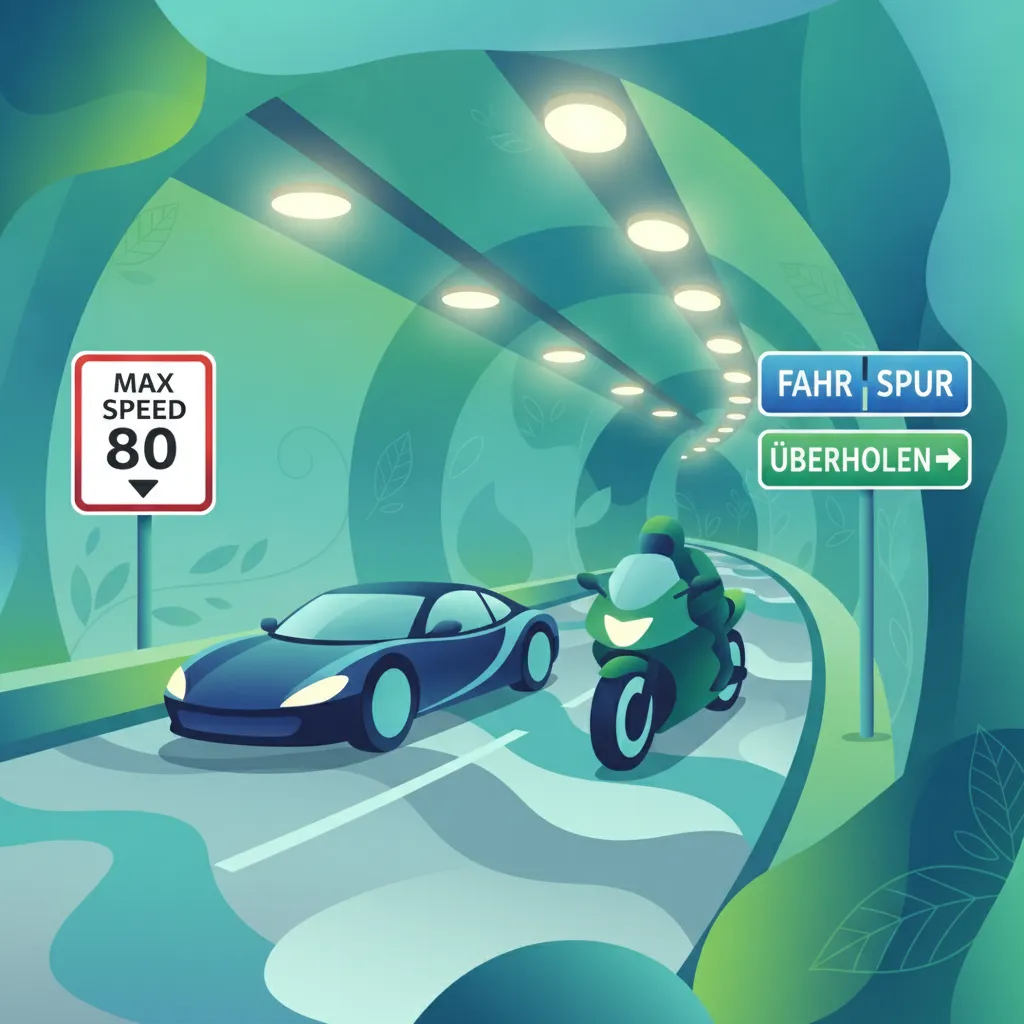
Tunnels are enclosed environments where incidents can quickly escalate. This lesson outlines the specific rules for tunnel driving: remove sunglasses, turn on dipped headlights, maintain a safe following distance, and tune the radio to the indicated frequency. It also covers the critical emergency procedures to follow in the event of a fire or breakdown inside a tunnel.
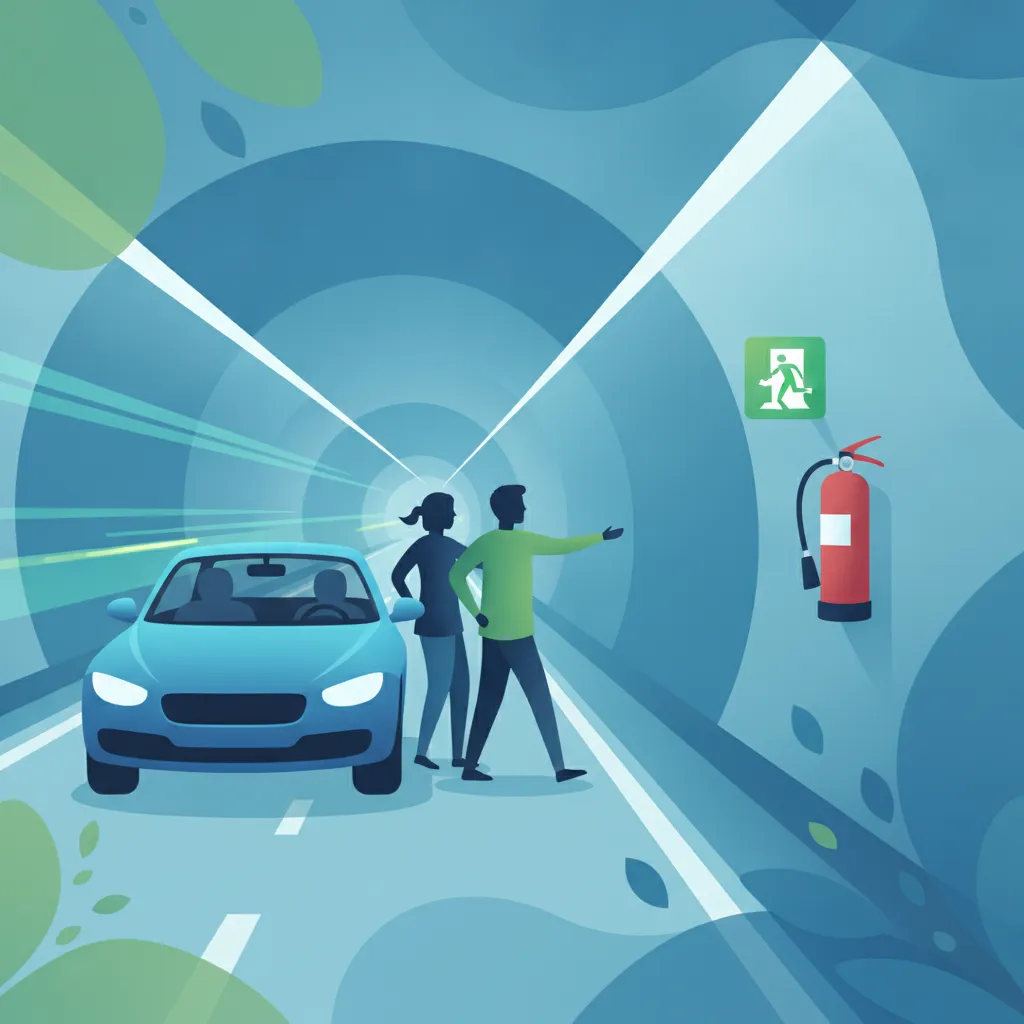
This lesson focuses on safety protocols specific to tunnel driving, explaining how to interpret tunnel signage and maintain appropriate speed. It covers how to respond to emergencies such as fires or breakdowns inside a tunnel. The content also details the location and use of emergency exits, the role of ventilation systems, and driver responsibilities.

Driving a large vehicle on mountain passes is a demanding skill. This lesson covers selecting the correct gear for both ascents and descents to maintain control and avoid overheating the brakes. It also explains the specific priority rules that apply on mountain roads and the importance of being aware of sudden weather changes.
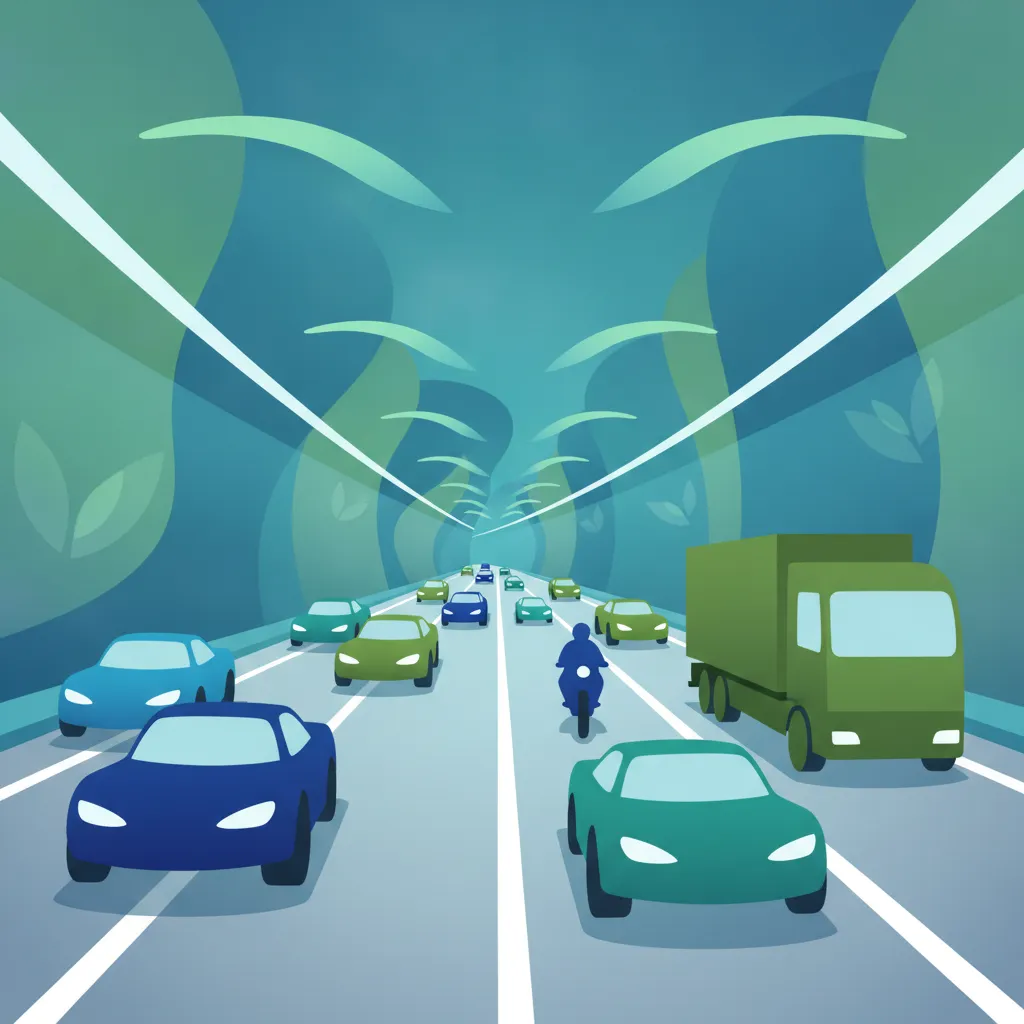
This lesson explores the rules for driving on motorways and navigating tunnels. It covers entry and exit procedures, lane discipline, minimum speed requirements, and overtaking protocols on high-speed roads. For tunnels, the content explains speed limits, lighting, emergency exits, and ventilation requirements for safe travel.
Departing from a bus stop is a high-risk manoeuvre. This lesson details the critical sequence of actions: checking all passengers are clear of the doors, performing a comprehensive mirror and blind spot check, signalling, and waiting for a safe gap in traffic. This systematic approach is essential for preventing collisions with overtaking vehicles, cyclists, or pedestrians.
Driving a bus in older parts of a city requires exceptional spatial awareness and precise control. This lesson focuses on assessing clearances, managing front and rear overhang, and negotiating tight turns around parked cars and buildings. A key theme is slow, careful, and deliberate manoeuvring to avoid contact.
Transporting children carries the highest level of responsibility. This lesson covers the specific legal requirements for school buses in Switzerland, including the use of special signs and warning lights. It details the safe procedures for stopping, boarding, and alighting, and the driver's role in supervising children.
Rural driving requires a different mindset from urban driving. This lesson covers how to position your vehicle on narrow roads, how to use passing places effectively, and how to anticipate hazards like slow-moving farm machinery, animals, and concealed junctions. Managing vehicle width and height is a key focus.
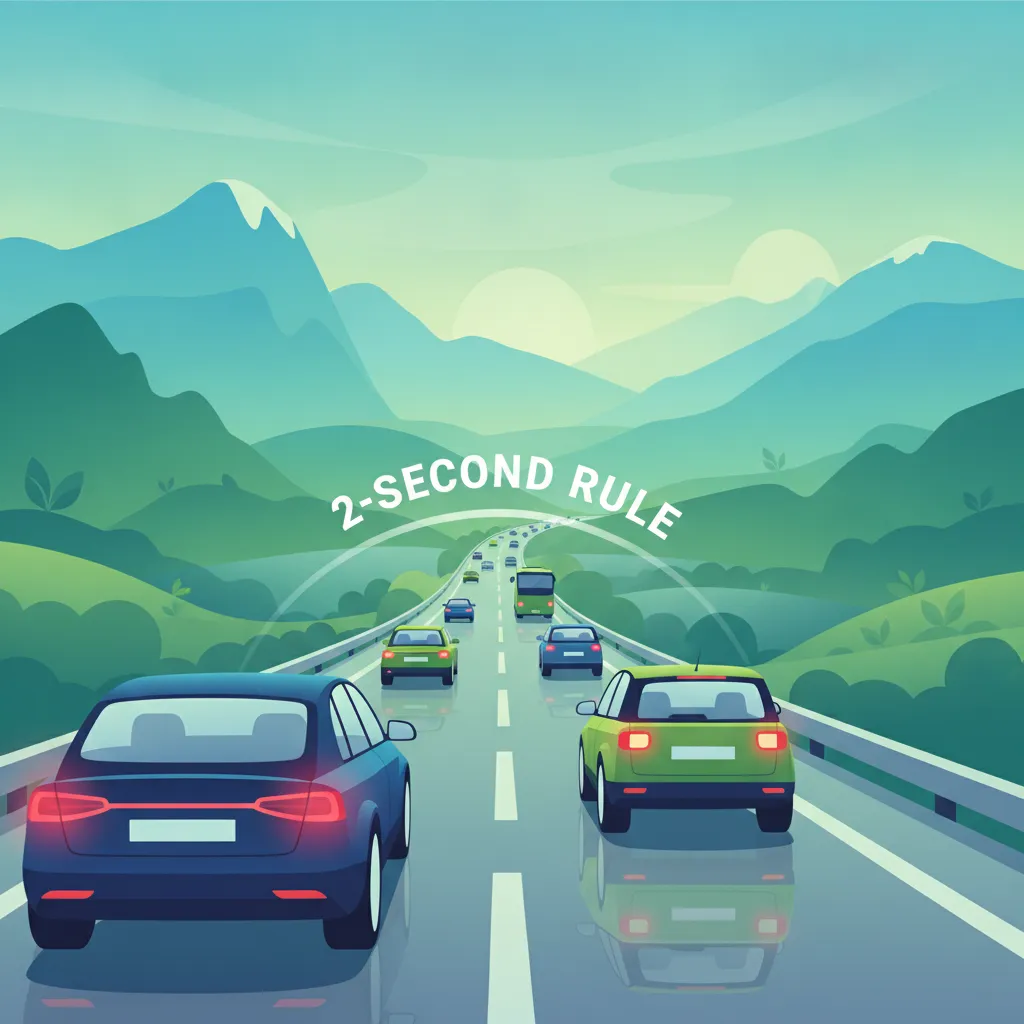
Buses and coaches require significantly more distance to stop than cars. This lesson explains why the 'two-second rule' is insufficient and teaches the appropriate methods for calculating a safe gap in various conditions. Maintaining an adequate safety cushion is one of the most important defensive driving skills.
The approach to a stop sets the stage for a safe passenger exchange. This lesson covers signalling in good time, decelerating smoothly, and aiming for a final position that is close and parallel to the kerb. Proper positioning minimizes the step for passengers and prevents them from having to step into traffic.
Learn critical emergency protocols for Category D drivers dealing with breakdowns or fires inside Swiss tunnels. Covers immediate actions, passenger evacuation, and contacting emergency services for safe transit.
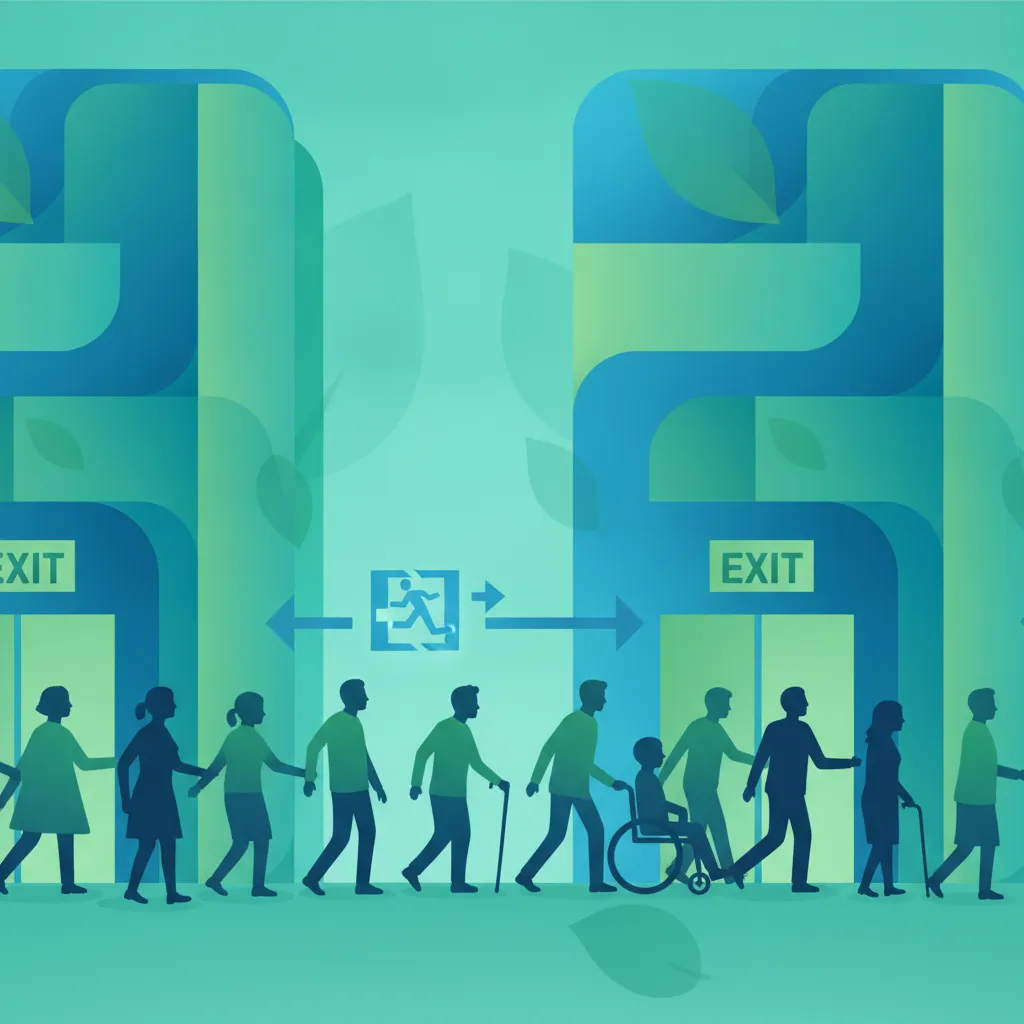
In the event of a fire or other serious danger, a driver must be able to lead an evacuation. This lesson covers the decision-making process, how to use all available emergency exits, and the importance of clear, authoritative communication to guide passengers. The goal is to move everyone to a safe location away from the vehicle and any traffic.
This lesson outlines the steps a driver should take when a passenger becomes ill or requires medical attention. It covers safely stopping the vehicle, making an emergency call to the correct number (144/112), and providing basic assistance until professional help arrives. The focus is on a calm, systematic response to a stressful situation.
This lesson focuses on safety protocols specific to tunnel driving, explaining how to interpret tunnel signage and maintain appropriate speed. It covers how to respond to emergencies such as fires or breakdowns inside a tunnel. The content also details the location and use of emergency exits, the role of ventilation systems, and driver responsibilities.
A breakdown can be a dangerous situation, especially on a busy road or motorway. This lesson provides a clear, sequential guide to follow. It includes pulling over to a safe location, activating hazard lights, placing the warning triangle, ensuring passenger safety, and contacting the appropriate services for assistance.
Tunnels are enclosed environments where incidents can quickly escalate. This lesson outlines the specific rules for tunnel driving: remove sunglasses, turn on dipped headlights, maintain a safe following distance, and tune the radio to the indicated frequency. It also covers the critical emergency procedures to follow in the event of a fire or breakdown inside a tunnel.
Effective communication is vital during an emergency. This lesson teaches you what critical information to provide when calling emergency services, including precise location and the nature of the incident. It also covers techniques for communicating with passengers to provide reassurance and instruction, helping to maintain calm and order.
Departing from a bus stop is a high-risk manoeuvre. This lesson details the critical sequence of actions: checking all passengers are clear of the doors, performing a comprehensive mirror and blind spot check, signalling, and waiting for a safe gap in traffic. This systematic approach is essential for preventing collisions with overtaking vehicles, cyclists, or pedestrians.
A fire on a passenger vehicle is a critical emergency. This lesson covers common fire risks and preventative checks. It provides clear instructions on if, when, and how to tackle a small fire with an on-board extinguisher, always emphasizing that passenger and driver safety is the absolute first priority.
This lesson focuses on the legally required safety equipment that must be on board every passenger vehicle. You will learn how to locate and check the fire extinguisher, first aid kit, and emergency hammers. It also covers the inspection of emergency exits to ensure they are unobstructed and functional.
Find clear answers to common questions learners have about Specific Safety Procedures for Tunnels and Galleries. Learn how the lesson is structured, which driving theory objectives it supports, and how it fits into the overall learning path of units and curriculum progression in Switzerland. These explanations help you understand key concepts, lesson flow, and exam focused study goals.
Removing sunglasses is critical because your eyes need to adapt instantly to the reduced light inside a tunnel. Failing to do so can significantly impair your vision of road markings and obstacles, posing a safety risk for your passengers.
Yes, you must ensure your dipped headlights are switched on before entering any tunnel, regardless of how well-lit it appears. This increases your visibility to other motorists and improves your own view of the road environment.
Because visibility is restricted and the enclosed space limits exit options, you must maintain a greater following distance than on an open road. This provides the necessary reaction time to brake smoothly or avoid debris, ensuring passenger comfort and safety.
You must attempt to drive to a designated emergency bay. If the vehicle is immobile, switch on your hazard warning lights, turn off the engine, leave the keys in the ignition, and evacuate passengers through the designated safe exits while notifying authorities immediately.
Pinpoint specific Swiss traffic rules, road signs, or driving situations you need to master. Use the practice search to start a focused revision session now and build confidence for your official driving theory exam.