
This lesson explores the balance between maintaining professional schedules and ensuring passenger safety as a Category D driver. You will learn how to manage time-related stress and external pressure without compromising your duty of care or traffic safety standards.

Lesson content overview
As a professional driver undertaking the Swiss Category D Driving License Theory Course, comprehending and managing route information and timetable pressures is fundamental to your role. While adhering to schedules is an essential operational requirement for public transport and coach services, it must never overshadow your primary responsibility: the safe operation of the vehicle and the well-being of all road users and passengers. This lesson delves into how to interpret route data, identify sources of pressure, and employ effective strategies to maintain safety and comply with regulations, even when facing tight deadlines.
The cornerstone of professional driving in Switzerland, especially for passenger transport, is the unwavering commitment to safety. This principle, enshrined in Swiss traffic law, dictates that safety considerations always take precedence over operational demands, including timetable adherence. A professional driver's legal duty of care mandates that they operate their bus or coach in a manner that ensures no unnecessary risk is posed to passengers, pedestrians, cyclists, or other motorists.
This means that while punctuality is valued, it cannot be achieved through reckless driving, violations of traffic laws, or any action that compromises safety. Your decisions on the road must constantly balance efficiency with the imperative of protecting lives and property.
Accurate and up-to-date route information is your guide to providing reliable and safe service. It encompasses various forms of data that, when used effectively, allow for smooth operations and informed decision-making.
Timetables, also known as service schedules, are detailed charts indicating the planned departure and arrival times at each designated stop along a specific route. They are the backbone of public transport, enabling passengers to plan their journeys and ensuring efficient network operation.
For drivers, timetables are more than just a list of times; they represent a carefully planned sequence of events that accounts for expected travel times, passenger boarding and alighting, and turnaround periods. It is crucial to understand that these schedules are developed based on typical traffic conditions and are intended as realistic guidelines. They often incorporate what is known as buffer time – additional minutes built into the schedule to absorb minor, unforeseen delays without requiring the driver to rush or compromise safety.
Pre-trip review of the timetable allows you to anticipate peak passenger loads, potential congestion points, and required dwell times at busy stops. It helps you mentally rehearse the journey and prepare for specific challenges.
Route maps provide a visual representation of your journey, showing the path the bus or coach will take, the exact locations of all stops, and often connections to other routes or transport modes. Network diagrams give a broader overview, illustrating the relationship between multiple routes within a service area.
These visual aids are invaluable for pre-trip planning, especially when driving a new or unfamiliar route, or when planning a diversion. They help you understand the geography of your route, identify key junctions, and locate bus stop positions accurately. Consulting a route map can help you confirm the designated path, preventing unauthorized deviations that could lead to delays or legal issues.
Modern passenger transport systems increasingly rely on real-time updates to manage dynamic operational environments. This live information, often conveyed via on-board displays, dispatcher radio, or mobile data terminals, can include:
The ability to process and react to real-time information is a critical skill. It allows you to make informed decisions about adjusting your driving style, informing passengers about delays, or even consulting with dispatch about potential alternative routes. However, remember that any adjustment based on real-time data must still adhere strictly to traffic laws and safety principles. For instance, an alert about congestion ahead should prompt you to prepare for slower speeds, not to consider illegal maneuvers to bypass it.
Timetable pressure is the subjective or objective demand placed on a driver to adhere to a schedule. While a certain degree of pressure is inherent in any scheduled service, it can become problematic if it leads to unsafe driving behaviours.
Timetable pressure can originate from several sources:
Regardless of its source, timetable pressure must be recognized and managed responsibly. No pressure, internal or external, permits a driver to violate traffic laws or compromise safety.
Unrealistic timetables are a significant factor contributing to unsafe driving practices. When schedules are designed without sufficient buffer time or without considering typical operating conditions (e.g., rush hour traffic, frequent stops with high passenger turnover), they force drivers into a difficult position. The constant struggle to meet an unattainable schedule can lead to:
The Federal Act on the Promotion of Public Transport (FPÖV) Art. 12 directly addresses this by requiring operators to design timetables that are realistic and allow for safe operation under expected conditions. This legislative principle underscores that safety must be built into the system, not merely left to individual driver discretion under duress.
While external pressures are significant, drivers can also place considerable self-imposed pressure on themselves to be punctual. This is often rooted in a strong work ethic and a desire to provide excellent service. While admirable, it's crucial for drivers to distinguish between efficient, safe driving and a compulsion to meet a schedule at any cost.
Recognizing when self-imposed pressure is becoming counterproductive is an important aspect of professional development. It requires a conscious effort to prioritize the legal duty of care over the emotional desire to be perfectly on time. Maintaining composure and adhering to safe driving practices, even when running late, is a hallmark of a truly professional driver.
Effective time management is the key to balancing timetable adherence with unwavering safety. By employing proactive strategies, you can minimize the impact of unforeseen delays and reduce the temptation to take risks.
Before even starting your journey, thorough pre-trip planning is crucial. This involves:
This proactive approach allows you to anticipate potential delays and mentally prepare for the journey, reducing stress and improving your ability to react to unexpected events.
Buffer time is critical for safe schedule adherence. It represents the spare minutes built into the timetable to absorb minor, unexpected delays without creating pressure to rush.
While timetables are designed by operators, understanding how to utilize existing buffer time or mentally create your own (e.g., by ensuring you leave the depot promptly, or using available layover time efficiently) can significantly reduce pressure. If a timetable does not provide adequate buffer, it should be reported as a systemic issue.
Driving efficiently is not about driving fast; it's about driving smoothly, anticipating traffic, and making optimal use of road space.
Smooth Acceleration and Braking: Gradual inputs reduce fuel consumption, improve passenger comfort, and minimize wear and tear on the vehicle. Abrupt actions can also cause unsecured passengers to lose balance and risk injury (VTV Art. 6).
Maintaining Appropriate Following Distances: This provides more time to react to hazards, reducing the need for sudden braking and improving safety.
Strategic Lane Changes: Plan lane changes well in advance, using mirrors and indicators effectively, to avoid last-minute, risky maneuvers.
Utilizing Bus Lanes Where Permitted: In urban areas, dedicated bus lanes can significantly improve punctuality by allowing buses to bypass general traffic congestion. However, their use is subject to specific rules (Ordinance on the Use of Bus Lanes (LVO) Art. 3) and does not permit disregarding other traffic regulations or safety principles. You cannot use a bus lane to overtake unsafely or run a red light.
Anticipatory Driving: Constantly scanning the road ahead and around you allows you to react to changing conditions early, avoiding unnecessary stops or sudden accelerations.
These practices not only contribute to punctuality but also enhance passenger comfort and safety, reduce accident risk, and prolong the life of the vehicle.
The ability to perform continuous risk assessment is paramount for professional drivers, particularly when operating under timetable pressure. This involves evaluating potential hazards before deciding to perform any manoeuvre.
In any situation where time pressure is a factor, the decision-making process must always default to safety. If a manoeuvre is required to keep on schedule but introduces an unacceptable level of risk, it must be abandoned.
This includes assessing:
Drivers must consistently ask themselves: "Is this manoeuvre genuinely safe, or am I being influenced by the desire to save time?" The Swiss Road Traffic Act (SVG) Art. 5 is clear: the driver must always drive in a manner that ensures the safety of passengers and other road users. This is a mandatory legal requirement that supersedes any operational or scheduling pressure.
Under pressure, it's easy to fall into common traps that compromise safety:
The legal framework in Switzerland provides no exemptions for public transport drivers to deviate from traffic laws in the name of punctuality. The Ordinance on Public Transport Vehicles (VÖV) Art. 34 specifically states that drivers must adhere to published timetables only insofar as they do not conflict with traffic regulations. This regulation is a critical reminder that timetables are operational guidelines, not legal exemptions.
Several key Swiss regulations reinforce the supremacy of safety over schedule. Understanding these laws is essential for your professional conduct.
This foundational article mandates that every driver must operate their vehicle in a manner that ensures the safety of passengers and all other road users. This broad principle applies at all times, regardless of the timetable. It means a driver cannot, for example, exceed the speed limit, run a red light, or make an unsafe overtaking maneuver simply to keep schedule. Violations can lead to severe legal consequences, including fines, license suspension, and even criminal charges in the event of an accident.
This ordinance specifically addresses public transport operations, clarifying the relationship between timetables and traffic laws. It explicitly states that timetable adherence is secondary to compliance with traffic regulations. This provides a clear legal basis for a driver to prioritize safety when a conflict arises between the schedule and the rules of the road.
This Act places responsibility on the operators to design timetables that are realistic and allow for safe operation under expected conditions. While aimed at operators, it indirectly protects drivers by requiring schedules to be feasible. If you consistently find a timetable unrealistic, this legislation underpins your right to report such issues to your employer.
Dedicated bus lanes are designed to give public transport vehicles priority and improve efficiency. However, LVO Art. 3 clarifies that bus lanes may be used only when regular traffic conditions permit safe operation. Using a bus lane does not grant a driver exemption from other traffic rules, such as speed limits, right-of-way rules at intersections, or prohibitions on unsafe overtaking.
Swiss labor laws, specifically ArG Art. 7, protect employees from being forced to work under conditions that could compromise their health or safety. This includes protection from excessive time pressure that could lead to fatigue or unsafe driving. Drivers have a right to refuse to operate under conditions that they genuinely believe are unsafe due to unrealistic scheduling demands, provided they communicate their concerns appropriately.
This regulation is particularly relevant at bus stops and during vehicle movement. It mandates that all passengers must be secured or have sufficient stability before the vehicle proceeds or performs abrupt maneuvers. This means that accelerating aggressively to regain lost time, causing unsecured passengers to fall, is a direct violation of this safety regulation. Smooth acceleration and braking are not just for comfort; they are a legal requirement for passenger safety.
An open and effective communication channel between drivers and management is vital for maintaining safety and improving the overall efficiency of public transport services.
If an incident occurs that significantly impacts your ability to adhere to the timetable (e.g., a major traffic accident, a vehicle breakdown, an extended passenger assistance requirement), it is crucial to report this immediately to dispatch or your supervisor.
This immediate reporting allows the operator to:
Timely communication prevents a cascade of delays and ensures that operational decisions are made with the most current information, alleviating pressure on the driver.
Beyond immediate incidents, drivers are uniquely positioned to provide valuable feedback on the feasibility and realism of timetables. After completing a route, especially if it consistently presented challenges in terms of punctuality without compromising safety, you should submit a post-trip report or engage in formal feedback processes.
This feedback might include:
Such feedback is essential for operators to review and revise timetables, ensuring they are sustainable and realistic for drivers to maintain safely in the long term. This aligns with the intent of FPÖV Art. 12.
For effective communication to flourish, it is vital that drivers feel comfortable reporting delays or schedule problems without fear of punitive action, provided they have adhered to all safety regulations. A safety culture within an organization encourages open dialogue about challenges, learning from incidents, and continuous improvement.
When drivers are confident that their reports of unrealistic timetables or unavoidable delays will be met with understanding and a commitment to systemic improvement, rather than blame, it fosters trust and ultimately leads to a safer and more efficient service.
Driving conditions are rarely static. Professional drivers must be adept at integrating various factors into their driving decisions, understanding that these can impact their ability to maintain schedule safely.
Weather conditions significantly affect vehicle performance and road safety:
The type of road and the vehicle's load also demand adaptive driving:
The presence of vulnerable road users (pedestrians, cyclists, motorcyclists) always takes precedence over timetable considerations. Near schools, hospitals, pedestrian zones, or in busy urban areas, extra caution, reduced speeds, and readiness to stop immediately are non-negotiable. Forcing a manoeuvre or hurrying through an area with vulnerable users to save time is exceptionally dangerous and illegal.
While real-time traffic information systems are valuable, they can sometimes be delayed or inaccurate. Drivers must always make decisions based on the observed conditions on the road, rather than blindly relying on outdated or incomplete data from a screen. Your senses and judgment are the ultimate tools for risk assessment.
Understanding common pitfalls is key to avoiding them.
Accelerating through an amber or red light: Illegal and carries a high risk of collision, directly violates SVG Art. 5.
Skipping a planned stop: Breaches VÖV Art. 34 and can cause significant inconvenience or safety issues for passengers.
Overtaking another vehicle unsafely: This includes overtaking without sufficient visibility, in prohibited zones, or forcing other road users to take evasive action.
Exceeding the speed limit: A direct violation of traffic laws, irrespective of how late you are.
Hard braking or aggressive acceleration: Jeopardizes passenger stability and comfort, violating VTV Art. 6.
Misusing bus lanes: Using a bus lane to undertake at an intersection or in a manner that conflicts with other specific road rules (LVO Art. 3).
Failing to report systematic schedule delays: Prevents the operator from addressing root causes, perpetuating unsafe pressure.
Best Practice Summary: Always prioritize your legal duty of care. Plan ahead, drive smoothly and defensively, utilize buffer time, and communicate issues. If maintaining the schedule requires breaking a law or compromising safety, the schedule must yield.
By internalizing these principles, you will not only become a safer, more responsible driver but also contribute to the overall reliability and positive reputation of public transport services in Switzerland.
This lesson teaches Category D drivers how to manage timetable pressures while maintaining safety as their overriding legal priority. Swiss traffic law is explicit: no schedule justifies violating traffic regulations or compromising passenger and road user safety. Professional drivers must use proactive planning, efficient driving practices, and proper buffer time to meet schedules legally, while continuously assessing risks and refusing any unsafe demands from any source. Understanding the relationship between timetables and legal obligations, as defined in Swiss legislation including SVG Art. 5, VÖV Art. 34, and FPÖV Art. 12, is essential for both safe driving and theory exam success.
A short set of high-value points that capture the most important learning from this lesson.
Safety is a legal duty that always takes precedence over timetable adherence, with no exceptions under Swiss traffic law
Timetables are operational guidelines only and do not provide exemptions from any traffic regulations
Buffer time built into schedules is specifically designed to absorb delays without compromising safety
Risk assessment must be continuous, and any manoeuvre that risks safety must be abandoned regardless of schedule impact
Drivers have both the right and responsibility to report unrealistic timetables and refuse unsafe demands
Explore all units and lessons included in this driving theory course.
SVG Art. 5 mandates that drivers must operate in a manner ensuring safety of passengers and all road users at all times
VÖV Art. 34 explicitly states timetables must be adhered to only insofar as they do not conflict with traffic regulations
VTV Art. 6 requires smooth driving because abrupt maneuvers endanger unsecured passengers and violate safety regulations
Bus lanes (LVO Art. 3) grant priority but do not exempt drivers from other traffic rules like speed limits or right-of-way
ArG Art. 7 protects drivers from being forced to operate under conditions compromising health or safety
Attempting to accelerate through amber or red lights to make up lost time, which directly violates SVG Art. 5
Assuming that bus lane usage or public transport status permits ignoring other traffic regulations
Skipping safety checks or vehicle inspections to save time, leading to mechanical failures mid-route
Allowing passenger impatience or dispatcher pressure to influence decisions about unsafe maneuvers
Relying on real-time traffic data instead of observed road conditions for final risk assessment decisions
Lesson content overview
A short set of high-value points that capture the most important learning from this lesson.
Safety is a legal duty that always takes precedence over timetable adherence, with no exceptions under Swiss traffic law
Timetables are operational guidelines only and do not provide exemptions from any traffic regulations
Buffer time built into schedules is specifically designed to absorb delays without compromising safety
Risk assessment must be continuous, and any manoeuvre that risks safety must be abandoned regardless of schedule impact
Drivers have both the right and responsibility to report unrealistic timetables and refuse unsafe demands
Explore all units and lessons included in this driving theory course.
SVG Art. 5 mandates that drivers must operate in a manner ensuring safety of passengers and all road users at all times
VÖV Art. 34 explicitly states timetables must be adhered to only insofar as they do not conflict with traffic regulations
VTV Art. 6 requires smooth driving because abrupt maneuvers endanger unsecured passengers and violate safety regulations
Bus lanes (LVO Art. 3) grant priority but do not exempt drivers from other traffic rules like speed limits or right-of-way
ArG Art. 7 protects drivers from being forced to operate under conditions compromising health or safety
Attempting to accelerate through amber or red lights to make up lost time, which directly violates SVG Art. 5
Assuming that bus lane usage or public transport status permits ignoring other traffic regulations
Skipping safety checks or vehicle inspections to save time, leading to mechanical failures mid-route
Allowing passenger impatience or dispatcher pressure to influence decisions about unsafe maneuvers
Relying on real-time traffic data instead of observed road conditions for final risk assessment decisions
Explore search topics learners often look for when studying Understanding Route Information and Timetable Pressures. These topics reflect common questions about road rules, driving situations, safety guidance, and lesson level theory preparation for learners in Switzerland.
Browse additional driving theory lessons that cover connected traffic rules, road signs, and common driving situations related to this topic. Improve your understanding of how different rules interact across everyday traffic scenarios.
Understand how Swiss driving regulations prioritize safety over strict timetable adherence. Learn to manage schedule pressures effectively without compromising passenger or road user safety, essential for Category D license theory.

This lesson focuses on general driving safety in areas with a high concentration of children. It stresses the importance of significantly reducing speed, being prepared for unexpected events, and scanning for children between parked cars. The driver must exhibit maximum vigilance in these high-risk environments at all times.

Driving a bus in older parts of a city requires exceptional spatial awareness and precise control. This lesson focuses on assessing clearances, managing front and rear overhang, and negotiating tight turns around parked cars and buildings. A key theme is slow, careful, and deliberate manoeuvring to avoid contact.

Departing from a bus stop is a high-risk manoeuvre. This lesson details the critical sequence of actions: checking all passengers are clear of the doors, performing a comprehensive mirror and blind spot check, signalling, and waiting for a safe gap in traffic. This systematic approach is essential for preventing collisions with overtaking vehicles, cyclists, or pedestrians.

This lesson moves beyond simply staying within the lines, teaching how to actively position your vehicle within the lane to manage risk. You will learn to create a 'safety cushion' of space around your bus. This proactive approach improves your reaction time and gives other road users more space, reducing the likelihood of conflicts.

Buses and coaches require significantly more distance to stop than cars. This lesson explains why the 'two-second rule' is insufficient and teaches the appropriate methods for calculating a safe gap in various conditions. Maintaining an adequate safety cushion is one of the most important defensive driving skills.

Transporting children carries the highest level of responsibility. This lesson covers the specific legal requirements for school buses in Switzerland, including the use of special signs and warning lights. It details the safe procedures for stopping, boarding, and alighting, and the driver's role in supervising children.

Bus lanes are a key tool for improving service reliability, but they come with specific rules. This lesson covers how to correctly interpret bus lane signs and markings. It also explains the regulations for entering and leaving the lane to make turns or avoid obstructions, and the priority rules associated with them.

Driving a large vehicle on mountain passes is a demanding skill. This lesson covers selecting the correct gear for both ascents and descents to maintain control and avoid overheating the brakes. It also explains the specific priority rules that apply on mountain roads and the importance of being aware of sudden weather changes.

Motorway driving involves high speeds and requires constant concentration. This lesson covers correct lane discipline, safe procedures for joining and leaving the motorway, and techniques for overtaking other large vehicles. Maintaining appropriate speed and a safe following distance is emphasized throughout.
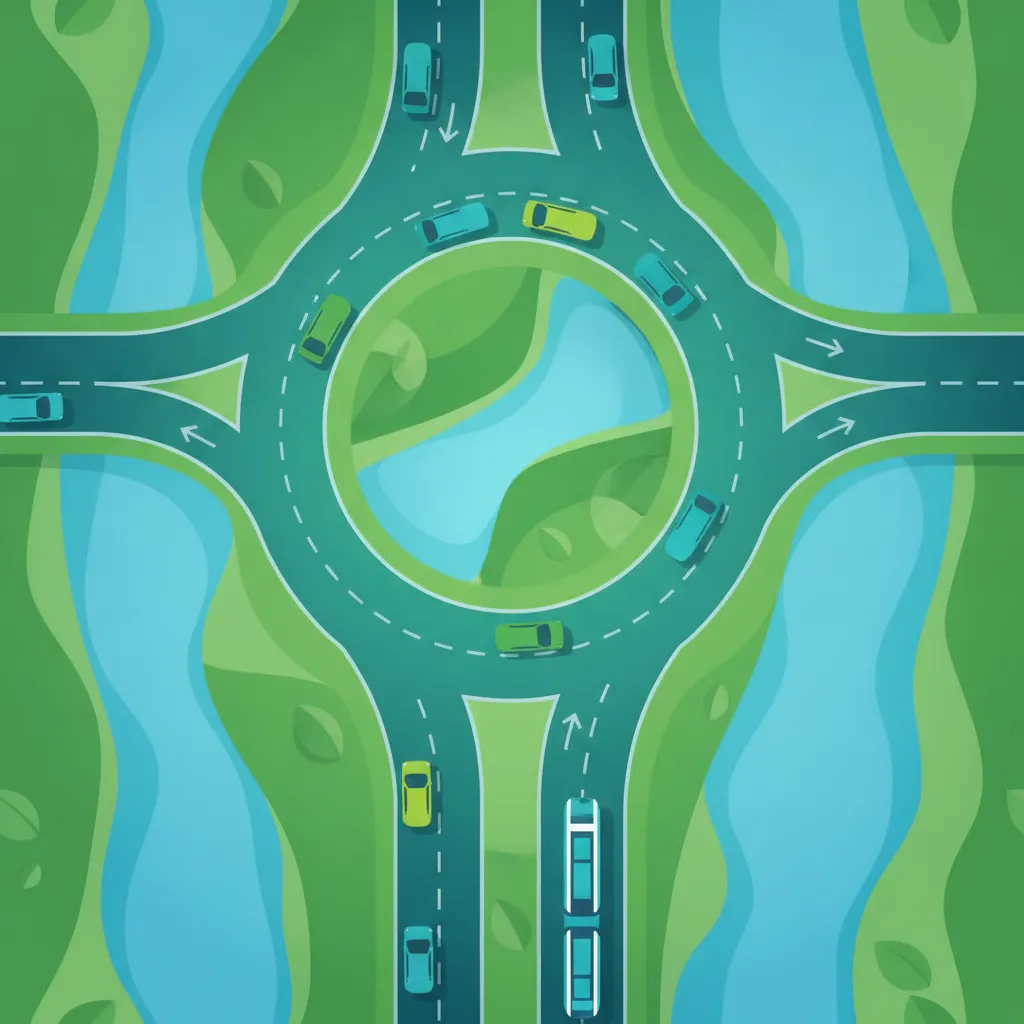
The size of a bus requires careful planning when negotiating complex intersections. This lesson teaches the importance of early lane selection, clear signalling, and comprehensive observation. It provides specific techniques for managing the vehicle's swept path through multi-lane roundabouts and other challenging urban junctions.
Explore how to decode route information and conduct continuous risk assessments to navigate safely, especially under timetable pressure. This lesson guides Category D drivers in making sound decisions on Swiss roads.
This lesson moves beyond simply staying within the lines, teaching how to actively position your vehicle within the lane to manage risk. You will learn to create a 'safety cushion' of space around your bus. This proactive approach improves your reaction time and gives other road users more space, reducing the likelihood of conflicts.
Departing from a bus stop is a high-risk manoeuvre. This lesson details the critical sequence of actions: checking all passengers are clear of the doors, performing a comprehensive mirror and blind spot check, signalling, and waiting for a safe gap in traffic. This systematic approach is essential for preventing collisions with overtaking vehicles, cyclists, or pedestrians.

This lesson trains drivers to look beyond other vehicles and actively search for pedestrians, cyclists, and motorcyclists, especially those who may be distracted or unaware. It covers common behavioral patterns of different VRU groups. The goal is to see potential hazards developing early and create time and space to react safely.

Buses and coaches have significant blind spots to the front, sides, and rear. This lesson maps out these 'no-zones' and teaches a continuous and active scanning process using all available mirrors and direct vision. The goal is to minimize the time any other road user spends undetected in a blind spot.
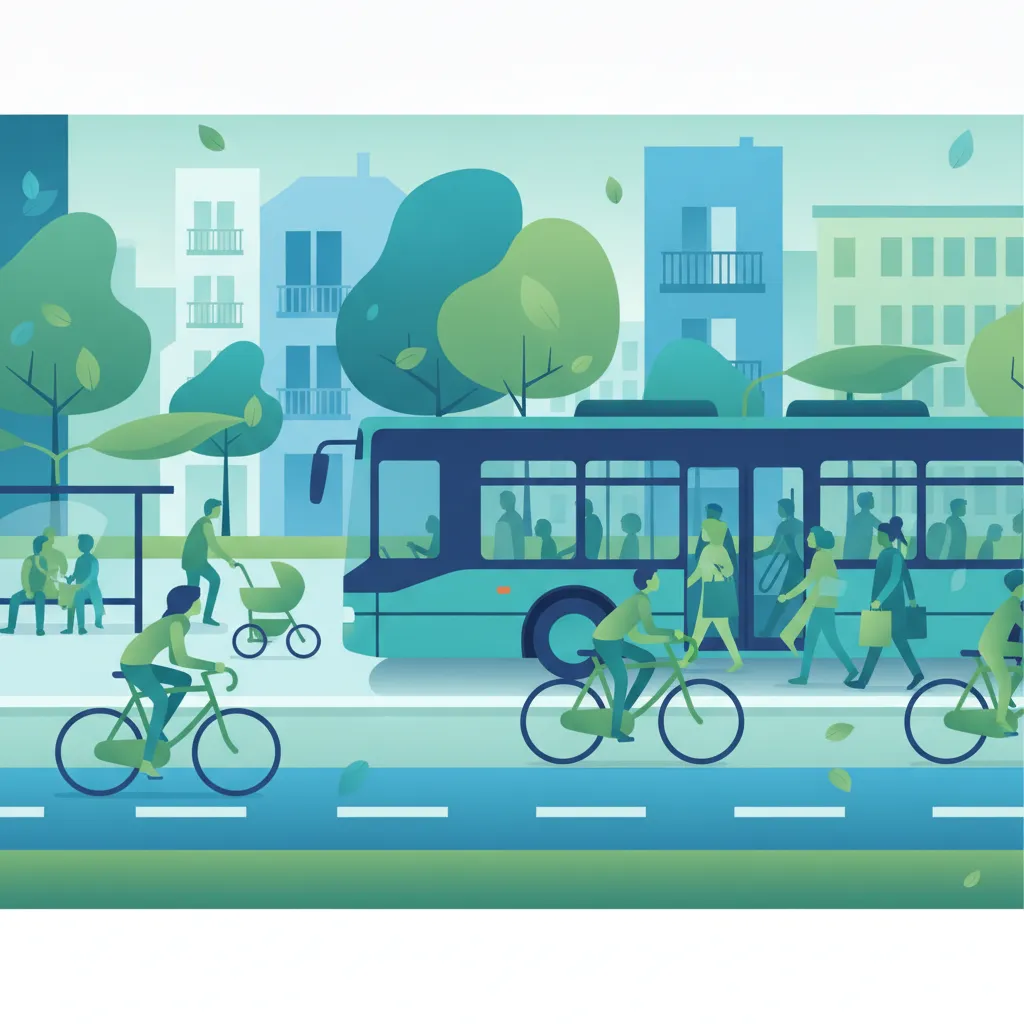
A stopped bus creates a significant visual obstruction for other road users. This lesson focuses on the risk of pedestrians stepping out from in front of the bus and cyclists passing unexpectedly on either side. It reinforces the need for exhaustive mirror and blind spot checks before moving off to prevent tragic 'pull-away' accidents.

The approach to a stop sets the stage for a safe passenger exchange. This lesson covers signalling in good time, decelerating smoothly, and aiming for a final position that is close and parallel to the kerb. Proper positioning minimizes the step for passengers and prevents them from having to step into traffic.
The size of a bus requires careful planning when negotiating complex intersections. This lesson teaches the importance of early lane selection, clear signalling, and comprehensive observation. It provides specific techniques for managing the vehicle's swept path through multi-lane roundabouts and other challenging urban junctions.

Tourists are often unfamiliar with local traffic rules and may be distracted by sightseeing, leading to unpredictable behavior. This lesson teaches drivers to be extra cautious in these zones. It focuses on anticipating sudden crossings, being aware of other tour vehicles, and maintaining a large safety bubble around the bus.

Standing passengers are particularly vulnerable to sudden vehicle movements. This lesson covers the driver's responsibility to adapt their driving style when people are standing. It emphasizes even smoother control, heightened awareness, and clear communication to minimize the risk of falls and injuries.
This lesson focuses on general driving safety in areas with a high concentration of children. It stresses the importance of significantly reducing speed, being prepared for unexpected events, and scanning for children between parked cars. The driver must exhibit maximum vigilance in these high-risk environments at all times.
Find clear answers to common questions learners have about Understanding Route Information and Timetable Pressures. Learn how the lesson is structured, which driving theory objectives it supports, and how it fits into the overall learning path of units and curriculum progression in Switzerland. These explanations help you understand key concepts, lesson flow, and exam focused study goals.
No. A professional driver's primary responsibility is always the safety of passengers and other road users. Speeding is a legal violation and a significant risk that cannot be justified by schedule pressure or passenger requests.
You should maintain safe driving practices and communicate the delay through your official dispatch or communication system according to company protocols. Never attempt to make up for lost time by performing risky maneuvers.
Exam questions often test your ability to recognize that time pressure does not excuse poor judgment. You must demonstrate that you will maintain a safe following distance and speed regardless of how much time is behind schedule.
While this is theory-focused, examiners monitor your ability to manage the vehicle efficiently without rushing. Understanding these principles helps you maintain a calm, smooth driving style which is highly evaluated.
Pinpoint specific Swiss traffic rules, road signs, or driving situations you need to master. Use the practice search to start a focused revision session now and build confidence for your official driving theory exam.