
This lesson introduces the fundamental legal and ethical responsibilities inherent in the professional role of a bus or coach driver in Switzerland. You will explore how to translate the duty of care into daily practice, ensuring you are prepared for both the rigorous theory exam and your future career as a passenger transport professional.

Lesson content overview
As a professional driver operating buses and coaches in Switzerland, particularly within the Swiss Category D driving license scope, your responsibilities extend far beyond simply navigating the vehicle. A core tenet of your profession is the stringent legal and ethical duty of care you owe to every passenger on board. This comprehensive obligation ensures their safety, well-being, and comfort from the moment they step onto your vehicle until they safely alight. Understanding and rigorously upholding this duty is paramount to maintaining public trust, preventing accidents, and complying with Swiss road traffic laws.
The concept of a driver's duty of care forms the bedrock of professional passenger transport. It is a continuous, legally enforceable obligation that arises from both the contractual relationship between the operator and passengers, and is reinforced by statutory law, notably the Swiss Road Traffic Act (SVG) and its associated ordinances (Verkehrsregelnverordnung, VZV). This duty also reflects broader ethical expectations and professional standards inherent in public transport services.
The duty of care is fundamentally a legal obligation. It mandates that you, as the driver, must act with a level of reasonable foresight, competence, and precaution to protect your passengers. The primary purpose of this duty is to prevent foreseeable harm that could be caused by negligence, recklessness, or omission on your part. This means you must constantly assess potential risks, enforce necessary safety measures, and actively avoid any behavior or inaction that could endanger those entrusted to your care. It is an active and continuous responsibility, not merely a passive expectation.
While the duty of care defines what you must do, the standard of care specifies how you must do it. This standard establishes an objective benchmark for your performance, measured against what a reasonably prudent and competent professional driver would do in a similar situation. Failure to meet this standard may constitute negligence, leading to severe legal consequences. Conversely, consistently adhering to this elevated standard demonstrates your professional competence and commitment to passenger safety, which is crucial for maintaining your license and professional accreditation.
A critical component of your duty of care is reasonable foreseeability. This refers to your ability to anticipate potential hazards or the likely outcomes of your actions or inactions in the context of passenger transport. It's not about predicting every remote possibility, but rather identifying risks that a reasonable professional driver would anticipate. For example, you must foresee risks related to how passengers are loaded, prevailing road conditions, and common passenger behavior. This concept is vital in determining whether you could have prevented an incident, placing the onus on you to proactively manage potential dangers.
In the event of an incident leading to passenger injury or loss, causation becomes a legal requirement for establishing liability. This principle demands that a direct or indirect link be proven between your breach of duty (e.g., a negligent action or omission) and the resulting harm suffered by a passenger. For instance, if you fail to secure the vehicle doors properly before moving, and a passenger falls out and is injured, there is a clear causal link between your negligence and their injury. Understanding causation reinforces the importance of meticulous adherence to all safety protocols to avoid liability.
At its core, the duty of care mandates that you place passenger welfare and safety above all other considerations, including convenience, operational speed, or adherence to strict schedules. This principle aligns your behavior with both ethical expectations and stringent legal requirements for public transport professionals. For example, if a passenger is struggling to board or alight slowly, your decision must always prioritize their safety over maintaining the schedule. This might mean waiting an extra moment to ensure they are stable, even if it causes a slight delay.
Upholding your duty of care requires a proactive approach through various stages of a passenger journey. From the moment you prepare your vehicle to the final passenger alights, specific protocols must be diligently followed.
Before you even consider opening the doors for passengers, a systematic and thorough inspection of your vehicle is mandatory. These pre-trip passenger safety checks are designed to ensure the vehicle and all its safety equipment are in optimal condition for safe passenger transport.
Seating and Restraints Verification: Inspect all seat belts, ensuring they are functional, easily accessible, and free from damage. For coaches, this also includes checking the integrity of all fixed and removable seats.
Accessibility Features: If applicable, verify the correct operation of ramps, lifts, and securement systems for passengers with reduced mobility. Ensure they are clean and unobstructed.
Emergency Equipment: Confirm the presence and accessibility of essential emergency items, such as the first-aid kit, fire extinguisher, and emergency hammers (for breaking windows). Check their expiry dates and serviceability.
Door and Emergency Exit Functionality: Test all passenger doors for smooth operation, ensuring they open and close completely and can be securely latched. Crucially, check all emergency exits to confirm they are unobstructed and functional, and that their opening mechanisms are understood.
Interior Condition: Check for any sharp edges, loose fittings, or debris that could pose a hazard to passengers.
These checks are not optional; Swiss Road Traffic Act (SVG Art. 32) mandates that such inspections must be performed before each journey with passengers on board. A common misunderstanding is viewing these checks as superfluous if the vehicle appears externally sound. However, many critical safety features are internal and require specific verification. For instance, checking that all seat belts on a coach are functional before opening doors for passengers is a direct application of this duty.
The processes of passenger boarding and alighting are critical junctures where the risk of falls or collisions with moving traffic is high. As a professional driver, you must implement controlled procedures to minimize these risks.
Full Stop at Designated Stops: Always bring the vehicle to a complete and stable stop at designated bus stops or safe alighting points before opening doors. Never allow passengers to board or alight while the vehicle is in motion, no matter how slowly. This is a direct requirement of Swiss Road Traffic Act (SVG Art. 32) and the Verkehrsregelnverordnung (VZV Art. 17).
Door Operation and Safety: Operate doors smoothly, ensuring they are fully open when passengers are entering or exiting, and securely closed before the vehicle moves. Be aware of the door's swing path, especially in busy areas where pedestrians or cyclists might be present.
Use of Handrails and Steps: Encourage or, if necessary, instruct passengers, especially those with mobility challenges, to use handrails and steps provided. Ensure steps are clear of debris, water, or ice.
Clear Communication: Clearly announce stops, especially for "stops on demand," and use interior/exterior signage effectively. Before moving, verbally or visually confirm that all passengers have safely boarded or alighted and are clear of the vehicle.
A driver waiting for all passengers to clear the step and move safely away from the vehicle before gently accelerating demonstrates adherence to this duty. Rushing this process, or allowing passengers to board while the vehicle is in motion, are clear breaches of your duty of care and legally prohibited.
Ensuring that passengers are appropriately seated and that all available restraints are used is fundamental to mitigating injury severity during sudden stops or collisions. This is covered by passenger seating and restraint management.
Under Swiss road traffic regulations (Art. 52), seat belts must be fastened when the vehicle is in motion if available. This applies to all passengers, including children, for whom appropriate child safety provisions (child seats, booster seats) must be used as required.
Your practical responsibility includes reminding passengers, particularly before departure, to buckle up. You must also ensure that any standing passengers have adequate handholds and are positioned safely, away from doors or areas of potential impact. A common misunderstanding is assuming that due to low urban speeds, seat belts are unnecessary; however, even minor impacts or sudden braking can cause significant injury to unrestrained occupants.
Your driving style directly impacts passenger safety and comfort. Safe driving practices for passenger vehicles involve adopting specific techniques that prioritize the well-being of those on board.
Smooth Acceleration and Deceleration: Avoid sudden bursts of speed or harsh braking, which can cause passengers to lose balance, fall, or become uncomfortable. Aim for gradual, controlled inputs.
Safe Following Distances: Maintain a significantly greater following distance than you would in a private car. This allows more time to react to hazards and brake gently, minimizing whiplash or falls for passengers. A minimum of 2 seconds under normal conditions is standard, increasing in adverse weather.
Anticipatory Braking: Scan the road far ahead to anticipate traffic light changes, junctions, or potential hazards. This allows you to ease off the accelerator and begin braking much earlier and more smoothly.
Avoid Abrupt Lane Changes: Plan your route and lane changes well in advance. Execute changes smoothly and gradually, after thorough mirror checks and signalling, to avoid unsettling passengers or causing them to lose balance.
Adherence to Speed Limits: Always respect posted speed limits, adjusting further downwards in adverse conditions or complex environments. Overemphasis on timeliness should never lead to aggressive driving.
By slowing down early for a red light to avoid sudden braking, you exemplify anticipatory driving that minimizes passenger discomfort and injury risk. These practices are integral to preventing accidents and ensuring a pleasant journey.
Part of your duty of care extends to managing passenger conduct to maintain order, safety, and compliance within the vehicle. This prevents hazards caused by passenger actions and ensures a secure environment for everyone.
Announcing Safety and Conduct Rules: Clearly communicate essential safety rules, such as the requirement to remain seated during travel, hold onto handrails, or secure luggage.
Addressing Disruptive Behavior: Politely but firmly address any behavior that could endanger others or disrupt the service, such as standing in aisles during turns or excessive noise that could distract the driver.
Securing Luggage: Ensure all luggage, particularly large items, is properly stored in designated compartments or secured to prevent it from shifting during transit. Loose items can become dangerous projectiles during sudden stops.
Swiss law (SVG Art. 66) holds drivers responsible for passenger safety, including preventing dangerous conduct. It is a common misunderstanding to assume passengers will self-regulate without driver oversight. For example, if a passenger is standing or moving around during a steep descent, your duty requires you to ask them to sit down and hold onto the handrail.
Being prepared for the unexpected is a critical aspect of your duty of care. Emergency procedures and passenger evacuation protocols are designed to save lives and minimize harm during incidents such as fires, collisions, or breakdowns.
Drivers must be thoroughly trained in evacuation procedures (as per Swiss road traffic safety training regulations) and regularly review the location and operation of all emergency exits, emergency hammers, and first-aid equipment.
Familiarity with Emergency Exits: Know the location and operation of all emergency exits (doors, windows, roof hatches) and the tools required to open them (e.g., emergency hammers). Ensure these are always kept clear and unobstructed.
Communication of Evacuation Routes: Be able to clearly and calmly communicate evacuation instructions to passengers, guiding them to the safest exit routes.
Assistance for Vulnerable Passengers: Prioritize assistance for disabled, injured, elderly, or young passengers during an evacuation, ensuring they receive the necessary support to exit safely.
Never assume automatic doors will function after a crash; manual override procedures must be practiced. If a minor collision occurs, initiating and guiding passengers through an evacuation to a safe area demonstrates your preparedness and commitment to their safety.
In professional passenger transport, documentation and record keeping are vital for ensuring compliance, facilitating investigations, and demonstrating that your duty of care has been met.
While not always required for every short route, certain passenger transport operations, especially longer-distance or chartered services, may necessitate maintaining records such as:
These records provide critical evidence of compliance with regulations and are invaluable in the event of legal proceedings or audits. Even on short routes, neglecting documentation can lead to non-compliance with regulatory requirements.
The driver's duty of care is firmly anchored in Swiss law, particularly the Road Traffic Act (Strassenverkehrsgesetz, SVG) and its associated ordinances (Verkehrsregelnverordnung, VZV). Adherence to these specific articles is non-negotiable for professional drivers.
Swiss Road Traffic Act (SVG Art. 52) explicitly mandates that drivers must ensure passengers are safely seated and restrained while the vehicle is in motion. This rule applies to all passenger-carrying trips, regardless of distance, and its rationale is to significantly reduce injury severity in the event of sudden braking or a collision.
Swiss Road Traffic Act (SVG Art. 32), complemented by Verordnung zum Strassenverkehr (VZV Art. 17), dictates that the vehicle must stop completely at designated stops before allowing any boarding or alighting. This regulation aims to prevent passengers from stepping into traffic prematurely, falling from a moving vehicle, or being hit by the vehicle's doors.
Swiss Road Traffic Act (SVG Art. 66) broadly establishes the driver's responsibility for the safety of passengers throughout the entire journey—during boarding, travel, and alighting. This article provides the overarching legal recognition of the driver's duty of care.
Beyond specific articles, Swiss vehicle safety regulations mandate that all emergency exits must be kept clear, functional, and easily accessible. Furthermore, drivers must be appropriately trained in their use and in general evacuation procedures. The rationale is to ensure rapid and efficient evacuation in emergencies, which can be critical for saving lives.
Understanding common violations and how to navigate conditional variations is crucial for applying the duty of care effectively in real-world professional driving.
Breaches of the duty of care can lead to serious consequences, ranging from civil liability to criminal charges for reckless endangerment. Common violations include:
The application of your duty of care must be dynamic and adapt to diverse operating conditions.
Neglecting your duty of care carries significant consequences for both the driver and the operating company.
Conversely, consistently upholding your duty of care leads to reduced injury rates, strong compliance with legal standards, and the maintenance of your professional license and reputation. Proper pre-trip checks allow for early detection of equipment failures, preventing in-transit emergencies, while ensuring seating and restraints significantly lowers the risk of injuries in collisions or abrupt stops.
The duty of care is not an isolated concept; it is interwoven with many other aspects of professional driving.
The legal duty of care for Swiss Category D drivers is a comprehensive, continuously enforceable obligation rooted in the Swiss Road Traffic Act (SVG) and its ordinances. This lesson establishes that drivers must act with reasonable foresight to protect passengers from boarding to alighting, meeting an objective professional standard of care measured against what a reasonably prudent driver would do. Key obligations include mandatory pre-trip safety checks, ensuring complete stops before passenger boarding or alighting, enforcing seat belt use, maintaining safe driving practices with adequate following distances, managing passenger conduct, and keeping emergency exits clear and functional. Neglect of these duties can result in civil liability, criminal charges, loss of professional license, and severe reputational damage, making consistent adherence essential for both exam success and professional practice.
A short set of high-value points that capture the most important learning from this lesson.
As a Category D driver, your duty of care is a continuous, legally enforceable obligation to protect passengers from foreseeable harm from boarding to alighting.
The standard of care requires you to act as a reasonably prudent professional driver would in similar circumstances, not merely as a private car driver.
Pre-trip inspections are mandatory under SVG Art. 32 and must include verification of seat belts, emergency exits, accessibility equipment, and emergency supplies.
Passengers may only board or alight when the vehicle is completely stopped at designated stops; opening doors while moving is a direct legal violation.
You must prioritize passenger safety above schedules, convenience, or operational speed at all times.
Explore all units and lessons included in this driving theory course.
SVG Art. 52 mandates seat belt use for all passengers when the vehicle is in motion; verbal reminders and visual checks are your responsibility.
SVG Art. 66 establishes your broad legal accountability for passenger safety throughout the entire journey.
Reasonable foreseeability means anticipating risks a competent professional driver would identify, such as slippery steps in rain or standing passengers during turns.
Emergency exits must remain unobstructed at all times; knowing manual override procedures is essential as automatic systems may fail after a collision.
Documentation including incident reports and maintenance logs provides evidence of compliance and protects you in legal proceedings.
Assuming pre-trip inspections are optional if the vehicle appears externally sound; many critical safety features are internal and require specific verification.
Believing seat belts are unnecessary at low urban speeds; even minor impacts or sudden braking can cause significant injury to unrestrained occupants.
Allowing passengers to board or alight while the vehicle has only slowed rather than stopped completely, violating VZV Art. 17.
Ignoring standing passengers or those sitting on armrests during travel, which violates safety protocols and increases injury risk during turns or braking.
Assuming passengers will self-regulate their conduct without driver oversight; Swiss law holds you responsible for preventing dangerous passenger behavior.
Lesson content overview
A short set of high-value points that capture the most important learning from this lesson.
As a Category D driver, your duty of care is a continuous, legally enforceable obligation to protect passengers from foreseeable harm from boarding to alighting.
The standard of care requires you to act as a reasonably prudent professional driver would in similar circumstances, not merely as a private car driver.
Pre-trip inspections are mandatory under SVG Art. 32 and must include verification of seat belts, emergency exits, accessibility equipment, and emergency supplies.
Passengers may only board or alight when the vehicle is completely stopped at designated stops; opening doors while moving is a direct legal violation.
You must prioritize passenger safety above schedules, convenience, or operational speed at all times.
Explore all units and lessons included in this driving theory course.
SVG Art. 52 mandates seat belt use for all passengers when the vehicle is in motion; verbal reminders and visual checks are your responsibility.
SVG Art. 66 establishes your broad legal accountability for passenger safety throughout the entire journey.
Reasonable foreseeability means anticipating risks a competent professional driver would identify, such as slippery steps in rain or standing passengers during turns.
Emergency exits must remain unobstructed at all times; knowing manual override procedures is essential as automatic systems may fail after a collision.
Documentation including incident reports and maintenance logs provides evidence of compliance and protects you in legal proceedings.
Assuming pre-trip inspections are optional if the vehicle appears externally sound; many critical safety features are internal and require specific verification.
Believing seat belts are unnecessary at low urban speeds; even minor impacts or sudden braking can cause significant injury to unrestrained occupants.
Allowing passengers to board or alight while the vehicle has only slowed rather than stopped completely, violating VZV Art. 17.
Ignoring standing passengers or those sitting on armrests during travel, which violates safety protocols and increases injury risk during turns or braking.
Assuming passengers will self-regulate their conduct without driver oversight; Swiss law holds you responsible for preventing dangerous passenger behavior.
Explore search topics learners often look for when studying The Legal Duty of Care for Passengers. These topics reflect common questions about road rules, driving situations, safety guidance, and lesson level theory preparation for learners in Switzerland.
Browse additional driving theory lessons that cover connected traffic rules, road signs, and common driving situations related to this topic. Improve your understanding of how different rules interact across everyday traffic scenarios.
Understand the detailed safety protocols required for professional drivers, including safe boarding, alighting, and in-vehicle procedures. Learn about the essential steps to ensure passenger safety from start to finish as per Swiss regulations.
The driver must ensure all boarding passengers are safely on board and stable before moving off. This lesson covers managing the flow of passengers, dealing with fares or tickets efficiently, and encouraging people to move away from the doorway. The primary goal is to prevent falls that can occur if the vehicle moves prematurely.
This lesson outlines the steps a driver should take when a passenger becomes ill or requires medical attention. It covers safely stopping the vehicle, making an emergency call to the correct number (144/112), and providing basic assistance until professional help arrives. The focus is on a calm, systematic response to a stressful situation.

Standing passengers are particularly vulnerable to sudden vehicle movements. This lesson covers the driver's responsibility to adapt their driving style when people are standing. It emphasizes even smoother control, heightened awareness, and clear communication to minimize the risk of falls and injuries.
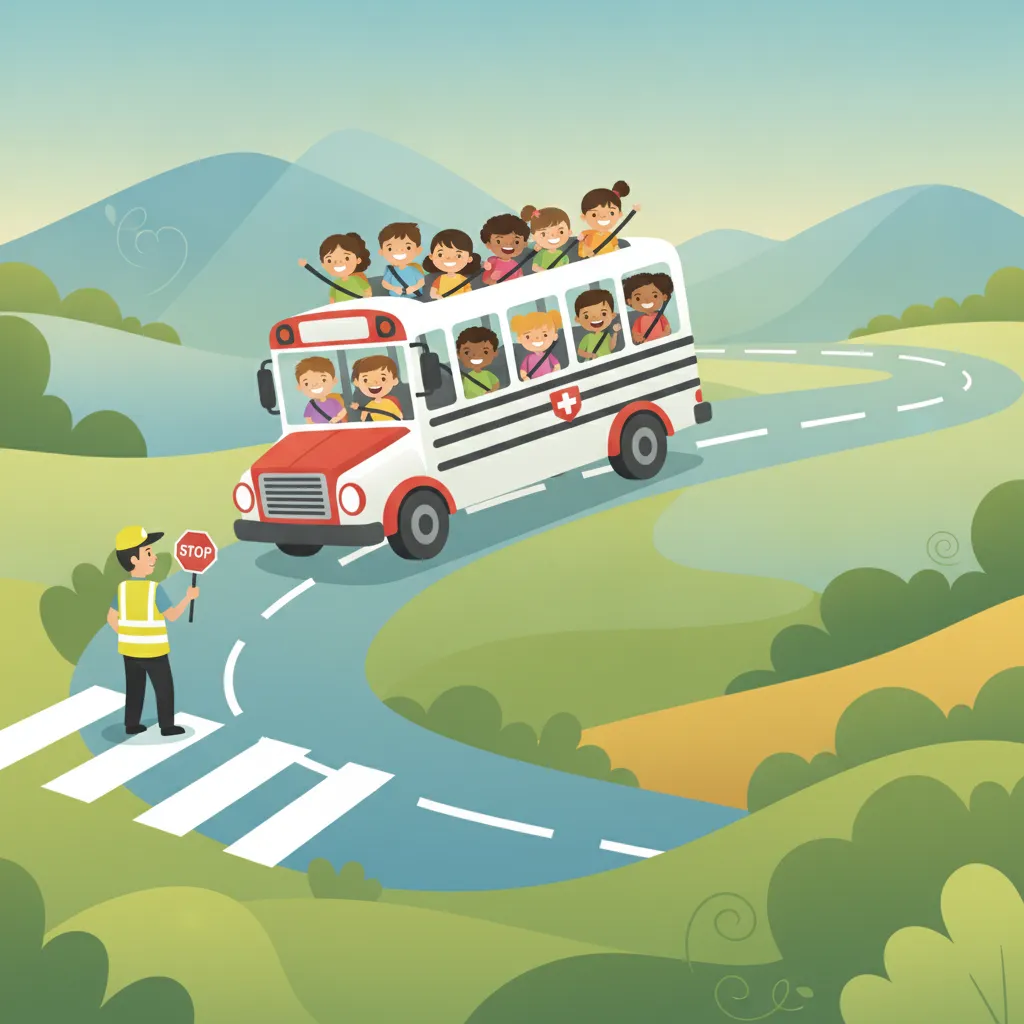
Transporting children carries the highest level of responsibility. This lesson covers the specific legal requirements for school buses in Switzerland, including the use of special signs and warning lights. It details the safe procedures for stopping, boarding, and alighting, and the driver's role in supervising children.
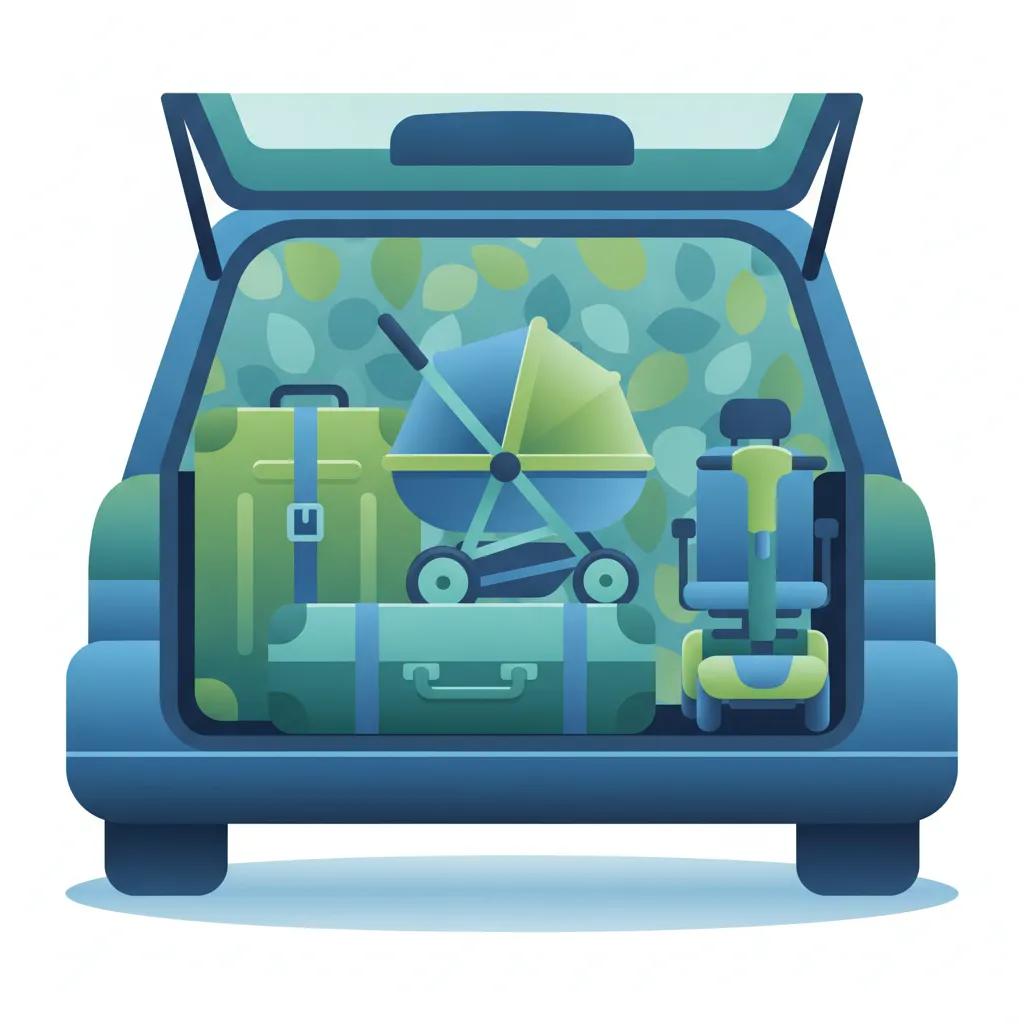
Unsecured items can become dangerous projectiles in the event of a sudden stop or collision. This lesson covers the driver's responsibility for overseeing the secure stowage of passenger belongings. It includes rules for using luggage compartments on coaches and designated spaces for prams and mobility aids on city buses.
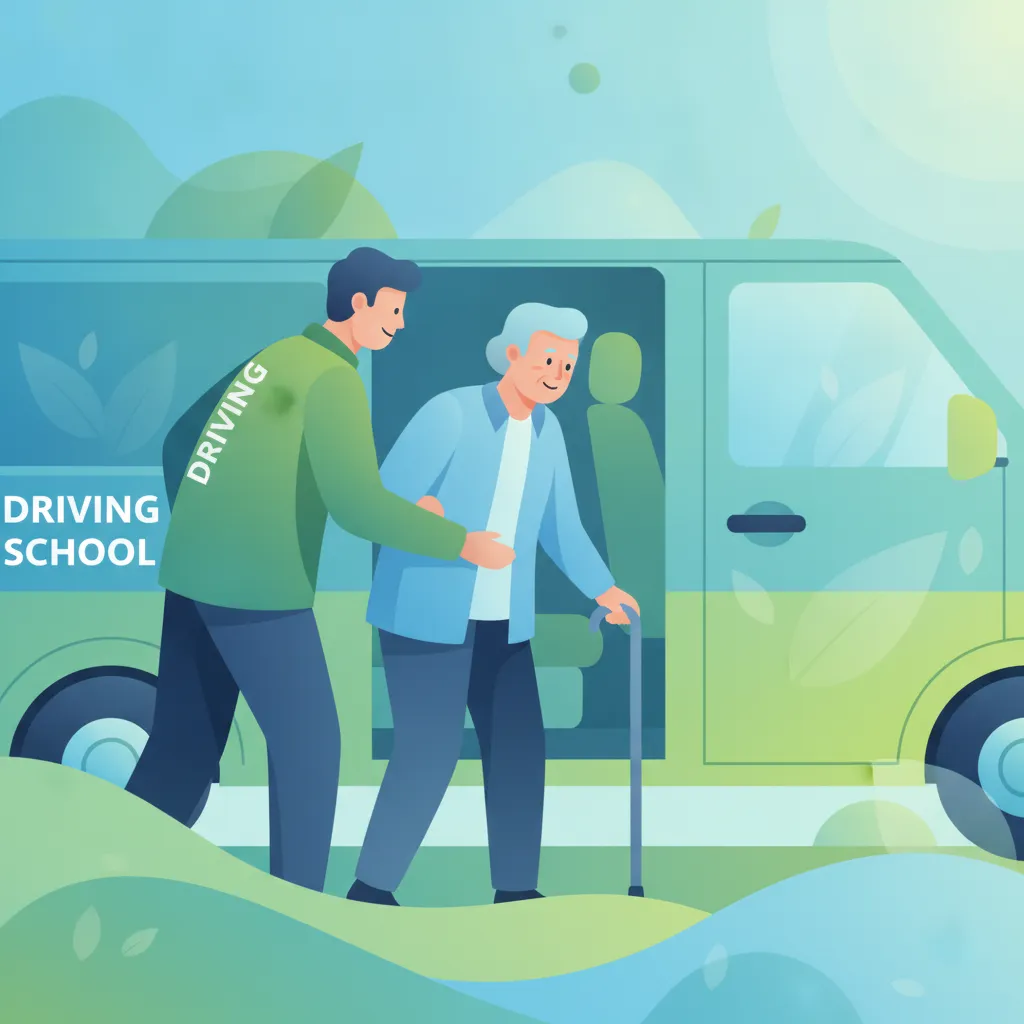
Professional drivers play a crucial role in ensuring public transport is accessible to everyone. This lesson provides guidance on how to communicate with and offer assistance to passengers with various needs. It covers best practices for helping elderly passengers, people with visual impairments, and other disabilities, always with a focus on dignity and respect.

Departing from a bus stop is a high-risk manoeuvre. This lesson details the critical sequence of actions: checking all passengers are clear of the doors, performing a comprehensive mirror and blind spot check, signalling, and waiting for a safe gap in traffic. This systematic approach is essential for preventing collisions with overtaking vehicles, cyclists, or pedestrians.

This lesson focuses on the legally required safety equipment that must be on board every passenger vehicle. You will learn how to locate and check the fire extinguisher, first aid kit, and emergency hammers. It also covers the inspection of emergency exits to ensure they are unobstructed and functional.
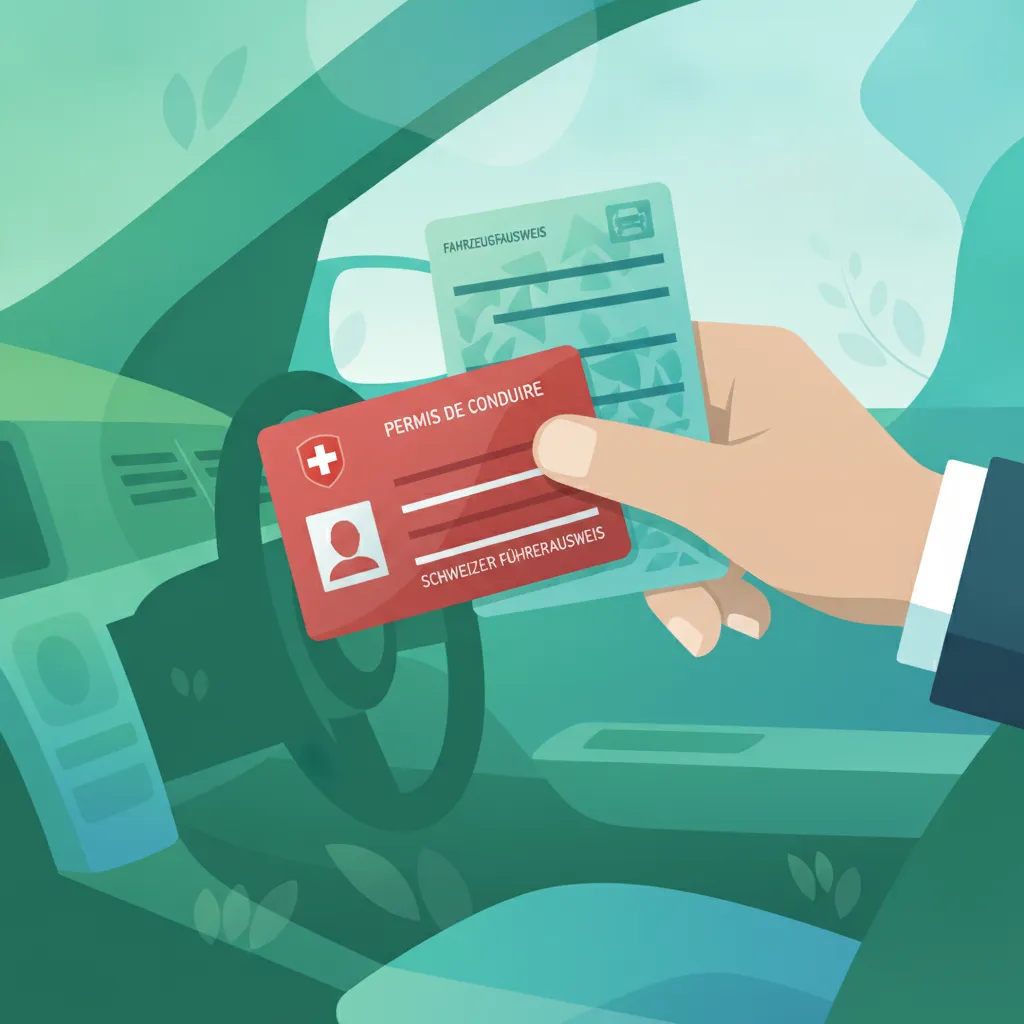
This lesson details the specific documents that must be present in the vehicle and on the driver's person during service. It covers the driving license, OACP card, vehicle registration, and tachograph records. You will learn the importance of ensuring all paperwork is current and correct to ensure legal compliance at all times.
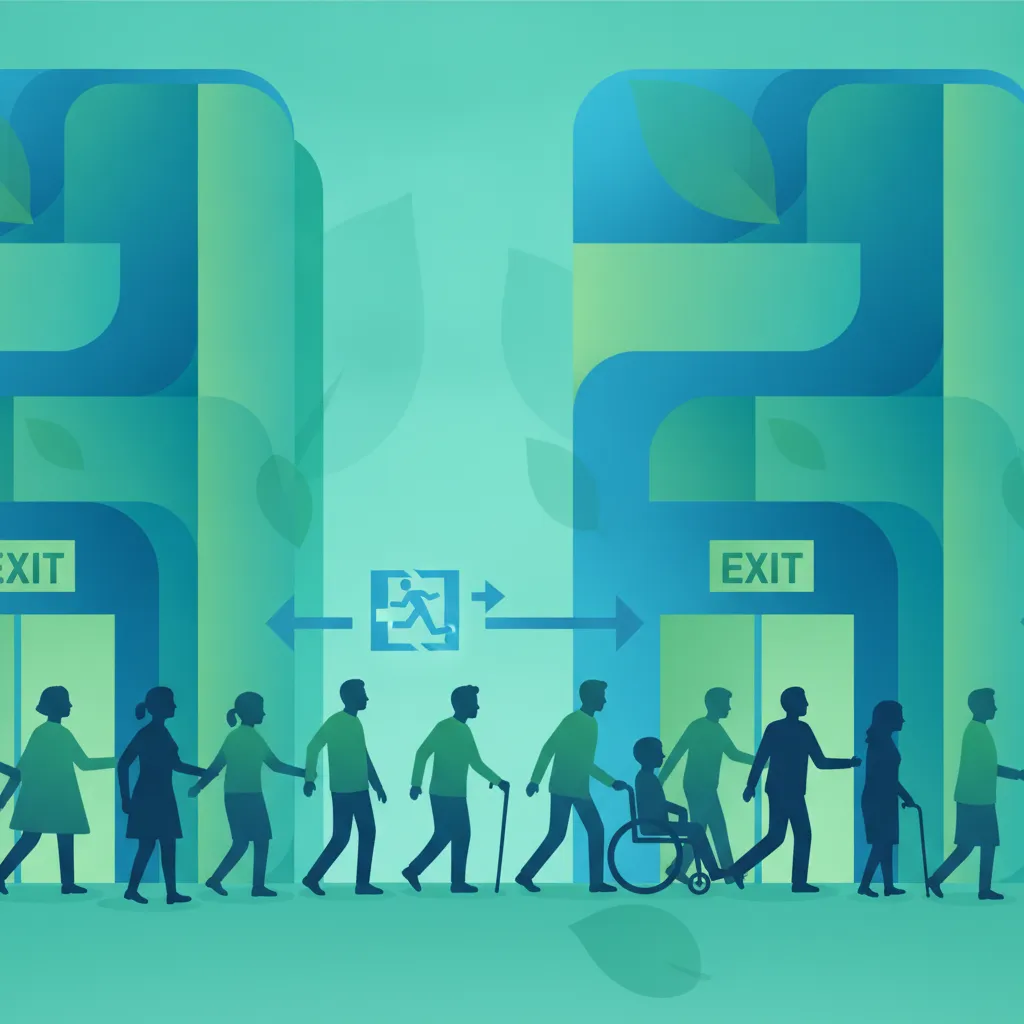
In the event of a fire or other serious danger, a driver must be able to lead an evacuation. This lesson covers the decision-making process, how to use all available emergency exits, and the importance of clear, authoritative communication to guide passengers. The goal is to move everyone to a safe location away from the vehicle and any traffic.
Explore the legal ramifications of failing to uphold the duty of care for passengers in Switzerland. This lesson details potential consequences and examines real-world scenarios illustrating driver liability and passenger safety.
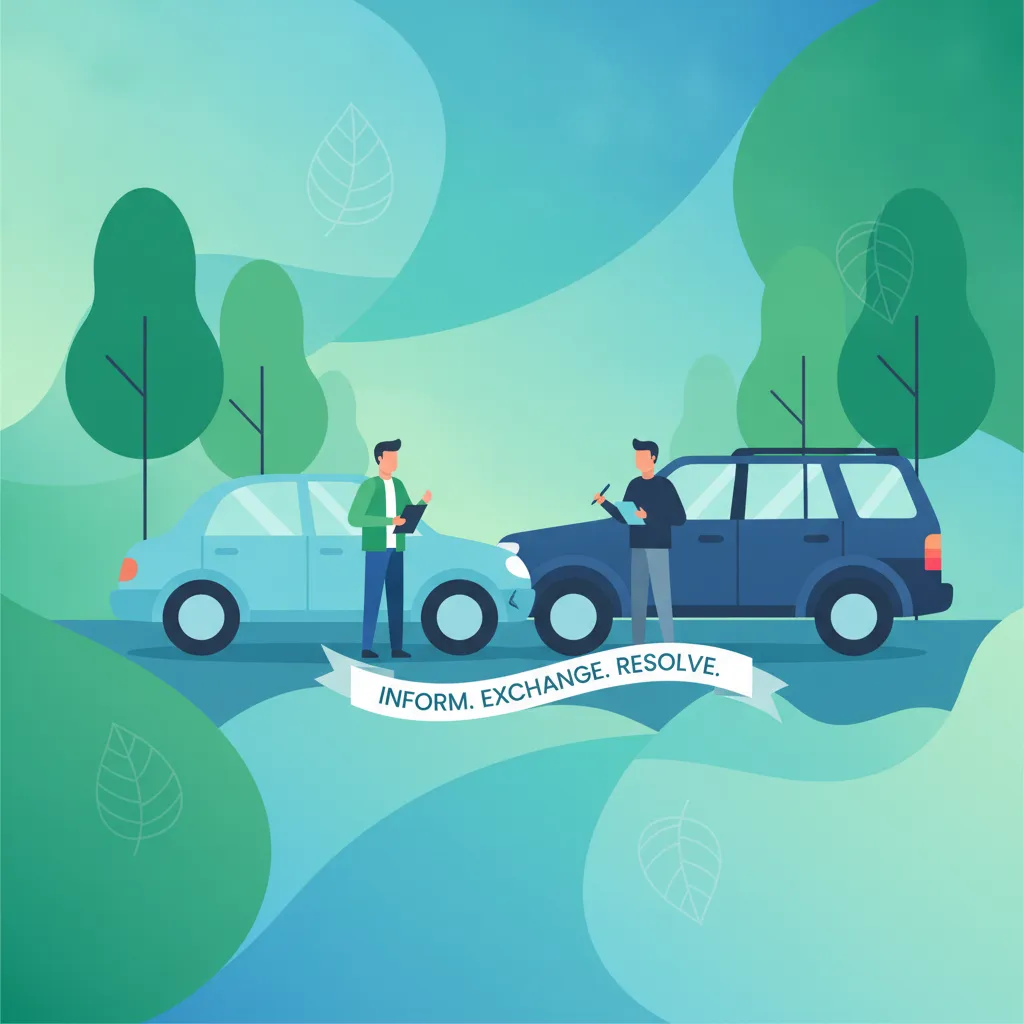
This lesson covers the immediate actions to take following a collision. The priorities are to prevent further incidents by securing the scene, to assess the situation for injuries, and to alert the emergency services. You will learn the correct procedures for making the area safe for yourself, your passengers, and other road users.
Transporting children carries the highest level of responsibility. This lesson covers the specific legal requirements for school buses in Switzerland, including the use of special signs and warning lights. It details the safe procedures for stopping, boarding, and alighting, and the driver's role in supervising children.

Operating a heavy goods vehicle involves a significant responsibility for the safety of all road users. This lesson emphasizes the professional driver's enhanced duty of care due to the vehicle's size, mass, and potential impact in a collision. It covers the importance of a professional attitude, constant vigilance, and adherence to all traffic regulations to prevent incidents and maintain a high standard of road safety.
This lesson emphasizes the broad responsibilities of holding a driver's licence in Switzerland, including adherence to traffic laws and maintaining vehicle roadworthiness. It covers legal obligations related to insurance, registration, and reporting accidents, as well as the consequences of violations. The content reinforces the duty of care drivers owe to all other road users.
This lesson outlines the steps a driver should take when a passenger becomes ill or requires medical attention. It covers safely stopping the vehicle, making an emergency call to the correct number (144/112), and providing basic assistance until professional help arrives. The focus is on a calm, systematic response to a stressful situation.
This lesson details the specific documents that must be present in the vehicle and on the driver's person during service. It covers the driving license, OACP card, vehicle registration, and tachograph records. You will learn the importance of ensuring all paperwork is current and correct to ensure legal compliance at all times.
Standing passengers are particularly vulnerable to sudden vehicle movements. This lesson covers the driver's responsibility to adapt their driving style when people are standing. It emphasizes even smoother control, heightened awareness, and clear communication to minimize the risk of falls and injuries.

While others may have loaded the vehicle, the driver holds the final legal responsibility for the security of the load once on the public highway. This lesson clarifies this crucial point of law, explaining that the driver must inspect the load and its securing arrangements before departure and re-check them during the journey. The consequences of a load shifting or falling can be catastrophic and result in severe legal penalties for the driver.

For professional drivers, traffic violations can have career-altering consequences beyond standard fines. This lesson details the heightened penalties for infringements such as speeding, overloading, insecure loads, and violations of driving time regulations. It outlines the process of warnings, license suspension or withdrawal, and potential criminal liability, emphasizing the importance of strict legal compliance in the transport industry.

This lesson provides a structured guide for managing the scene of a road traffic accident. It covers the internationally recognized priorities: assess for danger, make the scene safe, send for help by calling emergency services (112), and provide first aid to the injured if trained to do so. It also details the legal requirement to stop and exchange information after being involved in a collision.
Find clear answers to common questions learners have about The Legal Duty of Care for Passengers. Learn how the lesson is structured, which driving theory objectives it supports, and how it fits into the overall learning path of units and curriculum progression in Switzerland. These explanations help you understand key concepts, lesson flow, and exam focused study goals.
It means you have a legal obligation to take reasonable steps to ensure the safety and wellbeing of your passengers throughout their journey. This goes beyond just driving safely; it includes monitoring the bus environment, ensuring safe boarding and alighting, and taking appropriate action in emergencies.
While all drivers must follow traffic rules, a professional passenger transport driver has an elevated legal responsibility. You are responsible for the safety of multiple individuals whose actions you cannot always control, requiring higher levels of vigilance, professional conduct, and accountability.
Yes, the Swiss theory exam includes questions on the legal status and obligations of professional drivers. You should understand the principles of liability and the driver's role in maintaining public safety and trust.
Absolutely. Your duty of care is constant from the moment passengers begin boarding until they have safely alighted. This includes duties while stopped at a bus stop, during passenger movement, and in emergency situations.
Pinpoint specific Swiss traffic rules, road signs, or driving situations you need to master. Use the practice search to start a focused revision session now and build confidence for your official driving theory exam.