
Transport hubs are high-risk environments requiring professional vigilance from bus drivers. This lesson explores effective strategies for managing bus stops and terminal areas safely, ensuring you can navigate complex traffic and large crowds for your Swiss Category D licence.
Lesson content overview
As a professional driver undertaking the Swiss Category D Driving License Theory Course, mastering the navigation of busy transport hubs like railway stations and airports is crucial. These environments are characterized by a unique confluence of passenger vehicles, service vehicles, and a high density of often distracted pedestrians, many carrying luggage. This lesson provides comprehensive strategies and essential knowledge to operate buses and coaches safely and efficiently in these complex settings.
Transport hubs are micro-environments where multiple modes of transport converge, creating dynamic and often unpredictable traffic situations. Drivers must manage the dense mix of buses, coaches, taxis, private cars, and a significant number of pedestrians, who may be unfamiliar with the area, rushing, or distracted by travel plans and luggage. The goal in these areas is primarily conflict reduction—minimizing interactions that could lead to collisions.
The inherent complexity of transport hubs demands an elevated level of awareness and proactive driving. Unlike typical urban roads, these zones often feature specialized lanes, designated drop-off and pick-up points, and temporary obstructions. Visibility can be limited by large structures, other vehicles, or dense crowds. A momentary lapse in concentration can have severe consequences, making constant vigilance not just a recommendation but a necessity.
Effective navigation within transport hubs hinges on several core principles: maintaining very low speeds, clearly communicating your intentions, and anticipating the actions of all road users, especially vulnerable ones. These principles are not isolated but interconnected, forming a holistic approach to safety that is particularly relevant for the professional driver of a large passenger vehicle like a bus or coach.
Successful navigation of high-traffic transport hubs relies on the consistent application of specific safety principles. These guidelines are designed to mitigate risks and ensure the safety of passengers, pedestrians, and other road users.
Operating your bus or coach at a significantly reduced speed is the single most critical safety measure in transport hubs. This means driving at a speed that allows you to stop completely within your visible stopping distance, often well below the general urban speed limits.
In many hub zones, a default speed limit of 30 km/h or even 20 km/h is applicable, especially in designated pedestrian zones. Always adjust your speed to conditions, prioritizing safety over efficiency.
Purpose and Rationale: Lower speeds provide significantly more reaction time to unexpected events, such as a pedestrian stepping into the road or another vehicle making an abrupt stop. Furthermore, in the unfortunate event of a collision, reduced speed drastically lowers the kinetic energy involved, thereby minimizing the severity of impact and potential injuries. This is particularly important when considering the presence of vulnerable road users.
Effective communication is paramount in environments where intentions can easily be misunderstood. As a bus or coach driver, you must use all available signals to convey your planned movements clearly and well in advance.
Methods of Communication:
Purpose and Rationale: Clear communication helps other road users anticipate your actions, reducing uncertainty and the likelihood of conflicts. In a noisy and visually cluttered environment like a transport hub, unambiguous signals are essential for maintaining an orderly flow of traffic and pedestrian movement.
Pedestrians are the most vulnerable road users in transport hubs. They may be preoccupied, disoriented, or have their visibility and mobility impaired by luggage. Continuous scanning of your surroundings is therefore vital.
Specific Considerations:
Purpose and Rationale: Anticipating pedestrian behavior, particularly those burdened by luggage, allows you to react proactively, maintain safe distances, and be prepared to stop at any moment. Your responsibility is to protect these vulnerable individuals.
Transport hubs often feature dedicated lanes, drop-off/pick-up zones, and specific markings designed to streamline traffic flow and separate different vehicle types. Strict adherence to these markings is mandatory.
Key Aspects:
Purpose and Rationale: Following designated lanes and markings prevents conflicts with other vehicles and pedestrians, enhances safety, and ensures the efficient operation of the hub. Deviating from these rules can lead to fines and, more importantly, create hazardous situations.
In Swiss road traffic law, pedestrians always have priority when they are on a pedestrian crossing (zebra crossing) or have clearly indicated their intention to cross the road, even if no traffic signal is present. This rule is especially critical in transport hubs.
Implications for Drivers:
Purpose and Rationale: Yielding to pedestrians is a legal requirement and a fundamental safety principle. It acknowledges the vulnerability of pedestrians and prevents potential collisions, reinforcing the driver's duty of care.
Situational awareness involves constantly monitoring your entire surroundings—not just directly ahead—and anticipating potential hazards. This includes observing other vehicles, pedestrians, and environmental factors like weather and lighting.
Proactive Scanning Techniques:
Purpose and Rationale: Proactive scanning enables early hazard detection and informed decision-making, allowing you to react safely and smoothly to unfolding situations before they become critical.
Beyond the core principles, specific operational guidelines help navigate the intricacies of railway stations and airports safely.
Transport hubs are often divided into specific zones, each with its own rules and functions. Recognizing and adapting to these zones is crucial.
Subcategories of Hub Zones:
Practical Meaning: Drivers must adapt their speed and behavior according to the specific zone's layout and designated functions. Always look for signage indicating speed limits, prohibited maneuvers, or designated uses.
Pedestrians carrying or pulling luggage require extra caution. Their movements can be slow, erratic, and their field of vision may be obstructed.
Key Considerations:
Associated Rules: Drivers must significantly increase their following distance and be prepared to stop instantly. Treat all pedestrians, especially those with luggage, as high-priority vulnerable road users.
Using your vehicle's signals correctly is vital for preventing misunderstandings and ensuring safety in busy transport hubs.
Subcategories of Communication:
Common Misunderstandings: Some drivers overuse the horn or use hazard lights while moving, which can be counterproductive and hazardous. Precision and purpose are key to effective communication.
These lanes are designed for the swift and safe exchange of passengers. Proper use is essential to prevent congestion and ensure safety.
Key Aspects:
Transport hubs are full of visual obstructions—large vehicles, building structures, signage, and dense crowds. These can create blind spots for drivers.
Common Obstructions:
Practical Meaning: Always assume that something or someone might be hidden behind an obstruction. Reduce your speed, increase scanning, and proceed with extreme caution. Make eye contact with any visible pedestrians or drivers before proceeding.
Transport hubs host a variety of service vehicles (e.g., luggage carts, airport shuttle vans, maintenance trucks) that often operate on specific routes and may have unique right-of-way rules.
Key Principles:
Associated Rules: Always be aware of your surroundings and be prepared to yield, even if it feels contrary to general traffic rules.
The sheer volume of visual and auditory stimuli in transport hubs can be overwhelming, leading to driver distraction. Public announcements, numerous signs, advertisements, and bustling crowds can all divert attention.
Managing Distractions:
Purpose and Rationale: Maintaining full concentration is crucial for detecting hazards early and reacting appropriately. High cognitive load can increase accident risk, so minimizing preventable distractions is essential.
Adherence to specific regulations is critical for safe and compliant operation within Swiss transport hubs.
| Rule | Statement | Applicability | Legal Status | Rationale | Correct Example | Incorrect Example |
|---|---|---|---|---|---|---|
| Reduced Speed in Transport Hubs | Vehicles must not exceed the posted speed limit in transport hub zones; if no limit is posted, a default limit of 30 km/h (or 20 km/h for designated pedestrian zones) applies. | All vehicles entering railway station or airport hub zones. | Mandatory. | Lower speed provides adequate reaction time amid high pedestrian density and reduces collision severity. | A bus entering a railway station hub slows to 20 km/h as required. | A coach accelerates to 50 km/h within the hub zone. |
| Yield to Pedestrians | Drivers must give way to pedestrians who have entered the roadway, even if they are crossing at a pedestrian crossing without a traffic signal. | All road users, including buses and coaches, at any point in the hub. | Mandatory. | Pedestrians are vulnerable and may be distracted by luggage or unfamiliar surroundings. | A bus stops when a pedestrian starts crossing a zebra crossing. | A bus proceeds through a zebra crossing while a pedestrian is crossing. |
| Use of Designated Drop-Off/Pick-Up Lanes | Vehicles may stop or park only in clearly marked bays designed for passenger exchange. | Within railway stations, airports, and similar hub facilities. | Mandatory. | Prevents obstruction of traffic flow and ensures safe boarding and alighting for passengers. | A coach stops in a blue-marked bus bay to let passengers alight. | The same coach stops in a regular traffic lane, blocking other vehicles. |
| Clear Communication Using Signals | Turn signals, horn, and hazard lights must be used to indicate intended movements, especially in areas with reduced visibility. | Throughout transport hub zones, particularly before lane changes and stops. | Mandatory for signaling; horn use is permitted only when necessary to avoid danger. | Prevents confusion among multiple road users and helps anticipate movements. | A driver flashes the left turn signal before merging left. | A driver changes lanes without signaling in a busy hub. |
| Stopping at Stop Lines | Vehicles must stop behind designated stop lines at bus stops or passenger bays; overtaking is prohibited at these points. | At all marked stop lines within hub zones. | Mandatory. | Ensures orderly loading and unloading, prevents obstructing traffic flow, and maintains safety. | A bus stops before the line and opens doors for boarding. | A bus stops in the traffic lane, partially blocking the flow. |
| Prioritizing Vulnerable Road Users | When pedestrians carrying heavy luggage or using mobility aids are present, drivers must increase following distance and be prepared to stop. | In all hub zones where such pedestrians are observed. | Mandatory. | Large luggage can obscure visibility, affect pedestrian movement speed, and require more reaction time. | A driver maintains a larger gap when a pedestrian with a suitcase approaches. | A driver closely follows a pedestrian, not allowing extra stopping distance. |
| Yield to Service Vehicles | Service vehicles (e.g., luggage carts) with right-of-way indicators must be given priority. | When service vehicles display right-of-way signs in hub zones. | Mandatory. | Service vehicles often have specific, legally granted priority in hubs due to operational needs. | A bus yields when a luggage cart proceeds across the bus lane. | A bus overtakes a luggage cart that has the right-of-way indicator. |
| No Overtaking in Designated Zones | Overtaking is prohibited in zones marked with "No Overtaking" signs, especially within short-stay or drop-off zones. | In marked no-overtaking zones within hub areas. | Mandatory. | Prevents sudden lane changes that could endanger pedestrians or cause conflicts with other vehicles. | A bus stays behind a slower vehicle in a no-overtaking zone. | A driver overtakes within the designated drop-off lane. |
| Use of Hazard Lights | Hazard lights may be activated when the vehicle is stopped in a way that could obstruct traffic flow, but only when stationary. | While stationary in a traffic lane or at a stop point, particularly when stopping briefly to pick up or drop off passengers outside of a designated bay (if permissible, or during an emergency stop). | Mandatory for stationary obstruction. | Alerts other drivers of a potential obstacle, reducing the risk of rear-end collisions. | A bus uses hazard lights while briefly stopped at a busy bay before pulling fully into position. | A driver activates hazard lights while moving through the hub. |
Understanding common mistakes can help professional drivers avoid them and maintain a high standard of safety.
The dynamic nature of transport hubs means conditions can change rapidly. Drivers must be prepared to adjust their strategies based on various environmental and operational factors.
Adverse weather or poor lighting significantly impacts visibility and vehicle handling.
The condition of your vehicle and the road surface directly affect braking performance and maneuverability.
The unpredictable nature of transport hubs requires constant readiness for unexpected events.
Every action a driver takes in a transport hub has a direct consequence, positive or negative.
Applying the principles and rules in practical scenarios helps solidify understanding and prepare for real-world driving.
Setting: Midday at a busy urban railway station. Traffic is moderate, and pedestrians are moving between the station and waiting vehicles. Rule/Decision Point: Swiss regulations require reduced speed limits (e.g., 20 km/h) in designated drop-off zones, stopping at marked stop lines, and yielding to pedestrians. Correct Behavior: As your bus approaches the railway station's designated drop-off zone, you reduce your speed to 20 km/h. You observe the marked stop line for buses and stop precisely behind it, waiting for any pedestrians to clear the crossing area before proceeding slowly to the passenger boarding zone. Incorrect Behavior: Your bus enters the zone at 45 km/h, passes the stop line, and proceeds through a pedestrian crossing while people are still in the roadway, assuming they will get out of the way. Explanation: The correct behavior prioritizes safety by adhering to the reduced speed limit and yielding to pedestrians, preventing potential collisions. The incorrect behavior is a serious violation, endangering pedestrians and risking legal penalties.
Setting: Early morning at an airport terminal, moderate vehicle traffic, and occasional service vehicles. Rule/Decision Point: Adherence to designated shuttle lanes and yielding to service vehicles with explicit right-of-way. Correct Behavior: Your coach enters the clearly marked airport shuttle lane. Ahead, you notice an airport luggage cart displaying a flashing amber light (indicating priority) slowly crossing your path to reach a check-in area. You slow down and allow the cart to pass safely before continuing. Incorrect Behavior: Your coach maintains speed, assumes priority, and overtakes the luggage cart in the shuttle lane, forcing the cart operator to brake sharply. Explanation: The correct action respects the operational priority of service vehicles within the hub, ensuring smooth and safe movement. The incorrect action risks a collision, delays operations, and violates safety protocols.
Setting: Afternoon at an airport arrival hall, busy with arriving passengers, many carrying large suitcases, approaching a zebra crossing without traffic lights. Rule/Decision Point: Yield to pedestrians who have started or intend to cross a non-signalized zebra crossing. Correct Behavior: As your bus approaches the zebra crossing, a passenger pulling a large, rolling suitcase steps onto the crossing. You bring your bus to a complete stop at the stop line, allowing the pedestrian ample time and space to cross safely before proceeding. Incorrect Behavior: Your bus continues to advance, forcing the passenger with luggage to hurry across the road or stop in the middle of the crossing. Explanation: The correct approach demonstrates a commitment to pedestrian safety and compliance with right-of-way rules. The incorrect action places a vulnerable pedestrian at significant risk.
Setting: Evening at a railway station, low light conditions, and a large temporary construction hoarding or luggage cart unexpectedly blocks a portion of the road, obscuring the view. Rule/Decision Point: Adjust speed, increase vigilance due to reduced visibility, and anticipate hidden hazards. Correct Behavior: You immediately reduce your speed to 15 km/h, activate your dipped headlights, and continuously scan the area around and beyond the obstruction, looking for any pedestrians or smaller vehicles that might be hidden. You are prepared to stop if anything emerges unexpectedly. Incorrect Behavior: You maintain your normal speed, assume the road is clear behind the obstruction, and only react if something suddenly appears in your path. Explanation: Reducing speed and increasing vigilance compensates for the visual obstruction, providing crucial time to react to unforeseen hazards. Maintaining speed with compromised visibility is extremely dangerous.
Understanding and diligently applying these concepts ensures safety, regulatory compliance, and smooth, efficient operation for professional bus and coach drivers within complex railway stations and airports in Switzerland.
This lesson covers safe navigation strategies for railway stations and airports, environments where buses, taxis, private vehicles, and large numbers of distracted pedestrians converge. The six core principles—reduced speed, clear communication, pedestrian vigilance, lane adherence, right-of-way respect, and situational awareness—form an interconnected safety framework. Specific Swiss regulations apply to speed limits, stop line compliance, and pedestrian priority, with a comprehensive table of mandatory rules provided. Four detailed scenarios demonstrate correct versus incorrect behaviors, and common violations are catalogued to help learners avoid pitfalls. Professional bus drivers must master these skills to protect vulnerable road users while ensuring efficient hub operations.
A short set of high-value points that capture the most important learning from this lesson.
Reduced speed is the single most critical safety measure in transport hubs, allowing you to stop within your visible stopping distance.
Clear communication through turn signals, horn, and gestures prevents misunderstandings with other road users in noisy, cluttered environments.
Pedestrians carrying luggage are high-priority vulnerable road users due to impaired visibility, reduced mobility, and distracted focus.
Always stop behind marked stop lines at bus stops and only use designated bays for passenger loading and unloading.
Visual obstructions are constant in hubs; assume hazards may be hidden and approach with extreme caution.
Explore all units and lessons included in this driving theory course.
Default speed limit in hub zones is typically 30 km/h, with 20 km/h in designated pedestrian areas.
Hazard lights are for stationary vehicles only—never activate them while moving.
Turn signals must be activated at least 5 seconds before any lane change or turn.
Pedestrians have priority at zebra crossings even without traffic signals once they have started or clearly intend to cross.
Service vehicles with right-of-way indicators must be yielded to in hub operations.
Exceeding speed limits in hub zones, drastically reducing reaction time and increasing collision severity.
Failing to yield to pedestrians with luggage who move unpredictably and have obstructed visibility.
Stopping in traffic lanes instead of designated bays, creating conflict points and obstructing traffic flow.
Using hazard lights while moving, which confuses other drivers about your intentions.
Neglecting to use turn signals when changing lanes in crowded hub areas.
Lesson content overview
A short set of high-value points that capture the most important learning from this lesson.
Reduced speed is the single most critical safety measure in transport hubs, allowing you to stop within your visible stopping distance.
Clear communication through turn signals, horn, and gestures prevents misunderstandings with other road users in noisy, cluttered environments.
Pedestrians carrying luggage are high-priority vulnerable road users due to impaired visibility, reduced mobility, and distracted focus.
Always stop behind marked stop lines at bus stops and only use designated bays for passenger loading and unloading.
Visual obstructions are constant in hubs; assume hazards may be hidden and approach with extreme caution.
Explore all units and lessons included in this driving theory course.
Default speed limit in hub zones is typically 30 km/h, with 20 km/h in designated pedestrian areas.
Hazard lights are for stationary vehicles only—never activate them while moving.
Turn signals must be activated at least 5 seconds before any lane change or turn.
Pedestrians have priority at zebra crossings even without traffic signals once they have started or clearly intend to cross.
Service vehicles with right-of-way indicators must be yielded to in hub operations.
Exceeding speed limits in hub zones, drastically reducing reaction time and increasing collision severity.
Failing to yield to pedestrians with luggage who move unpredictably and have obstructed visibility.
Stopping in traffic lanes instead of designated bays, creating conflict points and obstructing traffic flow.
Using hazard lights while moving, which confuses other drivers about your intentions.
Neglecting to use turn signals when changing lanes in crowded hub areas.
Explore search topics learners often look for when studying Navigating Busy Transport Hubs: Railway Stations and Airports. These topics reflect common questions about road rules, driving situations, safety guidance, and lesson level theory preparation for learners in Switzerland.
Browse additional driving theory lessons that cover connected traffic rules, road signs, and common driving situations related to this topic. Improve your understanding of how different rules interact across everyday traffic scenarios.
Learn advanced strategies for identifying and safely navigating around vulnerable road users, especially those with luggage, and overcoming visual obstructions common in busy Swiss transport hubs like railway stations and airports.
Terminals and depots are busy environments with other large vehicles, maintenance staff, and cleaning crews. This lesson focuses on the specific hazards present in these off-road locations. It emphasizes adherence to site-specific rules, maintaining low speeds, and being highly aware of people working around vehicles.
Driving a bus in older parts of a city requires exceptional spatial awareness and precise control. This lesson focuses on assessing clearances, managing front and rear overhang, and negotiating tight turns around parked cars and buildings. A key theme is slow, careful, and deliberate manoeuvring to avoid contact.

This lesson trains drivers to look beyond other vehicles and actively search for pedestrians, cyclists, and motorcyclists, especially those who may be distracted or unaware. It covers common behavioral patterns of different VRU groups. The goal is to see potential hazards developing early and create time and space to react safely.

Tourists are often unfamiliar with local traffic rules and may be distracted by sightseeing, leading to unpredictable behavior. This lesson teaches drivers to be extra cautious in these zones. It focuses on anticipating sudden crossings, being aware of other tour vehicles, and maintaining a large safety bubble around the bus.

Depots and loading bays present unique challenges with tight spaces, other moving vehicles, and pedestrians. This lesson focuses on the principles of safe manoeuvring in these environments, stressing the need for extremely low speeds, constant observation, and patience. It covers techniques for aligning with loading docks and navigating around fixed obstacles and other site traffic.
Pedestrians, cyclists, motorcyclists, and e-scooter riders are extremely vulnerable in any interaction with a heavy vehicle. This lesson instills a defensive mindset, teaching drivers to be hyper-aware of VRUs, especially near junctions, crossings, and cycle lanes. It focuses on anticipation and giving VRUs extra space, as they can be unpredictable and are often hidden in blind spots.
This lesson focuses on safe interaction with large vehicles. It highlights the significant blind spots (or 'no-zones') around trucks and buses and teaches riders how to position themselves to remain visible. The content also provides guidance on overtaking large vehicles safely and anticipating their wide turning radius at intersections.
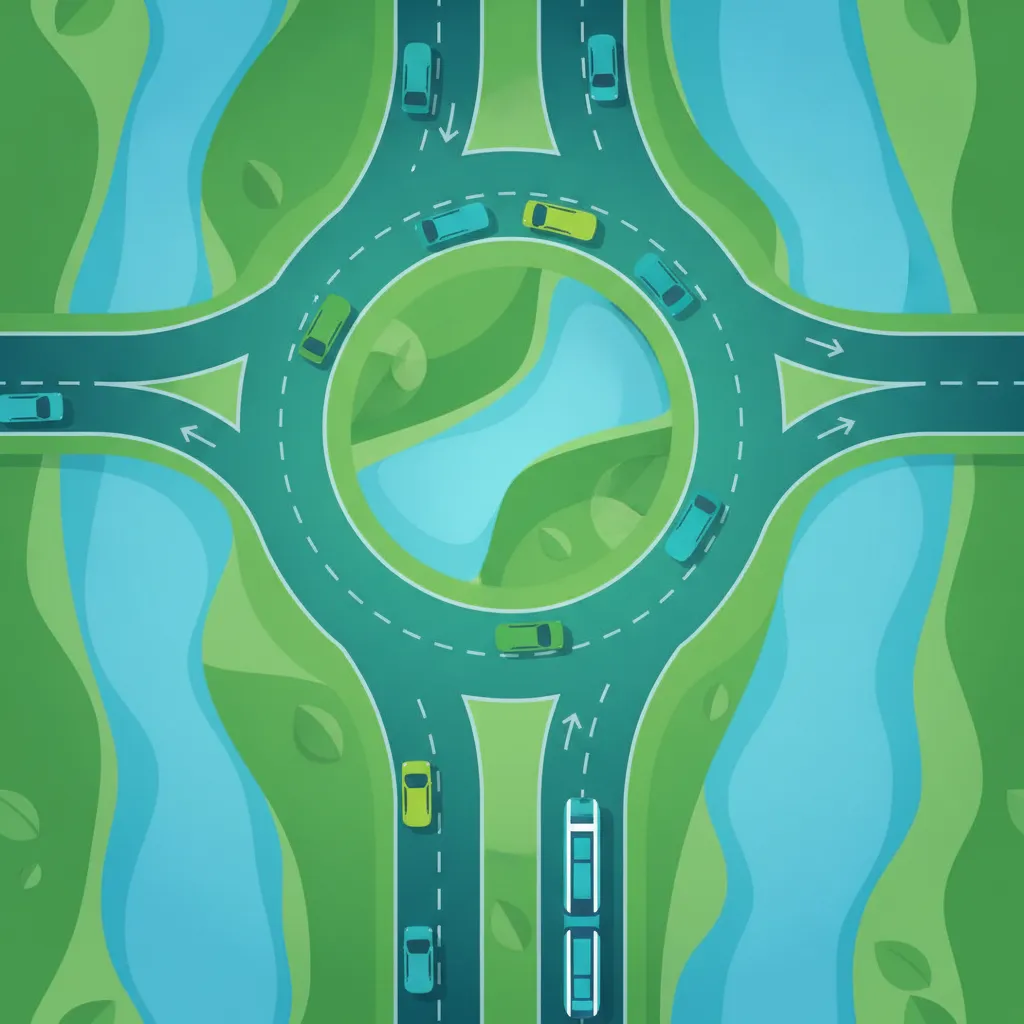
The size of a bus requires careful planning when negotiating complex intersections. This lesson teaches the importance of early lane selection, clear signalling, and comprehensive observation. It provides specific techniques for managing the vehicle's swept path through multi-lane roundabouts and other challenging urban junctions.
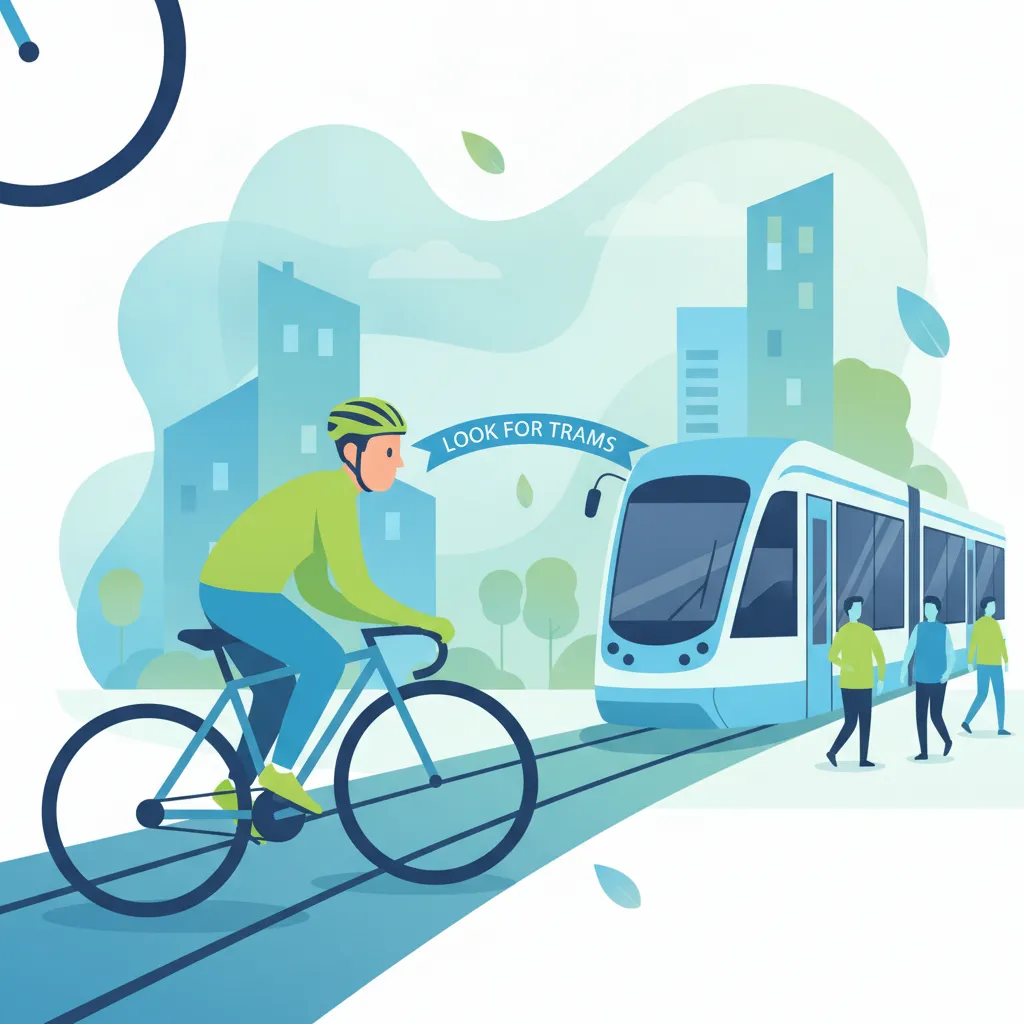
Sharing road space with trams presents unique challenges, including different priority rules and physical hazards like tracks. This lesson covers the Swiss regulations regarding tram priority at junctions and stops. It also provides practical advice on crossing tram tracks safely and maintaining awareness of tram movements.
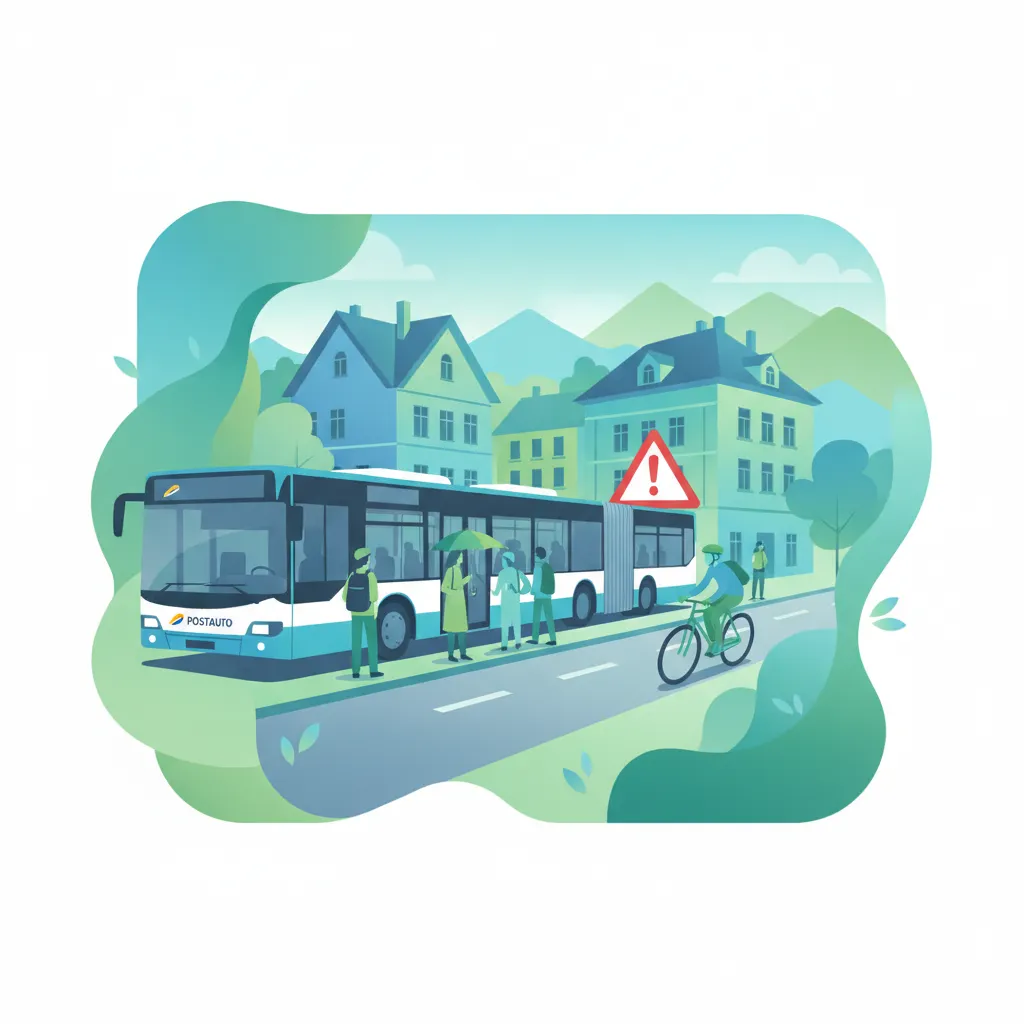
Bus stops are magnets for activity and potential hazards. This lesson trains you to anticipate dangers such as pedestrians running for the bus, cyclists passing on the inside, and cars attempting to overtake. Developing heightened situational awareness is key to preventing accidents in these busy environments.
Understand the specific operational rules, regulations, and common scenarios faced by professional drivers in busy Swiss transport hubs, focusing on safe procedures at drop-off zones and interacting with service vehicles.
Terminals and depots are busy environments with other large vehicles, maintenance staff, and cleaning crews. This lesson focuses on the specific hazards present in these off-road locations. It emphasizes adherence to site-specific rules, maintaining low speeds, and being highly aware of people working around vehicles.

Bus lanes are a key tool for improving service reliability, but they come with specific rules. This lesson covers how to correctly interpret bus lane signs and markings. It also explains the regulations for entering and leaving the lane to make turns or avoid obstructions, and the priority rules associated with them.
Driving a bus in older parts of a city requires exceptional spatial awareness and precise control. This lesson focuses on assessing clearances, managing front and rear overhang, and negotiating tight turns around parked cars and buildings. A key theme is slow, careful, and deliberate manoeuvring to avoid contact.
The size of a bus requires careful planning when negotiating complex intersections. This lesson teaches the importance of early lane selection, clear signalling, and comprehensive observation. It provides specific techniques for managing the vehicle's swept path through multi-lane roundabouts and other challenging urban junctions.
Departing from a bus stop is a high-risk manoeuvre. This lesson details the critical sequence of actions: checking all passengers are clear of the doors, performing a comprehensive mirror and blind spot check, signalling, and waiting for a safe gap in traffic. This systematic approach is essential for preventing collisions with overtaking vehicles, cyclists, or pedestrians.
Motorway driving involves high speeds and requires constant concentration. This lesson covers correct lane discipline, safe procedures for joining and leaving the motorway, and techniques for overtaking other large vehicles. Maintaining appropriate speed and a safe following distance is emphasized throughout.

This lesson focuses on the rules governing interactions with public transport vehicles like buses and trams. It explains the priority given to these vehicles at stops and the use of dedicated lanes. Additionally, the content covers tram track crossing procedures and correct vehicle positioning near public transport stops to ensure safety.
Many Swiss cities use systems that give buses priority at traffic lights to improve punctuality. This lesson explains how these systems detect an approaching bus and alter the signal phasing. You will learn to recognize and correctly respond to the special white light signals that grant this priority.

This lesson focuses on general driving safety in areas with a high concentration of children. It stresses the importance of significantly reducing speed, being prepared for unexpected events, and scanning for children between parked cars. The driver must exhibit maximum vigilance in these high-risk environments at all times.
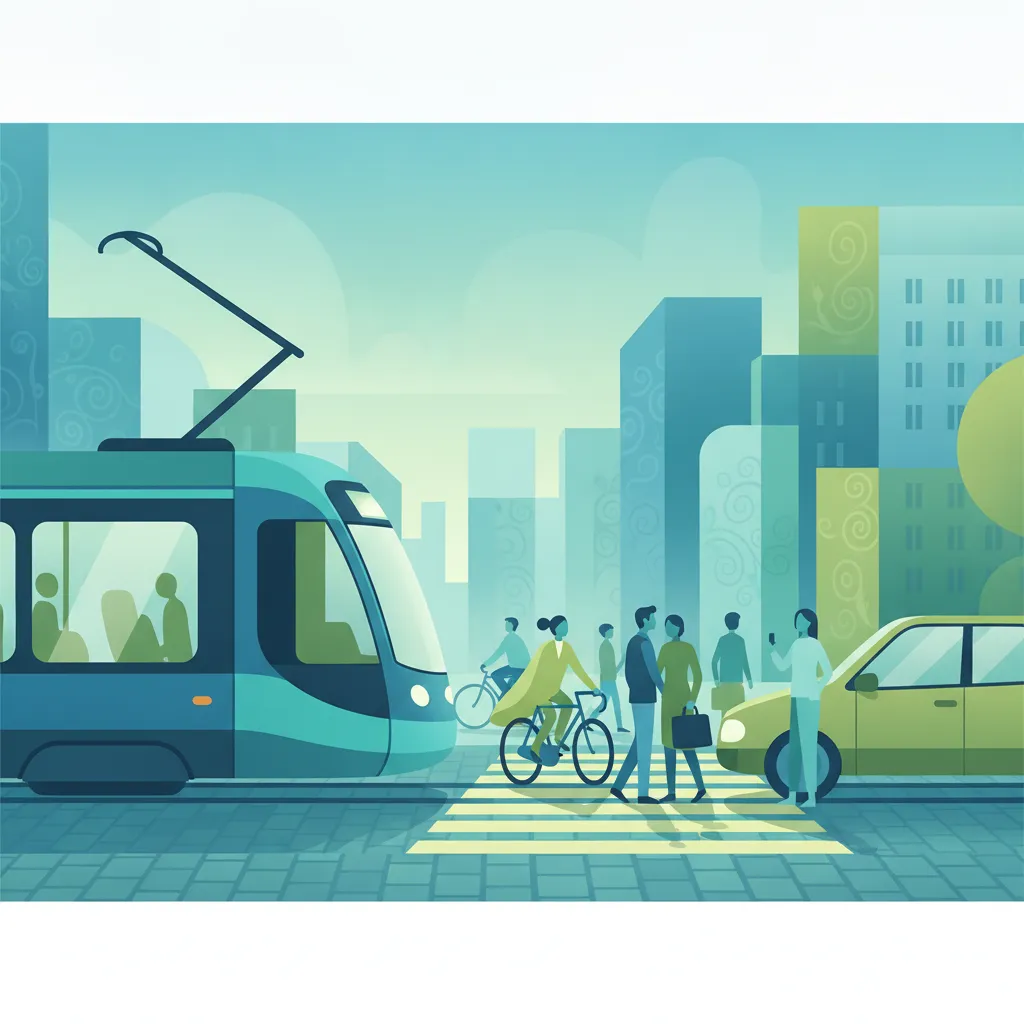
This lesson explores the priority given to public transport vehicles, especially trams and buses, in Swiss traffic. It explains how to recognize dedicated public transport lanes and the requirement to yield to trams at intersections. The content also covers procedures when a bus is stopping for passengers and how to ensure safe interactions.
Find clear answers to common questions learners have about Navigating Busy Transport Hubs: Railway Stations and Airports. Learn how the lesson is structured, which driving theory objectives it supports, and how it fits into the overall learning path of units and curriculum progression in Switzerland. These explanations help you understand key concepts, lesson flow, and exam focused study goals.
Transport hubs involve high concentrations of pedestrians who are often distracted, carrying heavy luggage, or moving in large groups. Lower speeds give you the necessary reaction time to stop if someone steps into the road unexpectedly.
Taxis are often in a hurry and may change lanes or stop abruptly. Maintain a larger safety cushion, anticipate sudden maneuvers, and always communicate your intentions clearly through signals.
Yes, you must adhere strictly to the marked zones and priority rules for public transport. Always ensure you do not block pedestrian crossings or emergency vehicle access points while waiting for passengers.
Use your mirrors and camera systems constantly. Practice the 'look-last' check before moving off, and stay vigilant for children or elderly passengers who may require more time to navigate the area around the bus.
Pinpoint specific Swiss traffic rules, road signs, or driving situations you need to master. Use the practice search to start a focused revision session now and build confidence for your official driving theory exam.