
This lesson focuses on identifying and managing risks associated with bus stops, a critical area for professional drivers of Category D vehicles. You will learn to anticipate the unpredictable movements of pedestrians and cyclists to ensure the safety of your passengers and other road users.
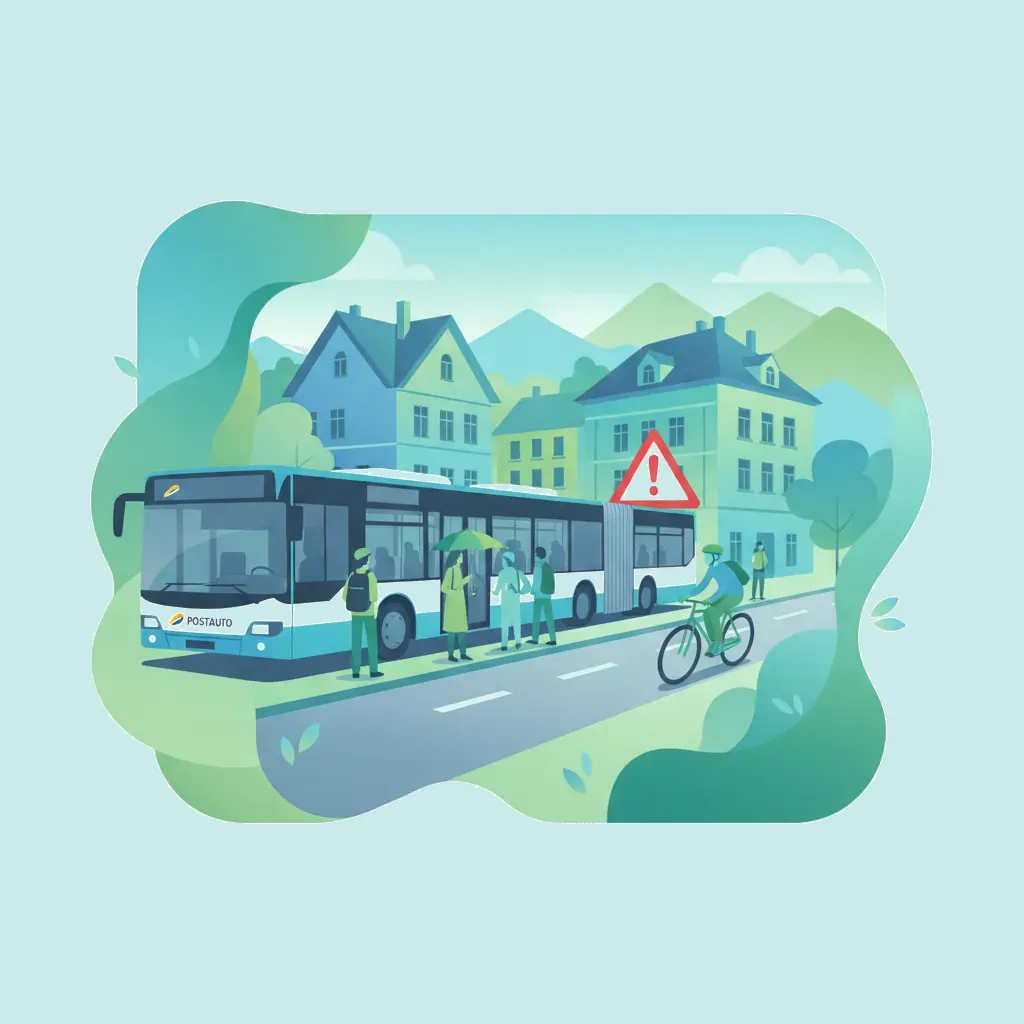
Lesson content overview
Bus stops are dynamic environments, acting as critical points where passenger vehicles, pedestrians, and cyclists frequently converge. For professional bus and coach drivers seeking a Swiss Category D Driving License, developing exceptional hazard perception skills in these areas is paramount. This lesson will equip you with the knowledge to anticipate, identify, and react to potential dangers, ensuring the safety of all road users and adherence to Swiss road safety regulations.
The unique nature of bus stops creates a higher risk profile for vulnerable road users, primarily pedestrians and cyclists. Unlike other road segments, bus stops involve frequent stops and starts, rapid passenger movement, and often limited space, demanding constant vigilance from the driver.
Pedestrians at bus stops exhibit a range of behaviors that can quickly become hazardous if not anticipated. These movements often occur close to the bus, in its immediate path, or within areas of limited visibility. Understanding these patterns is the first step in proactive hazard management.
Always assume pedestrians, particularly children or those distracted by phones, may act unpredictably. Their primary focus is often on the bus or their destination, not necessarily on surrounding traffic.
Swiss road traffic law places a strong emphasis on pedestrian safety, particularly around public transport. Drivers are legally obligated to yield to pedestrians who are boarding or alighting from a bus, or crossing the roadway at a designated crossing. This duty of care extends beyond marked crossings in the immediate vicinity of a bus stop.
Cyclists present a distinct set of challenges at bus stops. They often share lanes or use dedicated cycle paths adjacent to bus routes, leading to close interactions with buses, especially when a bus is stationary or moving slowly.
Cyclists have a right to use designated cycle lanes, and bus drivers must not obstruct these paths. Maintaining safe lateral clearance is not just a courtesy but a legal requirement designed to prevent dangerous side-impact collisions.
Proactive risk management is the cornerstone of safe bus operation at stops. This involves adopting several core principles that dictate how you approach, position, operate, and depart from a bus stop.
Controlling your vehicle's speed as you near a bus stop is fundamental to safety. A reduced speed provides more time to react to unexpected movements from pedestrians or cyclists and ensures you can stop precisely at the designated point.
For Category D vehicles in urban areas, the approach speed to bus stops is typically limited. In Switzerland, this limit is generally 30 km/h in urban zones. However, this is a maximum, not a target. Depending on conditions, you may need to reduce your speed significantly below this limit.
When approaching a bus stop, actively scan for potential hazards well in advance. Reduce your speed early and smoothly, allowing the bus to come to a controlled stop without harsh braking.
The stopping distance of a fully loaded bus is considerably longer than that of a passenger car due to its greater mass. This requires even greater anticipation and a more generous safety margin. Your approach speed must allow the bus to stop well before the stop line, ensuring enough room for safe door operation and pedestrian movement without encroaching on cyclist paths.
Precise positioning of your bus at the stop is crucial for both passenger safety and the safe passage of other road users. The goal is to stop cleanly at the designated kerb line.
Accurate lane discipline and spatial awareness are key to preventing collisions and ensuring smooth traffic flow around the bus stop.
Blind spots are inherent to all vehicles, but they are particularly pronounced in large vehicles like buses. Areas directly alongside, behind, and sometimes even in front of the bus can be obscured from the driver's direct view. This makes diligent mirror usage indispensable.
The "look-last" check is a mandatory and comprehensive visual scan that must be performed after the bus has stopped, the doors have closed, and immediately before moving off.
Interior Mirrors: Check all interior mirrors to confirm all passengers are safely seated or have cleared the door area. Look for any passengers rushing to exit or who may have dropped an item.
Side Mirrors: Systematically scan both left and right side mirrors. Pay close attention to the area between the bus and the kerb for cyclists attempting to pass or pedestrians stepping off the kerb. Check the far side for any vehicles or cyclists in adjacent lanes.
Rearview Mirrors (if applicable) / Reverse Cameras: Utilize any available rearview mirrors or cameras to check the area directly behind the bus, especially if you anticipate needing to reverse or maneuver.
Direct Vision: Where possible, a quick direct glance around the bus's immediate surroundings (if stationary) can supplement mirror checks, though this is often limited from the driver's seat.
Never assume a blind spot is clear after a quick glance. A thorough, systematic scan is essential to detect hazards that may appear suddenly.
This final, comprehensive check ensures that no pedestrian, cyclist, or other hazard has entered an unseen area around your vehicle just before you intend to move.
The safe operation of bus doors is critical to preventing injuries to passengers and external road users, especially cyclists. Modern buses are equipped with interlock systems that enhance safety, but these systems do not negate the driver's responsibility for visual checks.
A mechanical or electronic safety mechanism that prevents bus doors from opening or closing when the vehicle is moving above a very low speed, or when certain unsafe conditions are detected, such as a cyclist being too close.
Door interlock systems are a valuable safety feature, but they are a supplement, not a replacement, for the driver's vigilant observation and judgment.
In Switzerland, the law grants specific priority to pedestrians in certain situations, especially around public transport. This means that as a bus driver, you must yield to pedestrians in accordance with the Swiss Road Traffic Act.
Failing to yield to pedestrians is not only a serious safety violation but also carries significant legal consequences.
Maintaining adequate lateral clearance between your bus and cyclists is a mandatory safety principle to prevent side-swipe collisions. When a cyclist passes a stationary bus, particularly on the inside, there must be a minimum safe distance.
The Swiss Road Traffic Act specifies that a minimum lateral clearance of 1.5 metres must be given to cyclists passing a stationary bus. This distance allows cyclists sufficient room to maneuver, especially if they encounter an uneven surface or debris, and prevents them from being struck by the bus's side as it potentially moves off.
The horizontal distance maintained between the side of a bus and another road user (such as a cyclist) or object. A minimum of 1.5 metres is legally required in Switzerland for cyclists passing a stationary bus.
Drivers must anticipate the cyclist's path and, if necessary, wait until the cyclist has passed safely and with sufficient clearance before closing doors or moving the bus. Never force a cyclist into a dangerous position by moving off too soon or too close.
Adhering to specific Swiss regulations is non-negotiable for professional bus and coach drivers. These laws are designed to mitigate the inherent risks associated with operating large passenger vehicles in environments shared with vulnerable road users.
The Swiss Road Traffic Act, § 55, explicitly states that drivers must yield to pedestrians who are boarding or alighting from a bus. This legal mandate reinforces the paramount importance of pedestrian safety.
The Swiss Road Traffic Act, § 73, stipulates the mandatory lateral clearance for cyclists.
Article 2 of the Swiss Bus Stop Regulation addresses the precise positioning of buses at designated stops.
Article 4 of the Regulation on Door Interlocks specifically regulates door operation to protect cyclists.
Article 12 of the Speed Limitation at Stops regulation sets limits on the approach speed.
Always verify the most current and specific details of Swiss road traffic regulations for Category D vehicles, as laws can be updated. These provisions are critical for maintaining a high standard of professional driving.
Even experienced drivers can sometimes fall into common traps or make critical errors at bus stops. Recognizing these pitfalls is essential for preventing incidents.
Safe driving is inherently adaptable. The principles of hazard perception remain constant, but their application must be adjusted based on prevailing environmental and operational conditions.
Adverse weather significantly reduces visibility and can affect braking performance.
The design of the road around the bus stop can influence potential hazards.
The number of passengers on board directly affects the bus's dynamics.
Different cyclist behaviors require tailored responses.
The volume of pedestrians can drastically change the hazard profile.
Understanding the direct links between driver actions and safety outcomes is crucial for embedding a proactive safety mindset. Every decision at a bus stop has a consequence.
This lesson teaches Category D drivers to identify and manage hazards at Swiss bus stops, focusing on the unpredictable behaviour of pedestrians and cyclists. Key legal obligations include yielding to boarding and alighting passengers under § 55, maintaining 1.5 metres lateral clearance from cyclists per § 73, and ensuring no cyclist is within 5 metres before opening doors. The mandatory look-last mirror check must be performed systematically after doors close and before moving off, covering all mirrors to detect hazards in blind spots. Safe approach requires respecting the 30 km/h urban speed limit and adapting to conditions such as weather, road layout, and passenger density to prevent collisions and ensure compliance with Swiss professional driving regulations.
A short set of high-value points that capture the most important learning from this lesson.
Pedestrians boarding or alighting have legal priority under Swiss Road Traffic Act § 55, requiring drivers to remain stationary until all passengers have safely cleared the bus's path.
A minimum lateral clearance of 1.5 metres must be maintained between a stationary bus and passing cyclists according to § 73 of the Swiss Road Traffic Act.
Bus doors must not be opened if a cyclist is within 5 metres of the door side, as specified in Article 4 of the Regulation on Door Interlocks.
The 'look-last' mirror check is a mandatory comprehensive scan of all interior and exterior mirrors performed immediately before moving off from a bus stop.
Urban approach speed to bus stops is limited to 30 km/h, though conditions may require reducing speed further for safety.
Explore all units and lessons included in this driving theory course.
Pedestrian priority applies whenever bus doors are open, not just at marked crossings—the duty of care extends throughout the boarding and alighting process.
Cyclist clearance has two distinct requirements: 1.5 metres lateral distance while stationary and 5 metres longitudinal clearance before opening doors.
The look-last check sequence must cover interior mirrors, both side mirrors, and any rearview mirrors or cameras, followed by direct vision where possible.
Bus positioning must balance proximity to the kerb for passenger access while never encroaching into cycle lanes or adjacent traffic lanes.
Environmental factors such as weather, time of day, and passenger density all require adaptive driving adjustments despite fixed rules.
Premature departure: moving off while a passenger is still stepping onto the pavement or while a cyclist is passing within the danger zone.
Incorrect positioning: stopping too far from or too close to the kerb, which blocks cycle lanes and forces cyclists into hazardous situations.
Skipping the look-last check: neglecting the final mirror scan after doors close allows pedestrians or cyclists in blind spots to go undetected.
Opening doors before the bus is fully stationary or before confirming the 5-metre cyclist clearance zone is clear.
Assuming an apparently empty stop is hazard-free: pedestrians can emerge unexpectedly from behind parked vehicles or other obstructions.
Lesson content overview
A short set of high-value points that capture the most important learning from this lesson.
Pedestrians boarding or alighting have legal priority under Swiss Road Traffic Act § 55, requiring drivers to remain stationary until all passengers have safely cleared the bus's path.
A minimum lateral clearance of 1.5 metres must be maintained between a stationary bus and passing cyclists according to § 73 of the Swiss Road Traffic Act.
Bus doors must not be opened if a cyclist is within 5 metres of the door side, as specified in Article 4 of the Regulation on Door Interlocks.
The 'look-last' mirror check is a mandatory comprehensive scan of all interior and exterior mirrors performed immediately before moving off from a bus stop.
Urban approach speed to bus stops is limited to 30 km/h, though conditions may require reducing speed further for safety.
Explore all units and lessons included in this driving theory course.
Pedestrian priority applies whenever bus doors are open, not just at marked crossings—the duty of care extends throughout the boarding and alighting process.
Cyclist clearance has two distinct requirements: 1.5 metres lateral distance while stationary and 5 metres longitudinal clearance before opening doors.
The look-last check sequence must cover interior mirrors, both side mirrors, and any rearview mirrors or cameras, followed by direct vision where possible.
Bus positioning must balance proximity to the kerb for passenger access while never encroaching into cycle lanes or adjacent traffic lanes.
Environmental factors such as weather, time of day, and passenger density all require adaptive driving adjustments despite fixed rules.
Premature departure: moving off while a passenger is still stepping onto the pavement or while a cyclist is passing within the danger zone.
Incorrect positioning: stopping too far from or too close to the kerb, which blocks cycle lanes and forces cyclists into hazardous situations.
Skipping the look-last check: neglecting the final mirror scan after doors close allows pedestrians or cyclists in blind spots to go undetected.
Opening doors before the bus is fully stationary or before confirming the 5-metre cyclist clearance zone is clear.
Assuming an apparently empty stop is hazard-free: pedestrians can emerge unexpectedly from behind parked vehicles or other obstructions.
Explore search topics learners often look for when studying Hazard Perception at Bus Stops: Pedestrians and Cyclists. These topics reflect common questions about road rules, driving situations, safety guidance, and lesson level theory preparation for learners in Switzerland.
Browse additional driving theory lessons that cover connected traffic rules, road signs, and common driving situations related to this topic. Improve your understanding of how different rules interact across everyday traffic scenarios.
Understand the specific risks and legal requirements when interacting with pedestrians and cyclists near bus stops in Switzerland. Learn to safely manage their unpredictable behaviour and ensure clear passage for all road users.

This lesson trains drivers to look beyond other vehicles and actively search for pedestrians, cyclists, and motorcyclists, especially those who may be distracted or unaware. It covers common behavioral patterns of different VRU groups. The goal is to see potential hazards developing early and create time and space to react safely.
This lesson explores the specific considerations for cyclists and pedestrians, who are among the most vulnerable road users. It covers the proper use of bicycle lanes, the minimum safe overtaking distance for cyclists, and the legal requirements for yielding at pedestrian crossings. The content reinforces the need for heightened vigilance around these users.
Pedestrians, cyclists, motorcyclists, and e-scooter riders are extremely vulnerable in any interaction with a heavy vehicle. This lesson instills a defensive mindset, teaching drivers to be hyper-aware of VRUs, especially near junctions, crossings, and cycle lanes. It focuses on anticipation and giving VRUs extra space, as they can be unpredictable and are often hidden in blind spots.
This lesson explores the complexities of riding in busy urban areas with a mix of traffic types. It covers strategies for safely navigating alongside buses, trams, cyclists, and pedestrians. Key topics include respecting designated lanes, anticipating the movements of vulnerable road users, and maintaining heightened situational awareness.

This lesson focuses on general driving safety in areas with a high concentration of children. It stresses the importance of significantly reducing speed, being prepared for unexpected events, and scanning for children between parked cars. The driver must exhibit maximum vigilance in these high-risk environments at all times.
Sharing road space with trams presents unique challenges, including different priority rules and physical hazards like tracks. This lesson covers the Swiss regulations regarding tram priority at junctions and stops. It also provides practical advice on crossing tram tracks safely and maintaining awareness of tram movements.
This lesson explores pedestrian right-of-way at various crossings, including zebra crossings and pedestrian islands. It emphasizes the need for drivers to reduce speed, anticipate pedestrian movement, and stop safely when required. The content also covers special regulations that apply in school zones, such as reduced speed limits and heightened vigilance.
This lesson contrasts the interaction dynamics between road users in urban and rural environments, highlighting differing challenges. It discusses the higher density of pedestrians and cyclists in cities versus the presence of agricultural vehicles and wildlife in rural areas. You will learn how speed limits, visibility, and road layout impact safe interactions.
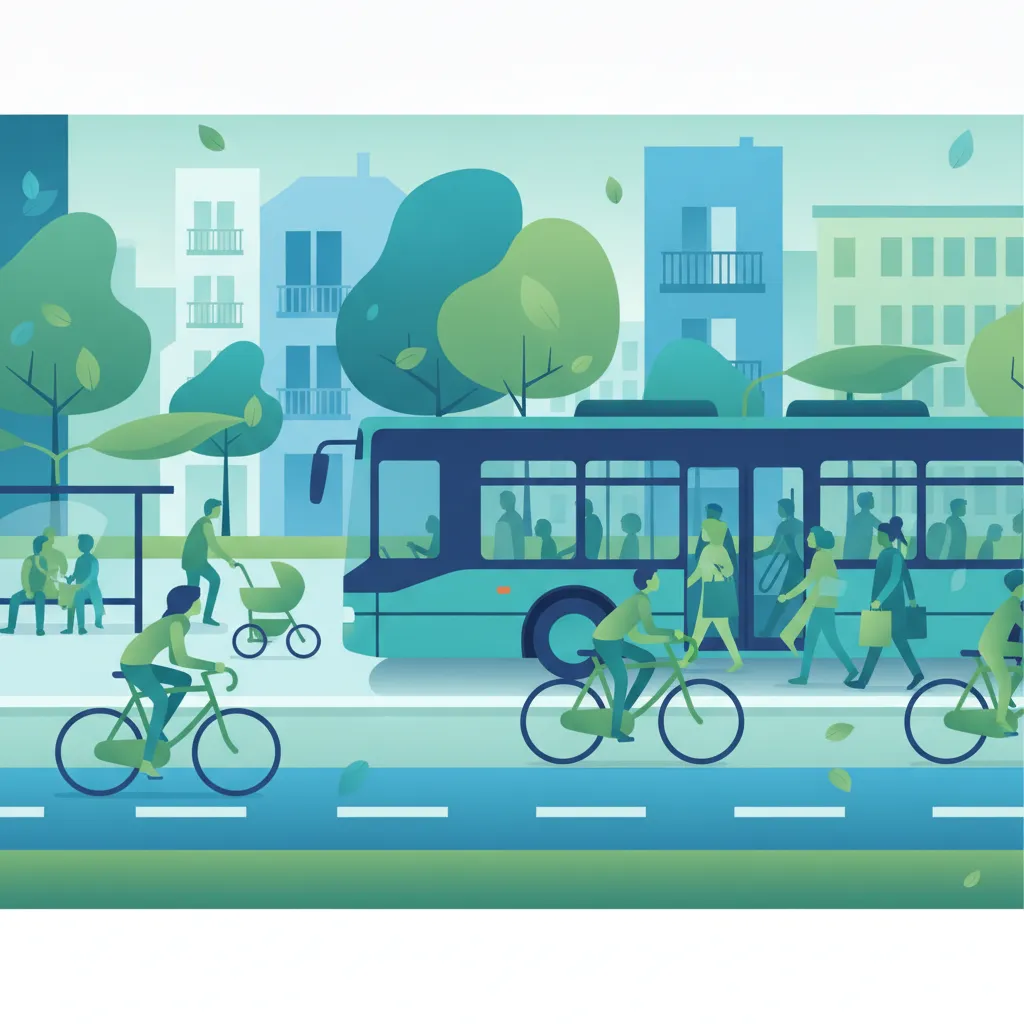
A stopped bus creates a significant visual obstruction for other road users. This lesson focuses on the risk of pedestrians stepping out from in front of the bus and cyclists passing unexpectedly on either side. It reinforces the need for exhaustive mirror and blind spot checks before moving off to prevent tragic 'pull-away' accidents.
Driving a bus in older parts of a city requires exceptional spatial awareness and precise control. This lesson focuses on assessing clearances, managing front and rear overhang, and negotiating tight turns around parked cars and buildings. A key theme is slow, careful, and deliberate manoeuvring to avoid contact.
Master the specific Swiss legal requirements and regulations governing bus operations at bus stops. This includes understanding pedestrian priority, cyclist clearance, speed limits, and correct vehicle positioning to ensure compliance.

Bus lanes are a key tool for improving service reliability, but they come with specific rules. This lesson covers how to correctly interpret bus lane signs and markings. It also explains the regulations for entering and leaving the lane to make turns or avoid obstructions, and the priority rules associated with them.
Transporting children carries the highest level of responsibility. This lesson covers the specific legal requirements for school buses in Switzerland, including the use of special signs and warning lights. It details the safe procedures for stopping, boarding, and alighting, and the driver's role in supervising children.
Motorway driving involves high speeds and requires constant concentration. This lesson covers correct lane discipline, safe procedures for joining and leaving the motorway, and techniques for overtaking other large vehicles. Maintaining appropriate speed and a safe following distance is emphasized throughout.

This lesson details the specific documents that must be present in the vehicle and on the driver's person during service. It covers the driving license, OACP card, vehicle registration, and tachograph records. You will learn the importance of ensuring all paperwork is current and correct to ensure legal compliance at all times.
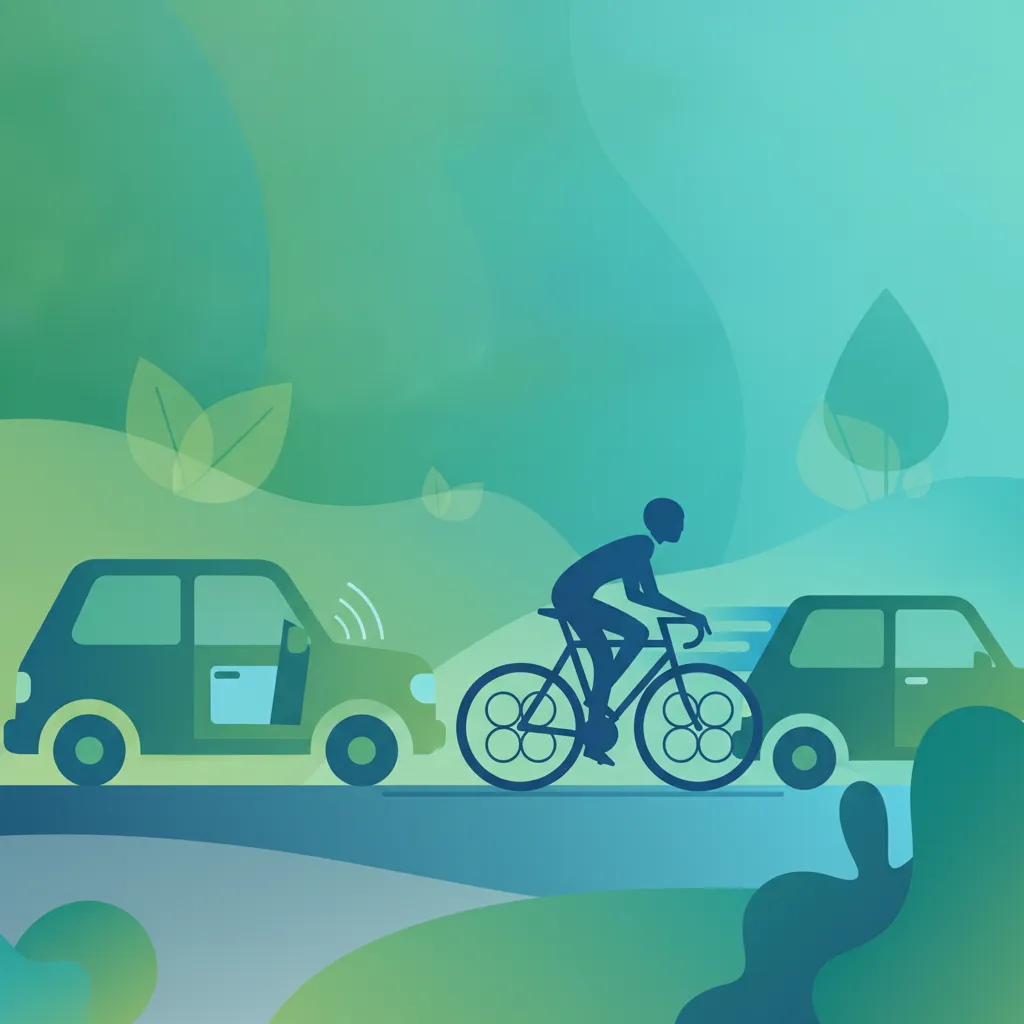
Departing from a bus stop is a high-risk manoeuvre. This lesson details the critical sequence of actions: checking all passengers are clear of the doors, performing a comprehensive mirror and blind spot check, signalling, and waiting for a safe gap in traffic. This systematic approach is essential for preventing collisions with overtaking vehicles, cyclists, or pedestrians.

Buses and coaches require significantly more distance to stop than cars. This lesson explains why the 'two-second rule' is insufficient and teaches the appropriate methods for calculating a safe gap in various conditions. Maintaining an adequate safety cushion is one of the most important defensive driving skills.

The legal speed limit is a maximum, not a target. This lesson teaches the professional driver's approach to speed management, which involves constantly assessing traffic, road, and weather conditions. You will learn to adjust your speed to ensure you can always stop safely within the distance you can see to be clear.
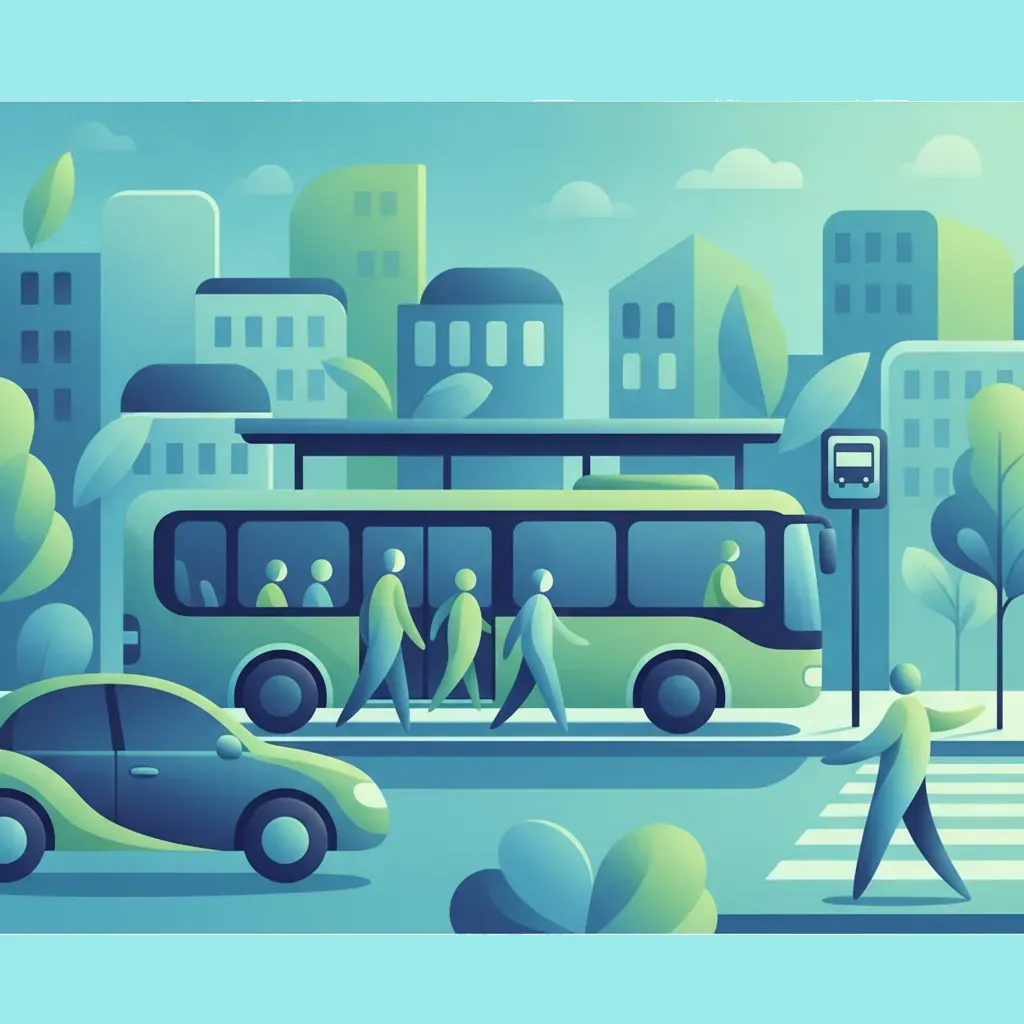
The approach to a stop sets the stage for a safe passenger exchange. This lesson covers signalling in good time, decelerating smoothly, and aiming for a final position that is close and parallel to the kerb. Proper positioning minimizes the step for passengers and prevents them from having to step into traffic.
This lesson focuses on general driving safety in areas with a high concentration of children. It stresses the importance of significantly reducing speed, being prepared for unexpected events, and scanning for children between parked cars. The driver must exhibit maximum vigilance in these high-risk environments at all times.
Many Swiss cities use systems that give buses priority at traffic lights to improve punctuality. This lesson explains how these systems detect an approaching bus and alter the signal phasing. You will learn to recognize and correctly respond to the special white light signals that grant this priority.
Find clear answers to common questions learners have about Hazard Perception at Bus Stops: Pedestrians and Cyclists. Learn how the lesson is structured, which driving theory objectives it supports, and how it fits into the overall learning path of units and curriculum progression in Switzerland. These explanations help you understand key concepts, lesson flow, and exam focused study goals.
The biggest hazard is often the 'invisible' cyclist passing on the nearside as you approach the kerb, combined with pedestrians who may suddenly step onto the road to catch the bus.
Always maintain a high level of situational awareness. Never encourage pedestrians to run by gesturing; focus on your safe stopping procedure and wait for them to reach the bus safely, ensuring you have clear visibility before moving off.
Cyclists are vulnerable, and you must grant them sufficient space. When approaching a stop, always check your mirrors repeatedly for cyclists who may try to filter past on the inside while you are decelerating.
Yes, regardless of whether you are driving a minibus (D1) or an articulated bus (DE), the principles of hazard perception at bus stops remain identical and are fundamental to professional driving safety.
Pinpoint specific Swiss traffic rules, road signs, or driving situations you need to master. Use the practice search to start a focused revision session now and build confidence for your official driving theory exam.