
This lesson introduces critical hazard perception skills for aspiring professional truck drivers in Spain. You'll learn to proactively identify common road risks and adapt your driving for challenging weather conditions, which is essential for success in your DGT Category C & C1 theory exam and for safe operation on Spanish roads.

Lesson content overview
Driving a large goods vehicle (LGV) in Spain requires a heightened level of awareness and skill, especially when encountering unexpected road hazards or challenging weather conditions. This lesson, part of your Official DGT Theory Course for Spanish Truck Licence Category C & C1, will equip you with the essential knowledge and techniques to identify potential dangers, understand their impact, and adapt your driving to maintain safety and control.
Successfully navigating various road and weather scenarios is not only crucial for your safety and the integrity of your cargo but also a legal obligation under DGT (Dirección General de Tráfico) regulations. By proactively assessing risks and adjusting your driving strategy, you protect yourself, your vehicle, your load, and other road users, ensuring compliance and a professional approach to haulage.
Road hazards encompass any condition or object on the road or in the driving environment that can compromise safe vehicle operation, potentially leading to an accident or damage. For professional truck drivers, the stakes are higher due to the vehicle's size, weight, and the momentum it carries, which amplifies the consequences of even minor errors.
Effective hazard perception begins with situational awareness, which is the continuous scanning and evaluation of your surroundings to detect potential threats before they become immediate dangers. This proactive approach reduces reaction time and enables early, smooth corrective actions, critical for heavy vehicles.
Static road hazards are physical irregularities or foreign objects on the carriageway that can directly affect a vehicle's stability, steering, or cause mechanical damage. Due to a truck's weight and longer wheelbase, these hazards can have different, often more severe, impacts compared to passenger cars.
DGT Article 71 mandates that drivers must adapt their speed to the condition of the pavement. Failing to reduce speed for road surface hazards is a violation that significantly increases accident risk.
Dynamic hazards refer to unpredictable actions or behaviors of other road users, including other drivers, motorcyclists, cyclists, pedestrians, and animals. For a truck driver, recognizing these potential dangers early is crucial due to longer braking distances and reduced maneuverability.
Always perform blind spot checks before changing lanes. Trucks have significantly larger blind spots than cars, making it easier for smaller vehicles to disappear from view.
The characteristics of your cargo significantly influence how your truck responds to hazards and adverse conditions. Load-influenced maneuverability is the principle that recognizes how cargo weight, distribution, and its centre of gravity affect braking, steering, and overall vehicle stability.
The hypothetical point where the entire weight of the vehicle and its load is considered to act. A higher centre of gravity increases the vehicle's tendency to roll over.
Adverse weather conditions are a leading cause of truck accidents due to reduced visibility and decreased tire traction. Professional drivers must master speed-weather matching, which means adjusting vehicle speed proportionally to the prevailing road surface conditions and visibility.
Reduced visibility is a severe challenge for truck drivers, as it limits the time available to perceive hazards and react. Proper use of lighting and speed adjustments are paramount.
DGT Article 75 requires the use of appropriate lighting in adverse visibility conditions. Article 76 mandates proportional speed reduction when visibility is reduced, especially when it falls below 100 metres.
Traction is the friction between your tires and the road surface, essential for acceleration, braking, and steering. Adverse weather conditions severely reduce this friction, making vehicle control challenging.
DGT Article 84 specifies that vehicles equipped with ABS must utilize this system in conditions of low adhesion when braking. Pumping the brakes manually on an ABS-equipped vehicle is incorrect and reduces the system's effectiveness.
While not always affecting visibility or traction directly, strong winds can significantly impact a truck's stability, especially high-sided vehicles.
Adherence to DGT regulations is fundamental to safe professional truck driving. These rules are designed to mitigate risks associated with hazards and adverse weather.
Standard headlights designed to illuminate the road for a limited distance ahead without causing excessive glare to oncoming traffic. Essential in rain and fog.
Specialized lights, front and rear, that emit a wide, low beam designed to penetrate fog and make the vehicle more visible. Front fog lights are used with low-beams; rear fog lights are for when visibility drops below 50 metres.
Beyond understanding regulations, effective hazard perception relies on developing strong driving habits and a robust decision-making framework.
Maintaining high situational awareness is non-negotiable for professional drivers. This involves a comprehensive and continuous scanning routine:
When a potential hazard is identified, a quick and accurate risk assessment is required to decide on the most appropriate mitigation strategy.
The driving environment dictates the type and frequency of hazards encountered.
Professional drivers must be aware of common pitfalls that can lead to accidents and always strive for best practices.
For comprehensive preparation for your Spanish professional truck driving theory exam, continue exploring related lessons.
This lesson covers hazard perception and weather adaptation for Spanish DGT Category C & C1 truck drivers, teaching how to identify static hazards like potholes and debris, dynamic threats from other road users, and weather-related challenges including fog, rain, ice, and wind. It emphasises that truck size, weight, and load characteristics fundamentally affect vehicle response and require adjusted driving techniques. Key DGT regulations covered include Article 71 on speed adaptation to road conditions, Article 75 on lighting requirements in reduced visibility, and Articles 93 and 95 on load compliance and securement. The content provides practical frameworks for situational awareness, risk assessment, and defensive driving across urban, highway, and mountainous environments.
A short set of high-value points that capture the most important learning from this lesson.
Truck drivers must maintain continuous situational awareness by scanning far ahead, checking mirrors regularly, and managing large blind spots to detect hazards early
Adverse weather conditions reduce both visibility and traction; professional drivers must proportionally adjust speed and increase following distances accordingly
Cargo characteristics including weight, distribution, and centre of gravity directly impact braking distance, steering response, and rollover risk
DGT regulations mandate specific responses to hazards including speed adaptation for road conditions, appropriate lighting in reduced visibility, and proper load securement
Anticipating unpredictable behavior from other road users and planning escape routes are essential defensive driving skills for professional truck operators
Explore all units and lessons included in this driving theory course.
Fog requires low-beam headlights and fog lights while drastically reducing speed to stop within visible range; never use high beams
Wet roads reduce friction significantly; hydroplaning risk increases with speed and tire wear, requiring 20-30% speed reduction on motorways
Load securement using tie-downs and friction mats must prevent cargo movement under braking or cornering forces per DGT Article 95
ABS prevents wheel lock-up but cannot create traction; always combine ABS with significant speed reduction on low-grip surfaces
Hazard warning lights may only be used when stationary and dangerous, or during emergency stops while moving; using them in normal moving traffic violates DGT Article 80
Driving at normal speed on wet asphalt without reducing speed or increasing following distance despite dramatically reduced friction
Using high-beam headlights in fog, which causes glare by reflecting off water droplets and worsens visibility instead of improving it
Failing to increase following distance appropriately; a loaded truck requires significantly longer stopping distances on wet or slippery surfaces
Overloading beyond the maximum authorised mass (MAM), which reduces braking efficiency, strains components, and increases stopping distances
Making sudden lane changes to avoid small debris; slow down, maintain lane position, and steer gently around obstacles to avoid destabilising the load
Lesson content overview
A short set of high-value points that capture the most important learning from this lesson.
Truck drivers must maintain continuous situational awareness by scanning far ahead, checking mirrors regularly, and managing large blind spots to detect hazards early
Adverse weather conditions reduce both visibility and traction; professional drivers must proportionally adjust speed and increase following distances accordingly
Cargo characteristics including weight, distribution, and centre of gravity directly impact braking distance, steering response, and rollover risk
DGT regulations mandate specific responses to hazards including speed adaptation for road conditions, appropriate lighting in reduced visibility, and proper load securement
Anticipating unpredictable behavior from other road users and planning escape routes are essential defensive driving skills for professional truck operators
Explore all units and lessons included in this driving theory course.
Fog requires low-beam headlights and fog lights while drastically reducing speed to stop within visible range; never use high beams
Wet roads reduce friction significantly; hydroplaning risk increases with speed and tire wear, requiring 20-30% speed reduction on motorways
Load securement using tie-downs and friction mats must prevent cargo movement under braking or cornering forces per DGT Article 95
ABS prevents wheel lock-up but cannot create traction; always combine ABS with significant speed reduction on low-grip surfaces
Hazard warning lights may only be used when stationary and dangerous, or during emergency stops while moving; using them in normal moving traffic violates DGT Article 80
Driving at normal speed on wet asphalt without reducing speed or increasing following distance despite dramatically reduced friction
Using high-beam headlights in fog, which causes glare by reflecting off water droplets and worsens visibility instead of improving it
Failing to increase following distance appropriately; a loaded truck requires significantly longer stopping distances on wet or slippery surfaces
Overloading beyond the maximum authorised mass (MAM), which reduces braking efficiency, strains components, and increases stopping distances
Making sudden lane changes to avoid small debris; slow down, maintain lane position, and steer gently around obstacles to avoid destabilising the load
Explore search topics learners often look for when studying Identifying Road Hazards and Weather Impacts. These topics reflect common questions about road rules, driving situations, safety guidance, and lesson level theory preparation for learners in Spain.
Browse additional driving theory lessons that cover connected traffic rules, road signs, and common driving situations related to this topic. Improve your understanding of how different rules interact across everyday traffic scenarios.
Explore the critical impact of rain, fog, snow, and ice on truck traction and visibility. Understand how to adapt driving techniques and comply with Spanish DGT regulations for safe operation in challenging weather conditions.
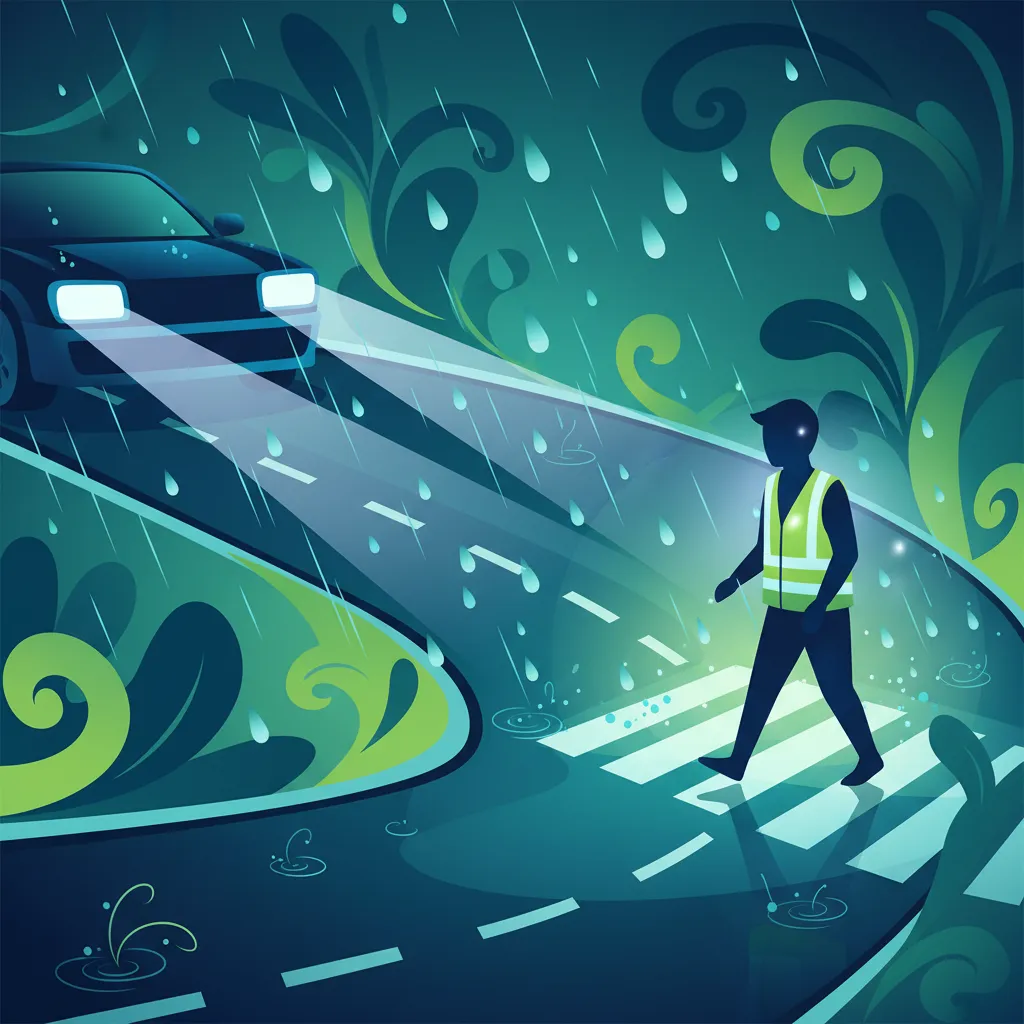
This lesson covers how environmental conditions such as rain, fog, and darkness affect driving safety. It instructs drivers on adjusting speed, using appropriate lighting, and increasing following distance to compensate for reduced visibility and traction. The lesson incorporates DGT safety recommendations for handling adverse weather to mitigate risk and maintain control.
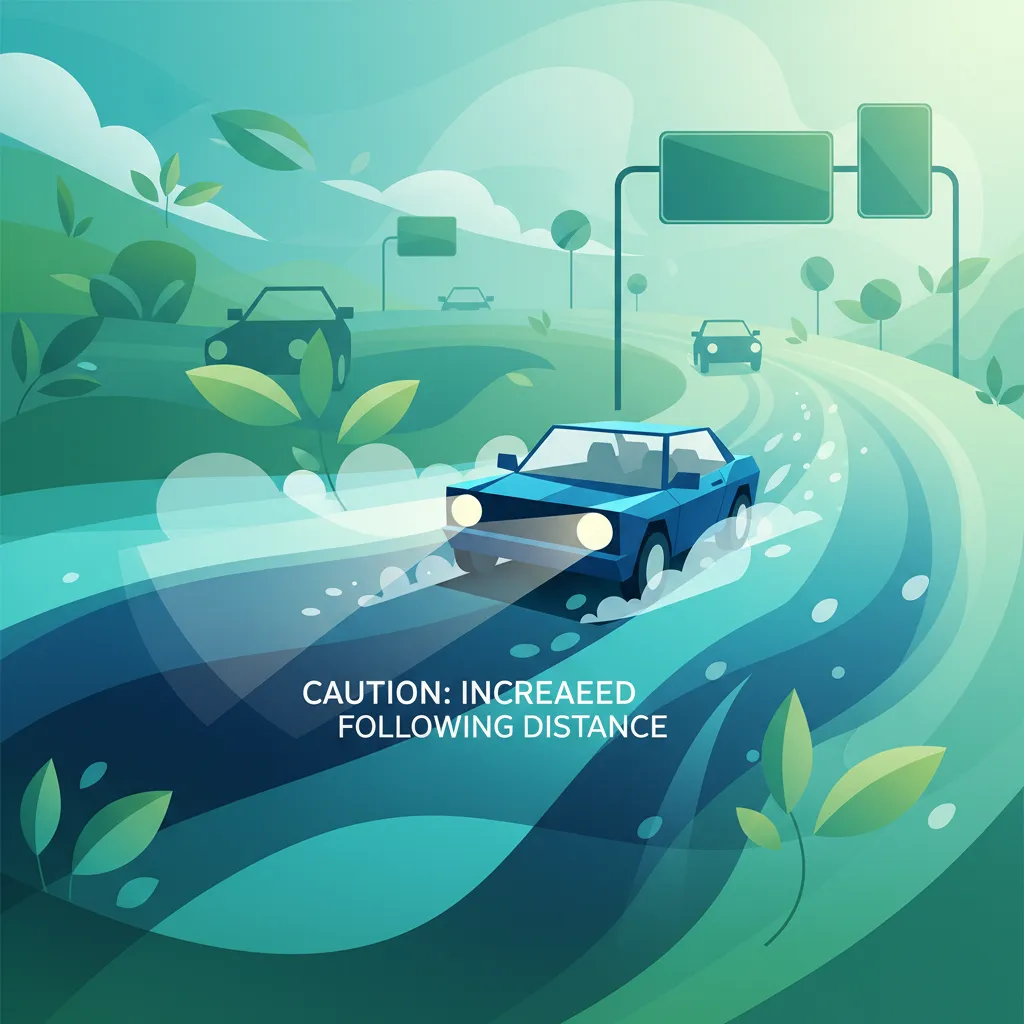
This lesson addresses the specific challenges posed by rain and fog, focusing on reduced visibility and loss of traction. It explains the proper use of windshield wipers and fog lights, and the need to adjust speed and increase following distance. The content covers how to prevent and react to hydroplaning (aquaplaning) to maintain vehicle control.

This lesson examines the significant impact of various weather conditions on driving safety, including rain, fog, snow, ice, and high winds. Learners will understand how each condition can affect vehicle traction, reduce visibility, and alter driver perception, learning the appropriate adjustments to speed, following distance, and braking. The module also covers the use of vehicle safety features to mitigate risks in adverse weather.

This lesson focuses on the core principles of defensive driving as they apply to operating a large truck. It explains the importance of managing the space around the vehicle to create a safety buffer and always having an 'escape route' in mind. The content emphasizes anticipating the actions of other road users and being prepared to react calmly and safely to unexpected situations.

This lesson introduces fundamental road safety principles applicable to all drivers, with a special emphasis on heavy vehicles. It covers defensive driving techniques, including the importance of anticipating potential hazards and managing speed appropriately for conditions. Learners will also study how to establish and maintain safe following distances and understand the hierarchy of road users to ensure safe interactions.

This lesson addresses the dynamics of accelerating, braking, and turning while towing a trailer. It explains how to adjust for increased load inertia, the impact on stopping distances, and the need for wider turns to account for off-tracking. The content outlines DGT speed guidelines specific to towing and emphasizes smooth control to ensure stability.

This lesson focuses on the critical relationship between speed, following distance, and overall traffic safety on highways. It explains how to calculate a safe following distance based on speed and weather conditions, accounting for a truck's longer stopping distance. The content also teaches strategies for managing speed to adapt smoothly to changing traffic flow, enhancing both safety and fuel efficiency.
Learn to identify common road hazards from potholes to debris and anticipate unpredictable actions of other road users. This lesson focuses on proactive risk assessment for professional truck drivers in Spain.
This lesson focuses on the core principles of defensive driving as they apply to operating a large truck. It explains the importance of managing the space around the vehicle to create a safety buffer and always having an 'escape route' in mind. The content emphasizes anticipating the actions of other road users and being prepared to react calmly and safely to unexpected situations.

This lesson focuses on the critical skill of safely interacting with vulnerable road users, such as pedestrians and cyclists, in an urban setting. It highlights the extensive blind spots around a truck and teaches drivers to be extra vigilant, especially at intersections and crosswalks. The content covers the legal requirements for yielding and the importance of making eye contact to confirm intentions.
This lesson introduces fundamental road safety principles applicable to all drivers, with a special emphasis on heavy vehicles. It covers defensive driving techniques, including the importance of anticipating potential hazards and managing speed appropriately for conditions. Learners will also study how to establish and maintain safe following distances and understand the hierarchy of road users to ensure safe interactions.
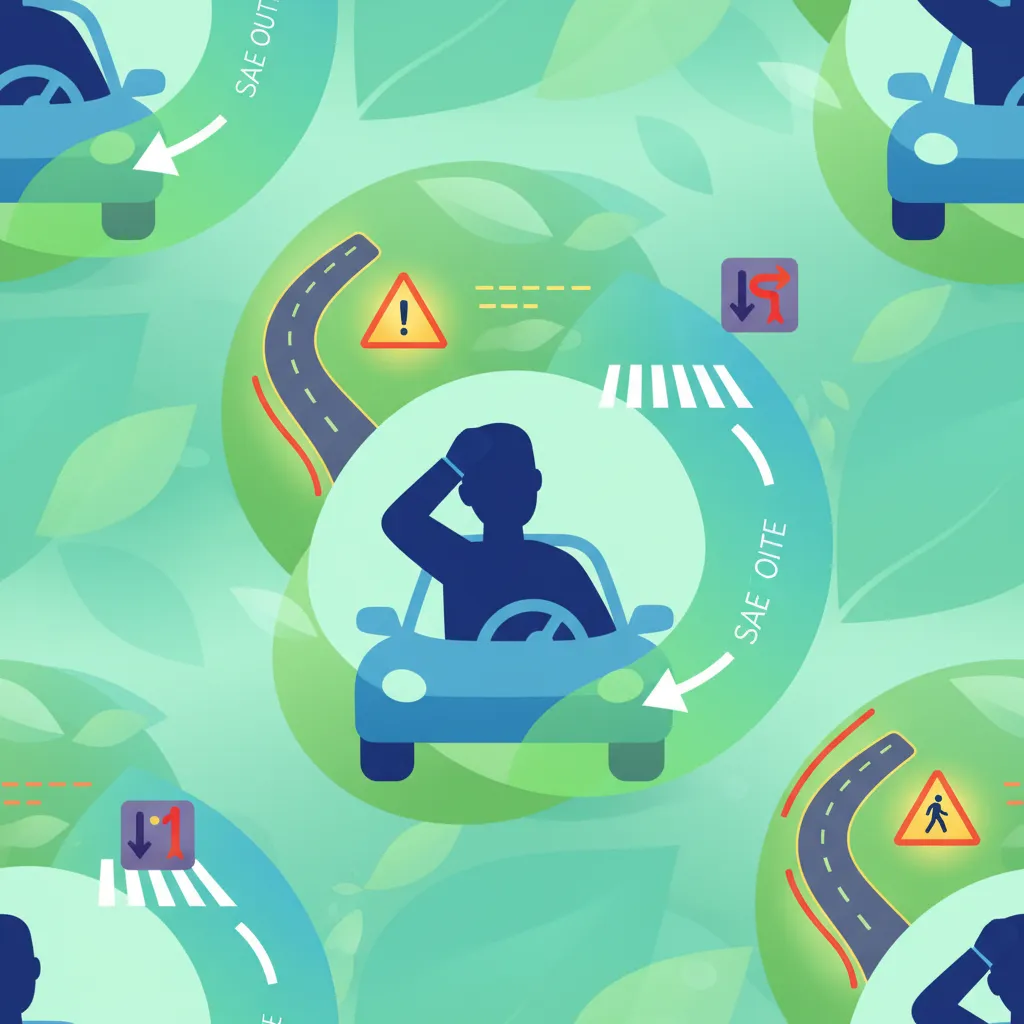
In this lesson, drivers learn how to identify risk zones where potential hazards are likely to develop. The content explains the use of proactive observation and scanning techniques to detect evolving dangers in the driving environment. Learners will practice anticipating the actions of other road users based on traffic patterns and context, adjusting their speed and position accordingly.

This lesson is focused on the early identification of road hazards through the application of effective scanning techniques and the use of peripheral vision. Learners will practice recognizing visual cues that signal potential dangers, such as erratic vehicle movements, unexpected obstacles, or pedestrian behavior. The module also teaches proactive response strategies designed to mitigate these risks before they can escalate into dangerous situations.

This lesson provides a detailed guide to performing safe and legal overtaking maneuvers on the highway. It places strong emphasis on the techniques for thoroughly checking the large blind spots around a truck before initiating a lane change. The content also covers judging the necessary speed differential and distance required to complete the pass and return to the lane safely.
This lesson focuses on the critical relationship between speed, following distance, and overall traffic safety on highways. It explains how to calculate a safe following distance based on speed and weather conditions, accounting for a truck's longer stopping distance. The content also teaches strategies for managing speed to adapt smoothly to changing traffic flow, enhancing both safety and fuel efficiency.
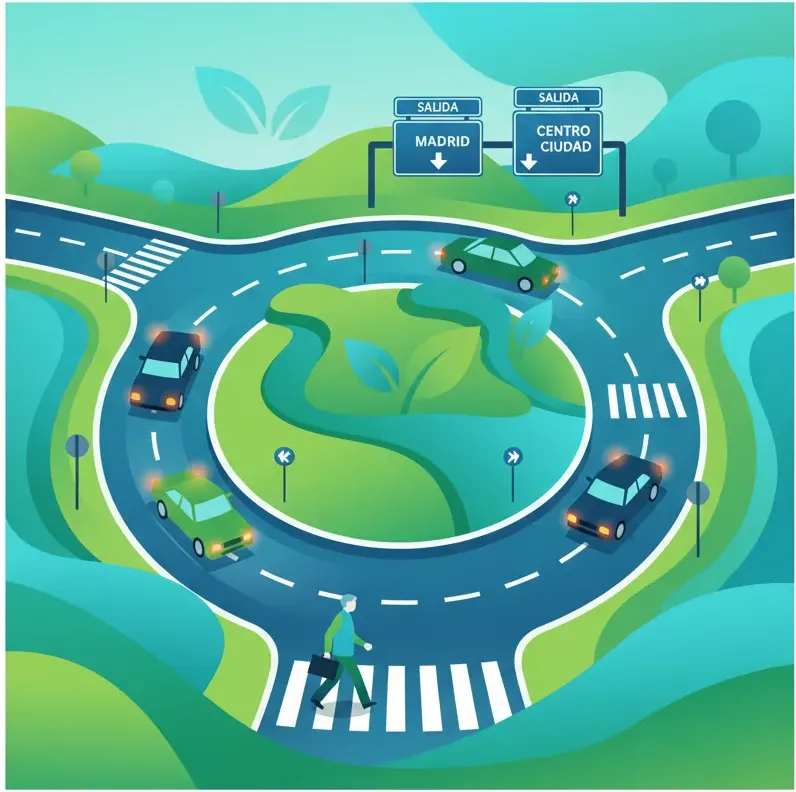
This lesson provides specific instructions on how to safely navigate complex junctions such as roundabouts and intersections with a large vehicle. It explains the rules of priority, the correct lane to use based on the intended exit, and the importance of proper vehicle positioning to account for off-tracking. The content also covers clear signaling to communicate intentions to other road users for safe and efficient passage.

This lesson provides strategies for navigating dense and often unpredictable city traffic. It explains how to maintain a safe following distance and position the vehicle correctly in stop-and-go situations to optimize flow and visibility. The content emphasizes the importance of anticipation, patience, and defensive driving techniques to safely manage the challenges of urban congestion.

This lesson provides guidance on the practical aspects of parking and making deliveries in urban areas. It covers the techniques for safely maneuvering into and out of loading docks and designated delivery zones, which often involves precise reversing. The content also explains the specific parking regulations that apply to commercial vehicles and best practices for ensuring safety during loading and unloading.
Find clear answers to common questions learners have about Identifying Road Hazards and Weather Impacts. Learn how the lesson is structured, which driving theory objectives it supports, and how it fits into the overall learning path of units and curriculum progression in Spain. These explanations help you understand key concepts, lesson flow, and exam focused study goals.
Strong crosswinds significantly impact HGVs due to their large side surface area. They can cause vehicles to sway, drift laterally, and even overturn, particularly when empty or lightly loaded. DGT advises reducing speed, gripping the steering wheel firmly, and being prepared for sudden movements, especially when exiting tunnels or passing gaps in buildings.
The biggest risk in dense fog for Category C & C1 drivers is severely reduced visibility, which can lead to late reactions, sudden braking by other vehicles, and a heightened risk of multi-vehicle pile-ups. Drivers must significantly reduce speed, increase following distances, use fog lights correctly, and avoid sudden maneuvers to prevent accidents as per DGT guidelines.
While no specific numerical speed limits are set for heavy rain, DGT regulations require drivers to adapt their speed to conditions. For trucks, this means a substantial reduction from the posted limit to minimize aquaplaning risk and maintain control. Increased braking distances and reduced visibility necessitate a much slower pace than in dry conditions.
Black ice is notoriously hard to spot. Truck drivers should look for visual cues like wet-looking patches on cold, clear days, especially in shaded areas or on bridges/overpasses where temperatures drop faster. Feeling the steering become unusually light or hearing a lack of tyre noise can also indicate black ice. Reduce speed and avoid sudden movements when conditions are ripe for its formation.
Truck drivers must anticipate various hazards from other road users, including sudden lane changes without warning, driving in blind spots, aggressive overtaking, and incorrect merging. Vulnerable road users like cyclists and pedestrians can also create hazards, especially in urban areas. Vigilant observation and defensive driving are crucial for mitigating these risks.
Use our powerful search functionality to pinpoint specific Spanish DGT driving theory practice sets. Filter by road sign categories, traffic law topics, or question difficulty to build custom study sessions and reinforce your knowledge precisely where it matters for your official exam.