
This lesson focuses on essential highway driving techniques, covering proper lane discipline, safe merging onto acceleration lanes, and smooth exiting using deceleration lanes. Mastering these skills is crucial for navigating Spain's high-speed roads safely and successfully passing the DGT theory exam for categories B and BE.
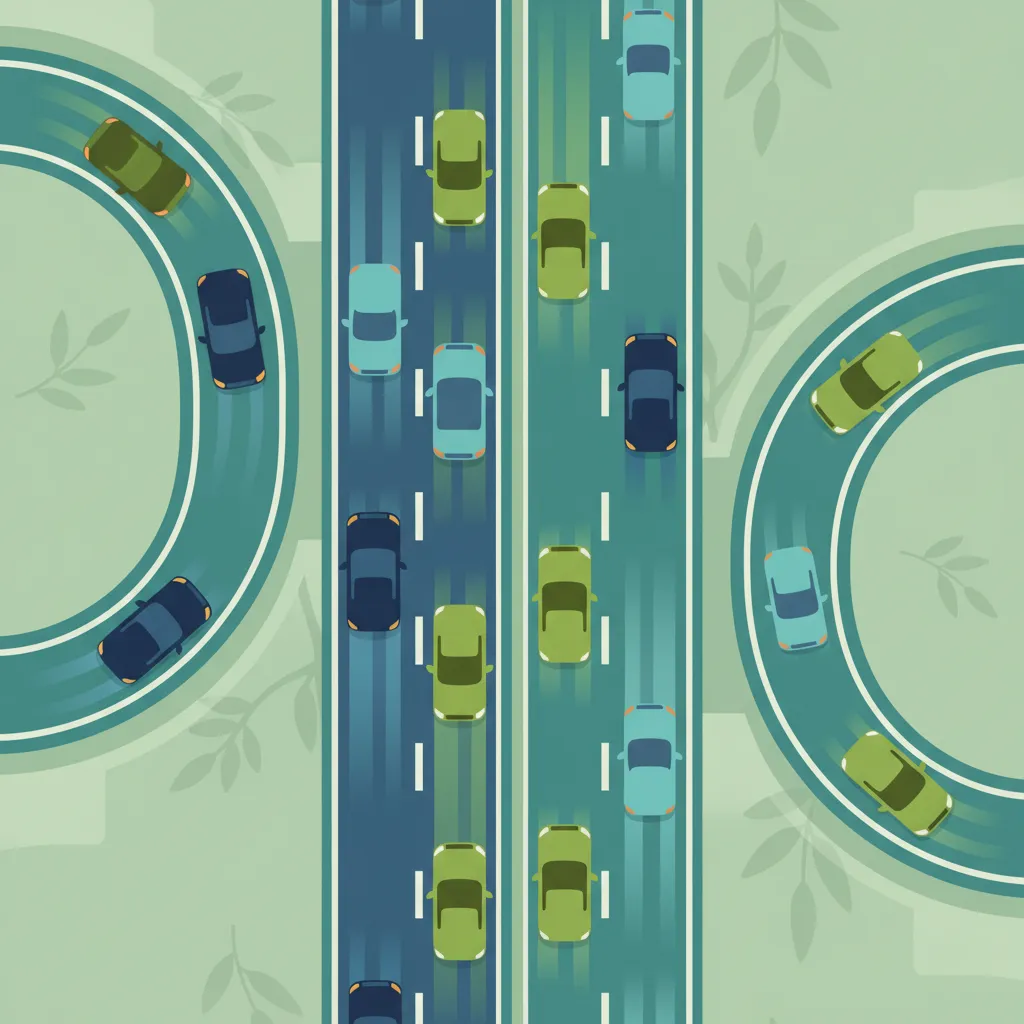
Lesson content overview
Navigating motorways and dual carriageways (autovías) in Spain requires a solid understanding of lane discipline, safe merging, and effective exit strategies. These practices are crucial not only for maintaining smooth traffic flow but also for ensuring your safety and the safety of other road users. This lesson, part of your Complete Spanish Driving License Theory Course for Categories B & BE, will define the rules and best practices as mandated by the Dirección General de Tráfico (DGT).
Mastering proper lane use, knowing how to merge onto main carriageways from an acceleration lane, and executing safe exits using deceleration lanes are fundamental skills. Adhering to these principles reduces the risk of collisions, avoids penalties, and contributes significantly to overall road safety in Spain.
Lane discipline refers to the systematic use of road lanes according to legal and safety standards. On Spanish motorways and dual carriageways, specific rules govern which lane you should use and when, maximizing capacity, predictability, and safety for all drivers. The core principle is to drive in the right-hand lane unless you are overtaking or preparing to exit.
According to DGT Article 61, the lane closest to the right edge of the carriageway is designated as the standard driving lane for normal travel. This is your default position. Drivers must always remain in this right-hand lane unless there is a clear reason to move to another lane.
This rule ensures uniform traffic flow, allows for predictable overtaking from the left, and is a cornerstone of safe highway driving. By keeping to the right, you make it easier for faster traffic to pass you on the left and for vehicles to merge from acceleration lanes.
Lanes to the left of the default right-hand lane are primarily reserved for overtaking slower traffic. DGT Article 61 specifies that overtaking must be performed from the left lane. Once you have safely completed your overtaking maneuver, you must return to the right-hand lane as soon as it is safe to do so.
Important: Staying in a left lane without actively overtaking a slower vehicle is a common violation in Spain, often referred to as "uso indebido del carril." This practice can cause unnecessary congestion and is subject to penalties.
In specific circumstances, you might use a left lane if the right-hand lane is blocked, or if road signage explicitly directs you to do so (e.g., preparing for a left-hand exit on a very complex intersection, although this is rare on standard motorways).
Consistent lane usage minimizes abrupt lane changes, which are a major cause of side-on collisions. It reduces the need for sudden speed adjustments, allowing all vehicles to maintain safer following distances. When drivers adhere to lane discipline, the flow of traffic becomes more predictable, making it easier for everyone to anticipate movements and react safely. This systematic approach supports the physics of safe following distances and reduces the overall risk of accidents.
An acceleration lane (carril de aceleración) is a dedicated lane designed to allow vehicles to gain sufficient speed before merging onto a main carriageway, such as a motorway or dual carriageway. Proper use of this lane is vital for a smooth and safe entry onto high-speed traffic.
The primary goal when using an acceleration lane is to match the speed of the traffic already on the main carriageway. This allows you to integrate smoothly without forcing other drivers to brake or swerve.
Observe and Plan: As you enter the acceleration lane, immediately assess the traffic flow on the main carriageway. Look for gaps and evaluate the speed of approaching vehicles.
Accelerate Decisively: Use the full length of the acceleration lane to build up speed. Do not hesitate or merge at a lower speed than the main traffic. Your goal is to reach a speed that is as close as possible to the flow of traffic on the motorway, usually between 90-120 km/h.
Signal Your Intent: Activate your right turn signal at least 5 seconds before you intend to merge. This alerts drivers on the main carriageway to your intention to join.
Check Mirrors and Blind Spot: Continuously check your rear-view mirror, side mirror, and perform a quick head-turn (shoulder check) to verify your blind spot. Ensure there is a safe gap, ideally at least a three-second following distance, both ahead and behind the vehicle you intend to merge in front of.
Merge Smoothly: When a safe and adequate gap appears, steer smoothly into the main carriageway. Do not cut off other drivers or force your way into a gap that is too small. Once merged, switch off your signal.
DGT Article 68 explicitly states that vehicles joining a main carriageway must not impede traffic already on the main road. This means that drivers on the acceleration lane must yield the right-of-way to vehicles already present on the motorway. While main-road drivers are encouraged to facilitate merging by moving over if safe, they are not obligated to do so. The responsibility for safe merging lies with the driver entering the main carriageway.
A deceleration lane (carril de deceleración) is a dedicated lane that allows vehicles to reduce speed safely before exiting a motorway or dual carriageway. Its purpose is to prevent drivers from braking abruptly on the main carriageway, which could endanger trailing traffic.
Exiting a high-speed road requires careful planning and execution. Deceleration lanes are designed to manage the transition from high speed to a lower speed environment, typically for service areas, smaller roads, or other motorway connections. By moving into the deceleration lane early, you remove your slowing vehicle from the main flow of traffic, protecting yourself and others from potential rear-end collisions caused by sudden braking.
To execute a safe exit, you must signal your intention well in advance and position your vehicle correctly.
Anticipate Your Exit: Look for exit signs (often indicating the next town or road number) well before your actual exit point. DGT recommends signaling approximately 300 metres before the exit on motorways.
Signal Early: Activate your right turn signal at least 5 seconds before you intend to move into the deceleration lane. This gives following drivers ample warning of your upcoming maneuver.
Move to the Exit Lane: Ensure you are in the right-hand lane (or the designated exit lane, if different) as you approach the start of the deceleration lane.
Enter Deceleration Lane: Steer smoothly into the deceleration lane at the correct entry point. Do not begin braking while still in the main carriageway.
Decelerate Gradually: Once fully within the deceleration lane, gradually reduce your speed to match the advisory speed limit for the exit ramp. This allows you to maintain control and prevents abrupt braking.
Adjust to Exit Road: As you leave the deceleration lane and enter the connecting road, be aware of any changes in speed limits, sharp bends, or junctions, and adjust your driving accordingly.
DGT Article 70 emphasizes that drivers must use deceleration lanes appropriately and must not obstruct traffic on the main carriageway. This means you should aim to do most of your braking within the deceleration lane itself, not before entering it. Braking sharply while still in the main lane can catch trailing vehicles by surprise and lead to dangerous situations.
Clear and timely signaling is non-negotiable for safe lane changes, merging, and exiting. It is a fundamental aspect of communicating your intentions to other road users, allowing them time to react appropriately.
DGT Article 62.1 mandates that turn signals must be activated at least 5 seconds before initiating any lane change. This specific time frame is crucial because it provides other drivers with sufficient warning to process your intention and adjust their speed or position if necessary. A late signal can give other drivers only 1-2 seconds of warning, which is often not enough to prevent a collision or panic braking.
Before any lane change, merging maneuver, or exit, a thorough check of your surroundings is paramount. This includes:
A safe maneuvering gap refers to the minimum longitudinal space required to safely change lanes without endangering surrounding vehicles. While not always codified with specific distances, DGT driver education highly recommends maintaining a sufficient gap.
The general guideline is the two-second rule: ensure at least a two-second gap between your vehicle and the vehicle ahead in your target lane before merging or changing lanes. This provides a safe reaction time. In adverse conditions such as rain, fog, or at night, this gap should be increased to three seconds or more. Always be aware of the speed of vehicles in adjacent lanes; fast-approaching traffic will close gaps much quicker.
Lane discipline and maneuvering strategies are not static; they must be adapted to various road conditions, vehicle types, and environmental factors.
In rain, fog, ice, or low light, visibility is reduced, and stopping distances increase.
Driving a vehicle with a trailer (Category BE) significantly alters vehicle dynamics and requires specific adaptations to lane discipline.
Construction zones often involve temporary lane closures, altered lane markings, and reduced speed limits.
The rules governing lane discipline, merging, and exiting are clearly defined in the Spanish Reglamento General de Circulación. Familiarity with these articles is essential for compliance and safe driving.
Failure to adhere to DGT regulations regarding lane discipline can lead to fines and, in some cases, points deducted from your license. Common violations include:
To solidify your understanding, consider these common driving situations:
Imagine you are driving on a dual carriageway with a speed limit of 120 km/h, and you are currently in the right-hand lane. Ahead, a vehicle is traveling at 100 km/h.
You are at the start of an acceleration lane, preparing to join a motorway where traffic is flowing at approximately 110 km/h.
You are approaching an exit for a service area on a motorway. The exit ramp includes a deceleration lane.
By understanding and consistently applying these principles, you will become a more confident, predictable, and safer driver on Spain's motorways and dual carriageways, adhering fully to DGT regulations for categories B and BE.
This lesson covers essential Spanish highway driving procedures mandated by the DGT. The core principle is to keep the right-hand lane as your default travel lane, using left lanes only for overtaking and returning right immediately after. Safe merging requires using acceleration lanes to match motorway speeds (90-120 km/h) and yielding to main carriageway traffic, while safe exiting demands entering deceleration lanes early and completing braking within them rather than on the main road. The mandatory 5-second signaling rule (DGT Article 62.1) applies to all lane changes, merges, and exits, and drivers must always check mirrors and blind spots before any lateral maneuver. These procedures are directly tested in the DGT theory exam for categories B and BE.
A short set of high-value points that capture the most important learning from this lesson.
Always drive in the right-hand lane as your default position; only move left to overtake slower traffic and return right immediately after
Use the full length of acceleration lanes to match motorway speed (typically 90-120 km/h) before merging onto main carriageways
Activate turn signals at least 5 seconds before any lane change, merge, or exit to comply with DGT Article 62.1
Complete your deceleration within the deceleration lane before the exit point to avoid sudden braking on the main carriageway
Always check rear-view mirror, side mirror, and perform a shoulder check to cover your blind spot before any lateral maneuver
Explore all units and lessons included in this driving theory course.
DGT Article 61 mandates driving in the right-hand lane unless actively overtaking; left-lane use without overtaking is a violation (uso indebido del carril)
The 5-second signaling rule applies to all lane changes, merges, and exits on Spanish motorways (DGT Article 62.1)
Drivers entering from an acceleration lane must yield to traffic already on the main carriageway (DGT Article 68)
Abrupt braking on the main carriageway before an exit is prohibited; use deceleration lanes for speed reduction (DGT Article 70)
Maintain at least a two-second following distance in normal conditions, increasing to three seconds or more in adverse weather
Remaining in the left lane indefinitely after overtaking, which causes congestion and is an illegal improper lane use
Merging onto motorways at significantly lower speeds than traffic flow, forcing other drivers to brake suddenly
Signaling too late or failing to signal entirely before lane changes, reducing other drivers' reaction time
Stopping or slowing at the end of an acceleration lane instead of using its length to build speed
Braking abruptly in the main carriageway before reaching the deceleration lane, creating hazards for following traffic
Lesson content overview
A short set of high-value points that capture the most important learning from this lesson.
Always drive in the right-hand lane as your default position; only move left to overtake slower traffic and return right immediately after
Use the full length of acceleration lanes to match motorway speed (typically 90-120 km/h) before merging onto main carriageways
Activate turn signals at least 5 seconds before any lane change, merge, or exit to comply with DGT Article 62.1
Complete your deceleration within the deceleration lane before the exit point to avoid sudden braking on the main carriageway
Always check rear-view mirror, side mirror, and perform a shoulder check to cover your blind spot before any lateral maneuver
Explore all units and lessons included in this driving theory course.
DGT Article 61 mandates driving in the right-hand lane unless actively overtaking; left-lane use without overtaking is a violation (uso indebido del carril)
The 5-second signaling rule applies to all lane changes, merges, and exits on Spanish motorways (DGT Article 62.1)
Drivers entering from an acceleration lane must yield to traffic already on the main carriageway (DGT Article 68)
Abrupt braking on the main carriageway before an exit is prohibited; use deceleration lanes for speed reduction (DGT Article 70)
Maintain at least a two-second following distance in normal conditions, increasing to three seconds or more in adverse weather
Remaining in the left lane indefinitely after overtaking, which causes congestion and is an illegal improper lane use
Merging onto motorways at significantly lower speeds than traffic flow, forcing other drivers to brake suddenly
Signaling too late or failing to signal entirely before lane changes, reducing other drivers' reaction time
Stopping or slowing at the end of an acceleration lane instead of using its length to build speed
Braking abruptly in the main carriageway before reaching the deceleration lane, creating hazards for following traffic
Explore search topics learners often look for when studying Lane Discipline, Merging, and Exit Strategies. These topics reflect common questions about road rules, driving situations, safety guidance, and lesson level theory preparation for learners in Spain.
Browse additional driving theory lessons that cover connected traffic rules, road signs, and common driving situations related to this topic. Improve your understanding of how different rules interact across everyday traffic scenarios.
Understand Spanish DGT rules for safe merging onto motorways using acceleration lanes and effective exiting with deceleration lanes. Learn essential signaling and speed management techniques for Spanish autovías and autopistas.
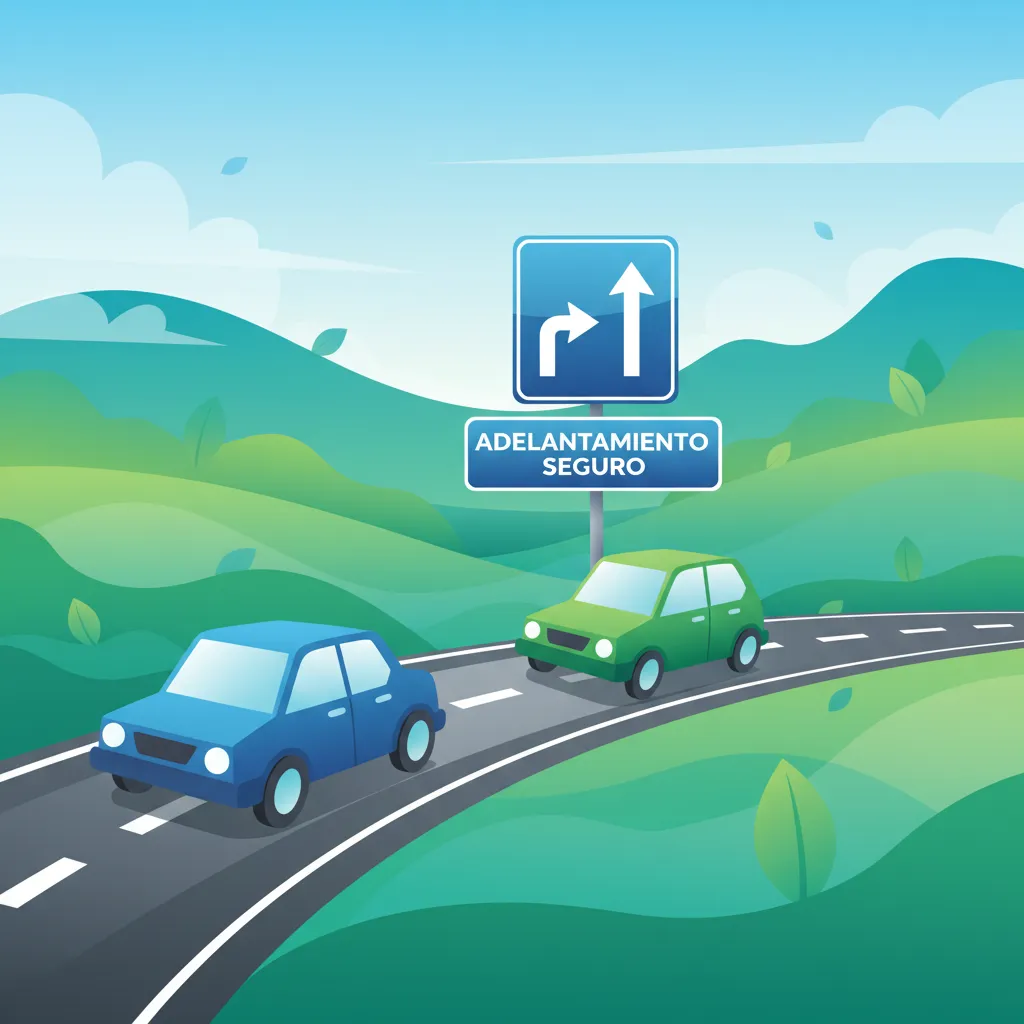
This lesson covers the legal overtaking procedures applicable on different road types, focusing on identifying safe passing zones and executing maneuvers correctly. Learners will be taught how to maintain adequate safety distances before, during, and after overtaking. The content includes DGT regulations for overtaking, appropriate signaling, and visibility checks to ensure safe completion of the maneuver.

This lesson focuses on the yielding hierarchy that governs roundabout usage in Spain. It clarifies that vehicles already circulating have priority over those entering and explains the proper lane positioning based on the intended exit. The content includes the correct use of signals for changing lanes and exiting, and safe merging techniques.

This lesson examines the principles of maintaining a safe following distance, including the 'two-second rule' and its adjustments for speed and weather. It focuses on effective blind-spot management, teaching drivers how to use mirrors and head checks. The content integrates DGT guidelines on creating a safety buffer around the vehicle to allow time to react to unexpected events.

This lesson analyzes the various intersection configurations found in Spanish cities, such as controlled and uncontrolled junctions. It explains the hierarchy of right-of-way, detailing when vehicles must yield, when pedestrians have priority, and how traffic signs dictate movement. Learners are guided through DGT signage conventions that determine priority at each intersection type.

This lesson clarifies the primary rule for roundabouts: all vehicles entering must yield to traffic already on the circular roadway. It explains how to approach a roundabout, select the appropriate lane based on the intended exit, and merge safely into the flow of traffic. Proper signaling before exiting is also covered, ensuring other drivers can anticipate the rider's movements for a smooth and safe negotiation of the junction.
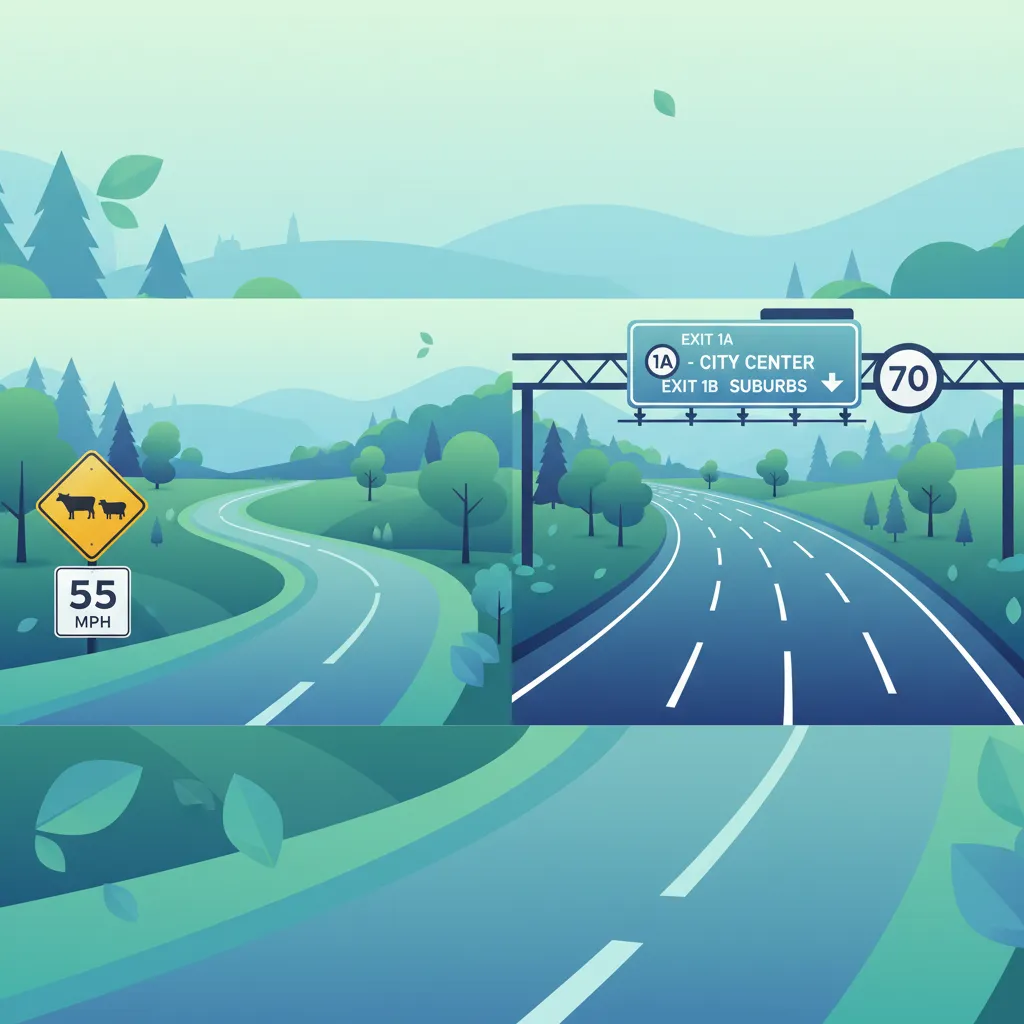
This lesson focuses on the specific signage systems used in rural and highway environments in Spain. It explains how to interpret directional signs, exit numbering, distance markers, and signs for services like fuel and rest areas. Understanding these signs is crucial for effective navigation and safe driving at high speeds.
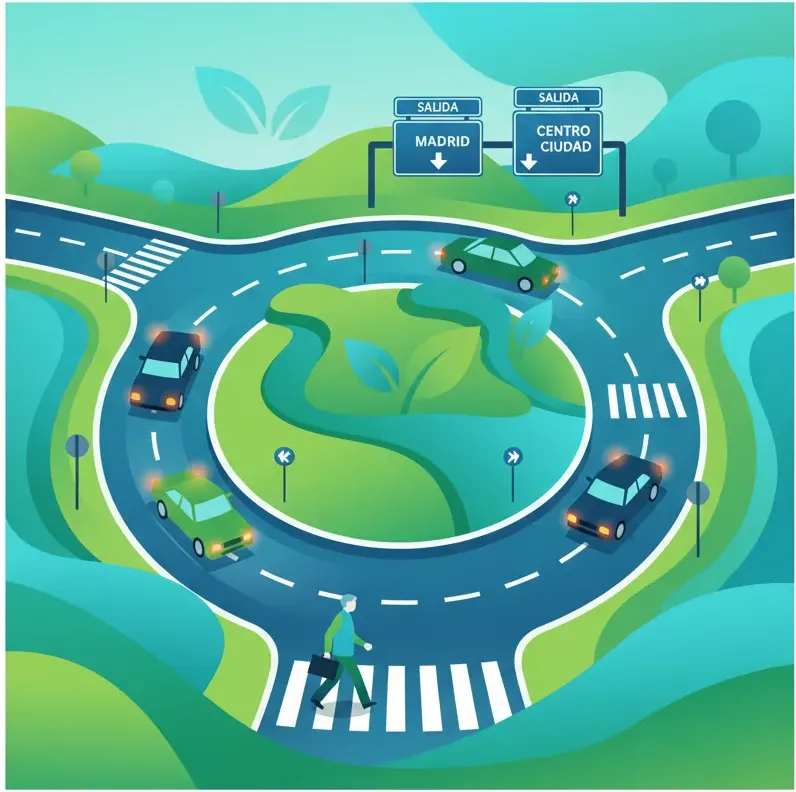
This lesson provides specific instructions on how to safely navigate complex junctions such as roundabouts and intersections with a large vehicle. It explains the rules of priority, the correct lane to use based on the intended exit, and the importance of proper vehicle positioning to account for off-tracking. The content also covers clear signaling to communicate intentions to other road users for safe and efficient passage.

This lesson explains the designated functions of different parts of a highway system. It covers the legal and appropriate use of carriageways, the specific emergency-only use of the hard shoulder (arcén), and the purpose of service roads. The content clarifies DGT regulations for each, ensuring drivers know where they can and cannot drive or stop.
This lesson offers a comprehensive guide to navigating roundabouts in urban settings, explaining the correct protocols for entry, yielding, and circulation. Learners will be taught how to interpret lane markings and signage on multi-lane roundabouts and determine the correct vehicle positioning for safe entry and exit. The content emphasizes full compliance with Spanish city regulations that govern priority and right-of-way at these intersections.
This lesson outlines the proper techniques for negotiating roundabouts and signal-controlled intersections in Spain. It explains priority rules at entry, lane selection based on the intended exit, and yielding to circulating traffic. The content also covers compliance with traffic signals and DGT regulations, including handling cyclist crossings.
Learn the fundamental DGT principles of lane discipline on Spanish motorways, focusing on the 'keep right' rule and proper use of lanes for overtaking. Master safe driving practices for autovías and autopistas.

This lesson focuses on the principles of safe lane selection and overtaking on multi-lane roads and highways. It covers the importance of maintaining proper lane discipline and the legal protocols for executing a safe pass, including checking blind spots and ensuring sufficient speed differential. The content also stresses the need for clear signaling and judging adequate space before returning to the original lane.

This lesson addresses overtaking procedures and lane discipline specifically for large coaches, emphasizing correct lane positioning and safe passing practices on multi-lane highways. It covers the legal rules for overtaking, the critical need for comprehensive blind spot checks before changing lanes, and the importance of signaling intentions early. Learners will also be taught how to maintain appropriate safety gaps when maneuvering around slower-moving traffic.
This lesson covers the legal overtaking procedures applicable on different road types, focusing on identifying safe passing zones and executing maneuvers correctly. Learners will be taught how to maintain adequate safety distances before, during, and after overtaking. The content includes DGT regulations for overtaking, appropriate signaling, and visibility checks to ensure safe completion of the maneuver.
This lesson focuses on the yielding hierarchy that governs roundabout usage in Spain. It clarifies that vehicles already circulating have priority over those entering and explains the proper lane positioning based on the intended exit. The content includes the correct use of signals for changing lanes and exiting, and safe merging techniques.

This lesson introduces the visual language of road markings, focusing on the distinction between solid and broken lines and what they permit regarding lane changes and overtaking. It explains the meaning of directional arrows painted on the road surface, which guide drivers into the correct lane for their intended maneuver. Understanding these markings is crucial for maintaining proper lane discipline and navigating complex intersections and multi-lane roads.

This lesson provides a detailed guide to performing safe and legal overtaking maneuvers on the highway. It places strong emphasis on the techniques for thoroughly checking the large blind spots around a truck before initiating a lane change. The content also covers judging the necessary speed differential and distance required to complete the pass and return to the lane safely.
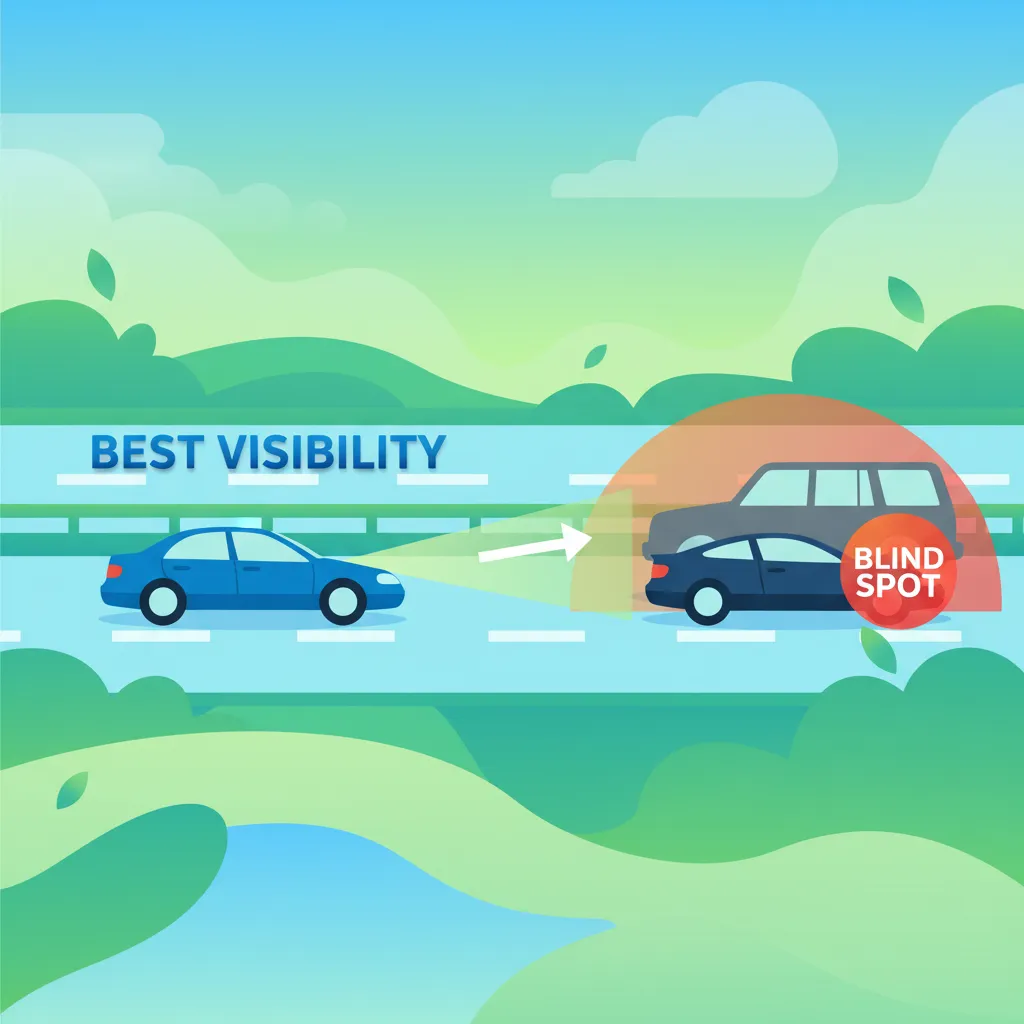
This lesson explores proper lane positioning, emphasizing strategic selection of traffic lanes for optimal visibility. It explains the importance of rider line of sight and peripheral vision in maintaining situational awareness. The content also covers legal aspects of lane splitting and correct usage of road shoulders, abiding by DGT regulations.

This lesson focuses on defensive maneuvers in mixed traffic environments where various vehicles share the road. It outlines lane discipline, appropriate overtaking safety measures, and strategies for maintaining a safety corridor. The content incorporates DGT defensive guidelines, teaching riders to manage space and anticipate unpredictable driver behavior.
This lesson explains the designated functions of different parts of a highway system. It covers the legal and appropriate use of carriageways, the specific emergency-only use of the hard shoulder (arcén), and the purpose of service roads. The content clarifies DGT regulations for each, ensuring drivers know where they can and cannot drive or stop.
This lesson examines the principles of maintaining a safe following distance, including the 'two-second rule' and its adjustments for speed and weather. It focuses on effective blind-spot management, teaching drivers how to use mirrors and head checks. The content integrates DGT guidelines on creating a safety buffer around the vehicle to allow time to react to unexpected events.
Find clear answers to common questions learners have about Lane Discipline, Merging, and Exit Strategies. Learn how the lesson is structured, which driving theory objectives it supports, and how it fits into the overall learning path of units and curriculum progression in Spain. These explanations help you understand key concepts, lesson flow, and exam focused study goals.
The fundamental rule for driving on Spanish highways is to occupy the right-hand lane whenever possible. You should only use the other lanes (middle or left) for overtaking other vehicles. Once overtaking is complete, you must return to the right-hand lane as soon as it is safe to do so. This ensures traffic flow and safety for all road users.
To merge safely, first adjust your speed on the acceleration lane to match the flow of traffic on the main carriageway. Check your mirrors and blind spot for a sufficient gap. Signal your intention clearly and merge smoothly into the gap when it is safe, without forcing other vehicles to brake or change lanes abruptly.
A deceleration lane, or 'carril de deceleración', is specifically designed to allow you to reduce your speed safely after leaving the main carriageway, without impeding the flow of traffic on the highway itself. You should activate your turn signal, move into the deceleration lane, and then gradually reduce your speed to comply with the speed limits of the upcoming road or junction.
You should always signal your intention to change lanes well in advance before you move. This gives other drivers adequate time to react to your intentions. For highway driving, this means signaling as you approach the lane you wish to enter, ideally before you start to drift into it.
Yes, the primary rule is to use the left lane for overtaking. Ensure you have a clear path and adequate space before initiating the manoeuvre. After safely overtaking the vehicle, return to the right-hand lane as soon as possible. Do not overtake from the right lane, except in specific circumstances like traffic congestion where vehicles in all lanes are moving slowly.
Use our powerful search functionality to pinpoint specific Spanish DGT driving theory practice sets. Filter by road sign categories, traffic law topics, or question difficulty to build custom study sessions and reinforce your knowledge precisely where it matters for your official exam.