
Logo
Swiss Driving Theory Courses

Lesson 1 of the Vehicle Dynamics: Smooth Control, Speed, Braking, and Following Distance unit

Swiss Driving Theory D: Progressive Braking Techniques for Passenger Comfort

This lesson teaches you the art of progressive braking, a critical skill for any professional bus driver. By mastering smooth, gradual pressure application, you will ensure passenger safety and comfort while navigating Switzerland's diverse road network.

Category Dbus drivingpassenger safetybraking techniquesdriving theory
Swiss Driving Theory D: Progressive Braking Techniques for Passenger Comfort

Lesson content overview

Swiss Driving Theory D

Progressive Braking Techniques for Professional Bus and Coach Drivers

As a professional driver holding a Swiss Category D driving license, mastering progressive braking is paramount for ensuring passenger comfort, safety, and compliance with rigorous traffic regulations. This technique transcends simple stopping; it embodies a driver's duty of care, transforming every deceleration into a smooth, predictable experience, particularly vital for standing passengers in buses and coaches. This lesson will meticulously explore the principles, methods, and contextual applications of progressive braking, equipping you with the knowledge to execute it flawlessly in varied driving conditions.

Understanding Progressive Braking for Passenger Comfort

Progressive braking is a sophisticated driving technique focused entirely on achieving a smooth and gradual deceleration. Instead of applying a sudden, fixed amount of pressure to the brake pedal, the driver initiates braking with a gentle touch, then steadily increases the pressure as needed to achieve the desired speed reduction or complete stop. This method significantly reduces sudden jolts, enhances the overall ride quality, and critically, prevents passengers – especially those standing – from losing balance or falling. It is a cornerstone of professional passenger transport, contributing directly to safety and the elevated standards expected of Category D drivers.

This skill is deeply intertwined with fundamental vehicle dynamics, specifically how inertia and kinetic energy affect a moving mass. By managing deceleration forces, progressive braking avoids the high jerking forces that can destabilize passengers. It also directly relates to your legal obligations, reinforcing the driver's duty of care and commitment to passenger comfort, as stipulated in Swiss traffic regulations.

Core Principles of Smooth Bus Braking

Effective progressive braking is built upon several foundational principles that guide a professional driver's actions and decision-making.

The Principle of Gradual Deceleration

At its heart, gradual deceleration means beginning your braking process with minimal pressure and incrementally increasing it to reduce speed effectively. The purpose is to prevent an abrupt loss of speed, which generates high deceleration forces that can unsettle passengers and even cause injuries. Implementing this principle requires keen anticipation and precise modulation of the brake pedal, influencing how and when you approach stopping points and position your vehicle on the road.

Anticipatory Braking: Planning Ahead

Anticipatory braking involves identifying potential stopping points far in advance and initiating the braking sequence early. This proactive approach grants the driver ample distance and time to execute a progressive stop without needing sudden, harsh maneuvers. It demands constant vigilance, requiring you to interpret road signs, monitor traffic flow, and observe passenger boarding and alighting patterns. By planning ahead, you ensure a smoother and safer experience for everyone on board.

Managing Load Distribution and Vehicle Mass During Braking

The weight and distribution of passengers and cargo significantly alter a vehicle's braking dynamics. Buses and coaches can carry substantial loads, and the presence of numerous standing passengers or heavy luggage increases the vehicle's total mass. Understanding this principle means adjusting your braking force and timing to compensate for the increased inertia. Heavier loads naturally extend stopping distances, necessitating even earlier and more gradual deceleration to maintain control and comfort.

Maintaining the Passenger Comfort Threshold

The comfort threshold refers to the maximum deceleration force that can be applied without causing passengers to lose their balance or experience significant discomfort. For standing passengers, this threshold is often recommended to be below a certain g-force, ensuring stability. Your primary objective is to keep deceleration forces within these comfortable limits, minimizing the risk of falls, injuries, and overall passenger distress. Achieving this requires sensitivity to vehicle movement and passenger reactions.

Key Concepts in Progressive Braking for Swiss Category D Drivers

To truly master progressive braking, it's essential to delve into its specific components and related concepts.

What is Progressive Braking?

Definition

Progressive Braking

A braking technique where the driver initially applies light pressure to the brake pedal and gradually increases it to achieve a smooth, controlled deceleration and stop.
This technique is fundamental for professional passenger transport. It means approaching a bus stop, traffic light, or queue of traffic by first applying a very light touch to the brake pedal, just enough to signal deceleration and gently shift the vehicle's weight. As the stopping point nears, the driver progressively increases pressure, bringing the vehicle to a smooth, controlled halt without any sudden lurching. This controlled application helps to prevent the forward momentum of standing passengers from causing them to fall, aligning with Swiss Traffic Regulations that mandate smooth vehicle operation for passenger safety. A common misunderstanding is the belief that braking harder and earlier automatically yields a quicker, safe stop; however, this can lead to abrupt deceleration if not modulated correctly.

Anticipatory Braking Strategies

Definition

Anticipatory Braking

The practice of observing the road ahead and initiating the braking process well in advance of a required stop or slowdown, allowing for gradual deceleration.
Anticipatory braking is the proactive element of smooth driving. It involves continuously scanning the road for cues such as traffic lights changing colour, merging traffic, upcoming bus stops, pedestrian crossings, or sudden changes in traffic flow. By identifying these stopping points early, you can begin braking much sooner, enabling a prolonged and gentle application of the brakes. This strategy is crucial for safe stops at designated passenger boarding points and reduces the likelihood of needing abrupt emergency braking. Neglecting anticipatory braking often leads to waiting until the last possible moment, resulting in harsh, uncomfortable stops.

Impact of Vehicle Load on Braking Distances

Definition

Load Distribution

The way passenger and cargo weight is spread throughout a vehicle, directly influencing its handling and braking characteristics.
The total mass of a bus or coach, including its full complement of passengers (seated and standing) and luggage, significantly impacts its stopping distance. A heavier vehicle possesses greater kinetic energy, requiring more force and distance to dissipate that energy and come to a halt. Professional drivers must constantly factor in the vehicle's current load. A fully loaded coach, for instance, will require significantly more distance to stop smoothly compared to an empty vehicle. Ignoring this principle can lead to overshooting stop points, or necessitate harsh, emergency braking actions that compromise passenger safety and comfort, and are penalized under Swiss regulations.

Deceleration Limits for Standing Passengers (Comfort Threshold)

Definition

Comfort Threshold (Deceleration Limits)

The maximum rate of deceleration a vehicle can undergo without causing standing passengers to lose balance or experience significant discomfort, typically expressed in g-force.
For professional bus and coach drivers, the safety and comfort of standing passengers are paramount. While a seated passenger can absorb more deceleration due to their secure position, standing passengers are highly susceptible to losing balance with sudden changes in speed. The comfort threshold provides a guideline for the maximum acceptable deceleration force. Exceeding this limit, even slightly, can lead to falls and injuries, exposing the driver and transport company to legal liability under Swiss law concerning passenger safety. Maintaining smooth deceleration is therefore a legal and ethical imperative.

Brake Modulation: The Art of Control

Definition

Brake Modulation

The continuous and precise adjustment of pressure on the brake pedal to achieve a desired rate of deceleration, rather than applying a fixed or "on/off" pressure.
Brake modulation is the tactile skill underpinning progressive braking. It involves subtle, continuous changes in foot pressure on the brake pedal. Instead of pushing the pedal down to a certain point and holding it, a skilled driver constantly feels the vehicle's response and adjusts the pressure incrementally. This allows for fine-tuning the deceleration, ensuring a seamless transition from full speed to a complete stop. Poor brake modulation, often referred to as "all-or-nothing" braking, is a common mistake that leads to jerky, uncomfortable stops, reflecting a lack of control crucial for professional passenger transport.

Swiss Traffic Regulations and Driver Responsibilities for Smooth Braking

Operating a professional passenger vehicle in Switzerland comes with specific legal obligations regarding braking techniques. These regulations are designed to safeguard passenger comfort and safety.

Note

Drivers must operate the braking system in a manner that ensures passenger safety and comfort, avoiding sudden deceleration. This is applicable to all stops, especially at bus stops, traffic lights, and pedestrian crossings where passengers may be standing. This mandate is legally binding under Swiss traffic code (e.g., Art. 49/1 and Art. 113/2 of the Swiss Road Traffic Act - SVG). The rationale is to prevent injuries to standing passengers and maintain vehicle stability.

Note

The driver must consider the vehicle's load and the presence of standing passengers when planning stopping distances. This applies during route planning and especially while driving fully loaded coaches or buses. It is a mandatory requirement (e.g., Art. 45/3 SVG). The reasoning is that heavier vehicles require significantly longer distances to stop safely and comfortably.

Warning

Abrupt or harsh braking that endangers passenger safety is strictly prohibited. This applies to any situation where the driver applies brake force beyond safe deceleration thresholds. Such actions are prohibited (e.g., Art. 32/2 SVG) and can lead to severe legal consequences, including liability for passenger injuries. The primary rationale is to protect standing passengers from falls and associated harm.

Common Braking Mistakes and How to Avoid Them

Even experienced drivers can fall into habits that compromise progressive braking. Recognizing these common errors is the first step towards rectifying them.

  1. Late Braking at Bus Stops: Applying brakes too close to the stop line inevitably leads to abrupt deceleration.
    • Consequence: Passengers are jolted forward, increasing the risk of falls and discomfort.
    • Avoidance: Practice anticipatory braking; identify the stop point further in advance and begin a gentle, progressive brake application earlier.
  2. Excessive Brake Application with a Full Load: Failing to account for increased vehicle mass and using the same braking distance as with an empty vehicle.
    • Consequence: The vehicle may overrun the intended stop point, potentially requiring a sudden, hard emergency stop or creating unsafe proximity to other vehicles.
    • Avoidance: Adjust your braking initiation point earlier when the vehicle is heavily loaded, ensuring a longer, more gradual deceleration phase.
  3. Hard Braking in Slippery Conditions: Not modifying braking technique for reduced tire grip on wet or icy roads.
    • Consequence: Loss of vehicle stability, wheel lock-up, and potential skidding, leading to loss of control.
    • Avoidance: Significantly increase anticipation and apply brake pressure much more gently and progressively. Be prepared to reduce speed earlier and allow for substantially longer stopping distances.
  4. Abrupt Braking for Pedestrian Crossings: Braking suddenly when a pedestrian appears, causing a jolt to passengers.
    • Consequence: Standing passengers may lose balance, and the abrupt stop might cause other road users to react suddenly.
    • Avoidance: Scan pedestrian crossings diligently. If a pedestrian is approaching, ease off the accelerator and be prepared to brake very gently and progressively well before they enter the crossing.
  5. Ignoring Standing Passengers During Braking: Driving without constant awareness of standing passengers and their stability needs.
    • Consequence: Increased liability for passenger injuries due to falls from sudden deceleration.
    • Avoidance: Develop a continuous awareness of your passenger load, especially standing individuals, and make their comfort and safety a primary consideration in all maneuvers, particularly braking.
  6. Incorrect Use of Brake Assistant Systems: Over-reliance on automatic brake assistance systems without understanding their potential to apply non-progressive braking in certain situations.
    • Consequence: The system might apply pressure more abruptly than a skilled progressive manual application, causing discomfort.
    • Avoidance: Understand your vehicle's systems. While useful, automatic systems are typically for emergency or complex scenarios. Your primary method should always be smooth, manual progressive braking.
  7. Sudden Deceleration for Traffic Light Changes: Braking heavily just as a traffic light turns red, instead of anticipating the change.
    • Consequence: Unnecessary discomfort for passengers and potential for rear-end collisions if following vehicles are not anticipating your sudden stop.
    • Avoidance: Observe traffic lights well in advance. If a light has been green for a long time or you see cross-traffic lights changing, anticipate it turning red and begin to coast or brake progressively.
  8. Braking While Connected to a Trailer: Applying normal braking pressure without adjusting for the additional dynamics and weight of a trailer or articulated section.
    • Consequence: Trailer sway, "jack-knifing" risk, and significant passenger discomfort due to unpredictable vehicle movement.
    • Avoidance: Always consider the entire vehicle combination. Increase anticipatory braking and apply even gentler, more prolonged progressive braking when towing or operating an articulated bus.

Adapting Braking to Conditions: Weather, Road, and Vehicle State

Progressive braking is not a rigid technique; it must be dynamically adapted to prevailing conditions.

Weather Conditions

  • Wet or Icy Surfaces: Significantly reduce tire grip (adhesion). In these conditions, drivers must start braking much earlier and increase the gentle progression of brake pressure. This avoids wheel lock-up, which can lead to skidding and loss of control. The margin for error is substantially smaller, demanding heightened caution and sensitivity.

Light Conditions

  • Low Visibility (Night, Fog, Heavy Rain): Reduced visibility naturally decreases reaction time. You must compensate by increasing anticipatory braking, scanning further ahead, and initiating your progressive braking sequence even earlier than usual. This ensures you have ample time to respond to unforeseen hazards.

Road Type

  • Urban Environments: Characterized by frequent stops (bus stops, traffic lights, pedestrian crossings). Progressive braking must be adapted to these shorter distances, demanding constant vigilance and smooth transitions between acceleration and deceleration.
  • Motorways/Highways: While stops are less frequent, speeds are higher. Anticipation is therefore critical; progressive braking must be integrated with early speed reduction. You'll often lift off the accelerator earlier and allow for a longer, very gentle deceleration before applying brakes.
  • Rural Roads/Mountain Passes: May involve steeper inclines or declines. On declines, engine braking should be utilized first to control speed, complementing progressive braking. On inclines, braking might be less frequent but still requires smooth application for comfort.

Vehicle State

  • Fully Loaded Bus/Coach: As discussed, increased mass requires significantly earlier anticipatory braking and an even gentler, prolonged pressure progression to achieve a smooth stop within a safe distance.
  • Brake Wear: Worn brake pads or components reduce braking efficiency. This necessitates earlier brake application and smoother, more deliberate pressure to compensate for the diminished stopping power and prevent sudden, harsh braking or overheating.

Vulnerable Road Users

  • Pedestrians or Cyclists Present: When vulnerable road users are nearby, avoid any abrupt braking actions that might startle them or cause them to react suddenly (e.g., sudden lane change or evasive maneuver) into your path or the path of others. Your braking should be predictable and controlled, giving them clear signals of your intentions.

Consequences of Improper Braking in Passenger Transport

The implications of failing to implement progressive braking correctly are far-reaching, affecting safety, legal standing, and operational efficiency.

  • Following Progressive Braking Correctly: Leads to smooth deceleration, which directly enhances passenger comfort. This reduces the risk of falls and injuries, ensuring compliance with your legal duty of care. Ultimately, it lowers potential liability for the driver and the transport company, fostering a professional image.
  • Violating Progressive Braking (Abrupt Deceleration): Results in passenger instability, increasing the likelihood of falls or injuries. This can lead to significant legal consequences, including fines, civil lawsuits, and damage to professional reputation.
  • Ignoring Load Effects: Insufficient braking distance due to heavy loads can cause you to overshoot your intended stop, potentially requiring abrupt emergency braking. This creates an uncomfortable and unsafe experience for passengers and can lead to collisions.
  • Not Adjusting for Weather: Hard braking on slippery surfaces invariably leads to wheel lock-up, skidding, and a complete loss of control. This dramatically increases the risk of accidents, endangering all occupants and other road users.

Connecting Progressive Braking to Other Driving Skills

Progressive braking is not an isolated skill but is deeply integrated with other critical aspects of professional bus and coach driving within the Swiss Category D curriculum.

  • Preceding Lessons: Understanding basic vehicle controls, the mechanics of a brake system, and the principles of vehicle dynamics (speed, acceleration, stopping distance) forms the essential foundation. Knowledge of passenger safety responsibilities (as covered in "Passenger Safety, Comfort, Accessibility, and Conduct") provides the crucial context for why progressive braking is so important.
  • Subsequent Lessons: The mastery of progressive braking is directly applied in "Safe Operations at Bus Stops: Doors, Boarding, and Alighting," where smooth deceleration is vital for safe passenger exchange. Furthermore, consistent, smooth vehicle operation, enabled by progressive braking, contributes to "Managing Fatigue, Incidents, and On-Board Emergencies" by reducing driver stress and improving overall vehicle stability.
  • Prior Knowledge: A solid grasp of general traffic laws and signs (especially those indicating stops or reduced speed zones) and a fundamental understanding of physics concepts like vehicle mass and inertia are indispensable.

Essential Terminology for Professional Braking

Practical Scenarios: Applying Progressive Braking

Let's explore how progressive braking principles are applied in real-world driving situations.

Scenario 1: Approaching an Urban Bus Stop

  • Setting: Your city bus is approaching a busy bus stop with several standing passengers preparing to alight, and new passengers waiting to board.
  • Rule/Decision Point: Apply progressive braking to ensure a smooth, comfortable stop aligned with passenger movements.
  • Correct Behavior: Approximately 30-50 metres before the stop line, you gently lift off the accelerator. You then apply very light pressure to the brake pedal, just enough to feel the resistance. As the bus gets closer, you progressively and smoothly increase the brake pressure, bringing the vehicle to a soft, controlled halt directly alongside the curb.
  • Incorrect Behavior: Waiting until 5-10 metres from the stop line, then applying significant brake pressure, causing the bus to lurch forward and standing passengers to sway violently.
  • Explanation: Early, progressive braking keeps the deceleration within the comfort threshold, preventing passenger instability and allowing them to prepare for alighting without fear of falling.

Scenario 2: Descending a Rural Hill on a Wet Road

  • Setting: You are driving a fully loaded coach down a winding rural hill, and the road surface is wet from recent rain.
  • Rule/Decision Point: Adjust braking for reduced tire adhesion due to the wet surface and increased vehicle mass.
  • Correct Behavior: Well before entering the descent, you engage appropriate lower gears (engine braking) to control speed. For further speed reduction, you begin braking much earlier than on a dry, flat road, applying extremely gentle and prolonged pressure, constantly monitoring for any signs of wheel lock-up or loss of traction. You use brake modulation to maintain subtle control.
  • Incorrect Behavior: Attempting to brake at the same point and with the same force as on a dry road, leading to immediate wheel lock-up, a skid, and potential loss of control.
  • Explanation: Earlier, gentle, and sustained progressive braking allows the tires to maintain maximum grip on the slippery surface, reducing the risk of skidding and ensuring vehicle stability. Engine braking also reduces reliance on friction brakes.

Scenario 3: Stopping for Boarding Passengers on a Moving Bus

  • Setting: Your bus is slowing down to halt at a bus stop, and you see passengers already moving towards the doors, preparing to board.
  • Rule/Decision Point: Use progressive braking to achieve a speed that matches the boarding process, allowing safe entry.
  • Correct Behavior: You begin to reduce speed gradually well in advance of the stop, using gentle, progressive brake pressure. This smooth deceleration allows passengers already on board to move safely towards exits and new passengers to approach the bus confidently, anticipating a gentle stop. The final halt is barely perceptible.
  • Incorrect Behavior: Making a sudden, abrupt stop at the designated point, causing passengers inside to lose balance and potentially deterring waiting passengers from approaching the bus.
  • Explanation: Comfortable and predictable deceleration facilitates safe and smooth boarding and alighting, reducing stress and injury risk for all passengers.

Scenario 4: A Fully Loaded Coach Entering a Bus Lane Before a Traffic Signal

  • Setting: Your coach is fully loaded with passengers and luggage, and you need to enter a designated bus lane leading to a traffic signal that has just turned yellow.
  • Rule/Decision Point: Account for the significant increase in vehicle mass when estimating stopping distance and planning your brake application.
  • Correct Behavior: Recognizing the heavy load and the changing light, you anticipate the need to stop much earlier. You gently lift off the accelerator as soon as the light turns yellow (if safe) or even before, then initiate a very gradual and sustained progressive brake application over a longer distance than you would with an empty vehicle.
  • Incorrect Behavior: Braking at the same point and with the same intensity as you would in a lightly loaded vehicle, causing you to overshoot the stop line or requiring an emergency, hard brake to avoid entering the intersection against a red light.
  • Explanation: The heavier load extends stopping distances significantly. Progressive braking, initiated earlier and maintained longer, compensates for this increased mass, ensuring a safe and comfortable stop.

Why Smooth Braking Matters: Safety and Operational Insights

The consistent application of progressive braking extends beyond mere technique; it underpins the safety, reputation, and operational efficiency of professional passenger transport.

  • Physics Basis: Every deceleration involves forces proportional to the vehicle's mass and its change in velocity. Progressive braking intelligently distributes these forces over a longer period, thus reducing the peak forces experienced by passengers. This physical principle is fundamental to preventing the violent forward lurch associated with abrupt stops.
  • Human Factors: Sudden, unexpected jerks or lurches trigger innate startle reflexes in humans. For standing passengers, this instinctive reaction can lead to a loss of balance, reaching out for support (and potentially injuring others), or falling, especially if they are elderly, have mobility issues, or are not bracing themselves. Smooth braking minimizes these startling effects.
  • Legal Responsibility: As a professional Category D driver in Switzerland, you carry a significant legal duty of care towards your passengers. This duty explicitly includes providing a safe and comfortable journey. Improper braking that leads to passenger injury can result in legal liability, fines, and disciplinary action, impacting your professional license and career.
  • Data Insights: Numerous studies and accident reports in public transport consistently highlight a strong correlation between abrupt or harsh braking incidents and passenger falls and injuries. These incidents are a leading cause of preventable injury in buses and coaches.
  • Psychological Comfort: Passengers' perception of safety and the quality of their journey is profoundly influenced by the smoothness of the ride. A driver who consistently brakes progressively instills confidence, reduces passenger anxiety, and contributes to a positive overall travel experience. This builds trust in the driver and the transport service.

Learn more with these articles

Check out these practice sets

Lesson recap

Quick summary before you move on

Fast revision

Progressive braking is a professional driving technique for Category D bus and coach drivers that involves applying brake pressure gradually from light to firm, ensuring smooth and predictable deceleration that protects standing passengers from falls and injuries. The technique requires anticipatory planning, understanding of vehicle load effects, and continuous brake modulation rather than all-or-nothing pressure application. Swiss traffic regulations explicitly mandate smooth braking to protect passenger safety and comfort, with legal consequences for abrupt deceleration that endangers passengers. Adapting braking technique to conditions such as weather, road surface, visibility, and vehicle load is essential for consistent safe stops.


Core takeaways

Main ideas from this lesson

A short set of high-value points that capture the most important learning from this lesson.

Progressive braking means applying brake pressure gradually from light to firm instead of sudden, fixed pressure to achieve smooth deceleration.

Anticipatory braking requires identifying stopping points early and initiating braking well in advance to allow a prolonged, gentle deceleration.

Vehicle load significantly affects braking distance; fully loaded buses require earlier and more gradual braking than empty vehicles.

The comfort threshold limits deceleration force for standing passengers, keeping g-forces low enough to prevent falls and injuries.

Brake modulation is the skill of continuously adjusting pedal pressure based on vehicle response for precise control.

Remember this

Details worth keeping in mind

Point 1

Swiss traffic regulations mandate smooth vehicle operation to protect standing passengers from sudden deceleration injuries.

Point 2

Heavier vehicles have greater kinetic energy and require more distance and time to stop safely.

Point 3

Wet or icy conditions reduce tire grip, requiring much earlier and gentler brake application to prevent wheel lock-up and skidding.

Point 4

Abrupt braking near bus stops or pedestrian crossings endangers both passengers and vulnerable road users.

Point 5

Understanding vehicle dynamics, load distribution, and brake system mechanics is essential foundation for mastering progressive braking.

Watch for this

Frequent learner mistakes

Late braking at bus stops by waiting until 5-10 metres away, causing abrupt deceleration and passenger jolts.

Failing to account for increased vehicle mass when loaded, using the same braking distance as with an empty bus.

Hard braking on slippery surfaces without adjusting technique, leading to wheel lock-up and loss of control.

Ignoring anticipatory braking for traffic light changes, braking heavily only when the light turns red.

Relying solely on brake assistant systems without maintaining manual progressive braking skills for comfort.

Search topics related to Progressive Braking Techniques for Passenger Comfort

Explore search topics learners often look for when studying Progressive Braking Techniques for Passenger Comfort. These topics reflect common questions about road rules, driving situations, safety guidance, and lesson level theory preparation for learners in Switzerland.

progressive braking techniques for bus drivershow to stop a bus smoothly Swiss theoryCategory D driving theory passenger comfortbus driving technique theory exam Switzerlandsmooth braking for heavy passenger vehiclespreventing falls in buses professional driving

Related driving theory lessons for Progressive Braking Techniques for Passenger Comfort

Browse additional driving theory lessons that cover connected traffic rules, road signs, and common driving situations related to this topic. Improve your understanding of how different rules interact across everyday traffic scenarios.

Heavy Vehicle Braking Dynamics and Physics Explained Swiss Theory

Explore the physics behind heavy vehicle braking, including how mass, load distribution, and speed affect stopping distances. Understand the dynamics for safe deceleration in Switzerland.
heavy vehicle dynamicsbraking physicsCategory D theorySwiss driving lawstopping distance
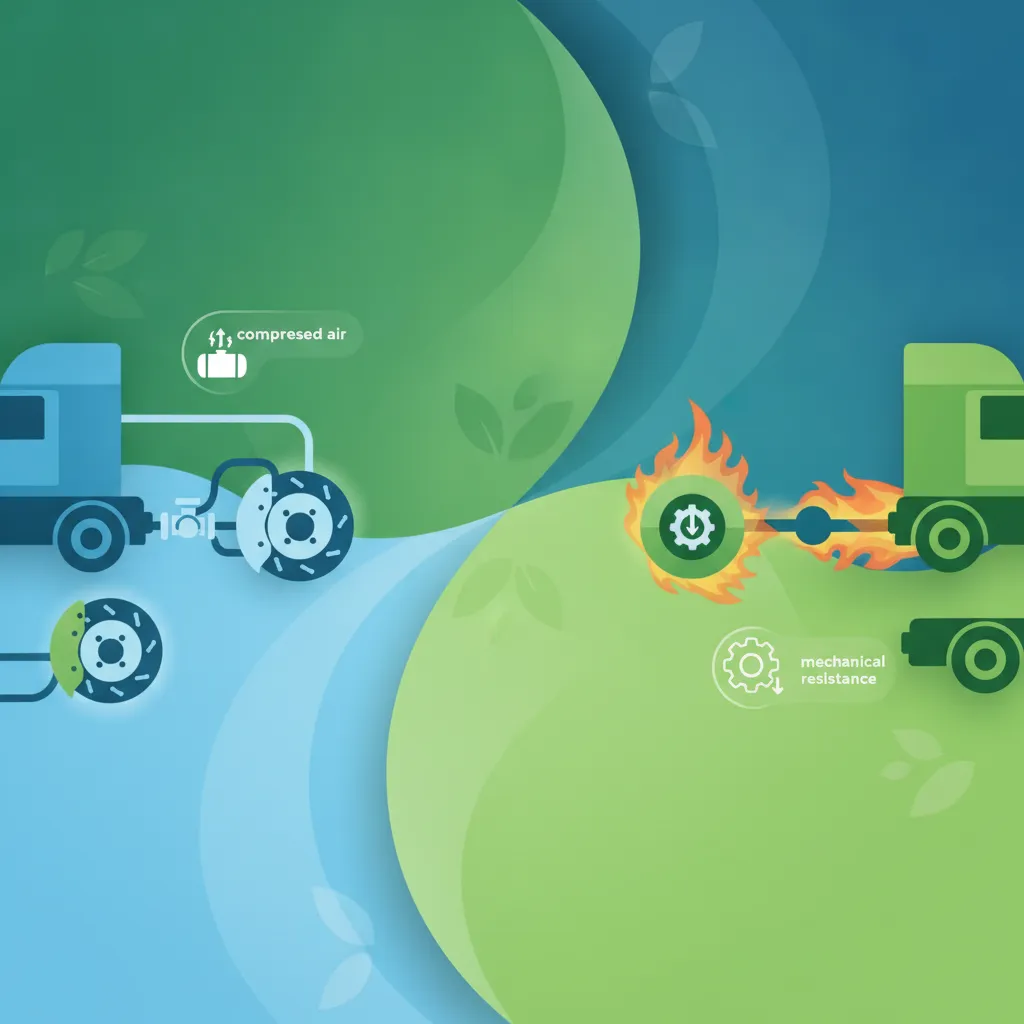
Understanding Braking Systems: Air Brakes and Retarders lesson image

Understanding Braking Systems: Air Brakes and Retarders

Large passenger vehicles rely on powerful air brake systems. This lesson explains how these systems work, including the importance of monitoring air pressure. It also details the function and proper use of auxiliary braking systems (retarders) to control speed on long descents and reduce wear on the service brakes.
Swiss Driving Theory DPassenger Vehicle Construction, Controls, and Pre-Trip Inspections
View lesson
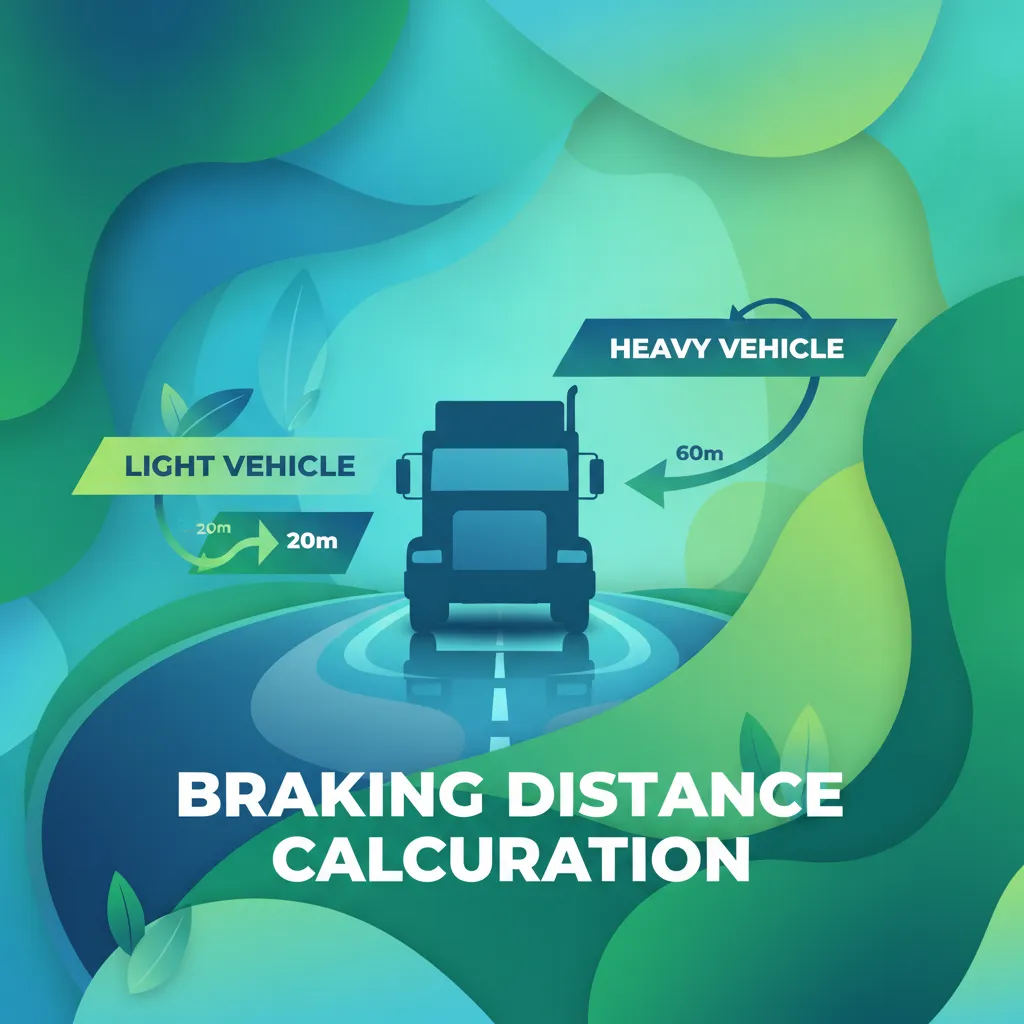
Calculating Braking Distance for Heavy Vehicles lesson image

Calculating Braking Distance for Heavy Vehicles

The immense mass of a loaded truck means its braking distance is far greater than that of a car. This lesson breaks down total stopping distance into reaction distance and braking distance, explaining how speed, weight, and road conditions have an exponential effect. It reinforces the necessity of maintaining a significantly larger following distance to ensure enough space to stop safely in an emergency.

Swiss Truck Driving Theory (C/C1)Heavy-Vehicle Braking Systems, Speed, Distance and Downhill Control
View lesson
Braking in Adverse Weather Conditions lesson image

Braking in Adverse Weather Conditions

Wet or icy roads drastically reduce tyre grip and can double or triple braking distances. This lesson stresses the importance of significantly reducing overall speed and increasing following distances in such conditions. It advises on using brakes with extreme care to avoid skidding and explains how the vehicle's retarder should be used with caution as it can cause the drive wheels to lock up on slippery surfaces.

Swiss Truck Driving Theory (C/C1)Heavy-Vehicle Braking Systems, Speed, Distance and Downhill Control
View lesson
Specific Challenges of Swiss Mountain Passes and Gradients lesson image

Specific Challenges of Swiss Mountain Passes and Gradients

Driving in the Alps requires a high level of skill and vehicle sympathy. This lesson covers techniques for climbing steep gradients by selecting the correct gear to maintain momentum without straining the engine. It reiterates the critical importance of using low gears and auxiliary brakes for descending, to ensure the service brakes remain cool and effective for the entire descent.

Swiss Truck Driving Theory (C/C1)Rural Roads, Mountain Roads, Motorways, Tunnels, Weather and Long-Distance Risks
View lesson
Safe Driving Techniques for Swiss Mountain Passes lesson image

Safe Driving Techniques for Swiss Mountain Passes

Driving a large vehicle on mountain passes is a demanding skill. This lesson covers selecting the correct gear for both ascents and descents to maintain control and avoid overheating the brakes. It also explains the specific priority rules that apply on mountain roads and the importance of being aware of sudden weather changes.
Swiss Driving Theory DDriving on Rural Routes, Mountain Roads, Motorways, and in Adverse Conditions
View lesson
Motorway Driving: Lane Discipline, Speed, and Exits lesson image

Motorway Driving: Lane Discipline, Speed, and Exits

Motorway driving involves high speeds and requires constant concentration. This lesson covers correct lane discipline, safe procedures for joining and leaving the motorway, and techniques for overtaking other large vehicles. Maintaining appropriate speed and a safe following distance is emphasized throughout.

Swiss Driving Theory DDriving on Rural Routes, Mountain Roads, Motorways, and in Adverse Conditions
View lesson
Understanding Total Stopping Distance: Factors and Calculation lesson image

Understanding Total Stopping Distance: Factors and Calculation

This lesson breaks down total stopping distance into its two components: thinking (reaction) distance and braking distance. You will learn how factors like speed, vehicle weight, driver fatigue, and road surface conditions dramatically affect how long it takes to come to a complete stop. This understanding is critical for proactive hazard management.
Swiss Driving Theory DVehicle Dynamics: Smooth Control, Speed, Braking, and Following Distance
View lesson
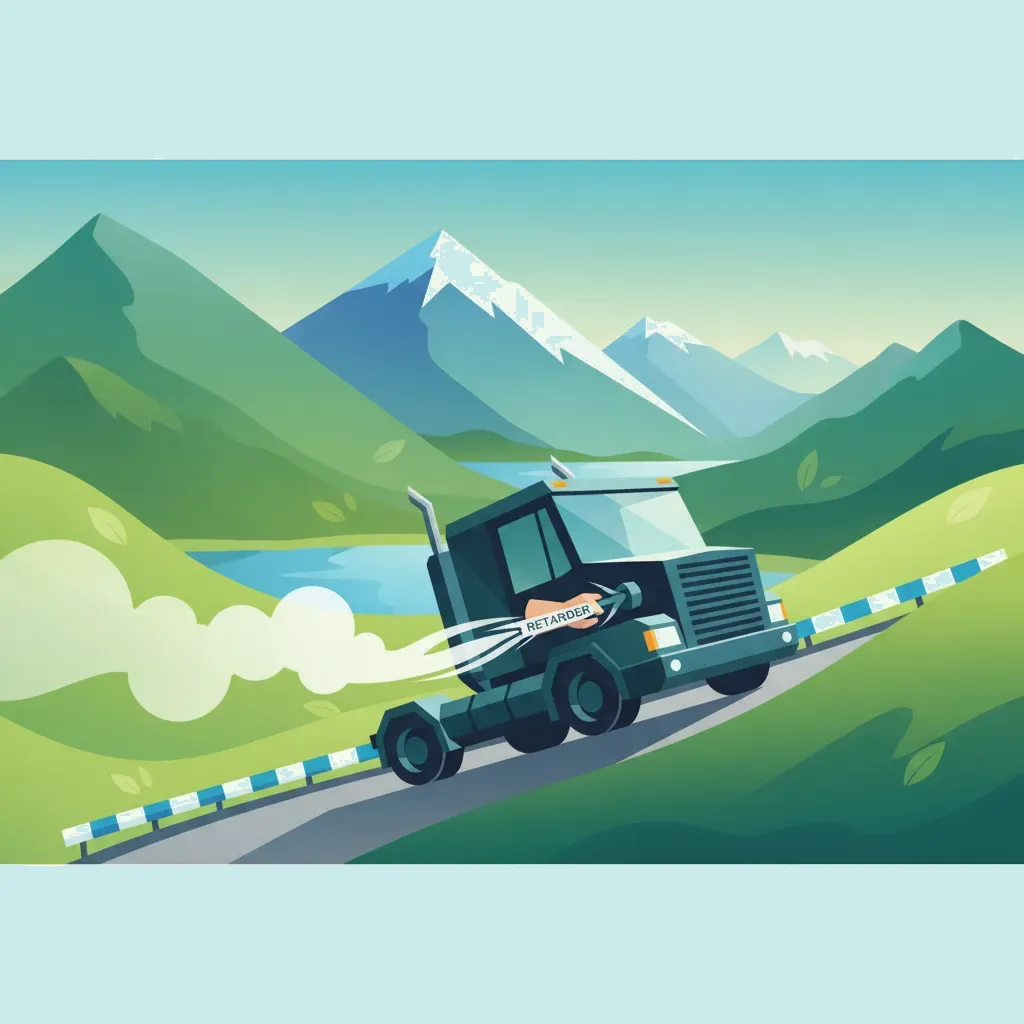
Correct Use of Auxiliary Brakes (Retarders) on Descents lesson image

Correct Use of Auxiliary Brakes (Retarders) on Descents

Relying solely on the service brakes on a long downhill stretch can lead to overheating and complete brake failure (brake fade). This lesson explains the function of auxiliary brakes like retarders. You will learn how and when to engage them to maintain a safe, controlled speed, preserving the main brakes for when they are truly needed.

Swiss Driving Theory DDriving on Rural Routes, Mountain Roads, Motorways, and in Adverse Conditions
View lesson
Motorway Driving: Lane Discipline, Overtaking, and Following Distances lesson image

Motorway Driving: Lane Discipline, Overtaking, and Following Distances

Motorway driving requires constant concentration due to high speeds. This lesson emphasizes the importance of staying in the right-hand lane unless overtaking and the specific restrictions on lorry overtaking in Switzerland. It reinforces the need for a following distance of at least four seconds to compensate for the vehicle's long stopping distance and provides guidance on safely merging and exiting.
Swiss Truck Driving Theory (C/C1)Rural Roads, Mountain Roads, Motorways, Tunnels, Weather and Long-Distance Risks
View lesson
Safe Downhill Driving Techniques and Gear Selection lesson image

Safe Downhill Driving Techniques and Gear Selection

Controlling a heavy vehicle on a steep downhill grade requires a specific technique to avoid disaster. This lesson teaches the golden rule: select a low gear before starting the descent, one that is low enough to control the speed with minimal use of the service brakes. It explains how to effectively combine this with the engine brake or retarder to maintain a safe, steady speed and keep the service brakes cool and ready for an emergency.

Swiss Truck Driving Theory (C/C1)Heavy-Vehicle Braking Systems, Speed, Distance and Downhill Control
View lesson

Passenger Comfort Braking Strategies for Swiss Bus Drivers

Learn advanced strategies for smooth and progressive braking specifically designed to enhance passenger comfort and prevent falls. Essential theory for Category D drivers in Switzerland.

passenger comfortsmooth brakingCategory D drivingbus driver theorysafety techniques
The Importance of a Smooth and Comfortable Ride lesson image

The Importance of a Smooth and Comfortable Ride

A key aspect of professionalism is the ability to provide a smooth ride. This lesson explains how harsh inputs to the accelerator, brakes, and steering can affect passenger comfort and safety. You will learn anticipation and vehicle control techniques to minimize G-forces and ensure a stable, pleasant journey for everyone on board.

Swiss Driving Theory DPassenger Safety, Comfort, Accessibility, and Conduct
View lesson
Understanding Braking Systems: Air Brakes and Retarders lesson image

Understanding Braking Systems: Air Brakes and Retarders

Large passenger vehicles rely on powerful air brake systems. This lesson explains how these systems work, including the importance of monitoring air pressure. It also details the function and proper use of auxiliary braking systems (retarders) to control speed on long descents and reduce wear on the service brakes.

Swiss Driving Theory DPassenger Vehicle Construction, Controls, and Pre-Trip Inspections
View lesson
How Vehicle Dimensions and Weight Affect Handling and Stability lesson image

How Vehicle Dimensions and Weight Affect Handling and Stability

Buses have a high centre of gravity, making them susceptible to rollover forces. This lesson explains how factors like passenger load, luggage placement, and speed affect vehicle stability. Understanding these principles is essential for safe cornering, navigating roundabouts, and handling the vehicle in strong crosswinds.

Swiss Driving Theory DVehicle Dynamics: Smooth Control, Speed, Braking, and Following Distance
View lesson
Safe Approach and Positioning at Bus Stops lesson image

Safe Approach and Positioning at Bus Stops

The approach to a stop sets the stage for a safe passenger exchange. This lesson covers signalling in good time, decelerating smoothly, and aiming for a final position that is close and parallel to the kerb. Proper positioning minimizes the step for passengers and prevents them from having to step into traffic.

Swiss Driving Theory DSafe Operations at Bus Stops: Doors, Boarding, and Alighting
View lesson
Rules and Best Practices for Standing Passengers lesson image

Rules and Best Practices for Standing Passengers

Standing passengers are particularly vulnerable to sudden vehicle movements. This lesson covers the driver's responsibility to adapt their driving style when people are standing. It emphasizes even smoother control, heightened awareness, and clear communication to minimize the risk of falls and injuries.
Swiss Driving Theory DPassenger Safety, Comfort, Accessibility, and Conduct
View lesson
Specific Hazards Involving Pedestrians and Cyclists Near Stops lesson image

Specific Hazards Involving Pedestrians and Cyclists Near Stops

A stopped bus creates a significant visual obstruction for other road users. This lesson focuses on the risk of pedestrians stepping out from in front of the bus and cyclists passing unexpectedly on either side. It reinforces the need for exhaustive mirror and blind spot checks before moving off to prevent tragic 'pull-away' accidents.

Swiss Driving Theory DProtecting Vulnerable Road Users and Managing High-Risk Environments
View lesson
Strategic Lane Positioning and Maintaining a Safety Cushion lesson image

Strategic Lane Positioning and Maintaining a Safety Cushion

This lesson moves beyond simply staying within the lines, teaching how to actively position your vehicle within the lane to manage risk. You will learn to create a 'safety cushion' of space around your bus. This proactive approach improves your reaction time and gives other road users more space, reducing the likelihood of conflicts.
Swiss Driving Theory DVehicle Dynamics: Smooth Control, Speed, Braking, and Following Distance
View lesson
Driving in Narrow Streets and Historic City Centres lesson image

Driving in Narrow Streets and Historic City Centres

Driving a bus in older parts of a city requires exceptional spatial awareness and precise control. This lesson focuses on assessing clearances, managing front and rear overhang, and negotiating tight turns around parked cars and buildings. A key theme is slow, careful, and deliberate manoeuvring to avoid contact.
Swiss Driving Theory DNavigating Urban Traffic, Bus Priority, and Public Transport Systems
View lesson
Ensuring Safe Alighting and Departure from the Kerb lesson image

Ensuring Safe Alighting and Departure from the Kerb

Departing from a bus stop is a high-risk manoeuvre. This lesson details the critical sequence of actions: checking all passengers are clear of the doors, performing a comprehensive mirror and blind spot check, signalling, and waiting for a safe gap in traffic. This systematic approach is essential for preventing collisions with overtaking vehicles, cyclists, or pedestrians.
Swiss Driving Theory DSafe Operations at Bus Stops: Doors, Boarding, and Alighting
View lesson
Supervising Passenger Boarding and Movement lesson image

Supervising Passenger Boarding and Movement

The driver must ensure all boarding passengers are safely on board and stable before moving off. This lesson covers managing the flow of passengers, dealing with fares or tickets efficiently, and encouraging people to move away from the doorway. The primary goal is to prevent falls that can occur if the vehicle moves prematurely.

Swiss Driving Theory DSafe Operations at Bus Stops: Doors, Boarding, and Alighting
View lesson

Frequently asked questions about Progressive Braking Techniques for Passenger Comfort

Find clear answers to common questions learners have about Progressive Braking Techniques for Passenger Comfort. Learn how the lesson is structured, which driving theory objectives it supports, and how it fits into the overall learning path of units and curriculum progression in Switzerland. These explanations help you understand key concepts, lesson flow, and exam focused study goals.

Why is progressive braking particularly important for Category D buses?

Buses often carry standing passengers. A sudden stop can cause these passengers to lose their balance and fall, leading to potential injury and liability issues for the driver.

How does progressive braking differ from normal car braking?

While car braking is often more immediate, bus braking requires a gentler, more extended approach to account for the vehicle's massive weight and center of gravity to avoid jolting passengers.

Will I be tested on braking techniques in the Category D theory exam?

Yes, the Swiss theory exam includes questions on vehicle dynamics and safe operation, where understanding how to maintain passenger safety through smooth vehicle handling is a key competency.

What happens if I brake too sharply in the exam scenario?

In both practical scenarios and theoretical evaluations, hard braking indicates poor anticipation and lack of control, which is penalized as it compromises passenger safety and comfort.

Ready to Target Specific Weaknesses in Your Swiss Driving Theory Knowledge?

Pinpoint specific Swiss traffic rules, road signs, or driving situations you need to master. Use the practice search to start a focused revision session now and build confidence for your official driving theory exam.

Search Practice Theory Questions

Continue your Swiss driving theory learning journey

Swiss road signsSwiss article topicsSearch Swiss road signsSwiss driving theory homeSwiss road sign categoriesSwiss driving theory topicsSearch Swiss theory articlesSwiss driving theory coursesSwiss Driving Theory B courseSwiss Driving Theory M courseSwiss Driving Theory D courseSwiss driving theory articlesSwiss driving theory practiceSwiss practice set categoriesSwiss driving licence proceduresSwiss Motorcycle Theory (A) courseSearch Swiss driving theory practiceSwiss driving theory terminology A–ZSwiss driving theory terms and glossarySwiss Truck Driving Theory (C/C1) courseSwiss Signs, Signals, Markings, and Priority Rules unit in Swiss Driving Theory MSwiss Category M Context and First-Rider Responsibility unit in Swiss Driving Theory MRoad Users, Core Behaviour Rules and Safe Communication unit in Swiss Driving Theory BSwiss D, D1, D1E & DE Scope and Professional Responsibility unit in Swiss Driving Theory DSwiss C, C1, C1E & CE Scope and Professional Context unit in Swiss Truck Driving Theory (C/C1)Passenger Vehicle Construction, Controls, and Pre-Trip Inspections unit in Swiss Driving Theory DMotorcycle Construction, Controls, Equipment and Safety Checks unit in Swiss Motorcycle Theory (A)Swiss Category B, Learner Permit, Examination and Driver Responsibility unit in Swiss Driving Theory BSwiss Motorcycle Categories, Licence Scope and Rider Responsibility unit in Swiss Motorcycle Theory (A)Heavy-Vehicle Dimensions, Masses, Axle Loads and Operating Limits unit in Swiss Truck Driving Theory (C/C1)Progressive Braking Techniques for Passenger Comfort lesson in Vehicle Dynamics: Smooth Control, Speed, Braking, and Following DistanceCalculating and Maintaining Safe Following Distances lesson in Vehicle Dynamics: Smooth Control, Speed, Braking, and Following DistanceStrategic Lane Positioning and Maintaining a Safety Cushion lesson in Vehicle Dynamics: Smooth Control, Speed, Braking, and Following DistanceManaging Speed Based on Road, Traffic, and Weather Conditions lesson in Vehicle Dynamics: Smooth Control, Speed, Braking, and Following DistanceUnderstanding Total Stopping Distance: Factors and Calculation lesson in Vehicle Dynamics: Smooth Control, Speed, Braking, and Following DistanceHow Vehicle Dimensions and Weight Affect Handling and Stability lesson in Vehicle Dynamics: Smooth Control, Speed, Braking, and Following Distance