
This lesson teaches professional bus and coach drivers how to calculate and maintain appropriate following distances, moving beyond basic rules to account for vehicle size and mass. It is a critical component of Unit 4, ensuring you can manage safety cushions effectively in diverse road conditions and prepare for your Swiss Category D theory exam.

Lesson content overview
Maintaining an adequate safety cushion is one of the most critical defensive driving skills, particularly for professional drivers operating large passenger vehicles such as buses and coaches. This lesson, part of your Swiss Category D Driving License Theory Course, delves into the specific methods and considerations for calculating and maintaining safe following distances, highlighting why the standard "two-second rule" is insufficient for heavy vehicles and explaining the appropriate adjustments for varying conditions. A thorough understanding of these principles is paramount for passenger safety, vehicle integrity, and compliance with Swiss road traffic regulations.
A safe following distance is the gap maintained between your vehicle and the vehicle ahead, allowing enough time and space to react to sudden changes and brake safely without causing an accident or passenger discomfort. For buses and coaches (Category D vehicles), this distance must be significantly greater than for passenger cars. This is primarily due to their substantially greater mass, which results in much longer braking distances and increased inertia.
The consequences of an insufficient following distance can range from abrupt, uncomfortable stops for passengers to severe rear-end collisions. As a professional driver, your duty of care extends beyond simply avoiding accidents; it includes ensuring a smooth and comfortable journey for all on board. Proper following distance is foundational to achieving this.
The "two-second rule" is a common heuristic for drivers of passenger cars to maintain a minimum safe following distance under ideal conditions. It suggests that you should pick a fixed point on the road, such as a sign or a bridge. Once the vehicle ahead passes that point, you should count "one-thousand-one, one-thousand-two." If your vehicle reaches the same point before you finish counting, you are following too closely.
While effective as a basic guideline for lighter vehicles, this rule is not sufficient for buses and coaches. The physics of motion dictate that a heavier vehicle, carrying more passengers and luggage, requires a much greater distance to come to a complete stop from the same speed compared to a car. Ignoring this fundamental difference significantly increases the risk of a collision.
For Category D vehicles, relying solely on the two-second rule is dangerous and illegal. Professional drivers must implement an extended following distance strategy that accounts for vehicle mass, load, and various road conditions.
To effectively determine a safe following distance, it's essential to understand the components that make up total stopping distance. This is the total linear distance your vehicle travels from the moment you perceive a hazard until it comes to a complete halt. It consists of three distinct phases:
This is the distance your vehicle travels during the time it takes for you to become aware of a hazard. Factors influencing perception distance include driver attentiveness, visibility, and environmental distractions. For an alert driver, this might be less than a second, but it can extend considerably under adverse conditions or if the driver is fatigued.
Once a hazard is perceived, you then need to decide to act (e.g., to brake). Reaction distance is the distance your vehicle travels during this decision-making and action-initiating phase. A typical human reaction time is around one second. However, this can be influenced by factors like driver fatigue, alcohol or drug impairment, and unexpected road events.
This is the distance your vehicle travels from the moment you apply the brakes until it comes to a complete stop. Braking distance is heavily influenced by:
The combined distance traveled by a vehicle from the point a driver perceives a hazard to the point the vehicle comes to a complete stop. It is the sum of perception distance, reaction distance, and braking distance.
For example, at 80 km/h, a passenger car might have a total stopping distance of around 60 metres on dry pavement. A fully loaded bus, however, could require well over 100 metres under the same conditions due to its increased mass and momentum. Recognizing these differences is fundamental to safe driving for Category D license holders.
Given the limitations of the two-second rule, professional bus and coach drivers must employ an extended following distance strategy. This is a dynamic calculation that builds upon a baseline time gap by adding additional seconds based on the vehicle's load and prevailing environmental conditions.
The general formula can be conceptualized as:
Safe Following Time = Baseline Time (for Category D) + Load Factor + Condition Factor
Let's break down each component.
Swiss Road Traffic Regulations stipulate that Category D vehicles must maintain a minimum time gap that allows safe stopping without endangering passengers or other road users. Under normal, dry conditions, this is generally considered to be a minimum of 3 seconds. This additional second compared to cars accounts for the inherent challenges of stopping a large, heavy vehicle.
The number of passengers and any luggage significantly impacts the total mass of a bus or coach, directly affecting its braking distance. A load-adjusted distance means increasing your following time proportionally to the weight carried.
Assess Passenger Count and Luggage: Estimate the total additional mass.
Apply a Weight Factor: For every approximate 1000 kg of additional mass (e.g., roughly 10-15 adult passengers), add an additional 0.5 to 1 second to your baseline following time. This factor can vary slightly depending on the specific vehicle type and manufacturer's recommendations.
Example: A fully loaded coach (e.g., 40 passengers, roughly 4000 kg additional mass) might require an extra 1.5 to 2 seconds beyond the baseline.
Failing to adjust for a full passenger load is a common mistake that can lead to dangerously insufficient stopping distances and significant risk to passengers in the event of an emergency stop.
Environmental factors drastically alter tire grip and visibility, demanding a condition-adjusted distance. Always err on the side of caution and increase your following time when conditions are less than ideal.
Wet Roads (Rain, Light Snow): Add at least 1 second to your following time. Wet surfaces can reduce tire grip by up to 50%, effectively doubling your braking distance.
Snow or Ice: Add at least 2 to 3 seconds or more, depending on the severity. On icy roads, braking distances can increase by a factor of 10 or more. In severe conditions, driving may be unsafe, or speeds must be drastically reduced.
Poor Visibility (Fog, Heavy Rain, Snowfall): Add at least 1 second for reduced visibility. When you cannot see as far ahead, your perception distance increases, and you need more time to react to hazards that appear suddenly.
Gravel or Uneven Surfaces: Add at least 1-2 seconds. These surfaces reduce tire grip and can cause instability, especially under braking.
Downhill Slopes: Add an additional 0.5 to 1 second. Gravity increases your vehicle's momentum on descents, requiring more distance to slow down or stop.
These adjustments are cumulative. A fully loaded bus on a wet, downhill road would require the baseline 3 seconds, plus load adjustment, plus 1 second for wet conditions, plus 0.5-1 second for the downhill grade.
Adhering to specific following distance rules is not just a safety recommendation; it is a legal requirement under Swiss Road Traffic Regulations for Category D drivers. These regulations underscore the heightened responsibility of professional passenger vehicle operators.
Swiss law explicitly mandates that drivers must maintain a distance from the vehicle ahead that allows them to stop safely, even if the vehicle in front brakes abruptly. For large passenger vehicles, this translates into a stricter interpretation of the general rule.
Drivers of Category D vehicles must ensure their following distance is sufficient to bring the vehicle to a complete stop without endangering passengers or other road users, typically meaning a minimum time gap of 3 seconds under normal, dry conditions.
This minimum 3-second gap for buses and coaches is a baseline. Drivers are legally obliged to increase this distance further to account for the actual load, vehicle speed, road conditions (e.g., wet, icy, gravel), and visibility. Failure to comply can result in fines, license penalties, and, in severe cases, criminal charges if an accident occurs.
While not directly defining following distance in seconds, other Swiss regulations indirectly reinforce the need for flexible following distances:
Always remember that the minimum legal following distance is a starting point. Your professional judgment dictates increasing that distance significantly whenever conditions are less than ideal.
Even experienced drivers can fall into common traps regarding following distances. Recognizing these pitfalls is crucial for maintaining a high standard of safety.
Maintaining a safe following distance is a dynamic process that requires constant re-evaluation of the driving environment.
When driving near pedestrians, cyclists, or school buses, your following distance considerations expand. You must anticipate sudden movements, especially around crosswalks, bus stops, and school zones. An increased safety cushion provides the crucial time needed to react to children or cyclists appearing unexpectedly.
An adequate following distance creates a "safety cushion" around your vehicle. This cushion isn't just ahead; it involves maintaining space to the sides as well. Strategic lane positioning, as discussed in other lessons, complements safe following distance by providing escape routes in an emergency and enhancing visibility. For example, positioning yourself slightly to one side of your lane (without entering another) can open up your line of sight further down the road, giving you more time to react.
Let's look at how the extended following distance rule applies in typical driving situations for Category D vehicles.
Mastering the calculation and maintenance of safe following distances is fundamental to responsible professional driving in the Swiss Category D Driving License Theory Course. It directly impacts the safety and comfort of your passengers, the longevity of your vehicle, and your compliance with legal obligations.
Remember these essential principles:
By integrating these concepts into your daily driving practice, you will significantly enhance road safety for yourself, your passengers, and all other road users.
Safe following distance for Category D vehicles requires abandoning the standard two-second rule and adopting an extended following distance strategy based on a 3-second baseline that is adjusted for vehicle load and environmental conditions. The total stopping distance is the sum of perception, reaction, and braking distances, each influenced by factors such as speed, mass, brake condition, road surface, and gradient. Swiss law mandates that professional drivers maintain distances sufficient to stop safely, with wet conditions requiring at least 1 additional second and icy conditions requiring 2 to 3 or more. These adjustments are cumulative, meaning a fully loaded bus on a wet downhill road combines baseline time plus load factor plus each applicable condition factor to determine the minimum safe gap.
A short set of high-value points that capture the most important learning from this lesson.
The two-second rule is insufficient for buses and coaches due to their greater mass and longer braking distances.
Total stopping distance consists of perception distance, reaction distance, and braking distance, all affected by vehicle load and conditions.
Category D vehicles must maintain a minimum 3-second baseline following gap under normal dry conditions.
Following distance adjustments are cumulative: baseline time plus load factor plus condition factor.
Swiss Road Traffic Regulations (VRV) legally require drivers to maintain distances sufficient for safe stopping, accounting for actual load and conditions.
Explore all units and lessons included in this driving theory course.
Heavy vehicles like buses require significantly longer stopping distances than cars because of increased mass and inertia.
Perception distance is affected by driver alertness and visibility; reaction distance depends on human decision time; braking distance is influenced by speed, mass, brakes, road surface, tires, and gradient.
Wet roads can reduce tire grip by up to 50%, effectively doubling braking distance and requiring at least 1 additional second.
Load adjustments: for every ~1000 kg of additional mass, add 0.5 to 1 second to your baseline following time.
On icy roads, braking distances can increase by a factor of 10 or more, demanding 2 to 3 additional seconds minimum.
Assuming a two-second gap is sufficient for buses, which becomes dangerously inadequate on wet or slippery surfaces.
Failing to adjust following distance when the vehicle is fully loaded with passengers and luggage, which dramatically increases braking distance.
Not accounting for downhill slopes, where gravity increases momentum and extends stopping distance.
Over-relying on adaptive cruise control systems without manually adjusting for adverse conditions or heavy loads.
Misjudging speed changes on curves where blind spots restrict visibility and sudden stops may occur.
Lesson content overview
A short set of high-value points that capture the most important learning from this lesson.
The two-second rule is insufficient for buses and coaches due to their greater mass and longer braking distances.
Total stopping distance consists of perception distance, reaction distance, and braking distance, all affected by vehicle load and conditions.
Category D vehicles must maintain a minimum 3-second baseline following gap under normal dry conditions.
Following distance adjustments are cumulative: baseline time plus load factor plus condition factor.
Swiss Road Traffic Regulations (VRV) legally require drivers to maintain distances sufficient for safe stopping, accounting for actual load and conditions.
Explore all units and lessons included in this driving theory course.
Heavy vehicles like buses require significantly longer stopping distances than cars because of increased mass and inertia.
Perception distance is affected by driver alertness and visibility; reaction distance depends on human decision time; braking distance is influenced by speed, mass, brakes, road surface, tires, and gradient.
Wet roads can reduce tire grip by up to 50%, effectively doubling braking distance and requiring at least 1 additional second.
Load adjustments: for every ~1000 kg of additional mass, add 0.5 to 1 second to your baseline following time.
On icy roads, braking distances can increase by a factor of 10 or more, demanding 2 to 3 additional seconds minimum.
Assuming a two-second gap is sufficient for buses, which becomes dangerously inadequate on wet or slippery surfaces.
Failing to adjust following distance when the vehicle is fully loaded with passengers and luggage, which dramatically increases braking distance.
Not accounting for downhill slopes, where gravity increases momentum and extends stopping distance.
Over-relying on adaptive cruise control systems without manually adjusting for adverse conditions or heavy loads.
Misjudging speed changes on curves where blind spots restrict visibility and sudden stops may occur.
Explore search topics learners often look for when studying Calculating and Maintaining Safe Following Distances. These topics reflect common questions about road rules, driving situations, safety guidance, and lesson level theory preparation for learners in Switzerland.
Browse additional driving theory lessons that cover connected traffic rules, road signs, and common driving situations related to this topic. Improve your understanding of how different rules interact across everyday traffic scenarios.
Explore practical examples of calculating and maintaining safe following distances for buses and coaches in various Swiss driving conditions, focusing on real-world hazards and common mistakes.
This lesson focuses on calculating total stopping distance, incorporating perception-reaction distance and the vehicle's braking distance. You will also learn to determine an appropriate following gap based on speed, visibility, and road conditions. The content emphasizes maintaining a safe distance to avoid collisions, especially in adverse weather.

This lesson focuses on general driving safety in areas with a high concentration of children. It stresses the importance of significantly reducing speed, being prepared for unexpected events, and scanning for children between parked cars. The driver must exhibit maximum vigilance in these high-risk environments at all times.

This lesson teaches riders how to establish and maintain a safe following distance from the vehicle ahead. It introduces the 'two-second rule' as a simple and effective method for gauging a safe gap in ideal conditions. The content also explains why this distance must be increased in wet weather, at night, or when visibility is poor.

This lesson teaches the importance of maintaining a safe following distance to allow adequate time to react and stop. It explains methods like the 'two-second rule' for gauging a safe gap in ideal conditions. The content emphasizes increasing this distance in adverse weather or poor visibility to ensure a sufficient safety margin.
Motorway driving requires constant concentration due to high speeds. This lesson emphasizes the importance of staying in the right-hand lane unless overtaking and the specific restrictions on lorry overtaking in Switzerland. It reinforces the need for a following distance of at least four seconds to compensate for the vehicle's long stopping distance and provides guidance on safely merging and exiting.
This lesson focuses on the rules governing when and how to stop a vehicle safely. You will learn to calculate the required stopping distance, considering reaction time and braking distance. The content also covers how to adjust stopping behavior for different road conditions and safe stopping techniques on inclines to ensure the vehicle remains under control.
Motorway driving involves high speeds and requires constant concentration. This lesson covers correct lane discipline, safe procedures for joining and leaving the motorway, and techniques for overtaking other large vehicles. Maintaining appropriate speed and a safe following distance is emphasized throughout.

Rural roads present challenges like narrow lanes, poor surfaces, sharp bends, and limited visibility. This lesson teaches drivers how to position their large vehicle to maximize space and visibility, anticipate oncoming traffic at blind corners, and be aware of specific rural hazards. These hazards include slow-moving agricultural vehicles, animals on the road, and concealed farm entrances.

This lesson trains drivers to look beyond other vehicles and actively search for pedestrians, cyclists, and motorcyclists, especially those who may be distracted or unaware. It covers common behavioral patterns of different VRU groups. The goal is to see potential hazards developing early and create time and space to react safely.
Rural driving requires a different mindset from urban driving. This lesson covers how to position your vehicle on narrow roads, how to use passing places effectively, and how to anticipate hazards like slow-moving farm machinery, animals, and concealed junctions. Managing vehicle width and height is a key focus.
Understand how vehicle mass, speed, road conditions, and brake efficiency critically influence the total stopping distance of buses and coaches in Switzerland. Essential theory for professional drivers.
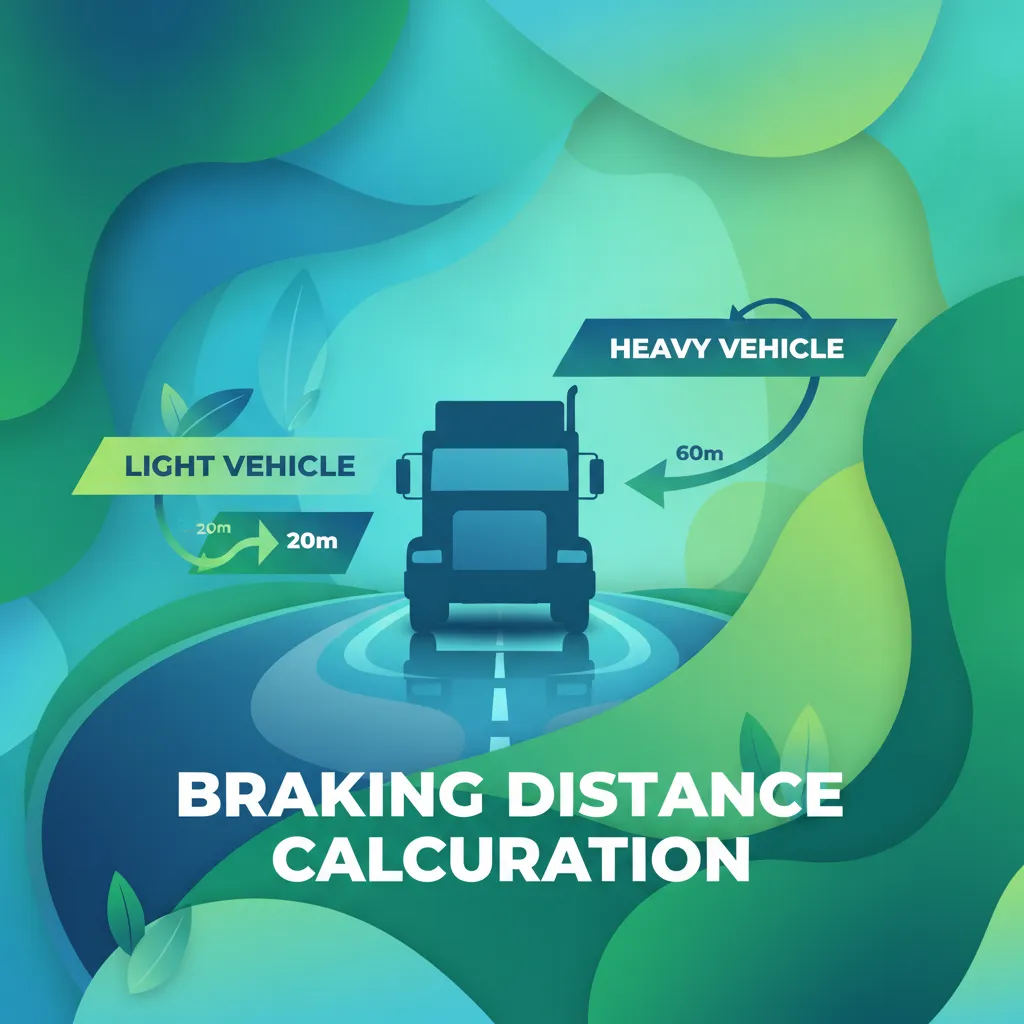
The immense mass of a loaded truck means its braking distance is far greater than that of a car. This lesson breaks down total stopping distance into reaction distance and braking distance, explaining how speed, weight, and road conditions have an exponential effect. It reinforces the necessity of maintaining a significantly larger following distance to ensure enough space to stop safely in an emergency.
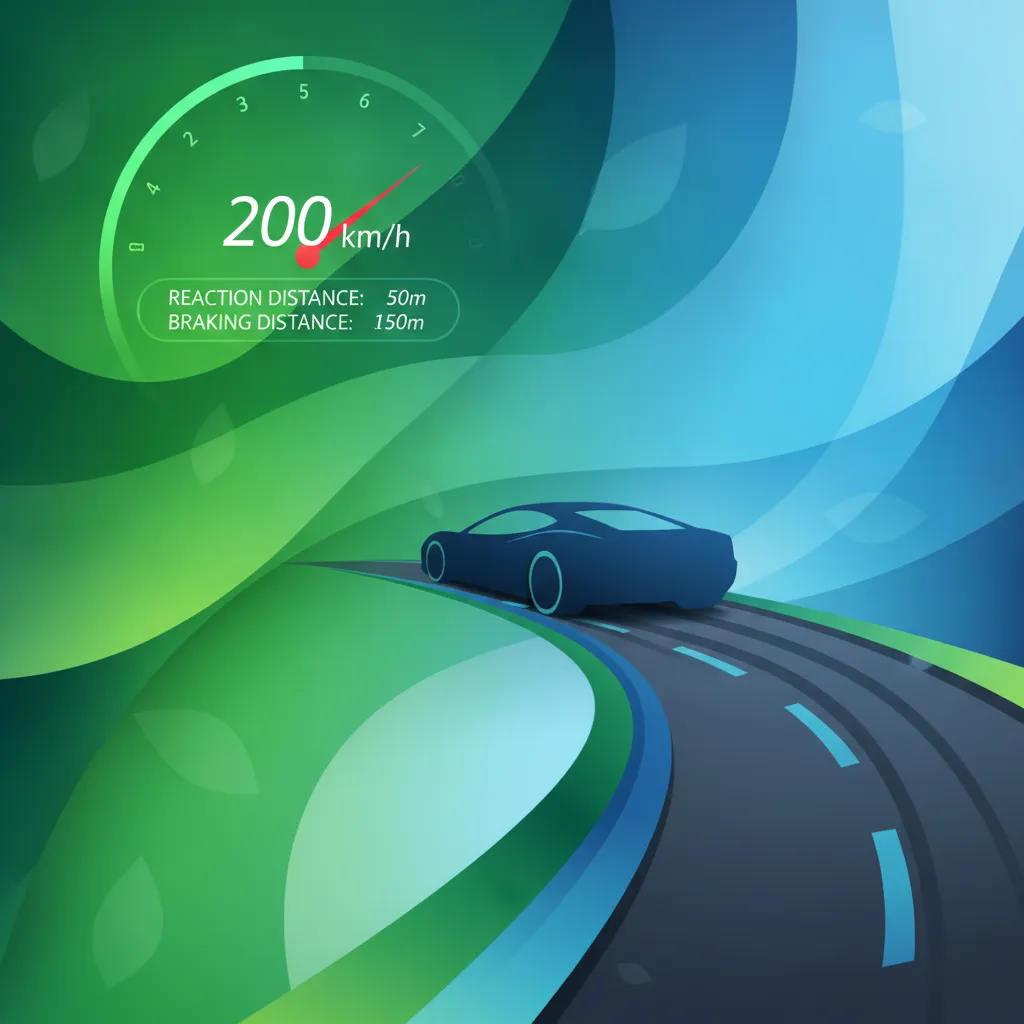
This lesson breaks down total stopping distance into its two components: thinking (reaction) distance and braking distance. You will learn how factors like speed, vehicle weight, driver fatigue, and road surface conditions dramatically affect how long it takes to come to a complete stop. This understanding is critical for proactive hazard management.
This lesson focuses on the rules governing when and how to stop a vehicle safely. You will learn to calculate the required stopping distance, considering reaction time and braking distance. The content also covers how to adjust stopping behavior for different road conditions and safe stopping techniques on inclines to ensure the vehicle remains under control.
This lesson focuses on calculating total stopping distance, incorporating perception-reaction distance and the vehicle's braking distance. You will also learn to determine an appropriate following gap based on speed, visibility, and road conditions. The content emphasizes maintaining a safe distance to avoid collisions, especially in adverse weather.
Motorway driving requires constant concentration due to high speeds. This lesson emphasizes the importance of staying in the right-hand lane unless overtaking and the specific restrictions on lorry overtaking in Switzerland. It reinforces the need for a following distance of at least four seconds to compensate for the vehicle's long stopping distance and provides guidance on safely merging and exiting.

Wet or icy roads drastically reduce tyre grip and can double or triple braking distances. This lesson stresses the importance of significantly reducing overall speed and increasing following distances in such conditions. It advises on using brakes with extreme care to avoid skidding and explains how the vehicle's retarder should be used with caution as it can cause the drive wheels to lock up on slippery surfaces.

This lesson demonstrates how speed dramatically affects a motorcycle's total stopping distance, which includes both reaction time and braking distance. It explains the physics involved and teaches riders how to choose a safe speed based on traffic, weather, and visibility. Adhering to Swiss speed limits and adjusting for conditions is presented as a critical safety skill.
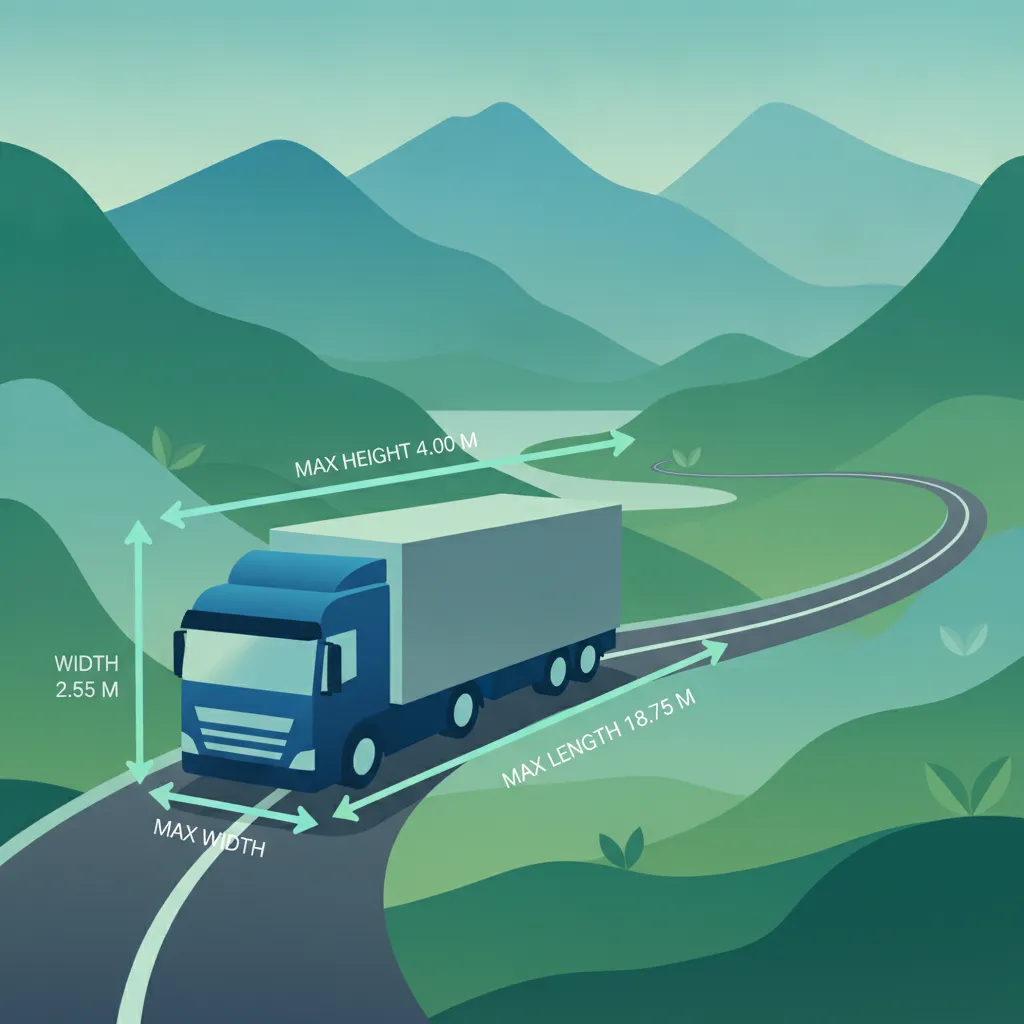
Swiss law strictly regulates the maximum dimensions of commercial vehicles to ensure they can safely navigate the infrastructure. This lesson specifies the standard limits for vehicle height (4.0m), width (2.55m), and length for various lorry and trailer combinations. Adhering to these dimensions is crucial for avoiding collisions with bridges, tunnels, and other structures, and for navigating narrow roads.

Heavy vehicles, especially those with a high centre ofgravity, are susceptible to rolling over. This lesson examines the primary causes, including excessive speed on bends or roundabouts, sudden steering manoeuvres, and the 'sloshing' effect of liquid loads in tankers. It reinforces that maintaining a sensible speed and driving smoothly are the best ways to mitigate this serious risk.
Overloading is a serious offence with severe safety and legal ramifications. This lesson details how excess weight drastically increases braking distances, puts extreme stress on tyres leading to blowouts, and negatively affects steering and overall stability. Furthermore, it discusses the substantial fines, potential license withdrawal, and driver liability that result from violating Swiss weight regulations.
Find clear answers to common questions learners have about Calculating and Maintaining Safe Following Distances. Learn how the lesson is structured, which driving theory objectives it supports, and how it fits into the overall learning path of units and curriculum progression in Switzerland. These explanations help you understand key concepts, lesson flow, and exam focused study goals.
The two-second rule is designed for passenger cars. Because buses and coaches have significantly more mass and different braking systems, their stopping distance is much longer. Professional drivers must maintain a larger safety cushion, often three seconds or more, to compensate for vehicle weight and reaction time.
A fully loaded bus or coach has a much higher momentum than an empty one, which significantly increases the required braking distance. You must adjust your following distance to be more conservative whenever you are transporting passengers or heavy luggage.
Yes, absolutely. In rain, snow, or ice, the road surface friction is reduced, and stopping distances increase dramatically. You should significantly increase your following distance beyond the dry-weather standard to ensure you have enough time and space to stop safely.
Total stopping distance is the sum of reaction distance (the distance travelled while the driver perceives a hazard and moves their foot to the brake) and braking distance (the distance covered while the brakes are applied). Always remember that speed, road conditions, and vehicle mass are the key variables in these calculations.
Pinpoint specific Swiss traffic rules, road signs, or driving situations you need to master. Use the practice search to start a focused revision session now and build confidence for your official driving theory exam.