
This lesson addresses the critical impact of environmental conditions on driving safety, focusing on challenges posed by rain, fog, and darkness. As part of the Hazard Perception & Defensive Driving unit, it teaches you to apply DGT safety recommendations for adjusting your driving behaviour, using appropriate lighting, and maintaining safe distances. Mastering these skills is essential for both your Spanish driving theory exam and safe real-world driving.
Lesson content overview
Driving requires constant awareness and the ability to react quickly to unforeseen events. However, environmental conditions such as rain, fog, snow, ice, and darkness significantly diminish a driver's ability to see and respond safely. This lesson explores how these factors influence driving safety, detailing the essential adjustments in speed, lighting, and vehicle handling mandated by Spanish DGT (Dirección General de Tráfico) regulations and best practices. Mastering these concepts is crucial for securing your Spanish driving license (Categories B & BE) and ensuring road safety.
Visibility is a driver's most critical sense. It refers to the maximum distance at which you can clearly perceive road features, traffic signs, other vehicles, and potential hazards. When visibility is reduced, the time available to detect a hazard, process the information, and execute a safe maneuver shrinks considerably. This directly impacts your safe driving speed, as you must always be able to stop your vehicle within the distance you can see ahead.
Reduced visual perception is the diminished ability to see due to environmental factors. In darkness, the human eye's ability to distinguish colors and depth is impaired. In fog, tiny water droplets scatter light, creating a bright "wall" that high beams cannot penetrate and can even worsen. Rain, snow, and hail create visual clutter and reflections, further obscuring the view. These phenomena extend the perception-reaction distance, which is the distance your vehicle travels from the moment you identify a hazard until you start to react.
The stopping distance is the total distance your vehicle travels from the moment you perceive a hazard until it comes to a complete halt. It consists of two main parts:
Adverse conditions drastically increase both components. For example, at 80 km/h, a typical dry-road stopping distance might be around 46 metres. On a wet road, this can easily extend to 71 metres or more, and on icy roads, it can be three or four times longer. This emphasizes why speed adaptation and following distance adjustment are non-negotiable in challenging conditions.
Correct use of your vehicle's lighting system is fundamental for both seeing and being seen, especially in conditions of reduced visibility. Spanish DGT regulations are strict on lighting requirements to ensure maximum safety for all road users.
Dipped beams, also known as low beams or luces de cruce in Spanish, are the standard headlights for normal night driving on both lit and unlit roads. They provide sufficient forward illumination without dazzling oncoming drivers or those you are following.
You must use dipped beams:
High beams, also known as full beams or luces de carretera / largas, provide maximum illumination and are designed for use on dark, unlit roads where there is no oncoming traffic and you are not following another vehicle closely.
You must immediately switch from high beams to dipped beams when:
Using high beams incorrectly can blind other drivers, leading to dangerous situations. Always be ready to dim your lights proactively.
Fog lights are specialized lights designed to cut through dense mist, heavy rain, or snow, positioned low on the vehicle to illuminate the road surface directly beneath the fog.
Never use high beams in fog. The light reflects off the water droplets, creating a "wall of light" that reduces your visibility further. Use dipped beams and, if conditions warrant, fog lights. Always switch off fog lights as soon as visibility improves to avoid dazzling other drivers.
Many modern vehicles are equipped with Daytime Running Lights (DRL), which illuminate automatically when the engine starts. These are designed to make your vehicle more visible to others during daylight hours. However, DRLs are not a substitute for dipped beams at night or in conditions of reduced visibility; they do not illuminate the road sufficiently for the driver.
Each type of adverse weather presents unique challenges to drivers, demanding specific adjustments to driving technique. The DGT emphasizes proactive and defensive driving in these conditions.
Rain reduces visibility and significantly decreases tire-road friction. Even light rain can be dangerous as it mixes with oil and dust on the road, creating a slippery film.
Key Adjustments for Rain:
Fog is one of the most dangerous weather conditions as it severely limits visibility, often creating disorienting tunnel vision.
Key Adjustments for Fog:
Snow and ice are particularly hazardous as they dramatically reduce tire grip, making braking, steering, and acceleration extremely difficult.
Key Adjustments for Snow and Ice:
When driving in snow or ice, aim to keep your engine speed (RPM) low to prevent wheel spin. Starting in second gear can provide more gentle torque to the wheels, improving traction.
These two elements are interdependent and crucial for safety in any driving condition, especially when visibility is poor or road grip is reduced.
As discussed, stopping distance is the sum of perception-reaction distance and braking distance. When road conditions are adverse, the braking distance increases substantially because of reduced friction. This means your normal stopping distance is no longer safe.
The following distance is the space maintained between your vehicle and the one ahead. It's best measured as a time gap, which dynamically adjusts to your speed.
Always increase your following distance when visibility is poor, road surfaces are slippery, you are traveling at higher speeds, or your vehicle is heavily loaded or towing a trailer.
Speed adaptation means adjusting your speed not just to the posted limit, but to the actual conditions of the road, weather, traffic, and your vehicle.
Driving at night introduces several unique challenges, even in clear weather, primarily due to reduced light and altered perception.
At night, the range of your vision is limited to the area illuminated by your headlights. This significantly reduces your ability to detect hazards, read road signs, and judge distances. Peripheral vision is also diminished.
Night Driving Precautions:
Pedestrians, cyclists, and motorcyclists are much harder to see at night, especially if they are not wearing reflective clothing or have insufficient lighting.
Your vehicle's condition plays a vital role in maintaining good visibility, regardless of external conditions. Neglecting maintenance can create self-inflicted visibility hazards.
Spanish regulations mandate that your vehicle pass regular technical inspections (ITV), which include checks on your lighting and visibility systems. Driving with faulty lights or wipers can result in fines.
Adhering to DGT regulations is not just about avoiding penalties; it's about adopting safe practices that save lives. Understanding common mistakes helps you avoid them.
Mastering driving in reduced visibility, adverse weather, and at night is a cornerstone of defensive driving. It requires a proactive mindset, understanding the physical limitations imposed by the environment, and strict adherence to DGT regulations. Always remember that your speed should be aligned with the distance you can see, and your following distance should be ample to allow for increased reaction and braking times. Regular vehicle maintenance ensures your safety systems are always ready. By internalizing these principles, you contribute significantly to your safety and the safety of all other road users on Spain's roads.
This lesson covers DGT rules for driving safely in reduced visibility conditions including night, rain, fog, and snow/ice. It explains how visibility directly determines safe speed and stopping distance, with specific numerical thresholds like the 150-metre high beam rule and 50-metre rear fog light activation threshold. The lesson details correct use of dipped beams, high beams, and fog lights according to Spanish regulations, and emphasizes time-based following distance rules (2/3/4 seconds) adapted to weather conditions. Critical mistakes covered include using high beams in fog, neglecting following distance adjustments, and driving without proper lighting in reduced visibility.
A short set of high-value points that capture the most important learning from this lesson.
Your stopping distance must never exceed the distance you can see ahead—speed must always align with visibility.
Use dipped beams (luces de cruce) from sunset to sunrise, in tunnels, and whenever visibility is reduced by rain, fog, or snow.
Switch from high beams to dipped beams when an oncoming vehicle is within approximately 150 metres or when following another vehicle closely.
Rear fog lights must only be used when visibility falls below 50 metres in dense fog, heavy snow, or severe rain—never in normal conditions.
In fog, high beams create a 'wall of light' that worsens visibility; use dipped beams and fog lights instead.
Explore all units and lessons included in this driving theory course.
In rain, apply the three-second following rule; in fog, apply the four-second rule; on icy roads, apply five or more seconds.
At 80 km/h, a typical dry-road stopping distance is around 46 metres, which can extend to 71 metres on wet roads and three to four times longer on ice.
Hydroplaning occurs when tires lose contact with the road surface on water—ease off the accelerator and do not brake suddenly.
Reflective vest must be worn before exiting your vehicle on the roadside in low visibility; emergency triangles must be placed at least 50 metres behind your vehicle.
Daytime Running Lights (DRL) are not a substitute for dipped beams at night or in reduced visibility—they do not illuminate the road adequately.
Using high beams in fog, which causes light to reflect off water droplets and further reduces visibility.
Failing to increase following distance in rain despite reduced traction and longer braking distances.
Driving without headlights at dusk or in light rain, assuming daytime visibility or DRLs are sufficient.
Leaving fog lights on after visibility improves, causing unnecessary glare for other drivers.
Accelerating rapidly on wet or icy surfaces, increasing the risk of hydroplaning or losing traction.
Lesson content overview
A short set of high-value points that capture the most important learning from this lesson.
Your stopping distance must never exceed the distance you can see ahead—speed must always align with visibility.
Use dipped beams (luces de cruce) from sunset to sunrise, in tunnels, and whenever visibility is reduced by rain, fog, or snow.
Switch from high beams to dipped beams when an oncoming vehicle is within approximately 150 metres or when following another vehicle closely.
Rear fog lights must only be used when visibility falls below 50 metres in dense fog, heavy snow, or severe rain—never in normal conditions.
In fog, high beams create a 'wall of light' that worsens visibility; use dipped beams and fog lights instead.
Explore all units and lessons included in this driving theory course.
In rain, apply the three-second following rule; in fog, apply the four-second rule; on icy roads, apply five or more seconds.
At 80 km/h, a typical dry-road stopping distance is around 46 metres, which can extend to 71 metres on wet roads and three to four times longer on ice.
Hydroplaning occurs when tires lose contact with the road surface on water—ease off the accelerator and do not brake suddenly.
Reflective vest must be worn before exiting your vehicle on the roadside in low visibility; emergency triangles must be placed at least 50 metres behind your vehicle.
Daytime Running Lights (DRL) are not a substitute for dipped beams at night or in reduced visibility—they do not illuminate the road adequately.
Using high beams in fog, which causes light to reflect off water droplets and further reduces visibility.
Failing to increase following distance in rain despite reduced traction and longer braking distances.
Driving without headlights at dusk or in light rain, assuming daytime visibility or DRLs are sufficient.
Leaving fog lights on after visibility improves, causing unnecessary glare for other drivers.
Accelerating rapidly on wet or icy surfaces, increasing the risk of hydroplaning or losing traction.
Explore search topics learners often look for when studying Visibility, Weather Influence, and Night Driving Hazards. These topics reflect common questions about road rules, driving situations, safety guidance, and lesson level theory preparation for learners in Spain.
Browse additional driving theory lessons that cover connected traffic rules, road signs, and common driving situations related to this topic. Improve your understanding of how different rules interact across everyday traffic scenarios.
Understand how rain, fog, snow, and darkness affect your ability to see and react. Learn Spanish DGT recommendations for adjusting speed, lighting, and vehicle control in challenging conditions.
This lesson addresses the specific challenges posed by rain and fog, focusing on reduced visibility and loss of traction. It explains the proper use of windshield wipers and fog lights, and the need to adjust speed and increase following distance. The content covers how to prevent and react to hydroplaning (aquaplaning) to maintain vehicle control.

This lesson outlines the proper use and legal requirements of vehicle lighting and mirror systems. It covers headlamps, fog lights, turn signals, and brake lights, clarifying when each must be used according to DGT regulations. The lesson also explains the correct adjustment of rearview and side mirrors and strategies for effective blind-spot monitoring.
This lesson focuses on nighttime driving, emphasizing proper headlight usage and glare management from oncoming vehicles. It discusses DGT regulations for night driving, the appropriate use of high-beam and low-beam headlights, and techniques to reduce eye strain. Additionally, the lesson highlights the signs of driver fatigue and the importance of taking breaks.
This lesson focuses on safe nighttime riding, covering headlight alignment, rear-light visibility, and the use of reflective gear to enhance conspicuity. It explains DGT night riding requirements, including mandatory lighting standards. Topics also include managing glare from oncoming vehicles and mitigating rider fatigue during low-light conditions.
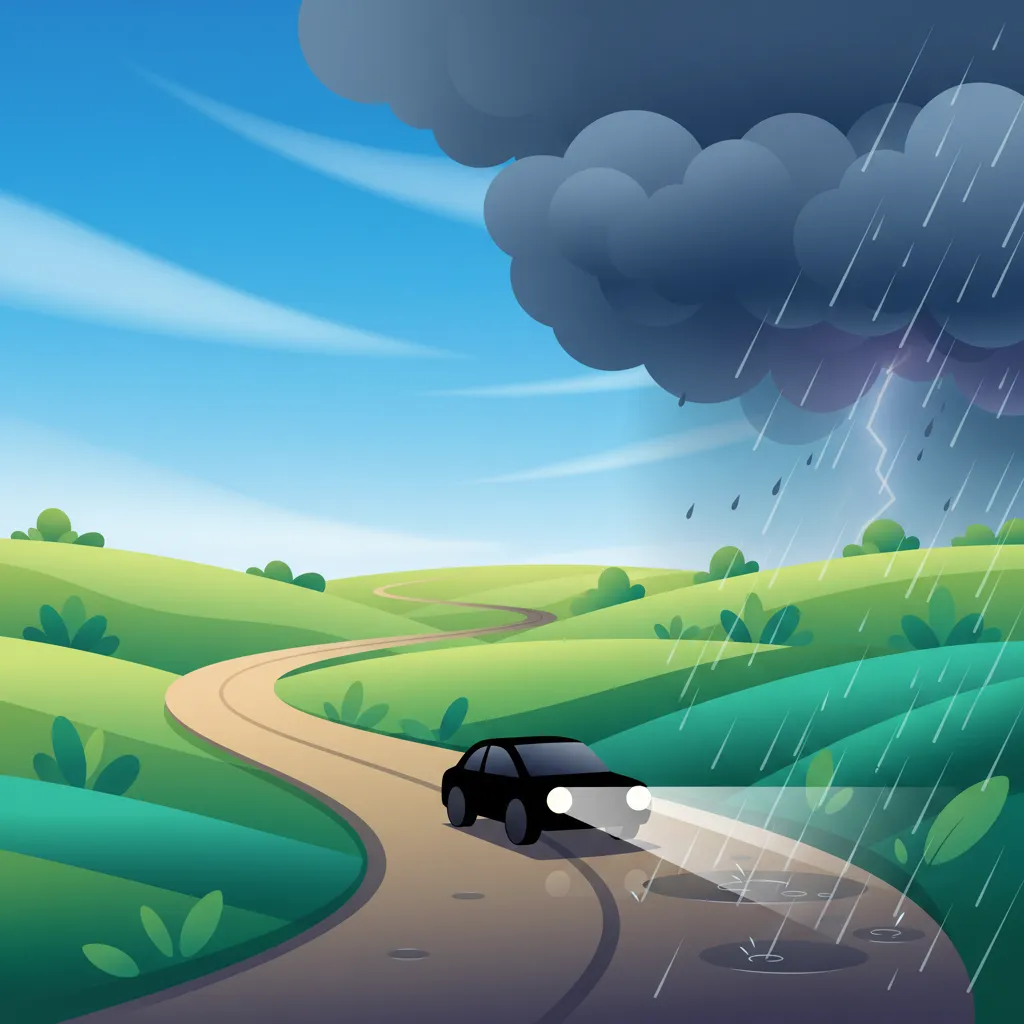
This lesson examines the significant impact of various weather conditions on driving safety, including rain, fog, snow, ice, and high winds. Learners will understand how each condition can affect vehicle traction, reduce visibility, and alter driver perception, learning the appropriate adjustments to speed, following distance, and braking. The module also covers the use of vehicle safety features to mitigate risks in adverse weather.
This lesson teaches drivers how to proactively identify potential road hazards, from potholes and debris to unpredictable driver behavior. It provides specific guidance on how to adjust driving techniques to cope with adverse weather conditions such as heavy rain, fog, high winds, and icy roads. The content focuses on managing reduced visibility and traction to maintain vehicle control and safety.
Master the correct use of dipped beams, high beams, and fog lights according to DGT regulations. Learn when to use each type of lighting to see and be seen in Spain's driving conditions.
This lesson outlines the proper use and legal requirements of vehicle lighting and mirror systems. It covers headlamps, fog lights, turn signals, and brake lights, clarifying when each must be used according to DGT regulations. The lesson also explains the correct adjustment of rearview and side mirrors and strategies for effective blind-spot monitoring.
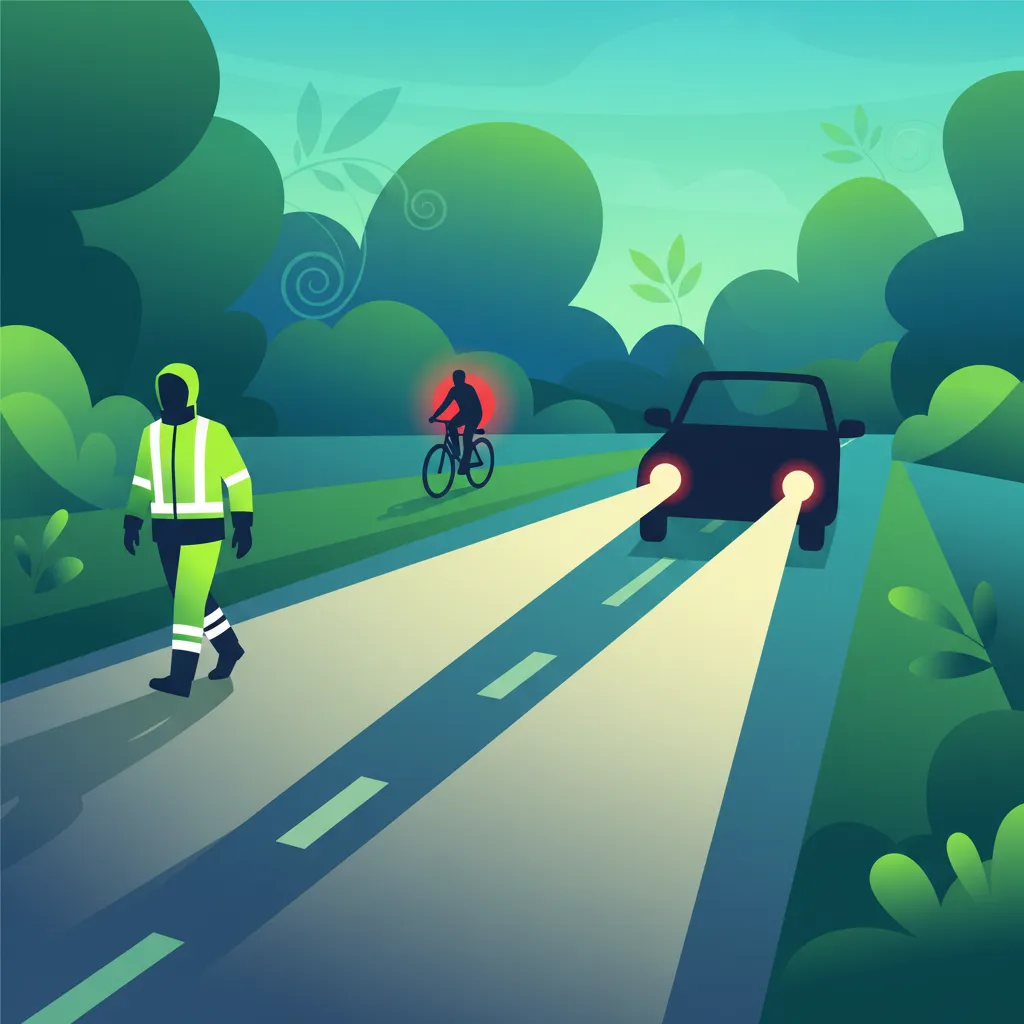
This lesson outlines the mandatory lighting and visibility equipment as per DGT regulations. It covers the correct use of headlights (low and high beams), taillights, and turn signals, ensuring the moped is visible to others, especially at night or in poor weather. The importance of wearing high-visibility or reflective clothing is also emphasized as a critical measure to enhance personal safety by making the rider more conspicuous.
This lesson addresses the specific challenges posed by rain and fog, focusing on reduced visibility and loss of traction. It explains the proper use of windshield wipers and fog lights, and the need to adjust speed and increase following distance. The content covers how to prevent and react to hydroplaning (aquaplaning) to maintain vehicle control.
This lesson focuses on safe nighttime riding, covering headlight alignment, rear-light visibility, and the use of reflective gear to enhance conspicuity. It explains DGT night riding requirements, including mandatory lighting standards. Topics also include managing glare from oncoming vehicles and mitigating rider fatigue during low-light conditions.
This lesson focuses on nighttime driving, emphasizing proper headlight usage and glare management from oncoming vehicles. It discusses DGT regulations for night driving, the appropriate use of high-beam and low-beam headlights, and techniques to reduce eye strain. Additionally, the lesson highlights the signs of driver fatigue and the importance of taking breaks.
This lesson explains each phase of a Spanish traffic light, detailing the specific action required for red, amber, and green signals. It clarifies the meaning of a flashing amber light, which indicates yielding to other traffic or pedestrians, and the red-amber combination. Understanding these signals is fundamental for safely navigating controlled intersections and ensuring compliance with traffic flow rules established by the DGT.
Find clear answers to common questions learners have about Visibility, Weather Influence, and Night Driving Hazards. Learn how the lesson is structured, which driving theory objectives it supports, and how it fits into the overall learning path of units and curriculum progression in Spain. These explanations help you understand key concepts, lesson flow, and exam focused study goals.
Rear fog lights should only be used when visibility is severely reduced, such as in very dense fog, heavy rain, or heavy snow. Front fog lights can be used in these conditions, or in less severe fog, rain, or snow, or on winding roads with many curves. Misusing fog lights can dazzle other drivers and result in a fine.
The DGT recommends significantly increasing your following distance in adverse weather. The general rule of maintaining at least a two-second gap in ideal conditions should be extended to four seconds or more in rain, fog, or icy conditions to allow sufficient braking time due to reduced grip and visibility.
Reduced visibility often accompanies adverse weather conditions that also reduce tire grip (like rain or ice). This combination significantly increases your braking distance. You must reduce your speed considerably and increase your following distance to compensate, ensuring you have enough time and space to react to unforeseen hazards.
While there aren't specific separate speed limits solely for night driving, you must always adjust your speed to conditions, including visibility. In rain, fog, or snow, the general speed limits effectively become lower because you are legally required to drive at a speed that allows you to stop safely within the visible distance ahead.
Common night driving hazards include reduced visibility of pedestrians, cyclists, and animals, difficulty judging distances, glare from oncoming headlights, driver fatigue, and the inability to clearly see road markings or signs. Maintaining a clean windshield, using appropriate lighting, reducing speed, and taking breaks are crucial.
Use our powerful search functionality to pinpoint specific Spanish DGT driving theory practice sets. Filter by road sign categories, traffic law topics, or question difficulty to build custom study sessions and reinforce your knowledge precisely where it matters for your official exam.