
Welcome to the 'Countersteering Principles' lesson! This essential module is part of Unit 4: Balance & Low-Speed Control, within your Spanish Motorcycle Theory Exam preparation for A, A1, and A2 licenses. Mastering countersteering is key to safe and confident motorcycle handling, especially in urban environments and during cornering.

Lesson content overview
Countersteering is the fundamental technique that enables a motorcycle to turn effectively at any speed above a walking pace. Far from simply "turning the handlebars," it involves a precise and brief input opposite to the desired direction of travel, initiating a lean that allows the motorcycle and rider to navigate curves and change lanes safely. Understanding and mastering countersteering is paramount for achieving precise directional control, maintaining stability during turns, and successfully passing the Spanish Motorcycle Theory Exam (A, A1, A2 Licence Prep Course).
This lesson will delve into the physics, biomechanics, and practical application of countersteering. We will explore how it facilitates turn entry, how lean angle is maintained, the crucial role of rider body shift, and how these elements synchronize across the entry, apex, and exit phases of a turn. By grasping these principles, you will develop the foundational skills for advanced cornering and defensive riding.
At its heart, countersteering is the most efficient and stable method for a two-wheeled vehicle to change direction. Many new riders instinctively try to turn the handlebars in the direction they want to go, similar to a bicycle at very low speeds. However, at higher speeds (generally above 10 km/h or 6 mph), this approach delays the turn, reduces control, and can lead to instability. Instead, a brief, deliberate push on the handlebar opposite the desired turn direction causes the motorcycle to lean into the turn.
Imagine you want to turn left. You would briefly push the left handlebar forward (or pull the right handlebar back). This momentary input steers the front wheel slightly to the right. Due to the gyroscopic effect of the spinning wheels and the geometry of the front fork, this slight rightward steering creates a torque that pushes the motorcycle's contact patches to the right, causing the bike to lean to the left. Once the desired lean angle is achieved, the rider can make minor adjustments to the steering to maintain the turn radius.
The effectiveness of countersteering is rooted in fundamental physics. The rapidly spinning wheels of a motorcycle create a gyroscopic effect, which is the tendency of a rotating object to resist changes to its axis of rotation. When you apply a brief steering input (countersteer), you introduce a force that acts on the motorcycle's front wheel. This force, combined with the gyroscopic precession of the wheel, generates a torque that causes the motorcycle to lean.
For example, to lean left, you momentarily steer the front wheel to the right. This slight rightward movement shifts the contact patch of the tires to the right, initiating a lean to the left. As the bike begins to lean, gravity and centripetal force work together to keep the motorcycle stable in the turn. This process happens almost instantaneously, allowing for precise and quick changes in direction that are impossible with direct steering at speed.
To effectively master countersteering, several core principles must be understood and applied simultaneously. These principles build upon each other to ensure a smooth, controlled, and safe turning experience.
Definition: Countersteering initiation is the brief, deliberate turn of the handlebars opposite to the intended direction of travel, which generates a lean into the desired turn.
Purpose: This is the fastest and most stable method to initiate a change of direction at any speed above approximately 10 km/h. It allows for quick adjustments, essential for hazard avoidance and smooth lane changes. Without proper countersteering, a rider would experience a delayed response, making precise control difficult and increasing the risk of collision, particularly at higher speeds where the gyroscopic stability is more pronounced.
To initiate a left turn, push the left handlebar forward. To initiate a right turn, push the right handlebar forward. Think "push left, go left; push right, go right."
Definition: Lean angle is the angle at which the motorcycle and rider tilt into the turn. This angle is crucial for balancing the gravitational force pulling the bike down with the centripetal force required to keep the motorcycle on its curved path.
Purpose: The correct lean angle ensures that the combined center of mass of the motorcycle and rider remains within the bike’s tire footprint, preventing rollover. This balance is dynamic; the faster the speed and tighter the turn radius, the greater the lean angle required. Incorrect lean—either too much or too little for the given speed and turn—can lead to excessive tire load, loss of traction, or the motorcycle drifting wider or tighter than intended.
Definition: Body shift synchronization involves the coordinated movement of the rider’s hips and shoulders to shift their center of mass toward the inside of the turn while countersteering.
Purpose: This rider input complements the steering input, enhancing stability, reducing rider fatigue, and improving traction on the inside tire. By shifting their weight, the rider can effectively reduce the amount of lean required from the motorcycle itself, or increase the available lean angle before the physical limits of the bike are reached. Failure to align body shift with countersteering can lead to "over-lean" (where the bike leans too much for the rider's position) or "under-lean" (where the bike doesn't lean enough), potentially causing a loss of grip or stability.
Definition: A turn is sequentially composed of three distinct stages:
Purpose: Understanding these phases provides a structured framework for timing steering inputs, throttle modulation, and braking. Misjudging these phases can lead to suboptimal turn execution, such as entering a turn too fast, running wide on the exit, or making abrupt lane changes, which can be dangerous and violate traffic regulations.
Delving deeper into each aspect of countersteering provides a clearer picture of how these principles are applied in real-world riding scenarios.
Countersteering is not a single, monolithic action but rather a spectrum of control from subconscious adjustment to deliberate input.
Practical Meaning: If a rider desires to turn left, they briefly push the left handlebar forward (or pull the right handlebar back). This causes the front wheel to steer slightly right, which in turn makes the motorcycle lean left. Once the lean is established, subtle inputs maintain the desired turn.
Common Misunderstandings: A widespread misconception among novice riders is that one should "turn the handlebars into the turn." In reality, this action delays the necessary lean and can significantly reduce control and stability, especially at speed. For instance, in Spain, the Reglamento General de Circulación (RGV) requires that lane changes be executed safely and without abrupt maneuvers. Active countersteering is the technique that allows for smooth, controlled, and compliant lane changes.
The lean angle is critical for safe cornering. It is dynamically determined by your speed and the radius of the turn.
Practical Meaning: A motorcycle traveling at 50 km/h and making a turn with a 30-meter radius will require a lean angle of approximately 15 degrees. This is not a fixed number, as factors like tire grip, road surface, and rider weight also play a role. The RGV expects riders to maintain a safe speed relative to curve radius, and adherence to speed limits is crucial. Exceeding a safe speed for a curve often leads to over-leaning or under-leaning, both of which can result in loss of traction.
Effective body shift is a coordinated movement that complements countersteering. It involves moving the rider’s hips and shoulders to shift their collective center of mass toward the inside of the turn.
Practical Meaning: When executing a left turn, a rider should shift their left hip forward, potentially bring their left knee out slightly, and rotate their shoulders leftward. This movement lowers the combined center of gravity and shifts it inwards, reducing the motorcycle's required lean angle for a given turn and improving stability. The RGV mandates that riders maintain control and do not obstruct other road users. Proper body shift is integral to maintaining stable control, thereby fulfilling this requirement. Keeping the body rigid or upright (a common beginner mistake) can lead to the motorcycle needing to lean excessively, increasing the risk of a slide due to insufficient weight transfer.
Every turn, from a gentle curve on a motorway to a tight urban intersection, can be broken down into three critical phases:
Practical Meaning: Approaching a sweeping right-hand curve, a rider would reduce speed, push the right handlebar forward to initiate the lean, maintain a steady speed or slight acceleration through the apex, and then gradually straighten the bike while accelerating as they exit the curve. Misjudging these phases, such as entering too fast or exiting too early/late, can lead to dangerous situations, including running wide, encroaching on other lanes, or making abrupt corrections. Spanish traffic law requires predictable maneuvers, and precise timing of these phases supports this legal requirement.
Throttle control is not just about speed; it's a vital tool for motorcycle stability and fine-tuning your path through a turn.
Practical Meaning: In a city curve, a rider might briefly roll off the throttle during the entry phase to reduce speed, then smoothly roll it back on at the apex to maintain momentum and stabilize the bike through the remainder of the turn. The RGV requires riders not to accelerate unless it can be performed safely. Smooth throttle management is a core part of safe, controlled riding, including overtaking and navigating curves.
Understanding how countersteering relates to Spanish traffic laws is crucial for both safety and passing your A, A1, or A2 licence exam. The Reglamento General de Circulación (RGV) outlines rules that are directly supported by effective countersteering techniques.
Statement: Riders must signal, check mirrors, and ensure a safe distance before changing lanes (RGV Art. 69).
Applicability: This is mandatory on all road types for overtaking, merging, or simply repositioning.
Rationale: Countersteering provides the precise and smooth directional control necessary to execute a lane change safely and predictably, reducing the risk of collisions with other vehicles.
Example: A rider wishing to move from the right lane to the left lane on a multi-lane road:
Statement: Speed must be adapted to road geometry and traffic conditions; riders must not exceed the speed appropriate for a curve (RGV Art. 61).
Applicability: This applies to all curves, bends, and turns, regardless of their type or location.
Rationale: Excessive speed in a curve dramatically increases the required lean angle, pushing the tires closer to their traction limits and significantly raising the risk of losing control. Controlled countersteering, combined with appropriate speed, allows for safe negotiation of curves.
Example: Approaching a tight hairpin bend on a mountain road:
Statement: Riders may overtake only when it can be done safely, with clear visibility, and without endangering other road users (RGV Art. 38). Overtaking in urban areas is generally restricted.
Applicability: Primarily on highways and rural roads where overtaking is permitted.
Rationale: Countersteering provides the precise maneuverability needed for safe overtaking. It allows for quick, controlled lane changes to move past another vehicle and return to the original lane without erratic movements.
Example: Overtaking a slower vehicle on a rural road:
Statement: Riders must wear suitable protective clothing, an approved helmet, gloves, and boots (RGV Art. 80).
Applicability: Mandatory for all motorcycle use on public roads in Spain.
Rationale: While not directly about countersteering technique, proper protective gear significantly reduces the severity of injuries should a loss of control occur, for example, due to misjudging a turn or experiencing a traction loss.
Example:
Even experienced riders can sometimes make mistakes when applying countersteering principles. Being aware of these common pitfalls can significantly enhance safety.
Late Countersteer Initiation:
Over-steering with Countersteer:
Failure to Signal Before Countersteer:
Inadequate Throttle Modulation During Turn:
Countersteering at Very Low Speeds (Misinterpretation):
Lane Change on Wet Surface Without Adjusting Lean:
Attempting Countersteer While Braking Hard:
The effectiveness and safety of countersteering are highly dependent on external conditions and the specific riding scenario. Adapting your technique is a hallmark of an experienced rider.
Understanding the direct links between your actions and their outcomes is fundamental to safe riding.
This lesson on countersteering is a pivotal point in your Spanish Motorcycle Theory Exam preparation, bridging foundational concepts with advanced riding techniques.
Countersteering is the fundamental and most effective method for initiating a turn on a motorcycle. It involves a brief, deliberate steering input opposite to the intended direction, which causes the bike to lean into the turn due to the gyroscopic effect and specific fork geometry. For the Spanish Motorcycle Theory Exam, remember these critical takeaways:
Countersteering is the fundamental technique for initiating turns on a motorcycle at speeds above walking pace, involving a brief steering input opposite to the desired direction that creates lean through gyroscopic effects. The technique requires synchronized body shift, appropriate lean angle determined by speed and turn radius, and smooth throttle management across the entry, apex, and exit phases of every turn. Understanding these principles directly supports compliance with Spanish traffic regulations including safe lane changes, speed adaptation to curves, and protective gear requirements. Adapting countersteering technique to conditions such as wet roads, strong winds, or heavy loads is essential for maintaining stability and avoiding loss of traction, making this knowledge critical for both safe riding and passing the DGT A, A1, or A2 theory exam.
A short set of high-value points that capture the most important learning from this lesson.
Countersteering requires briefly pushing the handlebar opposite to the desired turn direction, which causes the motorcycle to lean into the turn via gyroscopic effects and fork geometry.
Lean angle is dynamically determined by speed and turn radius: faster speeds and tighter turns require greater lean angles, balanced by centripetal force generated through tire grip.
Effective turning involves three sequential phases: entry (countersteering initiation and speed adjustment), apex (maximum lean with steady throttle), and exit (gradually unwinding lean while accelerating).
Body shift synchronization—moving hips and shoulders toward the inside of the turn—complements steering inputs, reduces required motorcycle lean, and improves overall stability and traction.
Throttle modulation during turns stabilizes the motorcycle; rolling on slightly at the apex helps maintain momentum and control, while abrupt throttle changes can destabilize the bike.
Explore all units and lessons included in this driving theory course.
Push left handlebar forward to lean left; push right handlebar forward to lean right—think 'push left, go left; push right, go right.'
Countersteering is effective above approximately 10 km/h where gyroscopic stability is pronounced; below this speed, passive balance inputs are more appropriate.
The gyroscopic effect from spinning wheels resists changes to rotation axis, creating stability and enabling precise directional control during countersteering.
RGV Article 69 requires signaling before lane changes, Article 61 mandates adapting speed to road geometry, and Article 80 requires mandatory protective gear.
Adverse conditions—wet roads, strong crosswinds, reduced visibility, or heavy loads—require earlier, smoother countersteer inputs and reduced lean angles.
Late countersteer initiation forces abrupt corrections that cause instability, wider turns, or encroachment on adjacent lanes.
Over-steering with excessive countersteering force causes exaggerated lean angles that can exceed tire traction limits, risking front or rear wheel slip.
Abruptly rolling off or chopping the throttle mid-turn shifts weight forward and reduces rear traction, potentially causing rear-wheel slide.
Attempting aggressive active countersteering at very low speeds (below 10 km/h) where passive balance is more effective leads to over-correction and loss of control.
Applying hard front braking simultaneously with significant countersteering inputs while leaned over overloads the front tire and can cause front-end loss of grip.
Lesson content overview
A short set of high-value points that capture the most important learning from this lesson.
Countersteering requires briefly pushing the handlebar opposite to the desired turn direction, which causes the motorcycle to lean into the turn via gyroscopic effects and fork geometry.
Lean angle is dynamically determined by speed and turn radius: faster speeds and tighter turns require greater lean angles, balanced by centripetal force generated through tire grip.
Effective turning involves three sequential phases: entry (countersteering initiation and speed adjustment), apex (maximum lean with steady throttle), and exit (gradually unwinding lean while accelerating).
Body shift synchronization—moving hips and shoulders toward the inside of the turn—complements steering inputs, reduces required motorcycle lean, and improves overall stability and traction.
Throttle modulation during turns stabilizes the motorcycle; rolling on slightly at the apex helps maintain momentum and control, while abrupt throttle changes can destabilize the bike.
Explore all units and lessons included in this driving theory course.
Push left handlebar forward to lean left; push right handlebar forward to lean right—think 'push left, go left; push right, go right.'
Countersteering is effective above approximately 10 km/h where gyroscopic stability is pronounced; below this speed, passive balance inputs are more appropriate.
The gyroscopic effect from spinning wheels resists changes to rotation axis, creating stability and enabling precise directional control during countersteering.
RGV Article 69 requires signaling before lane changes, Article 61 mandates adapting speed to road geometry, and Article 80 requires mandatory protective gear.
Adverse conditions—wet roads, strong crosswinds, reduced visibility, or heavy loads—require earlier, smoother countersteer inputs and reduced lean angles.
Late countersteer initiation forces abrupt corrections that cause instability, wider turns, or encroachment on adjacent lanes.
Over-steering with excessive countersteering force causes exaggerated lean angles that can exceed tire traction limits, risking front or rear wheel slip.
Abruptly rolling off or chopping the throttle mid-turn shifts weight forward and reduces rear traction, potentially causing rear-wheel slide.
Attempting aggressive active countersteering at very low speeds (below 10 km/h) where passive balance is more effective leads to over-correction and loss of control.
Applying hard front braking simultaneously with significant countersteering inputs while leaned over overloads the front tire and can cause front-end loss of grip.
Explore search topics learners often look for when studying Countersteering Principles. These topics reflect common questions about road rules, driving situations, safety guidance, and lesson level theory preparation for learners in Spain.
Browse additional driving theory lessons that cover connected traffic rules, road signs, and common driving situations related to this topic. Improve your understanding of how different rules interact across everyday traffic scenarios.
Explore the physics behind motorcycle lean angles, including centripetal force and gyroscopic effects. Understand how rider balance and lean angle management are critical for controlled turning and stability, crucial for passing your Spanish A licence theory exam.

This lesson examines the optimal body positioning during a turn, covering rider lean, hip shift, and foot placement to maintain balance. It explains how adjusting body posture improves mass distribution through the motorcycle. Different phases of the turn are described, with guidance on how posture should adapt at each stage.

This lesson focuses on counter-steering at higher speeds, highlighting how pre-steer torque initiates a lean. It outlines the rider input timing required for effective torque steer and discusses how speed affects the front-wheel angle necessary for stable cornering. The content includes dynamic lean initiation techniques and DGT guidelines for fast turns.
This lesson explores static balance techniques essential when the motorcycle is stationary or moving at extremely low speeds. The content covers optimal foot placement, body posture, and centre of gravity control to maintain stability. Emphasis is placed on weight distribution between the bike and rider and practical balance drills.

This lesson explores the concept of the traction circle and how slip angle influences grip limits during a curve. Learners study the impact of road camber and surface friction on tyre performance. Strategies for maintaining apex and exit speeds while preventing traction loss are presented, including rider feedback cues.

This lesson explains the physical principles of balance and steering specific to two-wheeled vehicles. It details the concept of counter-steering, where a slight push on the handlebar initiates a lean for turning, and explains how it applies at different speeds. Proper body positioning and weight distribution are also covered as key components for maintaining stability and executing smooth, controlled turns in tight urban environments.

This lesson details the technique of safely reducing speed while entering a corner, known as trail braking. It explains how the motorcycle’s lean angle affects front-wheel load and rear-wheel traction. The content aligns with DGT cornering safety standards to ensure riders execute controlled deceleration without compromising grip.
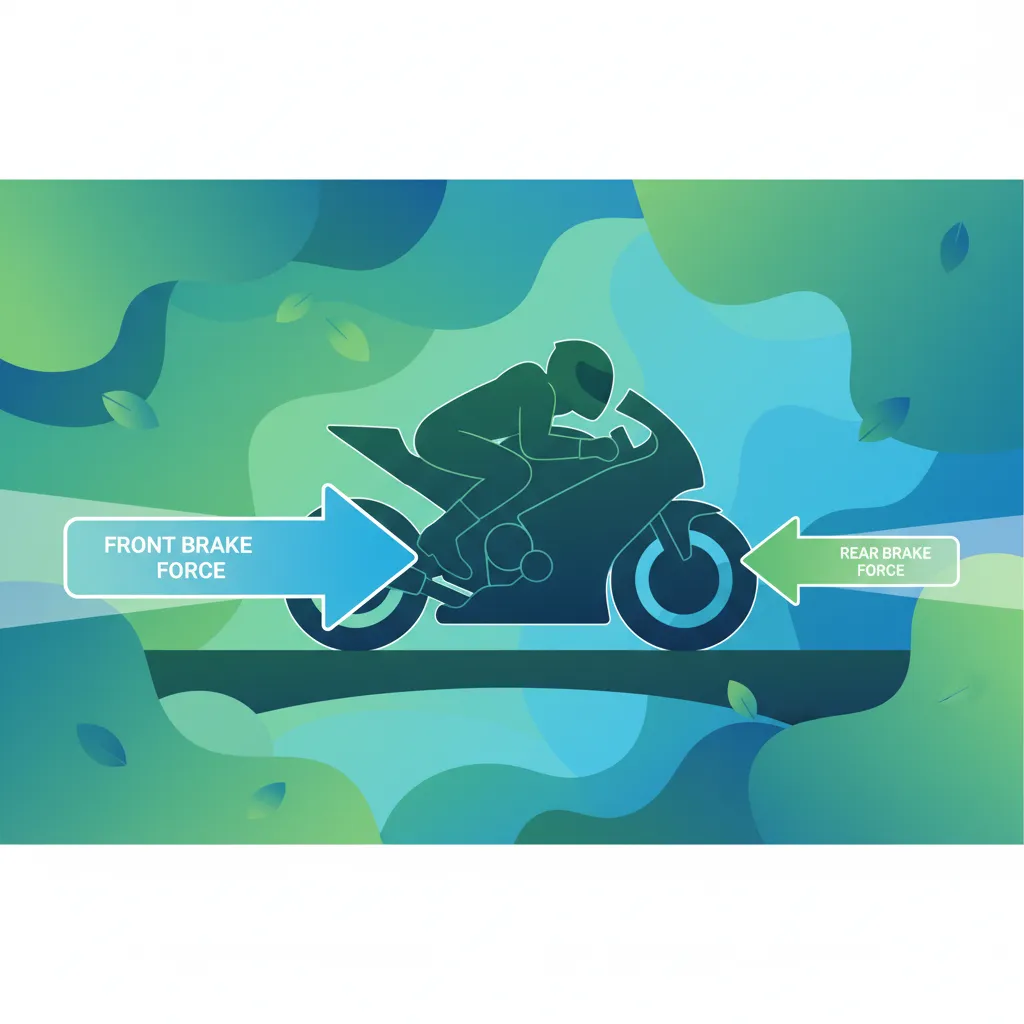
This lesson explores the physics behind brake torque distribution, explaining why the front brake provides greater stopping power due to weight shift during deceleration. It discusses the optimal brake bias for various speeds and surface conditions. Understanding these principles enables riders to modulate braking forces effectively.

This lesson presents advanced cornering scenarios common on Spanish roads, such as mountain hairpins and high-speed autovía exits. It outlines specific techniques for descent control, ascent maneuvers, and safely merging into traffic after cornering. Interaction with cyclists and emergency cornering strategies are also covered in accordance with DGT regulations.
Learn how to adjust motorcycle turning techniques, including countersteering and lean angle, for various conditions like urban traffic, wet roads, and windy weather. This lesson covers essential theory for safe riding and Spanish driving tests.
This lesson presents advanced cornering scenarios common on Spanish roads, such as mountain hairpins and high-speed autovía exits. It outlines specific techniques for descent control, ascent maneuvers, and safely merging into traffic after cornering. Interaction with cyclists and emergency cornering strategies are also covered in accordance with DGT regulations.

This lesson focuses on low-speed manoeuvres within congested urban traffic, detailing techniques for navigating tight corners and weaving through traffic. Learners analyze urban traffic flow, pedestrian zones, and cyclist interactions to anticipate hazards. The lesson also explains DGT regulations regarding slow-speed movement and lane positioning.
This lesson focuses on counter-steering at higher speeds, highlighting how pre-steer torque initiates a lean. It outlines the rider input timing required for effective torque steer and discusses how speed affects the front-wheel angle necessary for stable cornering. The content includes dynamic lean initiation techniques and DGT guidelines for fast turns.

This lesson focuses on adapting braking techniques for wet and slippery roads. Topics include hydroplaning risk, reduced tire friction, and how ABS assists in preventing wheel lock-up. Learners are taught to employ progressive braking, reduce speed, and assess tire tread depth to maintain adequate grip.

This lesson examines the impact of rain, wind, and heat on motorcycle dynamics and rider comfort. It discusses wet road grip, hydroplaning risk, and appropriate speed adaptation to maintain traction. Wind gust compensation techniques are presented, along with methods for managing heat-related tyre pressure changes and rider cooling.

This lesson focuses on defensive maneuvers in mixed traffic environments where various vehicles share the road. It outlines lane discipline, appropriate overtaking safety measures, and strategies for maintaining a safety corridor. The content incorporates DGT defensive guidelines, teaching riders to manage space and anticipate unpredictable driver behavior.
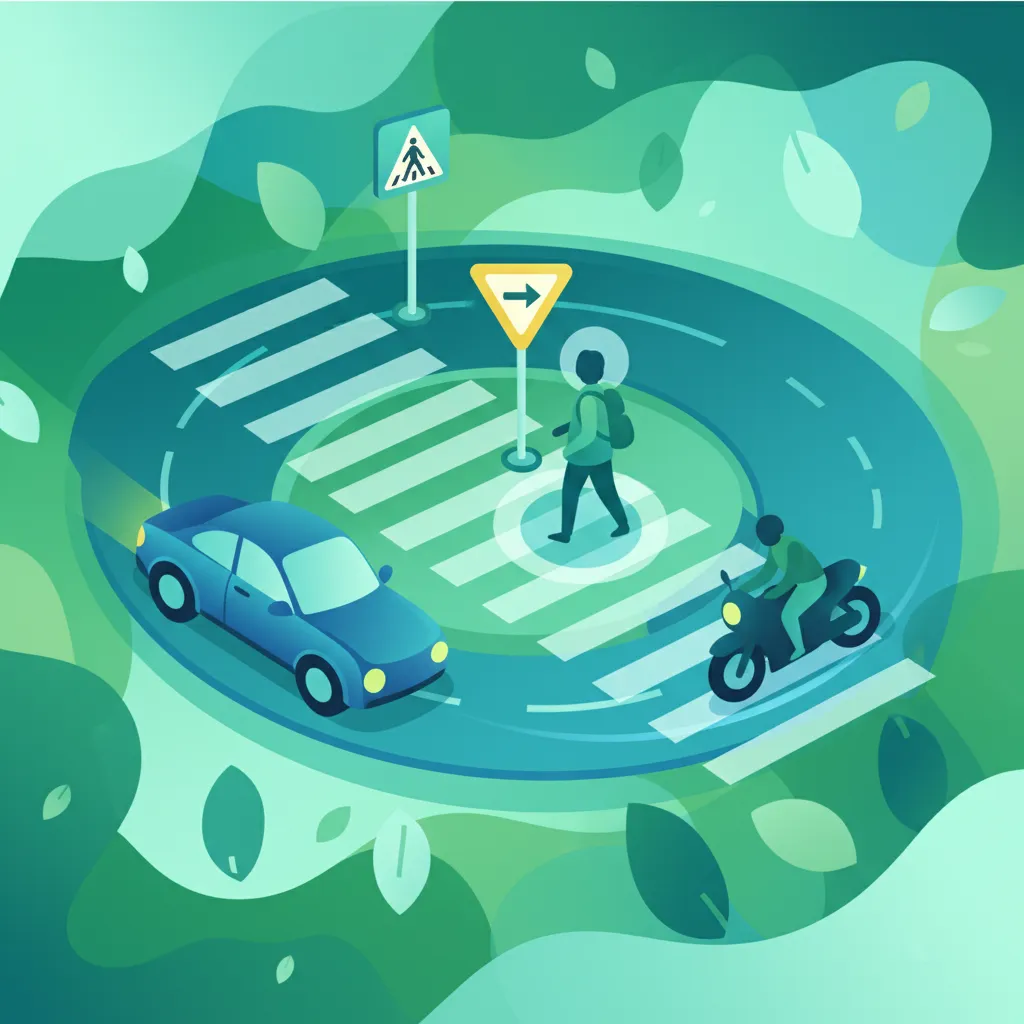
This lesson outlines the proper techniques for negotiating roundabouts and signal-controlled intersections in Spain. It explains priority rules at entry, lane selection based on the intended exit, and yielding to circulating traffic. The content also covers compliance with traffic signals and DGT regulations, including handling cyclist crossings.

This lesson introduces anticipation techniques that improve a rider’s ability to predict potential hazards before they manifest. It covers scanning ahead, evaluating traffic patterns, and applying DGT risk assessment criteria. Emphasis is placed on developing a defensive riding mindset and maintaining safety margins to reduce accident likelihood.
This lesson details the technique of safely reducing speed while entering a corner, known as trail braking. It explains how the motorcycle’s lean angle affects front-wheel load and rear-wheel traction. The content aligns with DGT cornering safety standards to ensure riders execute controlled deceleration without compromising grip.

This lesson explores proper lane positioning, emphasizing strategic selection of traffic lanes for optimal visibility. It explains the importance of rider line of sight and peripheral vision in maintaining situational awareness. The content also covers legal aspects of lane splitting and correct usage of road shoulders, abiding by DGT regulations.
Find clear answers to common questions learners have about Countersteering Principles. Learn how the lesson is structured, which driving theory objectives it supports, and how it fits into the overall learning path of units and curriculum progression in Spain. These explanations help you understand key concepts, lesson flow, and exam focused study goals.
Countersteering works due to gyroscopic forces and trail. When you push forward on the handlebar on one side, the front wheel momentarily turns the opposite way, causing the bike to lean. Once leaned, gravity helps maintain the turn. It's an essential physics principle for stable motorcycle control.
Countersteering is most effective and necessary at speeds above a slow walking pace. At very low speeds, body positioning and subtle handlebar movements become more dominant. However, the principles of initiating a lean through handlebar input are fundamental across most riding speeds.
Common mistakes include not steering correctly in the initial phase, oversteering, or panicking and not allowing the bike to lean. Learners might also try to force the bike into a turn with body weight alone, neglecting the crucial handlebar input. Correcting these requires practice and understanding the physics involved.
The DGT theory exam includes questions on motorcycle control and safety. Understanding countersteering is vital for demonstrating knowledge of how motorcycles manoeuvre, especially in cornering and hazard avoidance scenarios. It shows you grasp fundamental riding dynamics crucial for safe operation on Spanish roads.
Yes, understanding countersteering allows for quicker and more precise evasive manoeuvres. By knowing how to initiate a lean rapidly and safely, you can react more effectively to unexpected obstacles or changes in the road, a critical skill for defensive riding.
Use our powerful search functionality to pinpoint specific Spanish DGT driving theory practice sets. Filter by road sign categories, traffic law topics, or question difficulty to build custom study sessions and reinforce your knowledge precisely where it matters for your official exam.