
Welcome to the 'Anticipation Techniques and Risk Assessment' lesson, a key part of our 'Road Positioning & Traffic Interaction' unit for the Spanish motorcycle theory exam. This lesson builds on your understanding of road rules and positions, equipping you with the crucial skills to anticipate hazards and assess risks proactively before they become critical situations. Mastering these techniques is vital for safe urban riding and passing your DGT theory test.

Lesson content overview
Motorcycle riding on Spanish roads demands a high degree of awareness and foresight. The ability to anticipate potential hazards and accurately assess risks is not merely a recommendation; it is a fundamental pillar of defensive riding and a crucial skill for passing your Spanish DGT motorcycle theory exam for A, A1, and A2 licences. This lesson will equip you with the mental and procedural techniques necessary to predict environmental changes, evaluate traffic situations, and make informed decisions that enhance your safety and confidence on two wheels.
Anticipation is the proactive skill of foreseeing how the road environment might change and what potential dangers could emerge before they fully materialize. For motorcyclists, whose physical vulnerability is higher than that of car drivers, this skill reduces reaction time, enhances decision-making, and significantly minimizes the probability of accidents. Spanish traffic law, particularly through the Dirección General de Tráfico (DGT), emphasizes the rider's responsibility to maintain control and adapt to conditions, making anticipation a legal as well as a practical necessity.
Developing a strong anticipatory mindset means moving beyond simply reacting to immediate threats. Instead, you learn to scan the road ahead, identify evolving patterns in traffic, and apply structured risk assessment criteria to every situation. This proactive approach ensures you maintain adequate safety margins and select optimal road positioning, transforming you into a more resilient and safer rider in the diverse traffic conditions found across Spain.
Effective anticipation in motorcycle riding is built upon several interconnected principles. These principles, when combined, create a robust framework for hazard perception and risk management, essential for navigating Spanish roads safely and successfully completing your DGT motorcycle theory exam.
Scanning ahead is a continuous visual process that involves systematically observing the road and its surroundings. It goes beyond merely looking at the vehicle directly in front of you; it means actively sweeping your vision to cover the path ahead for at least 12 to 15 seconds of travel distance. This early detection provides crucial time to process information and prepare for changes in traffic flow, road conditions, and potential conflicts.
This continuous visual sweep includes both horizontal and vertical scanning. Horizontal scanning involves checking mirrors, glancing into side roads, and observing the movement of vehicles to your left and right. Vertical scanning means examining the road surface for hazards like potholes, gravel, or oil, as well as monitoring signage, traffic lights, and potential overhead obstacles. A common misunderstanding is to focus solely on the immediate road ahead, leading to "tunnel vision" and a delayed response to distant threats. Riders must actively counteract this by expanding their field of vision and frequently shifting their focal points.
For example, if you observe a bus 150 metres ahead indicating a left turn, an effective rider will predict that the bus may block the lane or slow significantly, and will adjust their speed or consider alternative road positioning well in advance. This proactive adjustment is directly supported by DGT rule 226.3, which mandates maintaining a clear view of an intersection approach.
Risk assessment in motorcycle riding involves an analytical approach, often structured around models like the DGT's "P-H-S" framework: Probability, Hazard, and Severity. This framework helps riders systematically evaluate potential conflicts and prioritize their actions based on the level of threat.
By applying the P-H-S model, a rider can classify situations into low, medium, or high-risk categories. A low-risk scenario might involve a distant parked car, requiring minimal adjustment. A medium-risk scenario could be a convoy of cyclists approaching a crossing, demanding moderate attention and speed adjustment. A high-risk situation, such as a fast-approaching truck merging onto a roundabout, would dictate immediate and decisive action, like waiting for a clear gap. This systematic evaluation empowers riders to make informed decisions about whether to decelerate, overtake, or maintain course, ensuring compliance with DGT standards like Article 372, which states drivers must take necessary measures to avoid dangerous situations.
A safety margin is the crucial buffer space, measured in time, distance, and visual angle, that a rider deliberately maintains between their motorcycle and surrounding objects or other road users. This margin is not static; it must constantly adapt to changing conditions and perceived risks. It serves as a vital safeguard, providing additional reaction time and braking space, thereby significantly reducing the likelihood of a collision.
There are several types of safety margins:
Spanish DGT recommendations typically suggest a minimum following distance of 2 seconds on dry roads. This translates to roughly one metre for every 10 km/h of speed. However, this distance must be extended significantly in adverse conditions, such as rain or fog, when braking efficiency is reduced. A common misunderstanding is to use a fixed distance regardless of speed or conditions, which can be dangerously inadequate at higher speeds or on slippery surfaces. For example, a rider traveling at 80 km/h behind a car should maintain at least a 3-second gap, increasing it further if rain reduces braking efficiency.
A defensive riding mindset is an attitude that presumes other road users may act unpredictably or make mistakes, and that the rider must always be prepared to mitigate the consequences. This mindset is fundamentally about anticipating worst-case scenarios and planning proactive responses, rather than assuming others will always adhere to traffic laws or act rationally. It fosters vigilance and reduces complacency, which can be particularly dangerous in varied Spanish traffic environments, from bustling city centres to winding mountain roads.
This proactive approach involves both strategic anticipation (planning ahead for potential problems) and tactical response (executing immediate actions when a hazard is identified). For instance, when approaching a school zone, a defensive rider will proactively reduce speed and scan for children, even if the road appears empty. This adherence to DGT Article 78, which obliges drivers to adapt speed to road conditions, exemplifies a defensive mindset. It is not about being overly cautious to the point of impeding traffic flow, but rather about riding intelligently and responsibly, always leaving yourself an "out" or an escape route. Adjusting lane position to avoid being boxed in at a construction site is another practical application of this mindset.
Road positioning refers to the precise lateral and longitudinal location of your motorcycle within a lane. It is a dynamic decision, constantly adjusted to maximize your visibility to other drivers, enhance your view of the road ahead, and provide ample room to maneuver around potential hazards. Proper road positioning is a critical component of anticipation, as it directly influences your ability to detect threats early and react safely.
While specific positioning can vary, three general positions within a lane are often discussed:
For example, positioning your motorcycle slightly to the left of the lane center on a two-lane road allows you to see oncoming traffic earlier, providing more time to react to potential hazards. Conversely, riding too close to the curb or shoulder limits your sight lines, makes you less visible to other drivers, and increases your vulnerability to road debris. Correct road positioning is not static; it constantly adapts to the immediate traffic situation, road curvature, and potential threats, always aiming to preserve your safety margin and give you the most options.
Adhering to Spanish traffic regulations, particularly those enforced by the DGT (Dirección General de Tráfico), is fundamental for safe motorcycle riding and successful exam completion. Several articles within the Reglamento General de Circulación (RGC) directly or indirectly mandate the principles of anticipation and risk assessment.
| Rule | Statement | Applicability | Legal Status | Rationale | Correct Example | Incorrect Example |
|---|---|---|---|---|---|---|
| RGC Art. 78 | Drivers must adapt speed to traffic, visibility, and road conditions. | All road situations, especially varying weather and traffic density. | Mandatory | Prevents collisions caused by excessive speed or inadequate control. | Reducing speed when rain reduces tire traction. | Maintaining 100 km/h in heavy fog on a motorway. |
| RGC Art. 88 | Obligación de mantener distancia de seguridad adecuada (Duty to maintain adequate safety distance). | Following, overtaking, and merging. | Mandatory | Allows necessary braking distance and reaction time. | Maintaining at least a 2-second gap on dry roads. | Following within 1 metre of a car at speed. |
| RGC Art. 92 | Drivers must avoid “conducción temeraria o temeraria” (reckless or negligent driving). | All maneuvers, especially overtaking and high-speed driving. | Mandatory | Deters risky behavior that could endanger others. | Choosing a safe overtaking spot after assessing traffic and visibility. | Cutting in front of a fast-approaching vehicle. |
| RGC Art. 108 | Usage of mirrors required to check rear traffic before lane changes. | Lane changes, overtaking, and any lateral movement. | Mandatory | Provides visual confirmation to avoid collisions with vehicles behind. | Checking mirrors and blind spot with a shoulder glance before moving left. | Changing lanes without any visual confirmation. |
| DGT Rule 226.3 | Drivers must maintain a clear view of an intersection before entering. | Intersections, roundabouts, and junctions. | Mandatory | Avoids collisions with cross-traffic or turning vehicles. | Stopping at a stop line, ensuring no vehicle approaching rapidly. | Entering an intersection without confirming cross-traffic. |
| RGC Art. 145 (2019) | Overtaking must be performed only when visibility is sufficient (minimum 2 seconds ahead). | Overtaking on any road type. | Mandatory | Guarantees enough reaction time for both the overtaker and overtaken. | Overtaking on a straight section with clear view of 50 m ahead. | Attempting to overtake on a blind curve. |
These regulations underscore the DGT's emphasis on proactive and responsible riding. They are designed to prevent dangerous situations by requiring riders to constantly assess their environment and adjust their actions accordingly. Failure to comply can result not only in penalties but, more importantly, in serious accidents.
Even experienced riders can fall into habits that compromise their ability to anticipate and assess risk effectively. Recognizing these common violations is the first step toward correcting them and enhancing your safety.
Late Scanning at Intersections:
Insufficient Safety Margin in Wet Conditions:
Over-reliance on Rear-view Mirrors:
Misjudging Hazard Probability:
Inadequate Positioning at Curves:
Failure to Adjust Speed for Roadwork:
Assuming a "Clear Path" Below 40 km/h:
The principles of anticipation and risk assessment are not static; they must be dynamically adjusted based on prevailing conditions and specific scenarios. A truly defensive rider understands how different contexts modify the probability and severity of hazards.
The deliberate application of anticipation techniques creates a powerful chain of positive effects that dramatically improve rider safety.
Following Anticipation Techniques → Earlier Detection → Increased Reaction Time → Ability to brake safely or evade → Lower Collision Risk. When you consistently scan ahead and apply risk assessment, you identify hazards earlier. This extra time is invaluable for a motorcyclist, allowing you to perceive the threat, decide on the best course of action (e.g., braking, steering, accelerating), and execute that action without panic. This extended perception-action cycle directly translates into a reduced likelihood of a collision.
Neglecting Risk Assessment → Underestimation of Hazard Severity → Inadequate Safety Margin → Insufficient Braking Distance → Higher Chance of Collision. Conversely, failing to perform systematic risk assessment means you might underestimate the potential danger of a situation. This often leads to maintaining an insufficient safety margin, leaving you with inadequate time and space to react if a hazard materializes. At motorcycle speeds, especially given the quadratic increase in braking distance with speed, such an oversight can quickly escalate into an unavoidable collision.
Poor Road Positioning → Reduced Visual Field → Late Hazard Detection → Reactive, Rather Than Proactive Maneuvering → Increased Stress and Accident Probability. Suboptimal road positioning severely limits your field of vision, causing hazards to be detected later. This forces you into reactive, emergency maneuvers, which are inherently more stressful and less controlled. The constant need for reactive adjustments increases cognitive load, diminishes rider confidence, and significantly elevates the probability of an accident.
Statistical data, including studies by the DGT, consistently shows that accidents are reduced when riders maintain adequate safety distances and practice defensive riding. By mastering anticipation, you are not just preparing for an exam; you are actively investing in your long-term safety and enjoyment of motorcycle riding.
Understanding anticipation techniques intellectually is one thing; applying them effectively in real-world scenarios is another. These practical examples illustrate how the principles discussed translate into safe riding decisions on Spanish roads.
Anticipation and risk assessment are fundamental defensive riding skills for Spanish motorcyclists. The DGT P-H-S framework (Probability, Hazard, Severity) helps systematically evaluate situations into low, medium, or high risk, guiding decisions about speed adjustment, lane positioning, or maneuver execution. Effective scanning must cover 12-15 seconds of travel distance both horizontally and vertically, while safety margins must dynamically adapt to conditions—minimum 2 seconds on dry roads, increased significantly on wet surfaces. Proper road positioning within the lane maximizes visibility and maneuverability, and a defensive mindset always assumes other road users may act unpredictably, requiring constant vigilance and an maintained escape route.
A short set of high-value points that capture the most important learning from this lesson.
The DGT P-H-S framework (Probability, Hazard, Severity) provides a structured approach to evaluating traffic situations and prioritizing actions.
Effective scanning covers 12-15 seconds of travel distance with both horizontal sweeps (mirrors, side roads) and vertical checks (road surface, signage, signals).
A 2-second minimum following distance on dry roads must be increased by at least 50% in wet conditions due to significantly reduced braking efficiency.
Three lane positions (left, center, right) serve different purposes: left provides better forward visibility, center balances prominence on highways, and right is used when preparing to exit.
A defensive riding mindset assumes other road users may act unpredictably and requires always maintaining an escape route.
Explore all units and lessons included in this driving theory course.
RGC Art. 78 requires drivers to adapt speed to traffic, visibility, and road conditions—rain, fog, and wind all demand speed reduction.
The P-H-S model classifies scenarios as low, medium, or high risk to guide whether to decelerate, overtake, or maintain course.
Safety margins exist in three forms: temporal (seconds), spatial (metres), and visual (approximately 30-degree cone).
Mirrors alone are insufficient for lane changes; RGC Art. 108 mandates a shoulder check to cover blind spots.
Road positioning near the curb or inside a curve severely limits sight lines and should be avoided to maintain visibility of potential hazards.
Relying solely on mirrors when changing lanes or maneuvering, neglecting the blind spot check required by RGC Art. 108.
Maintaining the same following distance in wet conditions as on dry roads, dangerously reducing available braking distance.
Treating slow-moving vehicles as predictable and failing to anticipate sudden lane changes, turns, or acceleration.
Entering intersections without fully scanning all approaches, potentially violating DGT Rule 226.3 and causing cross-traffic collisions.
Riding too close to the curb or inside curves, limiting visual field and forcing reactive rather than proactive maneuvers.
Lesson content overview
A short set of high-value points that capture the most important learning from this lesson.
The DGT P-H-S framework (Probability, Hazard, Severity) provides a structured approach to evaluating traffic situations and prioritizing actions.
Effective scanning covers 12-15 seconds of travel distance with both horizontal sweeps (mirrors, side roads) and vertical checks (road surface, signage, signals).
A 2-second minimum following distance on dry roads must be increased by at least 50% in wet conditions due to significantly reduced braking efficiency.
Three lane positions (left, center, right) serve different purposes: left provides better forward visibility, center balances prominence on highways, and right is used when preparing to exit.
A defensive riding mindset assumes other road users may act unpredictably and requires always maintaining an escape route.
Explore all units and lessons included in this driving theory course.
RGC Art. 78 requires drivers to adapt speed to traffic, visibility, and road conditions—rain, fog, and wind all demand speed reduction.
The P-H-S model classifies scenarios as low, medium, or high risk to guide whether to decelerate, overtake, or maintain course.
Safety margins exist in three forms: temporal (seconds), spatial (metres), and visual (approximately 30-degree cone).
Mirrors alone are insufficient for lane changes; RGC Art. 108 mandates a shoulder check to cover blind spots.
Road positioning near the curb or inside a curve severely limits sight lines and should be avoided to maintain visibility of potential hazards.
Relying solely on mirrors when changing lanes or maneuvering, neglecting the blind spot check required by RGC Art. 108.
Maintaining the same following distance in wet conditions as on dry roads, dangerously reducing available braking distance.
Treating slow-moving vehicles as predictable and failing to anticipate sudden lane changes, turns, or acceleration.
Entering intersections without fully scanning all approaches, potentially violating DGT Rule 226.3 and causing cross-traffic collisions.
Riding too close to the curb or inside curves, limiting visual field and forcing reactive rather than proactive maneuvers.
Explore search topics learners often look for when studying Anticipation Techniques and Risk Assessment. These topics reflect common questions about road rules, driving situations, safety guidance, and lesson level theory preparation for learners in Spain.
Browse additional driving theory lessons that cover connected traffic rules, road signs, and common driving situations related to this topic. Improve your understanding of how different rules interact across everyday traffic scenarios.
Explore complex driving situations and learn advanced risk assessment techniques for Spanish motorcycle theory. This lesson covers challenging scenarios, unpredictable traffic patterns, and how to apply defensive riding principles to mitigate risks and enhance safety on Spanish roads.

This lesson presents advanced cornering scenarios common on Spanish roads, such as mountain hairpins and high-speed autovía exits. It outlines specific techniques for descent control, ascent maneuvers, and safely merging into traffic after cornering. Interaction with cyclists and emergency cornering strategies are also covered in accordance with DGT regulations.

This lesson outlines procedures for handling emergency situations and accidents. It covers emergency braking techniques, hazard avoidance strategies, and the DGT emergency protocol for accident reporting. Emphasis is placed on rider protective actions, post-crash first aid, roadside safety, and legal obligations after an incident.

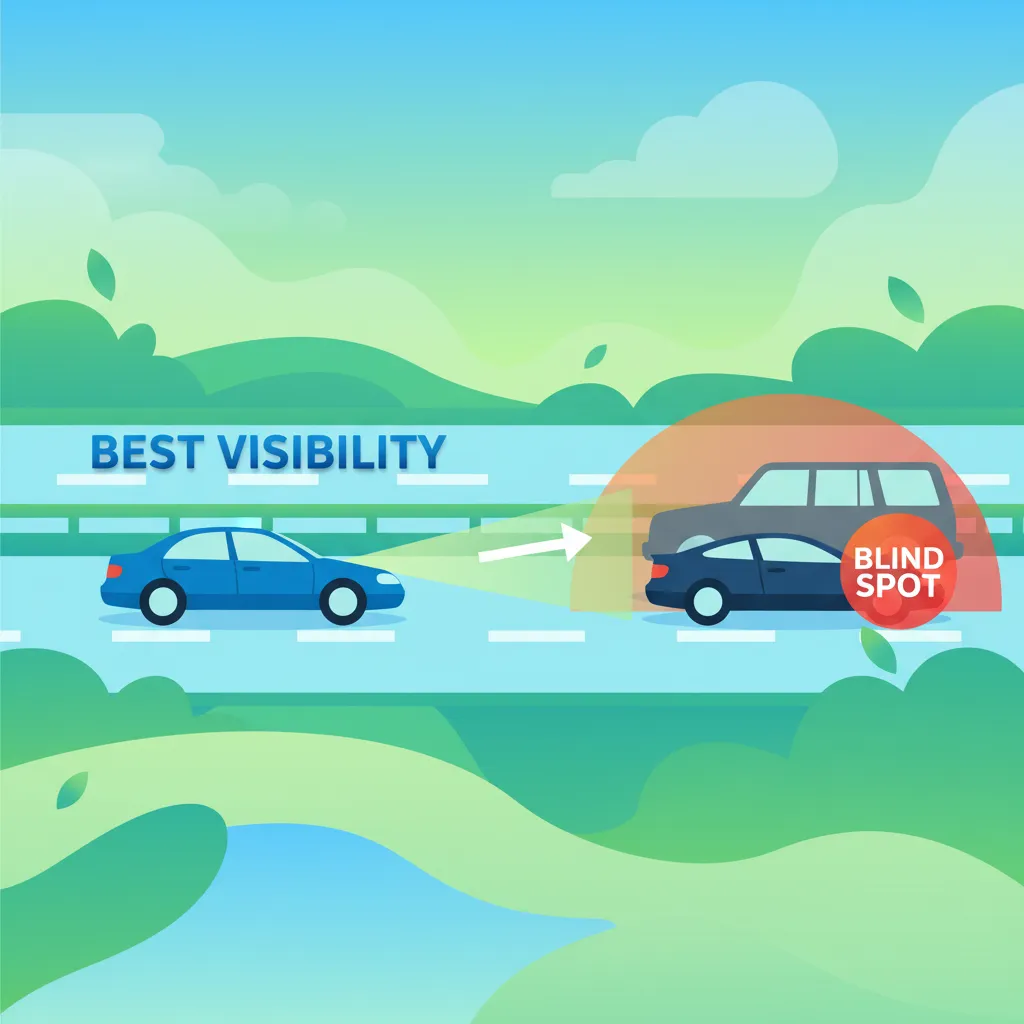
This lesson focuses on identifying blind spot zones created by larger vehicles and the rider’s own positioning. It covers effective mirror usage, lateral awareness techniques, and the importance of head checks before lane changes. DGT blind spot guidelines are referenced, emphasizing situational scanning to maintain safety in traffic.

In this lesson, drivers learn how to identify risk zones where potential hazards are likely to develop. The content explains the use of proactive observation and scanning techniques to detect evolving dangers in the driving environment. Learners will practice anticipating the actions of other road users based on traffic patterns and context, adjusting their speed and position accordingly.

This lesson focuses on interaction dynamics with larger vehicles like cars, trucks, and buses, detailing their specific blind spot zones. Strategies for safely sharing lanes, overtaking etiquette, and proper approach when a bus stops are covered. The lesson also includes guidance on merging onto acceleration lanes following DGT policies.

This lesson focuses on strategies for maximizing rider visibility in daylight and nighttime conditions, covering high-visibility apparel, reflective vests, and LED accessories. It delves into rider posture and lane positioning that improve sightlines and reduce collision risk. The content aligns with DGT regulations for illumination levels on motorcycles.

This lesson details the protocol for performing an emergency stop, emphasizing full-force application of both front and rear brakes while maintaining optimal rider posture. It covers the importance of visual fixation and the role of ABS in stabilizing the bike under panic conditions. Learners also study the calculation of stopping distances based on speed and road conditions.
This lesson explores proper lane positioning, emphasizing strategic selection of traffic lanes for optimal visibility. It explains the importance of rider line of sight and peripheral vision in maintaining situational awareness. The content also covers legal aspects of lane splitting and correct usage of road shoulders, abiding by DGT regulations.

This lesson details overtaking rules specific to motorcyclists, covering safe zones, required visibility distance, and assessment of oncoming traffic. It emphasizes the importance of speed matching and correct timing of lane changes. The module references DGT regulations, including conditions for passing on the left or right in various environments.

This lesson focuses on safe nighttime riding, covering headlight alignment, rear-light visibility, and the use of reflective gear to enhance conspicuity. It explains DGT night riding requirements, including mandatory lighting standards. Topics also include managing glare from oncoming vehicles and mitigating rider fatigue during low-light conditions.
Identify typical errors in anticipation, risk assessment, and defensive riding specific to Spanish traffic. This theory lesson helps riders recognize common pitfalls, understand their causes, and learn corrective actions to improve safety and exam performance.

This lesson identifies frequent beginner errors such as over-application of throttle, misuse of the clutch, and improper braking timing. It analyzes the underlying causes of these mistakes and offers corrective techniques to develop safe riding habits. By referencing DGT exam examples, learners gain insight into how to avoid these common pitfalls.
This lesson outlines procedures for handling emergency situations and accidents. It covers emergency braking techniques, hazard avoidance strategies, and the DGT emergency protocol for accident reporting. Emphasis is placed on rider protective actions, post-crash first aid, roadside safety, and legal obligations after an incident.

This lesson examines the legal framework for motorcyclists in Spain, including mandatory registration, compulsory insurance, and equipment standards enforced by the DGT. It covers the legal necessity of a homologated helmet, reflective clothing, and compliance with noise and emission standards. Learners also review documentation checks, vehicle inspections, and penalties for non-compliance.
This lesson explores proper lane positioning, emphasizing strategic selection of traffic lanes for optimal visibility. It explains the importance of rider line of sight and peripheral vision in maintaining situational awareness. The content also covers legal aspects of lane splitting and correct usage of road shoulders, abiding by DGT regulations.

This lesson introduces essential mechanical checks to ensure motorcycle reliability and safety. Topics include monitoring engine oil and coolant levels, chain lubrication procedures, and tire pressure verification. By establishing a routine maintenance schedule, riders can proactively address issues and comply with DGT guidelines.
This lesson focuses on identifying blind spot zones created by larger vehicles and the rider’s own positioning. It covers effective mirror usage, lateral awareness techniques, and the importance of head checks before lane changes. DGT blind spot guidelines are referenced, emphasizing situational scanning to maintain safety in traffic.
This lesson presents advanced cornering scenarios common on Spanish roads, such as mountain hairpins and high-speed autovía exits. It outlines specific techniques for descent control, ascent maneuvers, and safely merging into traffic after cornering. Interaction with cyclists and emergency cornering strategies are also covered in accordance with DGT regulations.
This lesson focuses on safe nighttime riding, covering headlight alignment, rear-light visibility, and the use of reflective gear to enhance conspicuity. It explains DGT night riding requirements, including mandatory lighting standards. Topics also include managing glare from oncoming vehicles and mitigating rider fatigue during low-light conditions.

This lesson focuses on defensive maneuvers in mixed traffic environments where various vehicles share the road. It outlines lane discipline, appropriate overtaking safety measures, and strategies for maintaining a safety corridor. The content incorporates DGT defensive guidelines, teaching riders to manage space and anticipate unpredictable driver behavior.
This lesson details overtaking rules specific to motorcyclists, covering safe zones, required visibility distance, and assessment of oncoming traffic. It emphasizes the importance of speed matching and correct timing of lane changes. The module references DGT regulations, including conditions for passing on the left or right in various environments.
Find clear answers to common questions learners have about Anticipation Techniques and Risk Assessment. Learn how the lesson is structured, which driving theory objectives it supports, and how it fits into the overall learning path of units and curriculum progression in Spain. These explanations help you understand key concepts, lesson flow, and exam focused study goals.
Hazard perception involves recognising immediate dangers, while anticipation is the skill of predicting potential hazards before they become imminent. Anticipation allows you to prepare or adjust your riding proactively, rather than just reacting to a present danger, which is key for defensive riding in Spain.
The DGT theory exam includes questions that simulate real-world scenarios, testing your ability to identify potential hazards and choose the safest course of action. This often involves understanding what could happen next based on the current situation, road conditions, and other road users' behaviour.
Key elements include evaluating the road environment (surface, visibility, weather), the actions of other vehicles, your own capabilities and state, and potential consequences. The goal is to consistently identify risks and employ strategies to minimise them, such as maintaining safe distances and being visible.
Practice scanning in 'slices': focus on the immediate path, then the mid-distance, and finally the far distance. Regularly check mirrors and periphery. This continuous, broad scanning helps you gather more information and anticipate potential issues further ahead.
While Spanish traffic law doesn't detail specific 'anticipation rules' per se, the emphasis on defensive riding, maintaining safe distances, and appropriate speed for conditions implicitly requires riders to anticipate potential hazards and act responsibly to avoid them.
Use our powerful search functionality to pinpoint specific Spanish DGT driving theory practice sets. Filter by road sign categories, traffic law topics, or question difficulty to build custom study sessions and reinforce your knowledge precisely where it matters for your official exam.