
Navigating tight urban spaces, such as multi-story car parks and narrow city streets, requires precision and control. This lesson focuses on the specific techniques and DGT regulations needed to maneuver safely and confidently in these challenging environments, building upon your understanding of general urban driving principles.

Lesson content overview
Navigating the tight, often unpredictable environments of urban areas is a crucial skill for any driver, particularly in countries like Spain with its dense historical city centers. This lesson focuses on developing the precision and control needed to confidently maneuver your vehicle through confined spaces such as multi-story car parks, narrow residential streets, and bustling alleyways. Mastery of these techniques not only reduces the risk of collisions and property damage but also enhances your overall vehicle control and driving confidence.
Understanding how to control your vehicle in spatially limited situations builds directly upon your foundational knowledge of vehicle basics and controls. It integrates advanced observation skills, hazard perception, and sets the stage for executing complex parking maneuvers and even handling trailers in challenging environments, as required for the Spanish driving license categories B and BE.
Safe and precise vehicle positioning in confined urban spaces hinges on several fundamental principles. Adhering to these guidelines ensures you maintain control, react effectively to unexpected situations, and comply with DGT (Dirección General de Tráfico) regulations.
Controlled speed involves maintaining a low, steady vehicle speed, typically under 10 km/h, when navigating tight zones. This principle is paramount because it dramatically reduces stopping distances, giving you more time to perceive and react to static obstacles, sudden pedestrian movements, or other vehicles. Minimizing kinetic energy during corrections also prevents abrupt movements that could lead to loss of control or collisions. Drivers must select an appropriate low gear, use gradual throttle inputs, and always be prepared to stop instantly if the situation demands it.
The observation loop is a systematic and continuous scanning of your environment. This involves actively using all mirrors (rear-view and side mirrors), direct vision through windows, and peripheral vision before, during, and after every movement. Its purpose is to ensure the early detection of all potential hazards, including fixed objects, moving pedestrians, cyclists, and other vehicles that may appear unexpectedly. A thorough observation loop requires systematic head-turns, frequent mirror checks, and anticipatory glances to cover blind spots before any steering input is made.
Comprehensive vehicle dimension awareness means knowing the exact width, length, height, and turning circle of your specific vehicle, including any protruding elements like side mirrors or bumpers. This knowledge is crucial for accurately assessing whether a passage, turning radius, or parking spot is physically sufficient for your vehicle. Drivers must develop the ability to estimate clearances and always maintain a safe buffer, typically a minimum of 0.5 metres, from fixed obstacles to prevent scrapes or collisions.
Reference point utilization involves identifying and using fixed visual markers to judge your vehicle's position relative to its surroundings. These points can include curb lines, parking slot markings, road edges, or even specific parts of nearby structures like pillars. They provide concrete, repeatable cues for judging steering angles, distances, and alignment. Leveraging reference points enables precise vehicle alignment when entering or exiting a parking slot or navigating a narrow passage, significantly reducing guesswork.
Incremental steering refers to executing small, measured steering adjustments rather than large, abrupt turns. This technique prevents over-steering, which can lead to loss of control, especially in tight spaces where quick corrections are often needed. It also minimizes the risk of colliding with nearby objects due to excessive vehicle swing. Mastering incremental steering requires developing a practiced feel for your vehicle's response to subtle steering inputs, ensuring smooth and controlled movements.
Safety margin compliance involves maintaining a legally mandated minimum distance from curb edges, traffic islands, other vehicles, and stationary objects. In many urban environments, particularly car parks, this is typically a minimum of 0.5 metres. Adhering to these margins ensures compliance with DGT regulations, prevents property damage to both your vehicle and infrastructure, and provides a buffer for minor errors in judgment. Specific signage may, however, dictate different distances, which must always be strictly followed.
To truly excel at driving in confined urban settings, it's vital to delve deeper into the interplay of your vehicle's characteristics and advanced driving techniques.
The physical dimensions of your vehicle, including its length, width, height, wheelbase, and critically, its turning radius (the smallest circular path the vehicle can describe when turning at full steering lock), are fundamental. These "static dimensions" dictate whether your vehicle can physically fit through a narrow passage or into a specific parking spot. The "dynamic dimensions," such as turning radius and how the vehicle's front and rear 'swing' during a turn, are equally important.
The DGT regulations explicitly require drivers to avoid causing damage to infrastructure (like walls or pillars) and to not occupy more space than legally permitted. A common misunderstanding is assuming a vehicle can fit into a visually adequate space without accounting for the rear of the vehicle swinging out during a turn or its full turning circle. For instance, a vehicle with a turning radius of 5.5 metres cannot execute a full U-turn within a narrow alley less than 3 metres wide without multiple forward and reverse movements. Constant awareness of your vehicle's footprint is key.
The observation loop is more than just looking; it's a systematic and methodical approach to visual scanning. It involves a pre-movement scan (before starting), a continuous scan while moving, and a post-movement scan (after completing a maneuver). Before any movement, thoroughly check your mirrors, the immediate front of your vehicle, and the entire surrounding environment. While moving, continuously update your mental map of the surroundings, anticipating potential hazards.
When driving in confined spaces, always perform a full 360-degree check around your vehicle before starting any maneuver, especially reversing. This helps detect objects or people that may have entered your blind spot.
This technique ensures you are aware of unexpected obstacles, such as a child emerging from between parked cars or a cyclist approaching from a side street. The DGT obliges drivers to maintain safe distances and anticipate hazards; failure to observe adequately is considered negligent. A common mistake is relying solely on forward vision, neglecting crucial information from side mirrors or head checks for blind spots. For example, before entering a tight multi-story car park lane, a diligent driver checks both side mirrors for pedestrians and the rearview mirror for approaching vehicles before committing to the turn.
Reference points are specific, fixed visual markers that you use to accurately gauge your vehicle's position and determine the necessary steering angles. These can be fixed reference points like curb lines, lane markings, parking slot boundaries, or even the corner of a building. They can also be dynamic reference points, such as the position of other parked vehicles relative to yours.
Effective use of reference points allows you to align your vehicle precisely during maneuvers like parallel or perpendicular parking. For instance, you might align your front bumper with the rear edge of a parallel parking slot before initiating your reverse maneuver. Neglecting reference points and relying solely on intuition often leads to misjudgment and potential damage. Drivers must practice estimating distances and angles relative to these points to execute maneuvers with confidence and accuracy, ensuring the vehicle stays within marked lines and avoids fines for improper parking.
Incremental steering is the art of performing a series of small, deliberate steering adjustments rather than a single large turn. This approach significantly reduces the likelihood of over-steering, especially in tight spaces, and vastly improves precision. It's often combined with maneuver sequencing, where a complex maneuver is broken down into defined, manageable steps.
Approach Phase: Signal, position the vehicle close to the right curb, ensuring enough room to turn left.
Turning Phase: Turn the steering wheel fully to the left, move forward slowly until nearly touching the opposite curb.
Reverse Phase: Turn the steering wheel fully to the right, check all mirrors and blind spots, and reverse slowly until near the original curb.
Final Alignment: Turn the steering wheel to the left, move forward slowly, and straighten the vehicle to continue in the new direction.
This structured approach, like the "three-point turn" (cambio de sentido en tres tiempos) used in a narrow dead-end street, reduces the likelihood of overshooting or colliding with obstacles. The DGT requires drivers not to obstruct traffic flow excessively during maneuvers and to signal intentions clearly. A common misunderstanding is attempting to achieve a complex maneuver with a single, large steering input, which often leads to poor positioning and the need for multiple, unplanned corrections.
Mirrors and rear-vision aids are indispensable tools for maintaining situational awareness in confined spaces, especially when reversing. This includes side mirrors, the rear-view mirror, and increasingly, camera systems (like rear-view cameras or 360-degree cameras). These aids compensate for blind spots, allowing you to see areas around your vehicle that would otherwise be obscured.
DGT regulations mandate that mirrors must be correctly adjusted before each maneuver; failure to do so can be considered negligence. A frequent error is assuming side mirrors alone eliminate all blind spots, neglecting the importance of also checking the interior rear-view mirror and performing physical head checks. For example, before backing out of a parking slot, carefully adjusting your side mirrors to clearly see the rear corners of your vehicle is crucial for avoiding collisions with nearby vehicles or obstacles.
Adhering to specific DGT regulations is not just about avoiding fines; it's fundamental to safe and respectful driving in Spain's urban environments.
Rule: Drivers must not obstruct traffic flow while maneuvering in confined spaces.
Rule: A minimum clearance distance, typically 0.5 metres, must be observed when passing close to curbs, parking barriers, walls, or other stationary obstacles.
Rule: The use of indicators is required before any lateral movement (e.g., changing lanes) or reverse movement in a confined space.
Rule: Parking in designated disabled spaces without proper authorization is strictly prohibited.
Rule: Drivers must yield to pedestrians at marked crosswalks, even within private parking structures or on narrow urban streets.
Rule: Vehicle loading limits must not affect vehicle dimensions or stability in a way that could increase risk in confined spaces. This is especially critical for Category BE drivers.
Rule: Hazard warning lights (luces de emergencia) may only be used when the vehicle is stationary and poses a temporary hazard or obstruction.
Understanding common mistakes helps prevent them and fosters safer driving habits.
Violation: Cutting corners without adequate clearance, resulting in scrapes or damage.
Violation: Reversing at speed without checking blind spots.
Violation: Failing to signal before entering a narrow lane or parking space.
Violation: Forgetting that a heavily loaded vehicle has altered dynamics.
Violation: Parking too close to a curb or barrier, impeding traffic flow.
Violation: Not yielding to pedestrians at a marked crosswalk within a car park.
Violation: Using hazard lights while the vehicle is moving.
Violation: Failing to adjust mirrors before a complex maneuver.
Maneuvering in confined spaces requires adaptability. External conditions and vehicle state can significantly impact your driving strategy.
Beyond rules, understanding the underlying principles of safety enhances your ability to drive confidently in confined urban areas.
Let's explore some practical scenarios to illustrate these concepts in action.
Setting: A seven-story car park entrance on a moderately rainy day, with moderate traffic queuing to enter. The entry ramp is narrow and has a sharp 45-degree angle. Decision Point: Approaching and entering the narrow, angled ramp. Correct Behavior:
Reduce speed to 5 km/h, engaging a low gear (first or second). Perform a thorough pre-movement observation loop, checking both side mirrors for adjacent vehicles attempting to overtake or pedestrians, and the rearview for sufficient space. Align the vehicle precisely with the ramp's entry markers, using the side mirror to monitor clearance from the wall or barrier. Use incremental steering to smoothly follow the ramp's curve, constantly checking both sides for adequate clearance and potential hazards. Be prepared to stop if an obstacle appears or traffic ahead halts. Incorrect Behavior: Accelerating to 15 km/h, ignoring side mirrors, and cutting the corner too sharply, almost scraping the side railing or encroaching on the adjacent lane. Explanation: Controlled speed and a comprehensive observation loop are crucial here. The rain reduces grip and visibility, demanding even greater caution. Incremental steering prevents over-steering on the tight ramp, ensuring safe lane adherence and preventing collisions.
Setting: A busy residential street on a sunny day, with cars parked tightly on both sides, leaving limited maneuvering space. You need to parallel park into a 2.5-meter long space. Decision Point: Successfully inserting your vehicle into the tight parallel parking slot. Correct Behavior:
First, signal your intent to park. Position your vehicle parallel to the car in front of the desired space, ensuring a gap of approximately 0.5-1 meter. Use reference points, such as aligning your rear bumper with the other car's rear bumper, before initiating reversal. Turn the steering wheel fully to the right (if parking on the right), slowly reverse, and continuously check your left side mirror until the entire front of the car behind you is visible. Then, straighten the wheels briefly and continue reversing. Next, turn the steering wheel fully to the left and continue reversing until the vehicle is parallel to the curb, maintaining at least 0.5 meters of clearance. Make small, incremental adjustments to center the vehicle within the space. Incorrect Behavior: Attempting to back directly into the space without proper alignment or reference points, resulting in multiple attempts, scraping the curb, or hitting the cars in front or behind. Explanation: Precise use of reference points and incremental steering are fundamental for accurate positioning in parallel parking. Constant observation through mirrors prevents damage to your vehicle and others.
Setting: A very narrow alley at dusk, with a loaded trailer attached to your vehicle. You need to reverse safely into a wider main road. Decision Point: Successfully reversing the vehicle and trailer from the alley onto the main road without incident. Correct Behavior:
Before moving, perform an extensive observation loop, checking all mirrors (especially side mirrors for trailer swing), performing head checks, and if possible, momentarily stepping out to assess the space. Signal your intent to reverse. Engage a low reverse gear and use extremely slow, incremental steering adjustments to control the trailer's direction. Remember that the trailer will move in the opposite direction of your steering wheel initially. Constantly monitor the trailer's swing to ensure it does not encroach on sidewalks, shop fronts, or passing traffic on the main road. If visibility is poor, consider asking a passenger to spot for you. Incorrect Behavior: Reversing without adequate observation, making large, abrupt steering inputs, and failing to account for the trailer's unique turning dynamics, potentially causing damage to a shop front or blocking the main road. Explanation: Proper scanning, incremental steering tailored for trailer dynamics, and a deep understanding of load shift are crucial for safely maneuvering a trailer in confined spaces, especially at dusk when visibility is reduced.
Setting: A busy car park with a clearly marked pedestrian crossing. A pedestrian is approaching the crossing from your left. Decision Point: Approaching the crosswalk at low speed. Correct Behavior:
Reduce your speed further as you approach the crosswalk. Observe the pedestrian carefully. If the pedestrian is on the crossing or clearly intending to cross, stop completely before the crosswalk lines and allow them to cross safely. Only proceed once the crossing is completely clear. Maintain eye contact (if possible) to confirm their intentions. Incorrect Behavior: Rolling through the crossing, forcing the pedestrian to stop or hurry, or failing to see the pedestrian due to distraction. Explanation: The "yield to pedestrians" rule is mandatory and paramount for safety. This scenario highlights the importance of anticipating vulnerable road users, even in seemingly private or low-speed environments like car parks.
Mastering confined urban maneuvering is a hallmark of a skilled and responsible driver. It demands a holistic approach that integrates careful observation, precise vehicle control, and strict adherence to DGT regulations.
By consistently applying these principles, you will navigate Spain's confined urban spaces with enhanced safety, precision, and confidence, fulfilling the requirements for your driving license and contributing to safer roads for everyone.
Maneuvering in confined urban spaces requires mastering slow, controlled vehicle operation combined with systematic 360-degree observation. Key DGT regulations include maintaining a minimum 0.5-meter clearance from obstacles, using indicators before any movement, and yielding to pedestrians at crosswalks. Understanding your vehicle's specific dimensions and turning circle is essential—never assume a space is adequate without accounting for rear swing during turns. Incremental steering and reference points provide precision, while proper mirror adjustment before reversing is mandatory. Failure to observe adequately or cutting corners without proper clearance are the most common violations leading to collisions in parking structures and narrow urban streets.
A short set of high-value points that capture the most important learning from this lesson.
Maintain controlled speed under 10 km/h in confined spaces to maximize reaction time and minimize kinetic energy
Execute a systematic 360-degree observation loop before, during, and after every movement using all mirrors and head checks
Know your vehicle's exact dimensions and turning circle to accurately assess whether spaces are physically sufficient
Use incremental steering (small, measured adjustments) rather than large, abrupt turns to prevent over-steering and collisions
Signal your intentions early and yield to pedestrians at all marked crosswalks, even in private car parks
Explore all units and lessons included in this driving theory course.
Minimum clearance of 0.5 meters from curbs, walls, pillars, and parked vehicles is mandatory under Spanish regulations
Indicators must be activated before any lateral movement, lane change, or reverse maneuver in confined spaces
Pedestrians always have priority at marked crosswalks, including inside car parks under DGT rules
Side mirrors should be adjusted to see the rear corners of your vehicle before reversing
Hazard lights are only for stationary vehicles; never use them while moving
Relying solely on forward vision and neglecting side mirrors or head checks for blind spots
Making large, single steering inputs instead of incremental adjustments, leading to over-steering
Failing to account for the rear of the vehicle swinging out when turning in tight spaces
Not signaling before entering narrow lanes or parking spaces, confusing other road users
Forgetting that heavy loads or trailers alter turning radius and vehicle dynamics, requiring adjusted techniques
Lesson content overview
A short set of high-value points that capture the most important learning from this lesson.
Maintain controlled speed under 10 km/h in confined spaces to maximize reaction time and minimize kinetic energy
Execute a systematic 360-degree observation loop before, during, and after every movement using all mirrors and head checks
Know your vehicle's exact dimensions and turning circle to accurately assess whether spaces are physically sufficient
Use incremental steering (small, measured adjustments) rather than large, abrupt turns to prevent over-steering and collisions
Signal your intentions early and yield to pedestrians at all marked crosswalks, even in private car parks
Explore all units and lessons included in this driving theory course.
Minimum clearance of 0.5 meters from curbs, walls, pillars, and parked vehicles is mandatory under Spanish regulations
Indicators must be activated before any lateral movement, lane change, or reverse maneuver in confined spaces
Pedestrians always have priority at marked crosswalks, including inside car parks under DGT rules
Side mirrors should be adjusted to see the rear corners of your vehicle before reversing
Hazard lights are only for stationary vehicles; never use them while moving
Relying solely on forward vision and neglecting side mirrors or head checks for blind spots
Making large, single steering inputs instead of incremental adjustments, leading to over-steering
Failing to account for the rear of the vehicle swinging out when turning in tight spaces
Not signaling before entering narrow lanes or parking spaces, confusing other road users
Forgetting that heavy loads or trailers alter turning radius and vehicle dynamics, requiring adjusted techniques
Explore search topics learners often look for when studying Maneuvering in Confined Urban Spaces. These topics reflect common questions about road rules, driving situations, safety guidance, and lesson level theory preparation for learners in Spain.
Browse additional driving theory lessons that cover connected traffic rules, road signs, and common driving situations related to this topic. Improve your understanding of how different rules interact across everyday traffic scenarios.
Detailed explanation of specific Spanish DGT regulations and traffic laws applicable to navigating narrow streets, parking garages, and other tight urban environments. Learn how to comply with traffic rules and avoid common violations.

This lesson focuses on low-speed manoeuvres within congested urban traffic, detailing techniques for navigating tight corners and weaving through traffic. Learners analyze urban traffic flow, pedestrian zones, and cyclist interactions to anticipate hazards. The lesson also explains DGT regulations regarding slow-speed movement and lane positioning.

In this lesson, learners will acquire the necessary skills to maneuver buses and coaches within confined areas such as narrow city streets, bus depots, and passenger terminals. It details techniques for reverse driving, tight cornering, and parallel parking, emphasizing the critical importance of blind spot awareness and precise low-speed control. The content focuses on developing spatial awareness to avoid collisions while maintaining passenger comfort.
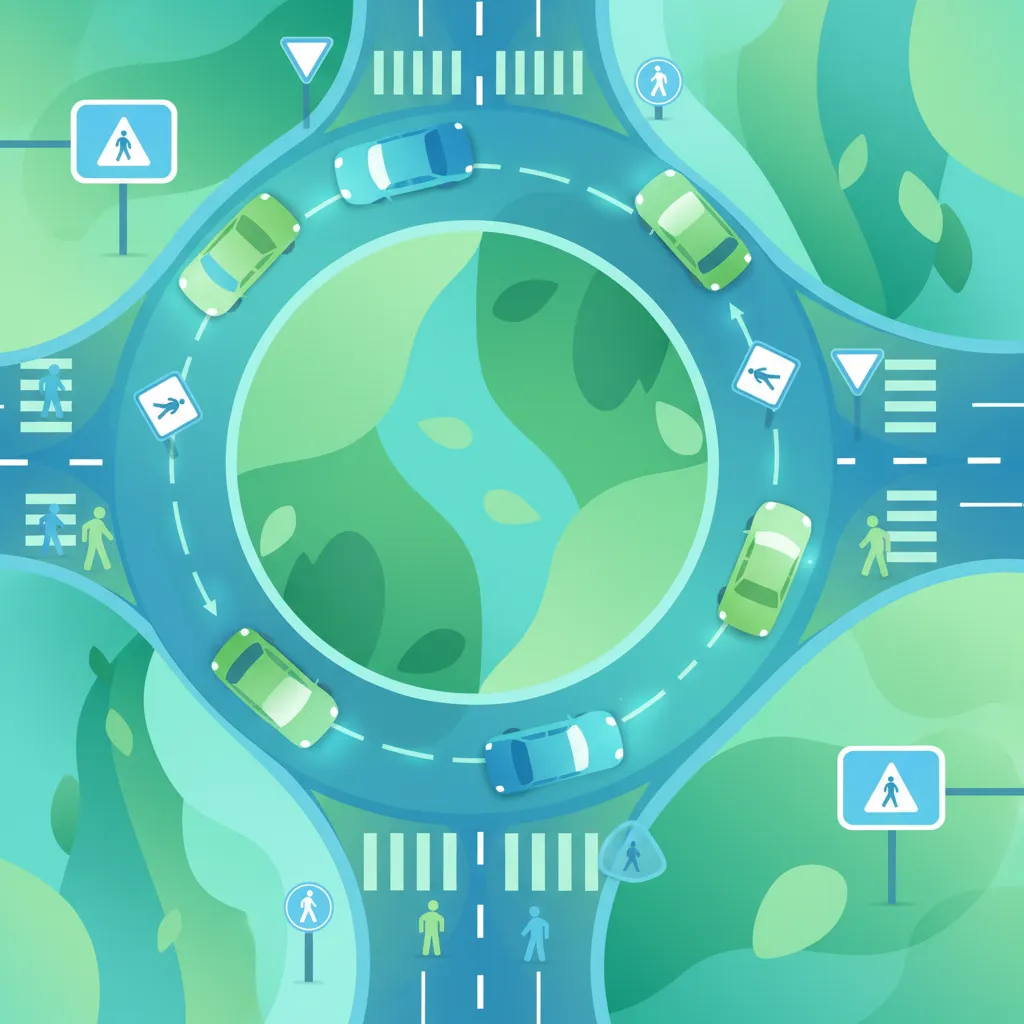
This lesson offers a comprehensive guide to navigating roundabouts in urban settings, explaining the correct protocols for entry, yielding, and circulation. Learners will be taught how to interpret lane markings and signage on multi-lane roundabouts and determine the correct vehicle positioning for safe entry and exit. The content emphasizes full compliance with Spanish city regulations that govern priority and right-of-way at these intersections.

This lesson provides guidance on the practical aspects of parking and making deliveries in urban areas. It covers the techniques for safely maneuvering into and out of loading docks and designated delivery zones, which often involves precise reversing. The content also explains the specific parking regulations that apply to commercial vehicles and best practices for ensuring safety during loading and unloading.

This lesson examines the principles of maintaining a safe following distance, including the 'two-second rule' and its adjustments for speed and weather. It focuses on effective blind-spot management, teaching drivers how to use mirrors and head checks. The content integrates DGT guidelines on creating a safety buffer around the vehicle to allow time to react to unexpected events.

This lesson addresses the practical aspects of maneuvering a large vehicle in various environments. It explains concepts like turning radius, off-tracking, and the vehicle's total footprint, which determine the space needed for turns and other maneuvers. Learners will develop the spatial awareness required to navigate tight corners, loading bays, and urban streets while maintaining safe clearance from obstacles.

This lesson examines the interaction between large vehicles, such as trucks, and vulnerable road users within roundabouts. It addresses the wide turning radius of heavy vehicles, the importance of checking blind spots, and the correct yielding behavior toward pedestrians and cyclists. Learners will understand how to maintain safe distances and anticipate the movements of different road users.
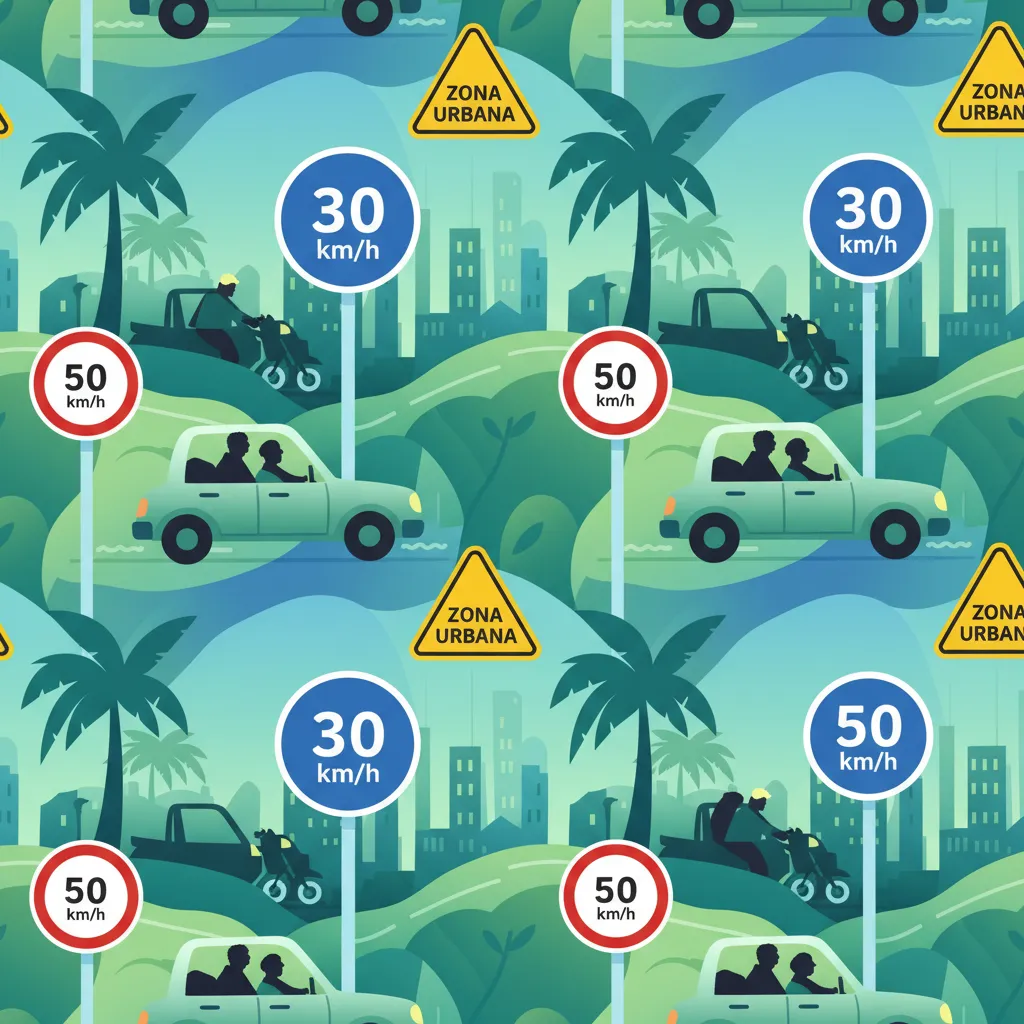
This lesson outlines the speed limits applicable to different types of urban streets and the corresponding road signs that communicate them. It explains the interpretation of speed zone markings, signs indicating reduced speed areas like 30 km/h zones, and the rationale behind speed enforcement in city settings. Learners will understand how to maintain compliance to enhance safety for all road users.

This lesson focuses on defensive maneuvers in mixed traffic environments where various vehicles share the road. It outlines lane discipline, appropriate overtaking safety measures, and strategies for maintaining a safety corridor. The content incorporates DGT defensive guidelines, teaching riders to manage space and anticipate unpredictable driver behavior.
Understand typical errors drivers make when maneuvering in tight city streets and car parks. Learn from these mistakes to improve your spatial awareness, vehicle control, and safety in challenging urban driving situations.
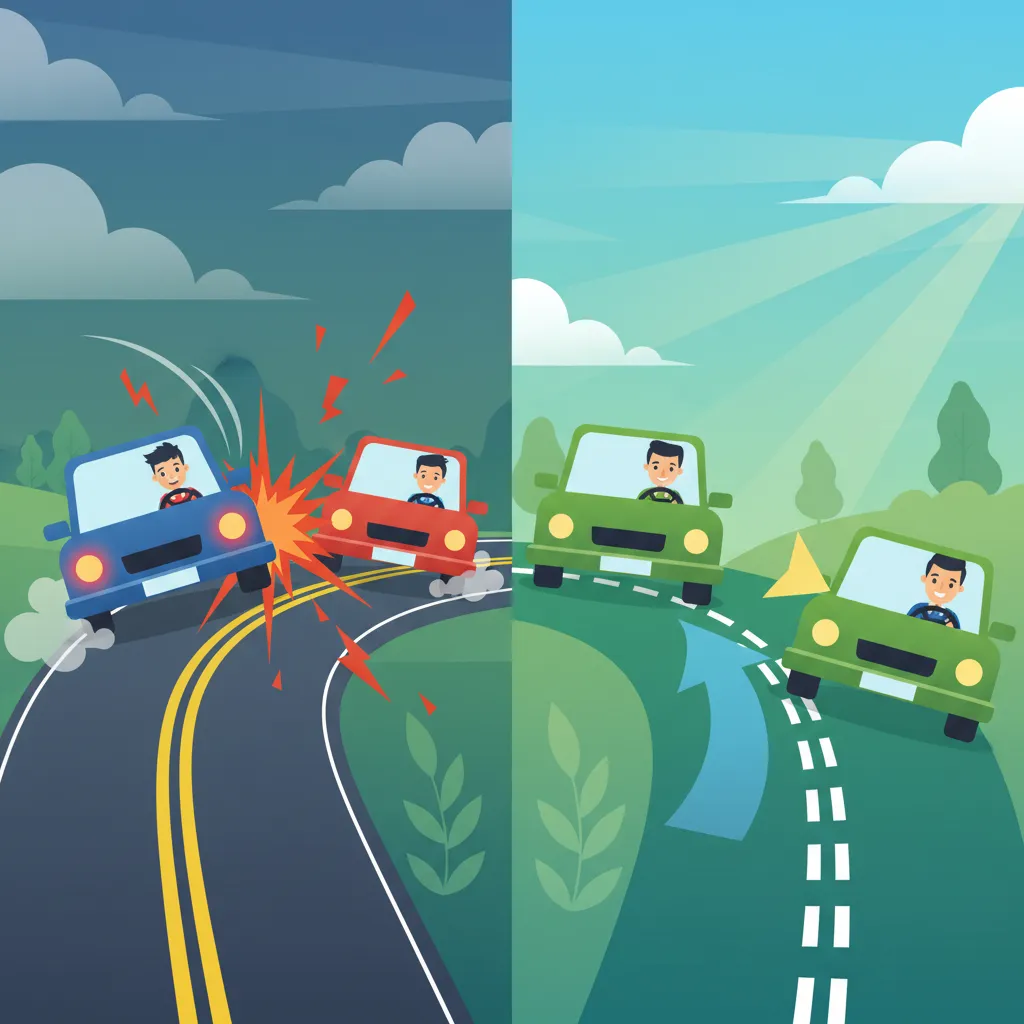
This lesson addresses common errors made by drivers when using roundabouts and presents corrective strategies. It covers issues such as entering from the wrong lane, failing to yield to circulating traffic, exceeding the recommended speed, and not signaling an exit correctly. By understanding these mistakes, drivers can improve their roundabout proficiency and reduce accident risk.

This lesson examines the specific hazards posed by vehicles parked along the roadside. It highlights the primary risk of a driver or passenger opening a door into the path of an approaching moped. Learners will understand the importance of maintaining a safe lateral distance and positioning themselves in the lane to avoid the 'door zone' while continuously scanning for signs of occupant activity.
This lesson focuses on low-speed manoeuvres within congested urban traffic, detailing techniques for navigating tight corners and weaving through traffic. Learners analyze urban traffic flow, pedestrian zones, and cyclist interactions to anticipate hazards. The lesson also explains DGT regulations regarding slow-speed movement and lane positioning.
Find clear answers to common questions learners have about Maneuvering in Confined Urban Spaces. Learn how the lesson is structured, which driving theory objectives it supports, and how it fits into the overall learning path of units and curriculum progression in Spain. These explanations help you understand key concepts, lesson flow, and exam focused study goals.
In narrow Spanish streets, priority is often given to vehicles already within the confined space. Always proceed at a crawl, observe constantly, and be prepared to stop or reverse if another vehicle approaches. Use mirrors and direct observation to judge your vehicle's width against the street's constraints, ensuring you don't scrape walls or parked cars.
For the driving test, approaching a multi-story car park requires slow, deliberate movements. Use your indicators appropriately, check mirrors constantly, and be aware of ramps, pillars, and other vehicles. When selecting a parking spot, ensure you have enough room to maneuver both in and out safely without hitting other cars or structures.
The most frequent errors involve misjudging distances, leading to scrapes or collisions with obstacles like walls, pillars, or other vehicles. Another common mistake is driving too fast for the conditions, which reduces reaction time and control. Constant, thorough observation and slow, controlled inputs are key to avoiding these issues.
Practice is crucial. Pay attention to where your wheels are relative to the kerb and to obstacles. Use your mirrors to monitor the rear and sides of your vehicle. Understanding your car's turning circle and wheelbase will help you predict its path through corners and tight turns.
Yes, in situations where two vehicles cannot pass each other, general Spanish traffic law often dictates that the vehicle facing downhill or the one that has already entered the narrow section should have priority. However, the safest approach is always to communicate with the other driver and be prepared to yield or reverse if necessary to avoid a conflict.
Use our powerful search functionality to pinpoint specific Spanish DGT driving theory practice sets. Filter by road sign categories, traffic law topics, or question difficulty to build custom study sessions and reinforce your knowledge precisely where it matters for your official exam.