
Welcome to the Official DGT Theory Course for Spanish Truck Licences! This lesson, 'Scope of Category C & C1 Licences', is your first step in Unit 1. It clearly defines the distinctions between Category C and C1 truck licences according to Spanish law, covering their maximum authorised mass (MAM) and the essential requirements for aspiring drivers. Understanding these fundamentals is crucial for your Category C/C1 exam preparation and professional driving career.

Lesson content overview
Welcome to this comprehensive lesson, part of the Official DGT Theory Course for Spanish Truck Licence Category C & C1. This chapter provides a detailed explanation of the legal definitions, requirements, and operational boundaries for Category C and C1 driving licences under Spanish law. Mastering these regulations is fundamental for safe, compliant, and professional heavy vehicle operation, establishing the bedrock for your career as a professional driver.
Operating heavy goods vehicles (HGVs) demands a higher level of skill, responsibility, and theoretical knowledge than driving standard passenger cars. The Spanish traffic authority, the Dirección General de Tráfico (DGT), categorizes these vehicles and their corresponding licences based primarily on their Maximum Authorised Mass (MAM), trailer capabilities, and the driver's professional qualifications. This differentiation ensures that only suitably qualified and medically fit individuals operate vehicles that present distinct challenges and risks on public roads.
The most critical factor in determining whether a vehicle requires a Category C1 or C licence is its Maximum Authorised Mass (MAM). This term, also frequently referred to as Gross Vehicle Weight (GVW) in some contexts, represents the heaviest legal weight a vehicle may have when driven on public roads. This includes the vehicle itself, its load, all accessories, fuel, and any passengers. Understanding and respecting MAM limits is paramount for road safety, preventing infrastructure damage, and ensuring legal compliance.
The Category C1 licence permits the driving of medium-sized heavy vehicles. Specifically, these are vehicles whose MAM is greater than 3,500 kilograms (3.5 tonnes) but does not exceed 7,500 kilograms (7.5 tonnes). This category acts as an intermediate step between standard car licences (Category B, which covers vehicles up to 3,500 kg MAM) and full heavy goods vehicle licences.
Drivers holding a Category C1 licence are typically authorized to operate vehicles such as larger delivery vans, small rigid lorries, or ambulances that exceed the 3.5-tonne limit but remain below 7.5 tonnes. This category is crucial for many commercial activities that require vehicles larger than standard light commercial vehicles but do not demand the full capacity of a heavy truck.
The Category C licence is designed for operating full-sized heavy goods vehicles. This category applies to vehicles with a MAM greater than 3,500 kilograms, with no upper weight limit. This means that a Category C licence is required for virtually all large rigid lorries, including those weighing 10 tonnes, 20 tonnes, or even the maximum permissible MAM for a rigid vehicle in Spain, typically around 26 tonnes (depending on axle configuration).
A Category C licence is the standard requirement for professional truck drivers operating a wide range of heavy commercial vehicles, from large distribution trucks to specialized vehicles like refuse lorries or concrete mixers. The extensive training and testing associated with this licence reflect the significant responsibilities and complexities involved in controlling such large and powerful machines.
It is important not to confuse a vehicle's curb weight (weight of the empty vehicle) with its MAM. The MAM always includes the maximum legal load the vehicle is designed to carry.
Beyond the primary vehicle's MAM, Spanish driving regulations also define strict limits on the mass of trailers that can be coupled to vehicles operated under Category C1 and C licences. These limits are crucial for ensuring safe braking performance, vehicle stability, and overall road safety, especially when maneuvering with a towed load.
For drivers holding a Category C1 licence, the permissible trailer mass is subject to two main conditions:
Exceeding the 12,000 kg combined MAM for a C1 licence holder is a serious offence and requires a Category C1+E licence.
Drivers holding a Category C licence have greater flexibility regarding trailer mass. They are authorized to tow trailers with a MAM of up to 3,500 kilograms (3.5 tonnes). Crucially, unlike Category C1, there is no specific combined mass restriction when towing a trailer up to 3,500 kg with a Category C licence. This allows Category C drivers to tow a variety of substantial trailers, such as larger plant trailers or livestock transporters.
If a driver needs to tow a trailer that exceeds the limits set for their base C1 or C licence – specifically, if the trailer's MAM is over 750 kg AND the combined MAM exceeds 12,000 kg (for C1), or if the trailer's MAM is over 3,500 kg (for C) – an additional licence endorsement, known as the Category E endorsement, is required. This results in licences such as C1+E or C+E, which authorize the operation of articulated lorries or vehicles with heavy trailers.
Obtaining a professional driving licence in Spain involves meeting specific criteria related to age, physical and mental fitness, and often, professional training. These prerequisites are designed to ensure that drivers of heavy vehicles possess the necessary maturity, health, and skills to operate safely.
The minimum age at which an applicant can apply for a Category C1 or C licence in Spain reflects the increased responsibility associated with driving heavier vehicles.
All applicants for, and holders of, Category C and C1 licences must present a valid medical fitness certificate. This certificate, issued by an authorized medical examination centre (Centro de Reconocimiento de Conductores), confirms that the driver meets the stringent health standards required for operating heavy vehicles.
Key aspects assessed during the medical examination include:
These rigorous medical checks, mandated by regulations such as Spanish Royal Decree 332/2006, are critical for minimizing the risk of accidents caused by driver incapacitation or impaired faculties.
The Certificado de Aptitud Profesional (CAP) is a mandatory qualification in Spain for any driver operating Category C or C1 vehicles (and Category D for buses) in a professional capacity, meaning for commercial transport. The CAP is distinct from the driving licence itself and serves to ensure that professional drivers meet high standards of training, road safety knowledge, and legal responsibilities.
The CAP qualification comprises two main parts:
The CAP is essential for anyone engaged in commercial transport activities. While a Category C or C1 licence allows a driver to operate a heavy vehicle, it does not automatically grant the right to use it professionally. Without a valid CAP, a Category C or C1 licence holder may only drive these vehicles for non-commercial purposes, such as personal use (e.g., moving personal belongings with a large truck) or specialized non-commercial activities.
If you plan to use your Category C or C1 licence for employment as a professional driver, obtaining the CAP is a non-negotiable requirement.
The DGT employs a systematic approach to vehicle classification, which is fundamental to understanding licence categories. This system organizes vehicles based on their design, purpose, and, most importantly, their weight and dimensions.
This structured classification ensures that drivers progress through categories, gaining experience and specific training relevant to the increasing size and complexity of the vehicles they are authorized to operate.
The operation of heavy vehicles in Spain is governed by a robust set of regulations, primarily outlined in the Reglamento General de Circulación (RGC), along with specific Royal Decrees and DGT Directives. Adherence to these rules is not only a legal obligation but a critical element of road safety.
Understanding common mistakes and edge cases is crucial for avoiding penalties and ensuring safety.
The operation of heavy vehicles is rarely static. External conditions and the state of the vehicle itself constantly influence driving safety and demand adaptability from the driver.
Every action and decision a professional driver makes has direct consequences for safety, legal compliance, and operational efficiency.
This foundational lesson on the scope of Category C and C1 licences is intricately linked to several other critical areas within the Official DGT Theory Course for Spanish Truck Licence Category C & C1.
This lesson establishes the foundational distinctions between Spanish Category C1 and Category C truck licences, centred on Maximum Authorised Mass (MAM) thresholds of 7,500 kg for C1 and no upper limit for C. Trailer coupling regulations differ significantly between categories, with C1 imposing a combined 12,000 kg limit for heavier trailers while C permits up to 3,500 kg trailers without restriction. Age requirements (18 for C1, 21 for C with CAP exception at 18) and mandatory medical fitness standards ensure driver suitability for heavy vehicle operation. The Certificado de Aptitud Profesional (CAP) represents a critical separate qualification required for any commercial transport activity, distinguishing between legal licence holding and lawful professional driving. Understanding these precise definitions and their practical implications is essential for both exam success and lawful operation of heavy goods vehicles in Spain.
A short set of high-value points that capture the most important learning from this lesson.
Category C1 licence covers vehicles with a MAM between 3,500 kg and 7,500 kg, while Category C covers vehicles over 3,500 kg with no upper limit for rigid vehicles.
Category C1 drivers may tow trailers up to 750 kg MAM, or heavier trailers only if the combined MAM does not exceed 12,000 kg; Category C drivers may tow trailers up to 3,500 kg without a combined mass restriction.
The minimum age for Category C1 is 18 years, while Category C requires 21 years, except when the applicant holds the initial CAP qualification allowing application at 18.
The CAP (Certificado de Aptitud Profesional) is mandatory for commercial driving of Category C or C1 vehicles and must be renewed every five years.
A valid medical fitness certificate is required for both obtaining and renewing Category C and C1 licences, assessing vision, hearing, cardiovascular health, and neurological status.
Explore all units and lessons included in this driving theory course.
MAM (Maximum Authorised Mass) always includes the vehicle, load, fuel, accessories, and passengers—not just the curb weight.
Exceeding trailer mass limits or combined mass limits without the appropriate E endorsement results in illegal operation regardless of having a valid C1 or C licence.
The CAP qualification is separate from the driving licence itself; holding a Category C or C1 licence does not automatically permit commercial transport without a valid CAP.
For C1+E or C+E endorsements, a driver may tow heavier trailers that exceed the base category limits, which is required for articulated lorries.
Drivers must verify vehicle MAM from the ficha técnica (technical document) before operating to ensure the vehicle falls within their licence category.
Confusing curb weight (empty vehicle) with MAM (maximum legal weight when loaded), leading to underestimation of the licence category required.
Believing a C1 licence covers vehicles up to 7,500 kg combined with trailer, when the 12,000 kg combined limit only applies when towing a trailer heavier than 750 kg.
Assuming that obtaining a Category C licence at 18 is automatic without first completing the initial CAP qualification under an approved training scheme.
Operating a Category C or C1 vehicle commercially without a valid CAP, which constitutes an illegal commercial transport offence even with a valid licence.
Neglecting to check combined MAM when towing, particularly for C1 drivers who may exceed the 12,000 kg limit with seemingly moderate trailer weights.
Lesson content overview
A short set of high-value points that capture the most important learning from this lesson.
Category C1 licence covers vehicles with a MAM between 3,500 kg and 7,500 kg, while Category C covers vehicles over 3,500 kg with no upper limit for rigid vehicles.
Category C1 drivers may tow trailers up to 750 kg MAM, or heavier trailers only if the combined MAM does not exceed 12,000 kg; Category C drivers may tow trailers up to 3,500 kg without a combined mass restriction.
The minimum age for Category C1 is 18 years, while Category C requires 21 years, except when the applicant holds the initial CAP qualification allowing application at 18.
The CAP (Certificado de Aptitud Profesional) is mandatory for commercial driving of Category C or C1 vehicles and must be renewed every five years.
A valid medical fitness certificate is required for both obtaining and renewing Category C and C1 licences, assessing vision, hearing, cardiovascular health, and neurological status.
Explore all units and lessons included in this driving theory course.
MAM (Maximum Authorised Mass) always includes the vehicle, load, fuel, accessories, and passengers—not just the curb weight.
Exceeding trailer mass limits or combined mass limits without the appropriate E endorsement results in illegal operation regardless of having a valid C1 or C licence.
The CAP qualification is separate from the driving licence itself; holding a Category C or C1 licence does not automatically permit commercial transport without a valid CAP.
For C1+E or C+E endorsements, a driver may tow heavier trailers that exceed the base category limits, which is required for articulated lorries.
Drivers must verify vehicle MAM from the ficha técnica (technical document) before operating to ensure the vehicle falls within their licence category.
Confusing curb weight (empty vehicle) with MAM (maximum legal weight when loaded), leading to underestimation of the licence category required.
Believing a C1 licence covers vehicles up to 7,500 kg combined with trailer, when the 12,000 kg combined limit only applies when towing a trailer heavier than 750 kg.
Assuming that obtaining a Category C licence at 18 is automatic without first completing the initial CAP qualification under an approved training scheme.
Operating a Category C or C1 vehicle commercially without a valid CAP, which constitutes an illegal commercial transport offence even with a valid licence.
Neglecting to check combined MAM when towing, particularly for C1 drivers who may exceed the 12,000 kg limit with seemingly moderate trailer weights.
Explore search topics learners often look for when studying Scope of Category C & C1 Licences. These topics reflect common questions about road rules, driving situations, safety guidance, and lesson level theory preparation for learners in Spain.
Browse additional driving theory lessons that cover connected traffic rules, road signs, and common driving situations related to this topic. Improve your understanding of how different rules interact across everyday traffic scenarios.
Understand the minimum age, medical fitness certificate requirements, and the mandatory Certificado de Aptitud Profesional (CAP) for obtaining and using Category C and C1 truck licences in Spain for commercial driving.
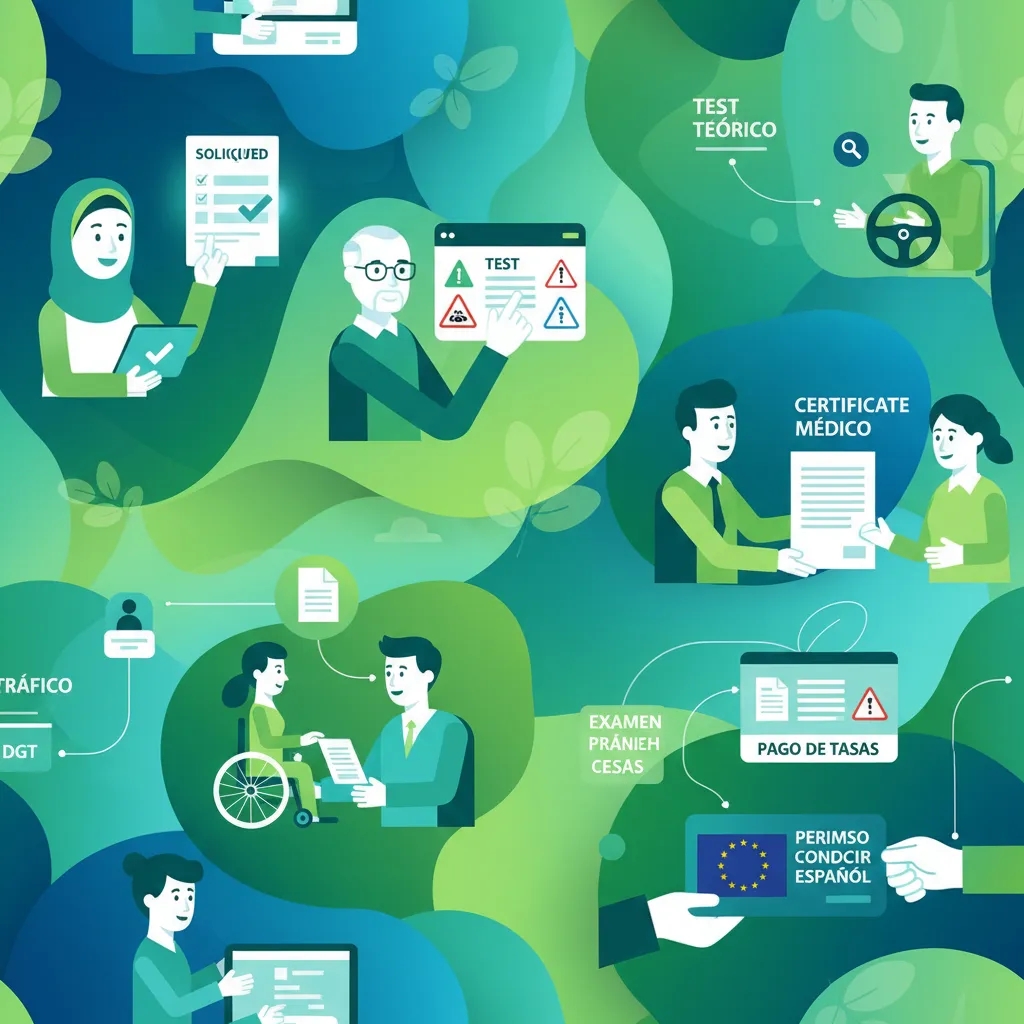
This lesson provides a step-by-step guide to the licensing process for professional truck drivers in Spain. It covers the necessary administrative procedures, including the mandatory medical examination and psychotechnical tests required for eligibility. Learners will understand the full scope of documentation needed for the application, such as training certificates and identity verification, to ensure a smooth process.

This lesson defines the minimum legal ages for driving categories B and BE and explains the importance of medical fitness for safe vehicle operation. It covers the specific health criteria set by the DGT, such as visual acuity, hearing capacity, and other physical capabilities. The content also outlines the distinctions between the two categories, focusing on the legal permissions and requirements for each.

This lesson provides a detailed breakdown of the D and D1 license categories, defining the vehicle dimensions and passenger capacities for each. It explains the DGT's eligibility requirements, including minimum age, medical certification, and mandatory psychological assessments for professional drivers. Learners will understand the complete procedural path to obtaining a professional bus or coach license in Spain.

This lesson examines the specific documents needed to start the Spanish license acquisition process, including personal identification, proof of residence, and a valid medical certificate (psicotécnico). It outlines the official DGT application form, associated fees, and the sequential steps for successful registration. The content also clarifies the age thresholds for categories B and BE and the conditions for license renewal.
Learn the specific rules for towing trailers with Category C1 and C licences in Spain. Understand the Maximum Authorised Mass (MAM) limits for trailers and the combined vehicle-trailer weight regulations.
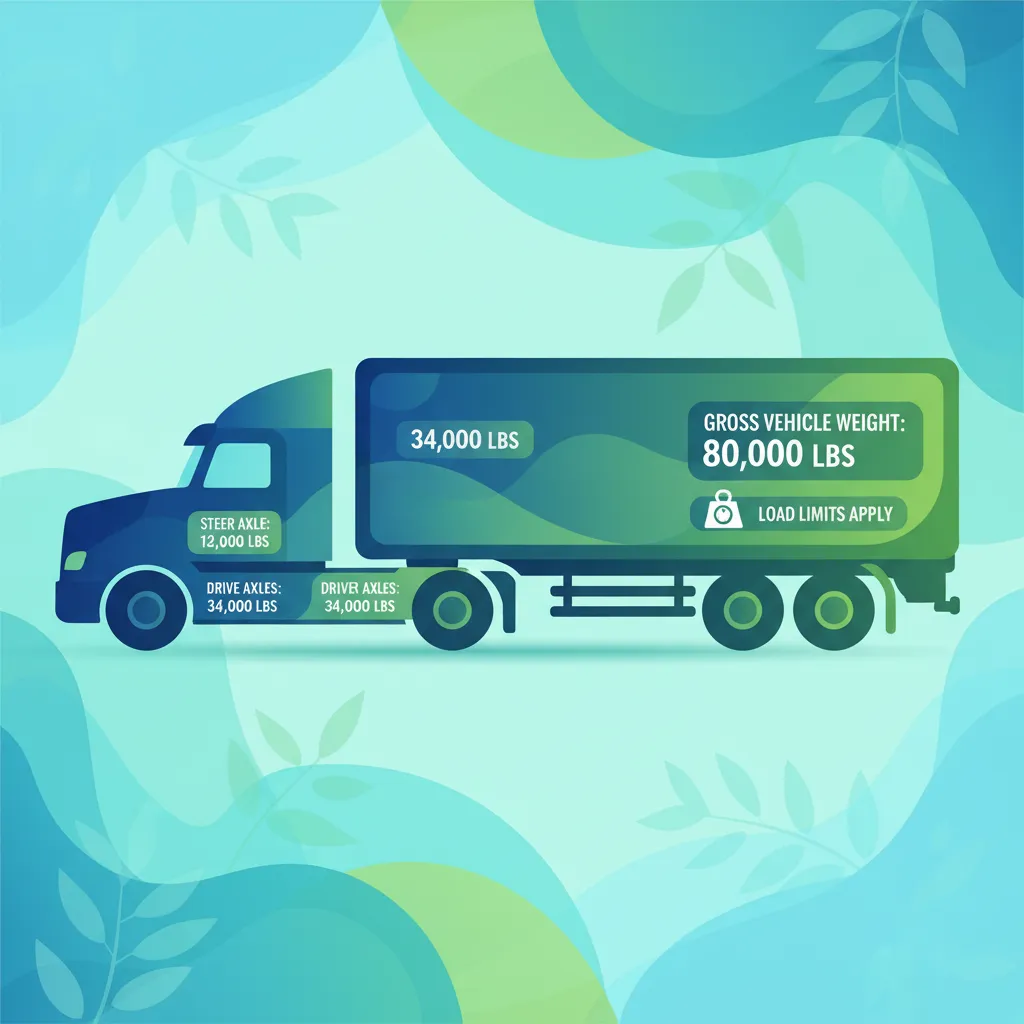
This lesson covers the critical regulations concerning vehicle weight, including Gross Vehicle Weight (GVW) and individual axle load limits. Learners will understand how to calculate tare weight and maximum payload to avoid overloading. The content also explains how proper weight distribution is essential for vehicle stability, braking efficiency, and minimizing road surface damage.
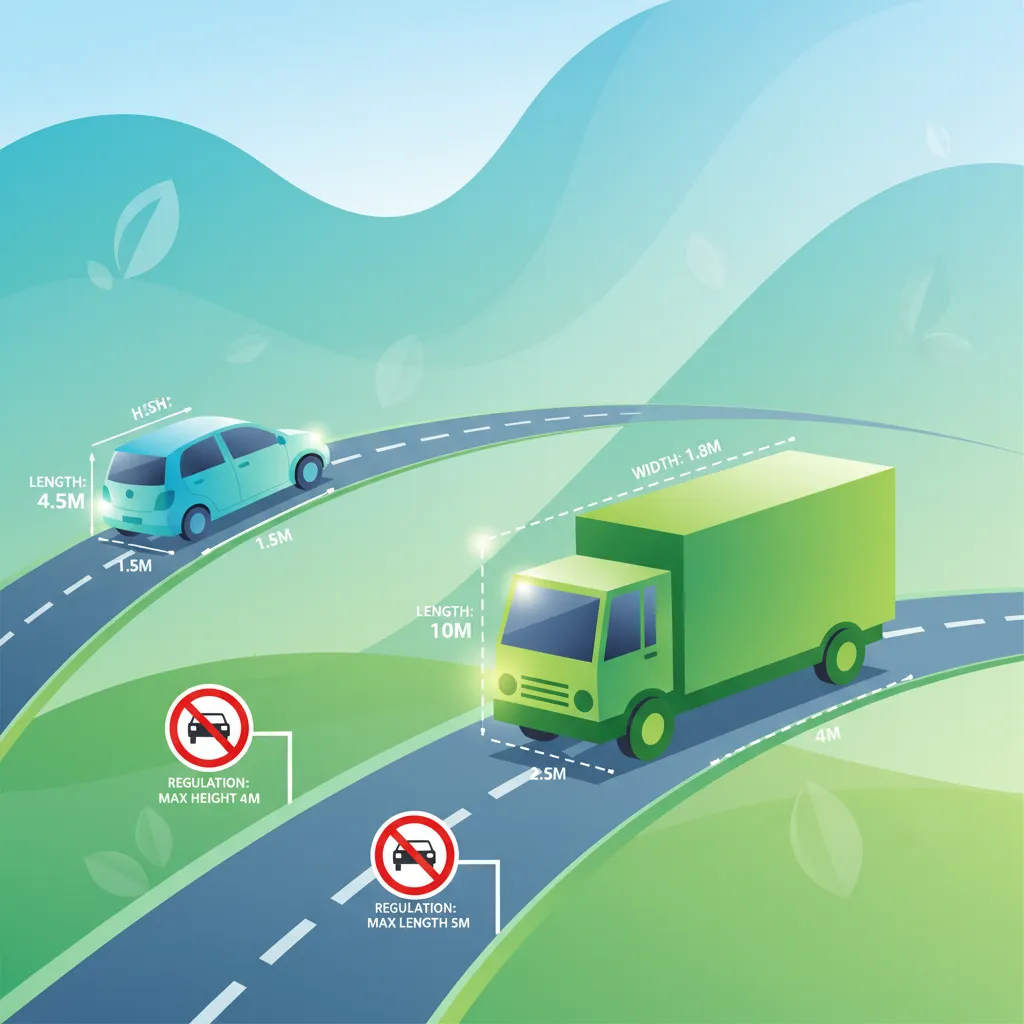
This lesson provides a detailed breakdown of the maximum permissible length, width, and height for heavy vehicles according to Spanish and EU regulations. It explains how these dimensions are measured and how they affect vehicle classification and route planning. The content emphasizes the critical importance of respecting clearance signs for bridges, tunnels, and other overhead structures to prevent accidents.
This lesson provides a step-by-step guide to the licensing process for professional truck drivers in Spain. It covers the necessary administrative procedures, including the mandatory medical examination and psychotechnical tests required for eligibility. Learners will understand the full scope of documentation needed for the application, such as training certificates and identity verification, to ensure a smooth process.
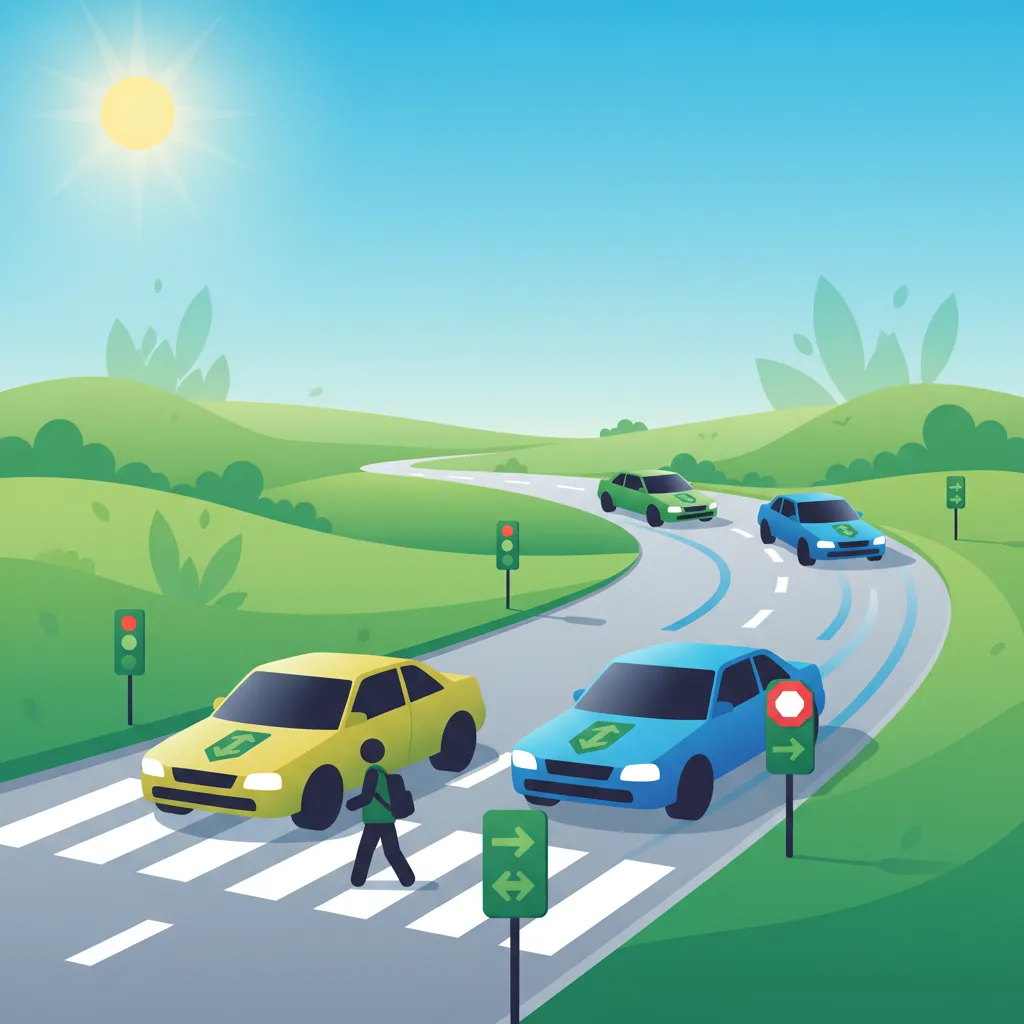
This lesson provides a broad overview of the key traffic regulations in Spain that directly impact professional truck drivers. It details the rules of priority at intersections, the interpretation of different road markings, and the principles of correct lane discipline. Furthermore, it explains the specific speed limits applicable to heavy vehicles and the legal protocols for safe overtaking and signaling.
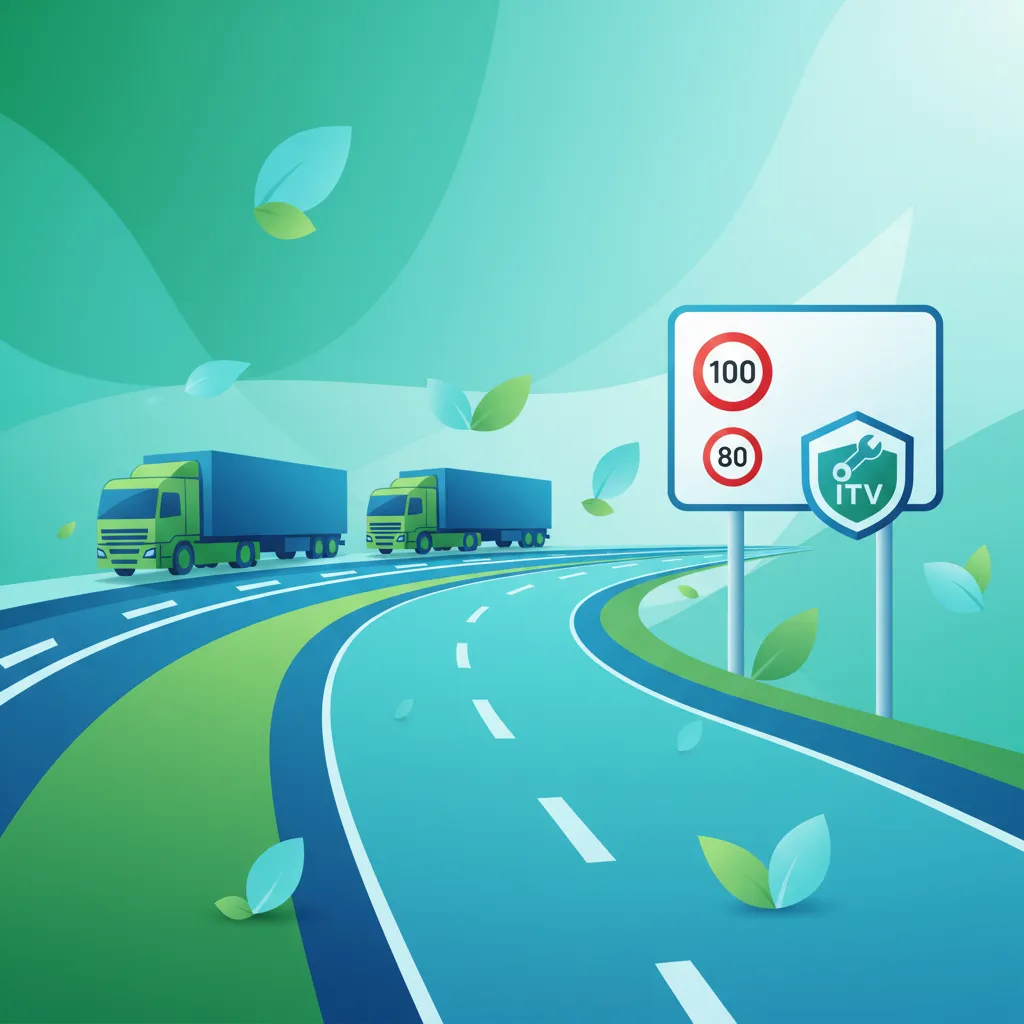
This lesson details the legal framework for towing in Spain. It covers the concepts of maximum authorized mass, towing capacities of vehicles, and specific weight limits for different axle configurations. The content also explains the documentation and periodic technical inspection (ITV) requirements for trailers to ensure full legal compliance.
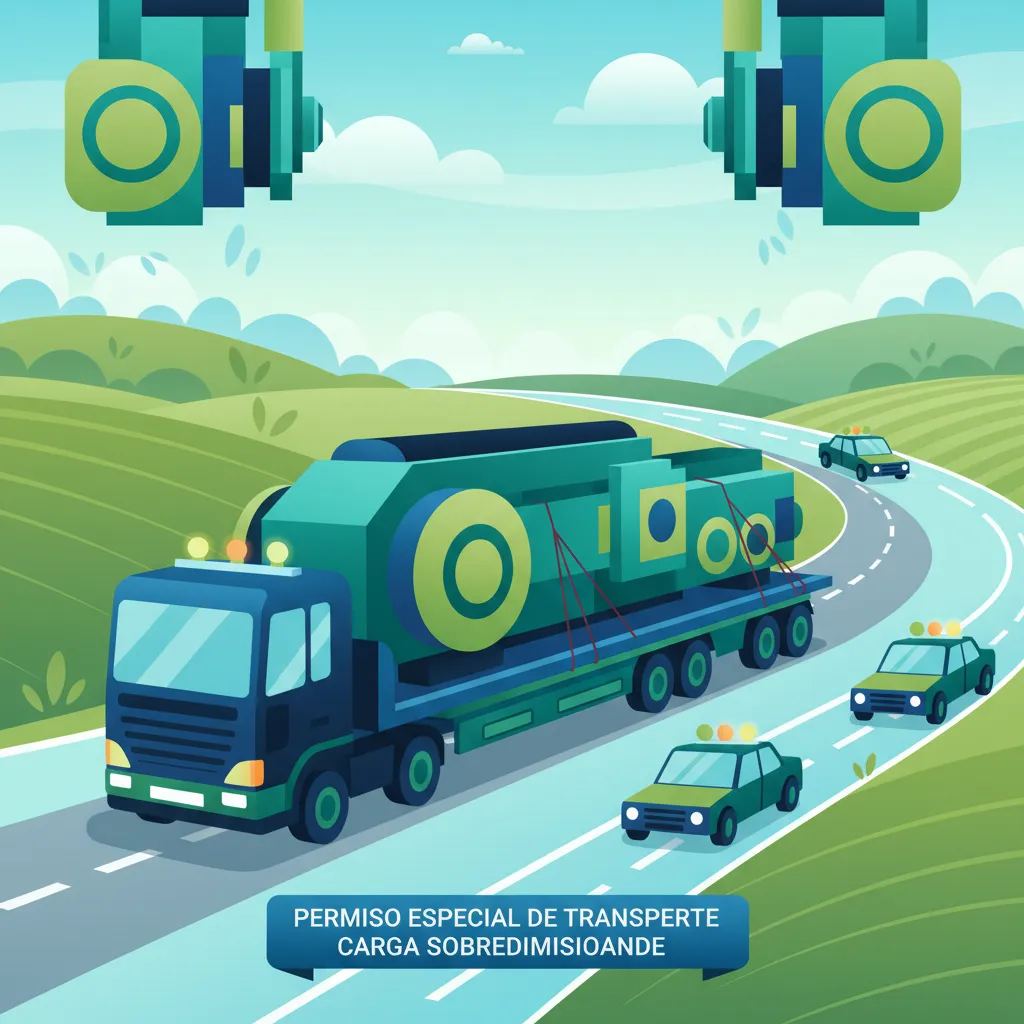
This lesson addresses the special regulations that apply to transporting loads that exceed standard legal dimensions or weight. It explains the process for obtaining the necessary special permits from the DGT and other authorities. The content also covers the requirements for route planning, the use of escort vehicles (pilot cars), and the mandatory signage and lighting for the vehicle.

This lesson focuses on the specific restrictions that heavy vehicles face on public infrastructure and in urban centers. It covers how to interpret signs indicating weight limits for bridges and height restrictions for tunnels and overpasses. The content also explains the various municipal regulations that can restrict truck access to certain urban areas, such as low-emission zones or time-based delivery windows.
This lesson focuses on the critical relationship between speed, following distance, and overall traffic safety on highways. It explains how to calculate a safe following distance based on speed and weather conditions, accounting for a truck's longer stopping distance. The content also teaches strategies for managing speed to adapt smoothly to changing traffic flow, enhancing both safety and fuel efficiency.
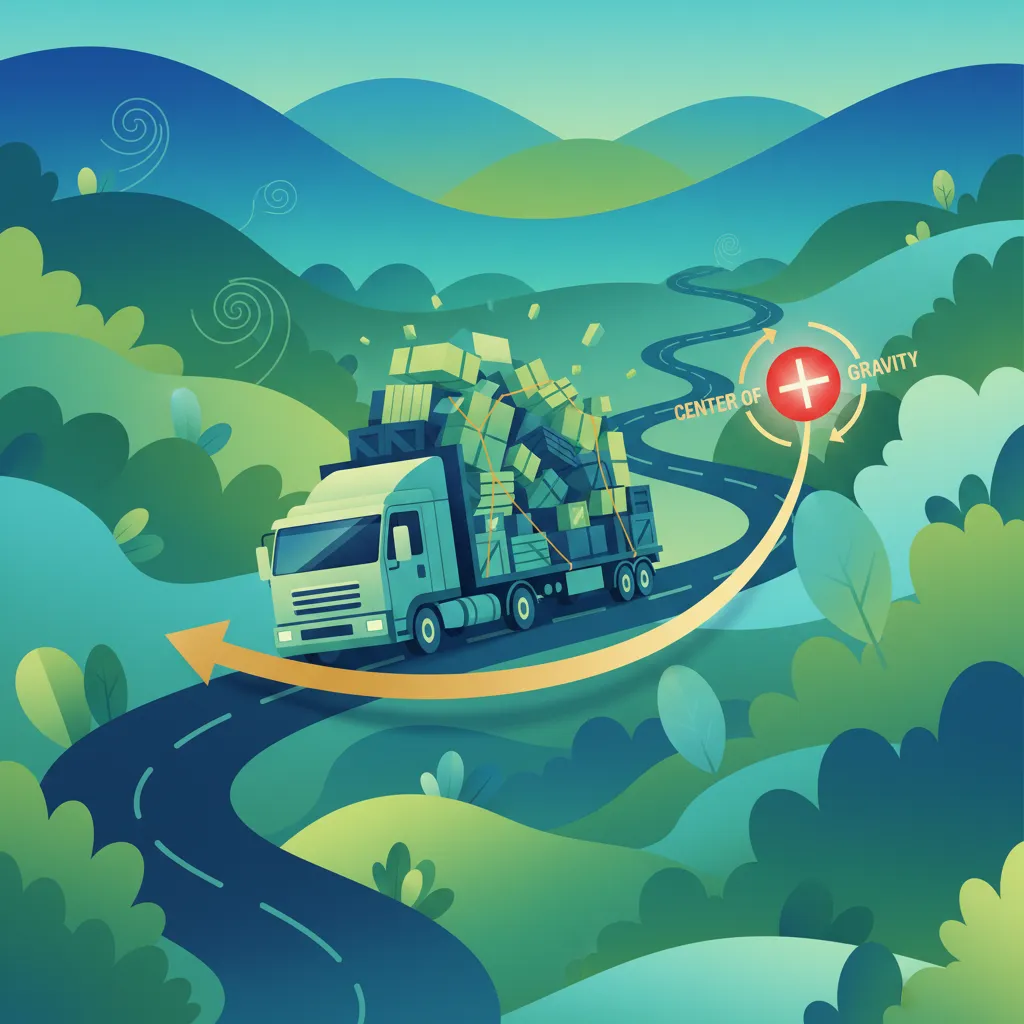
This lesson explains the physical concept of the center of gravity and its critical importance in heavy vehicle stability. It details how the placement and distribution of cargo can raise or lower the center of gravity, affecting rollover risk and handling. The content also covers factors that contribute to vehicle sway and the principles of load balancing to maintain control during turns and maneuvers.
Find clear answers to common questions learners have about Scope of Category C & C1 Licences. Learn how the lesson is structured, which driving theory objectives it supports, and how it fits into the overall learning path of units and curriculum progression in Spain. These explanations help you understand key concepts, lesson flow, and exam focused study goals.
The primary difference lies in the Maximum Authorised Mass (MAM) or Gross Vehicle Weight (GVW). Category C1 allows driving vehicles with a MAM between 3,500 kg and 7,500 kg. Category C permits driving vehicles with a MAM exceeding 7,500 kg.
The minimum age to apply for a Category C1 licence in Spain is 21 years old. However, with specific initial professional training (CAP inicial), this can be reduced to 18 years old.
The minimum age to apply for a Category C licence in Spain is 21 years old. Similar to C1, this can be reduced to 18 years old if you have completed the initial professional training (CAP inicial).
Yes, both Category C and C1 licences require passing a specific medical examination (reconocimiento médico) to verify your physical and mental fitness to drive heavy goods vehicles. This includes vision, hearing, and general health checks.
MAM, or Maximum Authorised Mass (Masa Máxima Autorizada in Spanish), is the maximum loaded weight of the vehicle as specified by the manufacturer. This includes the weight of the vehicle itself plus its payload. It is a key factor in determining which driving licence category is required.
Use our powerful search functionality to pinpoint specific Spanish DGT driving theory practice sets. Filter by road sign categories, traffic law topics, or question difficulty to build custom study sessions and reinforce your knowledge precisely where it matters for your official exam.