
Welcome to the 'Weight Distribution and Load Limits' lesson, a crucial part of our Vehicle Handling & Dimensions unit for your Professional Bus and Coach Theory. Understanding how weight impacts your vehicle's stability is vital for safe operation on Spanish roads.
Lesson content overview
Operating a bus or coach requires an in-depth understanding of vehicle dynamics, and a fundamental aspect of this is managing weight distribution and adhering to load limits. For professional drivers aiming for or holding a Spanish Category D or D1 driving license, this knowledge is not just recommended; it is legally mandatory and critical for ensuring safety, compliance, and the longevity of the vehicle. This lesson delves into the principles, regulations, and practical implications of how passengers and cargo affect your vehicle's stability, handling, and overall performance on the road.
Proper load planning is the cornerstone of safe and compliant bus and coach operation. This involves more than simply counting passengers; it requires a detailed understanding of how total weight and its distribution impact various components of the vehicle and its interaction with the road. Spanish transport legislation sets stringent requirements to protect both vehicle occupants and road infrastructure.
The Gross Vehicle Weight (GVW), known in Spanish as Masa Máxima Autorizada (MMA), represents the total permissible weight of a vehicle when fully loaded. This includes the vehicle's own weight (curb weight), plus the weight of all passengers, their luggage, fuel, and any other equipment carried. It is the absolute upper limit specified by the manufacturer and enforced by law, determining whether a bus or coach can legally and safely operate on specific routes.
The weight of the vehicle itself, including all standard equipment, fluids (like oil and coolant), and a full tank of fuel, but without passengers or cargo. This is the baseline weight before any load is added.
The maximum additional weight a vehicle can carry beyond its curb weight. This includes passengers, their luggage, and any extra cargo. The payload capacity is derived from subtracting the curb weight from the GVW.
Exceeding the GVW can have severe consequences, including structural damage to the vehicle's chassis, premature wear on tyres and suspension components, and a significant increase in braking distances. It also poses a substantial risk of fines and penalties under Spanish traffic regulations (e.g., Reglamento General de Circulación). Drivers must always ensure that the total weight of their bus or coach, under any operating condition, never surpasses the GVW specified on the vehicle's registration documents and certification plate.
Beyond the overall GVW, each individual axle on a bus or coach has a maximum permissible weight it can bear, known as the axle load limit (Carga Máxima por Eje). These limits are set by the vehicle manufacturer and are also enshrined in Spanish law. They are crucial for preventing overloading of specific parts of the vehicle, which can lead to tyre failure, suspension damage, and even structural fatigue of the chassis.
Axle load limits are typically different for the front and rear axles, and for articulated buses, specific limits may apply to tandem or tridem axle configurations. Placing heavy cargo predominantly over one axle, for instance, by storing all luggage at the very rear of a coach, can easily cause that axle to exceed its individual limit, even if the overall GVW remains within bounds. This imbalance can severely compromise vehicle handling and lead to uneven tyre wear and increased maintenance costs. Adherence to these limits is routinely checked during roadside inspections and technical vehicle inspections (Inspección Técnica de Vehículos - ITV) in Spain.
The Centre of Gravity (CG) is the theoretical point where the entire mass of the vehicle and its load can be considered to act. Its position, both vertically (height from the ground) and longitudinally (distance from the front axle), is paramount to a bus or coach’s stability and handling characteristics. A higher CG significantly increases the risk of rollover, especially during cornering or sudden evasive manoeuvres.
For buses and coaches, which often carry many passengers or significant luggage, maintaining a low and centrally located CG is essential. For example, loading luggage on the upper deck of a double-decker bus dramatically raises its vertical CG, making it more susceptible to tipping when negotiating sharp turns or driving on sloped terrain. Conversely, a CG that is too far forward can lead to excessive weight transfer to the front axle during braking, potentially reducing rear-wheel traction and stability. Professional drivers must understand how passenger and cargo placement directly influences the CG and adjust their loading strategy accordingly to ensure safe operation.
The load distribution ratio describes how the total weight (GVW) is proportioned between the front and rear axles, typically expressed as a percentage. For instance, a 40% front / 60% rear distribution means the front axle carries 40% of the GVW, and the rear axle carries 60%. This ratio is fundamental to balanced traction, braking efficiency, and steering response.
An incorrect load distribution ratio can lead to dangerous handling characteristics:
Spanish regulations often require a minimum front-axle load to ensure adequate steering and braking performance. Drivers must aim for a balanced distribution to maintain predictable vehicle control in all conditions.
The legal load limit for a bus or coach specifies the maximum number of passengers and the maximum weight of cargo permitted by law for a specific vehicle class. This is distinct from GVW and axle loads, as it focuses on the quantity of load items rather than just their weight.
For Category D and D1 licenses in Spain:
Exceeding the maximum passenger count, even if the GVW is not violated, is a serious offence that can result in significant fines, licence penalties, and immediate cessation of the journey. It compromises emergency evacuation procedures and the effectiveness of safety equipment, as these are designed for the vehicle's certified capacity. Cargo weight limits, as defined by the manufacturer and law, must also be strictly observed. This ensures that even with the maximum legal number of passengers, there is still capacity for their luggage without exceeding GVW or axle limits.
Understanding the static definitions of weight and distribution is only part of the equation. Professional drivers must also grasp the dynamic interplay between these factors and the vehicle's motion. Weight distribution is not a static concept; it constantly shifts during driving manoeuvres, and these shifts have profound effects on how the vehicle behaves.
During braking, inertia causes weight to transfer from the rear of the vehicle to the front. This forward load transfer increases the grip on the front wheels, which do most of the braking work, but simultaneously reduces the load, and thus the available grip, on the rear wheels.
Proper load distribution ensures that each axle can contribute optimally to braking without being overstressed, providing predictable and safe stopping distances.
The most critical dynamic effect of weight distribution is its impact on a vehicle's stability during cornering, directly influencing the rollover threshold. When a bus or coach negotiates a turn, centrifugal force (the outward force felt in a turn) acts at the vehicle's centre of gravity, pushing the vehicle outwards.
Professional drivers must be acutely aware that the combination of speed, turn radius, and the vehicle's CG dictates stability. Vehicles with an inappropriately high CG will have a dangerously reduced rollover threshold, meaning a situation that would be safe for a correctly loaded vehicle could cause a rollover for an improperly loaded one.
Weight distribution also profoundly affects a bus or coach's steering response and traction, especially on drive wheels.
Maintaining a balanced load distribution ratio ensures that all tyres are appropriately loaded for optimal grip, providing predictable steering, efficient power transfer, and overall vehicle control.
Compliance with Spanish transport legislation is non-negotiable for professional bus and coach drivers. Breaching these regulations can lead to severe penalties, compromise safety, and even result in the revocation of a driving license or operating permit.
The Reglamento de Vehículos (Vehicle Regulations) and the Reglamento General de Circulación (General Traffic Regulations) are the primary legal texts governing vehicle weights in Spain.
Violation of GVW or axle load limits is considered a serious offence in Spain. Penalties can include significant fines, temporary immobilization of the vehicle, and points deduction from the driver's license.
The number of passengers a bus or coach may carry is strictly limited by its homologation and registration documents.
These regulations are in place to ensure passenger safety, particularly regarding emergency exits, seatbelt usage (where applicable), and the structural integrity of the passenger compartment.
While specific regulations might not dictate the exact positioning of every piece of luggage, general safety principles and recommended practices for load placement are legally enforceable through general safety provisions.
Operators and drivers of commercial passenger vehicles in Spain are expected to demonstrate compliance with load limits.
Before every journey, especially after passenger changes or adding/removing cargo, mentally or physically re-evaluate your vehicle's load and distribution. Err on the side of caution.
Ignorance of load limits or complacency in load management can lead to dangerous situations and legal repercussions. Recognising common mistakes is the first step towards preventing them.
Many drivers inadvertently overload their vehicles, often by underestimating the cumulative weight of passengers and their belongings.
Even if a vehicle is correctly loaded at rest, unsecured cargo can create hazardous dynamic shifts in weight.
Managing weight and load distribution is not a static task; it requires dynamic awareness and adaptation to various driving contexts.
External factors significantly influence how a vehicle responds to its load.
The vehicle's mechanical state plays a role in how it handles its load.
The safety implications of an improperly loaded bus extend to other road users, particularly vulnerable ones like pedestrians and cyclists.
Effective load management is an ongoing process that begins before a journey and continues throughout.
Verify GVW and Axle Limits: Before loading, confirm the maximum GVW and axle load limits from the vehicle's documentation. Keep these figures in mind as you load.
Estimate Passenger Weight: Use an average passenger weight (e.g., 75 kg per person) and multiply by the number of passengers. Add this to the estimated luggage weight.
Plan Cargo Placement: Strategically place heavy luggage and cargo in the lowest, most central compartments. Distribute the load evenly across axles as much as possible. Avoid stacking heavy items high.
Secure All Items: Ensure all cargo, luggage, and equipment are securely stowed and cannot shift during transit. Use available restraints.
Check Tyre Pressures: Verify that all tyres are inflated to the manufacturer's recommended pressures for the anticipated load.
Load management is not a one-time task; it's dynamic.
Understanding the precise definitions of key terms is crucial for professional drivers when discussing vehicle loading and compliance.
For professional bus and coach drivers seeking or holding a Spanish Category D or D1 driving license, mastering weight distribution and load limits is fundamental. It is a critical aspect of safe vehicle operation, directly influencing braking performance, cornering stability, steering response, and overall vehicle control. Adherence to legal maximum Gross Vehicle Weight (GVW), individual axle load limits, and passenger capacity is not merely a bureaucratic requirement; it is a core responsibility that safeguards passengers, protects road infrastructure, and ensures the longevity of your vehicle.
By diligently calculating and distributing loads, drivers mitigate the risks of rollovers, extended stopping distances, and mechanical failures. Continuous awareness of the vehicle's centre of gravity, especially in dynamic conditions and varying road environments, empowers drivers to make informed decisions that prevent accidents and maintain the highest standards of professional conduct. Proper load management is an essential skill that underpins compliance with Spanish transport legislation and contributes significantly to road safety for everyone.
Understanding weight distribution and load limits is mandatory for all Category D and D1 drivers in Spain. The Gross Vehicle Weight (Masa Máxima Autorizada) and individual axle load limits are legally enforced maximums that must never be exceeded, and the centre of gravity position critically affects vehicle stability during braking, cornering, and acceleration. Professional drivers must strategically place heavy cargo low and centrally, ensure balanced axle loading, and account for dynamic weight shifts during all manoeuvres. Non-compliance risks severe penalties including fines, licence points, and vehicle immobilisation, while improper loading directly increases rollover risk, braking distances, and loss of control.
A short set of high-value points that capture the most important learning from this lesson.
Gross Vehicle Weight (Masa Máxima Autorizada) is the absolute maximum total weight your bus or coach can carry, including vehicle, passengers, luggage, and fuel.
A vehicle's centre of gravity directly determines its rollover threshold: the higher the CG, the greater the risk of tipping during cornering.
Exceeding individual axle load limits can occur even when overall GVW is compliant, especially when heavy cargo is placed over one axle.
During braking, weight transfers forward, reducing rear-wheel grip—this effect is amplified with rear-heavy loading and can cause skidding.
Passenger count limits are legally mandatory and distinct from weight limits; exceeding seated capacity violates license terms regardless of total weight.
Explore all units and lessons included in this driving theory course.
GVW and axle load limits must never be exceeded—minor overruns are still violations subject to fines and vehicle immobilisation.
Heavy luggage should be placed low and centrally to maintain a low centre of gravity and prevent rollover risk.
Category D1 limits are 16 passengers plus driver with maximum 8m length; Category D has no upper passenger limit but is bound by vehicle design and GVW.
Rear-heavy loading reduces front axle grip, leading to understeer and longer braking distances, while front-heavy loading reduces rear traction.
Unsecured cargo can dynamically shift the centre of gravity during manoeuvres, causing sudden instability.
Assuming passenger luggage is negligible—50 passengers with 25kg average luggage adds over a tonne to total weight.
Placing all heavy items in rear luggage compartments, causing rear axle overload even when GVW is within limits.
Failing to re-evaluate load distribution after passengers alight at intermediate stops, leaving the vehicle unbalanced.
Ignoring weather conditions—an overloaded or poorly distributed vehicle becomes significantly more dangerous on wet or icy roads.
Overestimating how much fuel weight is already factored in; a full diesel tank adds hundreds of kilograms that push the vehicle closer to its GVW limit.
Lesson content overview
A short set of high-value points that capture the most important learning from this lesson.
Gross Vehicle Weight (Masa Máxima Autorizada) is the absolute maximum total weight your bus or coach can carry, including vehicle, passengers, luggage, and fuel.
A vehicle's centre of gravity directly determines its rollover threshold: the higher the CG, the greater the risk of tipping during cornering.
Exceeding individual axle load limits can occur even when overall GVW is compliant, especially when heavy cargo is placed over one axle.
During braking, weight transfers forward, reducing rear-wheel grip—this effect is amplified with rear-heavy loading and can cause skidding.
Passenger count limits are legally mandatory and distinct from weight limits; exceeding seated capacity violates license terms regardless of total weight.
Explore all units and lessons included in this driving theory course.
GVW and axle load limits must never be exceeded—minor overruns are still violations subject to fines and vehicle immobilisation.
Heavy luggage should be placed low and centrally to maintain a low centre of gravity and prevent rollover risk.
Category D1 limits are 16 passengers plus driver with maximum 8m length; Category D has no upper passenger limit but is bound by vehicle design and GVW.
Rear-heavy loading reduces front axle grip, leading to understeer and longer braking distances, while front-heavy loading reduces rear traction.
Unsecured cargo can dynamically shift the centre of gravity during manoeuvres, causing sudden instability.
Assuming passenger luggage is negligible—50 passengers with 25kg average luggage adds over a tonne to total weight.
Placing all heavy items in rear luggage compartments, causing rear axle overload even when GVW is within limits.
Failing to re-evaluate load distribution after passengers alight at intermediate stops, leaving the vehicle unbalanced.
Ignoring weather conditions—an overloaded or poorly distributed vehicle becomes significantly more dangerous on wet or icy roads.
Overestimating how much fuel weight is already factored in; a full diesel tank adds hundreds of kilograms that push the vehicle closer to its GVW limit.
Explore search topics learners often look for when studying Weight Distribution and Load Limits. These topics reflect common questions about road rules, driving situations, safety guidance, and lesson level theory preparation for learners in Spain.
Browse additional driving theory lessons that cover connected traffic rules, road signs, and common driving situations related to this topic. Improve your understanding of how different rules interact across everyday traffic scenarios.
Explore how weight distribution, axle loads, and cargo placement affect a bus or coach's centre of gravity and overall stability. Understand the physics behind safe handling and rollover prevention for professional drivers in Spain.

This lesson explains the physical concept of the center of gravity and its critical importance in heavy vehicle stability. It details how the placement and distribution of cargo can raise or lower the center of gravity, affecting rollover risk and handling. The content also covers factors that contribute to vehicle sway and the principles of load balancing to maintain control during turns and maneuvers.

This lesson examines the complex braking systems found in heavy passenger vehicles, with a focus on air brakes and anti-lock braking systems (ABS). It covers how these systems impact stopping distance, brake fade, and overall safety under different load and weather conditions. Learners will also study the required maintenance schedules and safety checks to ensure the braking components remain in optimal working order.
In this lesson, the principles of proper load distribution and maintaining an appropriate center of gravity are explored. It covers how uneven weight can cause trailer sway (snaking) and destabilize the towing vehicle. Learners will be instructed on DGT load limits, proper cargo arrangement, and tie-down methods to ensure safe transport.
This lesson details the standard dimensions of buses and coaches, including length, width, height, and wheelbase. It explains how these measurements determine the vehicle's turning circle and its ability to maneuver in tight urban spaces with lane constraints. Learners will understand how to calculate necessary clearance zones and anticipate spatial needs to ensure safe and efficient operation.

This lesson outlines the best practices for precise vehicle positioning at urban bus stops and ensuring safe interaction with passengers. It covers the management of approach speed, correct alignment with the curb, and effective communication during boarding and alighting processes. Learners will also study how stopping maneuvers impact surrounding traffic flow and the importance of maintaining safety distances for efficient service.
This lesson focuses on the correct procedures for managing mechanical failures while ensuring the safety of all passengers. Learners will study safe pull-over techniques, the proper use of hazard warning lights, and effective communication with passengers during a breakdown. The content also covers the use of emergency tools, coordination with roadside assistance, and protocols for maintaining a safe environment until help arrives or service is restored.

This lesson explores the direct relationship between a vehicle's load and its braking and acceleration performance. It explains how increased mass significantly increases the vehicle's inertia, resulting in longer stopping distances and slower acceleration. Understanding these physical principles helps drivers adjust their driving style, such as increasing following distances, to compensate for the effects of a heavy load.

This lesson introduces various eco-driving techniques designed to improve fuel efficiency while ensuring a smooth ride for passengers. It covers principles such as gentle throttle control, strategic coasting, and the effective use of cruise control for speed stabilization on long stretches. Learners will also understand how gear selection, aerodynamic drag, and advance route planning contribute to reducing overall fuel consumption.
Understand the specific Spanish DGT regulations concerning Gross Vehicle Weight (GVW) and axle load limits for buses and coaches. Learn about legal passenger capacity and compliance for professional driving licenses.
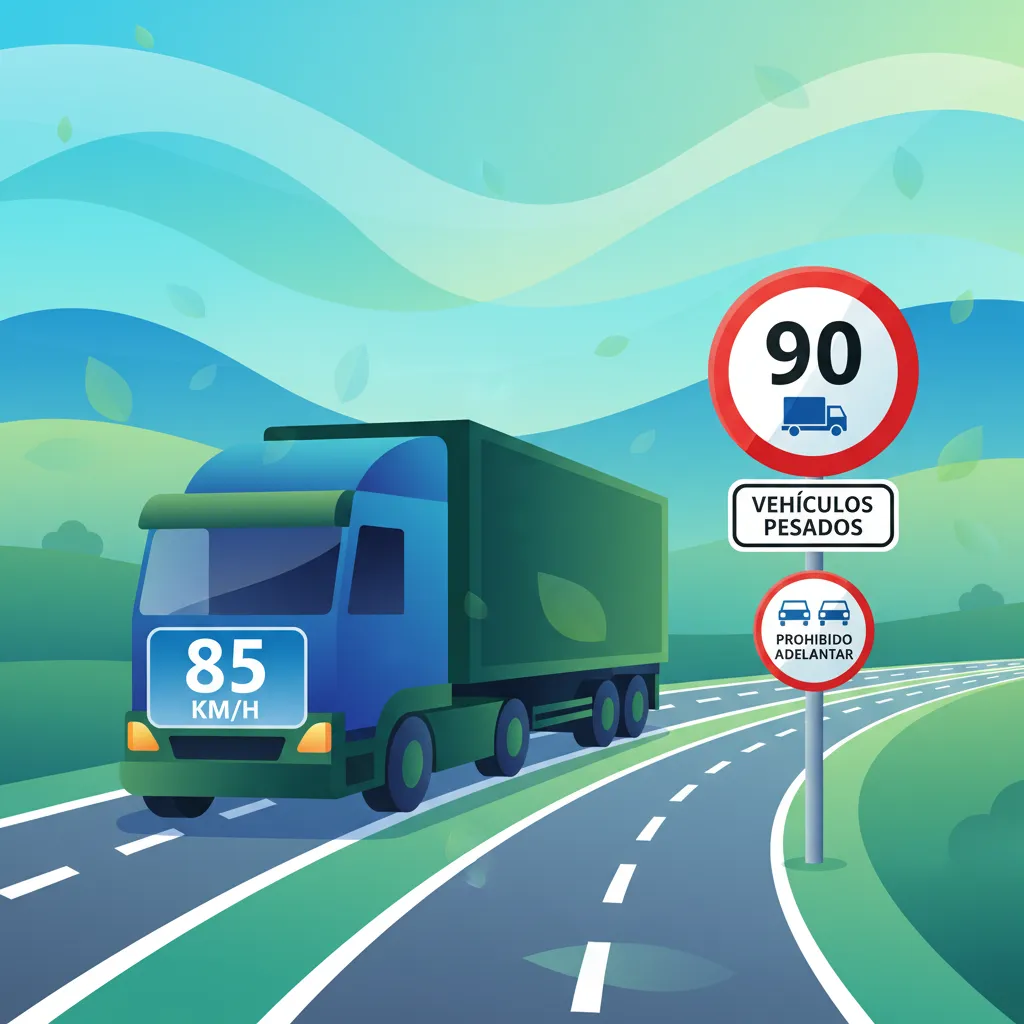
This lesson details the specific legal speed limits that apply to heavy passenger vehicles on Spanish highways, including variable speed zones that adjust based on traffic and weather conditions. Learners will understand the methods for speed monitoring, the function of speed control devices, and the legal consequences of non-compliance. The content also provides guidance on calculating a safe operating speed based on vehicle load and road conditions.

This lesson covers the critical regulations concerning vehicle weight, including Gross Vehicle Weight (GVW) and individual axle load limits. Learners will understand how to calculate tare weight and maximum payload to avoid overloading. The content also explains how proper weight distribution is essential for vehicle stability, braking efficiency, and minimizing road surface damage.
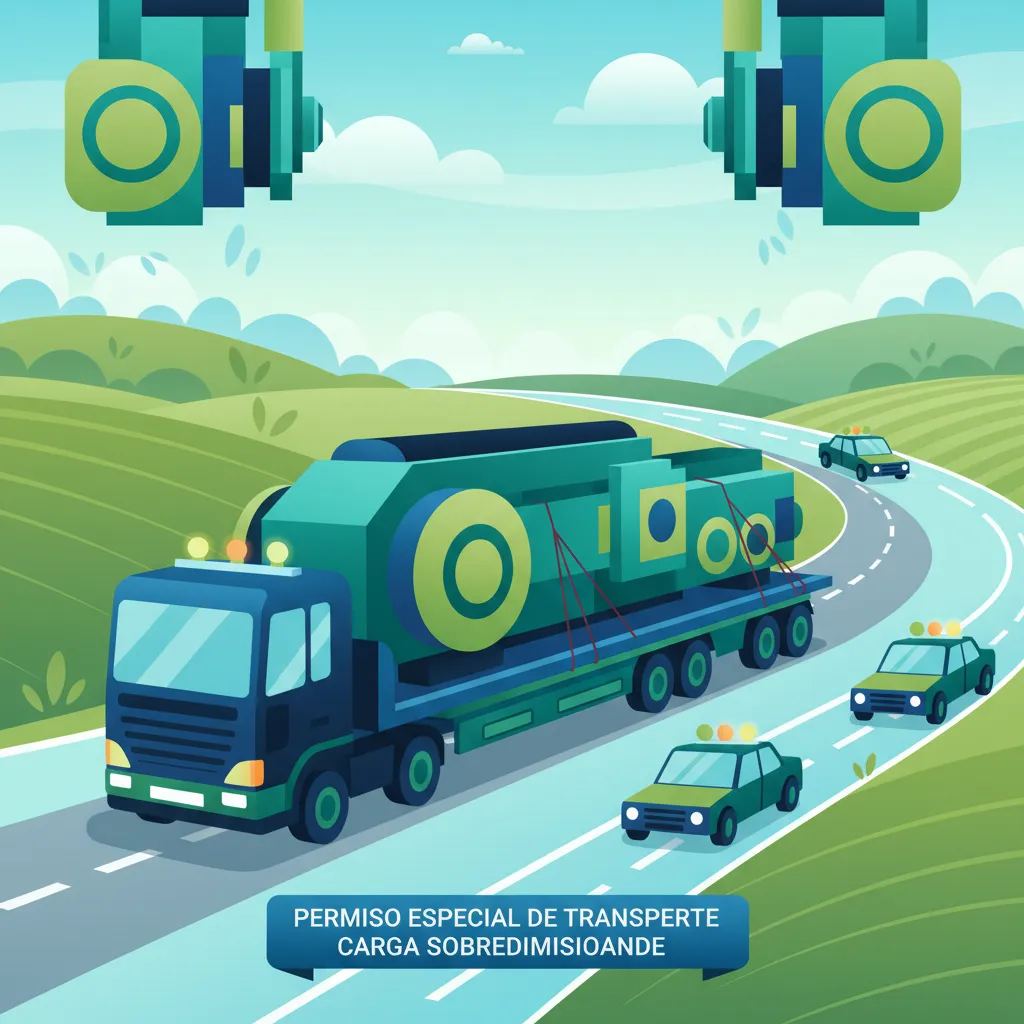
This lesson addresses the special regulations that apply to transporting loads that exceed standard legal dimensions or weight. It explains the process for obtaining the necessary special permits from the DGT and other authorities. The content also covers the requirements for route planning, the use of escort vehicles (pilot cars), and the mandatory signage and lighting for the vehicle.
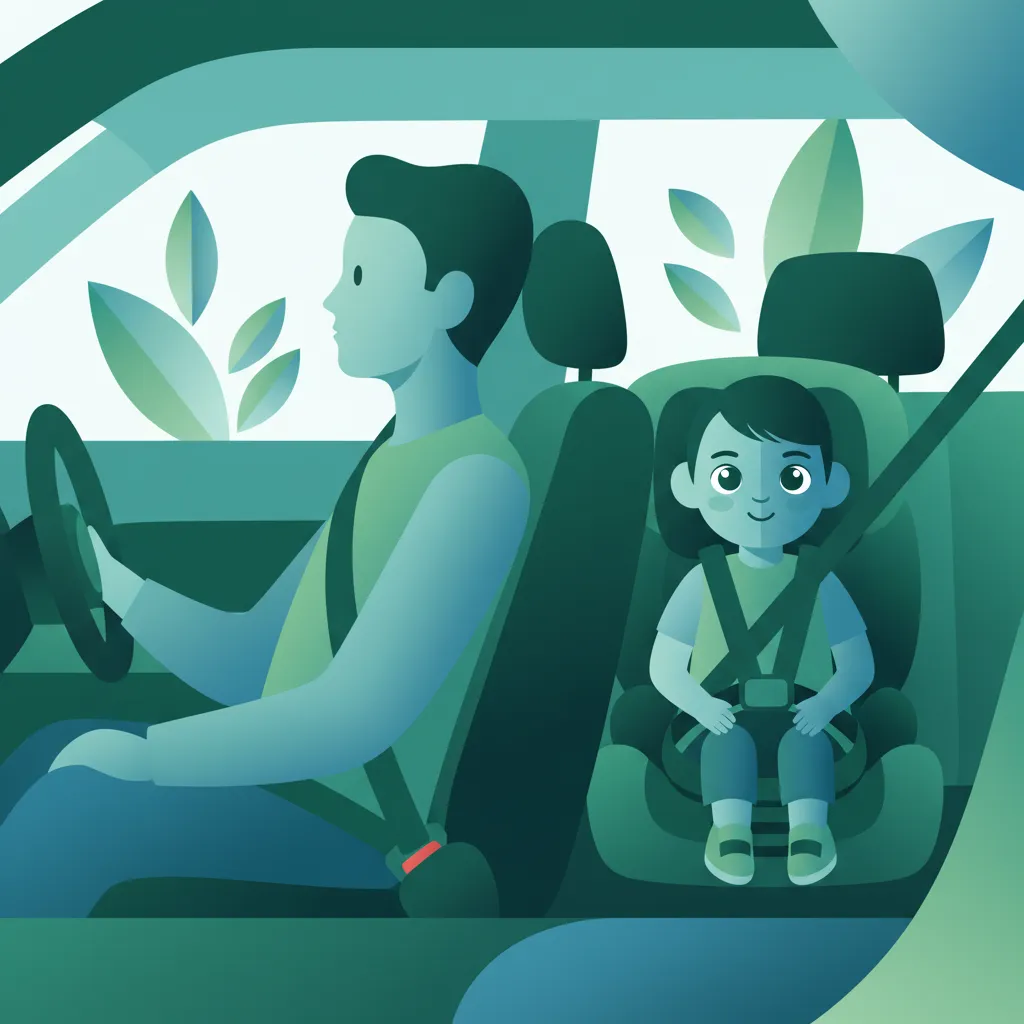
This lesson details the legal requirements for the use of seatbelts and child restraint systems in buses and coaches, as stipulated by DGT regulations. It specifies the age and size limits for various restraint devices and explains the verification checks drivers must perform. Learners will also review safety statistics that highlight the importance of correct usage and understand the legal penalties associated with non-compliance.
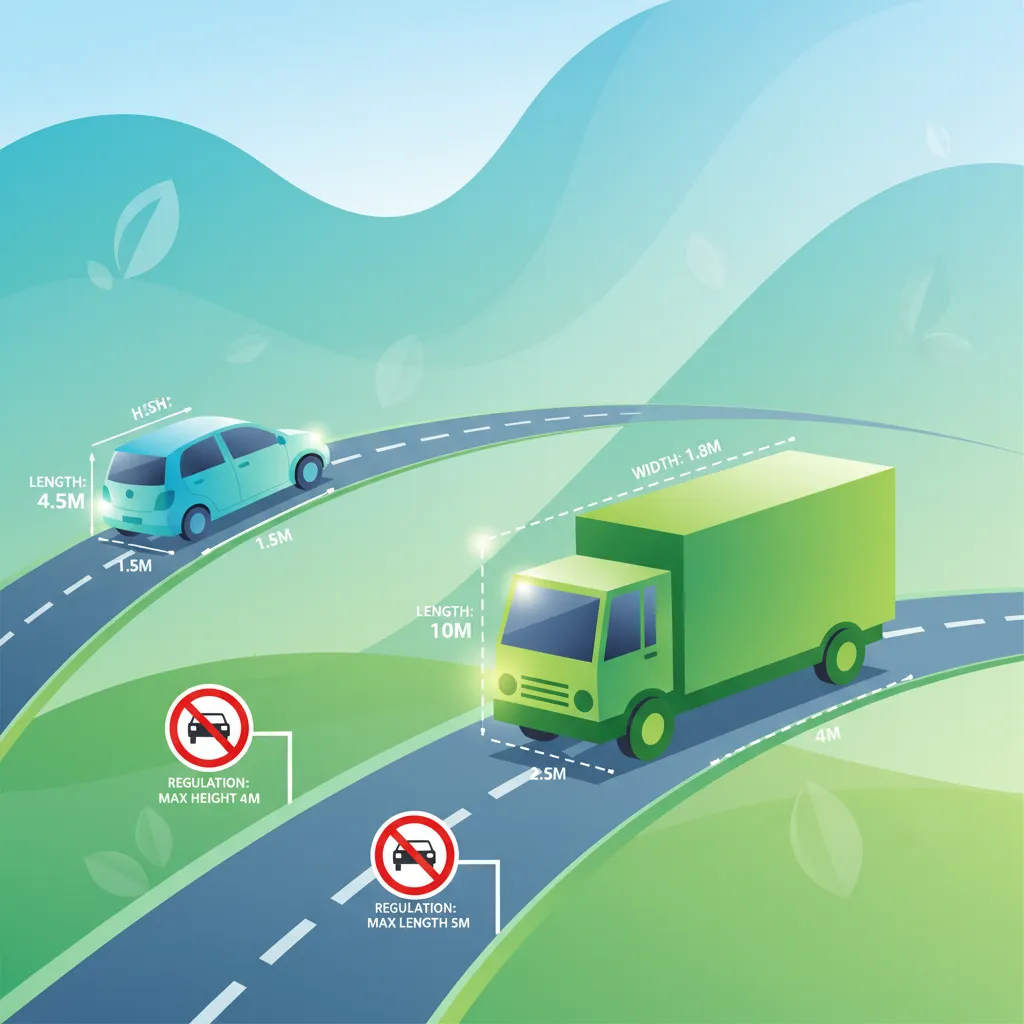
This lesson provides a detailed breakdown of the maximum permissible length, width, and height for heavy vehicles according to Spanish and EU regulations. It explains how these dimensions are measured and how they affect vehicle classification and route planning. The content emphasizes the critical importance of respecting clearance signs for bridges, tunnels, and other overhead structures to prevent accidents.

This lesson provides a detailed outline of the legal framework that governs driver duty hours in Spain, specifying the maximum continuous driving time and mandatory rest periods defined by the DGT. Learners will understand the limits on cumulative work hours, the necessity of meticulous record-keeping, and methods for monitoring compliance with these regulations. The module also discusses the penalties for violations and reinforces the safety imperative of adherence.

This lesson explains the specific legal framework governing truck operations on Spain's high-speed road network. It details the different speed limits for trucks on autovías versus autopistas and the regulations regarding which lanes heavy vehicles are permitted to use. Learners will also understand how to interpret specific highway signage relevant to commercial vehicles and any applicable toll regulations.

This lesson focuses on the legal duty of care that professional bus drivers owe to their passengers, emphasizing the obligation to ensure safe transport. It examines the specific traffic laws applicable to heavy vehicles and the consequences of violations, such as fines and license sanctions. The content also details the mandatory procedures for reporting incidents and the essential insurance coverage required by the DGT.
Find clear answers to common questions learners have about Weight Distribution and Load Limits. Learn how the lesson is structured, which driving theory objectives it supports, and how it fits into the overall learning path of units and curriculum progression in Spain. These explanations help you understand key concepts, lesson flow, and exam focused study goals.
Gross Vehicle Weight (GVW) refers to the total maximum allowable weight of the vehicle, including its chassis, body, engine, fuel, accessories, driver, passengers, and cargo. Axle load limits, on the other hand, specify the maximum weight that each individual axle is permitted to carry. Both are crucial for safety and regulatory compliance in Spain.
Placing passengers towards the rear of the bus, especially on a slope or during braking, can shift the center of gravity backward, potentially making the vehicle unstable or prone to lifting its front wheels. Conversely, concentrating weight at the front can negatively impact steering and braking. Even distribution is key.
Yes, the DGT establishes general regulations for vehicle weights, including specific limits for different types of buses like D1 (smaller coaches) and D (larger buses). These regulations consider factors like the number of axles, tyre specifications, and vehicle design to ensure safety and prevent road damage.
Exceeding weight limits, whether GVW or axle loads, can lead to severe penalties, including fines and potential impoundment of the vehicle. More importantly, it significantly compromises vehicle stability, braking efficiency, and steering control, greatly increasing the risk of accidents. It can also cause damage to the vehicle and road infrastructure.
Always consult the vehicle's manual for its specific GVW and axle load capacities. Distribute luggage evenly, preferably in designated storage areas, and be mindful of passenger distribution. For professional operators, proper load planning and documentation are essential to avoid violations.
Use our powerful search functionality to pinpoint specific Spanish DGT driving theory practice sets. Filter by road sign categories, traffic law topics, or question difficulty to build custom study sessions and reinforce your knowledge precisely where it matters for your official exam.