
Navigating urban environments as a professional truck driver requires precision, especially when parking, accessing loading docks, or using delivery zones. This lesson, part of Unit 7: Urban Driving with Trucks, builds on your understanding of truck dimensions and manoeuvring to equip you with the practical skills and knowledge for safe and compliant urban deliveries, preparing you for both the DGT theory exam and real-world challenges.
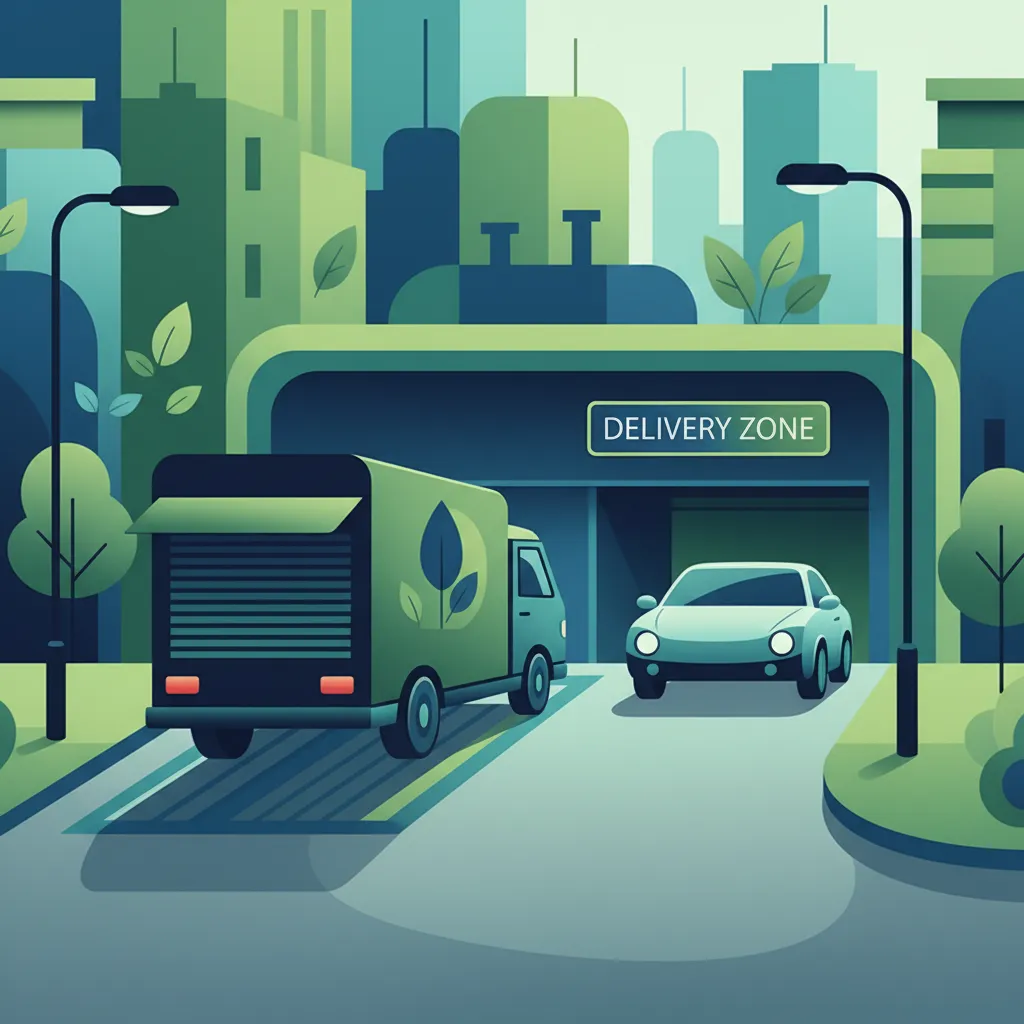
Lesson content overview
As a professional driver holding a Spanish Truck Licence Category C or C1, you will frequently navigate urban environments to park, load, and unload goods. These operations require precise maneuvering, strict adherence to regulations, and heightened awareness of surrounding traffic and pedestrians. This lesson provides essential guidance on safely and efficiently managing these critical procedures, minimizing risks, and ensuring compliance with national and municipal laws.
Proper parking and loading practices are fundamental to preventing accidents, safeguarding vulnerable road users, maintaining efficient traffic flow, and avoiding penalties. Failure to understand and apply these procedures can result in significant fines, traffic congestion, and increased risk of collisions or cargo damage.
Parking a heavy goods vehicle (HGV) or light commercial vehicle (LCV) in an urban setting presents unique challenges compared to passenger cars. The sheer size, weight, and limited maneuverability of Category C and C1 vehicles necessitate specific regulations and careful planning. Understanding where and how you can legally stop or park is the first step toward safe urban operations.
Commercial vehicles encounter various parking scenarios in cities, each with its own set of rules and best practices.
Spanish traffic regulations (DGT) and local municipal bylaws govern where and how commercial vehicles can park. These rules are designed to prevent congestion, ensure safety, and facilitate commercial activity efficiently.
The Dirección General de Tráfico (DGT) is the main governing body for road traffic in Spain, setting national rules and regulations. Municipalities may add local bylaws.
Parking in a non-designated area, or ignoring a "No Stopping" sign, will result in fines and potentially the vehicle being towed. Always confirm the legality of your chosen spot.
Loading docks are specialized areas designed for the efficient transfer of goods between commercial vehicles and buildings. Successfully navigating these docks requires precise maneuvering, careful attention to vehicle dimensions, and a strong focus on safety.
Maneuvering a heavy vehicle into a loading dock often involves precise reversing in confined spaces. This demands skill and a systematic approach to prevent damage to the vehicle, the dock, or surrounding property.
Pre-Arrival Assessment: Before approaching the dock, assess the area. Check for any overhead obstructions, ground hazards, gradients, and the condition of the dock itself. Note the dock height relative to your vehicle's cargo bed.
Strategic Approach: Position your vehicle for the reverse maneuver. This often means driving past the dock slightly and then initiating a controlled reverse. Consider the turning radius of your vehicle, especially if you have a trailer, to ensure you have enough space for the swing.
Precision Reversing: Slowly back the vehicle towards the dock. Use all available mirrors, and if necessary, a rear-view camera or a spotter. Maintain a low speed to allow for continuous adjustments. Your goal is to align the rear of your vehicle flush with the dock edge.
Final Positioning and Engagement: Once aligned, gently bring the vehicle to a stop. Engage the parking brake securely. If a loading ramp or dock plate is used, ensure it is properly positioned and secured between the vehicle and the dock before any loading or unloading begins.
Activate Hazard Lights: Immediately after positioning, activate your hazard warning lights to signal to others that your vehicle is stationary and engaged in operations.
Safety is paramount when operating at loading docks. The combination of heavy vehicles, moving cargo, and potentially limited visibility creates a high-risk environment.
Establish clear hand signals and communication protocols with your spotter before beginning any reverse maneuver.
Delivery zones are designated areas specifically reserved for the exchange of goods. They are crucial for urban logistics but come with strict rules to prevent congestion and ensure fairness for all commercial operators.
Delivery zones are typically marked with specific signage and pavement markings, indicating their purpose and often their operational hours.
Believing that a delivery zone allows indefinite parking if you are "waiting for a client" is a common misunderstanding. Only active loading/unloading is permitted, and time limits still apply.
Time management is a critical skill for professional drivers, particularly when dealing with time-restricted delivery zones.
Reversing a heavy goods vehicle or commercial van, especially with a trailer, is one of the most challenging maneuvers in professional driving. Precision reversing is crucial for safely entering loading docks and positioning within delivery zones.
Safe and precise reversing relies on a combination of vehicle control, spatial awareness, and external aids.
Even the most experienced drivers cannot see every angle around a large commercial vehicle, especially when reversing. Utilizing available aids is not optional; it's a critical safety requirement.
Over-reliance on technology without confirming physical clearance with mirrors or a spotter is a common and dangerous misunderstanding. Blind spots always persist.
Proper use of vehicle lighting is fundamental for communicating your intentions and alerting other road users, especially when your commercial vehicle is stationary or moving unpredictably during loading/unloading operations.
Specific light signals are legally required and crucial for safety in urban environments.
Ignoring regulations or making errors during parking, loading, and delivery operations can lead to significant consequences for professional drivers. Understanding common violations and adapting to varying conditions is key to consistent compliance.
Compliance with DGT regulations and municipal bylaws is mandatory. Violations carry specific penalties, which can impact your driving record and operational costs.
Driving conditions are rarely ideal. Professional drivers must constantly adapt their procedures to maintain safety and compliance.
Successful commercial driving, particularly in urban environments, hinges on a few fundamental principles:
Visibility is Your Lifeline: Reverse lights and hazard lights can increase your vehicle's detection radius by up to 50%, providing crucial warning time for others. In urban environments, where average reaction time is around 2.5 seconds, this extra warning is invaluable.
This lesson on parking, loading docks, and delivery zone procedures builds upon fundamental knowledge gained in previous modules and prepares you for more advanced driving scenarios. A thorough understanding of Vehicle Dimensions & Limitations (Lesson 3) is crucial for accurately judging space and clearances. Concepts from Load Management & Stability (Lesson 6) are directly applicable to ensuring cargo is secured before and during loading operations. Furthermore, the principles of Urban Driving with Trucks (Lesson 7) provide the overarching context for operating safely in city traffic and interacting with vulnerable road users. Your ability to apply Hazard Perception & Safety (Lesson 9) skills will be constantly tested in these complex urban environments.
Mastering these procedures ensures your safety, the safety of others, and your compliance with the Official DGT Theory Course for Spanish Truck Licence Category C & C1 requirements.
This lesson covers essential parking, loading dock, and delivery zone procedures for professional Category C and C1 drivers operating in Spanish urban environments. It explains DGT regulations for commercial vehicle parking, including designated 'Carga y Descarga' zones with time restrictions, and outlines step-by-step procedures for safely maneuvering trucks into loading docks with proper reversing techniques, mirror use, and spotter communication. The lesson emphasizes mandatory hazard light usage during stationary loading operations, pedestrian priority in all loading zones, and the critical importance of cargo securing before final positioning. Common violations include overstaying time limits, failing to use hazard lights, and blocking pedestrian pathways — all of which carry fines and safety risks.
A short set of high-value points that capture the most important learning from this lesson.
Hazard lights (DGT Regulation 8-4) are mandatory whenever your vehicle is stationary in a loading or delivery zone during loading or unloading operations.
Loading and delivery zones have strict time limits that must be actively monitored; overstaying is one of the most common violations for professional drivers.
Reversing into loading docks requires low speed, continuous mirror observation, and the use of a spotter when visibility is limited or the maneuver is complex.
Always yield priority to pedestrians and cyclists when entering, operating in, or exiting loading and delivery zones.
Cargo must be properly secured before final vehicle positioning into a dock to prevent instability and shift during loading/unloading.
Explore all units and lessons included in this driving theory course.
DGT Regulation 8-4 mandates hazard lights in loading zones; DGT Regulation 5-22 requires functional reverse lights when reversing.
Designated loading zones are marked 'Carga y Descarga' — never assume any space adjacent to a storefront is a loading zone.
When reversing with a trailer, the trailer initially moves opposite to your steering input, requiring counter-intuitive steering.
Blind spots always persist even with cameras and sensors — physical confirmation with mirrors or a spotter is required.
Only active loading/unloading is permitted in delivery zones; waiting for a client does not allow indefinite parking.
Over-relying on rear-view cameras or sensors without confirming physical clearance with mirrors or a spotter, believing technology replaces direct observation.
Parking in a non-designated space or assuming any space near a commercial building is a valid loading zone without checking signage.
Driving with hazard lights activated in moving traffic instead of only using them when stationary as a hazard indicator.
Staying in a delivery or loading zone beyond the permitted time limit because the driver was absorbed in the unloading process.
Failing to establish clear hand signal protocols with a spotter before beginning a reversing maneuver, leading to miscommunication.
Lesson content overview
A short set of high-value points that capture the most important learning from this lesson.
Hazard lights (DGT Regulation 8-4) are mandatory whenever your vehicle is stationary in a loading or delivery zone during loading or unloading operations.
Loading and delivery zones have strict time limits that must be actively monitored; overstaying is one of the most common violations for professional drivers.
Reversing into loading docks requires low speed, continuous mirror observation, and the use of a spotter when visibility is limited or the maneuver is complex.
Always yield priority to pedestrians and cyclists when entering, operating in, or exiting loading and delivery zones.
Cargo must be properly secured before final vehicle positioning into a dock to prevent instability and shift during loading/unloading.
Explore all units and lessons included in this driving theory course.
DGT Regulation 8-4 mandates hazard lights in loading zones; DGT Regulation 5-22 requires functional reverse lights when reversing.
Designated loading zones are marked 'Carga y Descarga' — never assume any space adjacent to a storefront is a loading zone.
When reversing with a trailer, the trailer initially moves opposite to your steering input, requiring counter-intuitive steering.
Blind spots always persist even with cameras and sensors — physical confirmation with mirrors or a spotter is required.
Only active loading/unloading is permitted in delivery zones; waiting for a client does not allow indefinite parking.
Over-relying on rear-view cameras or sensors without confirming physical clearance with mirrors or a spotter, believing technology replaces direct observation.
Parking in a non-designated space or assuming any space near a commercial building is a valid loading zone without checking signage.
Driving with hazard lights activated in moving traffic instead of only using them when stationary as a hazard indicator.
Staying in a delivery or loading zone beyond the permitted time limit because the driver was absorbed in the unloading process.
Failing to establish clear hand signal protocols with a spotter before beginning a reversing maneuver, leading to miscommunication.
Explore search topics learners often look for when studying Parking, Loading Docks, and Delivery Zone Procedures. These topics reflect common questions about road rules, driving situations, safety guidance, and lesson level theory preparation for learners in Spain.
Browse additional driving theory lessons that cover connected traffic rules, road signs, and common driving situations related to this topic. Improve your understanding of how different rules interact across everyday traffic scenarios.
Learn Spanish DGT regulations and best practices for commercial vehicle parking, maneuvering into loading docks, and operating within urban delivery zones. Essential theory for Category C & C1 drivers.
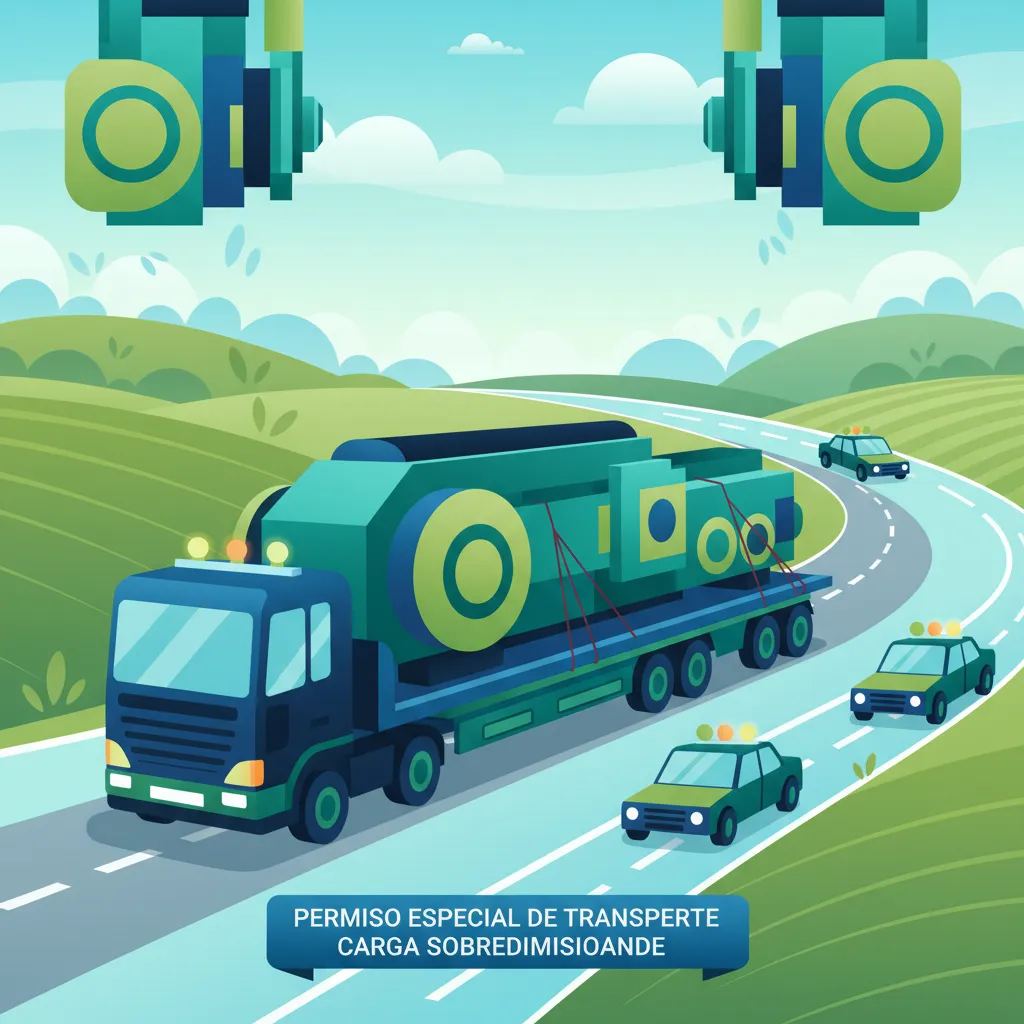
This lesson addresses the special regulations that apply to transporting loads that exceed standard legal dimensions or weight. It explains the process for obtaining the necessary special permits from the DGT and other authorities. The content also covers the requirements for route planning, the use of escort vehicles (pilot cars), and the mandatory signage and lighting for the vehicle.

This lesson explains the various access restrictions that trucks face in modern cities. It covers the rules and requirements for entering low-emission zones (LEZ), including necessary vehicle standards and permits. The content also details time-window restrictions, where deliveries are only permitted during specific hours of the day to reduce congestion, requiring careful logistical planning.
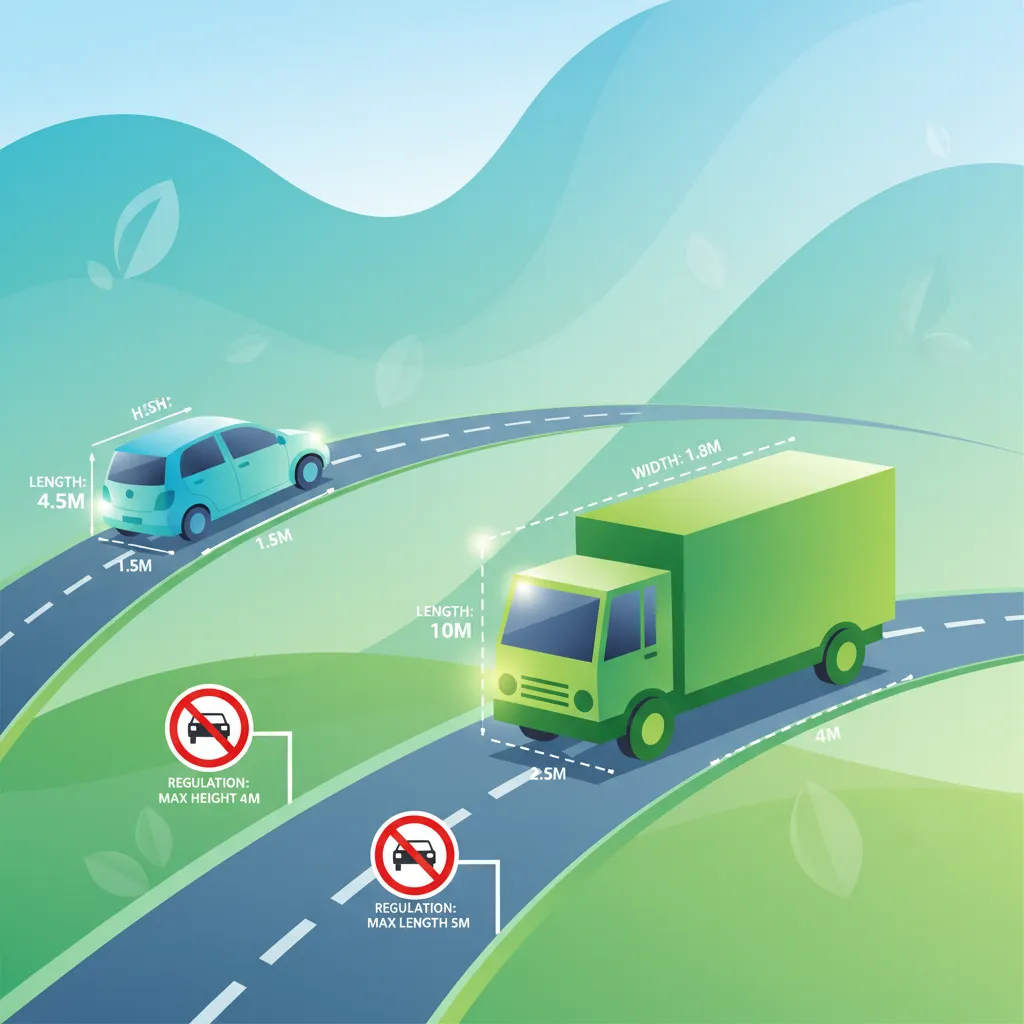
This lesson provides a detailed breakdown of the maximum permissible length, width, and height for heavy vehicles according to Spanish and EU regulations. It explains how these dimensions are measured and how they affect vehicle classification and route planning. The content emphasizes the critical importance of respecting clearance signs for bridges, tunnels, and other overhead structures to prevent accidents.
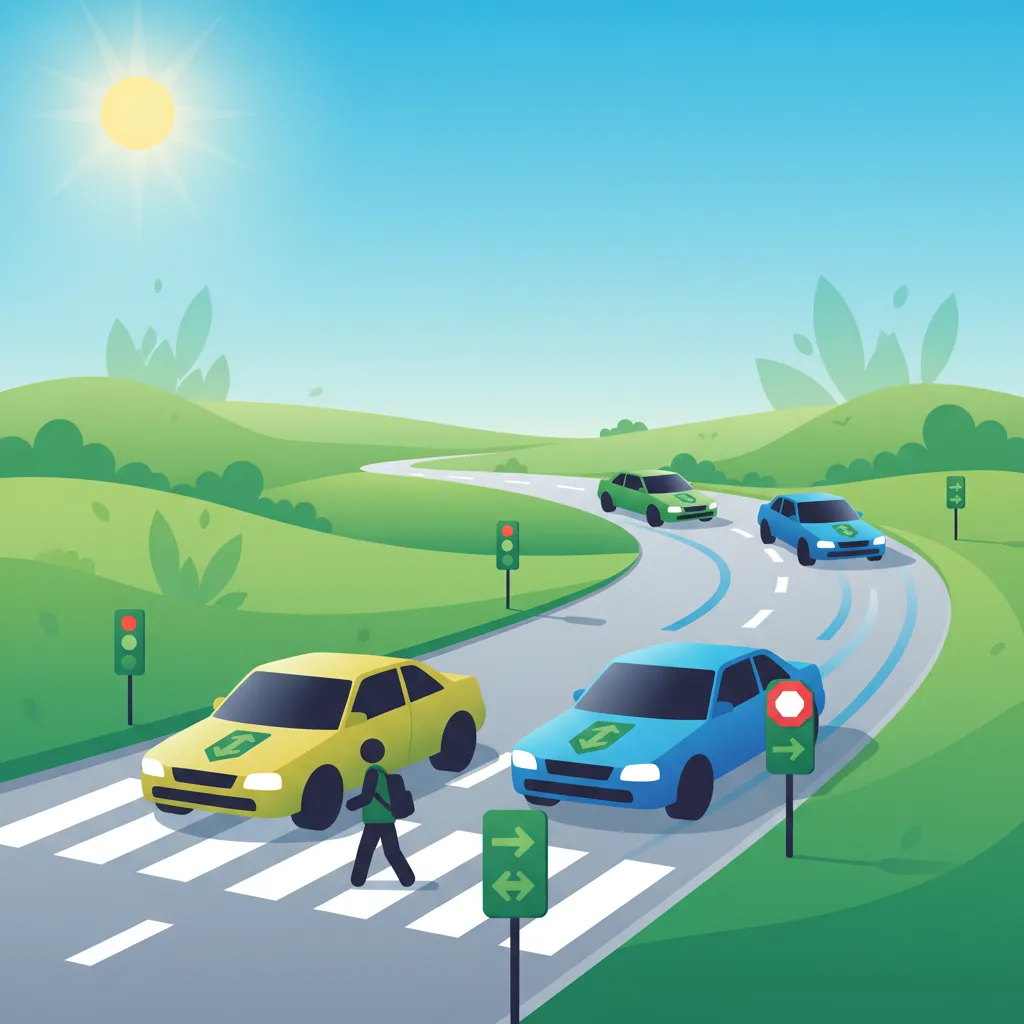
This lesson provides a broad overview of the key traffic regulations in Spain that directly impact professional truck drivers. It details the rules of priority at intersections, the interpretation of different road markings, and the principles of correct lane discipline. Furthermore, it explains the specific speed limits applicable to heavy vehicles and the legal protocols for safe overtaking and signaling.

This lesson explains the specific legal framework governing truck operations on Spain's high-speed road network. It details the different speed limits for trucks on autovías versus autopistas and the regulations regarding which lanes heavy vehicles are permitted to use. Learners will also understand how to interpret specific highway signage relevant to commercial vehicles and any applicable toll regulations.

This lesson focuses on the specific restrictions that heavy vehicles face on public infrastructure and in urban centers. It covers how to interpret signs indicating weight limits for bridges and height restrictions for tunnels and overpasses. The content also explains the various municipal regulations that can restrict truck access to certain urban areas, such as low-emission zones or time-based delivery windows.
Master precision reversing for trucks and commercial vans. This lesson covers techniques using mirrors, sensors, and spotters, focusing on safe maneuvering into loading bays and delivery zones according to Spanish theory.

This lesson provides strategies for navigating tight, confined environments such as multi-story car parks and narrow urban lanes. It emphasizes the importance of slow and controlled movements, constant observation, and a thorough understanding of the vehicle's dimensions and turning circle. Learners will develop the skills to maneuver with precision while avoiding obstacles.

This lesson provides theoretical guidance on the techniques for safely reversing a heavy vehicle, a high-risk maneuver. It emphasizes the correct use of mirrors, managing extensive blind spots, and the importance of using a spotter when available. The content also breaks down the geometric principles of parallel parking and backing into loading docks, focusing on vehicle positioning and spatial awareness.

This lesson focuses on the core principles of defensive driving as they apply to operating a large truck. It explains the importance of managing the space around the vehicle to create a safety buffer and always having an 'escape route' in mind. The content emphasizes anticipating the actions of other road users and being prepared to react calmly and safely to unexpected situations.

In this lesson, learners will acquire the necessary skills to maneuver buses and coaches within confined areas such as narrow city streets, bus depots, and passenger terminals. It details techniques for reverse driving, tight cornering, and parallel parking, emphasizing the critical importance of blind spot awareness and precise low-speed control. The content focuses on developing spatial awareness to avoid collisions while maintaining passenger comfort.
This lesson addresses the practical aspects of maneuvering a large vehicle in various environments. It explains concepts like turning radius, off-tracking, and the vehicle's total footprint, which determine the space needed for turns and other maneuvers. Learners will develop the spatial awareness required to navigate tight corners, loading bays, and urban streets while maintaining safe clearance from obstacles.

This lesson provides a detailed guide to performing safe and legal overtaking maneuvers on the highway. It places strong emphasis on the techniques for thoroughly checking the large blind spots around a truck before initiating a lane change. The content also covers judging the necessary speed differential and distance required to complete the pass and return to the lane safely.
Find clear answers to common questions learners have about Parking, Loading Docks, and Delivery Zone Procedures. Learn how the lesson is structured, which driving theory objectives it supports, and how it fits into the overall learning path of units and curriculum progression in Spain. These explanations help you understand key concepts, lesson flow, and exam focused study goals.
In Spain, urban delivery zones for trucks have specific regulations. Drivers must adhere to posted signs indicating times of access and duration limits. Parking is only permitted within the marked bays and only for the purpose of loading or unloading. Exceeding these limits or parking outside designated areas can result in fines and towing.
The primary challenge is the limited space and the significant 'off-tracking' of large trucks, meaning the rear wheels follow a tighter path than the front. This requires precise steering adjustments and constant awareness of the trailer's position relative to the dock, curbs, and surrounding obstacles. Maintaining visual contact with guides or using mirrors effectively is critical.
While this lesson focuses on the manoeuvring and parking aspect, DGT regulations also mandate that loads must be secured appropriately at all times, including during urban deliveries. This ensures cargo does not shift, fall, or impede traffic. Proper securing is essential for stability and safety, and questions related to load security are common in the theory exam.
If a delivery zone is occupied by another vehicle or obstacle, you should not attempt to force your way in. Look for alternative legal parking or waiting areas nearby if permitted. Patience and adherence to traffic rules are key. If you are on a strict schedule, communicate the delay to your dispatcher or the recipient.
Many Spanish cities have Low Emission Zones (ZBE) that restrict access for vehicles based on their emissions standards. Truck drivers must ensure their vehicle meets the required Euro emission standard for the specific ZBE they need to enter. Access may require prior registration or permits, and non-compliance leads to significant penalties.
Use our powerful search functionality to pinpoint specific Spanish DGT driving theory practice sets. Filter by road sign categories, traffic law topics, or question difficulty to build custom study sessions and reinforce your knowledge precisely where it matters for your official exam.