
This lesson introduces essential strategies for navigating dense urban environments in a heavy goods vehicle. As the first lesson in the Urban Driving unit, it lays the groundwork for safely managing city traffic flow and congestion, critical for all Category C and C1 drivers. You'll learn techniques to maintain safe distances and position your truck effectively, preparing you for complex DGT exam scenarios and real-world urban challenges.

Lesson content overview
Driving a heavy vehicle in dense urban environments presents a unique set of challenges that demand exceptional skill, foresight, and adherence to specific regulations. For professional truck drivers holding Category C and C1 licences, understanding and effectively managing city traffic flow and congestion is not merely about reaching a destination; it is fundamental to safety, efficiency, and compliance with the Spanish traffic code (Normativa DGT). This lesson will equip you with the advanced strategies necessary to navigate the complexities of urban driving, from maintaining optimal following distances to mastering defensive driving techniques that minimize risk and optimize traffic flow.
Urban traffic is characterized by its density, frequent stops, varied road users, and often unpredictable nature. For heavy vehicles such as trucks, these dynamics are amplified due to their significant dimensions, weight, and operational characteristics.
Trucks, by their nature, require more space to maneuver, accelerate, and stop compared to passenger cars. Their longer braking distances, larger blind spots, and reduced agility make urban environments particularly demanding. Professional drivers must constantly account for these factors, adapting their driving style to protect not only themselves and their cargo but also other, more vulnerable, road users like pedestrians and cyclists. The sheer volume of traffic, coupled with the need to adhere to delivery schedules and specific access restrictions, adds layers of complexity to daily operations.
Traffic congestion in cities is a multifaceted problem resulting from an interplay of factors. These include high vehicle volumes exceeding road capacity, frequent intersections, traffic signals, roadworks, and driver behavior. For heavy vehicles, congestion can lead to increased fuel consumption, extended travel times, higher operational costs, and elevated stress levels for the driver. Critically, it also significantly increases the risk of accidents, especially rear-end collisions, due to sudden stops and limited maneuvering space. Effective congestion management is therefore paramount for both safety and economic viability in professional transport.
To effectively navigate urban congestion, professional drivers must integrate several core principles into their driving practice. These principles form the foundation of safe and efficient heavy vehicle operation in cities.
A safe following distance is the minimum longitudinal gap between your truck and the vehicle ahead that allows you to stop safely without collision, even if the vehicle in front brakes abruptly. For heavy vehicles, this distance is significantly greater than for cars due to increased mass and momentum. In stop-and-go urban traffic, where sudden stops are common, maintaining an adequate gap is crucial for allowing sufficient reaction time and stopping distance, thereby preventing rear-end collisions.
Proper lateral and longitudinal placement of your truck within a lane or between lanes in congested conditions is vital. Strategic positioning ensures maximum visibility for the driver, reduces the risk of entering other road users' blind spots, and provides a buffer from roadside obstacles. It also facilitates smoother merging, turning, and overall traffic flow, preventing unnecessary lane blockages or unsafe maneuvers.
Anticipatory driving involves continuously assessing the traffic environment to predict potential developments and adjust your actions proactively. This means observing traffic patterns well ahead, reading traffic lights, understanding the intentions of other drivers, and anticipating stopping points. By driving anticipatively, you can avoid sudden braking, aggressive acceleration, and last-minute lane changes, contributing to smoother traffic flow and reducing stress on both the driver and the vehicle.
Defensive driving is a driving style that prioritizes safety over speed, emphasizing the anticipation of others' errors and maintaining a continuous margin of safety. In urban congestion, this means being extra cautious, yielding where necessary, and being prepared for unexpected actions from other road users. For professional truck drivers, defensive driving minimizes crash severity, protects vulnerable road users, and ensures compliance with DGT regulations, ultimately enhancing road safety for everyone.
Each core principle requires specific techniques and practical applications tailored to the demands of driving heavy vehicles in congested city settings.
The concept of a safe following distance is dynamic and must be adjusted based on various factors.
Under ideal driving conditions (dry roads, good visibility, light load), a commonly taught rule for cars is the "two-second rule." For trucks, this rule serves as a bare minimum and is often insufficient. It suggests that you should pick a fixed point (e.g., a lamppost) that the vehicle ahead passes, and then count "one-thousand-one, one-thousand-two." If you reach the point before finishing the count, you are following too closely. While a starting point, a truck's greater mass means it requires significantly more time and distance to stop.
For heavy vehicles like those in Category C and C1, especially in urban environments, the "four-second rule" is a more appropriate minimum under ideal conditions. This provides a greater buffer for reaction time and braking distance. However, this gap must be further extended in adverse conditions:
Practical Tip: To gauge your following distance, pick a stationary object on the side of the road. When the vehicle in front passes it, begin counting "one-thousand-one, one-thousand-two, one-thousand-three, one-thousand-four." If your vehicle reaches the object before you finish counting, you are too close.
Several factors combine to determine a truck's total stopping distance:
Proper lane positioning is paramount for heavy vehicles, especially in dense urban settings where space is limited and vulnerable road users are abundant.
Always strive to keep your truck centered within its lane. This maximizes your buffer space on both sides, reducing the risk of side-swiping parked vehicles, roadside obstacles, or other vehicles in adjacent lanes. It also helps in maintaining a clear line of sight and communicating your vehicle's path to other drivers.
Heavy trucks have extensive blind spots, often referred to as "No Zones," around the front, rear, and especially along both sides. In urban traffic, these blind spots pose a significant danger to pedestrians, cyclists, and motorcyclists.
Important: Always assume that if you cannot see a pedestrian or cyclist in your mirrors, they cannot see your truck. Be extra vigilant when turning, changing lanes, or moving off from a stop.
When stopping at traffic lights, stop signs, or crosswalks, the positioning of your truck is critical:
Anticipation is a hallmark of professional driving and is especially critical in city traffic.
Defensive driving in urban congestion means constantly being prepared for the unexpected and taking proactive steps to avoid incidents.
Adherence to specific DGT regulations is non-negotiable for professional drivers in Spain. These rules are designed to enhance safety, particularly in dense urban settings.
The DGT traffic code mandates that drivers maintain a distance that allows them to stop safely without dangerous proximity to the vehicle ahead. While specific numerical values (like 2 or 4 seconds) are common guidelines, the legal requirement emphasizes the ability to stop safely. This implies that the driver must constantly assess conditions (speed, load, weather) and adjust the distance accordingly. Failing to maintain this safe distance is a common cause of rear-end collisions and can lead to penalties.
Maintaining position within the designated lane, respecting lane markings and boundaries, and avoiding encroachment into adjacent lanes or onto shoulders.
DGT regulations require strict lane discipline, especially in slow-moving or congested traffic. Trucks must stay within their lane markings and avoid blocking crosswalks, bike lanes, or intersections. Improper lane usage can lead to fines and, more importantly, create hazardous situations for other road users.
In urban zones, heavy vehicles often have specific, lower speed limits compared to passenger cars. These limits are set to account for the longer braking distances and reduced maneuverability of trucks. It is mandatory to respect these truck-specific speed limits at all times, regardless of the overall traffic flow. Exceeding them increases accident risk and leads to legal penalties.
Overtaking in congested urban areas is generally prohibited or highly restricted. When traffic flow is clearly impeded or moving slowly, changing lanes to overtake significantly increases the risk of collision, particularly with vehicles that may suddenly slow down or change direction. Professional drivers must refrain from aggressive overtaking maneuvers in such conditions and maintain their lane position.
Pedestrians and cyclists are highly vulnerable road users. DGT regulations grant them priority at marked crosswalks, and drivers must always yield the right-of-way. For truck drivers, this means approaching crosswalks with caution, being prepared to stop, and ensuring that blind spots do not obscure the presence of pedestrians or cyclists.
Understanding common errors can help professional drivers proactively prevent dangerous situations in urban traffic.
Wrong: Following too closely, leaving insufficient space to react to sudden braking. This is a primary cause of rear-end collisions. Correct: Maintain at least a 4-second gap, or more in adverse conditions, to ensure adequate stopping distance and reaction time. Continuously adjust this gap as conditions change.
Wrong: Driving with the truck too close to the right curb or parked vehicles. This severely limits the driver's visibility of pedestrians and cyclists who may emerge from between cars or be riding on the right. It also reduces maneuvering space. Correct: Keep a central lane position with a generous buffer zone from the curb and parked vehicles. This increases visibility and provides space for error.
Wrong: Assuming that slow-moving traffic permits violating the posted truck speed limits, or attempting to keep pace with faster-moving cars. Correct: Always respect the specific speed limits for heavy vehicles, regardless of the general traffic flow. This is crucial for safety and legal compliance.
Wrong: Making sudden, unannounced, or aggressive lane changes in congested traffic, creating confusion and danger for other drivers. Correct: Plan lane changes well in advance, signal clearly and early, check all mirrors and blind spots thoroughly, and execute the maneuver smoothly only when there is abundant space.
Wrong: Accelerating towards an amber light without sufficient stopping distance, leading to abrupt braking or running a red light. Correct: Adjust speed early when approaching intersections. If an amber light appears, assess whether you can stop safely before the stop line. If not, proceed carefully. Never accelerate to "beat" a changing light.
Urban driving is rarely static; conditions change, requiring drivers to constantly adapt their strategies.
Pedestrians, cyclists, and motorcyclists are particularly susceptible to severe injury in a collision with a heavy vehicle.
Increased Lateral Distance: Always maintain a greater lateral distance from vulnerable road users. Give cyclists ample room, especially when they are riding alongside your truck or you are turning. Assume they might make sudden movements.
Mastering city traffic flow and congestion management is a cornerstone of professional truck driving. It requires a blend of technical skill, adherence to regulations, and a proactive, defensive mindset.
Core Understanding: Navigate dense urban traffic by consistently maintaining adequate safe following distances, executing precise vehicle positioning, and adopting defensive and anticipatory driving techniques tailored to the unique characteristics of your heavy vehicle and its load.
Key Rules:
Practical Skills:
Safety Logic: The consistent application of these principles directly reduces the probability and severity of collisions, minimizes fuel consumption, and ensures compliance with all DGT traffic regulations. It transforms the challenging task of urban heavy vehicle driving into a safer, more predictable, and more efficient operation.
Preparedness: These strategies are not isolated but are foundational, providing critical preparedness for subsequent lessons on hazard perception, emergency situations, and specialized urban maneuvers.
This lesson covers essential strategies for professional Category C and C1 truck drivers managing city traffic congestion in Spain. It establishes that heavy vehicles require significantly larger following distances than cars, with the 4-second rule as a minimum baseline that must be extended under adverse conditions such as rain, heavy loads, or reduced traction. Key skills include central lane positioning with generous buffer zones from curbs, extensive mirror checks to compensate for large blind spots, and anticipatory driving to predict traffic light changes and the movements of other road users. The lesson emphasizes strict adherence to DGT-mandated truck-specific speed limits and pedestrian/cyclist priority at crossings, while highlighting that defensive driving and patience are fundamental to safely navigating dense urban environments.
A short set of high-value points that capture the most important learning from this lesson.
Heavy vehicles require a minimum 4-second following distance under ideal conditions, significantly more than passenger cars, due to greater mass and longer braking distances.
Always maintain central lane positioning with buffer space from curbs and parked vehicles to maximize visibility and protect vulnerable road users.
Extensive blind spots on trucks mean other road users may not see you; assume if you cannot see them in your mirrors, they cannot see your truck.
Truck-specific speed limits in urban zones must be respected at all times, regardless of general traffic flow or speed of other vehicles.
Anticipatory driving—observing traffic patterns well ahead and predicting traffic light changes—reduces sudden braking and contributes to smoother traffic flow.
Explore all units and lessons included in this driving theory course.
The 4-second rule is the minimum following distance for trucks under ideal conditions; extend this gap further for adverse weather, heavy loads, or reduced traction.
Stop at least 2 metres behind stop lines or crosswalks to allow pedestrians and cyclists safe passage and improve your view of cross-traffic.
DGT regulations prohibit overtaking when traffic flow is impeded and require yielding priority to pedestrians and cyclists at marked crossings.
Heavy loads increase braking distance proportionally; factor in load weight when calculating safe following distance and moderating speed.
In fog, use fog lights when visibility drops below 50 metres; in rain or snow, extend following distance to 5–6 seconds or more.
Following too closely in stop-and-go traffic, leaving insufficient space to react to sudden braking and risking rear-end collisions.
Driving too close to the right curb, which severely limits visibility of pedestrians and cyclists emerging from between parked vehicles.
Attempting to match the speed of faster passenger cars or violating truck-specific speed limits when traffic is moving slowly.
Making sudden, unannounced lane changes in congested traffic without proper planning, signaling, and blind spot checks.
Accelerating toward an amber light without sufficient stopping distance, leading to either abrupt braking or running a red light.
Lesson content overview
A short set of high-value points that capture the most important learning from this lesson.
Heavy vehicles require a minimum 4-second following distance under ideal conditions, significantly more than passenger cars, due to greater mass and longer braking distances.
Always maintain central lane positioning with buffer space from curbs and parked vehicles to maximize visibility and protect vulnerable road users.
Extensive blind spots on trucks mean other road users may not see you; assume if you cannot see them in your mirrors, they cannot see your truck.
Truck-specific speed limits in urban zones must be respected at all times, regardless of general traffic flow or speed of other vehicles.
Anticipatory driving—observing traffic patterns well ahead and predicting traffic light changes—reduces sudden braking and contributes to smoother traffic flow.
Explore all units and lessons included in this driving theory course.
The 4-second rule is the minimum following distance for trucks under ideal conditions; extend this gap further for adverse weather, heavy loads, or reduced traction.
Stop at least 2 metres behind stop lines or crosswalks to allow pedestrians and cyclists safe passage and improve your view of cross-traffic.
DGT regulations prohibit overtaking when traffic flow is impeded and require yielding priority to pedestrians and cyclists at marked crossings.
Heavy loads increase braking distance proportionally; factor in load weight when calculating safe following distance and moderating speed.
In fog, use fog lights when visibility drops below 50 metres; in rain or snow, extend following distance to 5–6 seconds or more.
Following too closely in stop-and-go traffic, leaving insufficient space to react to sudden braking and risking rear-end collisions.
Driving too close to the right curb, which severely limits visibility of pedestrians and cyclists emerging from between parked vehicles.
Attempting to match the speed of faster passenger cars or violating truck-specific speed limits when traffic is moving slowly.
Making sudden, unannounced lane changes in congested traffic without proper planning, signaling, and blind spot checks.
Accelerating toward an amber light without sufficient stopping distance, leading to either abrupt braking or running a red light.
Explore search topics learners often look for when studying City Traffic Flow and Congestion Management. These topics reflect common questions about road rules, driving situations, safety guidance, and lesson level theory preparation for learners in Spain.
Browse additional driving theory lessons that cover connected traffic rules, road signs, and common driving situations related to this topic. Improve your understanding of how different rules interact across everyday traffic scenarios.
Explore advanced techniques for precise maneuvering of heavy vehicles in tight urban spaces. This lesson covers strategies for navigating narrow streets, avoiding obstacles, and maintaining control in challenging city traffic conditions according to DGT regulations.

This lesson provides strategies for navigating tight, confined environments such as multi-story car parks and narrow urban lanes. It emphasizes the importance of slow and controlled movements, constant observation, and a thorough understanding of the vehicle's dimensions and turning circle. Learners will develop the skills to maneuver with precision while avoiding obstacles.
This lesson provides guidance on the practical aspects of parking and making deliveries in urban areas. It covers the techniques for safely maneuvering into and out of loading docks and designated delivery zones, which often involves precise reversing. The content also explains the specific parking regulations that apply to commercial vehicles and best practices for ensuring safety during loading and unloading.
This lesson provides specific instructions on how to safely navigate complex junctions such as roundabouts and intersections with a large vehicle. It explains the rules of priority, the correct lane to use based on the intended exit, and the importance of proper vehicle positioning to account for off-tracking. The content also covers clear signaling to communicate intentions to other road users for safe and efficient passage.

This lesson focuses on low-speed manoeuvres within congested urban traffic, detailing techniques for navigating tight corners and weaving through traffic. Learners analyze urban traffic flow, pedestrian zones, and cyclist interactions to anticipate hazards. The lesson also explains DGT regulations regarding slow-speed movement and lane positioning.

This lesson focuses on the core principles of defensive driving as they apply to operating a large truck. It explains the importance of managing the space around the vehicle to create a safety buffer and always having an 'escape route' in mind. The content emphasizes anticipating the actions of other road users and being prepared to react calmly and safely to unexpected situations.

This lesson focuses on the critical skill of safely interacting with vulnerable road users, such as pedestrians and cyclists, in an urban setting. It highlights the extensive blind spots around a truck and teaches drivers to be extra vigilant, especially at intersections and crosswalks. The content covers the legal requirements for yielding and the importance of making eye contact to confirm intentions.

This lesson provides a detailed guide to performing safe and legal overtaking maneuvers on the highway. It places strong emphasis on the techniques for thoroughly checking the large blind spots around a truck before initiating a lane change. The content also covers judging the necessary speed differential and distance required to complete the pass and return to the lane safely.
This lesson addresses the practical aspects of maneuvering a large vehicle in various environments. It explains concepts like turning radius, off-tracking, and the vehicle's total footprint, which determine the space needed for turns and other maneuvers. Learners will develop the spatial awareness required to navigate tight corners, loading bays, and urban streets while maintaining safe clearance from obstacles.

This lesson focuses on the critical relationship between speed, following distance, and overall traffic safety on highways. It explains how to calculate a safe following distance based on speed and weather conditions, accounting for a truck's longer stopping distance. The content also teaches strategies for managing speed to adapt smoothly to changing traffic flow, enhancing both safety and fuel efficiency.
This lesson offers a comprehensive guide to navigating roundabouts in urban settings, explaining the correct protocols for entry, yielding, and circulation. Learners will be taught how to interpret lane markings and signage on multi-lane roundabouts and determine the correct vehicle positioning for safe entry and exit. The content emphasizes full compliance with Spanish city regulations that govern priority and right-of-way at these intersections.
Understand critical safety rules for professional truck drivers navigating traffic congestion in Spain. This lesson details safe following distances, hazard perception, and DGT-mandated procedures to prevent accidents in stop-and-go urban traffic.
This lesson focuses on the critical relationship between speed, following distance, and overall traffic safety on highways. It explains how to calculate a safe following distance based on speed and weather conditions, accounting for a truck's longer stopping distance. The content also teaches strategies for managing speed to adapt smoothly to changing traffic flow, enhancing both safety and fuel efficiency.
This lesson focuses on the core principles of defensive driving as they apply to operating a large truck. It explains the importance of managing the space around the vehicle to create a safety buffer and always having an 'escape route' in mind. The content emphasizes anticipating the actions of other road users and being prepared to react calmly and safely to unexpected situations.
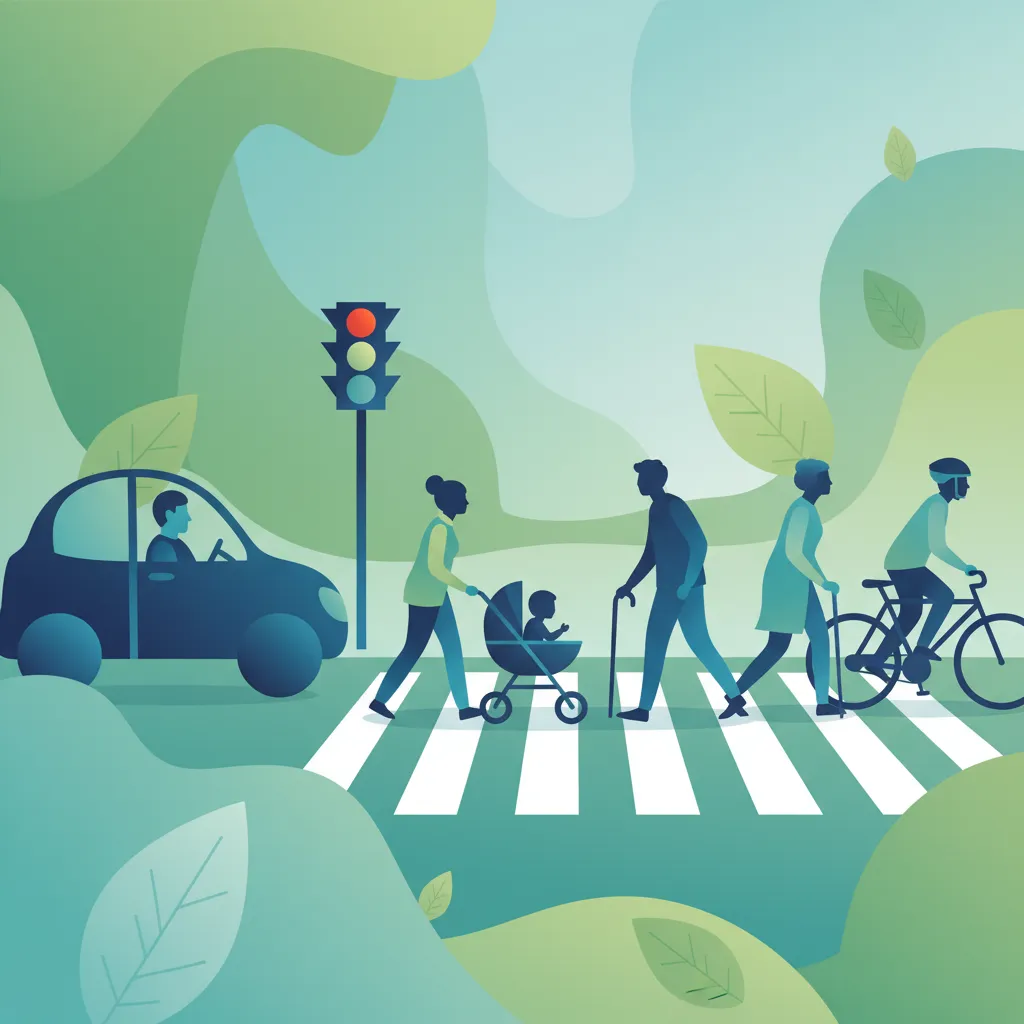
This lesson introduces fundamental road safety principles applicable to all drivers, with a special emphasis on heavy vehicles. It covers defensive driving techniques, including the importance of anticipating potential hazards and managing speed appropriately for conditions. Learners will also study how to establish and maintain safe following distances and understand the hierarchy of road users to ensure safe interactions.
This lesson provides a detailed guide to performing safe and legal overtaking maneuvers on the highway. It places strong emphasis on the techniques for thoroughly checking the large blind spots around a truck before initiating a lane change. The content also covers judging the necessary speed differential and distance required to complete the pass and return to the lane safely.
This lesson provides a broad overview of the key traffic regulations in Spain that directly impact professional truck drivers. It details the rules of priority at intersections, the interpretation of different road markings, and the principles of correct lane discipline. Furthermore, it explains the specific speed limits applicable to heavy vehicles and the legal protocols for safe overtaking and signaling.
This lesson focuses on the critical skill of safely interacting with vulnerable road users, such as pedestrians and cyclists, in an urban setting. It highlights the extensive blind spots around a truck and teaches drivers to be extra vigilant, especially at intersections and crosswalks. The content covers the legal requirements for yielding and the importance of making eye contact to confirm intentions.
This lesson provides specific instructions on how to safely navigate complex junctions such as roundabouts and intersections with a large vehicle. It explains the rules of priority, the correct lane to use based on the intended exit, and the importance of proper vehicle positioning to account for off-tracking. The content also covers clear signaling to communicate intentions to other road users for safe and efficient passage.

This lesson focuses on the principles of safe lane selection and overtaking on multi-lane roads and highways. It covers the importance of maintaining proper lane discipline and the legal protocols for executing a safe pass, including checking blind spots and ensuring sufficient speed differential. The content also stresses the need for clear signaling and judging adequate space before returning to the original lane.

This lesson teaches drivers how to proactively identify potential road hazards, from potholes and debris to unpredictable driver behavior. It provides specific guidance on how to adjust driving techniques to cope with adverse weather conditions such as heavy rain, fog, high winds, and icy roads. The content focuses on managing reduced visibility and traction to maintain vehicle control and safety.
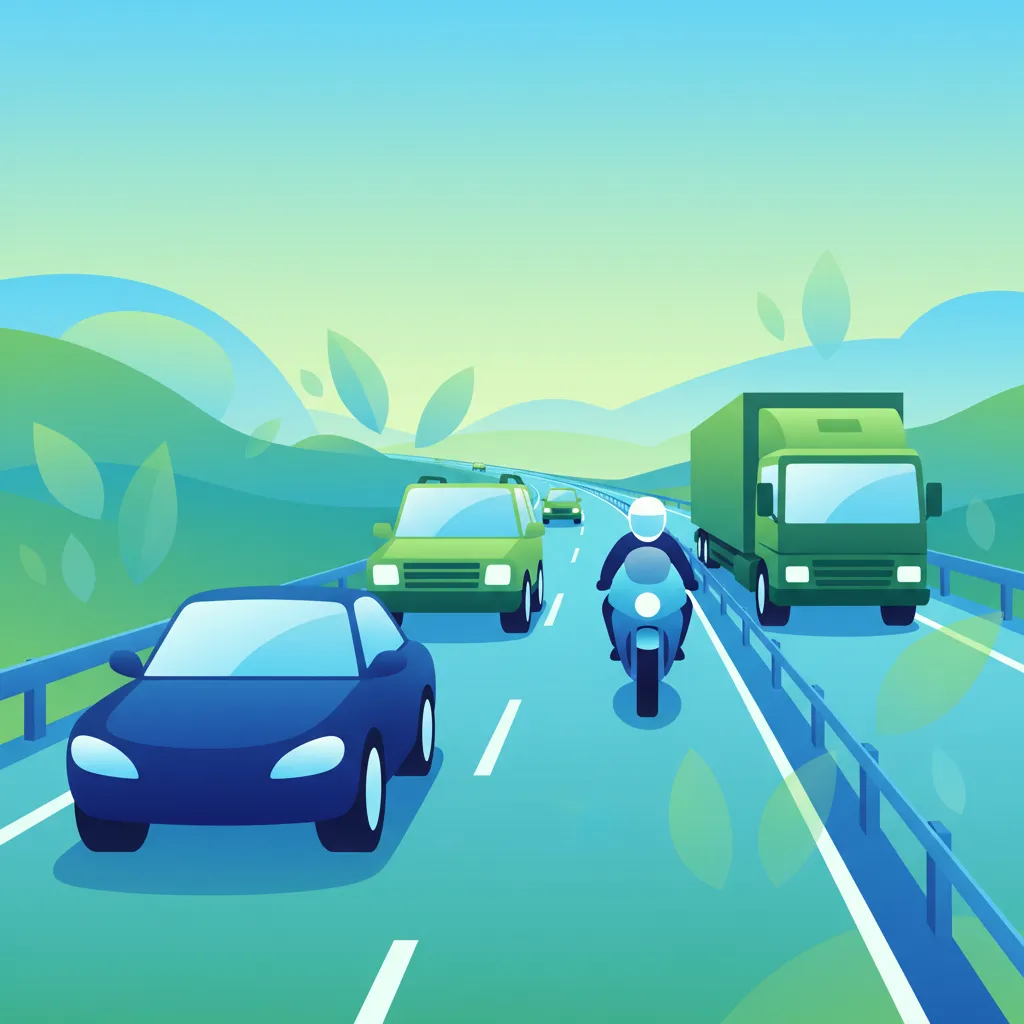
This lesson examines the principles of maintaining a safe following distance, including the 'two-second rule' and its adjustments for speed and weather. It focuses on effective blind-spot management, teaching drivers how to use mirrors and head checks. The content integrates DGT guidelines on creating a safety buffer around the vehicle to allow time to react to unexpected events.
Find clear answers to common questions learners have about City Traffic Flow and Congestion Management. Learn how the lesson is structured, which driving theory objectives it supports, and how it fits into the overall learning path of units and curriculum progression in Spain. These explanations help you understand key concepts, lesson flow, and exam focused study goals.
Trucks require significantly longer braking distances due to their mass and momentum, especially when fully loaded. In city traffic, maintaining a greater following distance gives you more time to react to sudden stops or unforeseen obstacles, preventing rear-end collisions and enhancing overall safety for Category C and C1 drivers.
Proper vehicle positioning optimizes your field of vision and helps other drivers anticipate your movements. By strategically positioning your truck, you can better see vulnerable road users, navigate tight turns without encroaching, and maintain a clear escape route, which is vital for DGT compliance in urban settings.
Exam questions often test your understanding of appropriate following distances in varying conditions, correct lane usage in congested areas, and hazard perception related to vulnerable road users. Many learners struggle with adapting car-driving habits to the specific requirements and limitations of a Category C/C1 truck.
Yes, many Spanish cities have established low-emission zones (ZBE) or specific time windows for goods delivery, which can impact how and when you manage congestion. While this lesson focuses on general flow, be aware that subsequent lessons will cover these specific access restrictions for Category C and C1 vehicles.
Use our powerful search functionality to pinpoint specific Spanish DGT driving theory practice sets. Filter by road sign categories, traffic law topics, or question difficulty to build custom study sessions and reinforce your knowledge precisely where it matters for your official exam.