
This lesson guides you through the technical and safety procedures for approaching and positioning a bus or coach at a bus stop. As part of your Category D training, mastering these steps is essential for passenger comfort and preventing accidents with vulnerable road users. You will learn how to signal, manage speed, and align your vehicle perfectly to ensure safe boarding and alighting.
Lesson content overview
The precision and care taken when approaching and positioning a bus or coach at a designated stop are fundamental to the safety and efficiency of passenger transport. For professional drivers undertaking the Swiss Category D Driving License Theory Course, mastering these skills is not merely about convenience; it is a critical component of their duty of care, directly impacting passenger well-being, traffic flow, and compliance with Swiss road traffic regulations. This lesson delves into the key aspects of a safe approach, including timely signalling, smooth deceleration, and achieving the optimal stopping position parallel to the kerb, ensuring minimal risk for passengers and other road users.
Proper approach and positioning at bus stops serve multiple vital functions. Firstly, they ensure the safety of passengers during boarding and alighting by minimising the step distance from the vehicle to the kerb and preventing passengers from having to step into the flow of traffic. Secondly, these precise actions enhance predictability for other road users, allowing them to anticipate the bus's movements and adjust their own speed and position accordingly, thereby reducing the risk of collisions. Finally, adhering to established procedures and regulations ensures operational efficiency, minimising delays and contributing to a smooth public transport service. Understanding the underlying physics of vehicle dynamics and the legal framework is crucial for every professional driver.
One of the most critical steps in a safe bus stop approach is the early activation of appropriate signals. This action provides essential information to all road users about your intention to stop, preventing sudden reactions and potential hazards.
Activating your turn signal in good time transforms a potentially unexpected stop into a predictable maneuver. This advanced warning allows drivers behind you to reduce their speed, cyclists to maintain a safe distance, and pedestrians to anticipate your arrival and potential opening of doors. Without early signalling, there is an increased risk of rear-end collisions or risky overtaking attempts by other vehicles that are unaware of your intention to stop.
For Category D vehicles in Switzerland, the standard method of signalling intent to stop at a bus stop is through the activation of flashing amber lights. These lights are specifically designed to indicate a hazard or a special stopping intention. It is crucial to activate these lights before entering the designated bus stop zone, not just as you begin to brake or after you have already stopped.
Always activate your flashing amber lights well in advance of the bus stop zone. This gives all road users ample time to react and adjust their speed and position, significantly enhancing safety.
A specific light signal used on buses and coaches to indicate an intention to stop at a designated bus stop, alerting other road users to exercise caution.
The manner in which a bus or coach decelerates towards a stop is paramount for passenger comfort and safety. Abrupt braking can cause passengers, especially those standing or moving towards the doors, to lose their balance and potentially sustain injuries.
Buses and coaches are heavy vehicles, and their mass significantly affects their braking performance. They require a greater stopping distance compared to lighter vehicles, and sudden braking can lead to instability, such as potential wheel lock-up or uneven weight distribution, which can be dangerous in adverse conditions. Smooth deceleration is achieved through progressive braking, where brake pressure is applied gradually rather than forcefully.
Progressive braking involves a gentle initial application of the brake pedal, followed by a gradual increase in pressure as needed, and then a smooth release of pressure as the vehicle comes to a complete halt. This technique ensures a comfortable and stable stop for passengers. Additionally, engine braking (using gear reduction) can assist in controlling speed and reducing wear on the service brakes, especially when approaching from higher speeds or on downhill slopes.
A gradual reduction of vehicle speed using controlled, progressive braking techniques, which prevents abrupt jolts and maintains passenger stability.
Avoid abrupt braking at all costs. Sudden stops can cause standing passengers to fall, potentially leading to serious injuries and increasing the risk of rear-end collisions.
The final position of the vehicle at the bus stop is critical for passenger safety, accessibility, and smooth traffic flow. It involves stopping within the designated zone, before the stop line, and at an optimal distance from the kerb.
Every designated bus stop has a defined "bus stop zone" and often a "stop line" painted on the road. The stop line indicates the precise point behind which the bus or coach must halt. Stopping within this zone and behind the line ensures that the vehicle is correctly positioned for passenger exchange and does not obstruct other traffic unnecessarily. Overshooting the stop line can cause the vehicle to block intersections or pedestrian crossings, creating hazards.
A clearly marked area on the roadway or alongside it, designated specifically for buses and coaches to stop for passenger boarding and alighting.
A solid white line painted across the lane, indicating the maximum forward position at which a vehicle must stop. For buses, it marks the boundary of the designated bus stop zone.
Maintaining a consistent and safe distance from the kerb is paramount. The goal is to minimise the step distance for passengers, particularly those with mobility challenges, while also preventing the bus from encroaching on the kerb itself or obstructing the sidewalk. In Switzerland, Category D regulations generally stipulate that the vehicle must maintain a distance of no more than 0.5 metres from the kerb. This gap ensures easy and safe access without forcing passengers to step into the road.
Stopping too far from the kerb forces passengers to take a larger step, increasing the risk of slips or falls, and exposing them to traffic. Conversely, stopping too close can damage the vehicle's tyres or suspension, or even block the footpath.
Beyond the distance, the vehicle's alignment relative to the kerb is equally important. The bus or coach must be positioned with its longitudinal axis running parallel to the kerb.
A parallel alignment ensures that the gap between the vehicle and the kerb is uniform along the entire length of the accessible doors. This uniformity is crucial for:
Misalignment, such as stopping at an angle, can complicate passenger movement, potentially causing them to walk further into the road or struggle with an uneven step. It can also cause the bus to protrude into the traffic lane, creating an obstruction.
The final act of positioning the vehicle correctly directly impacts the safety of door operations. Modern buses and coaches are often equipped with sophisticated safety features, including interlock systems.
An interlock system is a safety mechanism that prevents the doors from being opened unless specific conditions are met, most notably that the vehicle is correctly positioned within the bus stop zone and is stationary. This ensures that doors cannot inadvertently open while the bus is in motion or when it is positioned dangerously, such as too far from the kerb or into an active traffic lane. While not universally mandated in every jurisdiction, where installed, these systems are a critical layer of protection for passengers.
A safety mechanism in a vehicle that prevents certain operations (e.g., door opening) unless specific conditions (e.g., correct stopping position) are met.
The proper function of these systems relies on the driver's ability to position the vehicle accurately. A driver must ensure the vehicle is fully stopped, parallel to the kerb, and within the designated zone before attempting to open the doors.
Compliance with specific regulations is a cornerstone of professional driving in Switzerland. For Category D vehicles (buses and coaches), several rules govern the approach and positioning at bus stops, designed to maximise safety and efficiency.
Swiss regulations stipulate that Category D vehicles must stop within the designated bus stop area, aligning parallel to the kerb, and maintaining a distance of no more than 0.5 metres from the kerb. This rule applies to all scheduled stops and designated zones, ensuring uniform accessibility and safety for passengers.
Drivers are legally required to activate the flashing amber light before entering the bus stop zone. This mandatory rule ensures that other road users are alerted to the bus's intention to stop, allowing them to react safely and prevent potential collisions.
Mandatory safety rules dictate that drivers must decelerate smoothly, avoiding abrupt stops that could endanger passengers, particularly those standing. This requirement is vital for preventing passenger falls and maintaining vehicle stability.
In jurisdictions where interlock systems are mandated or installed, doors may only be opened when the vehicle is correctly positioned within the stop zone. This regulation, where applicable, prevents doors from opening onto traffic or when the bus is otherwise improperly situated, further safeguarding passengers.
Even experienced drivers can occasionally make mistakes when approaching bus stops. Awareness of common violations and their consequences is key to maintaining a high standard of safety and professionalism.
Stopping Beyond the Stop Line (Overruns):
Stopping past the designated stop line can obstruct traffic, block pedestrian crossings, and create an unsafe distance for passengers.
Correct Behavior: Always aim to stop precisely before the stop line, ensuring the entire vehicle is within the designated bus stop zone. Adjust your approach speed and braking early.
Failing to Signal Early:
Delaying or forgetting to activate the flashing amber lights deprives other road users of crucial warning, increasing the risk of rear-end collisions.
Correct Behavior: Make signalling an automatic action. Activate the flashing amber lights well before entering the bus stop zone to clearly communicate your intentions.
Abrupt Braking:
Harsh braking can cause standing passengers to lose balance and fall, leading to injuries, and can also contribute to vehicle instability.
Correct Behavior: Practice smooth, progressive braking. Anticipate the stop well in advance, ease off the accelerator, and apply brake pressure gradually.
Stopping Too Far from the Kerb (>0.5 metres):
An excessive gap between the bus and the kerb forces passengers to step into the traffic lane, increasing their risk of injury from passing vehicles or falls.
Correct Behavior: Aim for a consistent gap of no more than 0.5 metres from the kerb. Use mirrors and visual cues to guide your vehicle accurately into position.
Stopping with the Vehicle Angled to the Kerb (Misalignment):
An angled stop creates an uneven step distance, obstructs traffic lanes, and can hinder effective passenger flow.
Correct Behavior: Maneuver the vehicle to achieve full parallel alignment with the kerb along the entire length of the bus.
Opening Doors While Improperly Positioned:
Attempting to open doors before the vehicle is fully and correctly positioned (e.g., still moving, too far from kerb, or angled) compromises passenger safety.
Correct Behavior: Always ensure the vehicle is stationary, within the stop zone, parallel to the kerb, and the doors can safely open without obstruction. Rely on interlock systems where present.
Safe approach and positioning are not static procedures; they must be adapted to various dynamic conditions. A professional driver in the Swiss Category D Driving License Theory Course must understand how different factors influence their actions.
A fully loaded bus or coach has substantially more mass than an empty one. This increased weight directly impacts braking performance and vehicle dynamics.
Bus stops are inherently areas of high pedestrian and cyclist activity. Professional drivers must maintain heightened awareness, especially in areas near schools, hospitals, or busy commercial centres.
The elements of safe approach and positioning are not isolated steps but form a continuous, integrated process. From the moment you identify an upcoming bus stop until you are ready to open the doors, every action contributes to the overall safety of the operation. This comprehensive approach is central to the Swiss Category D Driving License Theory Course.
Early Identification and Signal Activation: Identify the bus stop well in advance. Check mirrors, assess traffic conditions, and activate your flashing amber lights before entering the bus stop zone.
Smooth Deceleration and Speed Management: Begin to ease off the accelerator and apply progressive braking. Adjust your speed gradually, ensuring passenger comfort and stability while maintaining full control of the vehicle. Consider engine braking to assist.
Precision Steering for Alignment: Guide the vehicle smoothly towards the kerb, aiming for a parallel alignment and a consistent gap throughout the manoeuvre. Use your mirrors to monitor your distance from the kerb.
Controlled Stop within Zone: Bring the vehicle to a complete halt before the stop line and within the designated bus stop zone, maintaining the optimal distance (≤ 0.5 metres) from the kerb.
Final Safety Checks (The 'Look-Last' Mirror Check): Before opening the doors, perform a comprehensive "Look-Last" check using all interior and exterior mirrors. Confirm that there are no vulnerable road users (pedestrians, cyclists) or other hazards in your immediate vicinity, especially near the doors or the rear of the bus. This final check is crucial before allowing passengers to board or alight.
By consistently applying these integrated procedures, professional drivers ensure that every stop is a safe, efficient, and predictable event, upholding the highest standards of passenger care and road safety.
This lesson covers the complete procedure for safely approaching and positioning a bus or coach at a Swiss bus stop, covering early signaling with flashing amber lights, smooth progressive braking for passenger comfort, and precise positioning within the designated zone no more than 0.5 metres from the kerb and parallel to it. Key safety elements include the mandatory Look-Last mirror check before door operation and the use of interlock systems where installed to prevent unsafe door opening. The lesson addresses common mistakes such as stop line overruns, delayed signaling, and abrupt braking, while emphasizing the need to adapt procedures for weather conditions, vehicle load, and vulnerable road users. All procedures align with Swiss Category D theory exam requirements and professional driving standards.
A short set of high-value points that capture the most important learning from this lesson.
Activating flashing amber lights before entering the bus stop zone is mandatory and transforms an unexpected stop into a predictable maneuver for all road users.
The vehicle must be positioned parallel to the kerb with a consistent gap of no more than 0.5 metres to minimize the step distance for passengers.
Smooth, progressive braking is essential for passenger stability, especially those standing, and prevents vehicle instability in heavy Category D vehicles.
The final 'Look-Last' mirror check before door operation is a critical safety step to confirm no vulnerable road users are near the doors.
Bus stop procedures must be adapted to weather conditions, vehicle load, and pedestrian/cyclist activity in the surrounding area.
Explore all units and lessons included in this driving theory course.
Flashing amber lights must be activated before entering the bus stop zone, not during braking or after stopping.
Stopping position must be within the designated bus stop zone and behind the stop line, not beyond it.
Parallel alignment ensures uniform gap along the entire accessible door length, preventing uneven step distances.
Interlock systems prevent doors from opening unless the vehicle is correctly positioned, stationary, and within the stop zone.
Increased vehicle load significantly extends stopping distance, requiring earlier and more gradual braking.
Overrunning the stop line by braking too late, which obstructs pedestrian crossings and creates unsafe passenger boarding distances.
Failing to activate flashing amber lights early enough, depriving other road users of crucial warning time and increasing rear-end collision risk.
Using abrupt or harsh braking that causes standing passengers to lose balance and fall, particularly dangerous on wet or icy roads.
Stopping more than 0.5 metres from the kerb, forcing passengers to step into traffic lanes with increased risk of slips and vehicle strikes.
Attempting to open doors before the vehicle is fully stationary, correctly positioned, parallel to the kerb, and the Look-Last check is complete.
Lesson content overview
A short set of high-value points that capture the most important learning from this lesson.
Activating flashing amber lights before entering the bus stop zone is mandatory and transforms an unexpected stop into a predictable maneuver for all road users.
The vehicle must be positioned parallel to the kerb with a consistent gap of no more than 0.5 metres to minimize the step distance for passengers.
Smooth, progressive braking is essential for passenger stability, especially those standing, and prevents vehicle instability in heavy Category D vehicles.
The final 'Look-Last' mirror check before door operation is a critical safety step to confirm no vulnerable road users are near the doors.
Bus stop procedures must be adapted to weather conditions, vehicle load, and pedestrian/cyclist activity in the surrounding area.
Explore all units and lessons included in this driving theory course.
Flashing amber lights must be activated before entering the bus stop zone, not during braking or after stopping.
Stopping position must be within the designated bus stop zone and behind the stop line, not beyond it.
Parallel alignment ensures uniform gap along the entire accessible door length, preventing uneven step distances.
Interlock systems prevent doors from opening unless the vehicle is correctly positioned, stationary, and within the stop zone.
Increased vehicle load significantly extends stopping distance, requiring earlier and more gradual braking.
Overrunning the stop line by braking too late, which obstructs pedestrian crossings and creates unsafe passenger boarding distances.
Failing to activate flashing amber lights early enough, depriving other road users of crucial warning time and increasing rear-end collision risk.
Using abrupt or harsh braking that causes standing passengers to lose balance and fall, particularly dangerous on wet or icy roads.
Stopping more than 0.5 metres from the kerb, forcing passengers to step into traffic lanes with increased risk of slips and vehicle strikes.
Attempting to open doors before the vehicle is fully stationary, correctly positioned, parallel to the kerb, and the Look-Last check is complete.
Explore search topics learners often look for when studying Safe Approach and Positioning at Bus Stops. These topics reflect common questions about road rules, driving situations, safety guidance, and lesson level theory preparation for learners in Switzerland.
Browse additional driving theory lessons that cover connected traffic rules, road signs, and common driving situations related to this topic. Improve your understanding of how different rules interact across everyday traffic scenarios.
Learn the exact rules for positioning a bus at a kerb for safe passenger boarding and alighting in Switzerland. Understand the critical 0.5-meter distance and parallel alignment requirements for Category D drivers.

Departing from a bus stop is a high-risk manoeuvre. This lesson details the critical sequence of actions: checking all passengers are clear of the doors, performing a comprehensive mirror and blind spot check, signalling, and waiting for a safe gap in traffic. This systematic approach is essential for preventing collisions with overtaking vehicles, cyclists, or pedestrians.

Buses and coaches require significantly more distance to stop than cars. This lesson explains why the 'two-second rule' is insufficient and teaches the appropriate methods for calculating a safe gap in various conditions. Maintaining an adequate safety cushion is one of the most important defensive driving skills.

Bus lanes are a key tool for improving service reliability, but they come with specific rules. This lesson covers how to correctly interpret bus lane signs and markings. It also explains the regulations for entering and leaving the lane to make turns or avoid obstructions, and the priority rules associated with them.

This lesson focuses on general driving safety in areas with a high concentration of children. It stresses the importance of significantly reducing speed, being prepared for unexpected events, and scanning for children between parked cars. The driver must exhibit maximum vigilance in these high-risk environments at all times.
A stopped bus creates a significant visual obstruction for other road users. This lesson focuses on the risk of pedestrians stepping out from in front of the bus and cyclists passing unexpectedly on either side. It reinforces the need for exhaustive mirror and blind spot checks before moving off to prevent tragic 'pull-away' accidents.

Motorway driving involves high speeds and requires constant concentration. This lesson covers correct lane discipline, safe procedures for joining and leaving the motorway, and techniques for overtaking other large vehicles. Maintaining appropriate speed and a safe following distance is emphasized throughout.
The size of a bus requires careful planning when negotiating complex intersections. This lesson teaches the importance of early lane selection, clear signalling, and comprehensive observation. It provides specific techniques for managing the vehicle's swept path through multi-lane roundabouts and other challenging urban junctions.
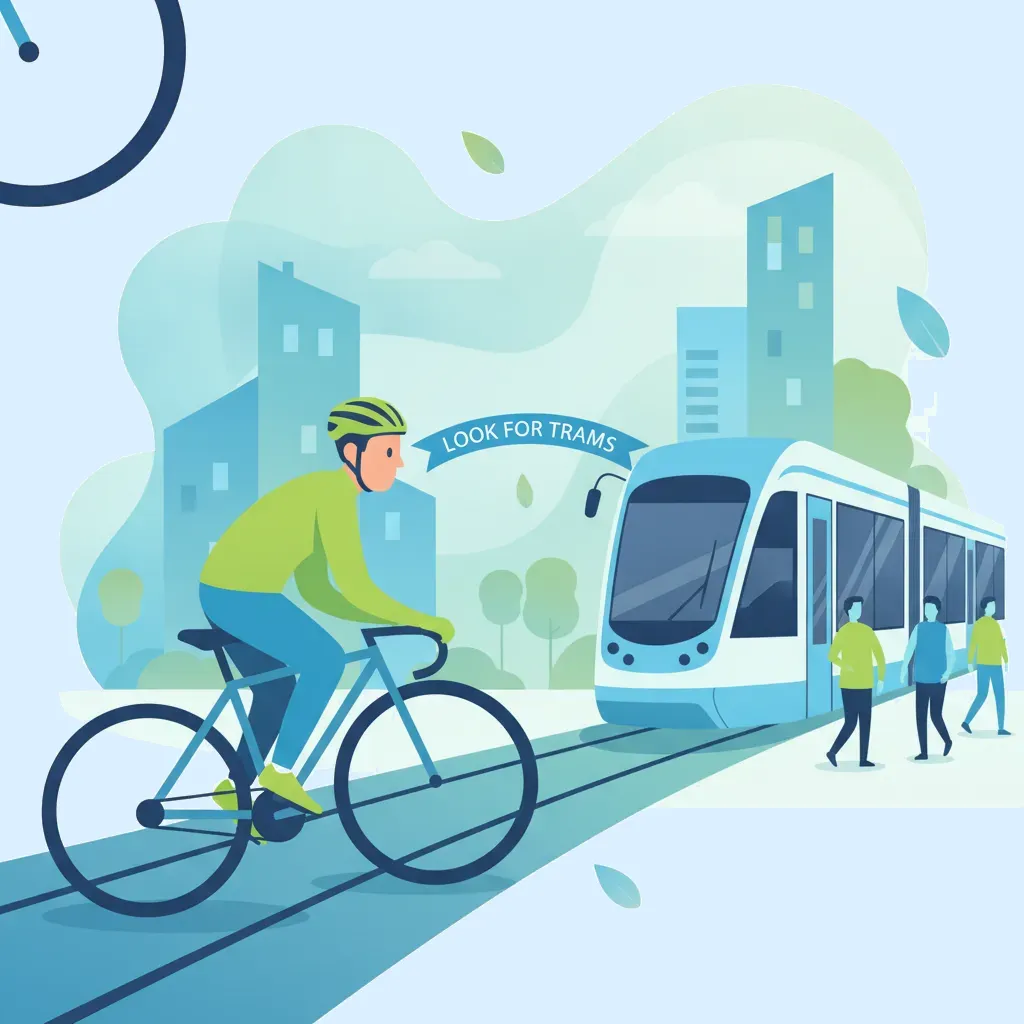
Sharing road space with trams presents unique challenges, including different priority rules and physical hazards like tracks. This lesson covers the Swiss regulations regarding tram priority at junctions and stops. It also provides practical advice on crossing tram tracks safely and maintaining awareness of tram movements.
Driving a bus in older parts of a city requires exceptional spatial awareness and precise control. This lesson focuses on assessing clearances, managing front and rear overhang, and negotiating tight turns around parked cars and buildings. A key theme is slow, careful, and deliberate manoeuvring to avoid contact.

This lesson moves beyond simply staying within the lines, teaching how to actively position your vehicle within the lane to manage risk. You will learn to create a 'safety cushion' of space around your bus. This proactive approach improves your reaction time and gives other road users more space, reducing the likelihood of conflicts.
Understand the specific hazards, including vulnerable road users, encountered when approaching and stopping at bus stops in Switzerland. Essential theory for safe Category D bus operations.
A stopped bus creates a significant visual obstruction for other road users. This lesson focuses on the risk of pedestrians stepping out from in front of the bus and cyclists passing unexpectedly on either side. It reinforces the need for exhaustive mirror and blind spot checks before moving off to prevent tragic 'pull-away' accidents.

This lesson trains drivers to look beyond other vehicles and actively search for pedestrians, cyclists, and motorcyclists, especially those who may be distracted or unaware. It covers common behavioral patterns of different VRU groups. The goal is to see potential hazards developing early and create time and space to react safely.
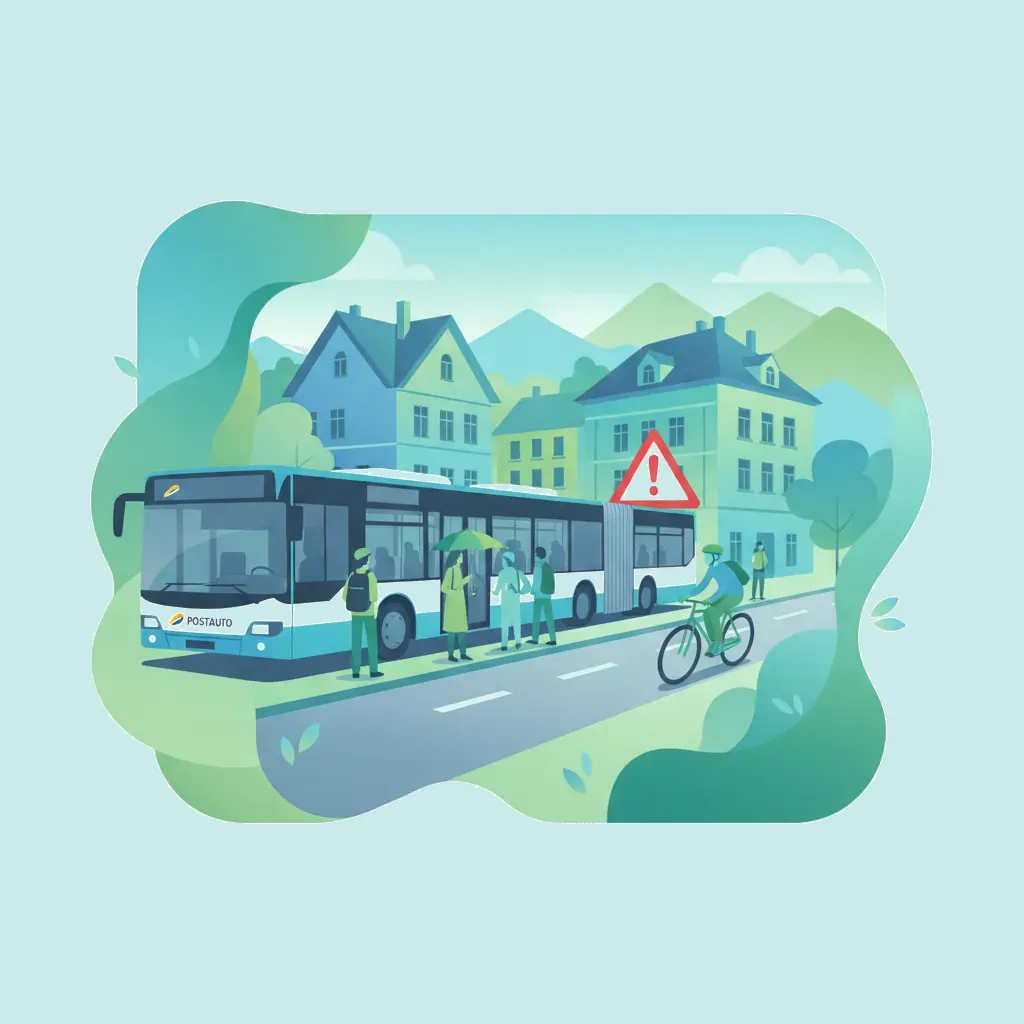
Bus stops are magnets for activity and potential hazards. This lesson trains you to anticipate dangers such as pedestrians running for the bus, cyclists passing on the inside, and cars attempting to overtake. Developing heightened situational awareness is key to preventing accidents in these busy environments.
Departing from a bus stop is a high-risk manoeuvre. This lesson details the critical sequence of actions: checking all passengers are clear of the doors, performing a comprehensive mirror and blind spot check, signalling, and waiting for a safe gap in traffic. This systematic approach is essential for preventing collisions with overtaking vehicles, cyclists, or pedestrians.
This lesson focuses on general driving safety in areas with a high concentration of children. It stresses the importance of significantly reducing speed, being prepared for unexpected events, and scanning for children between parked cars. The driver must exhibit maximum vigilance in these high-risk environments at all times.

Standing passengers are particularly vulnerable to sudden vehicle movements. This lesson covers the driver's responsibility to adapt their driving style when people are standing. It emphasizes even smoother control, heightened awareness, and clear communication to minimize the risk of falls and injuries.

Tourists are often unfamiliar with local traffic rules and may be distracted by sightseeing, leading to unpredictable behavior. This lesson teaches drivers to be extra cautious in these zones. It focuses on anticipating sudden crossings, being aware of other tour vehicles, and maintaining a large safety bubble around the bus.
Sharing road space with trams presents unique challenges, including different priority rules and physical hazards like tracks. This lesson covers the Swiss regulations regarding tram priority at junctions and stops. It also provides practical advice on crossing tram tracks safely and maintaining awareness of tram movements.

Buses and coaches have significant blind spots to the front, sides, and rear. This lesson maps out these 'no-zones' and teaches a continuous and active scanning process using all available mirrors and direct vision. The goal is to minimize the time any other road user spends undetected in a blind spot.
Find clear answers to common questions learners have about Safe Approach and Positioning at Bus Stops. Learn how the lesson is structured, which driving theory objectives it supports, and how it fits into the overall learning path of units and curriculum progression in Switzerland. These explanations help you understand key concepts, lesson flow, and exam focused study goals.
Being parallel and close to the kerb minimizes the gap between the vehicle and the pavement. This prevents passengers, especially those with mobility aids, from having to step into the road or over a large distance, significantly reducing fall risks.
Many drivers fail to check their mirrors for cyclists early enough during the approach. If you swing in too sharply, you may cut off a cyclist passing on the inside, which is a frequent cause of accidents and exam failure.
The 'look-last' check is a fundamental safety procedure in the Swiss theory exam. Demonstrating that you confirm the area is clear of pedestrians and cyclists immediately before opening the doors is considered a mandatory professional standard.
Yes. Signaling your intention to pull into the stop is mandatory to alert following traffic and pedestrians. It indicates you are slowing down and leaving the flow of traffic, which is vital for road safety.
Pinpoint specific Swiss traffic rules, road signs, or driving situations you need to master. Use the practice search to start a focused revision session now and build confidence for your official driving theory exam.