
This lesson focuses on the common dangers posed by parked vehicles on Spanish urban roads. Understanding how to identify and avoid the 'door zone' is crucial for moped riders. It builds upon your knowledge of road positioning and prepares you for managing unpredictable situations.
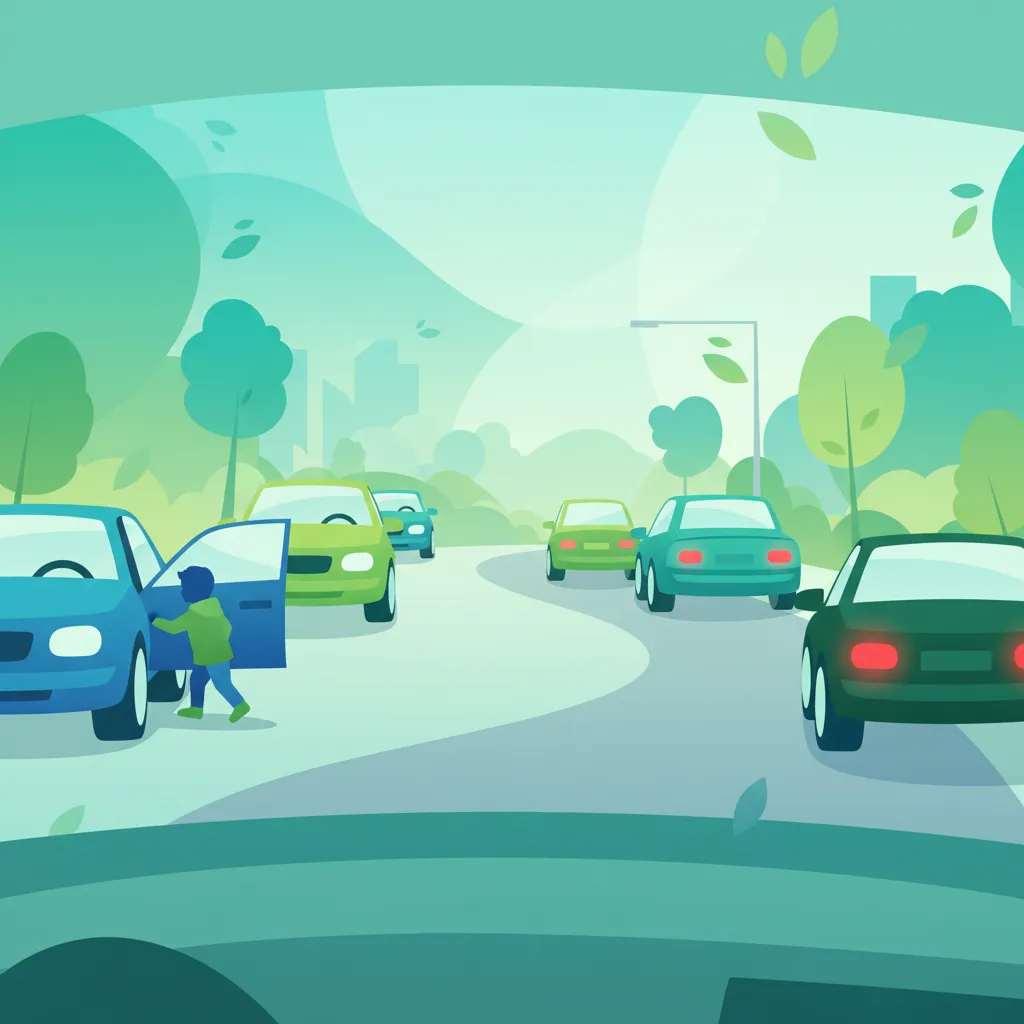
Lesson content overview
Riding a moped, especially in bustling urban environments, requires constant vigilance and a keen awareness of potential dangers. Among the most common and often underestimated hazards are vehicles parked along the roadside. While seemingly stationary, parked cars create a dynamic risk zone, particularly for vulnerable road users like moped riders. This lesson will delve into the specific dangers posed by parked vehicles, focusing on how a driver or passenger might unexpectedly open a door into your path. Understanding these risks is crucial for developing safe riding habits, maintaining appropriate distances, and mastering the art of proactive scanning.
Parked vehicles transform a seemingly clear stretch of road into a complex hazard zone. For moped riders, the proximity to the curb and the smaller size of the vehicle increase vulnerability to sudden obstacles. The primary risk stems from the unpredictable actions of occupants within these parked cars, who may open doors without checking for approaching traffic. This 'door-swing' risk can lead to abrupt evasive maneuvers, loss of control, or direct collisions, posing significant danger to riders of Category AM vehicles.
Effective hazard awareness is not just about reacting to immediate threats, but about anticipating potential dangers before they materialize. This involves understanding the principles of the "door zone," maintaining a safe lateral distance, and actively scanning for any signs of occupant activity. These skills are fundamental for safe urban riding and directly support the broader objective of accident prevention.
This lesson builds upon foundational knowledge from earlier modules, particularly those concerning Road Positioning & Lane Discipline, where you learned about appropriate lane placement. It also lays the groundwork for future topics like Speed Management & Braking, emphasizing why adequate stopping distances are vital.
The "door zone" is an essential concept for every moped rider. It refers to the area alongside any parked vehicle where an opened side door could potentially swing into the traffic lane, creating an immediate and dangerous obstruction.
The spatial region extending approximately 0.5 metres laterally from a stationary vehicle's side door, where an opening door may intersect the path of an approaching vehicle.
While a standard door swing might extend about half a metre, the actual "dynamic door zone" can vary. It depends on factors like the vehicle's size, the angle at which the door opens, and the speed of your moped. Even a partially opened door can be enough to cause a serious incident for a moped rider.
Many riders mistakenly believe that only a side mirror needs to be cleared, or they fail to consider the rapid expansion of this zone. A common scenario involves a rider passing a parked car at typical urban speeds (e.g., 30 km/h). If an occupant suddenly opens their door, the rider has minimal time to react, often forcing an abrupt brake or swerve, which can lead to loss of control or a collision. Recognizing and actively avoiding this zone is the first step towards safe navigation near parked cars.
Beyond simply knowing what the door zone is, riders must actively maintain a "safe lateral distance" to stay out of it. This refers to the minimum side clearance needed between your moped and any parked vehicle to ensure you can avoid contact with an opening door.
The minimum side clearance a moped rider must maintain from the curb or parked vehicle to avoid immediate contact with an opening door, generally recommended at least 0.5 metres for mopeds.
For mopeds, a recommended minimum lateral distance is at least 0.5 metres (50 centimetres) from the side of a parked vehicle. This distance provides a crucial buffer, allowing you sufficient space to react to an unexpected door opening or to execute emergency maneuvers if necessary.
This recommended safety buffer should be increased under adverse conditions such as wet roads, poor visibility, or higher speeds, as your reaction time and maneuverability may be compromised. It’s a common misunderstanding to think a minimal deviation is enough; even small vehicle sway or minor road surface irregularities can reduce an already tight clearance, making a collision more likely. When judging this distance, use visual cues, estimate your moped's width, and adjust your speed accordingly to ensure a comfortable and safe passage.
While maintaining a safe distance is critical, anticipating potential door openings adds another layer of safety. "Scanning for occupant activity" involves continuously monitoring parked vehicles for any visual cues that might indicate someone is about to exit. This proactive observation allows you to adjust your speed and trajectory before a door becomes a hazard.
Actively observing parked vehicles for signs that a passenger or driver may be preparing to exit, such as movement inside the vehicle, a window partially opened, or a hand reaching for the door handle.
Signs to look for include:
By actively scanning, you gain precious extra moments to react. Instead of being surprised by a sudden door swing, you can reduce your speed slightly, cover your brakes, or shift your lane position to increase your buffer. Many incidents occur because riders assume doors will only open when a vehicle has just pulled up; however, occupants can open doors at any time, even after you have passed the initial few meters of a parked car.
Your choice of lane positioning is a powerful tool for mitigating the risks associated with parked cars. "Lane positioning relative to parked cars" refers to strategically selecting the side of your lane that offers the greatest safety margin. This often means riding on the "far side" of the lane when passing parked vehicles.
The strategic choice of staying on the side of the lane that offers the greatest safety margin relative to parked vehicles, typically riding on the far side of the lane when passing parked cars.
On streets with parking on your right side, it is generally safer to position your moped towards the left side of your lane. This places you further away from the door zone and allows for a clearer view ahead. Conversely, if parking is on the left (e.g., on a one-way street), you should position your moped towards the right side of your lane, keeping a safe distance from those vehicles.
It's a common misconception that staying close to the curb is always the safest option. While it might seem intuitive to keep to the "edge" of the road, on streets with parked cars, the curb side is precisely where the door zone hazard is most concentrated. Riding in the center or far side of your lane not only reduces your exposure to door-swing risks but also enhances your visibility to other road users and gives you more room to maneuver.
Spanish traffic law, as outlined in the Reglamento General de Circulación (RGC), provides specific guidelines and mandates that directly apply to recognizing and avoiding parked car hazards. Adhering to these regulations is not only a legal obligation but also a fundamental aspect of safe moped riding.
Article 80 of the RGC directly addresses the need for drivers to maintain a safe distance from parked or stationary vehicles.
Drivers must keep a sufficient distance from parked vehicles to avoid potential collisions, especially those caused by the opening of a vehicle door.
This article underscores the legal requirement to stay out of the door zone. For a moped rider, this means actively ensuring at least the recommended 0.5 metres of lateral clearance. Failure to observe this rule could lead to a collision and subsequent legal sanctions. The rationale is clear: to prevent sudden obstacles from opened doors from causing accidents. Imagine a scenario where a rider maintains only 0.2 metres of clearance from a parked car. If a door suddenly opens, a collision is almost inevitable. Conversely, a rider maintaining 0.6 metres clearance has a significantly higher chance of reacting safely.
The RGC places a general obligation on all drivers to anticipate and react to potential road hazards. Article 38 highlights this principle.
Drivers must adapt their speed and trajectory to anticipate potential hazards, including the opening of vehicle doors or other sudden obstacles.
This article directly supports the practice of "Scanning for Occupant Activity." It mandates a proactive approach to driving, requiring riders to continuously assess the road ahead and anticipate dangers. By observing a driver reaching for their door handle or a child moving inside a parked vehicle, a moped rider who adjusts their speed or position is complying with Article 38. A rider who maintains high speed despite clear signs of occupant movement would be in violation of this principle, increasing the risk of an accident.
Proper lane usage is also covered by the RGC, with Article 94 relevant to how you position your moped in relation to parked cars.
Drivers must not occupy the lane side designated for parked vehicles unless it is necessary to overtake or for specific maneuvers, ensuring proper use of the available traffic lanes.
This regulation reinforces the concept of strategic lane positioning. While it doesn't explicitly mention the door zone, it implicitly encourages using the appropriate part of the lane to avoid conflict with stationary vehicles. On a street with parking on one side, a moped rider should use the main traffic lane, positioning themselves to maintain a safe distance from the parked cars, rather than hugging the curb in the "parking lane." Incorrectly riding too close to parked cars when the main lane is available could be considered a violation of this article.
Even experienced riders can fall into habits that compromise their safety around parked vehicles. Being aware of these common pitfalls can help you avoid them.
The principles of door-zone awareness, safe lateral distance, scanning, and lane positioning remain constant, but their application must adapt to varying conditions.
Understanding the mechanics and psychology behind these hazards reinforces why adherence to safe riding practices is so critical.
Let's look at how these principles apply in different real-world situations.
Mastering the art of navigating safely past parked vehicles is a cornerstone of responsible moped riding. It requires a combination of spatial awareness, proactive observation, and adherence to traffic laws.
Always remember these core principles:
Failing to observe these principles can lead to sudden, overriding hazards, increased risk of losing control, and potential legal consequences. By internalizing these concepts, you not only improve your safety but also contribute to a safer road environment for everyone, especially other vulnerable road users. This lesson has reinforced foundational knowledge from previous units on lane discipline and provides essential context for future topics on speed management, braking techniques, and riding in challenging weather conditions.
Parked vehicles create a dynamic 'door zone' hazard for moped riders, extending approximately 0.5 metres from the vehicle's side door, which can swing suddenly into your path. To avoid dangerous door-swing collisions, you must maintain at least 0.5 metres of lateral clearance, scan parked cars continuously for occupant activity cues, and position yourself on the far side of your lane. Spanish traffic regulations (RGC Articles 38, 80, and 94) legally mandate maintaining safe distances, anticipating hazards, and proper lane discipline. These principles apply consistently but require speed reduction and increased buffer distances in adverse weather, poor lighting, or narrow urban streets.
A short set of high-value points that capture the most important learning from this lesson.
The 'door zone' is the critical area extending approximately 0.5 metres from a parked vehicle's side door where an opened door can swing into the traffic lane
Moped riders must maintain a minimum safe lateral distance of at least 0.5 metres from parked vehicles to have reaction time if a door opens
Proactive scanning for occupant activity (movement, brake lights, window lowering) is your first line of defence against door hazards
Strategic lane positioning means riding on the far side of your lane relative to parked cars to maximise your safety buffer
Spanish traffic law (RGC Article 80) legally requires drivers to maintain sufficient distance from parked vehicles to avoid door-related collisions
Explore all units and lessons included in this driving theory course.
Safe lateral distance of 0.5m minimum should be increased in rain, at night, on narrow streets, or when carrying a passenger
Visual cues indicating a door may open include occupants sitting upright, brake lights illuminating, windows lowering, or hands near door handles
On streets with parking on your right, position your moped towards the left side of your lane; reverse for left-side parking on one-way streets
RGC Articles 38, 80, and 94 mandate hazard anticipation, safe distances from stationary vehicles, and proper lane usage
Reduce speed by at least 20% in poor conditions and increase lateral buffer to compensate for longer perception-reaction times
Riding too close to the curb when cars are parked on your side, which places you directly in the door zone
Failing to scan parked vehicles for occupant activity, missing early warning signs before a door opens
Accelerating through narrow gaps between parked cars, which reduces reaction time and may prevent maintaining safe clearance
Assuming doors won't open on one-way streets simply because traffic flows in one direction only
Riding at normal speeds in heavy rain or at night when visibility is reduced, preventing adequate hazard detection
Lesson content overview
A short set of high-value points that capture the most important learning from this lesson.
The 'door zone' is the critical area extending approximately 0.5 metres from a parked vehicle's side door where an opened door can swing into the traffic lane
Moped riders must maintain a minimum safe lateral distance of at least 0.5 metres from parked vehicles to have reaction time if a door opens
Proactive scanning for occupant activity (movement, brake lights, window lowering) is your first line of defence against door hazards
Strategic lane positioning means riding on the far side of your lane relative to parked cars to maximise your safety buffer
Spanish traffic law (RGC Article 80) legally requires drivers to maintain sufficient distance from parked vehicles to avoid door-related collisions
Explore all units and lessons included in this driving theory course.
Safe lateral distance of 0.5m minimum should be increased in rain, at night, on narrow streets, or when carrying a passenger
Visual cues indicating a door may open include occupants sitting upright, brake lights illuminating, windows lowering, or hands near door handles
On streets with parking on your right, position your moped towards the left side of your lane; reverse for left-side parking on one-way streets
RGC Articles 38, 80, and 94 mandate hazard anticipation, safe distances from stationary vehicles, and proper lane usage
Reduce speed by at least 20% in poor conditions and increase lateral buffer to compensate for longer perception-reaction times
Riding too close to the curb when cars are parked on your side, which places you directly in the door zone
Failing to scan parked vehicles for occupant activity, missing early warning signs before a door opens
Accelerating through narrow gaps between parked cars, which reduces reaction time and may prevent maintaining safe clearance
Assuming doors won't open on one-way streets simply because traffic flows in one direction only
Riding at normal speeds in heavy rain or at night when visibility is reduced, preventing adequate hazard detection
Explore search topics learners often look for when studying Recognizing Parked Car Hazards. These topics reflect common questions about road rules, driving situations, safety guidance, and lesson level theory preparation for learners in Spain.
Browse additional driving theory lessons that cover connected traffic rules, road signs, and common driving situations related to this topic. Improve your understanding of how different rules interact across everyday traffic scenarios.
Explore advanced concepts and subtle risks associated with parked cars, focusing on precise distance calculations, occupant behavior prediction, and strategic lane positioning for moped riders in Spanish urban traffic.
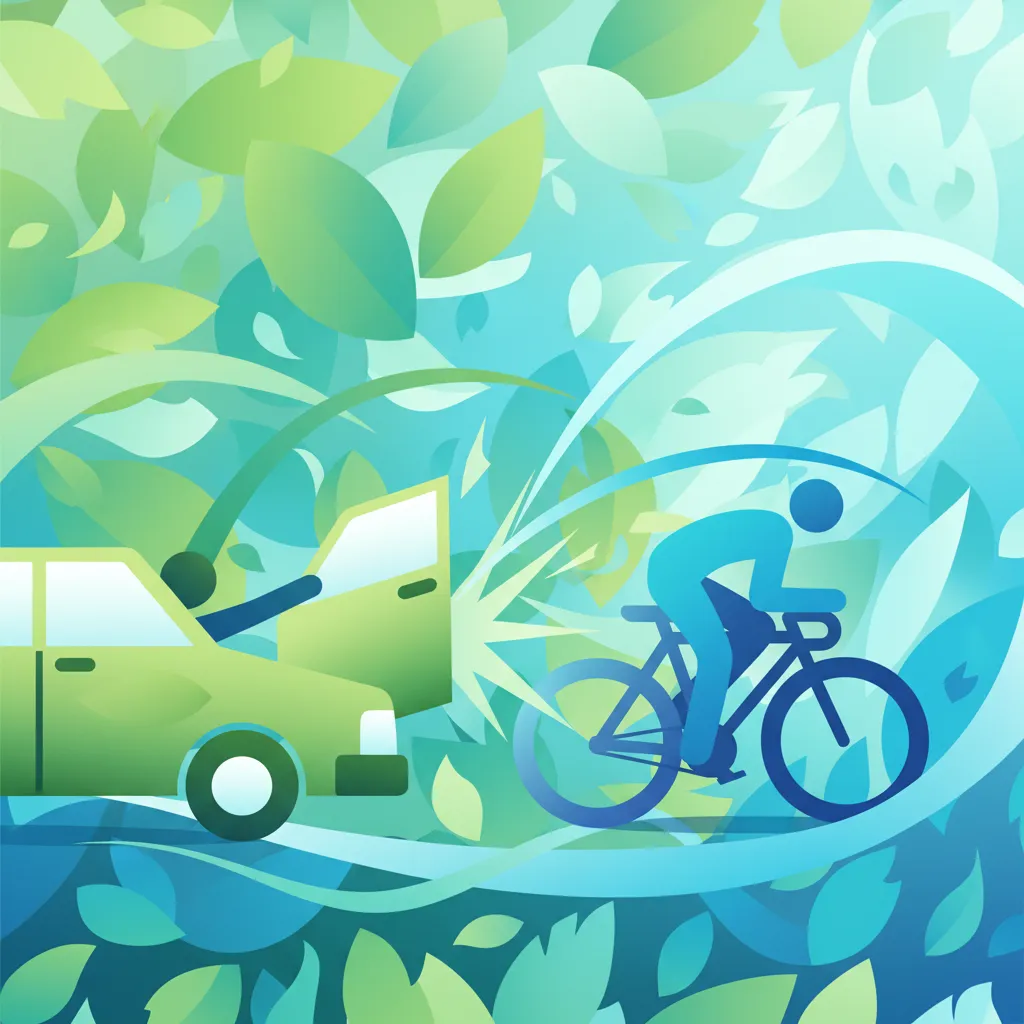
This lesson delves deeper into the mechanics and prevention of 'dooring' incidents, a common and serious urban hazard. It provides specific strategies for risk mitigation, such as adjusting lane position to ride outside the typical door-swing radius. Learners will be taught to observe cues like interior lights or visible occupants to anticipate a door opening and to always have a planned escape path.

This lesson focuses on the optimal position for a moped within a traffic lane to maximize visibility and safety. It discusses the importance of maintaining a safety buffer from other vehicles and hazards, particularly the risk posed by the doors of parked cars. The content explains how to use lane positioning strategically to discourage unsafe overtaking and to be clearly seen by drivers in front and behind, especially when approaching intersections.
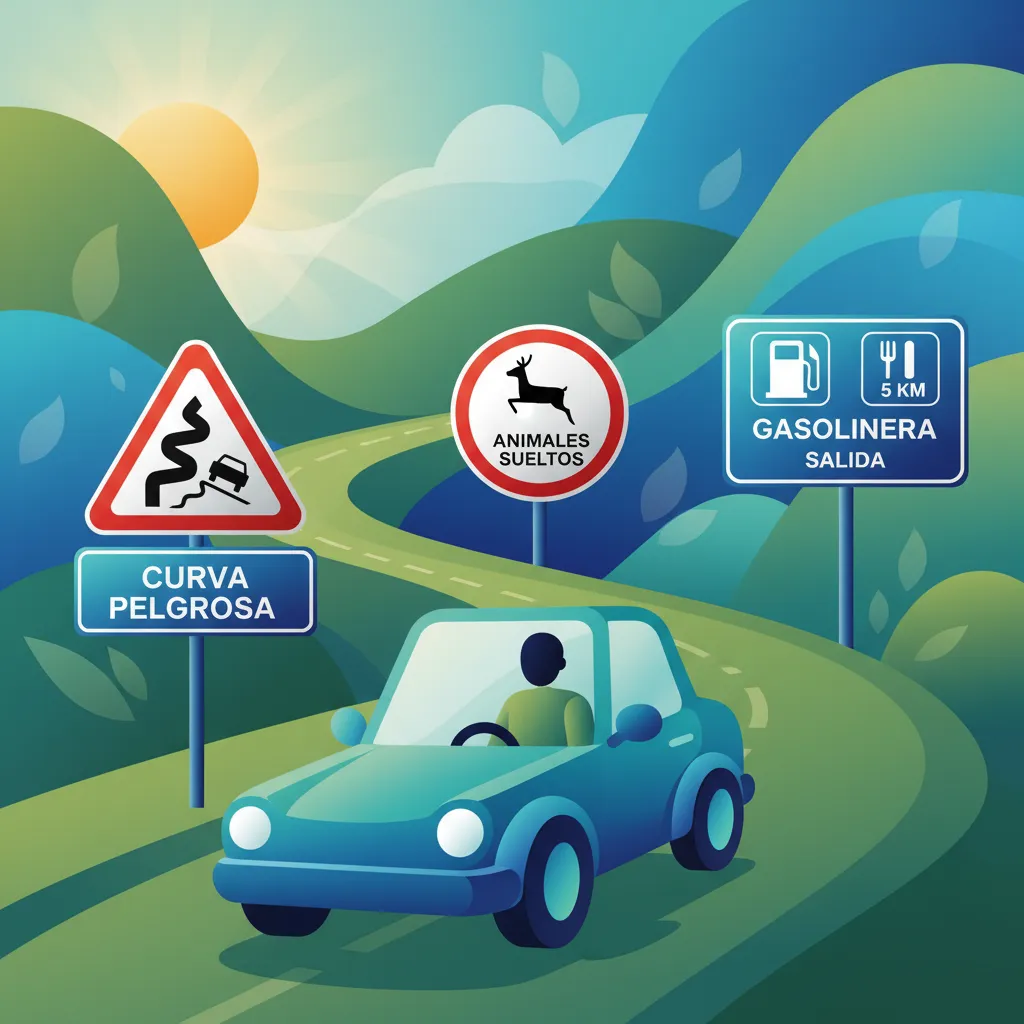
This lesson covers warning and informational signs, which are crucial for anticipating road conditions. It explains how triangular warning signs alert riders to upcoming hazards like sharp curves, slippery surfaces, or pedestrian crossings. The content also describes rectangular informational signs that provide directions, distances, and other useful guidance, helping riders to plan their route and adjust their driving in advance.
This lesson teaches riders how to react effectively in a sudden, critical situation. It explains the technique for applying maximum braking force without locking the wheels, ensuring the shortest possible stopping distance while maintaining stability. The content also covers how to perform a swift and controlled swerve to avoid an obstacle when stopping is not possible, emphasizing the importance of looking where you want to go.

This lesson examines the dynamic interactions between mopeds, cars, and bicycles in an urban environment. It emphasizes strategies for staying visible and avoiding the blind spots of larger vehicles. The content provides clear guidelines on overtaking bicycles safely, respecting dedicated bike lanes, and signaling intentions clearly to all other road users to ensure predictable and harmonious coexistence in mixed traffic.
This lesson introduces the regulatory signs that impose obligations or prohibitions on road users, with a focus on those pertinent to mopeds. It covers common signs such as speed limits, 'no entry', and mandatory turn directions, explaining how their shape and color indicate their function. Learners will be able to identify and correctly interpret these signs to navigate urban road networks legally and safely, avoiding potential fines.

This lesson introduces anticipation techniques that improve a rider’s ability to predict potential hazards before they manifest. It covers scanning ahead, evaluating traffic patterns, and applying DGT risk assessment criteria. Emphasis is placed on developing a defensive riding mindset and maintaining safety margins to reduce accident likelihood.

This lesson teaches riders the critical importance of maintaining a safe following distance to allow for adequate reaction and braking time. It explains practical methods for judging this distance, such as the 'two-second rule,' and how this gap must be increased in adverse weather or poor visibility. Understanding this principle is fundamental to preventing rear-end collisions, one of the most common types of traffic accidents.

This lesson focuses on the absolute priority of pedestrians at marked crosswalks, often known as zebra crossings. It explains that riders must always be prepared to stop and yield the right-of-way to any pedestrian waiting to cross or already crossing. The content also covers signaled pedestrian crossings and general awareness in urban areas where pedestrians may cross unexpectedly, reinforcing safety and legal compliance.
Learn to manage challenges in busy city streets, focusing on how to safely interact with parked vehicles, understand road positioning, and anticipate hazards specific to urban driving in Spain.
This lesson focuses on the optimal position for a moped within a traffic lane to maximize visibility and safety. It discusses the importance of maintaining a safety buffer from other vehicles and hazards, particularly the risk posed by the doors of parked cars. The content explains how to use lane positioning strategically to discourage unsafe overtaking and to be clearly seen by drivers in front and behind, especially when approaching intersections.
This lesson examines the dynamic interactions between mopeds, cars, and bicycles in an urban environment. It emphasizes strategies for staying visible and avoiding the blind spots of larger vehicles. The content provides clear guidelines on overtaking bicycles safely, respecting dedicated bike lanes, and signaling intentions clearly to all other road users to ensure predictable and harmonious coexistence in mixed traffic.

This lesson focuses on low-speed manoeuvres within congested urban traffic, detailing techniques for navigating tight corners and weaving through traffic. Learners analyze urban traffic flow, pedestrian zones, and cyclist interactions to anticipate hazards. The lesson also explains DGT regulations regarding slow-speed movement and lane positioning.
This lesson focuses on the absolute priority of pedestrians at marked crosswalks, often known as zebra crossings. It explains that riders must always be prepared to stop and yield the right-of-way to any pedestrian waiting to cross or already crossing. The content also covers signaled pedestrian crossings and general awareness in urban areas where pedestrians may cross unexpectedly, reinforcing safety and legal compliance.
This lesson covers warning and informational signs, which are crucial for anticipating road conditions. It explains how triangular warning signs alert riders to upcoming hazards like sharp curves, slippery surfaces, or pedestrian crossings. The content also describes rectangular informational signs that provide directions, distances, and other useful guidance, helping riders to plan their route and adjust their driving in advance.

This lesson addresses the critical skill of safely sharing the road with other vulnerable users like pedestrians, cyclists, and other motorcyclists. It emphasizes the need for increased awareness, speed adaptation, and providing ample space when passing. The content covers DGT regulations regarding minimum passing distances and highlights the importance of making eye contact to ensure mutual awareness and prevent common urban accidents.

This lesson provides strategies for navigating tight, confined environments such as multi-story car parks and narrow urban lanes. It emphasizes the importance of slow and controlled movements, constant observation, and a thorough understanding of the vehicle's dimensions and turning circle. Learners will develop the skills to maneuver with precision while avoiding obstacles.
This lesson introduces the regulatory signs that impose obligations or prohibitions on road users, with a focus on those pertinent to mopeds. It covers common signs such as speed limits, 'no entry', and mandatory turn directions, explaining how their shape and color indicate their function. Learners will be able to identify and correctly interpret these signs to navigate urban road networks legally and safely, avoiding potential fines.
This lesson offers a comprehensive guide to navigating roundabouts in urban settings, explaining the correct protocols for entry, yielding, and circulation. Learners will be taught how to interpret lane markings and signage on multi-lane roundabouts and determine the correct vehicle positioning for safe entry and exit. The content emphasizes full compliance with Spanish city regulations that govern priority and right-of-way at these intersections.

This lesson provides a detailed guide to safely starting a moped, from the ignition sequence to the coordinated use of the throttle and brakes. It explains the importance of a pre-ride checklist to verify lights and controls are functional. The content also covers techniques for achieving smooth acceleration from a standstill and performing controlled stops, which is crucial for managing stop-and-go urban traffic conditions.
Find clear answers to common questions learners have about Recognizing Parked Car Hazards. Learn how the lesson is structured, which driving theory objectives it supports, and how it fits into the overall learning path of units and curriculum progression in Spain. These explanations help you understand key concepts, lesson flow, and exam focused study goals.
The 'door zone' is the area around a parked car where a door could open unexpectedly. For mopeds, it's crucial to maintain a safe lateral distance, typically at least one meter, or even position yourself slightly further into the lane to avoid colliding with an opening door. Always assume a door might open.
Look for signs of activity within the parked car. This includes seeing people in the driver's or passenger seats looking out, reaching for the door handle, or seeing the door slightly ajar. Also, be aware of cars parked right next to bike lanes or where pedestrians frequently walk.
In Spain, generally, you would pass parked cars on the left, positioning yourself within your lane to create space. The key is to maintain a consistent and safe distance from the parked vehicles, regardless of which side you pass them on, and always be prepared for a door to open.
If the road is too narrow or traffic conditions make it unsafe to pass parked cars with adequate clearance, it's safer to slow down significantly, wait for the hazard to pass (e.g., if someone exits the vehicle), or stop completely until you can proceed safely. Your safety is the priority.
The AM category theory exam in Spain includes questions about hazard perception and safe riding practices. You'll encounter scenarios that test your knowledge of dealing with parked cars, such as choosing the correct action to take when approaching them, ensuring you demonstrate an understanding of avoiding the 'door zone'.
Use our powerful search functionality to pinpoint specific Spanish DGT driving theory practice sets. Filter by road sign categories, traffic law topics, or question difficulty to build custom study sessions and reinforce your knowledge precisely where it matters for your official exam.